In This Article
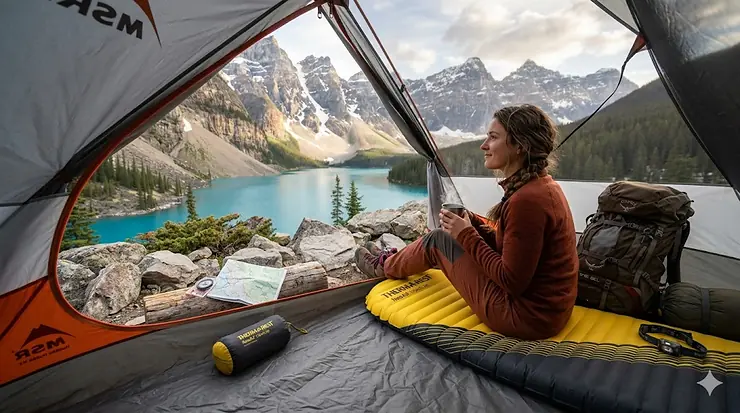
If you’ve ever hauled a heavy sleeping pad up a switchback on the Garibaldi Provincial Park approach, or tried to stuff a bulky foam roll into an already-packed bag before a Rockies backpacking trip, you already understand the obsession with weight savings. An ultralight sleeping pad under 1 pound isn’t just a luxury for gram-counting gear nerds — it’s a genuine quality-of-life upgrade that lets you cover more kilometres per day and arrive at camp with energy left to actually enjoy the experience.
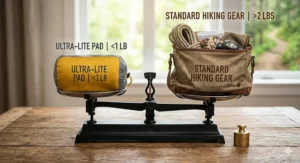
Here’s something the spec sheets don’t always tell you: the best ultralight sleeping pad under 1 pound for Canadian conditions isn’t necessarily the one with the lowest number on the scale. It’s the one that balances weight, warmth, and packability against the realities of Canadian trail life — cold shoulder seasons, damp ground, and the kind of temperature swings that can flip from a warm afternoon to near-freezing by midnight. Canada’s climate rewards forethought and punishes poor gear choices.
According to Parks Canada’s backcountry travel guidelines, proper sleep insulation is one of the core safety priorities for overnight wilderness travel. That insight matters when you’re choosing a pad rated for warmth. We’ve researched seven real products available to Canadian buyers through Amazon.ca and major Canadian retailers, compared them honestly, and laid out exactly who each one is best for. Let’s get into it.
Quick Comparison: Top 7 Ultralight Sleeping Pads Under 1 Pound
| Product | Weight | R-Value | Thickness | Best For | Approx. Price (CAD) |
|---|---|---|---|---|---|
| NEMO Tensor Elite | 241g (8.5 oz) | 2.4 | 7.6 cm (3 in) | Gram-counting thru-hikers | $290–$340 |
| Therm-a-Rest NeoAir XLite NXT | 369g (13 oz) | 4.5 | 7.6 cm (3 in) | 3-season all-rounders | $280–$330 |
| Therm-a-Rest NeoAir XTherm NXT | ~397g (14 oz) | 7.3 | 7.6 cm (3 in) | Cold sleepers, winter shoulder | $380–$440 |
| NEMO Tensor All-Season UL (mummy) | 400g (14.1 oz) | 5.4 | 8.9 cm (3.5 in) | Best R-value/weight 3-season | $290–$340 |
| Exped Ultra 6.5R | 340g (12 oz) | 6.5 | 9 cm (3.5 in) | Warmth + ultralight combo | $300–$370 |
| Sea to Summit Ether Light XT Insulated | ~425g (15 oz)* | 4.2 | 10 cm (4 in) | Side sleepers, max comfort | $290–$360 |
| Therm-a-Rest Z Lite SOL | 397g (14 oz) | 2.0 | 2 cm (folded) | Budget-conscious, bomb-proof | $65–$90 |
*Regular size; select the Regular Mummy or Small to stay comfortably under 454g (1 lb). Prices in CAD are approximate ranges — always check current pricing on Amazon.ca as rates fluctuate.
Looking at this table, it’s immediately clear that weight and R-value are inversely correlated across most of the lineup — the lighter you go, the more warmth you sacrifice. The Exped Ultra 6.5R is the outlier that breaks this rule, delivering exceptional insulation at a low weight. For most Canadian backpackers heading into three-season conditions, the sweet spot sits between the XLite NXT and the Tensor All-Season. Budget-conscious buyers and anyone wanting a zero-maintenance option should take a serious look at the Z Lite SOL before dismissing foam pads entirely.
💬 Just one click — help others make better buying decisions too! 😊
✨ Don’t Miss These Exclusive Deals!
🔍 Take your backpacking setup to the next level with these carefully selected ultralight pads. Click any highlighted product name to check current pricing and availability on Amazon.ca. These pads will help you sleep deeper, hike farther, and carry less into the Canadian backcountry!
Top 7 Ultralight Sleeping Pads Under 1 Pound: Expert Analysis
1. NEMO Tensor Elite — The Lightest Inflatable on the Market 🏆
The NEMO Tensor Elite is a genuinely astonishing product for thru-hikers and fastpackers who measure their pack weight in grams, not pounds. At just 241g (8.5 oz) for the pad alone — or 326g (11.5 oz) with the included pump sack and stuff sack — no other inflatable sleeping pad on the market comes close to this weight. NEMO achieves this through 10D CORDURA® nylon (about as thin as a good rain jacket’s lining) and a highly tapered mummy shape that eliminates every excess gram.
What this spec means in practice: pack this pad in a 35L ultralight pack and you’ll barely notice it’s there. For a Canadian thru-hiker pushing big-kilometre days on routes like the GDT (Great Divide Trail) during July and August, that weight reduction is compounded over hundreds of kilometres and translates to real-world less fatigue. The R-value of 2.4, however, means this is a summer-only pad — fine for nights above 5°C, but genuinely uncomfortable if you’re caught in a sudden cold snap. Canadian shoulder seasons are no joke, and this pad won’t save you in September in the Rockies. One AT thru-hiker reported using this pad for over 100 nights without a single puncture — which is impressive given the fragile fabric.
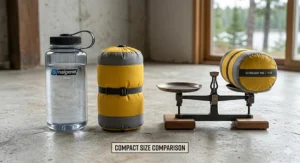
Customer feedback overwhelmingly praises the packability (roughly the size of a soda can) and how quickly it inflates with the Vortex pump sack. The one consistent gripe: the mummy cut is narrow, and side sleepers over 6 feet may feel constrained.
✅ Featherlight at 241g — unmatched by any other inflatable
✅ 7.6 cm (3 in) thick baffles provide genuine comfort despite the weight
✅ Compact as a 1L Nalgene — leaves room for everything else
❌ R-value 2.4 is summer-only; risky for Canadian shoulder seasons
❌ 10D nylon requires careful site selection — avoid sleeping on sharp debris
Verdict: Around the $290–$340 CAD range — premium price justified for summer thru-hikers who’ve already optimized everything else.
2. Therm-a-Rest NeoAir XLite NXT — The Gold Standard for Three-Season Ultralight
The Therm-a-Rest NeoAir XLite NXT has been the benchmark for ultralight inflatable sleeping pads for years, and the NXT generation earns that reputation. At 369g (13 oz) with an R-value of 4.5, it gives you genuine three-season warmth while staying well under the 454g (1 lb) threshold. The ThermaCapture™ reflective film technology captures radiant body heat, and the Triangular Core Matrix™ baffle structure minimizes convective heat loss — two engineering approaches that work together to make this pad punch far above its weight class in warmth.
In practical Canadian terms: an R-value of 4.5 means you can comfortably use this pad from April through October across most of Canada, including cold shoulder-season nights in BC’s Coast Mountains or Ontario’s Algonquin in early May when overnight temperatures can drop to 2–4°C. The 7.6 cm (3 in) thickness provides enough cushioning that even side sleepers won’t feel the ground on typical terrain. The WingLock™ valve inflates the pad three times faster than older designs — a detail that matters more than it sounds after a long day on trail. Therm-a-Rest’s “6x Quieter” claim for the NXT generation largely holds up in real-world testing; earlier NeoAir models were notoriously crinkly, but this one is significantly improved.
Canadian buyers will appreciate that Therm-a-Rest is widely stocked on Amazon.ca and at MEC locations across the country. The 30D ripstop nylon bottom is noticeably more confidence-inspiring than budget competitors.
✅ R-value 4.5 handles genuine three-season Canadian conditions
✅ Widely available on Amazon.ca — Prime-eligible shipping
✅ Much quieter than previous NeoAir generations
❌ Premium price tag in the $280–$330 CAD range
❌ Narrower 51 cm (20 in) width — restless sleepers may prefer a wider option
Verdict: The most reliable ultralight sleeping pad under 1 pound for year-round Canadian backpackers who want proven performance.
3. Therm-a-Rest NeoAir XTherm NXT — Winter-Worthy at Sub-1-Pound Weight 🇨🇦
What makes the Therm-a-Rest NeoAir XTherm NXT remarkable is what it achieves at its weight. At approximately 397g (14 oz), it sits comfortably under the 454g (1 lb) mark while delivering an R-value of 7.3 — the kind of warmth rating most pads double this weight can’t match. The NXT’s enhanced four-layer ThermaCapture™ film traps heat so effectively that this pad was used by multiple expedition teams in conditions well below -20°C.
For Canadian backpackers specifically, this is the pad to reach for when you’re heading out in late October in Jasper, doing a winter basecamp in Quebec’s Chic-Choc Mountains, or simply if you’re a cold sleeper who struggles with standard three-season pads. The spec sheet says R7.3 — what that means is that you can confidently pitch on frozen ground and wake up warm rather than stiff. That’s a real-world difference you feel at 3 AM when the temperature drops sharply. The 70D nylon bottom material also resists sharp rocks and sticks, making this a practical choice for Canadian terrain ranging from BC granite to Ontario limestone. Therm-a-Rest’s enhanced durability bottom is a welcome upgrade from their XLite line.
Canadian customer feedback highlights the combination of extreme warmth and low weight as genuinely surprising — many buyers who’d been doubtful upgraded from heavier winter pads and never looked back.
✅ R-value 7.3 — Canadian winter-viable at sub-1-pound weight
✅ 70D nylon bottom for durability on rough Canadian terrain
✅ Available on Amazon.ca; Prime shipping available
❌ Higher price point in the $380–$440 CAD range
❌ Overkill for summer use — this is a shoulder-season/winter specialist
Verdict: The smartest long-term investment for Canadian backpackers who camp in all four seasons.
4. NEMO Tensor All-Season Ultralight Insulated (Mummy) — Best R-Value-to-Weight Ratio
The NEMO Tensor All-Season Ultralight Insulated in mummy configuration hits 400g (14.1 oz) with an R-value of 5.4 — and that combination puts it at the best R-value-to-weight ratio of any three-season inflatable pad currently available, narrowly edging out even the NeoAir XLite NXT. NEMO’s proprietary Thermafilm insulation and their Spaceframe™ baffle design achieve both excellent warmth and a noticeably quieter sleep experience than many competitors in this category.
The practical advantage for Canadian backpackers: 8.9 cm (3.5 in) of thickness with horizontal baffles that cradle your body means you’re not bottoming out on uneven Canadian ground — a genuine issue with thinner pads. Side sleepers, stomach sleepers, and restless sleepers will all find this pad more accommodating than narrower mummy designs. The 40D bottom (versus the original Tensor’s thinner bottom) addressed the main durability complaint from previous generations, making it suitable for bushwhacking on unmaintained trails. At R5.4, this pad covers you from early April through late October in most Canadian regions, including cold nights in Yukon during the brief summer.
Canadian buyers note that while this pad sits at a premium price in the $290–$340 CAD range, the warmth-to-weight combination means fewer compromises across a full backpacking season.
✅ R-value 5.4 — highest for any sub-454g (1 lb) three-season pad
✅ 8.9 cm (3.5 in) thick — genuinely comfortable for all sleep styles
✅ Much quieter than comparable pads — a real bonus for light sleepers
❌ Mummy cut only in the lightest versions — rectangular version adds weight
❌ Vortex pump sack adds 57g (2 oz) if you bring it
Verdict: The smartest all-season pick if you want one pad to cover the majority of Canadian backpacking conditions.
5. Exped Ultra 6.5R — Warmth Champion in an Ultralight Package
The Exped Ultra 6.5R is the product that quietly breaks the assumptions of the sleeping pad market. At 340g (12 oz) with an R-value of 6.5, it outperforms pads that are both heavier and more expensive on the crucial warmth-to-weight ratio — and it does so with a channelled baffle design that disperses pressure across your body in a way that specifically benefits side sleepers. Exped, a Swiss brand with a strong following in the Canadian backcountry community, uses recycled materials throughout this pad.
Here’s what the R6.5 spec means in practice: this pad transitions seamlessly from a summer backpacking trip in Algonquin to a cold-weather outing in the Rockies in early October without needing a swap. Most Canadian backpackers who’ve tested this pad describe it as the first ultralight pad that didn’t feel like a compromise — the combination of depth, pressure distribution, and warmth does something most pads in this weight class can’t quite manage. The channelled baffles cradle your hips and shoulders, which is why Adventure Alan ranked this as having the “highest R-value-to-weight ratio of any all-season ultralight sleeping pad on the market.” The one caveat: the valve requires some care during inflation to avoid over-tightening.
Available through Amazon.ca and MEC locations across Canada; worth verifying Prime eligibility on Amazon.ca before checkout.
✅ R6.5 at 340g (12 oz) — an almost absurd warmth-to-weight achievement
✅ Channelled baffles are especially kind to side sleepers
✅ Recycled materials — Canadian eco-conscious backpackers will appreciate this
❌ Less brand recognition in Canada — harder to find for in-person demo
❌ Valve requires care; over-tightening during inflation can compromise seal
Verdict: A genuinely innovative pad in the $300–$370 CAD range that earns its place as a Canadian backpacker’s best-kept secret.
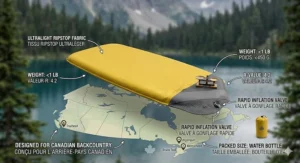
6. Sea to Summit Ether Light XT Insulated — Maximum Comfort at Ultralight Weight
The Sea to Summit Ether Light XT Insulated takes a different approach to ultralight design: rather than slimming down materials to hit a weight target, Sea to Summit focused on the thickest, most comfortable sleeping surface possible and then made it as light as they could. The result is a 10 cm (4 in) thick pad with Air-Sprung Cell technology — individual baffles shaped like springs — that collectively creates a sleep surface that legitimately mimics your mattress at home.
For Canadian backpackers who genuinely struggle to sleep well on the trail, this is the pad that changes the equation. The R-value of 4.2 covers three-season conditions comfortably. The dual-insulation approach (reflective film plus synthetic fibre layers in the XT Insulated version) means warmth without crinkle noise — this pad is among the quietest on the market. The Airstream integrated pump in the stuff sack means inflation without a separate pump sack. Select the Regular Mummy or Small size to stay under 454g (1 lb); the wider or longer versions drift slightly above.
Canadian reviewers consistently highlight the comfort as a step above every competitor, with particular appreciation from side sleepers who previously felt unsupported. Available on Amazon.ca; check Sea to Summit’s Canadian site (seatosummit.com/en-ca) for the full size range.
✅ 10 cm (4 in) thick Air-Sprung Cells — genuine home-mattress comfort
✅ Integrated pump in stuff sack — no separate accessories needed
✅ Quiet enough to not wake a light-sleeping tentmate
❌ Available in sizes — check weight carefully; some exceed 454g (1 lb)
❌ Air-Sprung Cell material requires careful handling in rocky terrain
Verdict: The comfort-first pick in the $290–$360 CAD range for backpackers who’ve been sacrificing sleep quality for pack weight.
7. Therm-a-Rest Z Lite SOL — The Indestructible Budget Champion
The Therm-a-Rest Z Lite SOL is the sleeping pad that laughs at everything that would destroy the pads above it. At 397g (14 oz) for the regular size, it’s a closed-cell foam accordion pad with an R-value of 2.0 and zero inflation required — ever. Sit on it, fold it wrong, leave it in a wet pack for a week, drop it in a river: this pad simply does not care. The ThermaCapture™ reflective coating adds about 15% warmth over the standard Z Lite.
What most buyers overlook about the Z Lite SOL is its strategic versatility. Canadian backpackers often use it as a combination sleep insulator and sit pad during breaks — folding off two or three panels creates a perfect trailside seat. It also stacks with a thin inflatable (like the Tensor Elite) for winter warmth without buying a single expensive all-season pad; the R-values are additive, as explained in detail by the insulation R-value standard on Wikipedia. The main compromise is bulk: this pad doesn’t compress, so it typically lives strapped to the outside of a pack.
For beginners, budget-constrained hikers, or anyone heading out on short Canadian summer overnight trips, this is the most economical ultralight sleeping pad under 1 pound available on Amazon.ca — typically in the $65–$90 CAD range.
✅ Indestructible — no puncture, no deflation risk, ever
✅ Zero setup — unroll and sleep immediately
✅ Most affordable option under the $90 CAD threshold
❌ R-value 2.0 limits use to warmer Canadian summer conditions
❌ Doesn’t compress — lives strapped outside your pack, not inside it
Verdict: The smartest pick for beginners and budget-conscious Canadian backpackers who want reliability over refinement.
How to Inflate, Store, and Protect Your Ultralight Pad in Canadian Conditions
Owning an ultralight sleeping pad under 1 pound is half the battle — maintaining it through Canadian backcountry conditions is the other half. Here’s what the product listings won’t tell you.
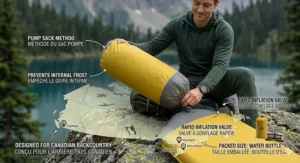
Inflation tips: Always use the included pump sack rather than breathing directly into the pad. Human breath introduces moisture, which can create mould inside the baffles over time — a slow-burn problem that’s invisible until it isn’t. In cold Canadian conditions (below 5°C), inflate the pad inside your tent after you’ve warmed the air slightly. Cold air is denser; a pad inflated outside at -5°C will feel deflated and firmer once it warms to your body temperature inside a shelter.
Field care: Wipe down your pad with a slightly damp cloth before storing it rolled or unrolled. Never store it compressed in its stuff sack — always lay it flat or hang it loosely when at home. This preserves baffle integrity across seasons. If you’re cowboy camping on rough ground in Canadian shield country, always sweep the area for sharp debris first.
Canadian climate tip: Cold temperatures reduce the apparent firmness of inflatable pads. Add a few extra puffs of air when setting up in sub-5°C conditions. Conversely, in the summer heat of BC’s Interior or Ontario’s cottage country, avoid over-inflation — UV heat can build pressure inside the pad and stress seams. Leave No Trace Canada also recommends choosing durable surfaces for camp setup, which indirectly protects your pad from the sharp sticks and rocks that cause most field punctures.
Which Ultralight Pad Suits Your Canadian Adventure? Real-World Profiles
Profile 1: The GDT Thru-Hiker (Alberta/BC, July–September) Emma, 34, is tackling the Great Divide Trail from Waterton to Kakwa over 90 days. Her priority is pack weight — every gram matters when you’re covering 30+ km daily. Temperature range: 5°C to 25°C nights, occasionally colder at altitude. Best pick: NEMO Tensor Elite. The 241g weight is unmatched, and the R2.4 covers her target date range. She accepts the durability trade-off by carefully selecting flat tent spots.
Profile 2: The Shoulder-Season Rockies Explorer (October) Marcus, 48, does four-day hut-to-hut trips in Banff and Yoho every October. Nights drop to -5°C regularly, and he sleeps cold. Best pick: NEMO Tensor All-Season Ultralight Insulated or Therm-a-Rest NeoAir XTherm NXT. The R5.4–R7.3 range provides genuine protection against the cold ground that consistently steals warmth from underprepared Canadian hikers.
Profile 3: The Weekend Family Hiker (Ontario, May–August) Priya and her partner take their two teenagers on provincial park backpacking trips in Killarney and Algonquin. Budget matters; gear gets treated roughly. Best pick: Therm-a-Rest Z Lite SOL for the kids (indestructible, cheap, zero worry), and the NeoAir XLite NXT for the adults who want comfort without excessive weight.
✨ Don’t Miss These Exclusive Deals!
🔍 Ready to upgrade your sleep system? Click any highlighted sleeping pad name to check the current price on Amazon.ca. Whether you’re gram-counting for a thru-hike or simply tired of waking up stiff, these pads represent the best the market offers Canadian backpackers in 2026!
How to Choose an Ultralight Sleeping Pad Under 1 Pound in Canada
- Start with your coldest expected temperature. Canadian trail temperatures are the single most important variable. Use the R-value guide on Wikipedia and the ASTM F 3340-18 standard (used by Therm-a-Rest, NEMO, Sea to Summit, and Exped) as your reference. Aim for R3–R4 for three-season Canada, R5+ for shoulder-season, and R7+ for true Canadian winter use.
- Choose your sleep position honestly. Side sleepers need thicker pads (8–10 cm / 3–4 in) with wider profiles to support hips. Back sleepers can get away with thinner, narrower designs. Choosing wrong and waking up in pain defeats the entire purpose of going ultralight.
- Weigh your trade-offs explicitly. Every gram saved below 454g (1 lb) comes at a cost in warmth, durability, or both. The NEMO Tensor Elite at 241g asks you to sacrifice shoulder-season use and accept fragile materials. Know what you’re trading before you buy.
- Consider packability separately from weight. Some pads weigh the same but compress dramatically differently. The Z Lite SOL weighs 397g but occupies external pack space permanently. The Tensor Elite at the same weight fits inside a 35L pack without a whisper of bulk.
- Verify Amazon.ca availability and Prime eligibility. Canadian prices run 15–25% above US equivalents due to exchange rates and import logistics — but you avoid cross-border customs delays, duty surprises, and warranty complications. Most pads reviewed here are Prime-eligible on Amazon.ca, which means free shipping on orders over $35 for Prime members.
- Don’t ignore warranty and Canadian service access. Therm-a-Rest’s Better Sleep Guarantee and NEMO’s warranty programs apply to Canadian buyers. Sea to Summit offers a Lifetime Guarantee. These matter when a baffle separates or a valve fails mid-trip.
What the R-Value Really Means for Canadian Backpackers
R-value is a measure of thermal resistance — specifically, how well a material slows the transfer of heat. In sleeping pad terms, it quantifies how effectively the pad insulates you from cold ground beneath you, independent of your sleeping bag. You lose more body heat to ground contact than to cold air, which is why a mediocre sleeping bag on a high-R pad will often outperform a premium sleeping bag on a low-R pad.
The ASTM F 3340-18 standard, now adopted by NEMO, Therm-a-Rest, Sea to Summit, and Exped, uses a standardized test that allows fair comparisons between brands. Be cautious with brands that don’t cite this standard — some budget brands (and occasionally Klymit) measure R-values using different protocols that tend to produce optimistic results. For Canadian conditions specifically, R3 is a reasonable minimum for three-season use across most provinces. R5+ is appropriate for highlands camping in the Rockies, Laurentians, or Shield country during September and October. Winter tent camping in Canada requires R7 or above, or the layering of two pads for additive insulation.
Women and lighter sleepers typically need 1–1.5 R-value higher than the stated gender-neutral threshold for any given temperature. This is worth knowing before a cold night in Algonquin teaches the lesson the hard way.
Common Mistakes When Buying an Ultralight Sleeping Pad in Canada
Mistake 1: Buying for summer and camping in October. This is the most expensive mistake in the category. The NEMO Tensor Elite and Z Lite SOL are phenomenal summer pads, but Canadian shoulder seasons are genuinely cold. Check the forecast, check your R-value, and when in doubt, size up.
Mistake 2: Ignoring width for the sake of weight. Most sub-300g (10 oz) pads come in narrow mummy cuts — typically 50–51 cm (20 in) wide. Restless sleepers, broader-shouldered hikers, and side sleepers will feel those edges at 3 AM. Going from a 51 cm pad to a 58 cm wide version typically adds 40–60g (1.5–2 oz) but saves your sleep quality.
Mistake 3: Comparing prices to Amazon.com (US) and feeling short-changed. Yes, Canadian retail prices are higher. But buying cross-border means customs duties, longer waits, and potentially voided Canadian warranty coverage. For gear you’ll trust your comfort and safety to on trail, buying domestically through Amazon.ca or a Canadian retailer like MEC is the smarter long game.
Mistake 4: Over-inflating in hot conditions. In summer, particularly in BC’s Interior or across the Prairies, internal air pressure rises as temps climb. Over-inflated pads stress seams and valves. Inflate to comfort while lying on the pad, not while it’s empty.
Mistake 5: Storing it compressed. Leaving an ultralight pad rolled tight in its stuff sack between trips permanently deforms the baffles. Store flat or hang loosely. This is the simplest maintenance step and the one most commonly ignored.
Ultralight Inflatable Pads vs. Traditional Foam Pads
| Factor | Ultralight Inflatable | Closed-Cell Foam (Z Lite SOL) |
|---|---|---|
| Weight | 241–400g (8.5–14 oz) | 397g (14 oz) regular |
| Packed Size | Fits inside pack — sub-1L | Straps outside pack |
| Puncture Risk | Moderate to high | Zero |
| Comfort | Excellent (3–10 cm thick) | Minimal (2 cm) |
| Warmth (R-value) | 2.4–7.3 | 2.0 |
| Price (CAD) | $65–$440 | $65–$90 |
| Maintenance | Needs drying, careful storage | Indestructible, no care needed |
| Best For | Comfort + warmth focused hikers | Backup, beginners, budget buyers |
The key insight here is that foam and inflatable pads aren’t really competitors — they’re tools for different priorities. Many Canadian ultralight hikers actually carry a half-length Z Lite SOL folded under their torso and a shorter inflatable for three-season warmth, combining them to a total weight often still under 600g (1.3 lbs) while achieving R4+ insulation at a fraction of the cost of a single premium pad.
FAQ: Ultralight Sleeping Pads Under 1 Pound — Canadian Questions Answered
❓ What R-value do I need for Canadian summer backpacking?
❓ Are ultralight sleeping pads under 1 pound durable enough for Rocky Mountain terrain?
❓ Do products like the Therm-a-Rest NeoAir XLite NXT ship to remote Canadian communities?
❓ Can I use a sub-1-pound sleeping pad for winter camping in Canada?
❓ Are there any Canadian brands making ultralight sleeping pads under 1 pound?
Conclusion
Choosing the right ultralight sleeping pad under 1 pound isn’t about finding the absolute lightest number on the scale — it’s about finding the lightest pad that still fits your sleep, your climate, and your trail conditions. For most Canadian backpackers, that means balancing R-value against weight with the realities of Canada’s shoulder seasons always in mind.
Our top overall pick for three-season Canadian use is the Therm-a-Rest NeoAir XLite NXT: widely available on Amazon.ca, proven on thousands of Canadian trail nights, and genuinely warm enough for April-through-October conditions. For pure weight savings in summer, nothing beats the NEMO Tensor Elite. If you camp into October or you sleep cold, the NEMO Tensor All-Season Ultralight Insulated or NeoAir XTherm NXT will serve you significantly better. And if your budget is the limiting factor, the Therm-a-Rest Z Lite SOL is genuinely excellent for what it costs.
Whatever you choose, keep your coldest expected night temperature in your mind while you shop. Canadian trails reward the backpacker who prepares well — and a great night’s sleep is the foundation of a great day on the trail.
Recommended for You
- Best Insulated Sleeping Pads for Winter Camping Canada 2026
- 7 Best Foam Sleeping Pad for Backpacking Canada 2026
- Best Inflatable Sleeping Pad for Camping Canada 2026
Disclaimer: This article contains affiliate links. As an Amazon Associate, I earn from qualifying purchases. If you purchase products through these links, we may earn a small commission at no additional cost to you.
✨ Found this helpful? Share it with your fellow backpackers! 💬🤗
