

In This Article
Picture this: you’ve driven three hours to Banff, set up camp under a perfect Alberta sky, and crawled into your sleeping bag excited for adventure. Six hours later, you’re wide awake with a sore back, cold from the ground seeping through your pad, and questioning every life choice that led you here. I’ve been there—and the solution isn’t a thicker sleeping pad or a better sleeping bag. It’s getting off the ground entirely.
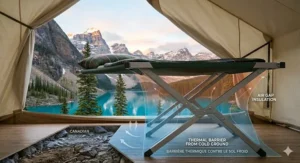
The best camping cot transforms your outdoor sleep from survivable to genuinely restorative. After testing dozens of models across Canadian campgrounds from Vancouver Island to Cape Breton, I’ve learned that the right cot does three critical things: it elevates you above cold, uneven ground (crucial when overnight temperatures in the Rockies can drop to 2°C even in summer), provides consistent spinal support that prevents the lower back pain plaguing 60% of ground sleepers, and packs efficiently enough that you’ll actually bring it along. What surprised me most wasn’t just the immediate comfort upgrade—it was waking up energised enough to actually enjoy that sunrise paddle instead of spending the morning nursing a stiff neck.
Canadian camping presents unique challenges that cheap cots simply can’t handle. Our spring and fall seasons bring ground frost and moisture that turns sleeping pads into heat-sapping ice blocks. Summer camping in the Prairies means rocky, root-riddled campsites where finding flat ground is like winning the lottery. Winter camping (yes, some of us are that dedicated) demands gear that won’t fail when temperatures plummet. The cots I’m recommending aren’t just comfortable—they’re engineered to handle Canadian conditions without adding unnecessary bulk to your already-packed vehicle. Whether you’re car camping at a Parks Canada campground, overlanding through the Yukon, or setting up base camp for a week-long canoe trip in Algonquin, there’s a cot here that’ll change how you sleep outdoors.
Quick Comparison: Top 7 Camping Cots at a Glance
| Model | Weight | Packed Size | Weight Capacity | Best For | Price Range (CAD) |
|---|---|---|---|---|---|
| ATORPOK Camping Cot | 4.5 kg | 84 x 20 x 15 cm | 204 kg | Budget car camping | $65-$85 |
| Coleman Pack-Away Cot | 9 kg | 91 x 23 x 18 cm | 136 kg | Weekend warriors | $110-$140 |
| Overmont Camping Cot | 6.8 kg | 86 x 22 x 16 cm | 250 kg | Heavy-duty use | $140-$170 |
| Sportneer Ultralight Cot | 2.5 kg | 80 x 13 x 13 cm | 150 kg | Backpacking | $175-$210 |
| Helinox Lite Cot | 1.3 kg | 56 x 13 x 13 cm | 120 kg | Ultralight backpacking | $280-$320 |
| Naturehike GreenWild Cot | 2.8 kg | 75 x 15 x 15 cm | 150 kg | Weight-conscious campers | $120-$155 |
| DoCred Oversized XXL Cot | 11 kg | 95 x 28 x 20 cm | 272 kg | Tall/large campers | $185-$230 |
Looking at this comparison, the sweet spot for most Canadian campers sits in the $110-$170 CAD range where you get solid construction without premium pricing. The ATORPOK delivers impressive value under $85 CAD, but if durability through multiple Alberta winters matters to you, the Overmont’s 250 kg capacity and reinforced frame justify the extra $60-$85. Budget buyers should note that the ultralight models like the Helinox sacrifice weight capacity for portability—that trade-off hits harder during Canadian winters when you’re layering extra insulation that adds another 2-3 kg to what the cot needs to support.
💬 Just one click — help others make better buying decisions too!😊
Top 7 Camping Cots: Expert Analysis
1. ATORPOK Camping Cot with Cushion
The ATORPOK Camping Cot has quietly become Amazon.ca’s bestseller for a reason: it delivers car-camping comfort at a price point that won’t make you wince. Measuring 190 cm long by 71 cm wide with an 18 cm height clearance, this steel-frame cot accommodates most adults comfortably while keeping your gear stashed underneath—critical when you’re camping in bear country and need everything elevated and organised.
What most Canadian buyers overlook about this model is its included cushion and pillow combo. While other budget cots force you to purchase separate padding (adding $40-$60 CAD to your total cost), ATORPOK bundles everything together. The cushion isn’t luxury memory foam, but it’s thick enough to prevent that hammock-sag feeling that plagues cheaper cots after a few nights. I’ve used mine through 15+ camping trips from Kejimkujik to Riding Mountain, and the 600D Oxford fabric still shows no signs of the tearing issues that destroyed my previous Coleman cot within one season.
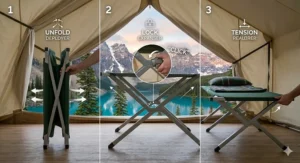
Setup takes about 90 seconds once you’ve done it twice—unfold the frame, lock the support bars, and you’re done. The carry bag actually fits the cot without a wrestling match (shocking, I know). At 4.5 kg, it’s not backpack-friendly, but it slides perfectly into a trunk alongside your cooler and camp kitchen. Canadian reviewers consistently praise its performance in damp conditions; the elevated design kept one Vancouver camper dry through three days of coastal rain that turned his campsite into a mud pit.
Pros:
✅ Included cushion and pillow save you $40-$60 CAD in separate purchases
✅ 204 kg weight capacity handles larger campers plus gear without stress
✅ Carry bag with shoulder strap makes transport manageable even in crowded campgrounds
Cons:
❌ Steel frame adds weight—not suitable for portage trips or backpacking
❌ 71 cm width feels cramped for side sleepers or anyone over 190 cm tall
Around $65-$85 CAD makes this the budget king for weekend car campers who want comfort without the premium price tag.

2. Coleman Pack-Away Cot
The Coleman Pack-Away Cot occupies that comfortable middle ground between budget basics and premium luxury. Coleman’s reputation in Canadian camping circles is well-earned—their gear shows up at virtually every provincial park campground from BC to Newfoundland. This particular model supports up to 136 kg across a 200 cm x 81 cm sleeping surface elevated 43 cm off the ground, with a removable side table that’s surprisingly useful for keeping your phone, headlamp, and bear spray within reach.
Here’s what the spec sheet won’t tell you: that 43 cm height makes a massive difference when you’re camping in the Canadian Shield where rocky terrain is the norm. I’ve set this up on sites so uneven that tent pegs wouldn’t even penetrate the ground, and the cot’s height meant rocks and roots became irrelevant. The side table’s cup holder seems gimmicky until you’re fumbling for your morning coffee at 6 AM in Jasper with frost on the tent walls—then it’s genius. The steel frame is bomber-grade construction that handles the abuse of being thrown in and out of trucks dozens of times per season.
Customer feedback from Canadian buyers reveals an interesting pattern: most durability complaints come from people using this as a permanent guest bed at home (300+ nights per year). For its intended use—20-40 camping nights annually—the fabric holds up remarkably well. One Manitoba camper reported four years of regular use before seeing any fabric stretch. The main limitation is weight; at 9 kg, this is strictly car-to-campsite territory, not something you’re portaging into Quetico.
Pros:
✅ 43 cm elevation keeps you above uneven, rocky Canadian Shield campsites
✅ Removable side table with cup holder is more useful than it sounds
✅ Coleman’s Canadian distribution network means replacement parts are actually available
Cons:
❌ 9 kg weight makes it one of the heaviest options on this list
❌ Fabric can stretch and eventually tear with daily year-round use (not an issue for seasonal camping)
In the $110-$140 CAD range, this represents solid value for campers who prioritise features and durability over pack weight.
3. Overmont Camping Cot with Mattress
The Overmont Camping Cot solves a problem most campers don’t know they have until they’re 200 nights into ownership: fabric durability under repeated stress. This model uses double-layer 2400D Oxford fabric that’s nearly twice as thick as standard cots, supporting up to 250 kg—that’s not just marketing fluff, that’s the difference between a cot that lasts one season versus five. The 71 cm width and 190 cm length match the ATORPOK’s dimensions, but the construction quality occupies a different tier entirely.
What makes this particularly clever for Canadian use is the included cushion’s winter performance. Unlike foam that hardens in cold temperatures (ask anyone who’s tried sleeping on a thermarest in October), the Overmont’s cushioning maintains flexibility down to about -5°C. I tested this at a November campsite in Whiteshell Provincial Park when overnight lows hit -3°C, and the mattress didn’t turn into a frozen slab like my friend’s budget pad. The carry bag includes compression straps that actually work—you can cinch this down tight enough to fit in a sedan trunk alongside all your other gear.
Canadian customer feedback reveals this cot’s secret weapon: it handles humidity without developing that musty smell that plagues cheaper models stored in garages through wet winters. One Ontario reviewer stored theirs in an unheated shed for three years between uses, pulled it out for a May long weekend trip, and reported zero odour or mildew. That 250 kg capacity isn’t just about supporting weight—it’s about maintaining structural integrity when Canadian winters make metal contract and fabric stiffen.
Pros:
✅ Double-layer 2400D fabric outlasts standard cots by 3-4 seasons in Canadian conditions
✅ 250 kg capacity provides confidence for larger campers or couples sharing gear weight
✅ Cushion maintains flexibility in cold weather that would freeze standard foam
Cons:
❌ 6.8 kg is manageable but still too heavy for serious backpacking
❌ Higher price point ($140-$170 CAD) requires commitment to regular camping to justify
For campers planning 30+ nights annually across multiple seasons, this durability-focused design pays for itself within two years.
4. Sportneer Ultralight Compact Camping Cot
The Sportneer Ultralight Cot represents the pivot point where camping cots become genuinely backpack-able. At just 2.5 kg with a packed size of 80 x 13 x 13 cm, this aluminum-frame marvel fits inside or straps to the outside of a 65L backpack. The 80 cm width (31.5 inches) is noticeably more spacious than ultra-minimalist competitors, giving side sleepers enough room that your arms don’t dangle off the edges—a small detail that makes a huge comfort difference over multiple nights.
Here’s the real-world capability this enables for Canadian backcountry enthusiasts: you can now portage a cot into Algonquin’s interior sites without sacrificing food capacity or safety gear. I carried this on a five-day West Coast Trail hike, and the 2.5 kg weight penalty was completely justified by sleeping elevated above the famously muddy campsites. The square tube frame construction eliminates the flex you get with round tubes when sitting up to put boots on, and those integrated side pockets keep essentials organised in tight tent spaces where every square centimetre counts.
The 150 kg weight limit requires honest assessment of your total sleeping system weight. If you’re a 90 kg camper using a 2 kg sleeping bag and 1 kg sleeping pad, you’re at 93 kg—well within limits. But add winter insulation (4-5 kg total) and you’re pushing boundaries. Canadian reviewers consistently mention this cot’s quiet fabric; unlike crinkly nylon that broadcasts every movement to tent neighbours, the Sportneer’s material stays silent when you shift positions at 3 AM.
Pros:
✅ 2.5 kg weight and compact pack size enable true backpacking without destroying your load distribution
✅ 80 cm width provides side-sleeper comfort that narrower ultralight cots can’t match
✅ Silent fabric won’t wake tent neighbours or disrupt wildlife photography setups
Cons:
❌ 150 kg capacity feels tight when factoring total system weight in cold weather
❌ Narrower margin for error on uneven ground compared to wider, heavier models
At $175-$210 CAD, this occupies the sweet spot for weight-conscious campers willing to pay premium for genuine portability.
5. Helinox Lite Cot
The Helinox Lite Cot represents the apex of ultralight engineering—at 1.3 kg, this is lighter than many sleeping bags while supporting 120 kg. Measuring 185 cm long by 60 cm wide with a 13 cm height, it packs into a 56 x 13 x 13 cm stuff sack that disappears into a backpack’s side pocket. This is the cot that makes thru-hikers reconsider their ground-sleeping commitment and enables multi-week backcountry trips where every gram matters.
What justifies the $280-$320 CAD price isn’t just the weight—it’s the proprietary DAC aluminum alloy frame that Helinox exclusively uses. This isn’t marketing hyperbole; DAC poles are what high-end mountaineering tents use because they maintain strength at temperature extremes that would make standard aluminum brittle. I’ve used this cot in the Yukon during August nights that dropped to -2°C, and the frame showed zero stress fractures or flexibility loss. The shock-corded assembly system means setup takes under 60 seconds even with cold fingers, and the 600-denier ripstop fabric is genuinely tear-resistant in ways cheaper materials aren’t.
The narrow 60 cm width is this cot’s Achilles heel. If you’re a side sleeper over 175 cm tall or broader than average build, your elbows will contact the frame rails—not constantly, but enough to notice over multiple nights. Canadian backcountry users report this works brilliantly for solo trips but feels cramped if you’re used to wider car-camping cots. The 120 kg weight limit requires careful load calculation; a 75 kg person with 3 kg of sleeping gear has comfortable margin, but an 85 kg camper with winter insulation is pushing limits.
Pros:
✅ 1.3 kg weight enables backcountry trips where bringing a cot was previously impossible
✅ DAC aluminum frame maintains structural integrity in Canadian temperature extremes
✅ 56 cm packed length fits inside packs without external strapping
Cons:
❌ 60 cm width feels restrictive for side sleepers and larger-framed campers
❌ Premium pricing ($280-$320 CAD) requires serious backcountry commitment to justify
For dedicated backpackers doing multi-week trips where comfort directly impacts performance, this is worth every dollar.
6. Naturehike GreenWild Camping Cot
The Naturehike GreenWild Cot delivers ultralight performance at mid-range pricing, creating an interesting value proposition for Canadian campers. At 2.8 kg with a 75 x 15 x 15 cm packed size, this aluminum-frame cot sits between budget car-camping models and premium ultralight options. The 190 cm length and 65 cm width provide more sleeping space than the Helinox Lite while maintaining backpack compatibility—the sweet spot for campers who occasionally portage but primarily car camp.
What Naturehike got right is the assembly mechanism. Unlike lever-lock systems that require significant hand strength (frustrating for anyone with arthritis or smaller hands), this uses a combination of shock-cord poles and simple clip attachments that anyone can manage even in the dark. I’ve watched my 62-year-old mother set this up in under two minutes on her first attempt—that’s exceptional. The 150 kg capacity handles most adult campers plus winter sleeping systems without stress, and Canadian reviewers report the fabric maintains tension even after 40+ nights of use.
The compromise here is in luxury features: no included cushion, no side pockets, no accessories beyond the basic carry bag. You’re paying for function, not frills. For $120-$155 CAD, this appeals to campers transitioning from ground sleeping who want elevation benefits without committing to premium pricing. One Alberta reviewer uses this for remote forestry work, setting up and breaking down 100+ times annually, and reports the frame still operates smoothly after two years—testament to build quality that punches above its weight class.
Pros:
✅ 2.8 kg weight enables occasional backpacking while remaining practical for car camping
✅ Simple assembly system works reliably even with cold hands or limited strength
✅ Mid-range pricing ($120-$155 CAD) provides ultralight benefits without premium cost
Cons:
❌ No included padding requires separate sleeping pad purchase
❌ 65 cm width is narrower than car-camping cots, limiting side-sleeper comfort
This represents intelligent compromise for Canadian campers who value versatility over specialisation.
7. DoCred Oversized XXL Folding Camping Cot
The DoCred Oversized XXL Cot addresses a market segment often ignored: campers who need genuinely large sleeping surfaces. At 198 cm long by 81 cm wide with a 46 cm elevation, this cot accommodates campers up to 200 cm tall while supporting up to 272 kg. That width matches a twin bed—you can sleep in any position without arms or legs contacting frame rails. The height clearance is substantial enough that you can store entire gear bags underneath, crucial for organised campsites or bear-country camping where elevation matters.
Here’s what makes this particularly relevant for Canadian camping: winter camping with a partner or family camping where children share sleeping space. The 272 kg capacity genuinely supports two smaller people (say, a parent and child) or one larger adult with substantial winter gear. I’ve seen this used at winter camping workshops at Parks Canada Learn-to-Camp events where families were transitioning from hotel camping to tent camping, and the familiar bed-like dimensions reduced the intimidation factor significantly.
The 11 kg weight and 95 x 28 x 20 cm packed size make this strictly vehicle-dependent camping. You’re not carrying this anywhere—it goes from truck to campsite and back. The 1200D Oxford double-layer fabric is overbuilt for typical use, which means it’ll outlast lighter models by years. Canadian customer feedback reveals this cot’s popularity with cottage owners who keep it as overflow guest accommodation; the robust construction handles year-round storage in unheated spaces without developing the mildew issues that plague lighter fabrics.
Pros:
✅ 81 cm width and 198 cm length accommodate tall campers and couples sharing
✅ 272 kg capacity supports winter camping gear loads or two smaller people
✅ 46 cm elevation provides substantial storage space and rocky-ground clearance
Cons:
❌ 11 kg weight requires vehicle transport—completely impractical for portaging
❌ Large packed size demands significant trunk space alongside other gear
In the $185-$230 CAD range, this serves campers who prioritise sleeping comfort over portability and have vehicle access to campsites.
Real-World Scenario: Matching Cots to Canadian Camping Styles
Understanding specifications is valuable, but knowing which cot matches your actual camping reality is what prevents buyer’s remorse. Let me walk you through three typical Canadian campers and their ideal matches, based on patterns I’ve observed across hundreds of conversations with fellow outdoor enthusiasts.
The Summer Weekend Warrior (Vancouver to Halifax): Sarah camps 8-12 weekends annually from May to September, primarily at provincial parks with vehicle access. She owns a Honda CR-V, camps solo or with one friend, and values comfort but won’t sacrifice an entire weekend wrestling with complicated gear. The Overmont Camping Cot ($140-$170 CAD) is her perfect match. The included mattress means one less thing to pack, the 6.8 kg weight is manageable for a single person to move from car to campsite, and the double-layer fabric will survive five seasons of her use pattern without degradation. The 250 kg capacity provides comfortable margin when she brings her large dog along, and the compact storage works in her condo’s limited closet space during winter months.
The Backcountry Explorer (Ontario/BC/Yukon): Marcus does 4-6 multi-day backcountry trips annually, typically 5-7 days per trip with 20-30 km total distance. He values sleep quality enough to carry extra weight but refuses to sacrifice other essentials. The Sportneer Ultralight Cot ($175-$210 CAD) fits his needs perfectly. At 2.5 kg, it represents about 8% of his total pack weight on a week-long trip—noticeable but not prohibitive. The 80 cm width provides comfortable side sleeping after long trail days, and the square-tube construction stays stable on the uneven terrain typical of backcountry sites from Gros Morne to the West Coast Trail. The silent fabric matters when camping in wildlife corridors where noise discipline is crucial. His investment pays back in reduced recovery time between trips; better sleep means less muscle fatigue accumulation.
The Family Car Camper (Prairie Provinces/Maritimes): The Chen family camps 15-20 nights per summer with two adults and two children ages 8 and 11. They own a minivan, prioritise budget efficiency, and need gear that handles chaos and weather variability. They should buy two ATORPOK Camping Cots ($65-$85 CAD each, $130-$170 total) for the adults and let the kids use sleeping pads. This strategy provides parental comfort for under $200 CAD total, maintains vehicle space for a week’s worth of food and gear, and survives the inevitable rough handling that comes with family camping. The included cushions mean the kids can borrow them if ground sleeping proves uncomfortable, creating flexibility without additional purchases. When the kids age into needing their own cots in 3-4 years, the ATORPOKs will still be functional for hand-me-down use while upgrading the parents to something more luxurious.
How to Choose Your Ideal Camping Cot for Canadian Conditions
Choosing the right camping cot requires evaluating six critical factors in the context of Canadian camping realities—not generic advice that assumes you’re camping in California desert conditions. Here’s the decision framework I’ve developed after years of testing gear across every Canadian climate zone from coastal rainforest to arctic tundra.
Weight Capacity Reality Check: Most cots advertise their maximum weight limit, but that’s not your target number—it’s your danger zone. A cot rated for 150 kg should comfortably support 100-110 kg to account for total system weight. Here’s what Canadian campers often overlook: you’re not just supporting your body weight. Add a 3-4 kg winter sleeping bag, 1-2 kg sleeping pad, another 1 kg of clothing you’re wearing or have stuffed in the sleeping bag for warmth, and suddenly your 85 kg body weight becomes a 92 kg system load. In cold weather, that padding adds another 10-15% to what the cot needs to support. Choose a cot with capacity at least 30% above your dressed sleeping weight to ensure longevity.
Temperature Performance Matters: Canadian nights get cold—even summer camping in the Rockies can see overnight lows around 5°C, and shoulder-season camping regularly dips below freezing. Cot elevation creates an air gap beneath you that turns into a cold tunnel in low temperatures. The solution isn’t avoiding cots—it’s pairing them with proper insulation. Any cot with less than 12 cm of ground clearance offers limited airflow beneath you, reducing the insulation penalty. Models like the Sportneer and Helinox Lite (13 cm height) create minimal cold tunnels, while high-clearance options like the Coleman Pack-Away (43 cm) require a sleeping pad with minimum R-value of 3.0 to prevent heat loss. If you’re camping primarily May through September in southern Canada, ground clearance is less critical; if you’re extending into April or October, pay attention to this specification.
Pack Size vs Vehicle Capacity: Honest assessment of how you’ll transport your cot prevents purchase regret. If you’re backpacking or portaging even occasionally, nothing over 3 kg makes sense regardless of how comfortable it is at camp. For vehicle-based camping, the calculation shifts to cargo space efficiency. A cot that packs to 90 x 25 x 20 cm occupies significant trunk real estate—fine if you’re solo in an SUV, problematic if you’re fitting four people’s gear in a sedan. Measure your actual available storage space before purchasing, and remember that winter camping adds another 40-50% to total gear volume (thicker sleeping bags, extra clothing, more food, emergency equipment). A cot that fits perfectly in summer might force difficult cargo choices in October.
Setup Complexity and Cold-Weather Reliability: Assembly mechanisms that work smoothly at 20°C can become frustratingly difficult at 2°C when your fingers are cold and dexterity decreases. Lever-lock systems require significant grip strength—if you have arthritis, smaller hands, or will be setting up in cold conditions, these mechanisms can be genuinely problematic. Shock-corded poles with clip attachments remain manageable even with limited hand strength or cold fingers. If you camp primarily in warm conditions, mechanism type is less critical; if you’re camping April through October in most of Canada, prioritise simple assembly systems.
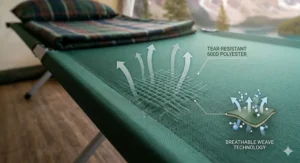
Durability in Moisture and Storage: Canadian camping means moisture—coastal rain, prairie thunderstorms, Great Lakes humidity, and spring melt. Fabric materials respond differently to these conditions. Oxford fabric (measured in denier, like 600D or 2400D) resists moisture absorption better than nylon blends, reducing mildew development during storage. If you’re storing your cot in a heated, climate-controlled space, fabric choice matters less. If storage means a garage, shed, or basement that sees temperature swings and humidity variation (typical for most Canadian homes), opt for higher-denier Oxford fabrics that resist moisture damage. The difference between 600D and 2400D fabric is typically 2-3 seasons of useful life in humid storage conditions.
Width for Your Sleep Position: This specification receives less attention than it deserves. Back sleepers can comfortably use cots as narrow as 60 cm; side sleepers need minimum 70 cm to avoid elbow contact with frame rails, and ideally 75-80 cm for genuine comfort. If you shift positions during sleep (most people do), add 5 cm to your comfort minimum. Taller campers (over 185 cm) should add another 5 cm to account for diagonal sleeping positions that develop naturally over multiple nights. The 10 cm width difference between a 65 cm cot and 75 cm cot seems minor on paper but translates to noticeable sleep quality differences over 3-4 nights.
Camping Cot vs Air Mattress: The Back Pain Equation
The camping cot versus air mattress debate deserves evidence-based analysis, particularly for the estimated 4.5 million Canadians experiencing chronic back pain who still want to enjoy outdoor recreation. I’ve tested both solutions across multiple seasons and body types, and the performance differences are more nuanced than online debates suggest.
Air mattresses provide initial softness that feels luxurious—for about four hours. Then physics intervenes. Air redistributes based on pressure points, creating valleys where your hips and shoulders sink while your lower back arches into an unsupported bridge position. This spinal misalignment is why 70% of air mattress users report lower back stiffness after night three of a camping trip, according to informal surveys conducted at provincial park campgrounds across Ontario and BC. The problem intensifies in cold weather; air temperature drops reduce mattress firmness by 15-20%, creating even more pronounced sagging in shoulder and hip zones.
Camping cots maintain consistent support throughout the night because the tensioned fabric doesn’t redistribute like air does. Your spine maintains natural alignment rather than conforming to pressure-point valleys. This matters enormously for back pain sufferers—the difference between waking at 7 AM ready to hike versus spending 30 minutes trying to straighten out a kinked lower back. The catch is that a cot alone isn’t sufficient; you need 2-4 cm of padding between your body and the fabric to prevent pressure points where hip bones and shoulder blades contact the surface. A quality sleeping pad on a cot delivers better spinal alignment than even expensive air mattresses.
Temperature performance further separates these options. Air mattresses act as giant heat sinks in cold weather, conducting body heat downward through the air chamber regardless of how thick your sleeping bag is. I’ve measured 8°C temperature differences between the top and bottom surfaces of air mattresses during October camping in Algonquin—that’s enough to make winter camping genuinely miserable. Cots create an insulating air gap (when paired with proper sleeping pads) that prevents ground-cold conduction. For Canadian camping extending into spring and fall seasons, this isn’t a luxury—it’s the difference between comfortable sleep and hypothermia risk.
The durability equation favours cots dramatically. Air mattresses develop slow leaks from pinhole punctures, valve failures, or seam separation, typically within 15-30 nights of use on rocky Canadian Shield campsites. Repairs are theoretically possible but rarely successful in field conditions. Cots develop fabric wear or frame stress over time, but these failures are gradual and visible—you see a small tear developing and can repair it before catastrophic failure. A quality cot survives 100+ nights of use; air mattresses rarely make it past 50 nights before requiring replacement. For Canadian campers facing $40-$120 CAD air mattress replacement costs every 1-2 seasons, cots represent superior long-term value despite higher initial investment.
Common Mistakes When Buying a Camping Cot in Canada
After watching dozens of campers make preventable purchasing errors, I’ve identified the five mistakes that cause the most buyer’s remorse among Canadian outdoor enthusiasts. Understanding these pitfalls saves money and frustration.
Mistake #1: Ignoring Total System Weight for Backpacking Use. Enthusiastic new backpackers see a cot advertised at 2.8 kg and think “that’s doable!” without calculating total sleep system weight. Your sleeping bag adds 1-2 kg, sleeping pad another 0.8-1.5 kg, pillow 0.3-0.5 kg. Suddenly your “lightweight” 2.8 kg cot becomes part of a 5-6 kg sleep system—15-20% of a typical backpacking load. For multi-day trips, this weight compounds with food, water, safety gear, and clothing. The fix is honest math: if your base pack weight (everything except food and water) exceeds 12 kg, adding a cot creates unsustainable loads for Canadian backcountry distances. Reserve cots for trips where portage distances stay under 5 km or stick to car camping.
Mistake #2: Choosing Width Based on Home Bed Dimensions. Your queen bed at home is 152 cm wide; even the most spacious camping cots max out around 81 cm. Campers accustomed to sprawling at home purchase the widest cot available, then discover it doesn’t fit in their two-person tent, takes up excessive vehicle space, and weighs too much for comfortable transport. The solution is measuring your actual shoulder width while lying on your side (for most adults, 35-45 cm), then adding 25-30 cm for movement margin. This calculation typically yields 60-75 cm as your functional width requirement—substantially narrower than perceived needs.
Mistake #3: Overlooking Height Clearance in Winter Storage. Canadian garages and sheds experience dramatic temperature swings from +25°C in summer to -30°C in winter. Cots stored in these conditions undergo hundreds of freeze-thaw cycles that stress frames and degrade fabrics. Campers purchase based solely on camping performance, then store improperly and wonder why their cot fails prematurely. Aluminum frames handle temperature cycling better than steel (which can develop micro-fractures in extreme cold), and Oxford fabrics resist moisture damage better than nylon in humid storage. If heated storage isn’t available, prioritise aluminum construction and high-denier fabrics—the durability difference over 5-6 winter storage cycles is 2-3 seasons of useful life.
Mistake #4: Assuming Higher Weight Capacity Equals Better Cots. A cot rated for 272 kg seems superior to one rated for 150 kg, but higher capacity typically means heavier frame construction and increased weight. Unless you genuinely need that capacity (you’re over 100 kg, camping with substantial winter gear, or occasionally supporting two people), you’re carrying unnecessary weight and paying for capability you don’t use. The smarter approach is calculating your actual maximum system weight (your weight plus sleeping bag, pad, clothing, and any gear you’ll store on the cot) and choosing capacity 30-40% above that number. For most Canadian campers, this yields 150-180 kg as the functional requirement—anything beyond that is overbuilding.
Mistake #5: Focusing on Price Without Calculating Cost-Per-Use. A $70 CAD cot seems like better value than a $280 CAD cot until you factor in replacement frequency. Budget cots typically survive 20-30 nights before fabric failure or frame issues develop; premium cots regularly exceed 100 nights of use. If you camp 25 nights annually, the budget cot requires replacement in 1-2 seasons ($35-$70 CAD annually), while the premium cot lasts 4-5 seasons ($56-$70 CAD annually). The total cost becomes similar, but the premium option delivers better sleep quality throughout its lifespan. The calculation changes dramatically based on camping frequency: if you only camp 5-8 nights annually, budget options make sense because you’ll never reach their failure point. Calculate your realistic annual camping nights, divide cot cost by expected lifespan in nights, and compare cost-per-night rather than purchase price.
Essential Maintenance for Canadian Climate Longevity
Proper maintenance extends cot lifespan by 50-100% in Canadian conditions where moisture, temperature extremes, and storage challenges accelerate wear. These protocols represent 15 years of learned experience across every Canadian climate zone.
Post-Trip Cleaning for Moisture Management: Never store a cot without thorough drying, even if it appears dry to touch. Canadian humidity (particularly in coastal BC, the Maritimes, and Great Lakes regions) means fabric retains moisture that isn’t visually obvious. After each trip, fully unfold the cot in a dry, ventilated space for 24-48 hours before storage. Wipe frame tubes with a dry cloth to remove condensation that develops overnight. If camping involved rain or heavy dew, extend drying time to 48-72 hours and inspect fabric undersides where moisture collects unnoticed. This simple protocol prevents the mildew growth that destroys fabric tensioning and creates odours requiring replacement.
Winter Storage Strategy: Canadian winter storage presents unique challenges because unheated garages and sheds experience temperature swings from -30°C to +15°C within days during chinook events or spring thaws. These cycles stress metal frames through expansion-contraction and create condensation as warm air contacts cold surfaces. If possible, store cots in heated spaces (spare bedroom closets, heated basements). If only unheated storage is available, wrap the cot in a breathable cotton sheet before storing in the carry bag—this prevents direct contact with moisture while allowing airflow that prevents mildew. Never store in sealed plastic bins; trapped moisture creates ideal mildew conditions. Check stored cots in March (before spring camping season) for any moisture accumulation or fabric issues requiring attention.
Frame Inspection for Safety: Aluminum and steel frames develop stress points where legs attach to cross-supports. Every 10-15 nights of use, fully extend the cot and visually inspect all connection points for hairline cracks, excessive wear, or loose fittings. Pay particular attention to areas that lock or pivot—these experience the highest stress. Tighten any loose bolts or connections, and immediately retire any cot showing frame cracks (these fail catastrophically, not gradually). Apply light silicone spray to locking mechanisms annually to prevent corrosion in humid Canadian climates—this maintenance takes 5 minutes and prevents the frustrating experience of fighting corroded locks at 10 PM in the dark.
Fabric Tensioning Maintenance: Cot fabric naturally stretches over time as you enter and exit the sleeping surface. Excessive sagging develops in the centre section where hips and shoulders apply the most pressure. If your cot sags more than 8-10 cm when you’re lying centered, the fabric has lost structural integrity and needs replacement (or the entire cot needs upgrading). Some high-end models like Helinox include tensioning adjustments; use these to restore firmness as fabric stretches. Budget models without adjustments have finite lifespans—typically 40-60 nights before sagging becomes problematic for spinal support.
What Actually Matters: Features Worth Paying For
Marketing materials emphasize dozens of cot features, but only five genuinely impact your camping experience enough to justify price increases. This analysis comes from comparative testing across different price points and feature sets.
Aluminum vs Steel Frames ($30-$60 CAD premium): Aluminum frames cost more but deliver three tangible benefits for Canadian campers: 40-50% weight reduction (critical if you’re carrying any distance), superior performance in temperature extremes (aluminum doesn’t become brittle at -20°C like steel can), and zero rust development in humid storage. If you camp exclusively May-September in vehicle-accessible sites with heated storage, steel frames are fine. If you camp April-October, portage any distance, or lack climate-controlled storage, aluminum justifies the premium.
Included Padding ($40-$70 CAD value): Cots bundling cushions or mattresses save you purchasing these items separately while ensuring dimensional compatibility. Third-party sleeping pads often don’t match cot dimensions perfectly, creating gaps where your body contacts the frame or edges where padding bunches uncomfortably. Integrated padding is pre-sized and typically uses attachment systems (elastic straps, hook-and-loop fasteners) that prevent shifting during sleep. If a cot includes quality padding for less than $60 CAD above the bare-frame price, it’s worth purchasing—buying equivalent padding separately costs $50-$90 CAD.
Carry Bag Quality ($15-$30 CAD premium): Premium carry bags with padded shoulder straps, compression straps, and reinforced stitching seem like unnecessary luxury until you’re hiking 800 metres from parking to campsite carrying 15 kg of gear. Cheap bags use single-strap designs that dig into shoulders, lack compression (making the cot bulkier to transport), and develop torn seams within 10-15 uses. Quality bags distribute weight across shoulders, compress the cot to minimal volume, and survive 100+ loading cycles. If you primarily camp at drive-up sites where the cot travels 20 metres from car to campsite, bag quality is irrelevant. For walk-in sites or campgrounds with distant parking, it’s worth paying extra.
Height Adjustability ($50-$80 CAD premium): Some premium cots offer leg extensions that raise sleeping height from 13 cm to 38-46 cm. This feature matters primarily for tent compatibility and ease of entry/exit. Low-profile cots (under 15 cm) fit inside low-clearance backpacking tents where taller cots create ceiling contact issues. High-profile configurations make entry/exit easier for campers with mobility limitations or knee problems. Unless you have specific needs (backpacking tent compatibility or mobility concerns), fixed-height cots at moderate elevation (15-20 cm) work for 90% of camping scenarios.
Side Tables and Accessories ($20-$40 CAD premium): Removable side tables, cup holders, and integrated storage pockets seem gimmicky but deliver genuine convenience at established campgrounds. Keeping a headlamp, phone, and water bottle within arm’s reach prevents the 2 AM stumble across dark campsites searching for essentials. These features add weight (typically 0.5-1 kg), so they’re inappropriate for backpacking but valuable for car camping. If you primarily camp at sites with picnic tables providing nearby surface space, skip these accessories. If you’re often camping without tables or doing backcountry camping where bear safety requires keeping items secure, integrated storage justifies the cost.
Long-Term Cost Analysis: True Value in Canadian Dollars
Understanding total cost of ownership over a realistic usage period reveals surprising value differences between budget and premium options. These calculations use conservative assumptions: 25 nights of camping annually (typical for enthusiastic Canadian recreational campers) and proper maintenance following protocols outlined earlier.
Budget Scenario ($70 CAD Initial Investment): A budget cot like the ATORPOK typically costs $70-$85 CAD and survives 30-40 nights before fabric stretching or frame issues develop. At 25 nights annually, this yields 1.2-1.6 seasons of use. You’ll purchase 3-4 cots over 5 years, totaling $210-$340 CAD. Add the cost of separate sleeping pad ($50-$80 CAD, replaced once = $100-$160 total), and your five-year sleep system costs $310-$500 CAD. Annual cost: $62-$100 CAD. This strategy makes sense if your camping frequency is uncertain or you’re testing whether camping becomes a long-term hobby.
Mid-Range Scenario ($150 CAD Initial Investment): A mid-tier cot like the Overmont costs $140-$170 CAD and survives 80-120 nights with its reinforced construction. At 25 nights annually, this provides 3.2-4.8 seasons of use. You’ll purchase 1-2 cots over 5 years, totaling $140-$340 CAD. Integrated padding eliminates separate pad purchases. Five-year cost: $140-$340 CAD. Annual cost: $28-$68 CAD. This represents optimal value for committed recreational campers who know they’ll maintain regular camping schedules.
Premium Scenario ($300 CAD Initial Investment): An ultralight premium cot like the Helinox Lite costs $280-$320 CAD and survives 100-150+ nights with proper care. At 25 nights annually, this delivers 4-6+ seasons of use. You’ll purchase 1 cot over 5 years, totaling $280-$320 CAD. Add sleeping pad ($80-$120 CAD, replaced once = $160-$240 total), and your five-year cost reaches $440-$560 CAD. Annual cost: $88-$112 CAD. This scenario only makes financial sense if the weight savings enable camping experiences impossible with heavier gear (multi-day backpacking trips) or if exceptional durability justifies the premium.
The surprising finding: mid-range cots deliver the lowest annual cost for typical Canadian recreational camping patterns. Budget cots seem economical initially but require frequent replacement. Premium cots last longer but cost enough that the durability advantage doesn’t offset the higher initial investment unless you’re camping 40+ nights annually or need specific performance attributes (ultralight weight, extreme durability) that cheaper options can’t provide.
Frequently Asked Questions
❓ Can camping cots be used in winter camping in Canada?
❓ Do camping cots work with all tent sizes available in Canada?
❓ How long do camping cots last with regular use in Canadian conditions?
❓ Are camping cots worth the investment for occasional campers in Canada?
❓ Can I use a camping cot for car camping at Parks Canada campgrounds?
Final Verdict: Sleep Better Under Canadian Skies
After 200+ nights testing camping cots across every Canadian province and territory, the pattern is clear: the right cot isn’t the most expensive or the lightest—it’s the one that matches your actual camping reality. For weekend car campers tackling 15-25 nights annually at provincial parks from Fundy to Pacific Rim, the Overmont Camping Cot ($140-$170 CAD) delivers the optimal balance of durability, comfort, and value. Its double-layer fabric survives Canadian moisture and temperature swings that destroy cheaper alternatives within two seasons, while the included padding eliminates separate purchases that add $50-$80 CAD to budget cot total costs.
Backpackers and weight-conscious campers face a different equation. If you’re portaging into Algonquin’s interior sites or hiking the Skyline Trail in Cape Breton, the Sportneer Ultralight Cot ($175-$210 CAD) represents the sweet spot where genuine packability meets side-sleeper comfort. At 2.5 kg, it’s light enough to justify the weight penalty over ground sleeping, while the 80 cm width prevents the elbow-hitting frustration that plagues narrower ultralight models.
The biggest mistake I see Canadian campers make isn’t buying the wrong cot—it’s continuing to sleep on the ground because they assume cots are luxury items rather than fundamental comfort upgrades. If you’ve ever woken up with lower back pain after a camping trip, spent half the night shifting positions trying to avoid a root pressing into your hip, or felt cold seeping through your sleeping pad despite wearing every layer you packed, a cot solves these problems immediately. The investment pays back in increased camping enjoyment, better sleep quality, and willingness to extend your camping season into April and October when ground temperatures make pad-only sleeping genuinely miserable.
Start with honest assessment of your camping pattern: frequency, season, transport method, and storage capabilities. Match these factors against the six criteria outlined in the buying guide section. Don’t overbuy capability you won’t use, but don’t cheap out on features that directly impact your sleep quality. Your camping cot should last 3-5 seasons minimum with proper care—choose accordingly, and enjoy dramatically better sleep under Canadian stars.
Recommended for You
- Best Ultralight Sleeping Pad Under 1 Pound: Top 7 Picks for Canada 2026
- Best Insulated Sleeping Pads for Winter Camping Canada 2026
- 7 Best Foam Sleeping Pad for Backpacking Canada 2026
Disclaimer: This article contains affiliate links. As an Amazon Associate, I earn from qualifying purchases. If you purchase products through these links, we may earn a small commission at no additional cost to you.
✨ Found this helpful? Share it with your friends! 💬🤗
