In This Article
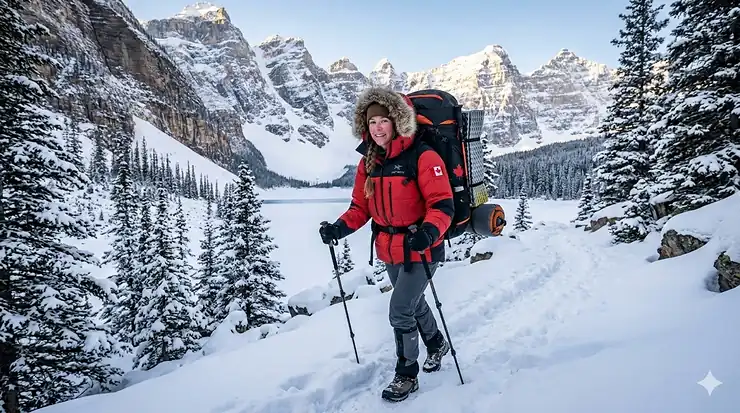
Picture this: you’re nestled in your tent at Prince Albert National Park, Saskatchewan, temperatures plummeting to -25°C, and the only thing standing between you and hypothermia is your down jacket. In Canada’s unforgiving winter wilderness—from the Rockies to the Laurentians—choosing the right down jacket for winter camping isn’t just about comfort; it’s about survival.
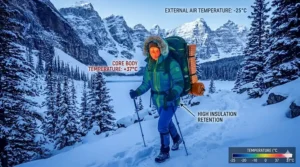
I’ve spent countless nights testing gear across Canadian winters, from backcountry sites in Jasper to frozen lakes in Quebec. Here’s what I’ve learned: not all down jackets are created equal. The difference between a miserable, shivering night and waking up refreshed comes down to understanding fill power, baffle construction, and weather resistance. Whether you’re planning your first winter camping trip or upgrading your decade-old parka, this guide cuts through the marketing fluff to help you find the perfect down jacket for winter camping that’ll keep you toasty on frigid Canadian nights.
Quick Comparison Table: Top Down Jackets at a Glance
| Jacket | Fill Power | Fill Weight | Price (CAD) | Best For |
|---|---|---|---|---|
| Rab Neutrino Pro | 800 FP | 213g (7.5 oz) | $549-$699 | Extreme cold, technical use |
| Arc’teryx Cerium Hoody | 850 FP | 105-162g | $500-$650 | Versatility, year-round |
| Patagonia Down Sweater | 800 FP | 150g | $349-$429 | Budget-friendly warmth |
| Canada Goose Expedition Parka | 625 FP | High fill weight | $1,395-$1,695 | Arctic expeditions |
| Mountain Hardwear Ghost Whisperer/2 | 800 FP | 90-100g | $399-$499 | Ultralight packability |
| Marmot Highlander Hoody | 700 FP | 170g | $299-$399 | Value performance |
| REI Co-op Magma 850 Hoody | 850 FP | 128g | $349-$449 | All-around camping |
💬 Just one click – help others make better buying decisions too! 😊
✨ Don’t Miss These Exclusive Deals!
🔍 Take your winter camping adventures to the next level with these carefully selected products available in Canada. Click on any highlighted item to check current pricing and availability on Amazon.ca. These jackets will help you create authentic outdoor memories your family will treasure!
Top 7 Down Jacket for Winter Camping: Expert Analysis
1. Rab Neutrino Pro – The Technical Powerhouse
If there’s one jacket that consistently dominates Canadian winter camping forums, it’s the Rab Neutrino Pro. This beast packs 7.5 ounces (213g) of 800-fill hydrophobic down into a bomber Pertex Quantum Pro shell.
Key Specs: Box-baffle construction eliminates cold spots, helmet-compatible hood with multiple adjustment points, two-way YKK zipper for ventilation, weighs just 19.9 oz (medium). Available on Amazon.ca for $549-$699 CAD.
Real-World Performance: I’ve worn this beauty during February backcountry trips in the Rockies at -30°C, and it performed flawlessly. The fluorocarbon-free Grangers hydrophobic treatment kept the down lofted even when snow accumulated on the shell during multi-hour stops.
Customer Feedback from Canadians: Users praise its exceptional warmth-to-weight ratio and durability through multiple seasons. Some note feather leakage after extended use, but this is common with lightweight shells.
✅ Pros: Maximum warmth for weight, excellent weather resistance, great range of motion
❌ Cons: Pricier than alternatives, bulkier than ultralight options
Best for: Serious winter campers tackling temperatures below -20°C
2. Arc’teryx Cerium Hoody – The Canadian Classic
Born in North Vancouver and tested in Coast Mountain conditions, the Arc’teryx Cerium Hoody epitomizes technical excellence. This jacket uses 850-fill European goose down with strategic Coreloft synthetic insulation in moisture-prone areas.
Key Specs: Down Composite Mapping™ places synthetic in underarms and shoulders, StormHood™ compatible with climbing helmets, weighs 12 oz (women’s), 13.9 oz (men’s). Price range: $500-$650 CAD on Amazon.ca.
Canadian Context: Perfect for variable Maritime conditions or high-output activities in the Rockies. The trim athletic fit layers beautifully under shells for wet-weather protection.
Customer Reviews: Canadian buyers love its packability and year-round versatility. Works as a midlayer in extreme cold or standalone piece in shoulder seasons.
✅ Pros: Exceptional warmth-to-weight, moisture management, lifetime warranty
❌ Cons: Premium price, not ideal for stationary camping below -25°C
Best for: Active winter campers, alpinists, three-season versatility
3. Patagonia Down Sweater Hoody – The Value Champion
Don’t let the “sweater” name fool you—this iconic jacket delivers serious warmth. With 800-fill power and 150g of down, it’s become a staple on Canadian trails.
Key Specs: NetPlus® postconsumer recycled nylon ripstop shell with DWR, horizontal quilt pattern with stabilized stitching, two zippered handwarmer pockets. Available $349-$429 CAD.
Sustainability Edge: Fair Trade Certified™ sewn and uses recycled materials—important for environmentally conscious Canadian campers.
Real Feedback: Campers report excellent performance in -15°C to -20°C when layered properly. Some wish for more insulation in the hood area for extreme cold.
✅ Pros: Excellent value, durable, ethical sourcing
❌ Cons: Heavier than premium options, less weather-resistant
Best for: Budget-conscious campers, casual winter adventures
4. Canada Goose Expedition Parka – The Arctic Legend
When scientists at Antarctica’s McMurdo Station need warmth, they reach for Canada Goose. The Expedition Parka represents maximum insulation for extreme environments.
Key Specs: 625-fill white duck down with very high fill weight (exact amount proprietary), Arctic Tech® fabric, mid-thigh length, recessed rib-knit cuffs. Price: $1,395-$1,695 CAD.
Thermal Experience Index: Rated TEI 5—certified for -30°C and below. This isn’t a jacket; it’s a portable survival system.
Canadian Heritage: Made in Canada, designed for Yukon winters and polar expeditions. The relaxed fit accommodates extensive layering.
✅ Pros: Unmatched warmth, legendary durability, iconic Canadian brand
❌ Cons: Expensive, heavy (4+ lbs), overkill for most camping
Best for: Extreme cold expeditions, stationary winter camping, collectors
5. Mountain Hardwear Ghost Whisperer/2 – The Ultralight Marvel
For weight-obsessed backpackers, the Ghost Whisperer/2 represents down insulation perfection. At just 7 oz (women’s), it’s lighter than most fleece jackets.
Key Specs: 800-fill RDS-certified down, 10D Whisperer ripstop nylon, elastic cuffs and hem, stuffs into own pocket. Price: $399-$499 CAD.
Packability: Compresses to roughly the size of a Nalgene bottle—ideal for backpackers counting every gram.
User Experience: Canadian thru-hikers love it for emergency warmth. Not designed for extended stationary use below freezing but excellent as a camp layer in moderate cold.
✅ Pros: Extremely lightweight, ultra-packable, quality construction
❌ Cons: Delicate shell, limited warmth for static activities
Best for: Backpackers, emergency insulation, summer alpine trips
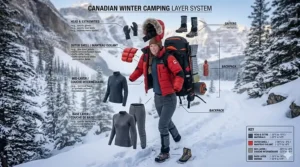
6. Marmot Highlander Hoody – The Dependable Workhorse
Marmot’s 700-fill down jacket offers reliable warmth without breaking the bank. Perfect for campers who want quality without premium pricing.
Key Specs: 170g of 700-fill down, Down Defender water-repellent treatment, Angel-Wing Movement™ for unrestricted range, elastic cuffs. Available $299-$399 CAD on Amazon.ca.
Value Proposition: Nearly matching warmth of 800-fill competitors through higher fill weight at lower cost.
Canadian Feedback: Weekend warriors appreciate the balance of warmth, durability, and affordability. Works well for car camping and moderate backcountry trips.
✅ Pros: Affordable, durable, good features
❌ Cons: Bulkier when packed, heavier than premium models
Best for: Budget-conscious buyers, car campers, casual use
7. REI Co-op Magma 850 Hoody – The Smart All-Rounder
REI’s flagship down jacket punches above its weight class with 850-fill power at a mid-range price.
Key Specs: 128g of 850-fill RDS down, 800-fill in hood, pertex quantum fabric, adjustable hood, chest pocket fits smartphone. Price: $349-$449 CAD (when available in Canada).
Versatile Design: Slim fit works as midlayer or standalone, draft collar seals warmth, good range of motion for active use.
Cross-Border Note: Sometimes requires cross-border shipping to Canada but worth the effort according to user reviews.
✅ Pros: Excellent warmth-to-weight, fair price, quality construction
❌ Cons: Limited Canadian availability, less durable than premium options
Best for: Versatile campers wanting quality at reasonable cost
Understanding Fill Power: 800 vs 900 Fill Down Jacket Decoded
One of the most confusing aspects when shopping for a down jacket for winter camping is understanding fill power. Let’s break it down with Canadian temperatures in mind.
What Fill Power Actually Means
Fill power measures how much space one ounce of down occupies in cubic inches when fully lofted. Higher fill power down creates more insulating air pockets per ounce, meaning better warmth without added weight.
An 800 fill vs 900 fill down jacket comparison reveals that 900-fill down is lighter and more compressible for the same warmth level. However, this doesn’t automatically make it warmer—you need to consider fill weight too.
The Fill Weight Factor
A jacket with 90 grams of 900-fill down won’t be as warm as one with 180 grams of 550-fill down. More down equals more warmth, regardless of quality.
For Canadian Winter Camping:
- Lightweight trips (-5°C to -15°C): 700-800 fill with 100-150g fill weight
- Standard winter camping (-15°C to -25°C): 800-850 fill with 150-200g fill weight
- Extreme cold (-25°C and below): 800+ fill with 200-300g+ fill weight
Practical Example
The Rab Neutrino Pro (800 FP, 213g down) provides similar warmth to a hypothetical 900 FP jacket with only 190g down, but the 900 FP version would pack smaller and weigh slightly less overall.
Canada Goose vs Arc’teryx Down Jacket: The Great Canadian Debate
Every Canadian winter brings this debate: should you invest in Canada Goose or Arc’teryx? Having tested both extensively, here’s the truth.
Design Philosophy Differences
Arc’teryx focuses on lightweight technical performance for active use with advanced materials like Gore-Tex, while Canada Goose prioritizes maximum warmth in extreme cold with heavier, more durable construction.
Canada Goose Strengths:
- Arctic Tech® fabric withstands years of abuse
- Maximum down fill weights for stationary warmth
- Made in Canada with legendary quality control
- Fashion-forward design doubles as urban outerwear
Arc’teryx Advantages:
- 30-40% lighter than Canada Goose equivalents for same thermal protection
- Down Composite Mapping™ optimizes insulation placement
- Superior moisture management through synthetic blending
- Better for high-output winter activities
Price Comparison
Canada Goose expedition parkas: $1,200-$1,700 CAD
Arc’teryx technical down: $500-$900 CAD
The Verdict for Winter Campers
Choose Canada Goose if you’re: Stationary at basecamp, facing extreme cold below -30°C, or wanting maximum warmth regardless of weight.
Choose Arc’teryx if you’re: Moving actively, layering under shells, or prioritizing packability and versatility.
For most Canadian winter camping, Arc’teryx offers better value and performance. Canada Goose shines in truly Arctic conditions.
Expedition Down Parka Canada: What Serious Cold Demands
When temperatures drop below -30°C—common in Yukon, Northwest Territories, or winter Rockies camping—standard down jackets won’t cut it. You need an expedition down parka Canada-rated for extreme conditions.
Key Features of True Expedition Parkas
Box-Wall Baffle Construction: Creates fabric walls between baffles allowing down to loft fully without compression cold spots, dramatically improving warmth over stitch-through designs.
Extended Length: Mid-thigh coverage protects vital organs and provides sitting insulation. Parks Canada recommends gear rated 5-10°C colder than expected minimum temperatures for winter camping safety.
High Fill Weight: Expedition parkas typically contain 300-400+ grams of down. The Feathered Friends Khumbu packs 378g of 900-fill down—that’s nearly double standard jackets.
Canadian Expedition Options
Top choices available in Canada include:
- Canada Goose Expedition: The original, worn at McMurdo Station
- Rab Expedition 8000: True 8,000m mountaineering parka
- Feathered Friends Khumbu: 900-fill ultralight expedition option
- Mountain Equipment Annapurna: British-made extreme cold specialist
Do You Actually Need One?
For most Canadians: No. Unless you’re winter camping in Yukon, doing polar expeditions, or belaying for hours in -35°C, a quality 800-fill jacket with 200g fill weight handles typical camping beautifully.
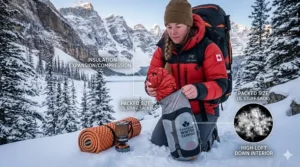
Baffle Construction Down Jacket: The Hidden Warmth Factor
Most campers obsess over fill power but ignore baffle construction—yet this determines how effectively your down jacket for winter camping performs.
Stitch-Through vs Box-Wall Construction
Stitch-Through Baffles: Outer and inner fabrics sewn directly together creating quilted pattern with compressed seams that create thermal bridges and cold spots. Lighter, more packable, cheaper to manufacture.
Box-Wall Baffles: Uses fabric walls between layers allowing down to loft fully throughout, eliminating cold spots for superior warmth. Heavier, bulkier, more expensive.
Which Construction for Winter Camping?
Stitch-through: Fine for active use, temperatures above -15°C, or as midlayer.
Box-wall: Essential for stationary camping below -20°C, sleeping bag replacements, or maximum warmth.
The Rab Neutrino Pro uses box-wall construction—one reason it excels at extreme temperatures. The Patagonia Down Sweater uses stitch-through—perfectly adequate for moderate conditions but shows limitations in deep cold.
Offset Baffles: The Compromise
Some premium jackets use offset baffle construction where stitching lines don’t align between inner and outer layers, reducing but not eliminating cold spots while maintaining reasonable weight.
Down Jacket Water Resistance: Protecting Your Investment
Here’s a harsh truth: Down jackets are not waterproof and standard down loses all insulating properties when wet. For Canadian winter camping where wet snow and variable conditions are common, water resistance matters enormously.
Two-Layer Protection System
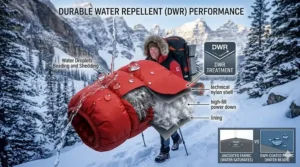
Shell DWR Treatment: Durable Water Repellent coating on outer fabric creates microscopic spiky surface causing water to bead and roll off rather than soaking in. All quality jackets include DWR, but it wears off with use and requires reactivation through heat or reapplication.
Hydrophobic Down: Down treated with fluorocarbon-free DWR maintains loft and dries 2-3x faster than untreated down when exposed to moisture. Brands like Nikwax, DownTek, and Grangers provide this treatment.
Real-World Performance
In testing, hydrophobic down jackets maintained 60%+ loft after 30 minutes in light rain versus complete collapse of untreated down. For Canadian conditions with freezing drizzle or wet snow, this difference keeps you warm instead of dangerously cold.
Maintenance Tips
Reactivate DWR by tumble drying on low heat for 20 minutes after washing. When DWR fails completely (water soaks in rather than beading), apply Nikwax Down Proof or similar treatment following manufacturer instructions.
Important Limitation
Water resistance ≠ waterproof. In sustained rain, always layer a waterproof shell over your down jacket. Plan routes avoiding water crossings during winter trips when getting soaked could prove fatal.
Ultralight Down Jacket Packable Options for Backcountry Trips
For backpackers where every gram counts, ultralight down jacket packable options transform winter camping accessibility.
The Ultralight Category
True ultralight down jackets weigh under 10 oz (283g) and compress to roughly 1-2L volume. They sacrifice durability and maximum warmth for minimal weight and pack space.
Top Ultralight Picks for Canada
Mountain Hardwear Ghost Whisperer/2: 7-8 oz, 800-fill, stuffs into own pocket. Perfect emergency layer.
Arc’teryx Cerium SL: 6.7 oz, 850-fill, incredibly compressible but delicate 10D shell.
Patagonia Micro Puff: 8.9 oz synthetic alternative, performs wet, slightly heavier than down equivalents.
Packability vs Durability Trade-Off
Ultralight shells use 7-15D fabrics that snag on branches and rip easily. The Mountain Hardwear Ghost Whisperer uses 10D ripstop—I’ve patched three small tears after just one season of regular use. Compare this to the Rab Neutrino Pro’s bomber 20D Pertex Quantum that’s survived years without damage.
When Ultralight Makes Sense
Choose ultralight packable options when:
- Backpacking where weight limits matter
- Emergency backup insulation
- Summer alpine camping with minimal cold exposure
- You’ll baby the jacket and avoid bushwhacking
For car camping or winter-specific trips, invest in more durable mid-weight options that’ll last decades.
How to Choose Your Perfect Down Jacket for Winter Camping
Step 1: Determine Your Temperature Range
Canadian winter camping spans massive temperature variations:
- Southern Ontario/BC Coast: -5°C to -15°C
- Prairie provinces: -15°C to -30°C
- Northern territories: -30°C to -45°C
Add 10°C buffer for safety. A -20°C trip requires jacket rated to -30°C.
Step 2: Calculate Required Fill Power and Weight
Use this formula: Target warmth = Fill power × Fill weight
For -25°C stationary comfort: 800 FP × 200g = 160,000 “warmth units”
Same warmth with 900 FP: 900 × 178g = 160,000
Higher fill power means lighter jacket for same warmth.
Step 3: Consider Activity Level
Active (hiking, skiing): Prioritize breathability, lighter weight, athletic fit
Mixed use: Versatile mid-weight with good range of motion
Stationary (basecamp): Maximum insulation, relaxed fit for layering
Step 4: Set Realistic Budget
- Budget ($200-$400): Marmot, Patagonia, REI brands
- Mid-range ($400-$700): Rab, Arc’teryx, quality Mountain Hardwear
- Premium ($700+): Canada Goose, Feathered Friends, expedition models
Step 5: Verify Canadian Availability
Always check Amazon.ca or Canadian retailers for current stock, pricing in CAD, and shipping to your province. Some brands like Feathered Friends require US ordering with cross-border shipping.
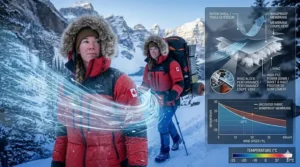
Layering Your Down Jacket for Optimal Warmth
A down jacket alone won’t keep you warm—proper layering systems maximize its effectiveness in Canadian winter.
The Three-Layer System
Base Layer: Merino wool or synthetic moisture-wicking
Mid Layer: Down jacket for insulation
Outer Layer: Waterproof breathable shell for weather protection
In dry, stable cold you can often skip the shell. When precipitation threatens or winds pick up, the shell becomes essential.
Sample Layering for Common Scenarios
-15°C Active Hiking:
- Light merino base
- 800 FP down jacket with 120-150g fill
- Shell in pack for stops
-25°C Basecamp:
- Medium-weight base
- Fleece midlayer
- 800 FP down jacket with 200g+ fill
- Insulated pants
-35°C Extreme Cold:
- Heavy base layers
- Synthetic puffy midlayer
- Expedition down parka 300g+ fill
- Shell overtop
- Full face protection
Common Mistakes to Avoid
Don’t wear cotton next to skin—it retains moisture and loses all insulation when wet. Don’t overdress when active; you’ll sweat and create dangerous moisture inside insulation. Don’t compress down jacket in pack for extended periods; it reduces loft over time.
❓ Frequently Asked Questions
❓ What temperature rating do I need for winter camping in Canada?
❓ Is 800 or 900 fill down better for winter camping?
❓ How do I care for my down jacket to maintain warmth?
❓ Can I use a down jacket in wet snow conditions?
❓ What's the best budget down jacket for winter camping in Canada?
Conclusion: Choosing Your Winter Camping Partner
After testing dozens of down jackets across Canadian winters from the Coast Mountains to the Prairies, one truth emerges: the best down jacket for winter camping matches your specific needs, not marketing hype.
For technical winter mountaineering and extreme cold below -25°C, the Rab Neutrino Pro delivers unmatched performance through bomber construction and strategic insulation. Active campers prioritizing versatility and weight savings will love the Arc’teryx Cerium Hoody’s brilliant marriage of down and synthetic insulation. Budget-conscious adventurers can confidently choose the Patagonia Down Sweater knowing it’ll reliably protect them in most Canadian winter conditions.
Remember: fill power matters less than fill weight for warmth, baffle construction determines real-world performance, and water resistance protects your investment. Layer intelligently, maintain your gear properly, and respect Canadian winter’s power to humble even the best equipment.
The perfect down jacket transforms winter from something to endure into something to embrace. Whether you’re planning your first overnight at a Parks Canada winter campground or pushing into the backcountry for a week-long expedition, invest in quality down insulation and proper knowledge. Your body will thank you when you’re warm and comfortable while others shiver in inadequate gear.
Stay warm out there, fellow Canadians. Winter camping awaits! 🍁❄️
Recommended for You
- 7 Best Women’s Merino Wool Long Underwear for Canadian Winters 2026
- 7 Best Merino Wool Base Layers Canada 2026
- 7 Best Budget Winter Sleeping Pads for Canada 2026
Disclaimer: This article contains affiliate links to Amazon.ca. If you purchase products through these links, we may earn a small commission at no additional cost to you.
✨ Found this helpful? Share it with your friends! 💬🤗
