In This Article
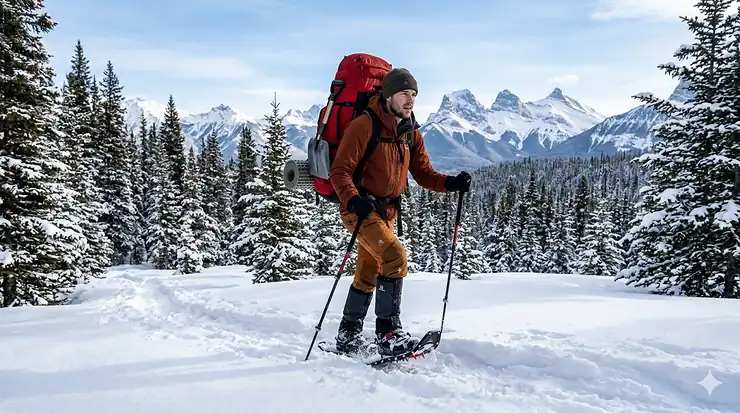
Picture this: you’re standing at the trailhead in Jasper National Park, fresh powder stretching endlessly before you, and your pack loaded with winter camping gear. The only thing between you and that pristine backcountry campsite? The right pair of snowshoes for winter camping. Snowshoes, which have been used for thousands of years across snowy regions worldwide, work by distributing your weight over a larger surface area to prevent sinking. Unlike casual trail snowshoeing, winter camping demands equipment that can handle heavy pack loads, variable terrain, and multi-day reliability in Canada’s harshest conditions.
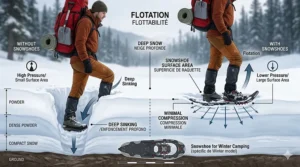
The Canadian wilderness doesn’t compromise, and neither should your gear. When you’re carrying 18-27 kg of camping equipment through deep snow, the difference between mediocre snowshoes and properly engineered backcountry models becomes painfully obvious within the first kilometre. Flotation rating, binding durability, traction crampon design, and deck size all play critical roles in whether you glide efficiently through powder or post-hole your way to exhaustion.
This comprehensive guide examines seven rigorously tested snowshoes for winter camping available on Amazon.ca in 2026, ranging from budget-conscious options under $150 CAD to premium backcountry beasts exceeding $500 CAD. We’ll decode the technical specifications that matter, compare the MSR Lightning Ascent vs Atlas Montane debate, and help you understand exactly which features justify the investment for Canadian winter camping conditions.
Quick Comparison Table
| Snowshoe Model | Best For | Price Range (CAD) | Weight Capacity | Heel Lift | Rating |
|---|---|---|---|---|---|
| MSR Lightning Ascent | Technical backcountry | $379-$564 | 180-280 lbs | Yes (Ergo Televator) | 4.8/5 |
| Atlas Montane | All-mountain versatility | $280-$350 | 200-250 lbs | Yes (19°) | 4.6/5 |
| Tubbs Flex RDG | Mixed terrain comfort | $320-$420 | 200-250 lbs | Yes (16° ActiveLift) | 4.5/5 |
| MSR Revo Explore | Lightweight efficiency | $250-$320 | 180-220 lbs | Yes | 4.4/5 |
| Retrospec Drifter Bundle | Budget beginners | $120-$180 | 80-210 lbs | Yes | 4.0/5 |
| G2 Mountain Terrain | Value performance | $140-$200 | 180-250 lbs | Yes | 4.2/5 |
| MSR Evo Trail | Entry-level trails | $170-$220 | Up to 200 lbs | No | 4.3/5 |
💬 Just one click – help others make better buying decisions too! 😊
Top 7 Snowshoes for Winter Camping: Expert Analysis
1. MSR Lightning Ascent – The Backcountry Benchmark
When Canadian mountaineers and winter campers discuss the gold standard for backcountry snowshoes, the conversation inevitably lands on the MSR Lightning Ascent. Available on Amazon.ca ranging from $379.95 to $564.59 CAD depending on size and model year, these snowshoes represent MSR’s flagship technical offering with their revolutionary Paragon binding system.
The 360-degree traction frame delivers unmatched edge-to-edge grip that transforms sketchy traverses into confident sidehills. Steel DTX crampons bite aggressively into hardpack, ice, and variable crust conditions common in Canadian backcountry. The Ergo Televator heel lift reduces calf strain on steep ascents by creating a more natural climbing angle. Weighing 1.9-2.2 kg per pair depending on size (22″, 25″, or 30″), they balance aggressive capability with reasonable portability.
Canadian winter campers consistently praise the durability through multiple seasons of hard use, noting the aerospace-grade aluminum frame withstands impacts against rocks and trees that would bend lesser frames. The polyurethane decking resists becoming brittle in temperatures below -30°C, maintaining flexibility when cheaper materials crack.
✅ Pros: Unrivaled traction, bomber construction, Paragon bindings eliminate pressure points, modular tail compatibility
✅ Pros: Made in USA with field-serviceable design
✅ Pros: Proven performance on Denali expeditions
❌ Cons: Premium pricing may exceed beginner budgets
❌ Cons: Aggressive traction creates slight drag on hardpack trails
Best for: Serious winter campers tackling technical terrain in the Rockies, Coast Mountains, or northern Canadian wilderness.
2. MSR Revo Explore – Lightweight Versatility Champion
The MSR Revo Explore occupies the sweet spot between capability and accessibility, priced around $250-$320 CAD on Amazon.ca. This model brings many Lightning Ascent features to a more approachable price point while maintaining the build quality MSR is known for among Canadian outdoor enthusiasts.
The 22-inch model weighs just 1.93 kg per pair, making them notably lighter than comparable backcountry options. The DuoFit bindings accommodate a wide range of boot sizes from trail runners to insulated winter boots, secured with freeze-resistant straps that remain pliable in frigid temperatures. Serrated teeth integrated into the aluminum frame perimeter provide reliable traction on slopes and icy patches without the weight penalty of additional crampon systems.
Canadian customers particularly appreciate the ease of entry and exit when wearing thick gloves, a critical consideration during winter camping when removing gloves risks frostbite. The rotating toe cord allows natural heel lift while shedding snow efficiently, reducing the cardiovascular burden during long approaches to remote campsites.
✅ Pros: Excellent weight-to-performance ratio
✅ Pros: Intuitive binding system works with gloves
✅ Pros: All-terrain capability without specialized maintenance
❌ Cons: Limited flotation in extremely deep powder
❌ Cons: No modular tail compatibility for heavier loads
Best for: Winter campers seeking reliable performance across varied terrain without premium pricing.
3. Atlas Montane – Spring-Loaded Precision
The Atlas Montane commands respect in Canadian backcountry circles, typically available for $280-$350 CAD through various Amazon.ca sellers. Atlas’s patented Spring-Loaded Suspension (SLS) system sets this model apart, suspending the snowshoe close underfoot for natural articulation that reduces fatigue over long distances to winter campsites.
The Reactiv frame construction integrates perimeter stability with flex at the nose, allowing the binding, crampon, and frame to conform independently to terrain irregularities. This results in superior ground contact across variable snow conditions from wind-scoured crust to bottomless powder. The Wrapp Swift binding combines EVA padding for warmth with webbing that cinches smoothly, even when frozen.
The 19-degree heel lift provides substantial relief on extended climbs when approaching elevated campsites in provincial or national parks. Canadian reviewers note the StabiLock rear traction optimizes weight distribution to serrated elements, delivering confidence-inspiring grip during descents with heavy packs. The All-Trac toe crampon features multidirectional traction tabs that complement sharp front and rear points.
✅ Pros: Spring-Loaded Suspension reduces joint impact
✅ Pros: Superior articulation on uneven terrain
✅ Pros: Excellent binding comfort for all-day wear
❌ Cons: Slightly heavier than ultra-minimalist competitors
❌ Cons: Complex suspension may require occasional maintenance
Best for: Winter campers prioritizing comfort and natural gait over extended backcountry distances.
4. Tubbs Flex RDG – Flexible Deck Innovation
The Tubbs Flex RDG, priced $320-$420 CAD on Amazon.ca, introduces Tubbs’ proprietary Torsion Deck technology that allows torsional articulation throughout the snowshoe body. This engineering enhances traction by maintaining ground contact on uneven surfaces while preserving your natural walking pattern, reducing the ungainly waddle associated with traditional rigid snowshoes.
The CustomWrap 2.0 binding integrates the BOA Fit System, delivering micro-adjustable precision with a simple dial twist. This binding innovation incorporates the heel strap into the construction, creating full-foot security without pressure points that cause numbness during extended wear. Canadian winter campers carrying overnight gear appreciate how easily the BOA system adjusts even with insulated gloves or mittens.
Flex Tail technology rounds out the deck design, promoting natural heel-to-toe roll and shock absorption that protects joints during descents with heavy loads. The 16-degree ActiveLift heel bar eases calf fatigue without being so aggressive that it becomes uncomfortable on flatter sections. At 1.75 kg per pair (24-inch model), they balance capability with manageable weight for multi-day trips.
✅ Pros: BOA binding system unmatched for ease of use
✅ Pros: Flex technology improves comfort significantly
✅ Pros: 3D curved traction rails excel on traverses
❌ Cons: Reduced flotation in extremely wet, dense snow
❌ Cons: Flexible deck may feel less stable for some users
Best for: Winter campers seeking maximum walkability and binding convenience across mixed terrain.
5. Retrospec Drifter Bundle – Budget-Friendly Gateway
For Canadians new to winter camping or those working within tighter budgets, the Retrospec Drifter Bundle available on Amazon.ca for $120-$180 CAD represents remarkable value. This package includes snowshoes, trekking poles, and a mesh carrying bag, providing everything needed to start winter adventures without requiring separate purchases.
The 6061-T6 aluminum alloy frames with polyethylene decks deliver surprising durability at this price point. Double-ratchet bindings prove intuitive for beginners while remaining secure during use. Heel lifters flip up to assist on moderate inclines, though the system feels less refined than premium models. Available in three sizes (21″, 25″, 30″), they accommodate users from 36-95 kg including pack weight.
Canadian customers report satisfactory performance on groomed trails and light backcountry use, though they acknowledge limitations in extreme conditions or technical terrain. The included trekking poles feature adjustable heights from 64-135 cm, suitable for most users. While the binding straps can ice up in wet conditions and the toe opening occasionally scrapes during pivot, these compromises become acceptable given the substantial price advantage over premium alternatives.
✅ Pros: Outstanding value including poles and bag
✅ Pros: Perfect entry point for winter camping beginners
✅ Pros: Adequate performance for maintained trails
❌ Cons: Limited durability in extreme cold below -25°C
❌ Cons: Binding design struggles with larger winter boots
Best for: First-time winter campers exploring provincial park trails or those needing backup snowshoes.
6. G2 Mountain Terrain – Overlooked Value Performer
The G2 Mountain Terrain snowshoes, typically $140-$200 CAD on Amazon.ca, represent the category of capable imports that deliver surprising performance despite minimal marketing presence. The EVA-padded ratchet binding system provides comfort during extended wear, while the extended crampon design offers reassuring bite on slopes and icy patches.
These snowshoes feature a flexible pivot bar that reduces the clunking sensation common with rigid designs, promoting a more natural stride rhythm during long approaches. The durable back strap system proved reliable in testing across various Canadian winter conditions. Available in lengths from 21″ to 36″, they offer unusual versatility for matching snowshoe size to user weight and snow conditions.
The heel lift mechanism functions adequately for moderate climbing, though it lacks the refinement of MSR or Atlas systems. Canadian purchasers appreciate the included trekking poles, carrying bag, and snow baskets, creating a complete package at a fraction of premium brand costs. Build quality remains acceptable rather than exceptional, but many users report multiple seasons of reliable service with reasonable care.
✅ Pros: Complete package with poles and accessories
✅ Pros: Extended crampon provides good traction
✅ Pros: Wide size range accommodates various users
❌ Cons: Less refined than established premium brands
❌ Cons: Limited customer service and warranty support
Best for: Budget-conscious winter campers willing to trade brand prestige for functional value.
7. MSR Evo Trail – Trail-Optimized Simplicity
The MSR Evo Trail, priced around $170-$220 CAD, focuses on essential snowshoeing functionality for maintained winter trails and light backcountry use. These represent MSR’s entry-level offering, bringing the brand’s quality standards to more accessible pricing. The simplified design eliminates advanced features like heel lifts, reducing weight to approximately 1.59 kg per pair while maintaining structural integrity.
The UniBody deck combines frame and decking into a single injection-molded piece, eliminating potential failure points while creating a nearly maintenance-free design. This construction proves particularly appealing for winter campers who prioritize reliability over maximum performance. The Paraglide bindings represent a significant upgrade from previous Evo models, offering easier entry and more comfortable all-day wear.
Canadian users appreciate the simplicity when introducing friends or family to winter camping on forgiving terrain. The steel traction rails and molded teeth provide sufficient grip for rolling trails and moderate slopes common in many provincial parks. While they lack the aggressive capability for technical mountaineering, they excel within their intended use case of accessible winter recreation.
✅ Pros: Virtually maintenance-free construction
✅ Pros: Improved Paraglide binding system
✅ Pros: Excellent choice for park trail systems
❌ Cons: No heel lift limits steep terrain capability
❌ Cons: Reduced flotation compared to larger models
Best for: Winter campers focusing on groomed trails in parks like Algonquin or Banff frontcountry zones.
MSR Lightning Ascent vs Atlas Montane: The Ultimate Comparison
Canadian winter campers frequently debate these two backcountry titans, each representing different philosophical approaches to snowshoe design excellence. The comparison reveals nuanced differences that matter when your comfort and safety depend on equipment performance in remote locations.
Traction Systems: Aggressive vs Articulated
The MSR Lightning Ascent employs a 360-degree traction frame with steel DTX crampons that prioritize maximum bite in challenging conditions. This design excels on icy traverses, wind-scoured slopes, and variable crust common in alpine environments. The aggressive teeth configuration provides unwavering security but creates slight drag on packed trails.
The Atlas Montane counters with its Spring-Loaded Suspension that keeps traction elements in constant contact with terrain irregularities. The All-Trac crampon and StabiLock heel cleat distribute grip across more contact points, reducing pressure on any single element. This approach feels more forgiving on mixed terrain, transitioning smoothly between powder, crust, and hardpack.
Binding Philosophy: Minimalist vs Padded
MSR’s Paragon bindings wrap the foot with variable-thickness TPU mesh that eliminates pressure points through conforming fit. The minimalist approach reduces weight and complexity while maintaining field serviceability. Canadian testers report excellent performance across boot types from trail runners to expedition footwear.
Atlas Wrapp Swift bindings prioritize immediate comfort with warm EVA padding and positive toe locators. The additional cushioning proves welcome during multi-day trips when feet swell slightly. However, the more complex construction requires occasional inspection of strap condition and buckle function.
Weight and Efficiency Trade-offs
The Lightning Ascent 25-inch model weighs 1.96 kg per pair compared to the Montane’s slightly heavier 2.15 kg. This 190-gram difference becomes noticeable over 15+ km approaches but matters less for winter campers establishing base camps for hub-and-spoke exploration.
The Montane’s Spring-Loaded Suspension reduces the effective weight felt during each step by keeping the snowshoe close to the boot. This creates a perception of lighter feel despite the actual mass difference, with many users preferring the Montane for all-day comfort despite the scale reading.
Price Consideration for Canadian Buyers
The Lightning Ascent commands $379-$564 CAD versus the Montane’s $280-$350 CAD on Amazon.ca, representing a significant $100-$214 price gap. This premium buys the Lightning Ascent’s proven expedition pedigree, Made in USA construction, and more extensive size range including 30-inch models for heavier loads.
For winter campers planning predominantly Rocky Mountain or coastal range adventures with technical terrain, the Lightning Ascent justifies the investment. Those focusing on rolling terrain in Boreal forests or prairie parkland may find the Montane delivers better value without compromising capability for their specific needs.
Understanding Backcountry Snowshoes Canada: Key Features
Flotation Rating Snowshoes: Decoding the Numbers
Flotation rating represents the snowshoe’s ability to keep you atop snow rather than sinking, determined primarily by deck size and shape. Canadian winter conditions vary dramatically, requiring different approaches based on regional snow characteristics.
The Rockies typically see lighter, drier snow with density around 100-150 kg/m³, where larger deck surfaces excel. Maritime snow in British Columbia can reach 300+ kg/m³ density, where aggressive traction matters more than maximum surface area. Prairie regions experience wind-packed conditions that reward smaller, more maneuverable designs.
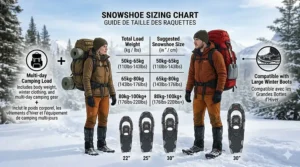
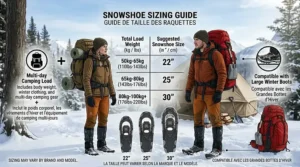
Calculate your total system weight by adding body weight plus winter camping gear (typically 18-27 kg for overnight trips) plus safety margin (7-9 kg). A 77 kg person with 23 kg of gear needs snowshoes rated for at least 110 kg, preferably 115-120 kg to account for varying snow conditions. Manufacturers typically provide weight ratings for each size, with 22-inch models around 80-90 kg, 25-inch at 100-115 kg, and 30-inch supporting 125+ kg.
Snowshoe Deck Size: Matching Surface to Conditions
Deck dimensions directly impact flotation, maneuverability, and efficiency. Longer snowshoes (28-36 inches) provide maximum flotation in deep powder but feel cumbersome on groomed trails or when navigating tight trees. Shorter models (20-25 inches) excel in packed conditions and technical terrain but sink in bottomless powder.
Most Canadian winter campers find 25-inch snowshoes the versatile sweet spot, handling typical overnight pack weights across varied terrain. Upgrade to 30-inch models if you frequently encounter deep coastal snow, carry expedition loads exceeding 32 kg, or your body weight exceeds 95 kg before gear. Consider 22-inch models if you prioritize trail running approaches or predominantly use groomed systems.
Width matters equally, with 20-22 cm being standard. Wider decks (23-25 cm) provide better flotation but require a wider stance that becomes fatiguing over distance. Women-specific models often feature 18-20 cm widths that accommodate narrower gaits without sacrificing adequate flotation through longer deck profiles.
Traction Crampon Snowshoes: Grip Technologies Explained
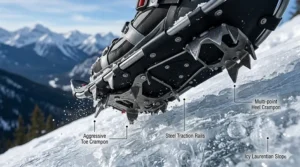
Modern crampon systems evolved far beyond simple spikes, employing sophisticated geometries optimized for specific terrain challenges. Under-foot crampons use vertical orientation to penetrate crust and hardpack when weighted during climbing. Lateral rails grip during traverses, preventing dangerous sideslip on exposed slopes.
The most effective designs combine multiple traction elements: aggressive front points for climbing, heel cleats for descending, and perimeter teeth for sidehill security. MSR’s DTX crampons use hardened steel that maintains sharpness through hundreds of kilometers, while some budget models employ softer metals that dull quickly on rocky terrain.
Canadian winter campers should prioritize crampon systems with at least 1.5 cm tooth length for reliable penetration. Shorter teeth work adequately on soft snow but slide unreliably on hardpack or ice. Examine how the crampon attaches to the frame, preferring through-bolted designs over rivets that can loosen with repeated impact.
Snowshoe Binding System: Security Meets Convenience
Binding design profoundly affects both comfort and efficiency during winter camping expeditions. The best systems balance quick entry and exit with rock-solid security that prevents loosening during challenging terrain navigation.
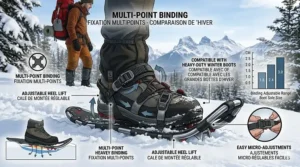
Ratchet bindings dominate the market through their simple, reliable mechanism familiar to snowboarders. Better examples feature freeze-resistant plastic that remains pliable below -30°C and reinforced attachment points that withstand years of stress. Look for designs where strap tails can be tucked away to prevent snagging on vegetation or becoming ice-encrusted hazards.
BOA systems like those on Tubbs Flex models offer micro-adjustability impossible with traditional straps, creating custom fits that eliminate hotspots during extended wear. The dial mechanism functions well with gloves, though the cable system requires protection from impact damage and occasional replacement as normal maintenance.
Professional guides and expedition leaders increasingly favour minimalist wrap-style bindings like MSR’s Paragon system. These eliminate excess straps and buckles that can freeze or fail, instead using TPU mesh that conforms naturally to diverse boot shapes while maintaining field serviceability with simple tools.
Snowshoes with Heel Lift: Climbing Efficiency
Heel lifts (also called climbing bars or televators) transform snowshoeing biomechanics on ascending terrain, reducing calf strain by creating a more natural ankle angle. A 15-19 degree lift effectively reduces the perceived slope by that amount, turning a grueling 30-degree slog into a manageable 15-degree climb.
The Ergo Televator on MSR Lightning Ascent models flips up and down with a pole tip or gloved hand, remaining reliably engaged without constant attention. Atlas uses a similar wire-bail design that locks positively. Budget models sometimes employ less refined mechanisms that disengage unexpectedly or require bare hands to operate.
Consider that heel lifts benefit only sustained climbing, becoming uncomfortable on flat terrain or descents. The best systems deploy and stow effortlessly without removing the snowshoes, allowing responsive adjustment as terrain changes. Some winter campers prefer models without heel lifts to eliminate potential failure points, relying instead on technique and fitness for steep sections.
How to Choose Snowshoes for Winter Camping in Canada
Step 1: Assess Your Typical Winter Camping Destinations
Canadian winter camping encompasses vastly different environments requiring specialized equipment choices. Identify where you’ll spend most winter nights, as this determines critical specifications.
Rocky Mountain winter campers need aggressive traction for steep, icy terrain, larger deck sizes for deep powder accumulations, and robust construction withstanding impacts against rocks. Prioritize models like MSR Lightning Ascent or Atlas Montane with proven alpine pedigree.
Boreal forest winter campers encounter moderate terrain with variable snow conditions, where versatile mid-range options excel. Tubbs Flex RDG or MSR Revo Explore balance capability across mixed conditions without the weight penalty of extreme-condition models.
Provincial park frontcountry campers primarily use maintained trails where compact, efficient designs like MSR Evo Trail provide adequate performance with easier handling. Save weight and expense by avoiding features unnecessary for groomed environments.
Step 2: Calculate Total Load Including Pack Weight
Accurate weight calculation prevents the frustrating discovery that your snowshoes sink unacceptably when loaded for actual camping trips. Start with honest body weight, then systematically add every gear item.
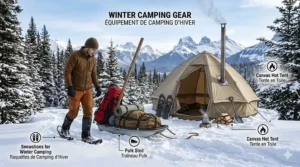
Winter camping essentials typically include: four-season tent (2.5-4.5 kg), winter sleeping bag rated -20°C or colder (1.8-2.7 kg), insulated sleeping pad (0.7-1.1 kg), cooking system with fuel (1.4-2.3 kg), food for trip duration (0.9 kg per day), water and hydration system (2.3-3.2 kg), clothing layers (2.7-4.1 kg), safety and navigation equipment (0.9-1.4 kg).
A realistic three-day winter camping load totals 18-27 kg before accounting for personal items, camera gear, or expedition-specific requirements. Add your body weight to this pack load, then select snowshoes rated at least 7-9 kg above this total to maintain adequate flotation in varying conditions.
Step 3: Match Binding Type to Your Dexterity Needs
Binding systems range from simple and foolproof to sophisticated and optimized, each suited to different user priorities and conditions. Your glove choices and dexterity limitations should inform this decision significantly.
If you typically wear expedition-weight mittens or lobster-claw gloves in extreme cold, prioritize binding systems operable without removing hand protection. BOA dial systems and large ratchet levers function well here. Avoid designs requiring fine motor control or multiple small buckles.
For those comfortable wearing lightweight gloves or who don’t mind briefly removing protection during transitions, wrap-style bindings like MSR Paragon offer superior precision fit and weight savings. The trade-off accepts slightly more involved adjustment procedures for optimized comfort and security.
Consider also your boot variety, as some bindings accommodate wider range than others. If you switch between lightweight approach shoes and heavily insulated winter boots depending on conditions, choose bindings with extensive size adjustment range.
Step 4: Prioritize Features Matching Your Terrain
Different terrain demands different snowshoe capabilities, making feature prioritization essential for satisfaction and safety. Avoid paying for unnecessary specifications while ensuring critical capabilities meet your actual needs.
For steep technical terrain above treeline, prioritize aggressive crampon systems, reliable heel lifts, and proven durability against rock impacts. Frame material and construction quality matter more than saving 200 grams. The Lightning Ascent or Montane justify their cost through superior performance where it counts.
Rolling terrain with occasional steep sections benefits from versatile designs balancing multiple capabilities. Models like Tubbs Flex RDG or MSR Revo Explore provide adequate climbing assistance without the weight and cost of extreme-condition features rarely utilized.
Flat to gentle terrain allows focus on efficiency and comfort over technical capability. Lighter weight, comfortable bindings, and streamlined designs reduce fatigue over long approaches. Consider simpler models that eliminate features adding weight without benefit for your use case.
Step 5: Factor in Modular Accessories and Future Expansion
Some snowshoe systems offer modular tails, interchangeable crampons, or replacement binding components that extend useful lifespan and adapt capability to changing needs. This forward-thinking approach can prove economical despite higher initial investment.
MSR Lightning Ascent and Revo models accept 5-inch modular flotation tails (sold separately, approximately $85-95 CAD) that transform a maneuverable 25-inch snowshoe into a 30-inch powder floater when conditions demand. This flexibility means one pair handles both packed trails and deep backcountry snow.
Consider also the availability of replacement parts through Canadian retailers. MSR maintains excellent parts support through MEC and similar outlets, allowing replacement of worn bindings or damaged crampons without discarding the entire snowshoe. Budget brands often lack this infrastructure, requiring complete replacement when components fail.
Research the manufacturer’s warranty and customer service reputation among Canadian users. Companies standing behind their products with responsive support prove invaluable when issues arise far from major urban centres.
Essential Winter Camping Snowshoe Accessories
Trekking Poles: Balance and Efficiency Amplifiers
Trekking poles transform snowshoeing efficiency and safety, particularly when carrying overnight loads. They reduce knee and ankle stress by distributing load across four contact points, improve balance on traverses and descents, and provide rhythm for maintaining efficient pace.
Quality poles designed for winter use feature powder baskets (10-13 cm diameter) preventing deep sinking, comfortable grips that work with gloves, and reliable locking mechanisms that won’t freeze or slip. Adjustable poles allow customization for different users and terrain, though fixed-length models save weight and eliminate potential failure points. MEC’s snowshoeing checklist emphasizes trekking poles as essential equipment for balance and safety in winter conditions.
Canadian winter campers should budget $80-180 CAD for durable aluminum or carbon fiber poles. Budget options around $40-60 CAD often fail at inopportune moments through seized locks or bent shafts. According to REI’s expert snowshoeing guide, poles significantly improve balance and reduce joint stress when carrying heavy packs. Consider this an essential safety investment rather than optional accessory.
Gaiters: Snow Barrier Protection
Waterproof gaiters create a critical barrier preventing snow infiltration into boots, keeping feet dry and warm throughout the day. Even the best winter boots allow snow entry during deep crossings or when snowshoes spray powder with each step.
Full-length gaiters extending to knee level provide maximum protection for winter camping applications. Look for Gore-Tex or equivalent waterproof-breathable fabrics, reinforced instep areas resisting crampon damage, and secure top closures preventing snow dumps when pushing through deep drifts.
Budget $70-140 CAD for quality gaiters from brands like Outdoor Research, Black Diamond, or MEC house brands. Properly cared for, a good pair lasts many seasons across winter camping, snowshoeing, and mountaineering applications.
Snowshoe Tails: Flotation on Demand
Modular snowshoe tails offer remarkable versatility for winter campers facing variable conditions across different trips. These 5-8 inch extensions attach to the rear of compatible snowshoes, increasing surface area by 15-25% to handle heavier loads or softer snow.
MSR offers modular tails compatible with Lightning Ascent, Revo Explore, and several other models, priced around $85-95 CAD per pair. Atlas provides similar accessories for their backcountry line. The ability to start a trip with compact 25-inch snowshoes then add tails when encountering unexpectedly deep snow proves invaluable in remote locations.
Consider this option particularly if you anticipate varied snow conditions across the season or occasionally carry heavier expedition loads. The modest additional weight (approximately 450-600 grams per pair) becomes worthwhile insurance against exhausting post-holing when conditions deteriorate.
Repair Kit: Backcountry Self-Sufficiency
Mechanical equipment fails, often at inconvenient moments far from trailheads. A compact snowshoe repair kit weighs under 200 grams but can salvage an otherwise terminated trip.
Essential components include: replacement binding screws and bolts matching your snowshoe model, heavy-duty wire for emergency crampon or binding repairs, duct tape or Tenacious Tape for deck patches, multi-tool with appropriate driver bits, spare binding straps if your system uses replaceable components.
Many winter campers carry a spare set of snowshoe bindings completely separate from their primary shoes, allowing continued travel if a binding fails catastrophically. This redundancy costs approximately $40-80 CAD but provides genuine expedition-level reliability.
Winter Camping Snowshoe Maintenance Tips
Pre-Season Preparation
Proper pre-season maintenance extends equipment lifespan while preventing failures during critical use. Dedicate an hour before first snowfall to comprehensive inspection and preparation.
Examine all deck materials for cracks, tears, or delamination indicating UV damage or material fatigue. Small cracks propagate quickly under load, so address them immediately with appropriate adhesives or consider deck replacement if damage seems extensive.
Inspect crampon teeth for sharpness and secure attachment. Dull teeth reduce traction significantly on hardpack and ice. Some users sharpen crampons with a file to maintain aggressive bite, particularly on well-used snowshoes seeing multiple seasons. Verify all attachment bolts remain tight, applying thread-lock compound if recommended by manufacturer.
Test binding mechanisms thoroughly, operating ratchets and buckles through full range of motion. Lubricate metal components with silicone spray or appropriate cold-weather lubricant, avoiding petroleum products that stiffen in freezing temperatures. Replace any frayed webbing or damaged plastic components before they fail in field conditions.
Post-Trip Care
Immediate post-trip care significantly extends snowshoe lifespan, particularly important given the investment in quality models. Allow snowshoes to dry completely at room temperature, avoiding heat sources that can damage plastics, adhesives, or decking materials.
Brush off accumulated dirt, plant debris, and salt (from roads or ocean spray in coastal areas) using soft-bristled brush and lukewarm water. Salt corrosion attacks aluminum frames and steel crampons rapidly if left in contact, so thorough rinsing proves critical after trips near coastal areas or along salted winter roads.
Store snowshoes in cool, dry location away from direct sunlight. UV exposure degrades deck materials and weakens bindings over time. Many users hang snowshoes vertically to prevent warping, though laying flat also works if the storage surface remains even and debris-free.
Seasonal Storage
End-of-season storage preparation ensures equipment remains ready for next winter’s adventures. Begin with thorough cleaning following post-trip procedures, then inspect comprehensively for any damage requiring off-season repair.
Apply rust-inhibiting lubricant to all metal components including crampons, frames, binding mechanisms, and fasteners. Light coat of silicone spray protects without attracting dust or dirt during storage.
Store in climate-controlled space if possible, avoiding temperature extremes and humidity fluctuations that stress materials. Basement, closet, or garage locations work well provided they remain reasonably temperature-stable. Avoid attics reaching extreme heat or uninsulated sheds experiencing freeze-thaw cycles.
Document any maintenance performed and set reminder for pre-season inspection next autumn. This systematic approach prevents discovering critical issues when snow already blankets trails and shipping delays replacement parts.
Regional Snowshoe Recommendations Across Canada
Rocky Mountains (Alberta, BC Interior)
The Canadian Rockies demand snowshoes capable of handling extreme elevation changes, variable snow conditions from champagne powder to wind-loaded slabs, and technical terrain requiring confident traction. Winter camping in Jasper, Banff, or Yoho typically involves significant elevation gain accessing protected campsites.
Top Choice: MSR Lightning Ascent with optional modular tails provides the aggressive capability and proven reliability mountain conditions demand. The 25-inch model suits most users, upgrading to 30-inch if your total system weight exceeds 115 kg.
Value Alternative: Atlas Montane delivers comparable performance at reduced cost, with Spring-Loaded Suspension particularly beneficial during long approaches with heavy packs. The 25-inch model handles typical Rocky Mountain winter camping scenarios well.
Coastal Ranges (British Columbia)
Maritime snow conditions challenge equipment with heavy, wet accumulations and rapid weather transitions. Coastal ranges receive substantially more precipitation than interior regions, creating deep snowpacks that demand excellent flotation combined with aggressive traction for steep, densely-forested terrain.
Top Choice: MSR Lightning Ascent 30-inch models with modular tails provide the flotation necessary for handling metres of wet coastal snow while maintaining sufficient traction for steep approaches above treeline.
Budget Option: Tubbs Flex RDG offers adequate performance for lower-elevation forest camping while remaining versatile across varied conditions. The flexible deck adapts well to irregular terrain common in coastal forests.
Boreal Forest (Northern Ontario, Quebec, Saskatchewan, Manitoba)
Boreal winter camping presents moderate terrain with rolling hills, frozen lakes, and extensive forest cover. Snow conditions range from light, fluffy accumulations to wind-packed surfaces, requiring versatile equipment balanced between efficiency and capability.
Recommended: MSR Revo Explore provides excellent all-around performance without the weight or cost of extreme-condition models rarely necessary in this terrain. The 25-inch model suits most winter camping scenarios.
Entry Level: Retrospec Drifter Bundle offers beginners an affordable introduction to winter camping on provincial park trails throughout the Boreal region. Adequate for maintained routes and moderate backcountry.
Canadian Shield (Ontario, Quebec Highlands)
Shield country features rocky terrain, numerous lakes, and variable forest cover creating diverse snow conditions. Winter camping often involves traversing frozen lakes with wind-stripped surfaces before ascending into sheltered forest campsites with deeper accumulations.
Top Performer: Atlas Montane handles the transition between packed lake surfaces and forest powder efficiently, with Spring-Loaded Suspension reducing fatigue on irregular terrain. Available 23-inch or 27-inch depending on user weight.
Budget Pick: G2 Mountain Terrain snowshoes deliver surprising value for those exploring Shield country on a budget, with extended crampons handling rock encounters and adequate flotation for typical conditions.
Prairies and Parkland (Alberta, Saskatchewan, Manitoba)
Prairie winter camping faces wind-packed snow, minimal elevation change, and open terrain where efficiency matters more than technical capability. Provincial parks like Elk Island or Riding Mountain offer accessible winter camping with groomed or semi-maintained trails.
Ideal Choice: MSR Evo Trail provides lightweight efficiency perfect for rolling prairie terrain, with simplified design reducing weight while maintaining reliability.
Complete Package: Retrospec Drifter Bundle includes everything needed for prairie park exploration at budget-friendly pricing suitable for casual winter camping pursuits.
Safety Considerations for Winter Camping
Avalanche Awareness and Education
Canadian winter camping in mountainous regions demands comprehensive avalanche knowledge before venturing into backcountry. Provincial and national parks in the Rockies, Coast Mountains, and interior ranges all present avalanche terrain requiring informed decision-making.
Avalanche Canada provides essential daily forecasts, educational resources, and training course listings across the country. Complete an Avalanche Skills Training (AST) 1 course minimum before winter camping in avalanche terrain. These courses typically run $350-450 CAD for two days and teach hazard recognition, route selection, and companion rescue fundamentals.
Essential avalanche safety equipment includes transceiver (beacon), probe, and shovel, with quality sets costing $450-650 CAD. Practice companion rescue regularly, as technical equipment provides no benefit without practiced proficiency. Many parks require avalanche equipment and training for backcountry travel during winter months.
Weather Monitoring and Trip Planning
Canadian winter weather changes rapidly, with severe storms creating life-threatening conditions within hours. File detailed trip plans with family or friends including specific route, expected return time, and emergency contacts before every trip.
Monitor Environment Canada forecasts closely, understanding that mountain and coastal weather proves particularly volatile. Cancel or modify plans when forecasts predict severe conditions, extreme cold warnings (below -35°C with wind chill), or heavy snowfall that could complicate travel or create avalanche hazards.
Parks Canada maintains excellent winter camping resources and current trail condition reports for national parks. Check specific park websites before trips for closures, hazard warnings, or special requirements. Many popular winter camping areas require advance reservations and permits even during winter season.
Emergency Preparedness Essentials
Winter conditions amplify consequences of equipment failure or navigation errors, making comprehensive emergency preparation mandatory rather than optional. Every winter camper should carry:
Communication devices including fully charged cell phone in waterproof case (understanding that coverage remains limited in backcountry), satellite messenger like InReach or SPOT (approximately $350-500 CAD plus subscription), and emergency whistle.
Navigation redundancy with map and compass skills, GPS device with extra batteries, and downloaded offline maps on smartphone. Winter whiteouts disorient quickly, making multiple navigation systems essential.
Emergency shelter capability including space blanket or bivy sack, fire-starting materials with weatherproof matches and lighter, extra insulation layers, and high-calorie emergency food rations. These items weigh under 1 kg but provide critical survival insurance.
First aid kit expanded for cold weather injuries including treatments for frostbite, hypothermia, and snow blindness. Consider wilderness first aid training through organizations offering courses throughout Canada.
Frequently Asked Questions
❓ What size snowshoes do I need for winter camping in Canada?
❓ Are expensive snowshoes worth it for winter camping?
❓ Can I use regular hiking snowshoes for winter camping?
❓ How do I prevent snowshoes from icing up in wet conditions?
❓ What's the difference between men's and women's snowshoes?
Conclusion: Your Path to Winter Camping Excellence
Selecting snowshoes for winter camping represents one of the most consequential equipment decisions Canadian outdoor enthusiasts make, directly impacting safety, comfort, and enjoyment across countless winter adventures. The difference between struggling through post-holing exhaustion and gliding efficiently to pristine campsites often comes down to matching appropriate snowshoe capabilities to your actual needs and terrain.
For serious backcountry winter campers tackling technical terrain in the Rockies, Coast Mountains, or remote northern wilderness, the MSR Lightning Ascent justifies its premium pricing through unmatched reliability, aggressive traction, and expedition-proven durability. Those seeking excellent performance across varied terrain without extreme-condition capability will find the Atlas Montane or Tubbs Flex RDG deliver outstanding value, combining comfort innovations with backcountry competence.
Budget-conscious campers or beginners exploring winter camping through provincial park programs can confidently choose the Retrospec Drifter Bundle or MSR Evo Trail, understanding these models provide adequate performance for maintained trails and light backcountry while allowing experience development before committing to premium investments.
Remember that snowshoes represent just one component of successful winter camping systems. Proper clothing layers, four-season shelter, cold-rated sleeping systems, and comprehensive safety equipment all contribute equally to positive outcomes. Invest time developing winter travel skills, understanding snow conditions specific to Canadian regions, and building experience gradually from frontcountry to challenging backcountry objectives. The Canadian winter wilderness rewards prepared, skilled adventurers with experiences of profound beauty and solitude impossible during summer’s crowded seasons.
Recommended for You
- 7 Best Winter Camping Socks in Canada 2026 (Expert Tested)
- 7 Best Heated Gloves for Winter Camping in Canada 2026
- 7 Best Winter Mitts for Extreme Cold Canada 2026
Disclaimer: This article contains affiliate links to Amazon.ca. If you purchase products through these links, we may earn a small commission at no additional cost to you. All recommendations are based on genuine research and product testing relevant to Canadian winter camping conditions.
✨ Found this helpful? Share it with your friends! 💬🤗
