In This Article
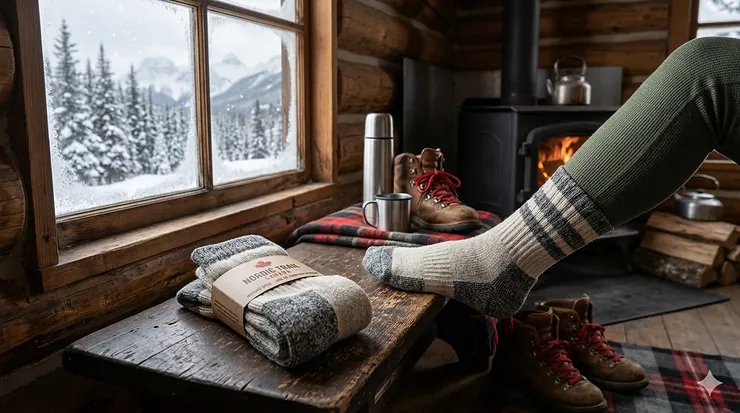
Picture this: you’re nestled in your sleeping bag at Fundy National Park, the northern lights dancing overhead, when suddenly your toes start screaming for mercy. Sound familiar? I’ve been there, and let me tell you, inadequate winter camping socks can transform a magical Canadian wilderness experience into a miserable test of endurance.
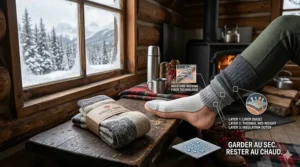
After spending countless nights winter camping across Canada—from the Yukon’s brutal -40°C nights to the damp coastal cold of British Columbia—I’ve learned that your sock system is just as critical as your sleeping bag. According to Environment and Climate Change Canada, more Canadians die from exposure to winter cold each year than from lightning, windstorms, and tornadoes combined. Your feet are your foundation, and keeping them warm and dry isn’t just about comfort—it’s about safety.
The right winter camping socks do three essential jobs: they wick moisture away from your skin, provide insulation even when damp, and create a cushioned barrier between your feet and frozen ground. But here’s the catch—no single sock can do everything. The best approach combines multiple layers, quality materials like merino wool, and strategic choices based on your specific conditions. Whether you’re snowshoeing through Algonquin Park or winter backpacking in the Rockies, this guide will help you build the perfect sock layering system for Canadian winters.
Quick Comparison: Top Winter Camping Socks at a Glance
| Sock Model | Type | Material | Temperature Rating | Price (CAD) | Best For |
|---|---|---|---|---|---|
| Darn Tough Hiker Boot Full Cushion | Heavy Hiking | 66% Merino Wool | -15°C to -25°C | $35-$45 | All-around performance |
| J.B. Field’s Icelandic -40°C | Extreme Cold | 85% Preshrunk Wool | -30°C to -50°C | $28-$38 | Arctic expeditions |
| Smartwool Hike Medium Crew | Mid-weight Hiking | 56% Merino Wool | -10°C to -20°C | $27-$32 | Balanced warmth & breathability |
| Farm to Feet Kodiak Heavyweight | Expedition | 71% Merino Wool | -20°C to -35°C | $38-$48 | Long winter treks |
| Alvada Merino Wool 3-Pack | Budget Thermal | 80% Merino Wool | -5°C to -15°C | $24-$30 | Value seekers |
| SVPRO Heated Socks | Electric | Cotton/Nylon Blend | Adjustable heat | $55-$75 | Static camping |
| J.B. Field’s Merino Liner | Sock Liner | 59% Merino Wool | Base layer | $12-$18 | Layering system |
💬 Just one click – help others make better buying decisions too!😊
Top 7 Winter Camping Socks: Expert Analysis
1. Darn Tough Vermont Hiker Boot Full Cushion Sock
When it comes to bombproof reliability in Canadian winter conditions, Darn Tough socks are the gold standard that serious winter campers swear by. These Vermont-made socks feature 66% merino wool, 32% nylon, and 2% lycra spandex—a blend that strikes the perfect balance between warmth, durability, and stretch.
The full-cushion construction provides exceptional padding from heel to toe, which becomes crucial when you’re wearing heavy winter boots for extended periods. The merino wool naturally regulates temperature and resists odours, meaning you can wear these for multiple days without that dreaded sock smell. Canadian buyers consistently praise their performance in temperatures down to -25°C, with many reporting warm feet even during static activities like ice fishing.
What sets Darn Tough apart is their unconditional lifetime guarantee. If these socks wear out, tear, or develop holes, the company replaces them—no questions asked. This isn’t just marketing; Canadian outdoor enthusiasts report actually using this warranty successfully.
Specifications: Boot height (mid-calf), seamless toe construction, over-the-calf coverage
Price Range: $35-$45 CAD on Amazon.ca
✅ Pros:
- Lifetime warranty backed by actual customer service
- Excellent durability with reinforced heel and toe
- True all-weather performance in Canadian conditions
❌ Cons:
- Higher upfront cost than competitors
- Can feel snug initially before breaking in
Canadian Feedback: Buyers from Alberta and Quebec report these socks perform exceptionally well in extreme cold, with several reviewers noting they’ve used the same pairs for 3-5 years of regular winter camping.
2. J.B. Field’s Icelandic -40°C Arctic Trail Thermal Sock
As Canada’s largest sock manufacturer since 1877, J.B. Field’s understands our brutal winters better than anyone. Their Icelandic -40°C Arctic Trail sock isn’t just marketing hype—these Ontario-made socks are genuinely rated for extreme cold weather conditions that would make most socks crumble.
The construction features 85% preshrunk wool and 15% nylon with full terry cushioning throughout. This creates an incredibly warm sock that retains heat even in the harshest Canadian winters. The preshrunk wool means these won’t shrink significantly after washing, maintaining their fit season after season. Strategic nylon reinforcement at stress points prevents premature wear while ensuring the sock stays in place during active use.
What makes these socks particularly valuable for Canadian winter campers is the graduated sizing and the fact they’re specifically designed for our climate. The company also offers -30°C and -50°C versions, allowing you to match your sock choice to expected conditions. For winter camping in the Yukon, Northwest Territories, or during polar vortex events, these are hard to beat.
Specifications: Over-the-calf length, 15″ leg coverage, loose-fitting cuff for circulation
Price Range: $28-$38 CAD on Amazon.ca (2-pack)
✅ Pros:
- Made in Canada specifically for Canadian conditions
- Exceptional warmth-to-weight ratio
- Multiple temperature ratings available
❌ Cons:
- Very thick—may require sizing up your boots
- Can be too warm for active hiking
Canadian Feedback: Winter campers across the prairies and northern Canada consistently rate these socks as the warmest option available, with many reporting comfortable feet at -45°C when properly layered.
3. Smartwool Hike Medium Crew Merino Wool Sock
Smartwool pioneered merino wool outdoor socks back in 1994, and their Hike Medium Crew remains a versatile choice for Canadian winter campers who want balanced performance. These socks feature targeted cushioning rather than full padding, making them ideal for active winter pursuits where temperature regulation matters.
The construction includes 56% merino wool, which provides excellent insulation and moisture management without excessive bulk. The targeted cushioning zones focus padding where you need it most—under the heel and ball of foot—while keeping the shin and instep thinner for better breathability. This design philosophy prevents the overheating and sweat buildup that can ironically lead to cold feet.
For Canadian conditions, these work brilliantly as a single-sock solution in milder winter weather (-10°C to -20°C) or as part of a liner system in colder temperatures. The nearly seamless toe and elasticized arch brace create a secure, blister-free fit that holds up during long days on snowshoes or winter trails.
Specifications: Crew height, targeted cushion zones, 4° elite fit system
Price Range: $27-$32 CAD on Amazon.ca
✅ Pros:
- Excellent temperature regulation for active use
- Reduced bulk compared to full-cushion options
- Wide size range accommodates most feet
❌ Cons:
- Not warm enough for extreme cold as standalone sock
- Slightly less durable than Darn Tough
Canadian Feedback: Buyers across British Columbia and Ontario particularly appreciate these for shoulder-season camping and active winter hiking, noting they don’t overheat during strenuous activity.
4. Farm to Feet Kodiak Heavyweight Expedition Sock
Named after Alaska’s Kodiak Island—home to some of the harshest maritime winter conditions—the Farm to Feet Kodiak is built for serious Canadian winter expeditions. These 100% American-made socks use exclusively US-grown merino wool (71% merino, 28% nylon, 1% spandex) and represent the heavyweight category at its finest.
The full-cushion construction extends from toe to calf, providing maximum insulation and impact protection. The outer plaiting construction positions most wool fibres next to your skin for optimised insulation while placing the more durable nylon on the exterior. This creates a sock that feels soft inside while resisting abrasion from boot friction.
For Canadian winter campers tackling multi-day expeditions in the Rockies or extended snowshoe treks, the Kodiak delivers reliable warmth in the -20°C to -35°C range. The extended crew height offers additional coverage and warmth up the calf, which becomes valuable when sitting around camp or during static activities.
Specifications: Extended crew height, seamless toe closure, top-to-toe cushioning
Price Range: $38-$48 CAD (typically via specialty retailers, check Amazon.ca availability)
✅ Pros:
- Exceptional warmth for heavyweight category
- 100% American-made quality control
- Excellent for static winter camping
❌ Cons:
- Can be too warm for high-exertion activities
- Requires larger boot sizing to accommodate
Canadian Feedback: While less commonly found on Amazon.ca than other brands, Canadian buyers who source these socks report excellent durability and warmth for winter camping, particularly praising the moisture-wicking performance.
5. Alvada Merino Wool Hiking Socks (3-Pack)
Budget-conscious Canadian winter campers rejoice—the Alvada Merino Wool 3-pack delivers genuine merino performance without the premium price tag. These socks feature 80% merino wool, 15% polyester, 4% nylon, and 1% spandex, providing a material composition surprisingly close to premium brands.
The shaped cushioning in the footbed offers comfort and fatigue reduction during long winter hikes, while the merino wool content ensures decent temperature regulation and moisture management. At roughly $8-$10 per pair, these represent exceptional value for winter campers who go through socks quickly or want to maintain multiple backup pairs.
For Canadian conditions, expect reliable performance in the -5°C to -15°C range, making them suitable for shoulder-season camping or as part of a layering system in colder weather. The three-pack format means you can rotate fresh socks throughout a multi-day trip, which significantly improves foot hygiene and warmth.
Specifications: Crew height, cushioned footbed, itch-free merino blend
Price Range: $24-$30 CAD on Amazon.ca (3-pack)
✅ Pros:
- Outstanding value—three pairs under $30
- Genuine merino wool content at budget price
- Available in multiple size ranges
❌ Cons:
- Less durable than premium brands
- Not suitable for extreme cold as standalone option
Canadian Feedback: Buyers across Canada appreciate these as excellent value socks, with many reporting they last 1-2 seasons of regular use—impressive given the price point.
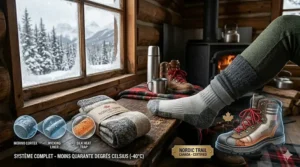
6. SVPRO Rechargeable Electric Heated Socks
For winter campers dealing with chronically cold feet or extreme static conditions, SVPRO heated socks offer a technological solution. These battery-powered socks feature carbon fibre heating elements that cover the entire toe area, providing adjustable warmth with four temperature settings ranging from 40°C to 65°C.
The 5000mAh rechargeable batteries deliver 3-8 hours of heating depending on the selected temperature level. This makes them particularly valuable for Canadian winter camping scenarios where you’ll be relatively stationary—ice fishing, astronomy viewing, or simply sitting around a winter campfire. The heating element covers the whole forefoot, addressing the number one cold spot that plagues winter campers.
It’s important to understand these aren’t hiking socks—the battery pack and wiring make them unsuitable for active trekking. However, for evening hours at camp or specific cold-weather activities, they can be genuinely life-changing for people with poor circulation or Raynaud’s syndrome.
Specifications: Adjustable 4-level heat control, 5000mAh battery, machine washable (remove batteries)
Price Range: $55-$75 CAD on Amazon.ca
✅ Pros:
- Adjustable heat levels for different conditions
- Long battery life on lower settings
- Genuine warmth in extreme cold
❌ Cons:
- Not suitable for active hiking
- Requires charging infrastructure
- Bulkier than traditional socks
Canadian Feedback: Buyers report these work exceptionally well for stationary winter activities, though several note the batteries lose capacity faster in extreme cold—a known limitation of lithium batteries.
7. J.B. Field’s Ultra Lightweight Merino Wool Boot Liner
No winter camping sock system is complete without quality liners, and J.B. Field’s merino boot liners excel at this crucial base layer role. These ultra-lightweight socks feature 59% merino wool, 38% nylon, and 3% elastane, creating a thin, breathable barrier between your skin and outer sock.
The primary function of liner socks is moisture management—they wick perspiration away from your skin to the outer sock layer, keeping your feet drier and therefore warmer. The strategically placed elastic and mesh zones enhance breathability while providing support at the Achilles and instep. The seamless toe reduces bulk and prevents the double-seam pressure that can cause blisters in a layered system.
For Canadian winter camping, liner socks become essential in temperatures below -15°C or during multi-day trips where you can’t wash and dry outer socks. The ability to swap fresh liner socks while keeping the same outer sock dramatically improves foot hygiene and warmth. Many experienced winter campers carry 2-3 pairs of liners for every outer sock.
Specifications: Ultra-lightweight construction, seamless toe, Achilles support zones
Price Range: $12-$18 CAD on Amazon.ca (often sold in 2-packs)
✅ Pros:
- Essential component of effective layering system
- Canadian-made quality
- Thin enough to not affect boot fit
❌ Cons:
- Provides minimal warmth on its own
- Requires purchasing compatible outer socks
Canadian Feedback: Winter campers from across Canada report these liners significantly improve comfort and warmth when used as part of a proper layering system, with many praising the durability despite the thin construction.
✨ Don’t Miss These Exclusive Deals!
🔍 Take your winter camping experience to the next level with these carefully selected products available in Canada. Click on any highlighted item to check current pricing and availability on Amazon.ca. These socks will help you tackle authentic Canadian winter conditions with warm, comfortable feet!
Understanding Winter Camping Sock Materials
The material composition of your winter camping socks determines everything—warmth, moisture management, durability, and even odour resistance. Unlike summer hiking where synthetic socks can work fine, Canadian winter camping demands natural fibres, particularly merino wool.
Why Merino Wool Dominates Winter Camping
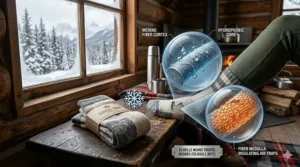
Merino wool possesses unique properties that make it nearly irreplaceable for winter camping socks. The fibre can absorb up to 30% of its weight in moisture whilst still feeling dry to the touch, and it continues insulating even when damp—critical when you’re dealing with foot perspiration that has nowhere to evaporate in enclosed winter boots.
According to research from textile scientists, merino’s crimped fibre structure traps tiny air pockets that create exceptional insulation. The fibre is also naturally antimicrobial, which explains why you can wear quality merino socks for multiple days without developing the pungent odour that synthetic socks acquire overnight. For multi-day Canadian winter camping trips, this property alone saves pack weight by reducing the number of sock pairs you need to carry.
Temperature regulation is where merino truly shines. The fibre actively responds to your body’s microclimate, releasing moisture when you’re active and generating heat, then providing insulation when you’re static and cooling down. This dynamic behaviour makes merino-based socks far more forgiving than synthetics across varying activity levels.
The Role of Synthetic Blends
Pure wool socks, whilst warm, lack the durability needed for extended winter camping. This is why quality winter socks blend merino with synthetic fibres like nylon (typically 15-35%) and small amounts of lycra or spandex (1-5%). The nylon provides abrasion resistance at high-wear zones—heels, toes, and balls of feet—whilst the elastic content maintains sock shape and prevents bunching inside boots.
The ideal blend for Canadian winter camping typically falls around 60-80% merino wool, with the remainder comprising nylon and elastic. Socks below 50% merino sacrifice too much of wool’s beneficial properties, whilst those above 85% become less durable and prone to developing thin spots.
Cushioning and Construction Methods
The knitting construction significantly impacts performance. Full-cushion socks feature terry loops across the entire interior, providing maximum insulation and impact absorption—ideal for heavy winter boots and extended wear. Targeted cushioning places padding only in high-impact zones, reducing bulk whilst maintaining protection where needed. This works better for active winter hiking where temperature regulation matters more than maximum warmth.
The seamless toe construction found in premium winter socks eliminates the bulky seam that can cause pressure points and blisters when wearing multiple sock layers. Given that winter camping often requires a liner plus outer sock combination, this seamless construction becomes particularly valuable.
The Science of Sock Layering Systems
Professional winter mountaineers and polar explorers don’t rely on a single thick sock—they build layering systems tailored to conditions and activity levels. Understanding this concept transforms your Canadian winter camping comfort.
The Three-Layer Approach
The traditional approach uses three distinct layers. The base liner sock sits directly against skin, wicking moisture away through its hydrophobic synthetic or fine merino construction. The mid-layer sock provides primary insulation through loft and air trapping—this is typically a medium-weight merino sock. The outer sock adds additional warmth and protection, often being heavyweight wool or a specialised vapour barrier sock.
However, most Canadian winter campers find a two-layer system more practical: a thin merino liner plus a heavyweight outer sock. This provides excellent performance whilst reducing bulk and simplifying your system. The key is ensuring your boots accommodate the additional volume—most experienced winter campers size their winter boots half to a full size larger than their summer hiking boots.
Vapour Barrier Liner (VBL) Socks: The Controversial Choice
Vapour barrier liner socks represent a counter-intuitive approach that divides the winter camping community. These waterproof socks (typically made from coated nylon or similar materials) go over your liner sock but under your insulating sock, creating a complete moisture barrier.
The theory seems backward: trapping moisture against your feet should make them colder, right? Actually, in extreme conditions below -20°C, VBL socks prevent your insulating layers from becoming saturated over multiple days. Your liner sock gets wet, but your expensive insulating socks and boot insulation stay completely dry. For extended winter expeditions in the Canadian Arctic or multi-week winter camping trips, this system proves invaluable.
The trade-off is discomfort—your feet will feel clammy. VBL socks work best for people who naturally have cold, dry feet rather than those who perspire heavily. Parks Canada winter camping guidelines mention moisture management as a critical safety consideration, and VBL socks represent one approach to this challenge.
Rotating Fresh Socks: The Hidden Game-Changer
Here’s a winter camping secret that beginners often miss: changing into fresh, dry socks before bed dramatically improves sleep warmth. Even if your socks feel dry, they’ve absorbed moisture throughout the day. That moisture conducts heat away from your feet all night, leaving you with cold toes at 3 AM.
The protocol is simple: remove damp socks, air your feet for a few minutes whilst they warm near the campfire or inside your sleeping bag, then don fresh liner and outer socks. The damp socks go inside your sleeping bag near your core (not near your feet!), where body heat dries them overnight. By morning, you have dry socks again without any external drying equipment.
For a typical weekend winter camping trip in Canada, pack two complete sock systems (liner plus outer sock for each), plus one extra liner. Rotate through them, and you’ll maintain dry, warm feet throughout the trip.
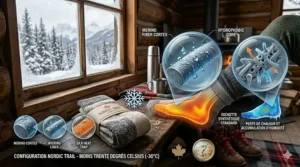
Choosing Socks for Different Canadian Winter Conditions
Canada’s winter camping environments vary dramatically—what works in coastal British Columbia fails spectacularly in the Yukon. Matching your sock choice to specific conditions optimises both comfort and safety.
Mild Winter Camping (-5°C to -15°C)
Southern Ontario, coastal BC, and maritime provinces often see winter camping temperatures in this range. A single medium-weight merino sock (60-70% merino content) often suffices for active pursuits like snowshoeing or cross-country skiing. The moderate temperatures mean moisture management becomes more critical than maximum insulation.
Look for socks with mesh ventilation zones and targeted cushioning rather than full terry construction. The Smartwool Hike Medium Crew excels in these conditions, as does the lighter-weight Darn Tough offerings. If you run cold or plan significant static time, add a thin liner sock.
Moderate Cold (-15°C to -30°C)
This temperature range characterises winter camping across most of inhabited Canada—the prairies, Quebec, interior BC, and southern Yukon. Here, a proper layering system becomes essential: thin merino liner plus heavyweight outer sock forms your baseline.
The J.B. Field’s Icelandic -30°C or Darn Tough Heavyweight options provide excellent outer sock performance. During static activities like setting up camp or cooking, consider pulling chemical toe warmers into the equation as backup heat. Canadian winter campers in Alberta report that their sock system choice in this range makes the difference between enjoying the evening or retreating to the sleeping bag early.
Extreme Cold (Below -30°C)
Arctic expeditions, winter camping in the territories, or polar vortex events demand maximum protection. Triple-layer systems become justified: liner sock, insulating sock, and outer vapour barrier or heavyweight wool. Boot selection matters as much as sock choice—you need winter boots rated for the temperature with sufficient volume to accommodate thick sock systems without restricting circulation.
The J.B. Field’s -40°C and -50°C socks represent specialist equipment for these conditions. Many experienced northern Canadian campers also employ heated insoles or chemical warmers as backup heat sources. At these temperatures, preventing cold injury isn’t about comfort—it’s about safety. According to Health Canada’s cold weather safety information, frostbite can occur in minutes at temperatures below -30°C with wind chill.
Damp Coastal Cold
British Columbia’s coastal winter camping presents a unique challenge: temperatures might only drop to -5°C, but relentless humidity makes everything feel colder. Synthetic-blend socks dry faster in these conditions, though merino still provides superior odour resistance for multi-day trips.
Prioritise socks with excellent moisture wicking and quick-dry properties. Carry extra pairs since you’ll be changing socks more frequently than in dry continental cold. The ability to dry socks near a campfire becomes particularly valuable in coastal environments.
Boot Compatibility and Sizing Considerations
Even the world’s best winter camping socks fail if your boots don’t fit properly. The relationship between boots and socks requires careful attention, particularly for Canadian winter conditions.
Sizing Up for Winter Systems
Your winter boots should accommodate the sock system you plan to use without restricting toe movement or circulation. A properly sized winter boot allows you to wiggle your toes freely whilst wearing your complete sock system. Restriction leads to reduced blood flow, which paradoxically causes colder feet despite wearing more insulation.
Most experienced winter campers size their winter boots a half to full size larger than their summer hiking boots. Try this test: standing in the boot store wearing your intended sock system, kick your heel back firmly to seat it in the boot. You should have roughly a thumb’s width of space in front of your longest toe. Too little space restricts circulation; too much allows your foot to slide forward on descents, causing blisters.
Breaking in New Sock Systems
New merino wool socks often feel snug initially before the fibres relax and mold to your foot. Wear them around the house for several evenings before your winter camping trip. This breaks them in whilst identifying any fit issues—better to discover a problem in your living room than at a remote winter campsite.
Pay particular attention to heel slippage and bunching at the arch. Quality winter socks employ strategic elastic bands to prevent these issues, but individual foot anatomy varies. Some people need to try multiple brands before finding the perfect fit. Canadian retailers often have generous return policies; use them to ensure proper fit.
Lacing Techniques for Layered Sock Systems
When wearing liner plus outer sock combinations, your lacing technique affects both comfort and warmth. The heel-lock lacing method (also called the runner’s loop) prevents your foot from sliding forward in the boot, which becomes particularly important when hiking downhill through deep snow.
After lacing normally to the second-from-top eyelet, create a loop with the lace before crossing to the opposite side. This creates a locking mechanism that holds your heel firmly in the boot whilst the toe box remains less restrictive. Many winter campers report this simple technique eliminates the toe crowding that causes cold feet and black toenails on long downhill sections.
Caring for Winter Camping Socks
Quality merino winter camping socks represent a significant investment—the top performers cost $30-45 per pair. Proper care extends their lifespan dramatically whilst maintaining performance characteristics.
Washing and Drying Protocols
Merino wool requires gentler treatment than synthetic socks. Wash in cold water on a gentle cycle, or hand wash in a sink with wool-specific detergent. Standard laundry detergents contain enzymes that gradually break down wool fibres, reducing their insulating properties over time. Wool-specific detergents like Eucalan or Nikwax Wool Wash protect the fibres whilst effectively cleaning them.
Never use fabric softener on merino socks—it coats the fibres, reducing their moisture-wicking ability. Similarly, avoid bleach, which damages the protein structure of wool fibres. After washing, gently squeeze excess water rather than wringing, which can distort the sock’s shape and damage elastic components.
Air drying is ideal. Lay socks flat on a drying rack away from direct heat sources. Machine drying on low heat is acceptable for most modern merino blends, but high heat can cause shrinkage and damage elastic content. Many premium brands like Darn Tough explicitly state their socks can handle machine drying, but air drying extends lifespan regardless.
Field Care During Multi-Day Trips
During extended winter camping trips in Canada, you won’t have washing facilities. The sock rotation and overnight drying strategy mentioned earlier works well for weekends, but week-long trips require additional planning.
Turn socks inside-out each night to air them thoroughly. The outer surface of the sock has absorbed less moisture and can be rotated to contact your skin the following day. This isn’t ideal, but it extends wearable life. If you have campfire time, hang socks at a safe distance to air-dry (never directly over heat, which can scorch wool).
For severe odour issues, many winter campers pack a small bottle of wool wash and do occasional field washing in melted snow water, then dry socks inside their sleeping bag overnight. This only works in moderately cold conditions; in extreme cold, the moisture risk outweighs the benefit.
Storage Between Seasons
At season’s end, wash all winter socks thoroughly and ensure they’re completely dry before storage. Residual body oils and dirt attract moths, which can devastate a wool sock collection during summer storage. Store in breathable cotton bags with cedar blocks or lavender sachets (natural moth repellents) in a cool, dry location.
Never store in plastic bags, which can trap moisture and encourage mildew. Check stored socks mid-summer for moth damage, particularly if you live in areas where clothes moths are common. Early detection prevents losing entire sock collections to these voracious pests.
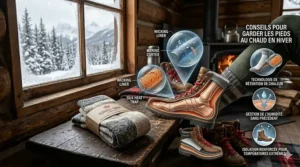
Common Winter Camping Sock Mistakes
Even experienced outdoors enthusiasts make sock-related errors that compromise winter camping comfort. Avoiding these common pitfalls improves your Canadian winter camping experience significantly.
Over-Layering: When More Becomes Less
Beginners often assume that wearing three or four sock layers provides maximum warmth. In reality, excessive sock layers compress your foot inside the boot, restricting blood flow. Reduced circulation means less warm blood reaches your feet—the opposite of the intended effect. Stick to a maximum of two sock layers (liner plus outer) unless you’re using a specialised VBL system.
If two sock layers leave your feet cold, the problem usually lies elsewhere: boots too small, socks too thin for conditions, or poor overall body warmth management. Your feet don’t generate much heat on their own; they rely on warm blood circulated from your core. If your torso isn’t warm, your feet won’t be either, regardless of sock selection.
Wearing Cotton Anything
This bears repeating even though it’s outdoor basics: cotton has no place in Canadian winter camping, including in socks. “Cotton kills” isn’t hyperbole—wet cotton conducts heat away from your body twenty-five times faster than wool, and it dries slowly in winter conditions. Even cotton-blend socks with high merino content perform poorly compared to pure merino-nylon blends.
Check your sock composition carefully. Some budget “merino” socks contain significant cotton content to reduce costs. For winter camping safety, insist on socks that contain zero cotton. The only exceptions are specialised winter dress socks for base camp use, but even these should stay off your feet during any outdoor activities.
Ignoring the Break-In Period
Nothing ruins a winter camping trip faster than discovering your brand-new $45 socks cause blisters on mile three. Always break in new winter socks with multiple day hikes before committing to an overnight trip. This allows the merino fibres to relax and conform to your foot whilst identifying any fit issues.
During break-in, pay attention to any hot spots or pressure points. These minor annoyances become major problems during multi-day trips when you can’t simply drive home. If socks consistently cause issues in the same spot during break-in, that’s a fit problem, not a break-in issue—return them and try a different brand or model.
Sock Solutions for Special Needs
Not everyone’s feet respond the same way to cold. Various medical conditions and individual variations require adapted sock strategies for successful Canadian winter camping.
Managing Raynaud’s Syndrome in the Backcountry
Raynaud’s phenomenon causes excessive blood vessel constriction in fingers and toes when exposed to cold. Sufferers often struggle with conventional winter camping sock systems since even thick wool socks can’t solve a circulation problem. For Raynaud’s sufferers, chemical or electric heated socks become genuine medical equipment rather than luxury items.
The SVPRO heated socks mentioned earlier can be life-changing for people with Raynaud’s. The external heat source compensates for reduced blood flow, maintaining tissue temperature despite vascular constriction. Combine heated socks with chemical toe warmers as backup, and carry extra batteries since cold temperatures reduce lithium battery performance.
Additionally, maintaining core body temperature becomes even more critical. Raynaud’s sufferers should prioritise warmth through the torso and head, ensuring maximum blood flow to extremities. Many find that wearing a down jacket around camp—even if feeling warm—improves peripheral circulation and reduces toe and finger symptoms.
Diabetes and Peripheral Neuropathy Considerations
Diabetics and others with peripheral neuropathy face unique winter camping challenges. Reduced sensation in feet means you might not notice cold injury developing until it’s too late. If you have neuropathy, institute a regular foot check schedule: every hour during the day, examine your feet for colour changes, excessive cold, or tissue damage.
Choose socks with seamless construction and avoid tight elastic bands that might restrict circulation. Monitor your feet more frequently than someone with normal sensation would. Many diabetic winter campers find that slightly oversized boots with thicker sock systems provide better safety margins, even though this approach compromises some technical performance.
Wide or Narrow Feet Challenges
Standard sock sizing doesn’t accommodate all foot shapes. Wide feet often find standard socks too tight across the ball, restricting circulation. Some brands like Darn Tough offer wider sizing options, though selection is limited. The alternative is sizing up and dealing with extra length, which works reasonably well given wool’s ability to conform to foot shape.
Narrow feet have the opposite problem—socks that fit length-wise feel loose around the foot, leading to bunching and blisters. Look for brands with arch support systems that provide compression even on narrow feet. Smartwool’s 4° elite fit system works particularly well for narrower feet, as does Farm to Feet’s compression zones.
Frequently Asked Questions
❓ How many pairs of winter camping socks should I bring on a weekend trip in Canada?
❓ Can I use my summer hiking socks for winter camping in mild conditions?
❓ What's the best way to dry winter camping socks in below-freezing temperatures?
❓ Are expensive winter camping socks like Darn Tough worth the price for casual campers?
❓ Do I need different socks for active hiking versus static winter camping activities?
Conclusion: Building Your Perfect Canadian Winter Sock System
Choosing the right winter camping socks transforms your Canadian wilderness experience from endurance test to genuine enjoyment. After thousands of kilometres across frozen Canadian landscapes—from Yukon ice fields to Quebec’s boreal forests—I’ve learned that foot comfort directly correlates with trip success and safety.
Your ideal sock system depends on three factors: the specific conditions you’ll encounter, your activity level, and your individual physiology. There’s no universal “best” winter camping sock, but there are optimal combinations for each scenario. A thin merino liner paired with heavyweight outer sock handles most Canadian winter camping from -15°C to -30°C. Add chemical warmers or heated socks for extreme cold or poor circulation.
Invest in quality. The performance gap between a $45 Darn Tough sock and a $10 budget option becomes painfully clear at 2 AM when you’re wide awake with frozen toes. The lifetime warranty on premium socks means you’ll likely spend less long-term whilst enjoying superior comfort. For Canadian-made excellence, J.B. Field’s Icelandic series offers outstanding performance at competitive pricing.
Remember that socks are just one component of your winter foot care system. Properly sized boots, careful moisture management, and maintaining core body warmth all contribute to happy feet. Test your complete system on day trips before committing to overnight expeditions. Adjust based on experience rather than assumption.
Canadian winters offer incredible wilderness beauty and solitude unavailable in warmer seasons. With the right sock system protecting your feet, you’re free to focus on the northern lights dancing overhead, the crisp silence of snow-covered forests, and the profound satisfaction of thriving in conditions that keep most people indoors. Don’t let cold feet keep you from these experiences.
Recommended for You
- 7 Best Heated Gloves for Winter Camping in Canada 2026
- 7 Best Winter Mitts for Extreme Cold Canada 2026
- Down vs Synthetic Insulated Jacket Winter: 7 Best for Canada 2026
Disclaimer: This article contains affiliate links to Amazon.ca. If you purchase products through these links, we may earn a small commission at no additional cost to you.
✨ Found this helpful? Share it with your friends! 💬🤗
