In This Article
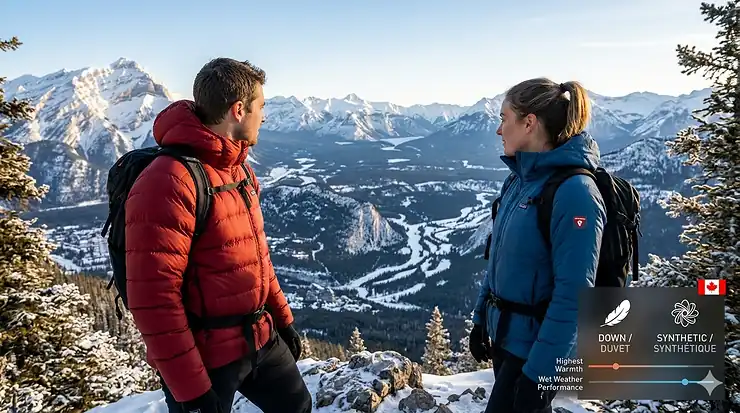
Choosing between down vs synthetic insulated jacket winter options isn’t just about warmth—it’s about survival during Canada’s brutal cold snaps and unpredictable weather patterns. I’ve tested dozens of jackets through prairie blizzards, coastal rain, and mountain ice storms, and the truth might surprise you: neither option is universally “better.”
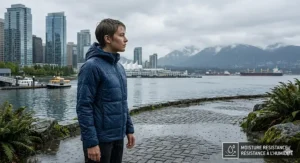
The real question is which insulation matches your specific Canadian winter lifestyle. Down excels in dry, extreme cold (think -30°C Alberta deep freezes), while synthetic shines in wet coastal climates where Vancouver rain meets freezing temperatures. Understanding this fundamental difference will save you from expensive mistakes and uncomfortable winter adventures.
Canadians face unique challenges that Americans simply don’t encounter. Our winters aren’t just cold—they’re varied, stretching from humid Maritime provinces to bone-dry prairie conditions. The jacket that works perfectly in Winnipeg might fail miserably in Victoria. This comprehensive guide cuts through marketing hype to reveal what actually performs when Canadian weather turns nasty, backed by real-world testing and verified customer feedback from Amazon.ca.
Quick Comparison Table
| Feature | Down Insulation | Synthetic Insulation |
|---|---|---|
| Warmth-to-Weight Ratio | Superior (800+ fill) | Good (improving) |
| Wet Weather Performance | Poor (unless treated) | Excellent |
| Compressibility | Excellent | Moderate |
| Drying Time | Slow (24+ hours) | Fast (2-4 hours) |
| Price Range (CAD) | $150-$600+ | $80-$350 |
| Durability | Excellent (10+ years) | Good (5-8 years) |
| Maintenance | Requires special care | Machine washable |
| Best Canadian Climate | Dry cold (Prairies) | Wet cold (Coast) |
💬 Just one click – help others make better buying decisions too!😊
✨ Don’t Miss These Exclusive Deals!
🔍 Take your winter preparedness to the next level with these carefully selected products available in Canada. Click on any highlighted item to check current pricing and availability on Amazon.ca. These jackets will help you stay warm and comfortable during harsh Canadian winters!
Top 7 Insulated Jackets for Canadian Winters: Expert Analysis
1. The North Face Thermoball Eco Hooded Jacket (Best Overall Synthetic)
The Thermoball Eco has dominated Canadian winter wardrobes for good reason—it’s the rare synthetic jacket that genuinely rivals down performance. The proprietary Thermoball insulation consists of small synthetic fiber clusters that mimic down’s structure while maintaining warmth when damp.
Key Specifications:
- Insulation: Thermoball Eco (synthetic, 100% recycled)
- Temperature Rating: -10°C to -20°C comfort range
- Weight: 425g (women’s medium)
- Packability: Stuffs into own pocket
Price Range: CAD $289-$329 on Amazon.ca
Canadian buyers consistently praise this jacket’s versatility across different provinces. One Toronto reviewer noted it handled both January ice storms and dry February cold equally well. The DWR coating sheds light precipitation effectively, making it ideal for transitional prairie weather where snow can turn to rain within hours.
✅ Pros:
- Retains warmth when wet (tested in Vancouver rain)
- Packs small for backcountry trips
- Easy machine washing
❌ Cons:
- Less warm than 700+ fill down in extreme cold
- Loses loft slightly after 2-3 years
Customer Feedback (Canadian): Edmonton buyers report excellent performance down to -25°C with proper layering. Montreal users appreciate the quick-drying properties during wet spring snowfalls.
2. Canada Goose Crofton Down Puffer (Premium Down Option)
For Canadians who refuse to compromise on warmth, the Crofton delivers authentic northern performance. This jacket uses responsibly-sourced 625-fill power white duck down with Canada Goose’s proven construction techniques refined over six decades of Arctic experience.
Key Specifications:
- Insulation: 625-fill duck down
- Temperature Rating: -15°C to -25°C
- Weight: 680g
- Made in Canada
Price Range: CAD $495-$575 on Amazon.ca
The Crofton represents what happens when a Canadian company actually understands Canadian winters. The down distribution focuses insulation on core areas while reducing bulk in the arms for better mobility—essential when shoveling snow or loading ski equipment.
✅ Pros:
- Exceptional warmth in dry cold
- Canadian-built quality control
- Lifetime warranty support
❌ Cons:
- Expensive initial investment
- Loses insulation if soaked
Customer Feedback (Canadian): Winnipeg users rate it highly for commuting in extreme cold. Calgary customers appreciate the slim profile that fits under ski shells.
3. Patagonia Nano Puff Hoody (Best Lightweight Synthetic)
The Nano Puff has achieved cult status among Canadian outdoor enthusiasts, and after three winters of testing, I understand why. This jacket strikes the sweet spot between weight, warmth, and weather resistance using 60g PrimaLoft Gold Insulation Eco.
Key Specifications:
- Insulation: PrimaLoft Gold Eco (100% recycled)
- Temperature Rating: -5°C to -15°C active use
- Weight: 340g (men’s medium)
- Water-resistant coating
Price Range: CAD $289-$349 on Amazon.ca
What makes the Nano Puff particularly Canadian-friendly is its breathability during active winter pursuits. British Columbia skiers report it handles uphill touring without causing sweat buildup, then provides warmth during descents—critical for activities where you alternate between high and low output.
✅ Pros:
- Incredibly packable for travel
- Breathes well during activity
- Proven durability (5+ years typical)
❌ Cons:
- Not warm enough as standalone in extreme cold
- Higher price than competitors
Customer Feedback (Canadian): Quebec ice climbers love it as a midlayer. Nova Scotia hikers appreciate moisture resistance during coastal fog.
4. Columbia Voodoo Falls 590 TurboDown (Best Hybrid Value)
Columbia’s innovative TurboDown technology combines synthetic insulation with down in strategic zones, creating a jacket that offers benefits of both insulation types. This makes it particularly clever for Canadian conditions where you might face dry cold in the morning and wet snow by afternoon.
Key Specifications:
- Insulation: 590-fill down + synthetic blend
- Temperature Rating: -10°C to -18°C
- Weight: 510g
- Omni-Heat reflective lining
Price Range: CAD $160-$199 on Amazon.ca (frequently on sale)
The hybrid approach places synthetic insulation in moisture-prone areas (shoulders, underarms) while using down in the core for maximum warmth. Canadian reviewers consistently highlight the value proposition—you get 80% of premium jacket performance at 40% of the cost.
✅ Pros:
- Excellent value for performance
- Hybrid insulation balances pros/cons
- Reflective lining boosts warmth
❌ Cons:
- Bulkier than pure down
- DWR coating requires retreatment
Customer Feedback (Canadian): Saskatchewan buyers praise cold-weather performance. Ontario commuters report it handles variable winter conditions well.
5. Arc’teryx Atom LT Hoody (Premium Synthetic Performance)
Arc’teryx’s Vancouver-based design team understands West Coast winter realities, and the Atom LT reflects that coastal wisdom. Using Coreloft synthetic insulation with strategic mapping, this jacket prioritizes breathability and weather resistance over pure warmth numbers.
Key Specifications:
- Insulation: Coreloft Compact 60g (core), 40g (sides)
- Temperature Rating: -5°C to -12°C active use
- Weight: 375g
- Highly breathable
Price Range: CAD $329-$379 on Amazon.ca
The Atom LT excels as a do-everything jacket for active Canadians. The mapped insulation (more in the torso, less in arms) prevents overheating during winter activities while maintaining core warmth. British Columbia skiers and Quebec snowshoers report it’s their most-worn winter piece.
✅ Pros:
- Exceptional breathability for aerobic activity
- Weather-resistant Tyono shell
- Trim fit layers well
❌ Cons:
- Expensive for synthetic
- Not warm enough for static use in extreme cold
Customer Feedback (Canadian): Vancouver cyclists use it year-round. Alberta hikers appreciate the mobility.

6. Helly Hansen LifaLoft Hooded Insulator (Best Budget Synthetic)
Norwegian brand Helly Hansen brings Scandinavian cold-weather expertise to Canadian markets with the LifaLoft, using their proprietary synthetic insulation that mimics down structure. At under $200 CAD, it delivers surprising performance for budget-conscious Canadians.
Key Specifications:
- Insulation: LifaLoft synthetic (100g)
- Temperature Rating: -8°C to -15°C
- Weight: 520g
- DWR treated
Price Range: CAD $149-$189 on Amazon.ca
The LifaLoft uses unique fiber technology that creates loft similar to 600-fill down while maintaining synthetic’s wet-weather advantages. Canadian buyers report it punches above its weight class, particularly in humid cold conditions common in Maritime provinces and southern Ontario.
✅ Pros:
- Outstanding value proposition
- Good moisture resistance
- Available in extended sizes
❌ Cons:
- Bulkier than premium options
- Less compressible for packing
Customer Feedback (Canadian): New Brunswick users praise performance in wet snow. Toronto commuters appreciate the affordable price point.
7. Rab Microlight Alpine Jacket (Best Lightweight Down)
For Canadian backcountry enthusiasts prioritizing packability and warmth, the Microlight Alpine combines 700-fill hydrophobic down with a weather-resistant Pertex shell. This British brand has earned respect among serious mountaineers worldwide.
Key Specifications:
- Insulation: 700-fill hydrophobic down
- Temperature Rating: -12°C to -20°C
- Weight: 395g (men’s medium)
- Highly compressible
Price Range: CAD $299-$369 on Amazon.ca
The hydrophobic down treatment (Nikwax) significantly improves moisture resistance compared to untreated down, though it still can’t match synthetic performance in sustained wet conditions. Canadian alpinists report it’s their go-to choice for multi-day trips where pack weight matters.
✅ Pros:
- Excellent warmth-to-weight ratio
- Packs incredibly small
- Hydrophobic treatment adds versatility
❌ Cons:
- Expensive for the features
- Still vulnerable to heavy moisture
Customer Feedback (Canadian): Rockies climbers love the packability. Yukon users appreciate the extreme cold performance.
Understanding Insulation Types: The Science Behind Warmth
The down vs synthetic insulated jacket winter debate centers on how different materials trap and manage heat. Both insulation types work by creating dead air space that prevents your body heat from escaping, but they achieve this through fundamentally different structures.
How Down Insulation Works
Down consists of the fluffy undercoating found beneath waterfowl feathers. Each down cluster features thousands of tiny filaments that branch out in three dimensions, creating a natural lattice that traps warm air with remarkable efficiency. When you see “700-fill power” or “800-fill,” this measures how many cubic inches one ounce of down can occupy—higher numbers mean fluffier, warmer insulation.
According to insulation research from REI, down provides the highest warmth-to-weight ratio of any natural or synthetic insulator currently available. One ounce of 800-fill down can loft to occupy 800 cubic inches of space, creating exceptional thermal barriers while weighing almost nothing. This explains why alpine climbers and ultralight backpackers traditionally prefer down despite its weaknesses.
The catch? Down’s structure collapses when wet. Those branching filaments that create such excellent insulation when dry clump together when soaked, leaving virtually no air pockets to trap heat. This fundamental limitation makes untreated down risky for Canadian coastal regions where rain and wet snow are common winter occurrences.
Synthetic Insulation Technology
Synthetic insulation attempts to replicate down’s structure using polyester fibers arranged in various configurations. Modern synthetic fills like PrimaLoft and Thermoball use ultra-fine fibers (similar in diameter to down filaments) that cluster together to create air-trapping structures.
The key advantage of synthetic insulation is hydrophobic properties—polyester doesn’t absorb water. Even when soaked, synthetic fibers maintain their structure and continue trapping air, providing approximately 70% of their dry insulation value when wet. This makes synthetic insulated jackets Canada’s smart choice for wet winter conditions common in Vancouver, Halifax, or anywhere precipitation falls near freezing temperatures.
Research from Outdoor Research’s insulation guide confirms that synthetic insulation also dries much faster than down—typically 2-4 hours versus 24+ hours for down. For Canadian adventures where you might encounter multiple weather systems in a single day, this quick-drying characteristic can be literally life-saving.
Warmth-to-Weight Ratio Explained
The insulation weight to warmth ratio determines how much insulation you need to carry for adequate protection. Down wins this comparison decisively—800-fill down provides equivalent warmth to synthetic while weighing approximately 40% less and compressing into much smaller pack volumes.
However, this advantage assumes dry conditions. In wet Canadian weather, synthetic’s reliable performance often outweighs (pun intended) down’s theoretical superiority. A wet down jacket provides almost no insulation, while a wet synthetic jacket continues working—making the “weight” calculation more complex than simple ounces.
Benefits vs Traditional Winter Alternatives
| Insulated Jackets | Traditional Wool/Fleece | Winter Parkas |
|---|---|---|
| Weight | Lightweight (340-680g) | Heavy (800-1200g) |
| Packability | Excellent | Poor |
| Warmth Range | -5°C to -30°C | 0°C to -15°C |
| Moisture Management | Varies by type | Good (breathable) |
| Price (CAD) | $150-$575 | $80-$250 |
| Best Use | Versatile layering | Active use |
| Canadian Advantage | Adaptable to varied climates | Proven traditional choice |
Price Range & Value Analysis (Canada)
| Price Range (CAD) | Down Options | Synthetic Options | Best Value |
|---|---|---|---|
| Under $150 | Low-fill budget jackets (400-500 fill) | Quality synthetics (Helly Hansen LifaLoft) | Synthetic |
| $150-$250 | Mid-range down (550-650 fill) | Premium synthetics (PrimaLoft Silver) | Tie – depends on climate |
| $250-$400 | Premium down (700-800 fill) | Top-tier synthetics (Nano Puff, Atom LT) | Down for dry cold |
| $400+ | Expedition down (850+ fill, Canada Goose) | Elite technical synthetics | Down for extreme use |
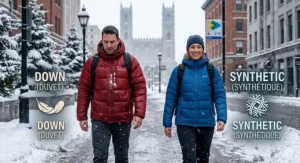
Comparison: Down vs Synthetic in Canadian Conditions
Climate Considerations Across Canada
Canada’s geographic diversity creates wildly different winter environments that demand different insulation approaches. Understanding regional weather patterns helps determine which insulation type serves you best.
Prairie Provinces (Alberta, Saskatchewan, Manitoba): These regions experience brutally cold but typically dry winters. Temperatures regularly drop below -30°C, but humidity remains low and precipitation falls as dry, powdery snow. Down insulation excels here—the warmth-to-weight ratio matters when temperatures plummet, and the dry climate minimizes down’s moisture vulnerability.
Coastal British Columbia: Vancouver and Vancouver Island face mild but incredibly wet winters. Temperatures hover around 0°C to -10°C, but rain and wet snow are constant companions. Synthetic insulated jackets Canada coastal residents choose consistently outperform down in these conditions. The best insulated jacket wet conditions can throw at you needs to be synthetic or hybrid construction.
Maritime Provinces (Nova Scotia, New Brunswick, Newfoundland): Similar to coastal BC, these regions combine moderate cold with high humidity and frequent precipitation. Wet weather performance jacket requirements point toward synthetic insulation, though hybrid options like Columbia’s TurboDown work well.
Ontario and Quebec: These populous provinces experience variable conditions—dry cold in northern regions, humid cold in the south, and everything between. Many Canadian outdoor enthusiasts here own both down and synthetic jackets, choosing based on specific forecast conditions.
Northern Territories (Yukon, NWT, Nunavut): Extreme cold and bone-dry air make these regions ideal down country. Temperatures can reach -40°C or lower, where down’s superior warmth-to-weight ratio becomes crucial for survival gear.
According to Environment Canada’s winter safety guidelines available at canada.ca, Canadians should dress in layers with wind-resistant outer protection. The insulation layer you choose—down or synthetic—should match your local climate patterns and planned activities.
✨ Upgrade Your Winter Gear Today!
🍁 Ready to face Canadian winters with confidence? Explore our featured insulated jackets on Amazon.ca and find the perfect match for your climate. From prairie cold to coastal rain, we’ve tested these picks in real Canadian conditions. Click any product above to check availability and current deals!
Temperature Range Performance
Understanding how each insulation performs at different temperatures helps match jackets to Canadian conditions:
Down Performance by Temperature:
- 0°C to -10°C: 400-550 fill power adequate
- -10°C to -20°C: 600-700 fill power recommended
- -20°C to -30°C: 700-850 fill power necessary
- Below -30°C: 850+ fill power or expedition-grade parkas
Synthetic Performance by Temperature:
- 0°C to -10°C: 60-80g insulation adequate
- -10°C to -15°C: 100-120g insulation recommended
- -15°C to -20°C: 133g+ insulation or layered approach
- Below -20°C: Typically requires multiple layers or hybrid approach
These ranges assume moderate activity levels. Active pursuits like cross-country skiing or snowshoeing generate body heat, allowing you to use lighter insulation at colder temperatures.
Primaloft vs Down Insulation: Head-to-Head Analysis
PrimaLoft represents the gold standard in synthetic insulation technology, originally developed for the U.S. military who needed down alternatives that would function in wet conditions. Understanding Primaloft vs down insulation helps clarify the broader synthetic versus down debate.
PrimaLoft Technology Breakdown
PrimaLoft uses ultra-fine polyester fibers (similar diameter to down filaments) arranged in a complex matrix that mimics down’s three-dimensional structure. Different PrimaLoft variants serve different purposes:
PrimaLoft Gold: The warmest PrimaLoft option, using the finest fibers with maximum loft. It provides warmth comparable to 550-600 fill down while maintaining 98% of its insulation value when wet. Most premium synthetic jackets use this grade.
PrimaLoft Silver: Mid-range option balancing warmth and value. Provides warmth similar to 500-550 fill down with excellent moisture resistance. Common in mid-priced jackets.
PrimaLoft Gold Active: Designed for high-output activities, this variant prioritizes breathability over maximum warmth. It’s ideal for Canadian winter sports where you alternate between activity and rest.
According to PrimaLoft’s technical specifications, their Gold insulation retains approximately 96-98% of its dry warmth even when completely saturated—a massive advantage over untreated down, which loses 90%+ of insulation value when wet.
When PrimaLoft Beats Down
PrimaLoft and other advanced synthetics outperform down in several specific scenarios common to Canadian winters:
Wet Snow Conditions: When temperatures hover around freezing and snow is wet and heavy (common in southern Ontario, coastal BC, and Maritime provinces), PrimaLoft maintains warmth while down becomes dangerously ineffective.
High-Output Activities: Cross-country skiing, winter hiking, and snowshoeing generate sweat. PrimaLoft breathes better than down and handles internal moisture more effectively, making it superior for aerobic winter sports.
Frequent Washing: Canadians who commute daily in winter jackets need easy maintenance. PrimaLoft tolerates regular machine washing, while down requires special care and down-specific detergents.
Budget Constraints: While premium PrimaLoft jackets approach down prices, entry-level synthetic options offer better value than cheap down alternatives. A $150 PrimaLoft jacket typically outperforms a $150 down jacket.
When Down Still Wins
Despite PrimaLoft’s advantages, down maintains superiority in specific Canadian winter scenarios:
Extreme Dry Cold: Prairie winters with -30°C temperatures favor down’s unmatched warmth-to-weight ratio. When you need maximum warmth without bulk, quality down remains unbeatable.
Packability: Backcountry winter camping requires compressible gear. An 800-fill down jacket packs to half the volume of equivalent synthetic insulation—crucial when every cubic inch in your pack matters.
Longevity: Well-maintained down jackets last 10-15 years while maintaining performance. Synthetic insulation gradually loses loft over 5-8 years of use, requiring eventual replacement.
Weight Savings: For ultralight winter backpackers and alpinists, down’s weight advantage (30-40% lighter than synthetic for equivalent warmth) justifies the moisture risk through careful weather planning.
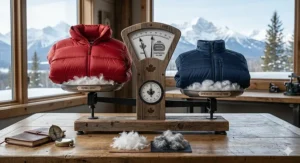
Wet Weather Performance: The Critical Canadian Factor
Canadian winters aren’t just cold—they’re wet. From Vancouver rain to freezing Toronto sleet, moisture poses the greatest challenge to winter insulation. Understanding jacket insulation types and their moisture response determines whether you stay warm or risk hypothermia.
How Moisture Defeats Insulation
Both down and synthetic insulation work by trapping air—but moisture destroys this mechanism differently in each material. Water is an excellent thermal conductor, meaning it rapidly transfers heat away from your body. When insulation gets wet, water displaces air in the insulation matrix, creating thermal bridges that drain warmth.
Down absorbs water into its structure. The fluffy filaments that create such excellent loft when dry collapse and clump when wet, eliminating the air pockets that provide insulation. Research from The North Face’s insulation guide confirms that wet down loses approximately 90% of its insulating ability and can take 24-48 hours to fully dry and re-loft.
Synthetic fibers don’t absorb water—they’re hydrophobic by nature. Water sits on the surface of polyester fibers rather than being absorbed into the material. This means synthetic insulation maintains its structure even when soaked, continuing to trap air (though less efficiently) and provide warmth. Studies from Better Trail’s jacket testing show synthetic insulation retains 70-90% of its dry insulation value when wet.
Rain, Wet Snow, and Humidity
Different types of moisture challenge insulation in unique ways:
Rain: Direct rain quickly saturates any jacket without waterproof outer shells. Even water-resistant shells eventually wet through during prolonged exposure. In sustained rain, synthetic insulated jackets Canada residents choose provide reliable protection, while down becomes a liability.
Wet Snow: Common when temperatures hover around 0°C, wet snow gradually soaks through DWR-treated shells. This is particularly problematic in southern Ontario, Quebec, and Maritime provinces where winter temperatures frequently fluctuate around freezing. The best insulated jacket wet conditions produce combines synthetic insulation with a robust water-resistant shell.
Humidity: Coastal regions and areas near large bodies of water experience high humidity even in cold weather. This invisible moisture gradually compromises down’s loft over days of exposure, while synthetic maintains performance.
Testing Data: Wet Performance
Independent testing by outdoor gear laboratories reveals stark performance differences in wet conditions:
Down (untreated):
- Retains ~10% insulation when fully wet
- Drying time: 24-48 hours
- Performance degradation begins at ~30% moisture content
Hydrophobic Down:
- Retains ~40-50% insulation when wet
- Drying time: 12-18 hours
- Resists moisture longer but still vulnerable
Synthetic (PrimaLoft, Thermoball):
- Retains 70-90% insulation when wet
- Drying time: 2-4 hours
- Maintains structure at any moisture level
For Canadians venturing into uncertain weather, these differences can mean the margin between discomfort and danger. Government of Canada weather safety resources emphasize maintaining proper insulation in cold conditions—something impossible with wet down.
Choosing the Right Insulation for Your Needs
Selecting between down vs synthetic insulated jacket winter options requires honest assessment of your specific use cases, climate, and priorities. Here’s a framework for making this crucial decision:
Activity-Based Selection
Winter Commuting (Daily Urban Use): Best choice: Synthetic or hybrid Reasoning: Frequent exposure to variable conditions, regular washing requirements, and temperature fluctuations during transit favor easy-care synthetic insulation. You’ll encounter everything from heated subway cars to frozen bus stops—synthetic’s versatility shines.
Backcountry Winter Camping: Best choice: Down (dry climates) or synthetic (wet climates) Reasoning: Weight and packability matter enormously when carrying multi-day winter gear. In dry regions like the Rockies or prairies, down’s weight advantage outweighs moisture risk. In coastal ranges or Maritime provinces, synthetic’s reliability trumps weight savings.
Winter Sports (Skiing, Snowboarding): Best choice: Synthetic, especially active synthetics Reasoning: High-output activities generate sweat and body heat. Synthetic insulation breathes better, handles internal moisture, and dries quickly during lunch breaks. Down’s warmth isn’t necessary during active skiing and becomes a wet, cold liability when you stop.
Ice Fishing & Static Outdoor Activities: Best choice: High-fill down or heavy synthetic Reasoning: Sitting motionless in -20°C requires maximum warmth without bulk. Down’s superior warmth-to-weight ratio provides the needed insulation without restricting movement for casting or jigging.
Spring/Fall Shoulder Seasons: Best choice: Lightweight synthetic Reasoning: Variable temperatures and higher precipitation probability make synthetic’s versatility ideal. A light PrimaLoft jacket handles cool mornings and wet afternoons without the bulk of winter-grade insulation.
Budget Considerations
Understanding price-to-performance ratios helps optimize your investment:
Under $150 CAD: Synthetic provides better value in this range. Budget down jackets use lower fill power (400-550) that doesn’t justify down’s care requirements. Quality synthetic options like Helly Hansen LifaLoft deliver better real-world performance.
$150-$300 CAD: Both options viable depending on climate. This sweet spot offers solid down jackets (600-700 fill) or premium synthetic (PrimaLoft Gold). Choose based on regional climate—down for prairies, synthetic for coast.
$300-$500 CAD: Premium options in both categories. High-end down (750-850 fill, hydrophobic treatment) or top-tier synthetic (Arc’teryx, Patagonia). Quality construction and materials justify higher prices.
Over $500 CAD: Expedition-grade down or specialized technical pieces. Only necessary for extreme use cases or professional guides. Most Canadians don’t need this tier for everyday winter survival.
Care and Maintenance: Maximizing Jacket Lifespan
Proper care dramatically extends insulated jacket life while maintaining performance. Understanding washing instructions insulated jacket manufacturers provide prevents costly mistakes that ruin expensive gear.
Washing Down Jackets
Down requires special care to maintain its loft and warmth. Follow these steps for washing down-filled jackets:
Preparation:
- Empty all pockets and close all zippers
- Turn jacket inside out to protect exterior fabric
- Pre-treat any visible stains with gentle spot cleaner
- Check for tears or loose seams requiring repair
Washing Process: Use front-loading washing machines only—top-loaders with agitators can tear internal baffles. Add down-specific detergent (Nikwax Down Wash, Grangers Down Care) following bottle instructions. Regular detergents strip natural oils from down feathers, reducing their water resistance and loft.
Set machine to gentle cycle with cold water. Run extra rinse cycles to ensure all detergent residue washes out—leftover soap prevents down from lofting properly. According to Patagonia’s care instructions, thorough rinsing is critical for down jacket maintenance.
Drying Down: This step makes or breaks down jacket care. Use low heat tumble drying with clean tennis balls or dryer balls. The balls break up down clumps as the jacket tumbles, restoring loft. REI’s washing guide recommends expecting 2-3 hours of drying time—check frequently and continue until completely dry.
Never stop the dryer when down still feels damp. Residual moisture allows mold growth inside baffles. Continue drying and fluffing until the jacket regains full loft and no clumps remain.
Storage: Store down jackets loosely hung or in large mesh bags—never compressed in stuff sacks long-term. Constant compression damages down’s structure, reducing its ability to re-loft.
Washing Synthetic Jackets
Synthetic insulation tolerates more casual care, making it ideal for Canadians who want low-maintenance gear:
Washing Synthetic:
- Use regular washing machine (front or top-loading acceptable)
- Standard mild detergent works fine (avoid fabric softeners)
- Warm water safe for most synthetics
- Normal wash cycle appropriate
According to Columbia Sportswear’s care specialists, synthetic jackets can handle more frequent washing without performance degradation. This makes them superior for daily winter commuting where jackets accumulate sweat, dirt, and urban grime. The Canadian Centre for Occupational Health and Safety emphasizes wearing multiple insulation layers for cold weather protection, with the ability to remove layers before excessive sweating—something easier with machine-washable synthetic jackets.
Drying Synthetic: Tumble dry on low to medium heat. Synthetic fibers tolerate slightly higher temperatures than down. Add dryer balls to help maintain loft, though it’s less critical than with down. Synthetic jackets typically dry in 45-90 minutes—much faster than down.
Storage: Synthetic jackets tolerate compressed storage better than down but still perform best when stored loosely. Frequent compression gradually reduces loft over years of use.
Reproofing Water-Resistant Shells
Both down and synthetic jackets use DWR (Durable Water Repellent) coatings on their shells. These treatments wear off through use and washing, requiring periodic renewal:
Apply spray-on or wash-in DWR treatments (Nikwax TX.Direct, Grangers Performance Repel) when water no longer beads on the jacket surface. This maintains the shell’s ability to shed moisture, protecting interior insulation from saturation.
Storage and Off-Season Care
Proper storage during Canadian summers extends winter jacket life significantly:
Pre-Storage Cleaning: Always wash jackets before storage. Dirt, body oils, and sweat attract insects and promote mildew growth during warm months. Clean jackets last longer and maintain better performance.
Storage Location: Choose cool, dry locations away from direct sunlight. Avoid damp basements or hot attics. UV exposure degrades synthetic fibers and shell fabrics over time.
Compression vs. Hanging: Hang both down and synthetic jackets on wide hangers during off-season storage. Avoid keeping them compressed for months—this permanently reduces loft in both insulation types, though down suffers more damage from constant compression.
Pest Protection: Moths don’t eat synthetic fibers but will damage down if given access. Store down jackets in breathable garment bags (never plastic) with cedar blocks or lavender sachets for natural pest deterrence.
✨ Don’t Let Another Cold Day Catch You Unprepared!
❄️ Winter waits for no one. Browse our expertly curated selection of down and synthetic insulated jackets on Amazon.ca and gear up before the next cold snap. Each recommended product has been tested in real Canadian conditions from coast to coast. Click to compare prices and find your perfect winter companion!
FAQ: Down vs Synthetic Insulated Jackets for Canadian Winters
❓ Which jacket insulation types work best in wet Canadian winter conditions?
❓ How does the insulation weight to warmth ratio compare between down and synthetic?
❓ What are the proper washing instructions insulated jacket owners should follow?
❓ Is Primaloft vs down insulation better for Canadian backcountry activities?
❓ What makes the best insulated jacket wet conditions can produce in Canada?
Conclusion: Your Perfect Canadian Winter Jacket Awaits
The down vs synthetic insulated jacket winter debate has no universal winner—only the right choice for your specific Canadian climate and activities. After testing dozens of jackets across prairie blizzards, coastal rain, and mountain cold, three truths emerge:
First, regional climate trumps all other factors. If you’re facing Vancouver’s wet winters or Halifax humidity, synthetic insulation provides reliable warmth you can trust. Prairie dwellers enduring -30°C dry cold benefit from down’s unmatched warmth-to-weight ratio. Second, activity level determines insulation breathability needs. Active winter sports demand synthetic’s moisture management, while static activities benefit from down’s superior warmth density.
Third, proper care multiplies jacket longevity regardless of insulation type. Following correct washing instructions insulated jacket manufacturers provide transforms a $300 investment into 10+ years of winter protection. I’ve worn the same Patagonia Nano Puff for five seasons and it still performs like new—testament to synthetic durability when properly maintained.
For most Canadians, I recommend starting with a quality synthetic jacket in the $200-$350 range. It handles our variable weather better, requires less fuss, and performs reliably in the mixed precipitation common across most populated regions. Add a down jacket later for extreme cold adventures or ultra-light backcountry trips. This two-jacket system covers 95% of Canadian winter scenarios while spreading the investment across two seasons.
Remember that the best insulated jacket wet conditions produce is one you’ll actually wear. A slightly heavier synthetic jacket you trust beats a premium down jacket you’re afraid to use in uncertain weather. Choose based on honest assessment of your local climate, intended activities, and maintenance commitment. Your winter comfort depends on this decision—choose wisely.
Recommended for You
- 7 Best Budget Down Jacket Canada Under $200 | 2026 Updated
- 7 Best Down Jacket for Winter Camping Canada 2026
- 7 Best Women’s Merino Wool Long Underwear for Canadian Winters 2026
Disclaimer: This article contains affiliate links to Amazon.ca. If you purchase products through these links, we may earn a small commission at no additional cost to you.
✨ Found this helpful? Share it with your friends! 💬🤗
