In This Article
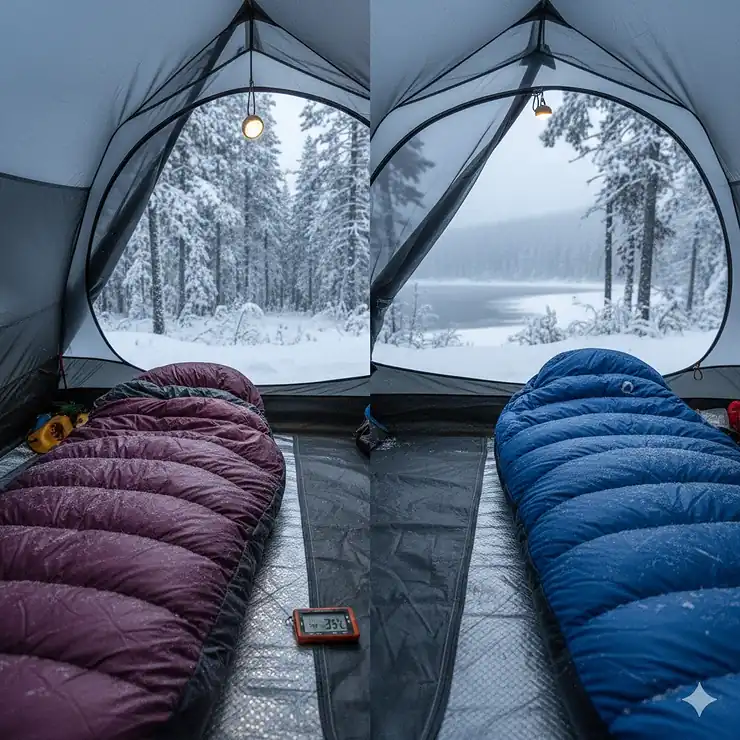
When temperatures plunge to -30°C in the Yukon or you’re facing a frigid February night in the Rockies, your sleeping bag becomes your most critical piece of survival gear. The debate between down vs synthetic sleeping bag extreme cold performance has kept Canadian adventurers arguing around campfires for decades. I’ve tested both types across various extreme conditions, from winter camping in Banff to backcountry expeditions in Northern Ontario, and the truth is more nuanced than most gear reviews suggest.
According to Parks Canada’s winter camping guidelines, proper insulation is essential for safe cold-weather adventures in Canadian national parks. Down sleeping bags offer unmatched warmth-to-weight ratios and packability, making them favourites among ultralight enthusiasts. However, synthetic options have evolved dramatically, providing reliable performance in damp conditions that characterize many Canadian winter environments.
The choice between down vs synthetic sleeping bag extreme cold variants depends on your specific needs: will you face consistently dry, Arctic conditions, or the variable moisture levels of coastal British Columbia winters? Your budget, planned activities, and personal cold tolerance all factor into this decision. This comprehensive guide examines seven top-rated sleeping bags available on Amazon.ca, analyzes the pros and cons of each insulation type, and provides expert recommendations to help you sleep warm during Canadian winters.
Whether you’re a seasoned mountaineer tackling the Columbia Icefields or a family learning winter camping at your local provincial park, understanding insulation technology, moisture management, and temperature ratings will ensure you invest in the right bag for your adventures.
Quick Comparison Table: Top Sleeping Bags for Extreme Cold
| Product | Type | Temperature Rating | Weight | Price (CAD) | Best For |
|---|---|---|---|---|---|
| TETON Sports ALTOS 0°F | Synthetic | 0°F (-18°C) | 3.7 lbs | $139-$179 | Budget-friendly cold weather |
| Mountain Warehouse Extreme Down | Down (75%) | -9°C (15°F) | 0.8 kg | $179-$229 | 3-season versatility |
| US Military ECW Down Bag | Down | -40°F (-40°C) | 4.5 lbs | $249-$329 | Extreme Arctic conditions |
| Marmot Col -20° | Down (650-fill) | -20°F (-29°C) | 3.9 lbs | $979 | Premium mountaineering |
| TETON Sports Celsius 0°F | Synthetic | 0°F (-18°C) | 5.2 lbs | $119-$159 | Car camping/family use |
| Sea to Summit Altitude | Down (850-fill) | -10°F (-23°C) | 2.8 lbs | $699-$849 | Ultralight backpacking |
| Coleman North Rim | Synthetic | -18°C (0°F) | 6.1 lbs | $89-$129 | Entry-level winter camping |
💬 Just one click – help others make better buying decisions too!😊
Top 7 Down vs Synthetic Sleeping Bag Extreme Cold Options: Expert Analysis
1. TETON Sports ALTOS 0°F Sleeping Bag – Best Value Synthetic Option
When researching down vs synthetic sleeping bag extreme cold performance on a budget, the TETON Sports ALTOS 0°F consistently emerges as the best value synthetic option available on Amazon.ca. This mummy-style bag delivers reliable warmth at sub-zero temperatures without the premium price tag of down alternatives.
The innovative microfiber PolarLite insulation offers excellent loft and compressibility while maintaining warmth even in damp conditions. At 3.7 lbs (1.67 kg), it’s surprisingly lightweight for a synthetic bag rated to 0°F (-18°C), making it suitable for backpacking trips through Canadian winters. The bag features a contoured mummy hood with draft collar, full-length zipper draft tube, and reinforced footbox that holds heat where you need it most.
Canadian buyers particularly appreciate the generous sizing—the regular fits up to 6 feet (183 cm) comfortably, addressing complaints about cramped competitor bags. The included compression sack reduces pack size significantly, though it won’t compress as small as equivalent down bags.
Key Specifications:
- Temperature Rating: 0°F (-18°C) comfort, -18°F (-28°C) extreme
- Weight: 3.7 lbs (1.67 kg)
- Fill: Premium PolarLite synthetic fiber
- Available on Amazon.ca: $139-$179 CAD
Pros:
✅ Excellent warmth-to-price ratio for Canadian winters
✅ Insulates when wet unlike traditional down
✅ Includes lifetime warranty from TETON Sports
Cons:
❌ Bulkier than comparable down bags
❌ Slightly heavier for extended backpacking
According to customer reviews from Canadian buyers, this bag performs admirably in temperatures down to -15°C when paired with a quality sleeping pad (minimum R-value of 5). One Alberta camper reported staying warm during a -22°C night in Jasper using just a base layer and fleece inside the bag.
2. Mountain Warehouse Extreme Lightweight Down Sleeping Bag – Compact 3-Season Choice
The Mountain Warehouse Extreme represents an interesting middle-ground in the down vs synthetic sleeping bag extreme cold debate. Filled with 75% grey duck down and 25% feathers, this bag offers genuine down performance at an accessible price point for Canadian outdoor enthusiasts.
Rated to -9°C (15°F) extreme temperature, it’s ideal for shoulder-season camping across Canada and milder winter nights. The 2/3 season rating makes it versatile for spring through fall use in most provinces. At just 0.8 kg (1.76 lbs), this bag packs incredibly small—30cm x 14cm when compressed—making it perfect for kayaking trips, bikepacking adventures, or any situation where space is premium.
However, Canadian reviewers note limitations in truly extreme cold. The bag’s performance relies heavily on staying dry, and the relatively thin shell fabric requires careful handling to prevent tears. The hood design and draft collar could be more robust for serious winter expeditions.
Key Specifications:
- Temperature Rating: -9°C (15°F) extreme
- Weight: 0.8 kg (1.76 lbs)
- Fill: 75% grey duck down, 25% feathers
- Available on Amazon.ca: $179-$229 CAD
Pros:
✅ Exceptional packability for multi-sport adventures
✅ Lightweight for extended trips
✅ Internal pocket for valuables
Cons:
❌ Not suitable for extreme Canadian winters below -10°C
❌ Shell fabric less durable than premium options
Canadian buyers from Ontario and Quebec report this bag works well for fall camping and early winter outings when paired with appropriate base layers. It’s become popular among canoe-camping enthusiasts who appreciate the small pack size.
3. US Military Subzero Extreme Cold Weather (ECW) Down Sleeping Bag – Proven Arctic Performance
When evaluating down vs synthetic sleeping bag extreme cold capabilities, few bags match the legendary US Military ECW Down Bag. Originally designed for military operations in Arctic environments, this heavyweight champion has been field-tested in some of Earth’s harshest conditions.
Rated to -40°F (-40°C), this genuine military surplus bag represents serious cold-weather protection. The massive amount of high-loft down insulation creates a cocoon of warmth even in the most brutal Canadian winter nights. The robust nylon shell withstands years of hard use, and the simple, functional design prioritizes warmth over weight savings.
At 4.5 lbs (2.04 kg), it’s heavier than modern ultralight alternatives but remains manageable for winter camping, ice fishing shelters, or basecamp expeditions. The olive drab green colour and utilitarian construction won’t win design awards, but they deliver uncompromising performance when temperatures drop to dangerous levels.
Key Specifications:
- Temperature Rating: -40°F (-40°C) genuine military spec
- Weight: 4.5 lbs (2.04 kg)
- Fill: High-loft military-grade down
- Available on Amazon.ca: $249-$329 CAD
Pros:
✅ Proven performance in true Arctic conditions
✅ Bombproof construction built for decades of use
✅ Exceptional value for extreme cold capability
Cons:
❌ Heavier and bulkier than modern alternatives
❌ Lacks modern features like hydrophobic down treatment
Canadian Arctic researchers, ice road truckers, and winter outfitters have relied on these bags for generations. One Yukon guide reported using the same ECW bag for 15 years of winter operations without performance degradation. While not the lightest option for down vs synthetic sleeping bag extreme cold comparisons, it’s among the most reliable.
4. Marmot Col -20° Down Sleeping Bag – Premium Mountaineering Excellence
For serious alpinists and mountaineers confronting the question of down vs synthetic sleeping bag extreme cold performance, the Marmot Col -20° represents the pinnacle of cold-weather sleeping bag engineering. This expedition-grade bag delivers professional-level warmth using responsibly sourced 650-fill-power down.
The Col features Marmot’s advanced MemBrain waterproof breathable fabric technology, which addresses down’s traditional weakness in wet conditions. The fabric reacts to interior temperature changes, increasing breathability to prevent moisture accumulation while maintaining water resistance. Cross-baffle construction prevents down migration and eliminates cold spots that plague lesser bags.
At 3.9 lbs (1.77 kg) for the regular length, the Col achieves remarkable warmth without excessive weight. The anatomical footbox, draft collar, and contoured hood create an efficient thermal envelope. Internal stash pockets keep essentials like headlamps accessible. Available through specialty retailers and Amazon.ca marketplace sellers, this bag commands premium pricing but delivers performance that justifies the investment.
Key Specifications:
- Temperature Rating: -20°F (-29°C) comfort
- Weight: 3.9 lbs (1.77 kg) regular
- Fill: 650-fill-power RDS-certified down
- Available in Canada: $979 CAD
Pros:
✅ Professional-grade construction for serious expeditions
✅ Advanced moisture management with MemBrain fabric
✅ Lifetime warranty and repair service
Cons:
❌ Premium price point limits accessibility
❌ Overkill for casual winter camping
Canadian mountaineers targeting winter ascents in the Rockies or ice climbing in Quebec’s Parc national de la Gaspésie consistently choose the Marmot Col. The sleeping bag moisture management capabilities make it particularly suitable for multi-day alpine expeditions where tent condensation is unavoidable.
5. TETON Sports Celsius 0°F Sleeping Bag – Family-Friendly Synthetic Warmth
The TETON Sports Celsius 0°F addresses the down vs synthetic sleeping bag extreme cold question from a practical, family-oriented perspective. This rectangular sleeping bag prioritizes comfort and affordability over ultralight performance, making it ideal for car camping, winter cabin trips, and introducing children to cold-weather outdoor adventures.
The generous cut allows for sleeping in multiple positions—a significant advantage over restrictive mummy bags during long winter nights. At 5.2 lbs (2.36 kg), weight isn’t a concern when you’re not backpacking. The soft poly-flannel lining feels luxurious against skin, and the half-circle hood provides warmth without claustrophobia.
Double-layer construction and draft tubes prevent heat loss through the zipper. The bag can fully unzip to create a blanket—perfect for milder conditions or indoor use. TETON includes a compression sack, though realistically, this bag is best suited for vehicle-based camping where space isn’t constrained.
Key Specifications:
- Temperature Rating: 0°F (-18°C)
- Weight: 5.2 lbs (2.36 kg)
- Fill: Synthetic fiber insulation
- Available on Amazon.ca: $119-$159 CAD
Pros:
✅ Spacious design comfortable for all sleeping positions
✅ Budget-friendly for families outfitting multiple campers
✅ Low-maintenance synthetic fill
Cons:
❌ Too heavy/bulky for backpacking
❌ Less efficient warmth-to-weight than mummy designs
Ontario families winter camping in provincial parks and ice fishing enthusiasts across the prairies appreciate this bag’s practical approach to warmth. One Saskatchewan customer reported using three Celsius bags to outfit their family for winter outings, praising the value proposition compared to down alternatives.
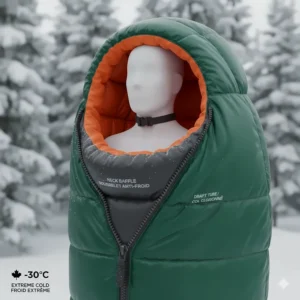
6. Sea to Summit Altitude At III -10°F Down Sleeping Bag – Ultralight Backpacking Champion
When serious backpackers evaluate down vs synthetic sleeping bag extreme cold options, the Sea to Summit Altitude At III consistently tops wish lists. This premium bag uses 850+ fill-power ULTRA-DRY Down™ with fluorocarbon-free hydrophobic treatment, achieving exceptional warmth without excessive weight.
At just 2.8 lbs (1.27 kg) for the regular length, the Altitude delivers -10°F (-23°C) comfort while packing smaller than most synthetic bags rated for far warmer temperatures. The PFC-free hydrophobic down treatment retains 60% more loft when damp and dries 60% faster than untreated down—critical advantages for drying time sleeping bag winter expeditions in variable Canadian conditions.
The premium Pertex Quantum shell fabric balances breathability with weather resistance. Vertical baffle construction prevents down shifting. The bag includes Sea to Summit’s Home Stretch panel system, which allows some stretch for a more comfortable fit without compromising thermal efficiency.
Key Specifications:
- Temperature Rating: -10°F (-23°C) comfort
- Weight: 2.8 lbs (1.27 kg) regular
- Fill: 850+ fill-power ULTRA-DRY Down™
- Available through specialty retailers: $699-$849 CAD
Pros:
✅ Exceptional warmth-to-weight ratio for extended trips
✅ Advanced hydrophobic down treatment for sleeping bag moisture management
✅ RDS-certified ethically sourced down
Cons:
❌ Premium pricing requires significant investment
❌ Less forgiving fit than roomier bags
Canadian thru-hikers on the Great Divide Trail and winter backpackers in the Bugaboos choose this bag when packability vs warmth sleeping bag performance is paramount. The combination of lightweight construction and genuine cold-weather capability makes it ideal for alpine starts and lightweight winter expeditions.
7. Coleman North Rim 0°F Sleeping Bag – Budget Entry Point
Rounding out our down vs synthetic sleeping bag extreme cold comparison, the Coleman North Rim offers the most accessible entry point for Canadians exploring winter camping. This synthetic bag delivers 0°F (-18°C) protection at a price point that won’t intimidate beginners.
The semi-rectangular shape provides more room than strict mummy bags while maintaining reasonable thermal efficiency. Coleman’s Coletherm insulation uses hollow-core fibers that trap warm air effectively. The Thermolock draft tube and zipper baffle prevent heat escape. At 6.1 lbs (2.77 kg), it’s the heaviest bag in our comparison, but weight matters less for car camping at established campgrounds.
The ZipPlow zipper system prevents snags—a thoughtful detail at this price point. Machine washable construction simplifies maintenance. While it lacks the advanced features of premium bags, the North Rim delivers honest performance for recreational winter camping across Canada.
Key Specifications:
- Temperature Rating: 0°F (-18°C)
- Weight: 6.1 lbs (2.77 kg)
- Fill: Coletherm hollow-fiber synthetic
- Available on Amazon.ca: $89-$129 CAD
Pros:
✅ Most affordable cold-weather option for beginners
✅ Machine washable for easy maintenance
✅ Reliable brand with widespread availability
Cons:
❌ Heaviest and bulkiest option reviewed
❌ Basic features compared to premium alternatives
First-time winter campers and budget-conscious outdoor enthusiasts across Canada rely on Coleman bags to get started. One Nova Scotia customer reported using the North Rim for three seasons of winter camping before upgrading to a lighter option, proving it provides solid value for occasional use.
✨ Don’t Miss These Exclusive Deals!
🔍 Take your winter camping adventures to the next level with these carefully selected products available in Canada. Click on any highlighted item to check current pricing and availability on Amazon.ca. These sleeping bags will help you create authentic wilderness experiences your family will remember forever!
Understanding Down vs Synthetic Sleeping Bag Extreme Cold Performance
The fundamental distinction between down and synthetic insulation stems from their physical properties and how they trap heat. Down insulation consists of the plumule clusters found beneath waterfowl feathers, creating thousands of tiny air pockets that provide exceptional warmth-to-weight ratios. Synthetic insulation uses engineered fibers designed to mimic down’s structure while offering different performance characteristics.
Down Sleeping Bag Pros and Cons Winter Considerations
Advantages of Down in Extreme Cold:
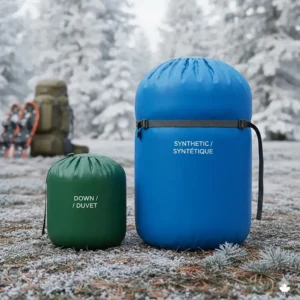
Down sleeping bag pros and cons winter analysis reveals significant benefits for dry, stable conditions. Superior compressibility allows down bags to pack 30-50% smaller than synthetic equivalents, crucial for extended winter backpacking trips where gear volume matters. The warmth-to-weight ratio remains unmatched—an 850-fill down bag provides more insulation per gram than any synthetic alternative.
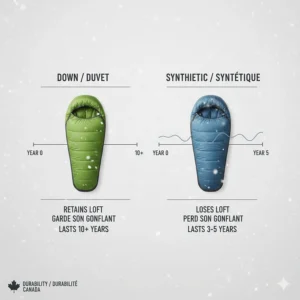
Durability represents another down advantage. Quality down sleeping bags maintain loft and thermal performance for 10-15 years with proper care, while synthetic insulation gradually loses effectiveness. The natural resilience of down clusters allows them to spring back repeatedly, whereas synthetic fibers eventually become permanently compressed.
Fill power indicates down quality, measuring the volume one ounce of down occupies when fully lofted. Higher fill power (750-900+) provides more warmth per ounce, allowing lighter bag construction for equivalent temperature ratings. Canadian winter enthusiasts targeting extreme cold should prioritize 700+ fill power for optimal performance.
Disadvantages of Down:
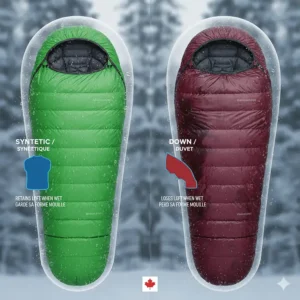
Moisture vulnerability represents down’s critical weakness. When wet, down clumps and loses most insulating ability—potentially dangerous in extreme cold. Traditional down absorbs water readily and dries slowly, problematic during multi-day winter trips where drying gear becomes challenging. This limitation makes down risky in coastal British Columbia winters or situations involving tent condensation.
Cost presents another barrier. Quality down sleeping bags start around $400 CAD and can exceed $1,000 for expedition-grade models. While the investment pays off over years of use, the initial expense discourages many Canadian outdoor enthusiasts.
Allergies affect some individuals, though properly cleaned down rarely causes issues. Ethical concerns about down sourcing led to the Responsible Down Standard (RDS), which certifies humane treatment of waterfowl. Canadian buyers should verify RDS certification when purchasing down products.
Synthetic Insulation: Modern Solutions for Canadian Winters
Advantages of Synthetic Fill:
Synthetic bags excel in wet conditions—the defining advantage when comparing down vs synthetic sleeping bag extreme cold performance in variable climates. Polyester fibers maintain insulating properties when damp, providing safety margins during unexpected weather changes. Quick drying time sleeping bag winter expeditions favour synthetic options in humid environments.
Affordability makes synthetic bags accessible. Quality models range from $100-$300 CAD, allowing families to outfit multiple members without breaking budgets. Lower initial costs reduce anxiety about damaging expensive gear during learning phases.
Easy maintenance simplifies care. Most synthetic bags tolerate machine washing, while down requires specialized cleaning. This convenience matters for families and outdoor educators managing multiple bags. Synthetic insulation also performs immediately out of the stuff sack, whereas down requires time to fully loft.
Hypoallergenic properties eliminate concerns for sensitive individuals. Synthetic fibers don’t harbor dust mites or allergens that occasionally affect down users.
Disadvantages of Synthetic:
Weight and bulk represent significant drawbacks. Synthetic bags weigh 20-40% more than equivalent down bags and compress less effectively. This matters enormously for backpacking—a synthetic -20°C bag might weigh 4.5 lbs and occupy twice the pack volume of a comparable down bag.
Durability limitations affect long-term value. Synthetic insulation gradually loses loft through compression cycles, with noticeable performance degradation after 3-5 years of regular use. The fibers break down mechanically, unlike down’s natural resilience.
Thermal efficiency lags behind premium down. Achieving equivalent warmth requires more synthetic insulation, creating the weight penalty that makes packability vs warmth sleeping bag comparisons favour down for serious cold weather applications.
Hydrophobic Down Treatment: Bridging the Gap
Modern hydrophobic down treatment technology addresses down’s traditional moisture vulnerability. Manufacturers apply water-repellent coatings to individual down clusters, allowing them to resist moisture absorption while maintaining natural loft. This innovation significantly impacts down vs synthetic sleeping bag extreme cold performance equations.
How Hydrophobic Down Works
Water-repellent treatments coat each down plumule with fluorocarbon-free hydrophobic chemicals, creating surface tension that forces moisture to bead and roll off rather than absorbing. Leading treatments include Nikwax Hydrophobic Down, DownTek™, and ULTRA-DRY Down™. These technologies claim 30-60% less moisture absorption and 60% faster drying compared to untreated down.
Research shows treated down retains approximately 60% more loft when exposed to moisture than untreated alternatives. For sleeping bag moisture management in variable Canadian conditions, this represents substantial improvement. A bag that maintains more loft when damp provides better insulation, potentially preventing dangerous heat loss during unexpected condensation or wet snow exposure.
However, treatments aren’t permanent. Repeated washing and use gradually diminish effectiveness, typically requiring re-treatment after 3-5 years. Some manufacturers offer proprietary re-treatment products, though effectiveness varies. The treatments also add cost—bags with hydrophobic down typically command $100-200 CAD premiums over standard down equivalents.
Practical Implications for Canadian Winters
For dry, cold environments like the Yukon or northern Alberta winters, hydrophobic down treatment provides insurance rather than necessity. These conditions rarely expose sleeping bags to significant moisture beyond normal breath condensation. The treatment offers peace of mind but may not justify premium pricing.
Coastal and maritime winter camping in British Columbia, Atlantic Canada, and the Great Lakes region benefits substantially from hydrophobic down. Higher humidity, variable temperatures, and increased precipitation make moisture management critical. The treatment’s ability to maintain loft when damp could prevent uncomfortable nights or dangerous situations.
Alpine environments present mixed scenarios. High-altitude Canadian Rockies expeditions experience low humidity but significant tent condensation from breathing and cooking. Hydrophobic treatment helps manage this moisture while avoiding the weight penalty of synthetic alternatives.
Sleeping Bag Moisture Management: Critical Winter Skill
Understanding moisture sources and management strategies proves equally important as choosing between down vs synthetic sleeping bag extreme cold options. Even the best insulation fails when saturated, making moisture control a survival skill for Canadian winter adventures.
Moisture Sources in Winter Camping
Breath condensation represents the primary moisture source. Humans exhale approximately one litre of water vapour nightly. In cold tents, this moisture freezes on tent walls before melting and dripping onto gear. Proper tent ventilation helps, but some condensation remains inevitable.
Body perspiration continues even during sleep, especially when over-insulated. The “sweat and freeze” cycle degrades sleeping bag performance over multi-day trips. Wearing appropriate base layers that wick moisture away from skin toward the bag’s exterior helps manage this issue.
External environmental moisture includes snow tracked into tents, melting ice from gear, and cooking steam. Disciplined tent management practices minimize these sources. Shaking snow from boots and clothing before entering, cooking in vestibules, and using stuff sacks for wet gear all help.
Ground moisture wicks through tent floors and sleeping pads in less-than-ideal conditions. Quality sleeping pads with high R-values (minimum 5 for winter) provide essential ground insulation while preventing moisture transfer. Groundsheets add another protective layer in wet snow conditions.
Management Strategies
Daily airing prevents gradual moisture accumulation. During multi-day winter trips, spread sleeping bags in sunshine whenever possible. Even 15 minutes of solar exposure helps dry accumulated moisture. Wind helps too—hang bags from tent lines during breaks, allowing air circulation.
Vapour barriers represent advanced moisture management. Special liners trap body moisture against skin rather than allowing it to migrate into insulation. While initially uncomfortable, vapour barriers prevent insulation degradation during extended cold-weather expeditions. Ice climbers and Arctic travelers use them regularly.
Proper storage maintains long-term performance. Never store sleeping bags compressed—hang them loosely or keep in large storage sacks allowing loft retention. Store in dry environments avoiding basements or sheds with humidity issues. Annual inspections identify problems before they compromise field performance.
Western Mountaineering vs Feathered Friends: Premium Down Bag Comparison
For Canadian mountaineers and serious winter adventurers researching Western Mountaineering vs Feathered Friends options, both manufacturers represent the pinnacle of down sleeping bag craftsmanship. These Seattle-area companies have supplied expedition-grade bags to professional climbers and polar explorers for decades.
Western Mountaineering Excellence
Western Mountaineering sleeping bags use exclusively high-fill-power goose down (850-900+) sourced from responsible suppliers. Their signature continuous baffle construction eliminates sewn-through cold spots, wrapping insulation completely around the sleeper. The MegaLoft bags rated to -40°F use massive amounts of premium down, creating bulletproof warmth for extreme Canadian winters.
Quality control exceeds industry standards. Each bag undergoes individual inspection, with fill amounts verified to ensure actual down weight exceeds specifications. The microfiber shell fabrics balance breathability with down-proof construction. YKK zippers withstand thousands of cycles. These bags commonly last 15-20 years with proper care.
Availability in Canada requires specialty retailers or direct ordering. Prices reflect premium positioning—expect $800-$1,400 CAD for expedition-grade models. However, the cost-per-use calculation favours Western Mountaineering for serious users planning decades of winter adventures.
Feathered Friends Alternative
Feathered Friends matches Western Mountaineering’s quality while offering different design philosophies. Their bags feature slightly roomier cuts accommodating broader shoulders and active sleepers. The proprietary down cleaning and sorting process ensures maximum loft and cleanliness.
The Snowbunting -10°F and Vireo -20°F models suit Canadian alpine pursuits perfectly. Advanced features include offset quilt construction preventing cold spots and waterproof footboxes protecting against tent condensation. Like Western Mountaineering, Feathered Friends offers custom sizing—invaluable for the 6’3″+ crowd often cramped in standard bags.
Pricing aligns closely with Western Mountaineering. The investment buys American-made craftsmanship, lifetime repair services, and performance that synthetic bags can’t match at comparable weights.
Which Suits Canadian Needs?
Both brands excel for serious winter mountaineering and Arctic expeditions. Western Mountaineering’s continuous baffles edge ahead in absolute warmth, while Feathered Friends’ roomier cuts benefit active sleepers. Neither disappoints—the choice comes down to personal fit preferences and specific feature priorities.
For casual winter campers or those requiring periodic extreme cold protection, the premium pricing may exceed reasonable budgets. Quality mid-range down bags from Marmot, Mountain Hardwear, or NEMO deliver 90% of the performance at 60% of the cost—a better value proposition for most Canadians.
Marmot CWM vs Mountain Hardwear: Mountaineering Bag Showdown
Comparing Marmot CWM vs Mountain Hardwear expedition bags reveals interesting trade-offs between weight, warmth, and moisture management. Both companies produce professional-grade equipment trusted by Canadian mountain guides and international expeditions.
Marmot CWM Analysis
The Marmot CWM (Central Wales Mountaineering) -40°F represents their flagship expedition bag. The name honours the iconic Welsh mountain where early testing occurred. This bag uses 800+ fill-power down with Pertex Shield waterproof breathable fabric—a membrane that prevents moisture penetration while allowing vapour escape.
At approximately 5 lbs (2.27 kg) for the regular length, the CWM delivers proven -40°C performance. The central zipper placement allows easy access while maintaining thermal efficiency. Dual side zippers enable arm use without fully opening the bag. Multiple internal pockets store boot liners, water bottles, and electronics requiring body heat protection.
Cross-baffle construction prevents down migration. The wraparound footbox increases warmth in the critical toe area. Reinforced bootie lining withstands abrasion from frozen boot liners. These details reflect decades of expedition feedback incorporated into design.
Canadian retailers stock the CWM sporadically, with prices around $1,100-$1,300 CAD. The Marmot Col -20°F offers similar technology at a more accessible $700-$979 price point for those not requiring absolute extreme cold capability.
Mountain Hardwear Alternatives
Mountain Hardwear’s Phantom -40°F competes directly with the Marmot CWM. Using 800-fill Q.Shield Down with water-repellent treatment, the Phantom achieves similar warmth at approximately 4.5 lbs (2.04 kg)—a 0.5 lb weight savings. The thermal.q insulation uses varying down densities strategically placed for optimal warmth-to-weight ratio.
The Lamina synthetic series provides excellent value for Canadians prioritizing moisture resistance over weight savings. The Lamina -30°F uses Thermal.Q synthetic insulation throughout, maintaining warmth when wet at 3.9 lbs (1.77 kg). While bulkier than down equivalents, synthetic construction suits coastal winter climbing and variable weather expeditions.
Head-to-Head Comparison
For absolute extreme cold in dry conditions, the Marmot CWM edges ahead with superior moisture barrier technology and proven performance in Himalayan expeditions. The waterproof shell provides genuine protection against external moisture rarely found in sleeping bags.
Mountain Hardwear wins on versatility and value. The Phantom costs $200-300 CAD less while delivering comparable warmth at reduced weight. For Canadian Rockies alpinism or general mountaineering, the Phantom’s combination of features, weight, and price point makes it highly competitive.
Both bags require significant investment but deliver professional-grade performance justifying costs for serious users. Weekend warriors should consider more affordable options unless planning genuine expedition objectives.

Packability vs Warmth Sleeping Bag: Finding Your Balance
The packability vs warmth sleeping bag equation represents the fundamental compromise in cold-weather sleeping bag selection. Maximum warmth requires substantial insulation, adding weight and volume. Ultralight, compact bags sacrifice thermal capacity. Understanding your specific priorities determines the optimal balance.
Ultralight Prioritization
Serious backpackers traveling 15+ kilometres daily with full winter camping loads prioritize packability aggressively. Carrying a 6 lb sleeping bag on a five-day winter trip adds 30 lbs to total load—equivalent to three extra days of food. The physical toll reduces enjoyment and increases injury risk.
For these users, premium down bags with 850-900 fill power provide optimal solutions. A quality -15°C bag can weigh under 3 lbs and compress to volleyball size. This allows reasonable pack volumes while maintaining safety margins. Accepting slightly lower temperature ratings (sleeping in extra clothing layers when needed) trades absolute warmth for mobility.
Base weight fanaticism requires honest assessment. Shaving 2 lbs from sleeping bag weight while remaining safe in expected conditions makes sense. Compromising safety to achieve arbitrary weight targets courts disaster. Know your cold tolerance, typical low temperatures, and realistic worst-case scenarios.
Warmth Prioritization
Car campers, ice fishing enthusiasts, and those establishing base camps can ignore weight concerns. A 6 lb synthetic bag rated to -30°C costs half the price of equivalent down while providing superior moisture resistance—perfect for the truck bed or ice hut.
Family winter camping benefits from prioritizing warmth and comfort over packability. Children particularly need generous temperature ratings since their smaller bodies struggle maintaining heat. The psychological comfort of knowing everyone stays genuinely warm outweighs pack size considerations when vehicles transport gear.
Extreme expeditions where temperatures approach -40°C demand maximum warmth regardless of weight penalties. Arctic researchers, ice road workers, and polar adventurers accept 5-6 lb sleeping bags because the alternative is dangerous. At these extremes, the down vs synthetic sleeping bag extreme cold debate clearly favours massive down bags with proven performance.
Practical Compromises
Most Canadian winter enthusiasts fall between extremes. Weekend trips within 5-10 km of trailheads allow moderate-weight bags (3.5-4.5 lbs) with generous temperature ratings. This provides comfortable warmth without crippling pack weight for short approaches.
Seasonal variation affects decisions. Spring and fall shoulder seasons in southern Canada rarely drop below -10°C, allowing lighter bags. Deep winter trips in Alberta or Saskatchewan regularly see -25°C, requiring serious insulation. Owning multiple bags for different seasons makes sense for active users.
The “one bag solution” requires careful analysis of your coldest regular conditions. A quality -15°C bag handles 80% of Canadian winter camping scenarios. Adding a light 3-season bag for milder trips costs less than one expedition-grade extreme cold bag while providing more versatility.
Temperature Ratings Decoded: What Numbers Really Mean
Temperature ratings create confusion because manufacturers use different standards, testing methods, and marketing approaches. Understanding the rating systems helps translate numbers into real-world performance for Canadian winter conditions.
EN/ISO Testing Standards
The European Norm (EN) 13537 and newer ISO 23537 standards provide the most reliable temperature ratings. These independent tests measure three ratings:
Comfort Rating: The lowest temperature at which an average cold sleeper (typically female) sleeps comfortably. This represents the conservative rating most users should follow.
Lower Limit Rating: The lowest temperature at which an average warm sleeper (typically male) sleeps comfortably. More optimistic than comfort ratings, suitable for warm sleepers.
Extreme Rating: The lowest temperature providing survival-level protection against hypothermia. This does NOT mean comfortable sleep—it means you’ll likely survive the night if properly clothed. Ignore extreme ratings for comfort planning.
Testing uses standardized mannequins wearing long underwear on insulated sleeping pads. Real-world performance varies based on personal metabolism, food intake, hydration, and physical condition. The ratings provide comparison baselines rather than guarantees.
Manufacturer Claims vs Reality
Non-tested bags (common on budget models) use marketing-driven ratings often exceeding actual performance. A “$50 sleeping bag rated to -20°C” likely fails testing standards and provides genuinely comfortable sleep only to -5°C or warmer.
Conservative manufacturers like Western Mountaineering and Feathered Friends rate bags below tested performance, ensuring customer satisfaction. Their -10°F bag might test comfortably to -15°F. This builds brand loyalty but makes direct comparisons with aggressive competitors difficult.
Canadian winter conditions include wind, humidity, and altitude factors not captured in lab testing. A bag rated to -15°C comfort works reliably to that temperature in sheltered lowland conditions. The same bag at 3,000m elevation with wind-driven snow requires supplemental insulation or warmer ratings.
Practical Temperature Selection
Add 10-15°C safety margin to expected low temperatures. Planning winter camping where overnight lows average -10°C? Choose bags rated to -20°C or -25°C comfort. This accounts for unexpectedly cold nights, personal variation, and aging insulation.
Consider your sleeping style. Cold sleepers (those who frequently feel chilled) should add extra margin. Warm sleepers tolerating lower temperatures can approach comfort ratings more closely. Women generally sleep colder than men and benefit from warmer ratings.
Sleeping pad R-values critically affect perceived warmth. Bags tested on R-5 pads lose performance on R-3 pads. Winter camping requires minimum R-5 pads, preferably R-6+. Ground insulation prevents heat loss accounting for 30-40% of total thermal performance.
Proper Care and Maintenance for Long-Term Performance
Quality sleeping bags represent significant investments deserving proper care. Following manufacturer guidelines extends lifespan from 5-7 years to 15-20 years while maintaining optimal performance. Care requirements differ between down and synthetic bags.
Down Sleeping Bag Care
Storage: Never store down bags compressed. Hang them loosely or keep in oversized cotton storage sacks. Compression damages down clusters, gradually reducing loft. Proper storage maintains original performance for decades.
Washing: Wash down bags only when noticeably dirty—typically every 30-50 nights of use. Oils from skin and dirt accumulate, eventually reducing loft. Use front-loading washers (top-loaders damage baffles) with specialized down wash products. Regular detergents strip natural oils and clump down.
Rinse thoroughly—soap residue attracts moisture and reduces loft. Add extra rinse cycles ensuring complete soap removal. Expect washing to take 2-3 hours including rinses.
Drying: Machine dry on low heat with clean tennis balls or specialized dryer balls. The balls break up down clumps, restoring loft. Drying requires 3-4 hours minimum. Rushing creates permanent clumping. Ensure complete dryness before storage—residual moisture causes mildew and odour.
Re-Treatment: Hydrophobic down treatments diminish after washing. Re-apply water-repellent treatments following manufacturer instructions. Nikwax Down Proof and similar products restore moisture resistance when applied correctly.
Synthetic Bag Care
Storage: While less critical than down, synthetic bags also benefit from loose storage. Constant compression permanently flattens fibers, reducing loft. Hang or use large storage sacks between trips.
Washing: Synthetic bags tolerate regular washing better than down. Most are machine washable in regular detergent. Follow manufacturer instructions—some specify cold water, others warm. Front-loading washers remain gentler than top-loaders.
Drying: Machine dry on low-medium heat. Synthetic insulation dries faster than down but still requires adequate time. Remove periodically to break up any clumps. Overdrying damages fibers—remove when fully dry but not hot.
Lifespan: Accept that synthetic insulation degrades faster than down. Noticing reduced loft after 4-5 years of regular use is normal. Budget for eventual replacement rather than expecting indefinite lifespan.
Field Care During Trips
Daily Airing: Hang bags outside (weather permitting) during breakfast and breaks. Sunlight and wind help dry accumulated moisture. Even 15 minutes helps on multi-day trips.
Minimize Compression: Stuff rather than roll sleeping bags. Stuffing randomly distributes stress across insulation. Rolling creates permanent creases in specific locations. Use compression sacks only for transport, loosening immediately upon arrival.
Protect from Moisture: Never place sleeping bags directly on tent floors. Use bivy sacks or groundsheets preventing ground moisture wicking. In snow caves or quinzhees, create insulated platforms separating bags from snow surfaces.
Spot Cleaning: Address spills and stains immediately in the field. Clean water and minimal rubbing remove most issues. Avoid harsh chemicals or excessive scrubbing that damage shell fabrics.
FAQ: Down vs Synthetic Sleeping Bag Extreme Cold
❓ What temperature sleeping bag do I need for Canadian winter camping?
❓ Is down or synthetic better for extreme cold in humid Canadian climates?
❓ How long do down and synthetic sleeping bags last in Canadian winters?
❓ What is the price range for extreme cold sleeping bags in Canada?
❓ Can I use a 0°F sleeping bag in -40°C Canadian weather?
Conclusion: Making Your Down vs Synthetic Sleeping Bag Extreme Cold Choice
After examining seven top-rated sleeping bags available to Canadians and analyzing the nuances of down vs synthetic sleeping bag extreme cold performance, clear patterns emerge. Your optimal choice depends on specific use cases, budget constraints, and personal priorities rather than any universal “best” option.
For weight-conscious backpackers tackling multi-day winter trips in dry, cold Canadian environments, premium down bags with 800+ fill power offer unmatched performance. The Sea to Summit Altitude At III or mid-range options like the Mountain Warehouse Extreme Down deliver exceptional packability vs warmth sleeping bag ratios. Accept the higher initial investment knowing proper care provides 15-20 years of reliable service.
Budget-focused families and recreational winter campers benefit from synthetic options like the TETON Sports Celsius 0°F or Coleman North Rim. These bags provide honest cold-weather protection without premium pricing. The moisture resistance of synthetic insulation adds safety margins for learning winter camping skills. Weight and bulk matter less when vehicles transport gear to established campgrounds.
Serious mountaineers and Arctic adventurers targeting extreme Canadian winters require expedition-grade equipment. The Marmot Col -20° or US Military ECW bag deliver proven performance in life-threatening cold. While expensive, these bags represent essential safety equipment rather than optional upgrades when confronting -30°C to -40°C conditions.
Understanding hydrophobic down treatment, sleeping bag moisture management, and realistic temperature ratings transforms marketing claims into actionable information. Modern treated down largely eliminates moisture concerns that previously mandated synthetic choices. However, synthetic bags remain valid options for specific scenarios prioritizing affordability, easy maintenance, and wet-condition performance.
The Western Mountaineering vs Feathered Friends and Marmot CWM vs Mountain Hardwear comparisons reveal minimal practical differences for most Canadian users. All represent excellent equipment where personal fit, specific features, and availability drive final decisions. Don’t obsess over marginal differences—any quality bag from reputable manufacturers performs excellently when matched appropriately to conditions.
Remember that sleeping bags represent one component of your sleep system. Proper sleeping pads (minimum R-5 for winter), moisture management habits, appropriate camp location selection, and realistic self-assessment of personal cold tolerance all contribute equally to comfortable winter camping. The best sleeping bag can’t compensate for inadequate supporting equipment or poor technique.
Start with honest assessment of your coldest regular camping conditions, typical trip styles, and budget reality. Choose bags with appropriate temperature ratings plus safety margins. Prioritize established brands offering proven track records over unverified marketing claims. Invest in the best bag your budget allows knowing quality equipment pays dividends through decades of Canadian wilderness adventures.
The winter landscapes of our national parks beckon. From Banff’s snow-covered peaks to the frozen shores of Georgian Bay, from Yukon’s Arctic tundra to Quebec’s Laurentian forests, Canadians enjoy unmatched winter camping opportunities. Proper sleeping bag selection ensures you’ll experience these environments comfortably and safely. Choose wisely, camp responsibly, and enjoy the unique magic of Canadian winters.
Recommended for You
- 7 Best Winter Sleeping Bags Canada Under $500 (2026 Guide)
- 7 Best Sleeping Bags for -40 Degrees Canada 2026 Guide
- 7 Best Camper Storage Units Canada 2026
Disclaimer: This article contains affiliate links to Amazon.ca. If you purchase products through these links, we may earn a small commission at no additional cost to you.
✨ Found this helpful? Share it with your friends! 💬🤗
