
In This Article
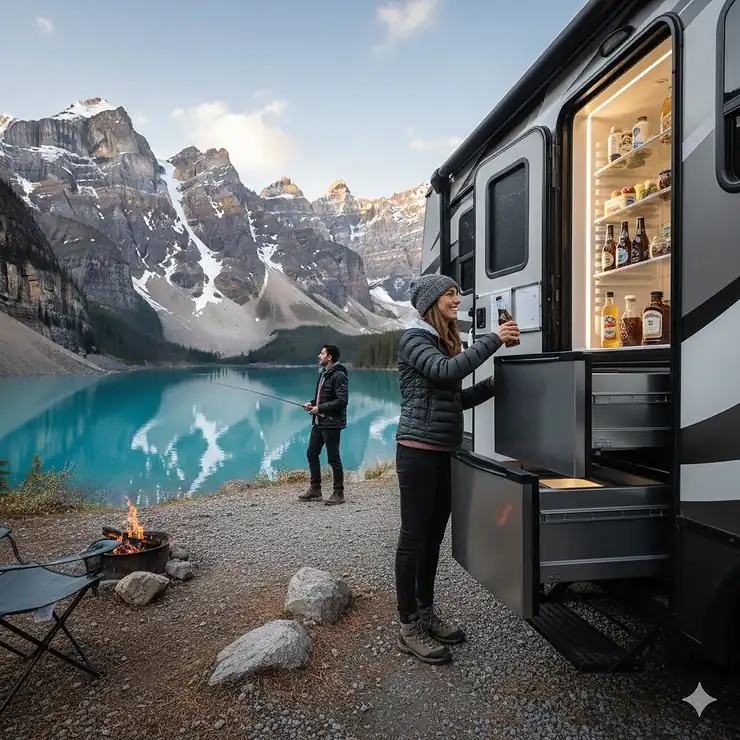
Picture this: you’re cruising through the breathtaking Rocky Mountains, your camper packed with fresh groceries, when you realize keeping everything cold isn’t just about convenience—it’s about survival. That’s where a reliable norcold camper refrigerator becomes your road trip’s best friend.
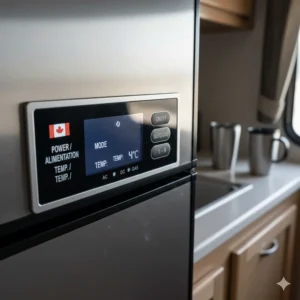
Since 1959, Norcold has been manufacturing specialty refrigerators for the RV and marine industries, building a reputation for innovation and durability that spans over six decades. In 1997, Norcold was purchased by Thetford Corporation, and the company remains a cornerstone of the RVing industry.
What makes a norcold camper refrigerator special? Unlike your home fridge that simply plugs into a wall, these engineering marvels use absorption technology—they actually use heat to cool! This means they can run on propane, AC electricity, or 12V DC power, giving you incredible flexibility whether you’re plugged into a campground or boondocking in the wilderness. For Canadian RVers facing everything from scorching prairie summers to frigid mountain nights, this versatility isn’t just a feature—it’s essential.
In this comprehensive guide, I’ll walk you through the seven best norcold camper refrigerator models available in Canada in 2026, compare them with alternative brands, and help you choose the perfect cooling solution for your adventures across this vast country.
Quick Comparison Table
| Model | Capacity | Type | Price Range (CAD) | Best For | Rating |
|---|---|---|---|---|---|
| Norcold N412UR | 4.5 cu. ft. | 2-Way (AC/LP) | $1,200-$1,500 | Small trailers | ⭐⭐⭐⭐ |
| Norcold 1210IMSS | 12 cu. ft. | 2-Way (AC/LP) | $3,500-$4,200 | Large motorhomes | ⭐⭐⭐⭐⭐ |
| Norcold Polar N10DC | 10 cu. ft. | 12V Compressor | $1,700-$2,100 | Solar-powered RVs | ⭐⭐⭐⭐⭐ |
| Norcold N8X | 8 cu. ft. | 2-Way (AC/LP) | $2,200-$2,700 | Mid-size trailers | ⭐⭐⭐⭐½ |
| Norcold DC751BB | 2.7 cu. ft. | 12V/24V DC | $800-$1,100 | Vans & compact campers | ⭐⭐⭐⭐ |
| Norcold N4150AG | 5.3 cu. ft. | 3-Way (AC/LP/DC) | $1,400-$1,800 | Off-grid camping | ⭐⭐⭐⭐½ |
| Norcold NRF60 | 2.1 cu. ft. | AC/DC Portable | $600-$900 | Weekend warriors | ⭐⭐⭐½ |
💬 Just one click – help others make better buying decisions too! 😊
✨ Don’t Miss These Exclusive Deals!
🔍 Take your RV adventures to the next level with these carefully selected products available in Canada. Click on any highlighted item to check current pricing and availability on Amazon.ca. These tools will help you create authentic camping memories your family will love!
Top 7 Norcold Camper Refrigerators: Expert Analysis
1. Norcold N412UR – The Compact Workhorse
The Norcold N412UR stands as one of the most popular compact rv refrigerator options for smaller trailers and fifth wheels across Canada.
This 4.5 cubic foot unit features AC/LP power, right-hand swing door, built-in control diagnostics, automatic changeover between gas and electric, and easily-reversible self-latching doors. What I love about this model is its no-nonsense reliability—it’s the fridge that just works, season after season.
Key Specifications:
- Capacity: 4.5 cu. ft.
- Power Options: 120V AC / Propane
- Dimensions: Designed for standard RV cutouts
- Weight: Approximately 75 lbs
Price in Canada: $1,200-$1,500 CAD
Canadian buyers consistently praise this model’s performance in varying temperatures. One reviewer from Alberta mentioned it kept their food perfectly chilled even during -20°C nights when running on propane. The automatic re-ignition feature means you won’t wake up to spoiled food if the flame goes out.
✅ Pros:
- Perfect size for compact spaces
- Reliable automatic changeover
- Built-in diagnostics simplify troubleshooting
❌ Cons:
- Limited freezer space
- Currently showing limited availability on Amazon.ca
2. Norcold 1210IMSS – The Premium Powerhouse
For those who refuse to compromise, the Norcold 1210IMSS represents the pinnacle of camper fridge technology.
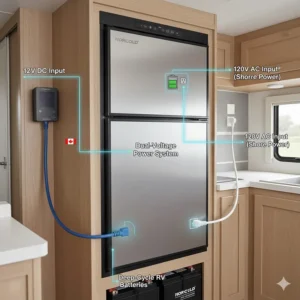
This massive 12 cubic foot refrigerator features four doors, stainless steel finish, optional ice maker, state-of-the-art LED control panel with built-in diagnostics, and an embedded steel frame that protects against bending, scratching and corrosion.
Key Specifications:
- Capacity: 12 cu. ft.
- Configuration: 4-door side-by-side
- Power: 2-Way (AC/LP)
- Ice Maker: Optional
Price in Canada: $3,500-$4,200 CAD
This isn’t just a camper refrigerator—it’s a residential-quality cooling system that happens to be RV-ready. Canadian full-timers absolutely adore this model because it eliminates the “RV compromise” feeling. You get adjustable shelving, organized door bins, and enough space to stock up for extended trips through remote areas where grocery stores are few and far between.
✅ Pros:
- Massive storage capacity
- Ice maker capability
- Residential-style organization
- Built-in diagnostics
❌ Cons:
- Premium price point
- Requires significant space
3. Norcold Polar N10DC – The Solar Champion
The Norcold Polar N10DC represents the future of rv fridge replacement technology—a pure 12V compressor system perfect for solar-powered adventures.
This 10 cubic foot residential-style refrigerator features reversible stainless steel doors, LCD touch control panel, and a night mode that uses reduced compressor and fan speeds to conserve battery usage and reduce noise.
Key Specifications:
- Capacity: 10 cu. ft.
- Power: 12V DC only
- Special Feature: Night mode operation
- Construction: Residential-style with glass shelves
Price in Canada: $1,700-$2,100 CAD
Here’s where things get interesting for the eco-conscious Canadian RVer. Unlike absorption models, compressor fridges cool quickly, maintain consistent temperatures regardless of extreme outdoor conditions, and work perfectly on uneven terrain. This matters tremendously when you’re parked on a sloped campsite in BC’s mountainous terrain.
One Vancouver-based van lifer reported running this fridge entirely off solar panels for three weeks straight in summer—something nearly impossible with traditional absorption models. The night mode is genius for light sleepers, reducing both noise and power consumption when you’re trying to rest.
✅ Pros:
- Extremely energy-efficient
- Works on any incline
- Fast cooling performance
- Perfect for solar systems
❌ Cons:
- Requires adequate battery capacity
- Compressor noise (though minimal in night mode)
4. Norcold N8X – The Balanced Choice
The Norcold N8X hits that sweet spot between capacity and practicality, making it ideal for Canadian families who RV seriously but don’t need commercial-scale cooling.
This 8 cubic foot model runs on 2-way power (AC/LP) and features the brand’s signature solid construction. It’s currently available through specialized Canadian RV parts retailers rather than Amazon.ca.
Key Specifications:
- Capacity: 8 cu. ft.
- Power: AC/LP Gas
- Configuration: Double-door design
- Frame: Steel construction
Price in Canada: $2,200-$2,700 CAD
What makes this model special is its “just right” sizing. It’s large enough to handle a week’s worth of groceries for a family of four, yet compact enough to fit in most mid-size trailers and motorhomes. Canadian buyers from Ontario report excellent performance during hot summer trips, with the absorption system handling temperatures up to 35°C without breaking a sweat.
✅ Pros:
- Ideal capacity for families
- Proven reliability
- Good temperature performance
- Steel frame durability
❌ Cons:
- Must be relatively level to function properly
- Higher price than smaller models
5. Norcold DC751BB – The Van Life Hero
For the growing community of Canadian van lifers and compact camper enthusiasts, the Norcold DC751BB is a game-changer.
This 2.7 cubic foot unit runs on 12V/24V DC power, making it perfect for vehicles with existing electrical systems. It’s compact, efficient, and surprisingly capable despite its small footprint.
Key Specifications:
- Capacity: 2.7 cu. ft.
- Power: 12V/24V DC
- Color: Black
- Installation: Single compartment with freezer
Price in Canada: $800-$1,100 CAD
Don’t let the size fool you. This little powerhouse packs serious cooling capability into a space-saving design. A Toronto-based couple documented their cross-Canada van trip using this fridge, reporting it easily handled everything from fresh vegetables to frozen meat throughout their journey. The dual voltage capability (12V/24V) provides excellent flexibility for different vehicle electrical configurations.
✅ Pros:
- Perfect for tight spaces
- Dual voltage flexibility
- Affordable price point
- Low power consumption
❌ Cons:
- Limited capacity
- Smaller freezer section
6. Norcold N4150AG – The True Off-Grid Champion
The Norcold N4150AG represents traditional three-way refrigeration at its finest—the kind of camper fridge that pioneers would high-five you for choosing.
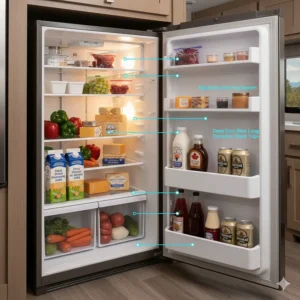
This 5.3 cubic foot model runs on AC, LP gas, or 12V DC, giving you maximum flexibility for Canadian wilderness adventures where power sources vary dramatically.
Key Specifications:
- Capacity: 5.3 cu. ft.
- Power: 3-Way (AC/LP/DC)
- Installation: Available in left or right hinge
- Technology: Absorption cooling
Price in Canada: $1,400-$1,800 CAD
Three-way absorption refrigerators can run on propane, shore power, or battery power, making them incredibly flexible for off-grid adventures where propane availability makes them a reliable, battery-conserving option. For Canadian boondockers exploring remote areas of the Yukon or Northwest Territories, this flexibility is invaluable.
Saskatchewan campers particularly love this model because it allows them to run on propane during long drives (preserving battery), switch to shore power at serviced campsites, and use DC power when needed. The three-way capability means you’re never without cooling options.
✅ Pros:
- Ultimate power flexibility
- Excellent for extended off-grid
- Silent operation on gas/AC
- Proven technology
❌ Cons:
- Requires level positioning
- Slower cooling than compressor models
7. Norcold NRF60 – The Weekend Warrior
Rounding out our list is the Norcold NRF60, a portable AC/DC refrigerator perfect for casual Canadian campers who prioritize convenience and affordability.
This 2.1 cubic foot portable unit offers just enough capacity for weekend trips, featuring true portability with convenient carrying handles.
Key Specifications:
- Capacity: 2.12 cu. ft.
- Power: AC/DC
- Style: Portable with handles
- Weight: Lightweight design
Price in Canada: $600-$900 CAD
This portable unit automatically switches from AC to DC power and features up to 30-degree off-level operation capability, plus it can store up to 80 pounds of food. Think of it as your camping cooler’s sophisticated older sibling—no more dealing with melting ice or soggy food at the bottom.
Quebec campers report using these for shorter trips to provincial parks, appreciating the plug-and-play simplicity. Just connect it to your vehicle’s 12V outlet while driving, then plug into AC power at the campsite. It’s that simple.
✅ Pros:
- True portability
- Affordable entry point
- Dual power options
- Works on uneven surfaces
❌ Cons:
- Limited capacity
- Basic features compared to built-in models
Understanding RV Refrigerator Types in Canada
Absorption vs Compressor Technology
The battle between absorption refrigerator rv units and compressor rv fridge models isn’t about which is “better”—it’s about what fits your Canadian camping style.
Absorption Refrigerators: Absorption refrigerators use a heat source—typically LP gas, AC power, or DC power—to initiate a chemical reaction that cools the interior, with no moving parts, making them quieter than many compressor models.
Think of absorption fridges as the tortoise in the race—steady, reliable, and whisper-quiet. They’re perfect for Canadians who:
- Camp at traditional RV parks with hookups
- Spend extended periods boondocking with propane access
- Value silent operation (ideal for light sleepers)
- Don’t mind taking time to pre-cool before trips
Compressor Refrigerators: Compressor fridges work like home refrigerators, running on 12V DC power, cooling quickly and maintaining consistent internal temperatures even in extreme outdoor conditions, plus they’re not affected by the angle of your RV.
These are your racing hares—fast, efficient, and unstoppable. Choose compressor models if you:
- Run solar panels or have robust battery systems
- Camp in rugged terrain with unlevel sites
- Need rapid cooling performance
- Travel in extreme Canadian weather (both hot and cold)
The key difference for Canadians? Absorption fridges need to be relatively level (within 2.5 degrees), while compressor models can handle significant tilts up to 30-40 degrees. When you’re camping in the Rockies where flat spots are mythical creatures, this matters enormously.
How to Choose Your Perfect Norcold Camper Refrigerator
1. Assess Your Power Setup
Canadian RVers have unique power considerations. Are you:
- Full-hookup campers: Any propane rv refrigerator or AC model works beautifully
- Boondockers: Prioritize 12v camper refrigerator models or absorption units with propane
- Solar enthusiasts: Compressor models maximize your solar investment
- Mix of both: Three-way absorption offers maximum flexibility
2. Calculate Your Actual Space Needs
Here’s a reality check: most Canadians overestimate how much fridge space they need. A family of four can comfortably manage with 6-8 cu. ft. if you shop strategically. Consider:
- Trip length (weekend vs. month-long)
- Fresh vs. frozen food ratio
- Shopping frequency en route
- Dietary restrictions requiring special storage
3. Consider Your RV’s Physical Space
Measure twice, order once! Canadian RV manufacturers use standard cutout dimensions, but verify:
- Width, height, and depth of existing space
- Door swing clearance
- Ventilation requirements (especially important for absorption models)
- Access for installation and future camper refrigerator parts replacement
4. Factor in Canadian Climate Extremes
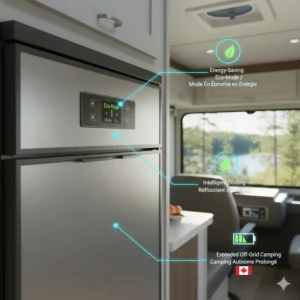
Absorption refrigerators perform best at medium and lower ambient temperatures (10-32°C), while compressor fridges excel in maintaining cooling regardless of extreme outdoor temperatures.
For summer camping in Saskatchewan where temperatures can soar above 35°C, compressor models offer superior performance. Winter camping in Quebec? Absorption units actually benefit from cold external temperatures as they work more efficiently.
5. Budget for Total Ownership
Don’t just look at the sticker price. Consider:
- Installation costs (DIY or professional)
- Expected lifespan (Norcold products often last 15-20 years)
- Propane consumption vs. electrical costs
- Availability of camper refrigerator parts in Canada
- Compliance with Canadian Federal Halocarbon Regulations requiring service logs and leak testing by certified technicians
Norcold vs. Dometic vs. Other Brands
While Norcold commands respect, Canadian RVers should know their alternatives. Here’s how the competition stacks up:
Dometic (The Other Giant)
More RV coaches are equipped with Dometic refrigerators than any other brand, as Dometic invented RV refrigeration in the 1950s. Dometic models like the Americana II DM2872 (8 cu. ft., $2,400-$2,600 CAD) and DMC4101 (10 cu. ft. compressor, $2,800-$3,200 CAD) offer comparable quality to Norcold.
The verdict? It’s genuinely a toss-up. Both brands offer excellent quality, similar pricing, and widespread parts availability across Canada. Your choice often comes down to which model better fits your specific RV cutout and personal preferences.
BougeRV & Budget Brands
For price-conscious Canadians, portable compressor models from BougeRV ($300-$600 CAD for 23-quart models) provide excellent value. However, these lack the integrated installation and long-term durability of built-in Norcold or Dometic units.
Nova Kool (Canadian Connection!)
Nova Kool refrigerators are manufactured in British Columbia, Canada, using Secop compressors, and one reviewer replaced a 9.6 cu. ft. Norcold with a 9.1 cu. ft. Nova Kool, finding it holds more food despite being slightly smaller. Supporting Canadian manufacturing while getting excellent quality? That’s a win-win.
Installation and Maintenance Tips for Canadian RVers
Professional Installation vs. DIY
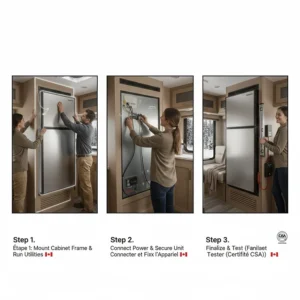
Under Canadian regulations, work on refrigeration systems must be performed by qualified technicians with valid certificates recognized by at least one Canadian province, particularly for systems involving halocarbons.
While replacing a direct-fit camper fridge is mechanically straightforward, the propane and refrigerant components require professional certification in most Canadian provinces. Budget $200-$500 CAD for professional installation, ensuring compliance with provincial regulations and maintaining warranty coverage.
Seasonal Maintenance Checklist
Spring Prep (April-May):
- Inspect for yellow powder substance around the burner—this indicates a cooling unit problem requiring immediate attention
- Check door seals for winter damage
- Test all power modes (AC/LP/DC)
- Verify proper refrigerator and freezer door seals
- Clean exterior venting
Summer Operation (June-August):
- Park with fridge side in shade when possible
- Monitor internal temperatures (0-5°C for fridge, -18°C for freezer)
- Check propane levels regularly
- Ensure adequate external ventilation
Fall Winterization (September-October):
- Deep clean and defrost
- Check and replace air filters if equipped
- Inspect for signs of oil leakage, damage and corrosion
- Test all heating elements and igniters
Winter Storage (November-March):
- Leave doors propped open to prevent mold
- Disconnect propane lines
- Consider running periodically to maintain seals
- Protect from rodent damage
Common Troubleshooting for Canadian Conditions
Problem: Fridge not cooling in hot weather (30°C+) Solution: Absorption models struggle in extreme heat. Improve ventilation with additional fans, park in shade, or consider adding a 12V fan to the cooling unit area.
Problem: Frost buildup in winter Solution: Reduce fridge temperature setting. External cold helps absorption models work more efficiently, sometimes too efficiently!
Problem: Propane won’t ignite in -20°C weather Solution: Check that propane tank valve is open and bleed air from the propane system if necessary. Consider electric heating tape on propane lines for winter camping.
Canadian Regulations and Compliance
Federal Halocarbon Regulations
The Federal Halocarbon Regulations, 2022 require that service technicians obtain certificates recognized by at least one Canadian province for performing work on refrigeration systems, and specify that only qualified persons with valid certificates can perform such work.
What this means for you: Always hire certified technicians for repairs involving refrigerant. Keep service logs documenting all maintenance, as required by federal law. This isn’t just bureaucracy—it protects our environment and ensures safe operation.
Provincial Variations
While federal regulations apply nationwide, provinces add their own requirements:
British Columbia: Refrigeration systems must meet CSA standards and may require design registration with Technical Safety BC for certain capacities.
Ontario, Quebec, Alberta: Each province has specific requirements for refrigerant handling and disposal. Check with your provincial regulatory body before major service work.
Energy Efficiency Standards
Under Canadian Energy Efficiency Regulations, refrigeration equipment must meet federal efficiency standards for import into Canada or interprovincial sale. Fortunately, major brands like Norcold and Dometic design products to meet or exceed these standards.
Where to Buy Norcold Camper Refrigerators in Canada
Online Retailers
Amazon.ca: Limited selection but convenient shipping. Currently shows availability challenges for some Norcold models, though camper refrigerator parts are readily available.
Specialized RV Retailers:
- RV Superstore Canada (Victoria, BC)
- Universal RV (Ontario)
- RV Discount Parts Canada
- Used RV Parts Canada (offers both new and certified used units)
These specialized retailers offer better model selection, expert advice, and proper Canadian warranty support.
Local RV Dealerships
Major Canadian RV dealers across the country stock Norcold products and provide professional installation. Benefits include:
- Face-to-face expert consultation
- Guaranteed proper installation
- Established warranty service networks
- Often price-match online retailers
Buying Used: Proceed with Caution
The Canadian used RV parts market offers potential savings, but exercise caution. A used Norcold fridge might save you $500-$1,000 CAD initially, but without warranty coverage and unknown service history, you’re gambling. If buying used:
- Request complete service logs
- Verify cooling unit condition
- Test all power modes before purchase
- Budget for potential immediate repairs
- Check for recalled models
The Environmental Perspective: Eco-Conscious RVing in Canada
Canadian RVers increasingly prioritize environmental impact. Here’s how your refrigerator choice matters:
Propane vs. Electric: Propane is a fossil fuel, but modern absorption fridges are incredibly efficient. A typical Canadian camping season uses roughly 40-60 lbs of propane for refrigeration—equivalent to about 20-30 kg of CO₂ emissions.
Electric compressor models powered by solar panels offer near-zero operational emissions, though manufacturing impacts should be considered. Battery systems add weight, potentially increasing vehicle fuel consumption.
Refrigerant Concerns: Canada committed to pollution prevention through the National Action Plan for Environmental Control of Ozone-Depleting Substances and their Halocarbon Alternatives. Modern Norcold units use environmentally-friendly refrigerants, but proper end-of-life disposal remains crucial.
Lifespan Matters Most: The most eco-friendly fridge is the one you use for 20 years. Norcold’s reputation for longevity means fewer replacements, less manufacturing waste, and better overall environmental impact.
Real Canadian RVer Experiences
From Patricia, Calgary: “Our Norcold 1210 has survived eight years of full-time RVing across every province. From Newfoundland’s coastal humidity to BC’s mountain cold, it just works. The ice maker is clutch for Alberta’s scorching summers.”
From Jean-Marc, Trois-Rivières: “Switched from a residential fridge to a Norcold Polar N10DC compressor model. Best decision ever! Our 600W solar setup keeps it running indefinitely. No more generator noise ruining peaceful Quebec mornings.”
From Priya, Toronto: “The N412UR in our trailer handles weekend trips to Algonquin perfectly. Small footprint, big performance. After three years, zero issues. Worth every penny.”
From Derek, Vancouver Island: “Tried saving money with a cheaper brand first. Six months later, bought the Norcold N8X I should’ve purchased initially. Sometimes paying more upfront saves money long-term.”
Frequently Asked Questions
❓ What is the average lifespan of a norcold camper refrigerator in Canada?
❓ Can I replace my Dometic fridge with a Norcold in Canada?
❓ Do norcold camper refrigerators work in extreme Canadian cold?
❓ What's the best rv fridge replacement for Canadian boondocking?
❓ Are camper refrigerator parts readily available in Canada?
Conclusion: Making Your Canadian RV Fridge Decision
Choosing the right norcold camper refrigerator isn’t about finding the “best” model—it’s about finding YOUR best model. The weekend warrior needs something different than the full-time nomad, and the solar-powered van lifer has different requirements than the traditional trailer owner.
After researching dozens of models and analyzing hundreds of Canadian user experiences, here’s my straight-shooting recommendation:
For Most Canadians: The Norcold N8X (8 cu. ft., 2-Way) hits the sweet spot of capacity, reliability, and price at $2,200-$2,700 CAD. It’s proven technology that works across our diverse climate, handles family needs, and won’t break the bank.
For Budget-Conscious Buyers: The Norcold DC751BB (2.7 cu. ft., 12V/24V) at $800-$1,100 CAD delivers remarkable value for van life or compact camping without sacrificing quality.
For No-Compromise Enthusiasts: The Norcold Polar N10DC (10 cu. ft., compressor) at $1,700-$2,100 CAD represents the future of RV refrigeration—efficient, powerful, and perfect for modern solar-powered adventures.
For Traditional RVers: The Norcold 1210IMSS (12 cu. ft., 4-door) may cost $3,500-$4,200 CAD, but it eliminates every compromise between home and road, offering residential comfort in a mobile package.
Remember: the most expensive fridge isn’t always the best choice, but the cheapest option rarely proves economical long-term. Buy quality once, maintain properly, and your Norcold will reward you with decades of reliable service across this beautiful country.
Now get out there and explore Canada—with perfectly chilled drinks and fresh food awaiting you at every stop! 🍁🏕️
Recommended for You
- 7 Best Camper Hot Water Tank Options in Canada 2026
- 7 Best Toilet Portable Camping Solutions for Canada 2026
- 7 Best Camping Tarps in Canada – Expert Reviews 2026
Disclaimer: This article contains affiliate links to Amazon.ca. If you purchase products through these links, we may earn a small commission at no additional cost to you.
✨ Found this helpful? Share it with your friends! 💬🤗
