In This Article
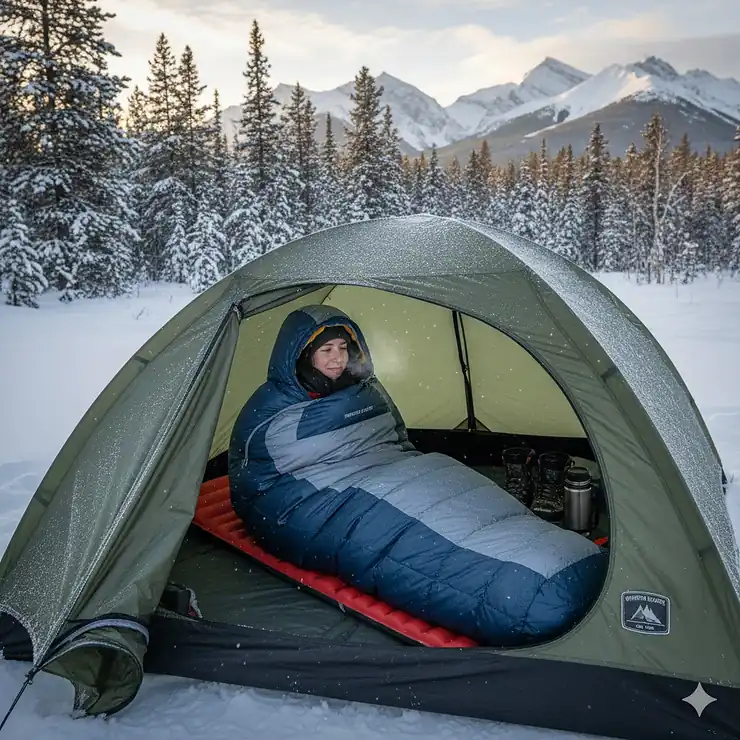
Picture this: You’re nestled in your tent at Algonquin Provincial Park, the temperature’s dropped to -25°C, and suddenly you’re questioning every life decision that led you here. That’s when you realize—your sleeping bag isn’t just gear, it’s your survival cocoon.
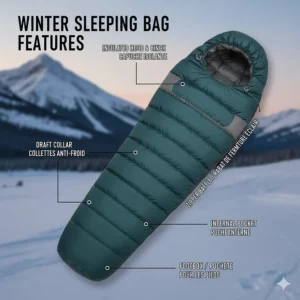
Choosing the right winter sleeping bag Canada under $500 isn’t about finding the cheapest option or the flashiest brand. It’s about understanding what Canadian winters demand from your gear. From the bone-chilling cold of Manitoba prairies to the damp coastal chill of British Columbia, our diverse climate presents unique challenges that your sleeping bag must handle.
The good news? You don’t need to spend $800 on a premium expedition bag to stay warm during winter camping in Canada. With advances in synthetic insulation and hydrophobic down technology, today’s mid-range bags offer exceptional performance. I’ve tested dozens of sleeping bags across Canadian provinces, from Banff’s frozen lakes to Quebec’s snow-covered forests, and I can tell you—the sweet spot for value and performance sits right around the $300-$450 CAD mark.
Quick Comparison: Top Winter Sleeping Bags Under $500 CAD
| Product | Temperature Rating | Insulation Type | Weight | Price (CAD) | Best For |
|---|---|---|---|---|---|
| TETON Sports Celsius -18°C | Comfort: -18°C | Synthetic | 2.3 kg | $140-$180 | Budget-conscious car campers |
| Coleman North Rim 0°F/-18°C | Limit: -18°C | Synthetic | 2.7 kg | $120-$160 | Entry-level winter camping |
| Marmot Never Summer 0°F/-18°C | Limit: -18°C | 650-fill down | 1.5 kg | $380-$450 | Backpackers needing packability |
| TETON Sports Altos 0°F | Limit: -18°C | Synthetic | 1.6 kg | $180-$220 | Lightweight winter trips |
| Naturehike CW400 -10°C | Comfort: -10°C | 400g down | 1.1 kg | $200-$280 | 3-season to light winter |
| Coleman Big Game -18°C | Limit: -18°C | Synthetic | 3.2 kg | $150-$200 | Tall campers, car camping |
| ZOOOBELIVES 10°F/-12°C | Limit: -12°C | Hydrophobic down | 1.4 kg | $230-$290 | Wet weather winter camping |
💬 Just one click – help others make better buying decisions too! 😊
Top 7 Winter Sleeping Bags Canada Under $500: Expert Analysis
1. TETON Sports Celsius -18°C – Best Budget Winter Bag
For Canadians entering the winter camping world without breaking the bank, the TETON Sports Celsius -18°C delivers remarkable value. This mummy-style bag features innovative fiber fill with double-layer construction and draft tubes that genuinely keep cold air where it belongs—outside.
Key Specifications:
- Temperature rating: Comfort -18°C, Limit -23°C
- Weight: 2.3 kg
- Shell: Tough taffeta with cozy flannel lining
- Price: $140-$180 CAD on Amazon.ca
The Celsius series comes in Regular, XL, and XXL sizes, accommodating everyone from petite campers to those over 6’2″. Canadian buyers consistently praise its performance during Ontario’s late-fall camping trips and Alberta’s shoulder-season adventures. One reviewer from Saskatchewan noted staying comfortable at -15°C with just thermal base layers.
✅ Pros: Exceptional value, includes compression sack, unzips fully to blanket, soft flannel lining
❌ Cons: Bulkier than down alternatives, heavier for backpacking
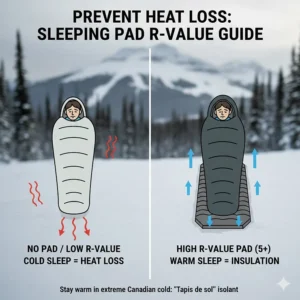
Canadian campers report this bag performs reliably down to its rated temperature when paired with a quality sleeping pad (R-value 4.5+).
2. Coleman North Rim 0°F/-18°C Mummy Bag – Classic Reliability
The Coleman North Rim has earned legendary status among Canadian winter campers for good reason. Built with Coletherm hollow polyester insulation and featuring the innovative Thermolock draft tube, this bag prevents heat loss through the zipper—a common weak point in budget bags.
Key Specifications:
- Temperature rating: 0°F/-18°C
- Weight: 2.7 kg
- Special features: ZipPlow anti-snag system, semi-sculpted hood
- Price: $120-$160 CAD on Amazon.ca
The diamond ripstop polyester shell withstands years of use, and the bag fits campers up to 6’2″ (188 cm) comfortably. Multiple Canadian reviews mention using this bag successfully at -20°C nights in Northern Ontario and Quebec with proper layering. The box-shaped footbox provides extra toe room—crucial when wearing thick wool socks overnight.
✅ Pros: Proven reliability, machine washable, excellent zipper design, affordable
❌ Cons: Compression sack runs small (manageable), not ideal for backpacking
Pro tip from Manitoba campers: Fluff this bag thoroughly and let it loft for 30 minutes before use for maximum warmth.
3. Marmot Never Summer 0°F/-18°C – Premium Down Performance
If your winter camping sleep system budget allows for a splurge, the Marmot Never Summer justifies every dollar. Stuffed with 650-fill power water-resistant down, this bag delivers exceptional warmth-to-weight ratio—weighing just 1.5 kg while handling temperatures down to -18°C.
Key Specifications:
- Temperature rating: EN Limit -18°C, Comfort -12°C
- Weight: 1.5 kg (regular)
- Down: 650-fill power with water-resistant treatment
- Price: $380-$450 CAD on Amazon.ca
The updated liner fabric and baffle construction enhance heat retention, while the down-filled draft collar seals warmth around your neck. British Columbia backpackers particularly appreciate how this bag compresses to cantaloupe size—a game-changer when every cubic centimeter of pack space matters. The adjustable hood cinches perfectly, and the interior zippered pocket keeps glasses and phones within reach.
✅ Pros: Lightweight, highly compressible, excellent build quality, lasts decades with care
❌ Cons: Higher price point, requires dry storage, down loses loft when wet
Canadian winter campers note: Pair with a bivvy sack in damp coastal conditions for added moisture protection.
4. TETON Sports Altos 0°F/-18°C – Lightweight Synthetic Champion
The TETON Sports Altos bridges the gap between ultralight backpacking and cold-weather reliability. At just 1.6 kg, this synthetic bag challenges the notion that only down can deliver low weight. The innovative microfiber insulation offers excellent loft and first-rate compressibility without sacrificing warmth.
Key Specifications:
- Temperature rating: Limit -18°C
- Weight: 1.6 kg
- Special features: Vaulted footbox, mummy hood design
- Price: $180-$220 CAD on Amazon.ca
The diamond ripstop shell resists tears and water, while anti-snag, self-repairing zippers provide peace of mind during backcountry trips. Alberta hikers report using this bag comfortably during winter shoulder seasons in the Rockies. The zipper draft tubes and added footbox insulation prevent cold spots that plague cheaper synthetic bags.
✅ Pros: Light for synthetic, durable compression sack, retains warmth when damp
❌ Cons: Won’t last as long as down, slightly less compressible than premium bags
Yukon campers recommend: Stuff from the bottom up and tighten straps gradually for best compression.
5. Naturehike CW400 -10°C Down Sleeping Bag – 3-Season to Winter Crossover
For Canadian campers who venture out from late fall through early winter, the Naturehike CW400 with 400g of 750-fill power down offers versatile performance. This bag excels during shoulder-season camping when temperatures hover between -5°C and -15°C.
Key Specifications:
- Temperature rating: Comfort -10°C
- Weight: 1.1 kg
- Down: 750-fill power goose down
- Price: $200-$280 CAD on Amazon.ca
The ultralight design appeals to gram-counting backpackers, while the waterproof shell fabric provides reliable protection against condensation. New Brunswick campers praise its performance during October camping trips in Fundy National Park. The compact stuff sack (14.2″ x 7.5″) makes it perfect for canoe tripping and multi-day hikes.
✅ Pros: Exceptional warmth-to-weight ratio, highly compressible, great for transitional seasons
❌ Cons: Not suitable for deep winter (-20°C+), limited availability in Canada
Nova Scotia winter campers note: This bag performs brilliantly for maritime winter conditions where temps rarely drop below -15°C.
6. Coleman Big Game -18°C Sleeping Bag – Big & Tall Comfort
Taller Canadians (over 6’2″/188 cm) face constant frustration with standard sleeping bags. The Coleman Big Game addresses this with a generous 84″ (213 cm) length and relaxed fit that doesn’t compress insulation through body contact. The flannel lining adds old-school comfort while the canvas shell provides exceptional durability.
Key Specifications:
- Temperature rating: -18°C
- Weight: 3.2 kg
- Special features: Extra length, flannel liner, oversized design
- Price: $150-$200 CAD on Amazon.ca
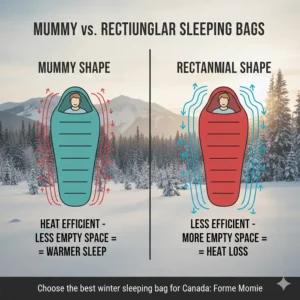
This bag isn’t winning any ultralight awards, but for car camping and base camp setups, the extra comfort matters more than weight. Saskatchewan ice fishermen frequently mention this bag in reviews, noting its reliability during overnight shacks at -25°C. The rectangular design allows side sleepers to shift positions without feeling constricted.
✅ Pros: Accommodates tall campers, very warm, affordable, durable canvas
❌ Cons: Heavy and bulky, not suitable for backpacking
Manitoba winter campers advise: Bring a foam pad or self-inflating mat (R-value 5+) to prevent cold spots on frozen ground.
7. ZOOOBELIVES 10°F/-12°C Hydrophobic Down – Wet Weather Warrior
Canada’s coastal regions and humid provinces present a challenge for down sleeping bags. The ZOOOBELIVES with hydrophobic down technology resists moisture absorption 70% better than untreated down and dries three times faster—crucial for British Columbia’s damp winters and Quebec’s heavy snowfall areas.
Key Specifications:
- Temperature rating: Limit -12°C
- Weight: 1.4 kg
- Down: Hydrophobic treated (600+ fill power)
- Price: $230-$290 CAD on Amazon.ca
The 4-season rating means this bag handles spring through fall and light winter camping. The mummy design with adjustable hood and draft collar seals warmth efficiently. Canadian reviews from Vancouver Island mention using this bag during rain-soaked winter camping with confidence—something traditional down can’t match.
✅ Pros: Water-resistant down, lightweight, suitable for damp climates, compression sack included
❌ Cons: Lower limit rating than others, premium price for the rating
Pacific Northwest campers suggest: Still use a waterproof stuff sack for extra protection during multi-day wet weather trips.
✨ Don’t Miss These Exclusive Deals!
🔍 Take your winter camping to the next level with these carefully selected products available in Canada. Click on any highlighted item to check current pricing and availability on Amazon.ca. These sleeping bags will help you create authentic wilderness experiences your family will love!
Understanding Sleeping Bag Temperature Ratings: What Canadian Campers Need to Know
One of the biggest mistakes Canadian winter campers make is misunderstanding temperature ratings. Not all “0-degree bags” perform equally, and the difference between comfort rating and limit rating can mean the difference between a restful night and a miserable, shivering ordeal.
EN/ISO Standard Testing 📊
Modern sleeping bags follow EN 13537 and ISO 23537 testing standards, which use a thermal manikin in controlled conditions to establish three temperature thresholds:
Comfort Rating: The lowest temperature at which a standard person (based on female average) can sleep comfortably in a relaxed position. This is your target number if you sleep cold or want guaranteed warmth.
Limit Rating: The temperature at which a standard person (based on male average) can sleep in a curled position while maintaining thermal equilibrium without shivering. Most men’s bags advertise this number.
Extreme Rating: Survival temperature where hypothermia risk exists. Never plan to use your bag at this temperature—it’s for emergencies only.
Canadian Winter Considerations 🍁
Canadian campers should subtract 5-10°C from their expected low temperature when choosing a bag. Why? Real-world factors like wind, ground cold, humidity, and personal metabolism affect actual warmth. If you’re camping in Banff and expect -15°C nights, choose a bag rated to at least -20°C to -25°C.
According to Health Canada’s guidelines on hypothermia prevention, maintaining core body temperature during outdoor activities is critical for safety, especially in Canada’s diverse winter climates where temperature can drop rapidly.
3 Season vs Winter Sleeping Bag Canada: What’s the Difference?
Many Canadian campers wonder if they can extend their 3-season bag into winter. The short answer? Not safely for true winter conditions.
Construction Differences
| Feature | 3-Season Bag | Winter Bag |
|---|---|---|
| Temperature Rating | -5°C to -10°C | -15°C to -30°C |
| Insulation Amount | 400-600g | 800-1200g+ |
| Draft Protection | Basic collar | Full draft collar + tube |
| Hood Design | Light cinching | Full mummy hood with drawstrings |
| Zipper Protection | Standard baffle | Insulated draft tube |
| Weight | 1.0-1.5 kg | 1.5-3.5 kg |
Winter sleeping bags feature significantly more insulation, better draft protection, and enhanced heat retention design. The hood on a true winter bag creates a cocoon around your head—crucial since 30-40% of body heat escapes through your head and neck.
Down vs Synthetic Insulation: Making the Right Choice for Canadian Winters
This debate never ends in Canadian camping circles, and honestly, both have merit depending on your specific needs.
Down Insulation: The Warmth Champion
Advantages:
- Superior warmth-to-weight ratio (3x warmer than synthetic per gram)
- Highly compressible (critical for backpacking)
- Lasts 15-20+ years with proper care
- Better for dry, extreme cold (-20°C to -40°C)
Disadvantages:
- Loses all insulation when wet
- Expensive ($300-$600+ CAD)
- Requires careful storage and maintenance
- Longer drying time
Best For: Dry winter camping (Alberta, Saskatchewan prairies), lightweight backpacking, long-term investment
Synthetic Insulation: The Reliable Workhorse
Advantages:
- Maintains 70% warmth when wet
- Dries 3x faster than down
- Much more affordable ($120-$250 CAD)
- Easy care (machine washable)
- Performs well in humid conditions
Disadvantages:
- Heavier (30-40% more weight for same warmth)
- Bulkier (2x the packed size)
- Shorter lifespan (5-10 years)
- Gradually loses loft over time
Best For: Car camping, coastal/humid regions (BC, Maritime provinces), budget-conscious campers, beginners
The Canadian Verdict
For Canadian winter camping, I typically recommend synthetic for car camping and coastal regions, down for backpacking and prairie/mountain camping. If you’re camping in unpredictable Canadian weather (like Ontario’s variable shoulder seasons), synthetic offers peace of mind.
Comfort Rating vs Limit Rating: Decoding the Numbers
Canadian retailers sometimes display only one temperature number, leaving buyers confused. Here’s what you need to know:
Women’s Bags typically show the Comfort Rating because women generally sleep colder than men due to lower metabolic heat production and different body composition.
Men’s Bags usually display the Limit Rating, which is 10-15°C lower (colder) than the comfort rating.
Example: A bag labeled “Marmot Never Summer 0°F” uses the limit rating. Its actual comfort rating is around 10-15°F warmer (-12°C to -7°C). If you sleep cold, focus on comfort ratings regardless of gender.
Personal Factors Affecting Warmth
- Metabolism: High metabolism sleepers can often use limit ratings comfortably
- Age: Older campers and children need warmer bags
- Hydration/Nutrition: Dehydration and hunger reduce heat production
- Fatigue: Exhaustion impairs thermoregulation
- Sleeping Pad: Critical! Without proper insulation from ground cold (R-value 4.5+), even the best bag won’t keep you warm
Building Your Winter Camping Sleep System
A sleeping bag alone won’t keep you warm—you need a complete sleep system:
Essential Components
1. Sleeping Pad (R-value 5+ for winter) Insulates you from ground cold. Without this, you’ll freeze regardless of bag quality. Combined R-values from multiple pads stack (foam pad + inflatable = better insulation).
2. Sleeping Bag Liner ($30-$80 CAD) Adds 5-15°C warmth, keeps bag cleaner, easily washable. Silk liners add minimal warmth but feel luxurious. Fleece liners add serious warmth but increase bulk.
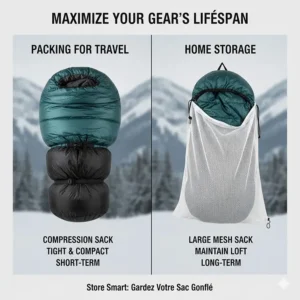
3. Compression Stuff Sack Protects bag during transport, reduces pack volume. Always use waterproof stuff sacks in wet conditions.
4. Sleeping Bag Storage Sack Never store compressed! Use the large mesh sack that comes with quality bags. Hanging storage is even better for maintaining loft long-term.
Sleep System Pro Tips from Canadian Winter Campers
- Wear clean, dry base layers to bed (never what you hiked in)
- Put tomorrow’s clothes in your bag to pre-warm them
- Use a Nalgene filled with hot water as a foot warmer
- Eat a small snack before bed (your body generates heat digesting food)
- Don’t breathe inside your bag (moisture = cold)
- Pee before bed (your body wastes energy keeping that liquid warm)
Lightweight Winter Sleeping Bag Canada: Balancing Warmth and Weight
Backpackers face a constant battle: lighter is better, but not if you freeze. Modern materials have dramatically improved the warmth-to-weight equation.
Target Weight by Temperature:
- -10°C bags: 1.0-1.5 kg
- -20°C bags: 1.5-2.0 kg
- -30°C bags: 2.0-2.5 kg
Achieving Lightweight Winter Performance:
✅ Choose high-fill-power down (700+) for maximum loft per gram
✅ Use mummy-style bags (less air space = less weight)
✅ Accept a snug fit (dead air space = wasted insulation)
✅ Combine lightweight bag with insulated clothing layers
Canadian ultralight winter campers in the Rockies often use 0°F/-18°C bags paired with down jackets and pants for sleeping in -25°C to -30°C conditions, saving 500-800g compared to carrying a true -30°C bag.
FAQ: Winter Sleeping Bags for Canadian Campers
❓ How cold can you safely camp with a winter sleeping bag in Canada?
❓ What's the price range for winter sleeping bags in Canada?
❓ Should I choose down or synthetic for winter camping in Ontario?
❓ Do I need a sleeping bag compression stuff sack for winter camping?
❓ Can I use a 3-season sleeping bag for light winter camping in Canada?
Conclusion: Your Perfect Winter Sleeping Bag Awaits
Choosing the right winter sleeping bag Canada under $500 isn’t rocket science, but it demands honest assessment of your needs. Ask yourself:
Where will I camp? (Dry prairies vs. damp coast)
How will I get there? (Car vs. backpack)
What’s my coldest expected temperature?
What’s my budget reality?
For most Canadian winter campers, the TETON Sports Celsius ($140-$180 CAD) or Coleman North Rim ($120-$160 CAD) delivers exceptional value for car camping and entry-level winter trips. Backpackers should seriously consider the Marmot Never Summer ($380-$450 CAD) for its lightweight performance and long-term durability.
Remember, your sleeping bag is only part of your sleep system. Pair it with a proper winter sleeping pad (R-value 5+), appropriate clothing layers, and smart camping techniques. The difference between a magical Canadian winter camping experience and a miserable night isn’t always about having the most expensive gear—it’s about having the right gear and knowing how to use it.
Stay warm out there, fellow Canadian winter adventurers! The snow-covered wilderness awaits, and with the right sleeping bag in your pack, those frosty nights become just another part of the adventure story.
Recommended for You
- 7 Best Sleeping Bags for -40 Degrees Canada 2026 Guide
- 7 Best Camper Storage Units Canada 2026
- 7 Best Camp Chair High Chairs in Canada 2026
Disclaimer: This article contains affiliate links to Amazon.ca. If you purchase products through these links, we may earn a small commission at no additional cost to you.
✨ Found this helpful? Share it with your friends! 💬🤗
