
In This Article
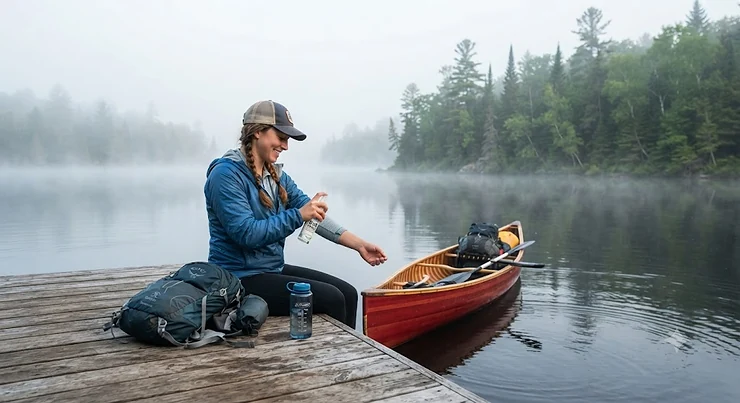
Bug spray for canoe trips is any insect repellent formulated to hold up against the specific punishment of paddling and portaging — sweat, sunscreen layering, humid shorelines, and hours of exposed skin near still water where mosquitoes and black flies breed. It’s not the same shopping decision as picking a bottle off the drugstore shelf for a backyard barbecue. Anyone who has paddled into a bay at dusk in the Kawarthas or hauled a pack over a portage in Temagami knows the moment: the drone starts before you’ve even flipped the canoe, and whatever is in your pocket had better work.

I’ve spent a stupid amount of time digging through spec sheets, Health Canada guidance, and the aggregated review chatter on products that have been kicking around canoe country for decades — Muskol, OFF!, Sawyer, Ben’s, Repel, Natrapel — because the “best” bottle for a weekend car-camp trip is often the wrong bottle for a ten-day fly-in expedition. Weight matters when you’re carrying everything on your back. Formula matters when your gear includes a plastic map case and a nylon spray skirt. And concentration matters more than most people realize, because Health Canada is explicit that more DEET doesn’t mean more protection — it just means longer protection.
This guide covers seven real products sold in Canada, spanning classic Canadian DEET pumps to gear-safe picaridin alternatives, with honest analysis of who each one actually suits — the weekend paddler, the portage-heavy backcountry tripper, or the family basecamp crowd. We’ll get into travel-size DEET spray options for minimalist packers, compact bug spray for backcountry canoeing where every gram counts, and the practical realities of applying repellent when you’re wet, buggy, and three portages from the truck.
Quick Comparison Table: Top Bug Sprays for Canoe Trips
| Product | Active Ingredient | Size | Price Range (CAD) | Best For |
|---|---|---|---|---|
| Muskol Ultra 30% DEET Pump Spray | 30% DEET | 50 mL | Under C$10 | Weekend paddlers, minimalist packing |
| Sawyer Premium Insect Repellent | 20% Picaridin | 118 mL (4 oz) | C$15-C$20 | Gear-conscious trippers, families |
| Repel 100 Insect Repellent | 98% DEET | 30 mL (1 oz) | Under C$10 | Ultralight portaging, extreme bug pressure |
| Ben’s 30 Tick & Insect Repellent | 30% DEET | 100 mL (3.4 oz) | C$15-C$20 | Tick-heavy routes, fragrance-sensitive users |
| Natrapel 12-Hour Picaridin Spray | 20% Picaridin | 100 mL (3.4 oz) | C$15-C$20 | DEET-free family basecamps |
| OFF! Deep Woods Insect Repellent | Up to 25% DEET | 88-118 mL | C$10-C$15 | Big-box convenience, mixed-group trips |
| Muskol BackCountry 8-Hour Aerosol | 30% DEET | 230 g | C$12-C$18 | Multi-week expeditions, group basecamps |
Looking at this lineup, the split really comes down to format and philosophy rather than raw effectiveness. The DEET options ( Muskol Ultra, Repel 100, Ben’s 30, OFF! Deep Woods, Muskol BackCountry) generally last longer between reapplications, while the picaridin picks ( Sawyer Premium and Natrapel 12-Hour) trade a bit of staying power for a formula that won’t degrade plastic gear or synthetic paddling jackets. Weight-conscious portagers should note that the smallest bottles here, the Repel 100 at 30 mL and the Muskol Ultra pump at 50 mL, weigh next to nothing but need topping up more often on multi-day water.
💬 Just one click — help other Canadian artists make a smarter buying decision too! 😊
Top 7 Bug Sprays for Canoe Trips: Expert Analysis
Before ranking these, it’s worth being upfront about what “best” means here. There’s no single winner for every trip — a three-hour paddle on a calm lake and a nine-day portage-heavy expedition through black fly season call for genuinely different bottles. The table below adds duration and format detail to help you cross-reference against the quick table above.
| Product | Concentration | Protection Duration (label claim) | Format | Reviewer Consensus |
|---|---|---|---|---|
| Muskol Ultra 30% DEET Pump Spray | 30% DEET | Up to 8 hours | Fine-mist pump | Praised for value; some note the pump nozzle clogs if not rinsed |
| Sawyer Premium Insect Repellent | 20% Picaridin | Up to 12 hours | Pump spray | Liked for being gear-safe; a few find the scent noticeable at first |
| Repel 100 Insect Repellent | 98% DEET | Up to 10 hours | Fine-mist pump | Loved for strength and tiny size; some report a greasy, oily feel |
| Ben’s 30 Tick & Insect Repellent | 30% DEET | Up to 8 hours | Fragrance-free pump | Frequently praised for tick performance; a few call the mist inconsistent |
| Natrapel 12-Hour Picaridin Spray | 20% Picaridin | Up to 12 hours | Continuous pump | Popular for families and sensitive skin; occasional complaints about scent |
| OFF! Deep Woods Insect Repellent | Up to 25% DEET | Up to 8 hours | Aerosol or pump | Long-trusted classic; some dislike the traditional DEET smell |
| Muskol BackCountry 8-Hour Aerosol | 30% DEET | Up to 8 hours | Aerosol | Valued for bulk coverage; a recurring complaint is aerosol overspray waste |
Reading across this table, the picaridin duo — Sawyer Premium and Natrapel 12-Hour — actually edges out the DEET options on label-claimed hours, which matters if you’re paddling dawn to dusk and don’t want to dig through a dry bag mid-portage to reapply. That said, aggregated review sentiment suggests DEET options like Repel 100 and Ben’s 30 still earn more consistent praise for performance against black flies specifically, a bug that picaridin users sometimes report needing to reapply for sooner than mosquitoes would require.
1. Muskol Ultra 30% DEET Pump Spray — smallest travel pump for weekend trips
The standout here is the 50 mL bottle size, which slides into a hip-belt pocket without adding noticeable weight to your pack. Muskol has been a fixture in Canadian outdoor stores for generations, and the 30% DEET concentration sits right at the ceiling Health Canada considers appropriate for adults and kids over 12, delivering up to 8 hours of labelled protection per application. In practice, that means one application should get most paddlers through a full day on the water without a midday top-up, assuming you’re not swimming or sweating it off early. This is the pick for someone doing a weekend trip or car-camping canoe outing who wants a known, trusted Canadian brand without committing to a bulkier bottle. Based on the spec comparison, its main limitation is capacity — 50 mL runs out fast if you’re outfitting a whole group or heading out for more than a few days. Aggregated reviewer sentiment on this product line consistently highlights the recognizable “classic bug spray” scent and reliable performance, though a subset of users note the fine-mist pump can clog with residue if it isn’t rinsed after each trip.
Pros:
- ✅ Compact 50 mL size barely registers in a pack
- ✅ Well-known, trusted Canadian brand with wide retail availability
- ✅ 30% DEET meets the Health Canada adult concentration ceiling
Cons:
- ❌ Small bottle empties quickly on multi-day trips
- ❌ Pump nozzle reportedly prone to clogging without rinsing
At a price point typically under C$10, this is one of the cheapest ways to get dependable DEET protection into your pack, and for short trips the value is hard to argue with.
2. Sawyer Premium Insect Repellent — gear-safe formula won’t melt plastics
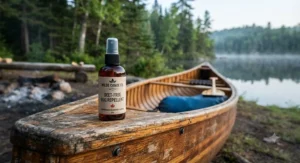
What sets this one apart immediately is the 20% picaridin base, which sidesteps DEET’s well-documented tendency to degrade plastics, synthetics, and some rubber coatings — a real concern when your gear list includes a plastic map case, a nylon spray skirt, or a laminated topo map. Independent gear reviewers have repeatedly found that concentrated DEET can visibly damage certain synthetic fabrics and plastics over repeated exposure, something picaridin simply doesn’t do. The 118 mL pump spray is labelled for up to 12 hours of protection against mosquitoes, making it a strong fit for anyone doing back-to-back paddling days without wanting to reapply constantly. Reviewers consistently note that picaridin feels less greasy on skin than high-concentration DEET, and it carries none of the plastic-melting reputation that makes some trippers nervous about spraying near their gear. This is the pick for families, gear-conscious canoeists, or anyone paddling with kids where a DEET-free option feels like the more comfortable default. The trade-off some reviewers mention is a mild, slightly citrusy scent on first application, and picaridin doesn’t have quite the multi-decade track record DEET does in Canadian backcountry use.
Pros:
- ✅ Won’t damage plastics, synthetics, or gear coatings
- ✅ Up to 12-hour labelled protection window
- ✅ Feels less greasy than high-concentration DEET sprays
Cons:
- ❌ Slightly higher price than basic DEET pumps
- ❌ Some reviewers note a noticeable scent on first spray
In the C$15-C$20 range, it costs more than a basic Muskol pump, but if you’re protecting a canoe’s worth of gear along with your skin, that premium buys real peace of mind.
3. Repel 100 Insect Repellent — lightest ounce-for-ounce protection on the market
The headline feature is the 98% DEET concentration packed into a 30 mL bottle, which sounds intense until you realize the whole point is maximum protection per gram carried — a genuinely clever solution for portage-heavy trips where every ounce in your pack gets carried, twice, uphill. Health Canada’s general guidance caps recommended DEET concentration at 30% for most uses, so it’s worth being clear-eyed here: higher percentages like this one don’t mean stronger repellency, they mean a longer window before you need to reapply, per that same guidance. Based on the spec comparison, this makes Repel 100 a niche but legitimate tool for extreme bug pressure situations — think black fly season in the boreal interior — where reapplying every few hours simply isn’t practical mid-paddle. Aggregated user reviews are enthusiastic about the sheer staying power and the almost absurdly small bottle size, though a recurring theme is that the near-pure DEET formula feels oily or slightly sticky on skin compared to diluted pumps. This is the pick for the ultralight portager who wants maximum hours of protection from the smallest possible container, not the family basecamp crowd looking for an easy, low-commitment spray.
Pros:
- ✅ Tiny 30 mL bottle adds almost no pack weight
- ✅ Long reapplication window even in heavy bug pressure
- ✅ Genuinely useful for multi-portage days without downtime to reapply
Cons:
- ❌ High concentration can feel greasy or heavy on skin
- ❌ Strong DEET odour some reviewers find overwhelming
Usually priced under C$10 for the travel size, it’s one of the best value-per-gram options here, provided you’re comfortable with a stronger DEET experience.
4. Ben’s 30 Tick & Insect Repellent — fragrance-free pump built for ticks too
The distinguishing feature is the fragrance-free formula paired with 30% DEET, aimed squarely at trippers who need tick protection along portage trails and brushy campsites, not just mosquito defence out on the water. Ticks have become a genuine and growing concern across much of southern and central Canada as ranges expand northward, and a repellent explicitly tested and marketed for tick performance carries real practical weight for anyone bushwhacking around a portage or setting up camp in tall grass. The 100 mL pump spray delivers roughly 8 hours of labelled protection, comparable to other 30% DEET products, but the specific tick-repellency claim is what differentiates it from a generic mosquito spray. Reviewers frequently single out the tick performance as the reason they keep buying it, alongside appreciation for the unscented formula, which matters if you’re layering sunscreen or don’t want your bug spray fighting with camp coffee for nose space. A smaller number of users report the mist pattern feels inconsistent compared to finer aerosol sprays, occasionally requiring a second pass for even coverage. This is a strong pick for anyone doing routes with known tick activity, or portaging through overgrown trail sections where brush contact is unavoidable.
Pros:
- ✅ Specifically formulated and marketed for tick protection
- ✅ Fragrance-free, so it won’t clash with sunscreen or food
- ✅ 30% DEET matches the adult concentration Health Canada considers appropriate
Cons:
- ❌ Mist pattern reportedly less even than some competitors
- ❌ Priced higher than basic drugstore DEET pumps
At roughly C$15-C$20, it’s a mid-range investment that pays off specifically if ticks, not just mosquitoes, are the bigger worry on your route.
5. Natrapel 12-Hour Picaridin Pump Spray — longest DEET-free protection window
The key feature is the 12-hour labelled protection claim from a 20% picaridin base, making this the longest-duration DEET-free option in this lineup and a genuinely strong fit for full-day paddling without a midday reapplication ritual. Picaridin has been used as an alternative to DEET in Europe and elsewhere for years, and its appeal for canoe trips specifically comes down to compatibility — it won’t compromise a life jacket’s synthetic straps, a dry bag’s coated fabric, or a paddle’s composite grip the way concentrated DEET occasionally can over repeated exposure. Based on the spec comparison, Natrapel’s continuous-spray pump also distributes more evenly than some fine-mist alternatives, which reviewers note translates to fewer missed patches on the backs of knees or ankles — exactly the spots stable flies and mosquitoes are known to target on paddlers. Aggregated reviews consistently praise it as the go-to family option, with parents specifically citing comfort using it on kids, while a smaller subset of reviewers mention a scent that lingers slightly longer than they’d like. This is the pick for family basecamps, canoe trips with young paddlers, or anyone who has simply decided they’re done with DEET.
Pros:
- ✅ 12-hour labelled protection, longest DEET-free option here
- ✅ Even continuous-spray coverage, good for ankles and exposed skin
- ✅ Widely regarded as a comfortable choice for kids and families
Cons:
- ❌ Some reviewers find the scent lingers longer than expected
- ❌ Costs more per millilitre than basic DEET pumps
Typically found in the C$15-C$20 range, it’s priced similarly to Sawyer’s picaridin option, and the choice between the two often comes down to bottle format preference.
6. OFF! Deep Woods Insect Repellent — reliable big-box standby for basecamp
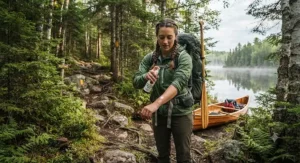
The defining trait of this one is sheer ubiquity — it’s the bottle most Canadians have already used at some point, sold everywhere from Canadian Tire to the corner gas station near the put-in, with formulations ranging up to roughly 25% DEET depending on the specific variant. That accessibility matters more than it sounds like on a canoe trip: if you forget your repellent or run out mid-route, OFF! Deep Woods is very likely the only thing on the shelf at the outfitter or general store near the access point. Available in both aerosol and pump formats, it delivers around 8 hours of labelled protection, putting it roughly on par with the Muskol and Ben’s products here rather than standing out on raw performance. Reviewers consistently describe it as dependable and familiar, which is its own kind of value, though a recurring complaint in aggregated feedback is the traditional, fairly strong DEET scent that some find more noticeable than newer formulations. This is a solid, unglamorous pick for mixed-group trips where not everyone has strong brand preferences, or as a reliable backup bottle stashed in a group gear barrel.
Pros:
- ✅ Extremely widely available at outfitters and general stores
- ✅ Familiar, well-trusted formula with decades of use in Canada
- ✅ Available in both aerosol and pump formats
Cons:
- ❌ Traditional strong scent noted repeatedly in reviews
- ❌ Concentration on the lower end of the effective DEET range
Priced roughly C$10-C$15 depending on size and format, it’s a middle-of-the-road value pick that earns its spot through convenience as much as performance.
7. Muskol BackCountry 8-Hour Aerosol — bulk aerosol for multi-week expeditions
The standout feature is the 230 g aerosol can, which holds far more product than any pump spray in this list and is explicitly branded for backcountry use, making it the obvious choice for group trips or extended expeditions where individual travel-size bottles simply won’t cut it. At 30% DEET with a labelled 8-hour protection window, the formula itself isn’t dramatically different from the Muskol Ultra pump — the differentiator is entirely about volume and application speed, since an aerosol can cover a lot of exposed skin fast when black flies are swarming and nobody wants to fumble with a small pump nozzle. Based on the spec comparison, this makes it a smart basecamp or group-barrel item rather than a personal travel-size DEET spray for a solo minimalist packer. Aggregated reviews value the sheer coverage capacity and speed of application, but a fair number of users flag aerosol overspray as wasteful, since a portion of every spray drifts away rather than landing on skin, and aerosols also can’t fly in carry-on luggage if your trip starts with a flight. This is best suited to car-accessible put-ins or fly-in trips where the can travels in checked gear or a floatplane cargo hold rather than a backpack.
Pros:
- ✅ Large 230 g capacity ideal for groups or long trips
- ✅ Fast application when black flies are swarming heavily
- ✅ Consistent 30% DEET formula with proven backcountry track record
Cons:
- ❌ Aerosol overspray wastes a portion of every application
- ❌ Bulkier and heavier than any pump option on this list
Generally priced around C$12-C$18, the per-millilitre value is actually strong given the volume, provided you have room in a barrel or vehicle rather than a portage pack.
Insect Repellent for Portaging Trips: A Practical Application Guide
Applying insect repellent for portaging trips is trickier than it sounds, because you’re managing sweat, exertion, and a pack strap crossing right over your shoulders and collarbone — prime bite real estate. Start by spraying exposed skin before you shoulder the pack, not after, since fumbling a spray bottle mid-carry with a canoe balanced on your head is a recipe for a soggy trail and an unsprayed neck. Apply to the back of the neck, ears, and ankles specifically, since stable flies are known to target exposed ankles and feet on paddlers, an area often forgotten under wool socks that get wet.
A common mistake is applying repellent, then immediately putting on sunscreen over top, which can dilute effectiveness of both products; the general rule dermatologists and outdoor guides recommend is sunscreen first, allowed to absorb for several minutes, then repellent on top. On multi-day trips, reapply after any swim, heavy sweat, or rain, since water and perspiration are exactly what wash DEET and picaridin off skin. Keep your bottle somewhere accessible — a hip-belt pocket or a PFD pocket — rather than buried in a portage pack, because the worst bug pressure typically hits during the carry itself, not while you’re gliding across open water with a breeze.
Real Canoe Trip Scenarios: Matching Bug Spray to Your Trip Style
Picture three different trippers. The first is a weekend paddler doing a two-night loop with car access at both ends, minimal portaging, and a low tolerance for gear fuss — for this person, a small Muskol Ultra pump or a bottle of OFF! Deep Woods grabbed at the outfitter covers the trip without overthinking it. The second is a family with young kids doing a gentle basecamp trip on a single lake, prioritizing comfort and skin sensitivity over maximum strength — here, Natrapel 12-Hour or Sawyer Premium’s picaridin formulas make more sense than a high-concentration DEET option nobody wants near a five-year-old’s face.
The third scenario is the serious backcountry tripper doing a nine-day route through Temagami or Quetico with six portages and genuine black fly pressure in late May — this person needs either Repel 100 for maximum protection-per-gram or a shared Muskol BackCountry aerosol split across the group barrel, paired with long sleeves and a bug jacket for the worst stretches. Matching the bottle to the trip, rather than grabbing whatever’s cheapest at the drugstore, genuinely changes how miserable or manageable those buggy portages feel.
Common Bug Spray Problems on Canoe Trips (And How to Fix Them)
The first common problem is repellent washing off during portages from sweat, which is solved simply by reapplying at the start of each carry rather than assuming morning application lasts all day. The second is DEET degrading plastic gear like map cases or sunglasses, which points toward switching to a picaridin option like Sawyer Premium or Natrapel for any trip where gear contact is unavoidable. Third, aerosol cans freezing or losing pressure in cold shoulder-season mornings is a known quirk — pump sprays like Ben’s 30 or Muskol Ultra don’t have this issue and work reliably regardless of temperature.
Fourth, running out mid-trip is a genuinely common failure, especially on longer expeditions, so packing a backup travel-size DEET spray inside a dry bag as insurance against a lost or empty bottle is cheap insurance against a miserable last few days. Fifth, applying repellent too close to a shared water source or cooking area can taint taste and smell — always spray a few metres away from the fire pit and any filtered water containers, letting hands dry before handling food or water gear.
How to Choose Bug Spray for Canoe Trips: 6 Expert Criteria
- Match concentration to trip length: shorter trips can use lower DEET percentages reapplied more often, while longer or bug-heavy trips benefit from higher concentrations or picaridin’s longer window.
- Consider gear compatibility: if your kit includes plastic map cases, synthetic paddling jackets, or coated dry bags, a picaridin formula avoids the plastic-degradation risk associated with concentrated DEET.
- Weigh format against weight limits: pump sprays and travel-size DEET spray bottles suit portage-heavy trips, while aerosols suit vehicle-accessible or fly-in group trips where weight matters less.
- Factor in who’s using it: children between 6 months and 12 years should use repellents with 10% DEET or less under Health Canada-aligned paediatric guidance, which rules out several products in this list for young kids.
- Check tick-specific claims if your route includes overgrown trails or portages, since not every general mosquito repellent is tested or marketed the same way against ticks.
- Budget for backup: always pack slightly more than you think you’ll need, since running dry three days from the takeout is a genuinely bad position to be in.
Common Mistakes When Buying Bug Spray for Canoe Trips
One frequent mistake is assuming a higher DEET percentage automatically means better protection, when Health Canada’s own guidance clarifies that concentration primarily affects duration, not strength, of protection. Another is buying a single large aerosol can for a solo lightweight trip, when a compact bug spray for backcountry canoeing in travel-pump format would serve the same protection need at a fraction of the pack weight. A third common error is choosing a repellent based purely on price without checking whether it’s DEET-based or picaridin-based, then discovering mid-trip that it’s degrading a plastic phone case or map sleeve. Finally, many trippers buy repellent for themselves but forget to check pediatric guidance for kids joining the trip, ending up with a 30% DEET adult formula that’s inappropriate for a child under 12.
DEET vs Picaridin for Canoe Trips: Which Wins on the Water
| Factor | DEET (e.g. Muskol Ultra, Repel 100) | Picaridin (e.g. Sawyer Premium, Natrapel 12-Hour) |
|---|---|---|
| Track record in Canadian backcountry | Decades of established use | Newer to mainstream Canadian use, growing adoption |
| Effect on plastics and synthetics | Can degrade certain plastics and fabrics over time | Generally considered gear-safe |
| Typical labelled duration | Up to 8-10 hours | Up to 12 hours |
| Skin feel | Can feel greasy at high concentrations | Generally lighter, less oily feel |
| Best suited to | Extreme bug pressure, tick-heavy routes | Families, gear-conscious trippers, sensitive skin |
This comparison suggests neither option is a universal winner — the choice hinges on your specific trip. If you’re bushwhacking through a portage in peak black fly season with heavy tick exposure, the established performance of a DEET product like Ben’s 30 or Repel 100 carries real weight. If you’re paddling with kids or worried about a C$40 map case melting in a dry bag, picaridin options like Sawyer Premium deserve serious consideration despite the slightly shorter track record in Canadian conditions.
✨ Don’t Miss These Exclusive Deals!
🔍 Take your canoe trip prep to the next level with these carefully selected sprays. Click on any highlighted product to check current pricing and availability before your next trip
Compact Bug Spray for Backcountry Canoeing: Portage Packing Weight Considerations
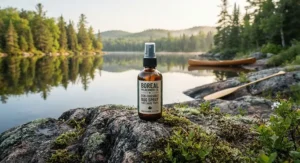
Compact bug spray for backcountry canoeing isn’t just a nice-to-have — on a trip with multiple portages, every bottle you carry gets lifted, packed, and carried across land, sometimes on the same trip as a canoe balanced overhead. A 230 g aerosol can like the Muskol BackCountry sprays weighs meaningfully more than the 30-50 mL travel pumps like Repel 100 or Muskol Ultra, and on a route with six or more portages, that weight difference compounds fast. Outdoor Canada’s portage guidance emphasizes minimizing unnecessary pack weight as one of the simplest ways to make portaging less punishing, and consumables like bug spray are an easy, overlooked place to trim grams without sacrificing anything essential.
| Option | Effectiveness | Portability for Portaging | Best For |
|---|---|---|---|
| Travel-size DEET spray (e.g. Repel 100, Muskol Ultra) | High | Excellent, near-zero added weight | Solo and lightweight portagers |
| Citronella candles or coils | Low to moderate, wind-dependent | Poor, bulky and fragile | Stationary basecamp evenings only |
| Wearable repellent bracelets/clips | Low, limited coverage radius | Excellent | Supplemental use only, not standalone |
| Bulk aerosol (e.g. Muskol BackCountry) | High | Poor for solo portaging, fine for group barrels | Group trips, vehicle or fly-in access |
The takeaway from this comparison is that traditional alternatives like citronella coils simply don’t hold up on a portage — they’re heavy, breakable, and largely ineffective in any breeze, which is exactly when bugs are worst near open water. A genuinely compact bug spray for backcountry canoeing, paired with proper clothing coverage, consistently outperforms these older alternatives for anyone actually moving gear over land rather than sitting at a fixed campsite.
Travel-Size DEET Spray vs Backcountry Aerosols: Features That Actually Matter
The features that actually matter for a travel-size DEET spray come down to three things: concentration, nozzle reliability, and bottle durability under pack compression, not marketing claims about “extreme protection” or exotic scent additives. A fine-mist pump that clogs after a week of dusty portage trails, as some Muskol Ultra reviewers note, matters far more in practice than whether the bottle has a slightly nicer label. Conversely, features that don’t matter much for most canoe trippers include elaborate “sport” branding or added skin-conditioning claims, since the core job of the product is simply reliable, even coverage.
Where aerosols genuinely earn their keep is speed and volume — spraying down exposed arms and neck in two seconds flat when black flies are swarming beats fumbling with a pump nozzle, which is exactly why products like the Muskol BackCountry aerosol persist despite the extra weight. But for anyone carrying their own gear over a portage trail, a reliable travel-size DEET spray or picaridin pump wins on the metric that actually matters most: ounces carried per hour of protection delivered.
Bug Spray and Backcountry Water Sources: What Every Paddler Should Know
Backcountry water sources deserve real caution around insect repellent, since most canoe trippers are drawing drinking water directly from the same lakes and rivers they’re paddling and camping beside. Spraying repellent while standing at the water’s edge, or handling a water filter or pump immediately after applying DEET or picaridin to your hands, risks transferring residue into your filtration system or directly into your water supply. Ontario Parks’ own backcountry water guidance recommends treating all backcountry water sources as untreated regardless of how clear they look, which is a useful reminder that contamination risks come from multiple directions, not just from beavers and giardia.
The practical fix is simple: apply repellent a few metres back from shore, let it fully absorb or dry before handling any water treatment gear, and consider designating one person’s hands as the “clean” water-filtering hands for the group, kept repellent-free through rotation. This is a small habit, but it closes an overlooked gap between two essential canoe-trip systems — bug protection and safe drinking water — that most product labels never mention because they’re written for general use, not specifically for people camped beside the water they drink from.
Black Fly Season in Canada: Timing Your Bug Spray Strategy
Black fly season in most of central and eastern Canada runs roughly from mid-May through late June, with Algonquin Park’s official biting-insect page pegging the peak specifically from mid-May until late June, occurring primarily during daylight hours. Mosquito season overlaps significantly, typically running from mid-to-late May into July depending on that year’s weather and water levels. Understanding this timing matters enormously for gear choice — a canoe trip planned for early June in Algonquin, Temagami, or the boreal Shield needs a fundamentally more aggressive bug strategy than the same route paddled in late July or August once black fly numbers have crashed.
For trips squarely inside peak black fly season, this points toward higher-concentration or longer-duration options like Repel 100 or Natrapel 12-Hour, paired with actual physical barriers — long sleeves, tucked pant cuffs, and a bug jacket for the worst portages — since no spray alone fully solves black fly pressure at its peak. Trippers with flexible schedules can also simply shift a trip later into summer specifically to dodge peak black fly season, trading slightly warmer daytime temperatures for a dramatically more pleasant bug experience.
Frequently Asked Questions
❓ What is the best bug spray for canoe trips in Canada?
❓ Is DEET or picaridin better for canoe trips?
❓ How much bug spray should I pack for a portaging trip?
❓ Can I use bug spray near lake water on a canoe trip?
❓ What DEET percentage do Health Canada guidelines recommend for adults?
Conclusion
Choosing bug spray for canoe trips really comes down to being honest about your specific trip, not chasing the single “best” bottle on the internet. A weekend paddle with car access barely needs more than a small Muskol Ultra pump or a bottle of OFF! Deep Woods grabbed at the outfitter on the way in. A nine-day portage-heavy expedition through peak black fly season is an entirely different calculation, one where a compact, high-concentration option like Repel 100 or a shared group aerosol like Muskol BackCountry genuinely earns its keep.
Families and gear-conscious trippers have real reasons to lean picaridin, with Sawyer Premium and Natrapel 12-Hour offering longer protection windows without the plastic-degradation risk that comes with concentrated DEET near map cases, sunglasses, and synthetic gear. Ticks add another layer entirely, and a fragrance-free, tick-specific option like Ben’s 30 deserves a spot in the pack for anyone bushwhacking overgrown portage trails. Whatever you choose, the research is consistent on one point worth remembering: more DEET doesn’t mean more protection, just more hours before you need to reapply — so match the bottle to the trip, not the highest number on the label.
🚣 Ready to gear up? Check current prices on any product above and get your bug protection sorted before your next launch! ✨
Recommended for You
- 7 Best Permethrin Treatment Kits for Camping Gear in 2026
- DEET-Free Bug Spray for Toddlers: 7 Safest Picks (2026)
- 7 Best Picaridin Bug Spray Picks for Canada in 2026
Disclaimer: This article contains affiliate links. As an Amazon Associate, I earn from qualifying purchases. If you purchase products through these links, we may earn a small commission at no additional cost to you.
✨ Found this helpful? Share it with your friends! 💬🤗
