
In This Article
You know the moment. It’s mid-May, the sun is out, the river is running high, and something the size of a grain of rice lands on your hairline and starts to carve. That’s a blackfly. A blackfly protection jacket is the closest thing to a force field a Canadian can buy for the cost of a pizza night.
Blackflies don’t bite politely. Algonquin Park’s biting-insect guide explains that they cut and rupture the skin, then soak up the blood. That’s why the welts swell and itch long after a mosquito bite has faded. Canada has 161 species. Most adults fly from mid-May to late June, mainly in daylight, and park staff specifically list a bug jacket as a sensible deterrent.
I haven’t field-tested any of these jackets, and I won’t pretend otherwise. This guide rests on published specs, retailer listings and aggregated reviewer reports, all interpreted for Canadian conditions. I cover seven real models, how mesh tightness for small biting insects works, why cuff and hood seals decide whether you stay sane, and when to expect the swarms.
Prices are ranges in Canadian dollars at the time of research. Check current prices before you buy.
Quick Comparison: 7 Blackfly Protection Jacket Options at a Glance
| Product | Style | Standout trait | Price range (CAD) | Best For |
|---|---|---|---|---|
| Coghlan’s Bug Jacket | Pullover mesh | Ultra-fine mesh, low cost | C$25–C$35 | First-timers and gardeners |
| Ben’s InvisiNet Bug Jacket & Mitts | Mesh jacket + mitts | Reinforced shoulders, mitts included | C$35–C$50 | Hikers with packs |
| Original Bug Shirt | Woven body + mesh sides | Made in Canada, dense torso | C$80–C$110 | Severe swarms, canoe trips |
| Bug Baffler Insect Protective Mesh Shirt | Hooded mesh shirt | Very fine mesh | C$55–C$80 | Maximum barrier, cooler days |
| Bushline Ultra Light Fine Mesh Bug-Resistant Jacket | Pullover mesh | Packs into its own bag | C$30–C$45 | Backpackers counting grams |
| Bushline Pullover Bug Jacket with Zip-off Mesh Hood | Woven + mesh sides | Detachable hood | C$45–C$60 | Variable-weather work and camp |
| Tough Outdoors Mosquito Suit | Jacket + pants | Full-body coverage | C$50–C$80 | Gardeners, fishers, heavy-bug zones |
Look at the table as a ladder of trade-offs. The Coghlan’s Bug Jacket and the two Bushline pullovers are the budget-friendly end. They’re light, cheap and good for short exposures. The Original Bug Shirt costs roughly three times as much, but it’s the only one here with dense fabric where cloth touches skin. That matters because blackflies bite through mesh pressed against you. If your priority is full coverage, the Tough Outdoors Mosquito Suit is the only entry that includes pants.
💬 Just one click — help others make better buying decisions too!😊
Top 7 Blackfly Protection Jacket Picks for Canada: Expert Analysis
1. Coghlan’s Bug Jacket — best low-cost entry point
If you want to find out whether you’ll actually wear a bug jacket, this is the cheapest honest experiment.
Retailers such as MEC list the polyester mesh at 1,600 holes per square inch, though an older listing I found says 1,150, so verify the version you’re buying. Either way, the weave is built to stop no-see-ums. Blackflies run 2 to 6 mm, so they can’t squeeze through. You also get zippered face access plus adjustable waist and cuffs. Sizing runs by body weight: small fits up to 73 kg, medium 91 kg, large 109 kg and extra-large 136 kg. Allow room for layers underneath.
Based on the spec comparison, this suits short, repeatable jobs like berry picking, garden chores and fishing from shore. Its weak spot is the same as every loose mesh pullover. If the mesh lies flat on your arms, a determined fly may find skin.
Review pools are small. MEC shows a perfect score from only two reviews. Retailer reviewers describe it keeping off blackflies and deer flies, note it gets hot, and one owner says a first jacket lasted around a decade.
Pros:
- ✅ Ultra-fine mesh stops tiny biters
- ✅ Zippered face access for snacks
- ✅ Very affordable and packs small
Cons:
- ❌ Warm in direct sun
- ❌ Mesh may touch skin at the arms
Around C$25–C$35: strong value as a starter.
2. Ben’s InvisiNet Bug Jacket & Mitts — best for hikers with a pack
The standout here is the bundle: jacket plus mitts, which closes the gap blackflies love most, your hands.
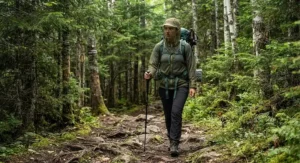
The jacket weighs about 4 oz (roughly 113 g). The mesh is reinforced with nylon at the shoulders and waist, exactly where a pack’s straps and hip belt grind. In practice that reinforcement should extend the life of the thin mesh on multi-day trips. The hood has an elasticized crown that holds it on your head or over a hat, and the cuffs and hem are elasticized. The manufacturer claims high-visibility netting, a claim I’d treat as marketing until you try it on.
The analytical take: if you’re moving, this is a better fit than a generic pullover, because the elastic closures resist riding up while you walk. The size S/M lists a 34–40 in chest (about 86–102 cm). Check the chart if you’re broad through the shoulders.
On reviews, one roundup flags that the mesh holds some heat in direct sunlight. I couldn’t find a large verified review pool at the retailers I checked, so treat the praise as modest evidence.
Pros:
- ✅ Mitts included for hand protection
- ✅ Reinforced shoulders for pack wear
- ✅ Pocket doubles as stuff sack
Cons:
- ❌ Mesh retains heat in sun
- ❌ Limited verified review volume
Around C$35–C$50: excellent value because the mitts are included.
3. Original Bug Shirt — made in Canada, built for the worst swarms
The distinguishing idea is smart. It uses dense woven fabric where the garment touches your skin and mesh only where it hangs loose.
It’s polyester with UV protection, with a loose fit, mesh sides, and an adjustable zippered mesh hood with a drawstring that works with or without a hat. There’s an adjustable wrist and a cordlock waist, and it folds into its own pocket. Wearable evidence from reviewers backs the design: one outdoor-gear writer wore it comfortably into the low 20s °C with just a T-shirt underneath. Another trick reviewers mention is pulling your arms inside the body to eat in a bug-free pocket of air.
The take: if your trips involve real swarms (canoeing and portaging in June, say), this is the pick. A cap brim also keeps the hood mesh off your face. The company says its fabric is tick and mosquito proof but not guaranteed against bees or wasps, a useful caveat.
MEC shows about 4.2 stars from nearly 40 reviews. Fit questions are the main recurring theme, so check the size chart.
Pros:
- ✅ Dense fabric defeats bites through cloth
- ✅ Mesh side panels for airflow
- ✅ Canadian-made with kids’ version available
Cons:
- ❌ Costs several times more than mesh pullovers
- ❌ Loose fit may need sizing care
Around C$80–C$110: pricey, but justified if your swarms are serious.
4. Bug Baffler Insect Protective Mesh Shirt — tightest barrier, cooler-day choice
Its claim to fame is genuine no-see-um mesh in a hooded pullover that the maker says blocks mosquitoes, blackflies, ticks and bees.
It’s polyester, made in the USA, and comes in olive green or white. The hoods are black, which gives the clearest view through fine mesh. The unisex cut is generous, so there’s no need to size up. It’s machine washable and should be air dried.
Here’s the honest trade. A reviewer roundup notes the dense mesh traps more body heat than looser mesh jackets and reduces visibility in dim light. So this is a barrier-first garment. It’s best on cool, damp, buggy days (opening a cottage in May, say) rather than a sweltering July portage.
I couldn’t verify a big review pool at the retailer page I checked. The roundup does say repeat buyers praise consistent quality and true-to-size fit.
Pros:
- ✅ Very fine mesh blocks tiny insects
- ✅ Black hood for clearer sightlines
- ✅ Easy washing and generous sizing
Cons:
- ❌ Runs warm in sunshine
- ❌ Dimmer vision at dusk
Around C$55–C$80 (cross-border pricing varies): decent value on cool days.
5. Bushline Ultra Light Fine Mesh Bug-Resistant Jacket — packs into its own bag
The standout is portability. It’s a fine-mesh pullover that ships with a mesh stuff bag, which means it lives in your daypack all season.
It’s polyester mesh in a pullover design, aimed at backpackers. The practical meaning: a pullover has no front zipper to leak, but you’ll wrestle it over your head with sunglasses and a hat. The jacket was sold through Canadian Tire at the time of research, so confirm whether a current Amazon.ca listing is available.
Canadian Tire reviewers give a mixed picture. One tested it on a walk in the yard and said it worked well. Another found the hood mesh thicker than expected, making it harder to see. That’s the kind of detail the spec sheet won’t tell you.
Who’s it for? Someone who wants cheap insurance in the pack, not a daily driver.
Pros:
- ✅ Ultra-light with included stuff bag
- ✅ Fine mesh for breathability
- ✅ Pullover design has no zipper to leak
Cons:
- ❌ Hood mesh can limit vision
- ❌ Awkward to put on over a hat
Around C$30–C$45: good value as pack insurance.
6. Bushline Pullover Bug Jacket with Zip-off Mesh Hood — detachable hood for changing conditions
The distinguishing feature is the zip-off mesh hood, which turns a bug jacket into a bug-proof shirt when the swarm thins.
The body is tightly woven poly/cotton with mesh sides, so it follows the same logic as the Original Bug Shirt: dense fabric against skin, ventilation on the sides. Drawstring cuffs and waist let you cinch gaps. Zip-off hoods are handy, but the zipper becomes a potential entry point. One owner in the retailer’s Q&A reports never having bugs get through the hood-to-body connection over years of use on a second jacket.
The same Q&A notes it’s pretty warm. Plan on mornings and evenings, not heat waves.
It suits farm chores, firewood duty and campsite mornings where you want to ditch the hood to eat.
Pros:
- ✅ Zip-off hood adds versatility
- ✅ Dense body fabric with side venting
- ✅ Drawstring cuffs and waist
Cons:
- ❌ Warm on hot days
- ❌ Hood zipper adds a seam to check
Around C$45–C$60: fair value for a convertible design.
7. Tough Outdoors Mosquito Suit — full coverage, jacket and pants
What sets it apart is that it’s a set. You get a hooded jacket and pants, and blackflies love ankles as much as necks.
It’s polyester no-see-um mesh with a zippered head cover for meals and drinks, adjustable drawcords at wrists, waist and ankles, and a carry pouch. It’s a one-size unisex cut and roomy. Roomy is good for airflow and for fitting over fleece or rain gear, though a baggy fit means more cinching.
The analytical take: this is the pick for people stationary in buggy places, such as gardeners, anglers and campers doing long camp chores. A 2022 Weather Network roundup picked it as a blackfly-season mesh suit and cited a 4.4 out of 5 average from more than 400 Amazon.ca reviews at that time. That’s a dated figure, so check the current rating.
Pros:
- ✅ Pants included for leg protection
- ✅ Drawcords seal wrists, waist, ankles
- ✅ Large review base at the time of research
Cons:
- ❌ Baggy one-size cut needs cinching
- ❌ Full suits run hot
Around C$50–C$80: strong value for a two-piece set.
Side-by-Side: Seals, Weight and Evidence
| Product | Hood | Cuffs and hem | Rating signal | Best For |
|---|---|---|---|---|
| Coghlan’s Bug Jacket | Zippered face access | Adjustable waist and cuffs | 5.0 from two MEC reviews | Budget starters |
| Ben’s InvisiNet Bug Jacket & Mitts | Elastic crown | Elastic cuffs and hem | Limited verified reviews | Pack-carrying hikers |
| Original Bug Shirt | Zippered, drawstring | Adjustable wrists, cordlock waist | About 4.2 (nearly 40 reviews, MEC) | Heavy swarms |
| Bug Baffler Insect Protective Mesh Shirt | Black mesh hood | Not detailed in listing | Roundup praise only | Cool, damp days |
| Bushline Ultra Light Fine Mesh Bug-Resistant Jacket | Pullover hood | Not detailed in listing | Mixed on hood visibility | Pack insurance |
| Bushline Pullover Bug Jacket with Zip-off Mesh Hood | Zip-off | Drawstring cuffs and waist | Positive Q&A on zipper seal | Variable conditions |
| Tough Outdoors Mosquito Suit | Zippered head cover | Drawcords at wrists, waist, ankles | 4.4 (400+, 2022 roundup) | Full-body coverage |
The big split is dense-body versus pure-mesh designs. The Original Bug Shirt and the Bushline Pullover protect better where fabric touches you, while the Coghlan’s Bug Jacket, Ben’s InvisiNet and Tough Outdoors keep you cooler. The Bug Baffler sits between: fine mesh, but warmer. Budget buyers should note that only the Tough Outdoors Mosquito Suit protects your legs.
Bug Jacket for Northern Camping Trips: Your First 30 Days
A bug jacket for northern camping trips lives or dies by setup. Treat the first month as a tuning period.
Before the trip: Try it on at home over the layers you’ll actually wear. Cinch the cuffs and waist, then raise your arms. If skin shows, fix it with a different size or a tucked layer. Sizing by weight (the Coghlan’s approach) means that without room for a fleece, you’ll be tight.
Hood setup: Wear a brimmed cap under the hood. The brim holds mesh off your face, so bites can’t land through it.
On the trail: Tuck the jacket into your pants, and tuck your pants into socks or gaiters. Add mitts (the Ben’s InvisiNet set includes them) or gloves. Natural gaps, wrists and ankles, are where bugs win.
At camp: Use zippered face access for food. With the Original Bug Shirt, reviewers describe pulling arms inside the body and eating from the bowl in a bug-free space.
Maintenance: Inspect for pinholes after each trip. Machine wash gently and air dry where the maker says so (as with the Bug Baffler). Store dry in the stuff sack.
Mistakes in the first 30 days: Overheating by dressing too warm underneath. Forgetting hands. Wearing dark colours, which blackflies like.
✨ Don’t Miss These Exclusive Deals!
🔍 Take your bug-free camping to the next level with these carefully selected jackets. Click on any highlighted item to check current pricing and availability. These tools will help you create the relaxed, itch-free trips your family will love!
Problem → Solution: Fixing the Five Most Common Blackfly Protection Jacket Complaints
1. “I can’t see through the hood.” Choose a black hood (the Bug Baffler design logic) and pair it with a brimmed cap. Reviewers of the Bushline Ultra Light flagged thicker hood mesh, so try before long trips.
2. “I’m roasting.” Choose side-vented designs like the Original Bug Shirt or the Bushline Pullover and wear a light wicking layer. Hydrate, and plan active hours for cool mornings.
3. “They still get me at the wrists and neck.” This is the classic failure. Use cuff and hood seals: cinch drawstrings, add mitts such as the Ben’s InvisiNet set, and tuck your neck gaiter into the collar.
4. “It snagged.” Thin mesh can catch on twigs and burrs. Pick the reinforced Ben’s InvisiNet for pack wear, and carry a small repair kit.
5. “I can’t eat.” Zippered face access on the Coghlan’s, Original Bug Shirt and Tough Outdoors solves lunch.
For background on why the bugs behave this way, Wikipedia’s blackfly entry is a good primer on life cycle and feeding.
Real-World Scenarios: Matching a Blackfly Protection Jacket to Your Life
Scenario A: The June canoe tripper. Northern Ontario, six days, daily portages, budget about C$150 for bug gear. The Original Bug Shirt handles swarms at portage landings. Add mitts or gloves for paddling. The dense torso also resists bites through the cloth when a pack presses on your back.
Scenario B: The Atlantic gardener. Late May, weekday evenings in a vegetable patch. A Coghlan’s Bug Jacket is an economical answer, and the long length covers your hips when you bend.
Scenario C: The all-day outdoor worker. Long shifts mean heat management. The Bushline Pullover lets you remove the hood when the swarm thins, while the Tough Outdoors Mosquito Suit suits stationary tasks like surveying from a fixed point.
Scenario D: The ultralight hiker. The Ben’s InvisiNet set or Bushline Ultra Light adds minimal weight and packs small.
What Is a Blackfly Protection Jacket?
A blackfly protection jacket is a lightweight, hooded garment made of fine mesh or tightly woven fabric that physically blocks biting flies from reaching your skin. Unlike repellents, it works mechanically, with no chemicals. Good models combine tight weave, sealed cuffs and hem, and a hood that keeps mesh off your face.
Think of it as a portable screen door. Blackflies crawl as well as fly, according to pest-control and biology sources, and they head for gaps around ears, eyes and the hairline. That makes the seams and closures as important as the mesh itself.
How to Choose a Blackfly Protection Jacket
- Pick mesh or weave for the bug. Blackflies are 2–6 mm. Look for a fine mesh jacket for blackflies (no-see-um grade) rather than ordinary netting.
- Check what touches your skin. Mesh lying on skin invites bites. Dense fabric against the torso helps.
- Favour pale body colours and a black hood. Blackflies are attracted to dark colours, per Algonquin Park. The Government of Canada’s insect bite prevention advice recommends light-coloured, loose clothes in tightly woven nylon or polyester. The black hood is for visibility only.
- Inspect the closures. Elastic or drawstring cuffs and hem, a zippered or elastic hood crown, and optional mitts matter more than any other feature.
- Match ventilation to season. Early spring tolerates warmer designs. Late-season humidity favours side-vented jackets.
- Think about weight and pack size. A stuff sack and under-150 g weight help if you’re carrying it everywhere.
Mesh Tightness for Small Biting Insects
Mesh tightness for small biting insects is measured in holes per square inch, and the numbers on listings can vary. Coghlan’s Bug Jacket lists 1,600 holes per square inch at some retailers and 1,150 at others. Treat these as marketing indicators, not lab results.
Here’s why tightness matters. Tighter mesh stops tiny insects, but it also restricts airflow and can reduce vision. A reviewer roundup says Bug Baffler‘s dense mesh traps more heat and cuts visibility in low light. Looser weaves breathe better but let tiny bugs through.
For blackflies, a fine mesh jacket for blackflies in no-see-um grade is the safe choice, because it covers both blackflies and midges (no-see-ums). If your main enemy is mosquitoes and larger flies, you can accept a slightly more open weave for comfort.
A practical test: hold the mesh up to a light. If you can see through the hood clearly in daylight but the weave looks dense, you’re in the right range. If you can see easily through it with big holes, it’s mosquito netting, not blackfly-grade.
Cuff and Hood Seals: Where Blackfly Protection Jackets Succeed or Fail
Cuff and hood seals are the make-or-break details. Even the finest mesh is useless if flies can walk up your sleeve.
Cuffs: Drawstring or elastic cuffs (the Original Bug Shirt, Bushline Pullover, Ben’s InvisiNet) beat open sleeves. Pair with mitts or gloves to close the final gap. One hiking-forum commenter noted that most bites land at cuffs, neck and hairline.
Hood: The crown should sit on a hat or head without sagging onto your face. Ben’s InvisiNet uses an elasticized crown, while the Original Bug Shirt has a drawstring.
Hood-to-body joint: On zip-off designs like the Bushline Pullover, the zipper is a potential entry point. One owner reported no leaks over years, but inspect it anyway.
Hem: Cinch the waist and tuck into pants. Blackflies crawl upward.
Good cuff and hood seals can matter more than a premium fabric. A budget jacket with well-cinched closures often beats an expensive one worn loose.
Blackfly Season Timing in Ontario, Quebec and Atlantic Canada
Blackfly season timing in Canada depends on latitude and weather. Algonquin Park says most species fly from mid-May to late June. In southern and central Ontario, biting swarms often appear around mid-May, with northern Ontario typically seeing them in the first or second week of June, according to one geological-survey writer’s field observations.
In Nova Scotia, CBC reported that blackfly season typically begins in late May and runs through June. A cool spring can keep rivers cold and high, stretching the season, while a sudden warm-up can compress emergence into a short, intense burst. A Science North scientist told CBC that a cold spell in one year caused insects to emerge all at once.
Daily timing matters too. Blackflies tend to be abundant on hot, humid spring days, and they’re mostly daytime biters.
Planning tip: Pack your blackfly protection jacket by early May for southern Canada, and mid-to-late May for northern trips. Don’t pack it away in July. Mosquitoes last longer, and deer flies peak in summer heat.
Blackfly Season Protective Clothing vs Traditional Alternatives
Blackfly season protective clothing includes jackets, base layers, gaiters and head nets. Here’s how a jacket compares with other options.
| Option | How it works | Typical cost | Main drawback | Best For |
|---|---|---|---|---|
| Mesh jacket (e.g. Coghlan’s Bug Jacket) | Physical barrier | C$25–C$110 | Heat, vision | Heavy bug zones |
| Repellent spray | Chemical deterrent on skin | Recurring refills | Reapplication, skin contact | Short exposure |
| Head net only | Protects face | Low | Leaves arms and neck | Light bug days |
| Base layer such as Rynoskin | Tight-weave layer under clothes | Mid-range | Needs a hood and gloves too | Active, warm days |
| Light, long-sleeved clothing | Reduces exposed skin | Already owned | Flies find gaps | Backup layer |
Repellents help, but Health Canada-approved products belong on exposed skin as part of a layered approach, and government advice recommends clothing in addition to repellent. A jacket won’t wash off in sweat or rain.
Treat the Rynoskin base layer as a complement, not a replacement. It’s a patented nylon-and-Lycra weave worn under regular clothing, with elastic collar, cuffs and waistband. One forum commenter said they couldn’t replace a bug jacket at peak blackfly season with it.
In short: a jacket gives the best face-and-torso protection per dollar, while repellent fills the gaps.
Long-Term Cost and Maintenance
Think cost per outing, not sticker price. Over a six-week blackfly window with, say, 20 outings, even a C$100 jacket works out to roughly C$5 per use, and it keeps working next year. One Coghlan’s reviewer reports that their first jacket lasted around ten years, which is a single anecdote but shows what careful care might deliver.
Compare that with repellent, which you buy again each season, and you’ll see why many Canadians keep one jacket in the truck.
Maintenance: Rinse sweat and sunscreen off after trips. Air dry. Check for pinholes. Fix tiny holes with fabric tape or needle and thread. Store out of the sun.
Replace when: Mesh frays, the hood loses shape, or cuffs lose elasticity. Hand-wash to prolong life.
Safety, Regulations and Practical Guidance for Canadians
Government guidance is simple. The Public Health Agency of Canada recommends tightly woven, light-coloured nylon or polyester, long pants, tucked-in sleeves and closed shoes. It lists permethrin-treated clothing for adults, though consumer availability in Canada varies, so check with a travel clinic.
Use only Health Canada-registered repellents on exposed skin and follow label directions. Apply sunscreen first. Check product labels before spraying any repellent on jackets, since some chemicals can damage synthetic fabrics.
Heat is your real safety risk. Mesh traps warmth in sun, so drink water, take breaks and loosen the hood when safe. Remember that a jacket isn’t proof against bees or wasps. Finally, do a tick check after hikes.
FAQ
❓ Can blackflies bite through a bug jacket?
❓ What colour bug jacket works best against blackflies?
❓ Does a blackfly protection jacket work on no-see-ums too?
❓ Can kids wear a bug jacket?
❓ Is a bug jacket worth it if I already use repellent?
Conclusion
The right blackfly protection jacket is the one you’ll actually wear when the swarm arrives. Start with your exposure. For short, local jobs, the Coghlan’s Bug Jacket or the Bushline Ultra Light offer inexpensive protection. For hiking with a pack, the Ben’s InvisiNet Bug Jacket & Mitts include the hand protection that other jackets leave out. For canoe trips and serious swarms, the dense-body Original Bug Shirt is the strongest design here, and the Bushline Pullover offers a cheaper take on the same idea. The Bug Baffler suits cool, damp days, and the Tough Outdoors Mosquito Suit is the full-coverage choice.
Remember the three rules: fine mesh, sealed cuffs and hood, and the right timing. Pack your jacket before mid-May in the south and by late May in the north, and pair it with a brimmed cap and sensible repellent on exposed skin.
✨ Ready to Take Back Your Spring?
🔍 Compare the models above, check current pricing and availability, and pick the jacket that fits your season. A little mesh now means a lot fewer welts later!
Recommended for You
- Mosquito Jacket For Camping: 7 Best Bite-Proof Picks (2026)
- Mosquito Head Net Guide 2026: 7 Best Picks That Actually Work
- Permethrin Clothing Spray For Hiking: 7 Proven Tick Picks 2026
Disclaimer: This article contains affiliate links. As an Amazon Associate, I earn from qualifying purchases. If you purchase products through these links, we may earn a small commission at no additional cost to you.
✨ Found this helpful? Share it with your friends! 💬🤗
