In This Article
Bug pants for hiking are lightweight long pants built to keep mosquitoes, black flies and ticks off your legs. They do it with loose no-see-um mesh that physically blocks bites, tightly woven fabric, or a factory-applied repellent finish. The best pairs breathe well enough for summer climbs while leaving bugs no easy route to bare skin.

Here’s the uncomfortable truth about a Canadian summer trail. Your legs are the buffet. Mosquitoes work the dusk shift, black flies swarm in late spring, and blacklegged ticks wait in leaf litter at ankle height for something warm to brush past. The Public Health Agency of Canada’s Lyme disease pamphlet boils the defence down to light-coloured long-sleeved shirts and pants, with pants tucked into socks. Bug pants for hiking take that advice and upgrade it.
The catch is heat. Nobody wants to cook inside nylon on a 28°C ridge walk, which is why this guide leans hard on mesh bug pants for trail hiking, lightweight insect-proof pants, and breathable mesh fabrics that vent without inviting a swarm.
One honest note before we start. This article draws on spec sheets, manufacturer documentation, Canadian public health guidance and published reviewer feedback. It is not a personal field test, and I won’t pretend otherwise. Prices appear as ranges in Canadian dollars and will shift, so check current pricing on Amazon.ca before you buy.
Quick Comparison: Bug Pants for Hiking at a Glance
| Product | Protection Type | Approx. Weight | Price Range (CAD) | Best For |
|---|---|---|---|---|
| Coghlan’s Bug Pants | Loose no-see-um mesh overlay | Light (not published) | C$25-C$40 | Camp, portages, black-fly season |
| Rynoskin Total Insect Protection Pants | Chemical-free knit base layer | Not published | C$60-C$90 (when in stock) | Tick-heavy brush, under existing pants |
| RailRiders Eco-Mesh Pants with Insect Shield | Treated nylon plus mesh-backed vents | ~285-320 g | C$130-C$165 | Hot, buggy, long-mileage days |
| RailRiders Bone Flat Pants | Ultra-vented, untreated nylon | ~240 g | C$110-C$150 | Humid heat, wet crossings |
| Craghoppers NosiLife Pro II Trousers | Built-in NosiLife treatment, stretch | ~265-280 g | C$110-C$150 | Everyday trail and travel |
| ExOfficio BugsAway Damselfly Pants | Treated, roll-up legs | ~221 g | C$100-C$140 | Packable, women’s fit |
| Craghoppers NosiLife Pro Convertible Trouser III | Treated zip-off legs | Not published | C$150-C$200 | Swinging temperatures |
Read the table by protection type before you read it by price. The Coghlan’s Bug Pants and Rynoskin Total Insect Protection Pants rely on physical barriers, the RailRiders and ExOfficio pairs add a repellent finish, and the Craghoppers models blend treatment with trail-friendly stretch. Budget hikers will find the Coghlan’s Bug Pants hard to beat on cost, while anyone logging all-day mileage should look at the vented RailRiders Eco-Mesh Pants with Insect Shield, which is the best fit for sustained heat.
💬 Just one click — help others make better buying decisions too!😊
Top 7 Bug Pants for Hiking: Expert Analysis
Each pick below follows the same pattern: what the spec means on the trail, who it suits, what reviewers keep saying, and where it falls short.
1. Coghlan’s Bug Pants — cheapest true mesh barrier
The whole appeal is brute simplicity: a physical wall between you and the swarm, with no chemistry involved.
The pants use ultra-fine polyester no-see-um mesh rated at 1,150 holes per square inch. In practice that is tight enough to stop mosquitoes and midges, and far too fine for a tick to squeeze through. The drawstring waist adjusts the fit, and the pants come in two sizes (Small/Medium and Large/Extra-large). The maker states they are intentionally baggy. That matters because mosquitoes can bite through mesh pressed against skin, and the loose cut keeps a layer of air between the mesh and your legs.
Based on the spec comparison, these work best as an overlay over regular trousers at camp, on portages, or on slow, buggy stretches. They are not an all-day, high-output hiking pant. Mesh also snags on brush, so budget for a patch kit.
On sentiment, one major retail listing showed roughly 4.1 out of 5 across about 70 reviews at the time of research. I could not verify enough detailed review text to summarize themes confidently, so check the current Amazon.ca reviews, especially for sizing.
Pros:
- ✅ Physical barrier with no repellent chemistry
- ✅ Very low cost for full-leg coverage
- ✅ Loose fit keeps mesh off your skin
Cons:
- ❌ Mesh can snag on branches and brush
- ❌ Baggy cut is awkward for scrambling
Expect to pay around C$25-C$40. Verdict: outstanding value as a bug-season backup.
2. Rynoskin Total Insect Protection Pants — chemical-free base layer for ticks
This is the stealth option, worn under whatever you already hike in.
The pants rely on a patented nylon-and-Lycra weave, with elasticated waistband and cuffs that close the usual crawl-in routes. The close fit won’t snag on branches. Because ticks climb upward from the ground, a snug cuff does a lot of work that loose trousers can’t, and it pairs naturally with gaiters (more on that below).
Reviewer sentiment is genuinely mixed, which is worth knowing. Some buyers report strong results against ticks and chiggers during brush-clearing work, while others describe disappointing durability and mosquito bites on the upper-body pieces. A forum discussion among Canadian paddlers also notes that most bites land at cuffs, the neck and the hairline, so fit matters as much as fabric. One practical complaint: reviewers mention there is no fly opening, which complicates trail bathroom breaks.
Availability needs checking. A Canadian retailer’s listing showed the pants as discontinued at the time of research, so confirm stock on Amazon.ca.
Pros:
- ✅ No repellent chemistry against skin or clothing
- ✅ Snug cuffs block crawling ticks
- ✅ Layers invisibly under hiking trousers
Cons:
- ❌ Extra layer adds heat in summer
- ❌ No fly makes bathroom stops awkward
Budget roughly C$60-C$90 when in stock. Verdict: strong for tick country, weaker as a standalone mosquito defence.
3. RailRiders Eco-Mesh Pants with Insect Shield — vents that don’t let bugs in
Its trick is putting ventilation where heat builds up and bug-proof mesh behind it.
Two-way zippered side vents run from thigh to near the ankle, backed by soft mesh. Open them for airflow and you get a breeze with bug protection intact. The fabric is 2-ply 3 oz Duralite nylon treated with Insect Shield, which the maker states lasts through 70 washes. The maker lists the weight at 10 oz (about 285 g), and one independent measurement came in at 11.2 oz (about 317 g). The elastic side panels and removable belt help the fit.
Reviewers on Trailspace praise the vents, durability and quick drying, with one hiker reporting a fall onto rocks that left the fabric intact. The recurring criticism is limited stretch in the crotch for scrambling, and one outdoor blog notes the pants run large, so consider sizing down.
For Canadians: Insect Shield is a permethrin treatment, so read the Safety section below before ordering.
Pros:
- ✅ Mesh-backed vents cool without letting bugs in
- ✅ Tough, quick-drying nylon built for abuse
- ✅ Treatment rated to 70 washes
Cons:
- ❌ Limited crotch stretch for big steps
- ❌ Runs large, so sizing takes care
Plan on about C$130-C$165. Verdict: the best long-day choice if the budget stretches.
4. RailRiders Bone Flat Pants — maximum airflow in the lineup
If your biggest enemy is humidity rather than bugs, start here.
The Bone Flats carry 27-inch mesh vents (roughly 69 cm) on both the inseam and outseam of each leg, and unlike the Eco-Mesh they stay permanently open. They weigh about 8.5 oz (roughly 240 g), with an elasticized waist and a fabric belt. Originally designed for saltwater fishing, they dry fast and block sun well.
The vital detail: they are not treated with Insect Shield. That makes them a ventilation specialist with a mesh barrier, not a repellent pant. A hiker on SectionHiker reached for them during record New England heat and humidity, precisely because they were lighter and more breathable than the Eco-Mesh he had worn for a decade.
The permanently open vents are the trade-off. You can’t zip them shut on a cool morning, so the pants run cool from start to finish.
Pros:
- ✅ Dual long vents on every leg
- ✅ Featherweight at roughly 240 g
- ✅ Dries fast after creek crossings
Cons:
- ❌ Vents can’t be closed in cool weather
- ❌ No repellent treatment for tick defence
Expect roughly C$110-C$150 (verify current pricing). Verdict: superb for sticky heat, but pair with other tick measures.
5. Craghoppers NosiLife Pro II Trousers — stretch comfort with built-in protection
These look like regular travel trousers, which is exactly the point.
The men’s version uses 92% nylon and 8% elastane and weighs about 280 g, with UPF 50+ sun protection and five pockets. The women’s version is slightly lighter at roughly 265 g. The elastane means the pants move with a high step, and the stretch is what separates them from stiffer treated pants. Craghoppers describes the NosiLife treatment as a plant-based formula built into the fabric for the garment’s lifetime, and retailers cite up to 90% fewer bites. Those are manufacturer claims, so treat them as such. I could not verify tick-specific efficacy.
A published review of the related Pro Active model praised freedom of movement and a minimalist, comfortable cut. On the retail pages I checked, only a handful of reviews were listed (single digits to low teens), so detailed sentiment patterns are not verifiable. Read current Amazon.ca reviews before buying.
Pros:
- ✅ Stretch fabric moves naturally on climbs
- ✅ UPF 50+ doubles as sun protection
- ✅ Looks fine at the trailhead café
Cons:
- ❌ Not a vented, hot-weather design
- ❌ Tick efficacy not independently verified
Roughly C$110-C$150. Verdict: the sensible everyday pair.
6. ExOfficio BugsAway Damselfly Pants — roll-up legs, featherweight pack
The standout here is how little they weigh and how small they pack.
The women’s Damselfly comes in about 7.8 oz (roughly 221 g) of 100% nylon, with an Insect Shield treatment good for 70 washes, a drawstring waist, articulated knees and a packable back zip pocket sized for a passport. The roll-up leg snaps let you convert to capris when you leave the buggy zone.
A caution from the tick angle: rolled legs expose your calves, so keep them down in tall grass and brush. Use the snaps at the lake, not on the trail. I could not verify reliable review sentiment for this model, so look at Amazon.ca’s current reviews and confirm the sizing, and also check whether a men’s equivalent is in stock.
Pros:
- ✅ Lightest pair in this roundup
- ✅ Articulated knees ease high steps
- ✅ Packs small for travel days
Cons:
- ❌ No ventilation panels for heat
- ❌ Rolled legs expose skin to ticks
Budget around C$100-C$140. Verdict: a fine packable option for light-duty buggy hikes.
7. Craghoppers NosiLife Pro Convertible Trouser III — zip-off range for changeable days
When the forecast reads 8°C at dawn and 26°C by noon, zip-offs earn their keep.
The fabric is mostly recycled polyamide with elastane, with UPF 40+ and the NosiLife treatment, which retailers say reduces bites by up to 90 percent. Five pockets stay usable even when the legs are zipped off. The long-leg version suits taller hikers.
My honest take on the design: zip seams create potential gaps, and zipped-off legs are bare skin. For tick country, keep them fully zipped and treat the shorts mode as a lakeside or campsite option. It is also the priciest pair here, so it needs to match a real need for versatility.
Review sentiment could not be verified at the time of research, so rely on current Amazon.ca reviews and sizing notes.
Pros:
- ✅ Two garments in one for packing
- ✅ Stretch fabric stays comfortable all day
- ✅ Fast-drying recycled polyamide
Cons:
- ❌ Zip seams add potential bug entry points
- ❌ Highest price in this lineup
Plan on about C$150-C$200. Verdict: worth it for travellers and shoulder-season hikers, overkill otherwise.
Pairing Pants With Gaiters: A Step-by-Step Setup Guide
Pairing pants with gaiters is the cheapest tick-defence upgrade in the whole system. Ticks climb upward from the ground, and PHAC’s guidance already points you to the cuff. Gaiters close the exact gap where trousers and footwear meet.
Step 1 — Choose the gaiter height. Low gaiters cover the ankle gap and work with treated pants. Calf-height gaiters add a longer barrier for brush and tall grass.
Step 2 — Dress from the bottom up. Socks over your base layer, boots on, then pants. Drop the pant cuff over the boot top.
Step 3 — Seal the cuff. Put the gaiter over the pant leg and boot, and cinch the top snugly around your calf. A loose top invites a tick to crawl inside the seam.
Step 4 — Match pant to gaiter. Fitted pants like the Rynoskin Total Insect Protection Pants sit cleanly under a gaiter. Loose mesh like the Coghlan’s Bug Pants needs the gaiter to cinch the extra fabric so it can’t gape.
Step 5 — Check the transition. Run a finger around every seam after the first kilometre. Gaps appear when you move.
Common first-month mistakes: cinching the top too loosely, forgetting tick checks, and leaving cuffs hanging out in tall grass. Another quiet failure: wearing dark gaiters. Light colours let you spot a hitchhiker before it finds skin.
Tick-Prevention Layering: A Head-to-Toe System
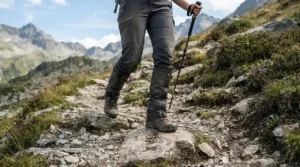
Tick-prevention layering means stacking small barriers so any one failure doesn’t matter. The Canada Communicable Disease Report’s review of Lyme disease prevention methods summarizes four approaches: avoiding risk areas, protective clothing and prompt tick removal, chemical barriers and repellents, and reducing tick abundance in the environment. Your pants cover the second pillar, so layer the others around them.
- Base layer: snug-cuffed leggings like the Rynoskin Total Insect Protection Pants give a final barrier at the waist and ankle.
- Outer pant: a treated or tightly woven pair, such as the Craghoppers NosiLife Pro II Trousers or the RailRiders Eco-Mesh Pants with Insect Shield.
- Seal: tuck the pants into socks or gaiters, and tuck your shirt into your waistband.
- Skin repellent: DEET or icaridin on exposed skin, per Health Canada label guidance.
- Light colours: easier tick spotting.
- After the hike: shower within about two hours, check hairline, behind knees and waistband, and run clothes through a hot dryer.
Treatment efficacy is worth quantifying. A study summarized by CanLyme found that in military tick submissions, 27% of ticks had fed to engorgement when no permethrin was present versus 12% when permethrin-treated clothing was worn. Even so, the authors stress tick avoidance remains multi-pronged, so layers beat any single garment.
Real-World Scenarios: Matching Bug Pants for Hiking to Your Trail
Instead of a generic ranking, here are three buyer profiles with budgets, environments and trip frequency.
The weekend Ontario day-hiker (C$50-C$100 budget, 10 trips a year). Wooded trails in southern Ontario mean ticks in leaf litter and mosquitoes at dusk. Layer the Rynoskin Total Insect Protection Pants (if in stock) or the Craghoppers NosiLife Pro II Trousers with gaiters. You skip the heavy gear and get meaningful tick coverage.
The Maritime or Quebec long-distance hiker (C$130+ budget, 40+ days a year). Humid summers, sweaty climbs and tick exposure all stack up. The RailRiders Eco-Mesh Pants with Insect Shield vents heat while its mesh backing keeps bugs out. If the weather turns brutally sticky, swap to the RailRiders Bone Flat Pants and rely on gaiters and repellent for tick defence.
The northern fisher or paddler (C$25-C$60 budget, black fly season). Portages stall you in swarms. Throw the Coghlan’s Bug Pants over your base layer at the put-in and pull them off when you’re moving. They pack small and cost less than a tank of gas.
How to Choose Bug Pants for Hiking
Follow these six steps and you will narrow the field quickly.
- Identify your main threat. Ticks reward snug cuffs and tuck-in systems. Mosquitoes and black flies reward loose mesh or treated fabric.
- Choose your barrier type. Physical mesh needs no chemistry. Treated fabric adds repellency but needs a regulatory check in Canada. Tightly woven fabric offers a middle ground.
- Check Canadian permethrin rules. The Public Health Agency of Canada’s permethrin-treated clothing page says to look for the Health Canada Pest Control Product (PCP) number on the label, and notes it is approved for people over 16.
- Prioritize breathability. Vents and thin nylon beat heavy cotton on any warm hike.
- Test the fit logic. Baggy for mesh overlays, trim for base layers, stretch for scrambling.
- Plan the cuff. Whatever pant you choose, confirm it works with your boots, gaiters and socks.
Mesh Bug Pants for Trail Hiking vs Treated Lightweight Pants
Choosing between mesh bug pants for trail hiking and treated lightweight pants comes down to what bugs you face and how hot you run.
Mesh pants stop bites mechanically. A tight no-see-um weave like the one on the Coghlan’s Bug Pants blocks almost everything small, but it adds a layer, snags, and collects heat. Treated pants like the Craghoppers NosiLife Pro II Trousers put repellency into fabric you’d wear anyway, so you gain protection without extra bulk, but you rely on the manufacturer’s claims and the chemistry’s lifespan. Vented hybrids like the RailRiders Eco-Mesh Pants with Insect Shield sit between the two worlds.
| Feature | Mesh Overlay | Treated Pant | Regular Hiking Pant |
|---|---|---|---|
| Stops mosquitoes | Strong (loose fit) | Strong (repels) | Moderate (thin fabric can fail) |
| Stops ticks | Strong barrier | Repels on contact | Only if tucked in |
| Breathability | Good, but extra layer | Varies | Varies |
| Cost | Lowest | Mid to high | Mid |
| Best for | Camp, portages | All-day hiking | Low-bug trails |
Looking at the comparison, treated pants win for most all-day hikers, since they replace the pants you’d wear anyway. Mesh overlays shine for the worst bug moments but shouldn’t be your only layer. Regular pants are fine when bugs are minimal, but they skip the extra margin.
Lightweight Insect-Proof Pants: Features That Actually Matter
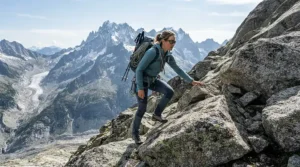
Lightweight insect-proof pants come with a pile of marketing features, and only a few change your day.
Features that matter:
- Weight under about 300 g. The ExOfficio BugsAway Damselfly Pants (about 221 g) and RailRiders Bone Flat Pants (about 240 g) prove you can protect without cooking.
- Cuff control. Elastic, drawstring or hemmable cuffs mean you can seal against gaiters.
- Mesh-backed venting. Open vents without an insect barrier are a trap.
- Quick-dry fabric. A creek crossing shouldn’t ruin your afternoon.
Features that don’t:
- Nine pockets. Three good ones beat nine mediocre ones.
- Extreme UPF claims. UPF 30+ is already solid for summer hiking.
- Marketing percentages. “Up to 90% fewer bites” depends on conditions you can’t reproduce at home.
What the spec sheet won’t tell you, but reviewers note, is that fit often matters more than a feature list. A great fabric with a gappy waist or cuff is a leak.
Breathable Mesh Fabrics: What to Expect in Real-World Performance
Breathable mesh fabrics promise cooling, but how do they actually behave when you’re hauling a pack up a 400-metre climb?
On paper, higher airflow means lower heat. In practice, mesh trades airflow for exposure. Loose mesh like the Coghlan’s Bug Pants lets air circulate between layers, but it sits on top of your regular clothes, so you are adding a layer, not swapping one. Mesh vents like those on the RailRiders Eco-Mesh Pants with Insect Shield and RailRiders Bone Flat Pants hit a better balance: the body of the pant stays conventional, while the vents act as radiators.
Here is what to expect. In still, humid air, no pant feels cool, and vents help only when you move. In wind, vents can feel like a gift. In cooler mornings, an unclosable vent like the Bone Flat’s means you’ll run a bit cold early, which is a fair trade for heat control later.
Dry time is the other overlooked benefit. Thin nylon with mesh sheds creek water quickly, and a user report on Trailspace describes the Eco-Mesh drying in roughly 10 to 15 minutes in dry air after crossings. Dry legs mean less chafing, which brings us to the next point: if thigh chafing is your nemesis, thin nylon with ventilation is a better ally than any treatment.
Bug Pants for Tick and Mosquito Protection: Canadian Safety and Regulations Guide
Here is where Canada gets quirky. The rules around bug pants for tick and mosquito protection are different from the US.
The Public Health Agency of Canada notes that permethrin-treated clothing has been approved for people over 16, including pregnant women, but should be kept away from children and pets, and that consumer permethrin sprays and liquids for DIY clothing treatment are not approved in Canada. When purchasing, look for the PCP number on the label.
The history is also worth knowing. A CBC News report described how Health Canada initially allowed permethrin-treated clothing to be marketed only against mosquitoes, not ticks, even though the product was essentially the same as US versions. Policies may have since evolved, since PHAC’s pamphlet now states permethrin-treated clothing is available in Canada, so always read the current label.
What this means for your shopping:
- Products like the RailRiders Eco-Mesh Pants with Insect Shield and ExOfficio BugsAway Damselfly Pants use US-style permethrin treatments. Confirm Amazon.ca’s listing and label status before you buy.
- Physical barriers such as the Coghlan’s Bug Pants and Rynoskin Total Insect Protection Pants sidestep this question entirely.
- Treated clothing “doesn’t provide complete protection,” as PHAC puts it, so combine it with tucking, tick checks and gaiters.
Long-Term Cost and Maintenance
Cheap pants that fail in a season cost more than good ones that last five.
| Pick | Price Range (CAD) | Treatment Lifespan | Cost Logic | Best For |
|---|---|---|---|---|
| Coghlan’s Bug Pants | C$25-C$40 | None needed (mesh) | Replace if torn | Budget, occasional use |
| RailRiders Eco-Mesh Pants with Insect Shield | C$130-C$165 | About 70 washes (maker claim) | Cheap per season if worn often | Frequent hikers |
| Craghoppers NosiLife Pro II Trousers | C$110-C$150 | Maker says garment lifetime | Dual-use pant | Everyday and trail |
| RailRiders Bone Flat Pants | C$110-C$150 | No treatment | Ventilation value only | Humid-heat hikers |
On cost per use, a C$150 pair worn 30 days a season for four seasons runs about C$1.25 per day. A C$30 mesh overlay worn 10 days a year can be even cheaper per use, though it replaces fewer layers. The best value is whichever pair you will actually wear.
Maintenance matters. Wash treated garments per label, avoid fabric softener, and don’t add more repellent to treated clothing. Patch mesh tears right away, since a small hole lets in bugs and then spreads. Store treated pants dry and out of reach of pets and kids, as PHAC advises. As the treatment ages, protection fades, which the CanLyme-summarized study suggests is linked to more engorged ticks over time, so retire pants once you are well past the maker’s wash rating.
FAQ
❓ Are bug pants for hiking worth it during Canadian black fly season?
❓ Can mosquitoes bite through mesh bug pants?
❓ How do I find permethrin-treated pants approved in Canada?
❓ How long does the repellent treatment last on insect-proof pants?
❓ Should I tuck my hiking pants into socks or use gaiters?
Conclusion
The best bug pants for hiking are the ones that match your bugs, your climate and your tolerance for heat. If ticks are your main fear, layer a snug base such as the Rynoskin Total Insect Protection Pants under your regular trousers and seal everything with gaiters. If mosquitoes and black flies dominate, the Coghlan’s Bug Pants deliver an astonishing amount of protection for the money. For long, hot, buggy days, the RailRiders Eco-Mesh Pants with Insect Shield is the strongest all-rounder in this lineup, with the RailRiders Bone Flat Pants taking over when humidity peaks. The Craghoppers NosiLife Pro II Trousers, ExOfficio BugsAway Damselfly Pants and Craghoppers NosiLife Pro Convertible Trouser III round things out for everyday, packable and variable-weather use.
Whatever you choose, remember that clothing is one layer of a system: tuck, seal, repel, check and shower. Confirm Canadian labelling for any treated product, read current Amazon.ca reviews, and check live pricing before you buy.
Recommended for You
- No-See-Um Mesh Jacket: 7 Best Bite-Blocking Picks, Canada 2026
- Blackfly Protection Jacket: 7 Best Picks For Canada (2026)
- Mosquito Jacket For Camping: 7 Best Bite-Proof Picks (2026)
Disclaimer: This article contains affiliate links. As an Amazon Associate, I earn from qualifying purchases. If you purchase products through these links, we may earn a small commission at no additional cost to you.
✨ Found this helpful? Share it with your friends! 💬🤗
