
In This Article
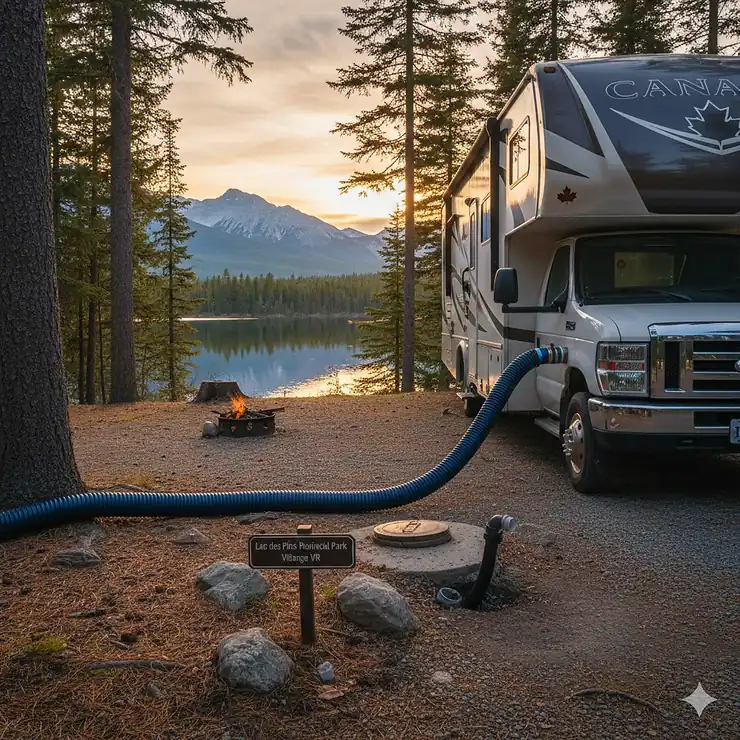
Managing waste in your RV doesn’t have to be a nightmare. Finding the right camper sewer hose transforms one of camping’s least pleasant tasks into a straightforward, mess-free experience. Whether you’re exploring the Rocky Mountains in Alberta or setting up camp along Nova Scotia’s coastline, a reliable sewer hose is essential equipment.
The Canadian RV market offers numerous options, from budget-friendly basics to premium heavy duty solutions. With harsh winters, varying provincial regulations, and unique camping conditions across our vast country, Canadian RVers need equipment that can handle temperature extremes and rugged use. This guide examines the top camper sewer hose options available on Amazon.ca in 2026, featuring real products with verified Canadian pricing, specifications, and customer feedback from fellow Canadian campers. You’ll discover everything from compact 10-foot models perfect for tight campground spaces to extended 20-foot systems ideal for remote boondocking sites.
Quick Comparison Table
| Product | Length | Material | Price (CAD) | Best For | Rating |
|---|---|---|---|---|---|
| Camco RhinoFLEX 15′ | 15 ft | Polyolefin + Steel | $67-75 | All-Season Use | 4.6/5 |
| DUMPMAN 20 FT Kit | 20 ft | TPE | $55-70 | Budget-Conscious | 4.4/5 |
| Valterra Dominator 20′ | 20 ft | UV-Stabilized Poly | $70-85 | Cold Weather | 4.5/5 |
| Camco RhinoEXTREME | 20 ft | TPE Technology | $90-110 | Premium Durability | 4.7/5 |
| Camco Revolution 360 | 20 ft | HTS Vinyl | $80-95 | Easy Rotation | 4.6/5 |
| DUMPMAN 10 FT Compact | 10 ft | TPE | $35-45 | Tight Spaces | 4.3/5 |
| Valterra EZ Coupler | 20 ft | Vinyl | $60-75 | Beginner-Friendly | 4.4/5 |
💬 Just one click – help others make better buying decisions too! 😊
Top 7 Camper Sewer Hoses: Expert Analysis
1. Camco RhinoFLEX 15′ RV Sewer Hose Kit (Model 39770)
The Camco RhinoFLEX 15′ stands as Canada’s most popular mid-length sewer hose, combining proven reliability with versatile functionality. This American-made kit features 23-mil polyolefin construction reinforced with steel wire, creating a hose that maintains its shape even in frigid Canadian winters.
Key Specifications:
- Length: 15 feet (compresses to 142 cm)
- Wall thickness: 23 mil
- Includes: Clear elbow, 4-in-1 adapter, 2 storage caps
The clear elbow fitting lets you monitor flow completion—essential when temperatures drop and you want minimal exposure. Canadian buyers appreciate how it compresses to just 56 inches for bumper storage, fitting standard 4-inch square RV bumpers after removing the adapter. The swivel bayonet fitting features four prongs for secure attachment to your RV’s waste outlet.
✅ Pros:
- Excellent cold-weather performance
- Made in USA with quality materials
- Fits most Canadian dump stations
❌ Cons:
- Single-piece design limits length customization
- Premium pricing
Price: $67-75 CAD | Canadian Availability: Readily available on Amazon.ca with Prime shipping
Customer Feedback: Canadian RVers praise its durability through multiple camping seasons. Quebec campers note it stays flexible even during spring thaws, while BC users appreciate its resistance to UV damage during summer trips.
2. DUMPMAN 20 FT RV Sewer Hose Kit
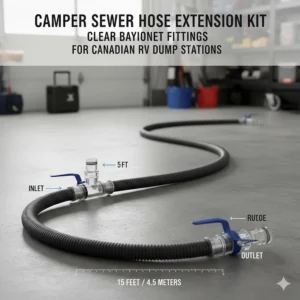
For budget-conscious Canadian campers, the DUMPMAN 20 FT delivers impressive value without compromising essential features. This kit includes two attachable 10-foot sections with TPE construction that resists crushing and provides superior abrasion resistance.
Key Specifications:
- Total length: 20 feet (two 10′ sections)
- Material: 24-mil TPE vinyl
- Includes: 90° clear adapter, 4-in-1 fitting, 4 storage caps
The modular design offers flexibility—use one 10-foot section for close dump stations or connect both for extended reach. Each section collapses to just 114 cm (45 inches) for compact storage. The 4-prong bayonet fittings feature built-in rubber seals to prevent leaks, while the transparent 90-degree adapter accommodates 3-inch slip and 3-, 3.5-, and 4-inch NPT threaded connections.
✅ Pros:
- Excellent value for Canadian market
- Modular system adapts to different scenarios
- UV-resistant for prairie summers
❌ Cons:
- Some users report fittings slightly large for standard bumpers
- Mixed reviews on long-term durability
Price: $55-70 CAD | Canadian Availability: Ships from Amazon.ca fulfillment centres
Customer Feedback: Ontario campers highlight the kit’s affordability and functionality. Several Maritime users mention it handles coastal humidity well, though a few Alberta RVers suggest upgrading fittings for extreme cold.
3. Valterra Dominator 20′ Sewer Hose Kit (Model D04-0275)
Valterra Dominator hoses have earned a loyal following among Canadian RVers for their rigid construction that holds position after installation. The 20-foot kit features 23-mil poly construction with UV stabilization—crucial for our intense summer sun across the prairies and northern territories.
Key Specifications:
- Length: 20 feet (two 10′ sections)
- Material: UV-stabilized polyolefin
- Temperature range: Flexible to -20°F (-29°C)
This camper waste hose maintains functionality in harsh conditions that would crack inferior hoses. The permanently attached rotating fittings protect against leaks while allowing easy positioning. Each 10-foot section compresses to 99 cm (39 inches), and the complete kit includes a clear 90-degree adapter plus storage caps.
✅ Pros:
- Exceptional cold-weather flexibility
- Holds shape for superior drainage
- UV protection for extended outdoor storage
❌ Cons:
- Heavier than flexible alternatives
- Requires more storage space when compressed
Price: $70-85 CAD | Canadian Availability: Available through multiple Amazon.ca sellers
Customer Feedback: Saskatchewan and Manitoba users particularly appreciate its performance in extreme cold. British Columbia mountain campers note it handles steep elevation changes effectively, maintaining proper slope for complete drainage.
4. Camco RhinoEXTREME 20′ Premium Hose Kit (Model 21056)
For Canadian RVers seeking premium performance, the Camco RhinoEXTREME represents the pinnacle of sewer hose technology. Engineered with TPE (thermoplastic elastomer) technology, this heavy duty rv sewer hose resists crushing, punctures, and abrasion better than standard polyolefin models.
Key Specifications:
- Length: 20 feet (two 10′ sections)
- Construction: TPE exoskeleton coating
- Includes: 360° swivel wye fitting, clear elbow, 4-in-1 adapter
The standout feature is the translucent swivel wye fitting that enables dual-tank dumping from a single connection—perfect for larger rigs with separate black tank valves. The clear elbow allows real-time monitoring of tank levels. Canadian campers benefit from its crush resistance when navigating rocky terrain at provincial parks.
✅ Pros:
- Superior durability justifies premium price
- Dual-tank capability
- Exceptional crush and puncture resistance
❌ Cons:
- Highest price point
- Overkill for occasional campers
Price: $90-110 CAD | Canadian Availability: Prime eligible on Amazon.ca
Customer Feedback: Full-time Canadian RVers rate this their top choice. Users across all provinces report multi-season performance without degradation. Some note the investment pays off through longevity—one Alberta couple used theirs for three years without replacement.
5. Camco Revolution 360 Sewer Hose Kit (Model 39667)
The Camco Revolution introduces innovative 360-degree swivel fittings that make connecting to awkward dump station angles significantly easier. This 20-foot rv sewer hose kit features HTS (Heavy Tough Stuff) vinyl construction designed to withstand Canadian camping conditions.
Key Specifications:
- Length: 20 feet (two 10′ sections)
- Material: HTS vinyl with wire reinforcement
- Fittings: Pre-attached 360° swivel connectors
The revolutionary fitting design eliminates twisting and kinking when connecting to dump stations positioned at difficult angles—common in older Canadian campgrounds. Clear elbow with removable 4-in-1 adapter accommodates various dump station configurations. Each section compresses efficiently for 4-inch bumper storage.
✅ Pros:
- 360° rotation simplifies challenging connections
- Wire guards protect against damage
- Excellent build quality
❌ Cons:
- Mid-premium pricing
- Rotation feature unnecessary for some setups
Price: $80-95 CAD | Canadian Availability: Ships within Canada via Amazon.ca
Customer Feedback: RVers frequenting older provincial park campgrounds praise the swivel feature. Quebec users mention it simplifies connections at Parks Canada facilities with varied dump station designs. Some find it particularly valuable for solo dumping without assistance.
6. DUMPMAN 10 FT Compact Sewer Hose Kit
The DUMPMAN 10 FT addresses a specific Canadian camping scenario—tight campground spaces where extended hoses create unnecessary complications. This compact black tank hose delivers essential functionality at an attractive price point.
Key Specifications:
- Length: 10 feet (single section)
- Material: 23-mil TPE vinyl
- Compressed size: 114 cm (45 inches)
Perfect for dump station camping where your RV parks directly beside the sewer connection, this kit eliminates excess hose management. The TPE construction resists UV damage during storage on your RV, while the 4-prong bayonet fitting ensures leak-proof connections. Includes 90-degree clear adapter and two storage caps.
✅ Pros:
- Ideal for close-quarters dumping
- Budget-friendly
- Minimal storage requirements
❌ Cons:
- Length limitations for distant connections
- Not suitable as sole hose for varied camping
Price: $35-45 CAD | Canadian Availability: Amazon.ca with fast shipping
Customer Feedback: Urban Canadian RVers using full-hookup sites rate this highly. Toronto-area campers appreciate it for weekend trips to nearby campgrounds. Some keep it as a backup to their longer primary hose—particularly useful at commercial RV parks with convenient dump locations.
7. Valterra EZ Coupler 20′ RV Sewer Hose Kit
Valterra’s EZ Coupler system targets first-time RV owners and those who prioritize ease of use. The 20-foot configuration features rotating fittings that make connections straightforward, even for newcomers to rv dump hose management.
Key Specifications:
- Length: 20 feet (two 10′ sections)
- Material: Reinforced vinyl
- Special feature: EZ Coupler connection system
The EZ Coupler fitting design allows quick, secure connections without the learning curve of traditional bayonet systems. Each 10-foot section features pre-installed rotating fittings, and the kit includes a 90-degree ClearView adapter for monitoring flow. Compresses efficiently for bumper storage.
✅ Pros:
- Beginner-friendly connection system
- Reliable performance
- Good value proposition
❌ Cons:
- Vinyl construction less durable than TPE
- Fittings may loosen over time
Price: $60-75 CAD | Canadian Availability: Multiple sellers on Amazon.ca
Customer Feedback: New Canadian RVers frequently mention this as their starter hose. Families just entering the camping lifestyle appreciate its forgiving design. Some experienced users keep it for guests or family members borrowing their RV, citing foolproof operation.
Understanding Camper Sewer Hose Systems
What Components Make Up a Complete System?
A functional rv waste management system consists of several key components working together. The sewer hose itself forms the primary conduit, but supporting elements ensure leak-free, efficient operation. Understanding these components helps Canadian RVers make informed purchases and maintain their systems properly.
The hose connects your RV’s termination valves to the dump station inlet. Quality hoses feature accordion-style construction allowing compression for storage while maintaining structural integrity when extended. Most Canadian campgrounds use standard 3-inch or 4-inch sewer connections, though older facilities may vary.
Fittings serve critical functions—bayonet and lug fittings attach to your RV’s waste outlet, creating odour-tight seals. The opposing end typically features an elbow adapter that angles downward into the dump station opening. Clear or translucent elbows let you monitor when tanks empty completely, reducing water waste during the rinsing process.
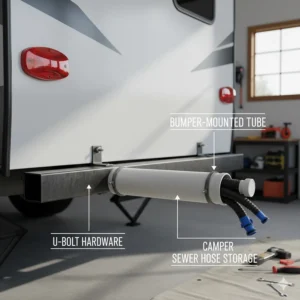
Storage caps protect both hose ends when not in use, preventing debris intrusion and containing residual odours. Many Canadian RVers store hoses in dedicated bumper compartments, though aftermarket storage tubes offer alternatives for RVs lacking built-in solutions.
How Sewer Hose Materials Impact Performance
Material selection dramatically affects hose performance across Canada’s diverse climate zones. Traditional vinyl hoses dominated the market for decades but showed limitations in extreme temperatures. Modern materials address these shortcomings while adding beneficial characteristics.
Polyolefin construction combines flexibility with durability, maintaining pliability in temperatures ranging from summer heat to winter cold. Steel wire reinforcement prevents crushing and helps hoses maintain shape during use. This material excels in Canadian conditions, performing reliably from coastal British Columbia to inland prairie provinces.
TPE (thermoplastic elastomer) technology represents the current premium standard. TPE hoses resist punctures, crushing, and UV degradation superior to older materials. They spring back when compressed and maintain flexibility at temperatures that crack conventional vinyl. For year-round Canadian RVers, TPE justifies its higher cost through extended lifespan.
UV stabilization matters significantly in Canada. Summer sun intensity, particularly at higher elevations and northern latitudes, degrades unprotected materials. UV-stabilized hoses resist cracking and brittleness, essential for RVs storing hoses externally during travel.
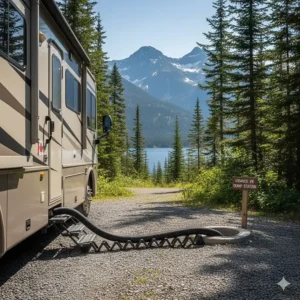
Wall thickness, measured in mils, indicates durability. Budget hoses start at 15-18 mils, adequate for occasional use. Mid-range options offer 20-23 mils, while premium models exceed 24 mils. Thicker walls resist punctures and abrasion—valuable when dragging hoses across gravel pads common at Canadian provincial parks.
Essential Factors for Choosing Camper Sewer Hoses in Canada
1. Length Requirements and Flexibility
Canadian campgrounds present varied dump station configurations. National parks often position facilities centrally, requiring 15-20 feet of hose. Private campgrounds may offer individual site hookups or distant dump stations. Assessing your typical camping style determines optimal length.
2. Temperature Tolerance
Canada’s climate demands equipment functional from -30°C winter storage to +35°C summer use. Hoses rated for -20°F (-29°C) or lower maintain flexibility when needed most. Spring and fall camping in northern regions particularly benefits from cold-weather performance.
3. Storage Compatibility
Most Canadian RVs feature 4-inch square bumpers designed for hose storage. Compressed hose length, including fittings, must accommodate these dimensions. Measure your storage compartment before purchasing—some premium kits with additional fittings may not fit standard bumpers without removing adapters.
4. Connection Versatility
Dump stations across Canada use various inlet configurations. The 4-in-1 adapter design accommodates 3-inch slip fittings plus 3-, 3.5-, and 4-inch NPT threaded connections—covering virtually all Canadian facilities. This versatility eliminates frustration at unfamiliar campgrounds.
5. Durability for Canadian Terrain
Rocky campground pads, gravel lots, and rough terrain characterize many Canadian camping areas. Abrasion-resistant construction prevents premature wear. Steel wire reinforcement or TPE technology protects against crushing when equipment rolls over hoses or they’re dragged across uneven ground.
6. Ease of Use and Maintenance
Simple, reliable connections reduce dumping stress, particularly for solo RVers. Swivel fittings prevent twisting, while clear elbows eliminate guesswork about tank status. Easy-to-clean materials and straightforward storage procedures encourage proper maintenance, extending equipment life.
7. Compliance with Parks Canada Regulations
When camping at national parks, ensure your equipment meets facility requirements. While Parks Canada doesn’t mandate specific hose types, proper waste management practices are enforced. Quality hoses with secure fittings prevent spills that could result in warnings or campground eviction.
Maintenance Tips for Maximum Hose Lifespan
Regular Cleaning Procedures
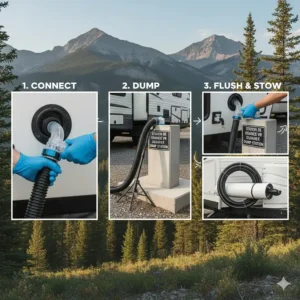
After each dumping session, rinse your hose thoroughly with fresh water. Many Canadian campgrounds provide rinse stations specifically for this purpose. If unavailable, carry a dedicated rinse hose—never use your drinking water hose for this task. Flushing removes residual waste that could cause odours or blockages.
Periodically deep-clean your camper sewer hose using specialized RV sewer hose cleaners available at Canadian Tire or RV dealerships. These enzymatic cleaners break down accumulated residue without damaging hose materials. Some RVers use a diluted bleach solution (1:10 ratio), though this may shorten hose lifespan with frequent use.
Proper Storage Techniques
Always store hoses completely drained and dry. Canadian humidity varies dramatically by region—coastal areas require extra drying time to prevent mildew. Elevate one end while draining, then shake vigorously to remove remaining water. Cap both ends immediately to prevent insect or debris intrusion.
For winter storage, particularly in provinces with harsh cold, bring hoses indoors if possible. Freezing and thawing cycles damage materials over time. If indoor storage isn’t available, ensure hoses are completely dry—trapped water expanding during freezing can crack fittings or split hose walls.
Avoid storing heavy items on top of coiled hoses. Prolonged pressure can deform accordion ridges, creating weak points prone to splitting. Dedicated hose storage bags protect from UV exposure and physical damage while keeping your RV organized.
Inspection and Replacement
Before each camping season, inspect your hose thoroughly. Check for cracks, particularly where the hose bends near fittings. Examine seals and gaskets for wear—these inexpensive components prevent expensive leaks. Test fittings for secure attachment, replacing any that feel loose or stripped.
Canadian RVers should replace hoses showing significant wear before failure occurs. A burst hose at a dump station creates unpleasant cleanup and potential health hazards. Most quality hoses last 3-5 years with proper care, though full-time RVers may need more frequent replacement.
Troubleshooting Common Sewer Hose Problems
Leaking Connections
Leaks typically occur at fitting interfaces where the hose connects to your RV or dump station. First, ensure you’re creating proper connections—bayonet fittings require a quarter-turn clockwise after insertion to fully engage. If leaks persist, inspect rubber seals and gaskets.
Canadian temperature fluctuations can harden seals over time. Replace deteriorated gaskets immediately—they’re inexpensive and readily available at RV supply stores across Canada. Some RVers carry spare gaskets in their essential supplies kit, enabling quick roadside repairs.
Clogged or Slow-Draining Hoses
Clogs usually result from inappropriate items entering your black tank. Only RV-specific toilet paper should go down RV toilets—regular tissue doesn’t dissolve adequately. Periodically using tank treatments with active bacteria helps break down solids, preventing buildup.
If a clog occurs, disconnect the hose and lay it straight on level ground. Use a garden hose to flush from the RV end toward the dump end—never reverse this direction, which could force waste back into your RV. For stubborn blockages, specialized sewer hose clearing tools are available at Canadian RV dealers.
Frozen Hoses in Cold Weather
Spring and fall camping in Canada occasionally presents freezing temperatures. If your hose freezes with waste inside, never force it—you’ll crack the material. Gently warm it using ambient heat from your RV or portable heaters positioned at safe distances. Some RVers wrap hoses in insulated sleeves when freezing is forecast.
Prevention works better than remediation. In cold weather, dump tanks early in the day when temperatures peak. Keep hoses as short as possible to minimize exposure time. Some Canadian full-timers invest in heated hose wraps for extended cold-weather camping.
Environmental Considerations and Responsible Dumping
Protecting Canada’s Natural Resources
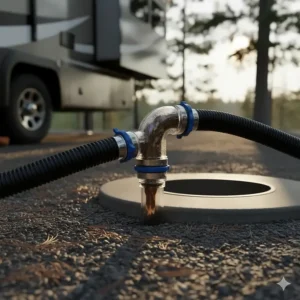
Proper waste management protects the pristine environments that make Canadian camping exceptional. Never dump black or gray water on the ground—this practice is illegal across all provinces and territories, carrying significant fines. Even in remote areas, improper dumping contaminates groundwater and harms ecosystems.
Use designated dump stations exclusively. Canada has extensive infrastructure, from national park facilities to commercial RV parks and municipal sites. Many rest areas along major highways offer free or low-cost dumping for travelers. The Parks Canada website (pc.gc.ca) provides comprehensive information about dump station locations at federal campgrounds.
Eco-Friendly Tank Treatments
Select tank treatment products certified environmentally safe. Many conventional chemicals harm beneficial bacteria at sewage treatment plants. Enzyme-based treatments break down waste naturally without toxic residues. Canadian brands like Thetford and Camco offer products meeting environmental standards.
Biodegradable toilet paper specifically designed for RVs dissolves faster than regular tissue, reducing tank buildup and processing burden at treatment facilities. While slightly more expensive, it prevents clogs and supports environmental responsibility.
Water Conservation
Canadian freshwater resources face increasing pressure. Conserve water during camping trips by taking shorter showers, fixing leaks promptly, and using efficient fixtures. This reduces both freshwater consumption and wastewater generation, allowing longer periods between dump station visits.
Full-time RVers can extend boondocking capabilities through careful water management. Many invest in gray water recycling systems or simple filtration allowing shower and sink water to be used for toilet flushing, significantly reducing black tank filling rates.
Cost Analysis: Budget vs. Premium Options
Understanding Price Ranges
Camper sewer hoses available in Canada span from $35 to over $110 CAD. This range reflects material quality, construction techniques, included accessories, and brand reputation. Understanding what you’re paying for helps optimize your investment.
Budget Category ($35-50 CAD): Entry-level hoses suit occasional campers visiting full-hookup sites. They typically feature basic vinyl construction with standard fittings. While adequate for light use, expect shorter lifespan and potential issues in temperature extremes.
Mid-Range Category ($55-80 CAD): This sweet spot offers excellent value for regular campers. You’ll find polyolefin or TPE construction, quality fittings, and accessories like clear elbows. Most Canadian RVers find mid-range options meet their needs perfectly.
Premium Category ($85-110+ CAD): Top-tier hoses feature advanced materials, innovative designs, and comprehensive accessory packages. Full-time RVers and those demanding maximum durability justify premium pricing through extended lifespan and superior performance.
Long-Term Value Calculation
Comparing prices requires considering replacement frequency. A $40 budget hose requiring annual replacement costs $200 over five years. A $90 premium hose lasting five years saves $110 while offering better performance throughout its life.
Factor in potential damage costs. A burst hose could cause wastewater spills requiring professional cleanup or campground fines. Premium hoses with superior construction minimize this risk. Some Canadian RV insurance policies consider proper waste management equipment when assessing claims.
When to Upgrade
If you’re camping more than 20 nights annually or full-timing, premium equipment justifies its cost. Beginners might start mid-range, upgrading after gaining experience. Weekend warriors visiting established campgrounds may find budget options sufficient for their needs.
Accessories That Enhance Sewer Hose Performance
Hose Supports and Cradles
Proper slope ensures complete tank drainage. Hose supports elevate your camper waste hose, creating consistent downward flow. Canadian options range from simple plastic cradles to adjustable systems accommodating uneven terrain.
The Camco Sidewinder (available on Amazon.ca) features telescoping design perfect for navigating obstacles common at rustic Canadian campgrounds. At approximately $30-40 CAD, it prevents sagging that can trap waste and slow drainage.
Storage Solutions
Beyond bumper storage, dedicated containers protect hoses from road debris during travel. Canvas or vinyl storage bags with handles simplify transport between RV and dump station. Some models include separate compartments for fittings and accessories, keeping everything organized.
Transparent storage tubes let you verify contents at a glance while protecting from UV damage. Prices range from $20-50 CAD depending on size and material quality. Consider models with drainage holes allowing air circulation during storage.
Rinse Attachments
Specialized rinse fittings connect to standard garden hoses, enabling thorough cleaning. The Camco Rhino Blaster uses pressurized water to scour hose interiors, removing residue that causes odours. Available for $25-35 CAD on Amazon.ca, it extends hose lifespan significantly.
Some Canadian RVers improvise using adjustable spray nozzles on regular garden hoses. While less specialized, this approach works adequately for routine maintenance between deep cleaning sessions.
Protective Gloves and Sanitation Supplies
Heavy-duty rubber gloves specifically designed for RV waste management cost $10-15 CAD but prevent direct contact with contaminated surfaces. Disposable options offer convenience, though reusable gloves prove more economical long-term.
Keep hand sanitizer and disinfecting wipes accessible near your storage area. After dumping, thoroughly sanitize hands and any equipment that contacted wastewater. This prevents illness and maintains hygienic conditions around your RV.
Regional Considerations Across Canada
Prairie Provinces (Alberta, Saskatchewan, Manitoba)
Extreme temperature swings characterize prairie camping. Summer heat can exceed 35°C while winter temperatures plummet below -30°C. Select hoses rated for wide temperature ranges, particularly if you camp year-round or store equipment on your RV.
UV protection matters immensely on the prairies where sun exposure is intense. Dark-coloured hoses absorb heat, potentially softening materials during peak summer. Light-coloured or reflective options reduce heat absorption, maintaining structural integrity.
British Columbia and Mountain Regions
Mountainous terrain presents unique challenges. Dump stations at elevation may be positioned on steep slopes, requiring hoses that hold shape against gravity. Rocky ground common at provincial parks demands abrasion-resistant construction.
Coastal BC humidity can promote mildew growth in stored hoses. Ensure complete drying before storage and consider moisture-absorbing packets in storage containers. Interior regions experience drier conditions but wider temperature ranges similar to prairie provinces.
Ontario and Quebec
High-use campgrounds around population centers mean busy dump stations. Efficient, quick-connecting systems reduce wait times and frustration. Clear elbows help monitor flow without repeatedly checking, speeding up the process during peak periods.
French-language labeling on products sold in Quebec ensures compliance with provincial requirements. Major brands offer bilingual packaging, though English-only products remain legal for personal use.
Atlantic Provinces
Maritime conditions combine humidity with salt air near coastal campgrounds. Corrosion-resistant fittings and UV-stabilized hoses withstand these conditions better than budget alternatives. Rinse equipment thoroughly after coastal camping to remove salt deposits.
Smaller campgrounds may have older dump stations with non-standard connections. The versatile 4-in-1 adapter proves particularly valuable across Atlantic Canada’s diverse camping infrastructure.
Northern Territories
Extended daylight during summer increases UV exposure dramatically. UV-resistant materials prevent premature degradation. Shorter camping seasons mean equipment may sit unused for extended periods—proper storage becomes critical.
Remote locations necessitate self-reliance. Carry backup hoses or repair kits since replacement options may be limited. Planning ahead prevents disrupted trips when equipment fails far from supply sources.
FAQ
❓ What length of camper sewer hose do I need in Canada?
❓ How much does a good quality rv sewer hose cost in Canada?
❓ Can I use my camper sewer hose in winter conditions?
❓ Are camper sewer hoses from Amazon.ca compatible with all Canadian dump stations?
❓ How do I properly clean and maintain my rv dump hose?
Conclusion
Selecting the right camper sewer hose dramatically improves your Canadian camping experience. Whether you’re a weekend warrior exploring nearby provincial parks or a full-time RVer traversing our vast country, the products reviewed here offer proven performance across Canada’s diverse conditions and climates.
The Camco RhinoFLEX 15′ ($67-75 CAD) stands out as the best all-around choice for most Canadian RVers, balancing quality construction, proven reliability, and reasonable pricing. Budget-conscious campers find excellent value in the DUMPMAN 20 FT Kit ($55-70 CAD), while those demanding premium performance should consider the Camco RhinoEXTREME ($90-110 CAD) for its superior durability and advanced features.
Remember that investing in quality waste management equipment protects both your investment and Canada’s pristine camping environments. Proper hose selection, combined with regular maintenance and responsible dumping practices, ensures hassle-free camping adventures for years to come. All products featured are available on Amazon.ca with convenient shipping across Canada, many qualifying for Prime delivery.
Your next camping trip deserves equipment you can trust. Choose wisely, maintain properly, and enjoy the freedom of Canadian RV travel without waste management worries.
Recommended for You
- Best Camper Awning Replacement Canada 2026 | Top 7 Picks
- 7 Best Camper Stabilizer Jacks Canada 2026
- 7 Best Camper Power Inverters in Canada 2026
Disclaimer: This article contains affiliate links to Amazon.ca. If you purchase products through these links, we may earn a small commission at no additional cost to you.
✨ Found this helpful? Share it with your friends! 💬🤗
