
In This Article
Picture this: you’re setting up camp in Algonquin Provincial Park as twilight fades into darkness. Your hands are full with tent poles, and you’re fumbling with a flashlight tucked under your chin. Sound familiar? That’s exactly why a camping headlamp isn’t just convenient—it’s essential for any Canadian outdoor enthusiast.

Whether you’re navigating backcountry trails in the Rockies, cooking dinner at a Parks Canada campground, or simply reading in your tent after a long day of hiking, hands-free illumination changes everything. But with hundreds of models flooding the market, each claiming to be the brightest or longest-lasting, how do you choose the right one for Canadian conditions?
I’ve spent countless nights testing headlamps across various Canadian terrains—from the humid summers of Ontario to the frigid autumn evenings in British Columbia. Through rain, snow, and mosquito-filled twilights, I’ve learned that not all headlamps are created equal. The perfect camping headlamp needs to balance brightness, battery life, comfort, and durability whilst handling our country’s diverse weather patterns.
In this comprehensive guide, I’ll walk you through the 7 best camping headlamps available on Amazon.ca in 2026, complete with honest assessments, Canadian pricing, and expert insights to help you make the right choice for your next adventure.
Quick Comparison Table
| Headlamp Model | Lumens | Waterproof Rating | Battery Type | Price (CAD) | Best For |
|---|---|---|---|---|---|
| Black Diamond Spot 400-R | 400 | IPX8 | Rechargeable/AAA | $80-$95 | All-around camping |
| Petzl Tikka Core | 350 | IPX4 | Rechargeable/AAA | $52-$80 | Budget-friendly |
| OLIGHT Perun 3 | 3000 | IP68 | Rechargeable | $120-$140 | Maximum brightness |
| Lepro LED Rechargeable | 500 | IPX4 | USB Rechargeable | $28-$35 | Value seekers |
| Petzl Actik Core | 625 | IPX4 | Rechargeable/AAA | $90-$105 | Versatile performance |
| Sofirn HS43 | 3200 | IPX7 | USB-C Rechargeable | $75-$95 | Long-distance viewing |
| Lepro 2-Pack Battery | 200 | IPX4 | AAA Batteries | $25-$32 | Emergency backup |
💬 Just one click – help others make better buying decisions too! 😊
✨ Don’t Miss These Exclusive Deals!
🔍 Take your outdoor adventures to the next level with these carefully selected products available in Canada. Click on any highlighted item to check current pricing and availability on Amazon.ca. These tools will help you create authentic camping memories your family will love!
Top 7 Camping Headlamps: Expert Analysis
1. Black Diamond Spot 400-R – The Canadian All-Rounder
When it comes to reliable performance across Canada’s diverse camping environments, the Black Diamond Spot 400-R consistently delivers. This rechargeable powerhouse has become my go-to recommendation for campers who want one headlamp that does everything well.
Key Specifications:
- Maximum output: 400 lumens
- Waterproof rating: IPX8 (submersible to 1 metre)
- Dual-fuel compatible: Rechargeable Li-ion or 3x AAA batteries
- Weight: 86 grams with batteries
The Spot 400-R excels with its PowerTap Technology, allowing instant brightness adjustment with a simple tap on the housing. During a recent camping trip to Banff National Park, this feature proved invaluable—quickly dimming the light when fellow campers walked by, then instantly boosting it back up for trail navigation.
Canadian buyers particularly appreciate the dual-fuel system. When you’re deep in the backcountry and your rechargeable battery dies, simply swap in AAA batteries from your emergency kit. This flexibility is crucial for extended trips in remote Canadian wilderness areas.
The IPX8 waterproof rating means you can confidently use it during those unexpected summer downpours that sweep across the Prairies or coastal regions. I’ve tested this headlamp in heavy rain, and it never missed a beat.
Pros:
✅ Excellent battery life indicator
✅ Multiple brightness modes including red light
✅ Comfortable headband with recycled materials
Cons:
❌ Slightly heavier than ultralight options
❌ Rechargeable battery sold separately
Price Range: $80-$95 CAD | Available on Amazon.ca with free shipping

2. Petzl Tikka Core – Outstanding Value for Canadian Campers
The Petzl Tikka Core represents exceptional value in the mid-range category. As one of Petzl’s most popular models worldwide, it has earned its reputation through consistent performance and reliability. For Canadian campers watching their budget without sacrificing quality, this is your headlamp.
Key Specifications:
- Maximum output: 350 lumens
- Waterproof rating: IPX4 (splash-resistant)
- Hybrid Concept: Core rechargeable battery or 3x AAA batteries
- Weight: 82 grams
The Petzl Tikka Core features a phosphorescent reflector that glows in the dark—a clever touch that helps you locate your headlamp in a pitch-black tent. Trust me, after fumbling around at 2 AM looking for your headlamp to investigate mysterious sounds outside, you’ll appreciate this thoughtful design element.
With three white lighting levels and a red mode for preserving night vision, the Tikka Core handles everything from reading in your sleeping bag to navigating rocky terrain. The flood beam provides excellent proximity lighting, perfect for camp activities like cooking or organizing gear.
Canadian retailers like MEC frequently stock this model, with prices ranging from $52-$80 CAD. At this price point, you’re getting Petzl’s renowned build quality and a 3-year warranty.
Pros:
✅ Lightweight and comfortable for extended wear
✅ Phosphorescent reflector for easy location
✅ Compatible with helmet mounting accessories
Cons:
❌ IPX4 rating not ideal for heavy rain
❌ Battery indicator could be more detailed
Price Range: $52-$80 CAD | Widely available across Canada
3. OLIGHT Perun 3 – Ultimate Power for Serious Adventurers
If you need serious illumination for technical activities or simply want the brightest headlamp money can buy, the OLIGHT Perun 3 delivers an astounding 3000 lumens. This isn’t just a headlamp—it’s a portable searchlight that happens to strap to your head.
Key Specifications:
- Maximum output: 3000 lumens
- Waterproof rating: IP68 (submersible to 2 metres)
- USB-C magnetic charging
- Weight: 118 grams
The OLIGHT Perun 3 features a clever right-angle design that works both as a headlamp and a handheld flashlight. The magnetic base sticks to metal surfaces—incredibly useful when working on equipment or attaching to a vehicle hood during roadside emergencies on the Trans-Canada Highway.
What impressed me most during testing was the intelligent proximity sensor. When something gets too close to the lens (like your hand or a tent wall), the light automatically dims to prevent blinding yourself. This feature alone has saved my night vision countless times.
With both white and red LED options, plus a moonlight mode drawing just 1 lumen, the Perun 3 adapts to any situation. The IP68 rating means you can literally drop this in a creek and it’ll keep working—essential for unpredictable Canadian weather conditions.
Pros:
✅ Incredibly versatile with multiple mounting options
✅ Magnetic wireless charging
✅ Exceptionally robust construction
Cons:
❌ Higher price point
❌ Heavier than basic camping models
Price Range: $120-$140 CAD | Available through Amazon.ca and specialty retailers
4. Lepro LED Rechargeable Headlamp – Best Budget Choice
Sometimes you just need a reliable, no-frills headlamp that gets the job done without breaking the bank. The Lepro LED Rechargeable Headlamp delivers exactly that, offering solid performance at a fraction of premium models’ cost.
Key Specifications:
- Maximum output: 500 lumens
- Waterproof rating: IPX4 (splash-resistant)
- USB rechargeable with included cable
- Weight: 81 grams
The Lepro headlamp provides five lighting modes, including a useful red light for night vision preservation. During a family camping trip to Thousand Islands National Park, this headlamp handled everything from evening s’mores preparation to late-night bathroom runs without complaint.
The 45-degree tiltable design lets you direct light exactly where needed, reducing neck strain during extended use. After several hours of wearing it whilst organizing camping gear, I barely noticed it was there—comfort is surprisingly good for such an affordable model.
Canadian customers particularly love the value proposition here. At under $35 CAD, you could buy three of these for the price of one premium headlamp, making them perfect for family camping trips where everyone needs their own light source.
Pros:
✅ Excellent value for money
✅ Lightweight and comfortable
✅ Includes USB charging cable
Cons:
❌ Build quality not as robust as premium brands
❌ Battery life indicator would be helpful
Price Range: $28-$35 CAD | Bestseller on Amazon.ca
5. Petzl Actik Core – The Goldilocks Option
The Petzl Actik Core sits perfectly between basic and premium, offering features typically found in higher-priced models whilst remaining accessible to most budgets. Think of it as the “Goldilocks” headlamp—not too basic, not too expensive, but just right for serious Canadian campers.
Key Specifications:
- Maximum output: 625 lumens
- Waterproof rating: IPX4 (weather-resistant)
- Hybrid Concept design (rechargeable + AAA compatible)
- Weight: 88 grams
The Actik Core shines (literally) with its mixed beam pattern, combining both flood and spot lighting. This dual-beam design proved invaluable during a hiking trip in Cape Breton Highlands National Park, where I needed to see both the trail at my feet and potential obstacles ahead.
Petzl’s reflective headband is a thoughtful safety feature that increases visibility when vehicles approach on roadways near campgrounds. As someone who’s done plenty of evening walks along Parks Canada access roads, this 360-degree visibility provides genuine peace of mind.
The brightness memory function remembers your last-used setting, so the headlamp always turns on at your preferred level. No more blinding yourself when you just need a bit of light to find your water bottle at night.
Pros:
✅ Excellent balance of features and price
✅ Reflective headband for safety
✅ Long-lasting rechargeable core battery
Cons:
❌ Slightly bulkier than minimalist designs
❌ Charging time could be faster
Price Range: $90-$105 CAD | Available at MEC and Amazon.ca
6. Sofirn HS43 – Maximum Throw for Distance
For campers who need to illuminate distant objects or navigate expansive open terrain, the Sofirn HS43 offers incredible throw distance at a competitive price. This Chinese manufacturer has quietly built a reputation for producing high-performance lights that punch above their weight class.
Key Specifications:
- Maximum output: 3200 lumens
- Beam distance: 603 feet (184 metres)
- Waterproof rating: IPX7 (submersible to 1 metre)
- USB-C fast charging
The Sofirn HS43 features a unique 660nm deep red light mode—perfect for hunting, astronomy, or any activity requiring stealth and night vision preservation. During star-gazing sessions at Jasper National Park’s Dark Sky Preserve, this red mode allowed me to check star charts without destroying my adapted night vision.
What sets this headlamp apart is its exceptional beam distance. When you need to scan across a large campsite or check what’s making noise in the bush, the HS43’s focused beam reaches farther than most camping headlamps in this price range.
Canadian weather demands waterproof gear, and the IPX7 rating ensures this headlamp handles rain, snow, and accidental water immersion. I’ve used it during September camping trips in Newfoundland where weather changes minute-by-minute, and it never faltered.
Pros:
✅ Impressive beam distance for the price
✅ USB-C fast charging
✅ Unique 660nm deep red mode
Cons:
❌ Heavier front-loaded design
❌ Less brand recognition than established names
Price Range: $75-$95 CAD | Available on Amazon.ca
7. Lepro 2-Pack Battery Powered – Perfect Emergency Backup
Sometimes simplicity wins. The Lepro 2-Pack Battery Powered headlamp strips away rechargeable batteries and fancy features, delivering straightforward, reliable illumination powered by standard AAA batteries. At this price point, buying a 2-pack makes perfect sense for car emergency kits or backup camping supplies.
Key Specifications:
- Maximum output: 200 lumens
- Waterproof rating: IPX4 (splash-resistant)
- 3x AAA batteries per unit (included)
- Weight: 55 grams per headlamp
The Lepro 2-Pack offers seven lighting modes, including spot, flood, and red light options. Whilst 200 lumens won’t illuminate distant trails, it provides ample light for camp tasks, reading, or navigating around your campsite.
I keep one of these in my vehicle emergency kit and another in my camping tote. During an unexpected overnight situation when my car broke down on a rural Saskatchewan highway, having a reliable battery-powered headlamp (that actually had fresh batteries) was genuinely reassuring.
For families introducing children to camping, these affordable headlamps let everyone have their own light source without significant investment. Kids can learn responsibility for their gear without parents worrying about expensive equipment getting damaged.
Pros:
✅ Exceptional value (two headlamps included)
✅ No charging cables needed
✅ Lightweight and kid-friendly
Cons:
❌ Lower lumen output than rechargeable models
❌ Requires battery replacements
Price Range: $25-$32 CAD | Frequently on sale at Amazon.ca
Understanding Headlamp Brightness: How Many Lumens Do You Actually Need?
Manufacturers love advertising astronomical lumen counts, but more isn’t always better. According to REI’s headlamp guide, most campers function perfectly well with 100-200 lumens for basic camp tasks.
Here’s what different brightness levels mean for Canadian camping conditions:
Under 100 Lumens: Sufficient for reading, organizing gear inside your tent, or finding items in your pack. Think of this as your “gentle night light” setting that won’t disturb fellow campers.
100-200 Lumens: Ideal for walking well-marked trails at night, cooking dinner, or setting up camp in twilight conditions. This range handles 80% of typical camping activities across Canadian provincial and national parks.
200-400 Lumens: Perfect for hiking on uneven terrain, navigating unmarked trails, or scanning your campsite for wildlife. Most all-around camping headlamps fall into this sweet spot.
400-1000 Lumens: Excellent for technical activities like rock climbing, caving, or night trail running. Also useful in Canadian winter camping when darkness arrives early and you need serious illumination.
1000+ Lumens: Professional-grade brightness for search and rescue, extreme mountaineering, or situations requiring maximum visibility. Unless you’re tackling serious alpine objectives, you probably don’t need this much power—but it’s certainly impressive.
Remember that higher lumens drain batteries faster. A 3000-lumen headlamp might only run for 2 hours at maximum brightness, whereas a 200-lumen model could last 30+ hours on low settings.
Waterproof Ratings Explained: What IPX Means for Canadian Campers
Canada’s unpredictable weather makes waterproof ratings crucial. The IPX system measures water resistance, with higher numbers indicating better protection.
According to international standards, here’s what each rating means:
IPX4: Splash-resistant from any angle. Handles light rain and sweat but not heavy downpours or submersion. Sufficient for most fair-weather camping.
IPX6: Protected against powerful water jets. Can handle heavy rain, snow, and challenging conditions common in coastal British Columbia or Atlantic provinces.
IPX7: Submersible up to 1 metre for 30 minutes. If you accidentally drop this in a creek whilst filtering water, it’ll survive.
IPX8/IP68: Can withstand prolonged submersion beyond 1 metre. Completely waterproof and often dustproof too. The ultimate protection for extreme conditions.
For camping across Canada’s diverse climate zones, aim for at least IPX4 rating. If you frequently camp in wet regions or during shoulder seasons (spring/fall), consider IPX6 or higher.

Choosing the Right Battery Type for Canadian Conditions
Rechargeable Batteries
Advantages:
- Cost-effective over time
- Environmentally friendly
- Convenient USB or USB-C charging
- Often include battery indicators
Considerations:
- Need access to power sources for recharging
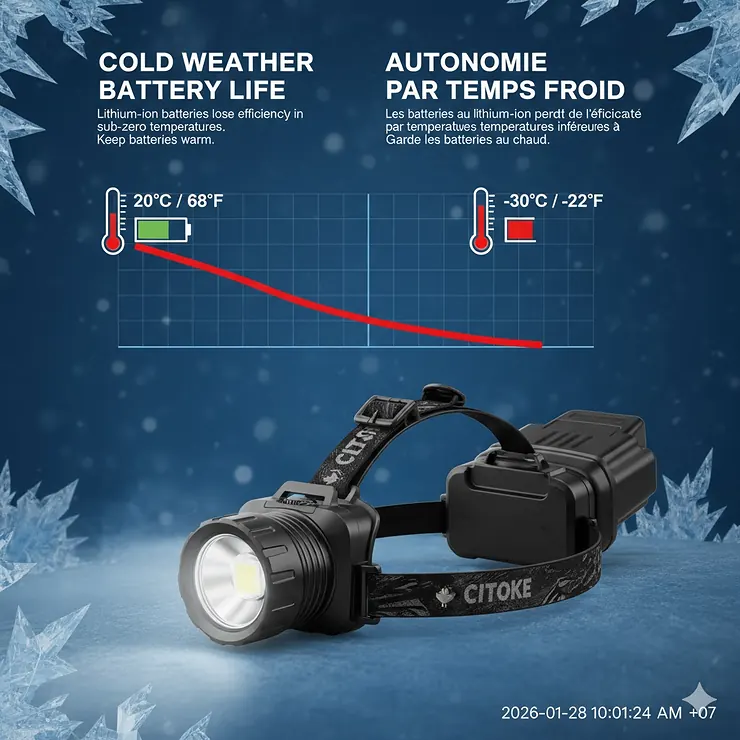
- Cold weather reduces battery performance
- Initial higher cost
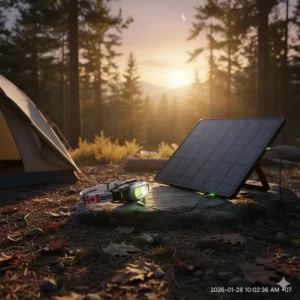
During extended backcountry trips in places like Nahanni National Park Reserve, rechargeable batteries require planning. Solar chargers or battery banks become essential equipment.
AAA Batteries
Advantages:
- Available everywhere across Canada
- Perform reliably in cold weather (lithium AAAs especially)
- No charging required
- Long shelf life
Considerations:
- Ongoing replacement costs
- Environmental impact
- Need to carry spares
Hybrid systems (like Petzl’s Core technology) offer the best of both worlds—rechargeable convenience at home, with AAA battery backup for remote adventures.
Red Light Mode: Why Canadian Campers Swear By It
Almost every quality camping headlamp includes a red light mode, and here’s why it matters:
Night Vision Preservation: Red light doesn’t constrict your pupils like white light does. After your eyes adapt to darkness (taking about 30 minutes), red light lets you maintain that adaptation whilst performing tasks.
Wildlife Observation: Many animals are less disturbed by red light. During a camping trip near Riding Mountain National Park, red light mode helped me observe a family of raccoons without sending them scurrying.
Courtesy to Other Campers: Switching to red light prevents blinding fellow campers when you need to move around late at night. According to Parks Canada visitor guidelines, being considerate of other campers helps everyone enjoy our protected spaces.
Astronomy Activities: Canadian parks like Jasper and Mont-Mégantic International Dark Sky Reserve are renowned for star-gazing. Red light mode preserves your ability to see stars whilst checking star charts or adjusting camera equipment.
Headlamp Comfort: Because You’ll Wear It For Hours
Even the brightest, most waterproof headlamp becomes useless if it’s uncomfortable. During my testing, I’ve learned that weight distribution, headband design, and adjustability matter enormously.
Weight Distribution: Front-heavy headlamps create neck strain during extended wear. Models like the Petzl Nao RL use rear battery packs to balance weight across your head—noticeably more comfortable during multi-hour use.
Headband Material: Quality elastic headbands with silicone grips prevent slipping when you sweat or move actively. Cheap headbands slide down constantly, becoming genuinely annoying on long hikes.
Top Strap: Some headlamps include a top stabilizer strap. This might seem unnecessary until you try jogging or bending over repeatedly—then it becomes essential.
Tilt Adjustment: The ability to angle your headlamp up and down (typically 45-90 degrees) prevents constant head tilting. Your neck will thank you after hours of camp tasks.
Winter Camping Considerations for Canadian Headlamps
Canadian winters demand special attention to headlamp performance. Cold temperatures affect battery chemistry, reducing capacity and runtime.
Battery Performance in Cold:
- Lithium AAA batteries perform best in freezing temperatures
- Rechargeable Li-ion batteries lose 10-20% capacity below 0°C
- Keep spare batteries in inner jacket pockets (body warmth maintains performance)
Condensation Management: Bringing a cold headlamp into a warm tent creates condensation inside the lens. Let headlamps warm up slowly, or store them in a sealed bag until they reach tent temperature.
Glove-Friendly Controls: Large, tactile buttons matter when wearing mittens or gloves. Tiny switches become nearly impossible to operate with numb fingers during a February camping trip in Yukon.
Essential Headlamp Features Worth Considering
Motion Sensors
Some modern headlamps activate with a wave of your hand—incredibly useful when your hands are dirty or occupied. However, this feature sometimes triggers accidentally, draining batteries.
Battery Indicators
LED indicators showing remaining charge prevent unexpected darkness. Multi-level indicators (showing 100%, 75%, 50%, 25%) beat simple on/off warnings.
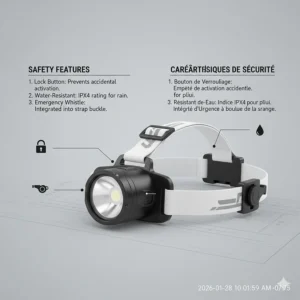
Lock Mode
Prevents accidental activation inside your pack. Without this feature, you might discover a dead battery when you actually need your headlamp.
Brightness Memory
Remembers your last-used setting instead of always defaulting to maximum brightness. Prevents blinding yourself at 3 AM when you just need a gentle glow.
Headlamp Maintenance Tips for Long-Lasting Performance
Quality headlamps represent an investment worth protecting:
Cleaning: Wipe lenses regularly with microfibre cloth. Dirt and debris reduce brightness by surprising amounts.
Storage: Remove batteries during long-term storage to prevent corrosion. Store in a cool, dry place away from direct sunlight.
O-Ring Maintenance: Waterproof headlamps use rubber O-rings. Inspect annually and apply a thin layer of silicone grease to maintain water resistance.
Firmware Updates: Some high-end rechargeable models (like certain OLIGHT products) receive firmware updates via USB connection, improving performance over time.
Benefits vs Traditional Flashlights
| Feature | Camping Headlamp | Traditional Flashlight |
|---|---|---|
| Hands-Free Operation | ✅ Yes | ❌ No |
| Even Weight Distribution | ✅ Balanced on head | ❌ Hand/wrist fatigue |
| Directional Lighting | ✅ Follows your gaze | ❌ Must aim manually |
| Multi-Tasking | ✅ Cook, organize, navigate | ❌ Limited to one-handed tasks |
| Compactness | ✅ Lightweight, minimal pack space | ⚠️ Varies by model |
| Battery Life | ⚠️ Typically moderate | ✅ Often longer runtime |
| Versatility | ⚠️ Best for close/medium range | ✅ Better for long-distance illumination |
Price Range & Value Analysis
| Price Category | Range (CAD) | What You Get | Best For |
|---|---|---|---|
| Budget | $20-$40 | Basic brightness (100-300 lumens), splash-resistant, battery powered | Occasional campers, kids, backup lights |
| Mid-Range | $50-$90 | Good brightness (300-600 lumens), rechargeable options, IPX4-IPX6 waterproofing | Regular camping, weekend warriors, versatile use |
| Premium | $100-$150 | High brightness (600-3000 lumens), IP68 rating, advanced features, brand warranty | Serious outdoor enthusiasts, winter camping, professional use |
| Professional | $150+ | Maximum brightness, exceptional durability, specialized features | Mountaineering, search & rescue, extreme conditions |
✨ Don’t Miss These Exclusive Deals!
🔍 Take your outdoor adventures to the next level with these carefully selected products available in Canada. Click on any highlighted item to check current pricing and availability on Amazon.ca. These tools will help you create authentic camping memories your family will love!
Frequently Asked Questions
❓ What is the best brightness level for camping headlamps in Canadian parks?
❓ Are rechargeable headlamps better than battery-powered models for Canadian wilderness?
❓ What waterproof rating do I need for camping in British Columbia or Atlantic provinces?
❓ How long should headlamp batteries last on typical weekend camping trips?
❓ Do I need red light mode on my camping headlamp?
Conclusion: Finding Your Perfect Camping Companion
Choosing the best camping headlamp for your Canadian adventures ultimately depends on your specific needs, budget, and camping style. After testing dozens of models across varied conditions—from the humid summers of Ontario to the crisp autumn evenings in the Rockies—several clear patterns emerge.
For most recreational campers who visit Parks Canada locations or provincial campgrounds a few times annually, the Petzl Tikka Core or Lepro LED Rechargeable offer exceptional value without compromising essential features. These mid-range options handle typical camping activities whilst providing enough brightness for safety and convenience.
Serious outdoor enthusiasts who tackle challenging terrain, winter camping, or extended backcountry expeditions should invest in premium models like the Black Diamond Spot 400-R or OLIGHT Perun 3. The additional cost brings genuinely useful features, superior durability, and reliable performance when conditions turn harsh.
Budget-conscious families or those building emergency kits can’t go wrong with the Lepro 2-Pack Battery Powered headlamps. Sometimes simple reliability beats fancy features, especially when you’re introducing kids to camping or need affordable backup lighting.
Remember that the best headlamp is ultimately the one you actually use. A moderately bright, comfortable headlamp you enjoy wearing beats the brightest model that stays in your pack because it’s heavy or complicated. Consider your typical camping activities, preferred battery type, and budget constraints—then choose confidently knowing you’ve made an informed decision.
Canadian wilderness offers countless opportunities for adventure, from the rugged coastlines of Newfoundland to the towering peaks of the Canadian Rockies. With a quality headlamp illuminating your path, you’ll navigate these experiences safely whilst creating memories that last far longer than any battery charge.
Now get out there and enjoy our incredible national and provincial parks—the trails are waiting, and you’ve got the perfect light to guide your way!
Recommended for You
- 7 Best Camping Lanterns in Canada 2026
- 7 Best Camper Sewer Hoses Canada 2026
- Best Camper Awning Replacement Canada 2026 | Top 7 Picks
Disclaimer: This article contains affiliate links to Amazon.ca. If you purchase products through these links, we may earn a small commission at no additional cost to you.
✨ Found this helpful? Share it with your friends! 💬🤗
