
In This Article
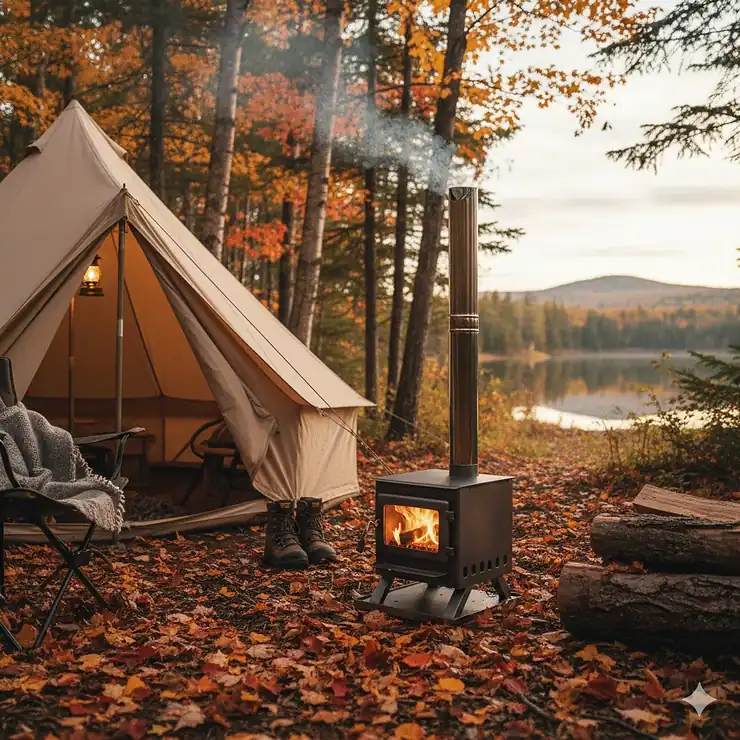
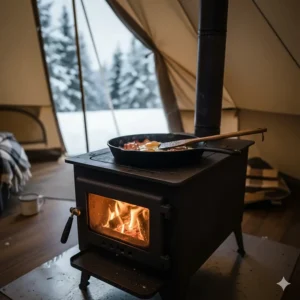
Picture this: you’re deep in the Algonquin backcountry on a frigid February night, temperatures plummeting to -20°C, and you’re cozy inside your canvas tent with a crackling fire warming your space. That’s the magic a camping wood stove brings to Canadian wilderness adventures.
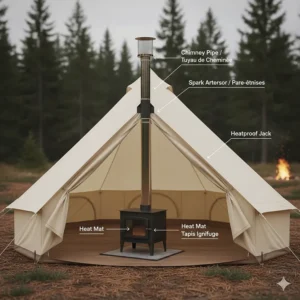
A camping wood stove is a portable, wood-burning heating device designed to provide warmth and cooking capability in outdoor shelters like canvas tents, teepees, and yurts. Unlike propane heaters that require carrying heavy fuel canisters, these ingenious stoves let you harvest fuel from your surroundings, making them ideal for extended backcountry trips across Canada’s diverse terrain.
For Canadian outdoor enthusiasts, a quality wood stove transforms winter camping from an endurance test into pure pleasure. You can dry wet gear after a day of snowshoeing, cook hearty meals without stepping into the cold, and enjoy comfortable temperatures even when Jack Frost is doing his worst outside. The dry heat these stoves produce also prevents condensation buildup that plagues propane heaters, keeping your tent environment healthier and more comfortable.
Beyond warmth and cooking, wood stoves offer something special: ambiance. There’s nothing quite like watching flames dance through a glass door while snow falls outside, sipping hot chocolate after a long day on the trail. For hunters, ice fishers, and winter campers across British Columbia, Alberta, Ontario, and beyond, a reliable camping wood stove isn’t just equipment—it’s your ticket to four-season adventure.
Quick Comparison Table
| Product | Material | Weight | Price (CAD) | Best For |
|---|---|---|---|---|
| Winnerwell Nomad 1G Medium | 304 Stainless Steel | 9.1 kg (20 lbs) | $450-$550 | Canvas tent camping |
| OneTigris Tiger Roar | 304 Stainless Steel | 8.2 kg (18.1 lbs) | $300-$400 | Winter camping & hunting |
| REDCAMP Folding Wood Stove | Stainless Steel | 0.7 kg (1.5 lbs) | $45-$65 | Backpacking & hiking |
| YRenZ Portable Tent Stove | Carbon Steel | 8.2 kg (18.1 lbs) | $150-$220 | Budget-friendly option |
| Lixada Titanium Folding Stove | Titanium | 135 g (4.8 oz) | $80-$120 | Ultralight backpacking |
| OneTigris ROCUBOID | 304 Stainless Steel | 511 g (18 oz) | $90-$130 | Versatile camping |
| GFTIME Tent Stove | Stainless Steel | 7.5 kg (16.5 lbs) | $180-$250 | Family camping |
💬 Just one click – help others make better buying decisions too!😊
Top 7 Camping Wood Stove: Expert Analysis
1. Winnerwell Nomad 1G Medium Wood Stove – Premium Choice for Serious Campers
When Canadian winters demand serious gear, the Winnerwell Nomad 1G Medium delivers without compromise. This precision-crafted stove represents the gold standard in portable wood heating.
Key Specifications:
- Dimensions: 35.6 cm × 20.3 cm × 23.9 cm (14″ × 8″ × 9.4″)
- Chimney: 5 sections of 6.4 cm (2.5″) diameter pipe
- Firebox capacity: Accommodates 30 cm (12″) logs
Priced between $450-$550 CAD, this investment delivers exceptional value for frequent campers. The 304 stainless steel construction resists corrosion even in Canada’s humid coastal regions, while the rectangular firebox and nesting four-leg design provide stability on uneven ground.
Canadian buyers consistently praise its glass viewing window for fire management and the integrated dampers for controlling burn rate. “Used this throughout a week-long elk hunt in northern Alberta,” shares one Ontario reviewer. “Kept our 4.5m × 6m (15′ × 20′) canvas tent comfortable even when it dropped to -15°C outside.”
✅ Pros:
- Corrosion-resistant 304 stainless steel construction
- Glass window for ambiance and fire monitoring
- Side shelves for cooking versatility
❌ Cons:
- Higher price point ($450-$550 CAD)
- 9.1 kg weight limits backpacking use
Availability: Ships within Canada with free shipping over $100 to BC, AB, SK, MB, and ON.
2. OneTigris Tiger Roar Tent Stove – Best Value for Winter Hunters
The OneTigris Tiger Roar strikes an impressive balance between affordability and performance, making it a favourite among Canadian hunters and winter campers who need reliable heat without breaking the bank.
Key Specifications:
- Body material: 304 stainless steel (3mm thickness at top)
- Glass: SCHOTT ROBAX ceramic (withstands up to 760°C)
- Chimney system: 7 pipe sections plus 2× 45° and 2× 90° elbows
At $300-$400 CAD, this stove offers remarkable features for the price. The fairing air intake design splits airflow for complete combustion, reducing smoke and improving efficiency—crucial when you’re sharing a tent with hunting partners. The adjustable chimney configuration accommodates various tent styles, from wall tents to tipi designs.
One Manitoba ice fisher reports: “Set this up in my ice shack and it kept three of us comfortable during a polar vortex. The glass window is amazing for checking the fire without opening the door.”
✅ Pros:
- Heat-resistant SCHOTT ROBAX glass panels
- Flexible chimney configuration options
- Excellent price-to-performance ratio
❌ Cons:
- Chimney pipes (201 stainless steel) slightly less durable than body
- Assembly requires reading instructions carefully
Availability: Available on Amazon.ca with Prime shipping across Canada.
3. REDCAMP Folding Wood Stove – Ultralight Champion
For backpackers who count every gram, the REDCAMP Folding Wood Stove is a revelation. This compact powerhouse proves you don’t need to sacrifice warmth for weight savings.
Key Specifications:
- Folded dimensions: 15 cm × 15 cm × 1 cm (6″ × 6″ × 0.4″)
- Setup dimensions: 12 cm × 12 cm × 15 cm (4.7″ × 4.7″ × 5.9″)
- Material: 304 stainless steel grid
Incredibly affordable at just $45-$65 CAD, this pocket-sized wonder weighs only 700 grams yet burns efficiently enough to boil water in 5-7 minutes. The folding design sets up in seconds—no tools required.
“Took this on a solo canoe trip through Quetico Provincial Park,” writes a Thunder Bay adventurer. “Burned small twigs and pine cones perfectly. Made coffee every morning without carrying fuel.”
✅ Pros:
- Extremely lightweight and packable
- Budget-friendly pricing
- Burns natural biomass efficiently
❌ Cons:
- Small size limits cooking surface
- Not suitable for tent heating
Availability: Prime shipping available across Canada, typically arrives in 2-3 business days.
4. YRenZ Portable Tent Stove – Best Budget Option for Tent Heating
The YRenZ Portable Tent Stove proves that quality tent heating doesn’t require a premium price tag. This carbon steel workhorse delivers reliable performance for budget-conscious campers.
Key Specifications:
- Dimensions: 35 cm × 18 cm × 17 cm (13.8″ × 7.1″ × 6.7″)
- Chimney: 6 connectable sections
- Includes: Fire poker, ash tray, 2 side shelves
Priced at $150-$220 CAD, this stove includes everything needed for immediate use. The heat-resistant glass window and collapsible legs make setup straightforward, while the removable top plate offers cooking versatility.
Canadian reviewers appreciate the value proposition. “Perfect for my hunting cabin in northern Saskatchewan,” one user notes. “Heats efficiently and the price let me buy other gear I needed.”
✅ Pros:
- Complete kit with all accessories included
- Adjustable air intake for fire control
- Excellent value for money
❌ Cons:
- Carbon steel requires more maintenance than stainless
- Heavier than premium titanium options
Availability: Ships within 3-5 business days across Canada.
5. Lixada Titanium Folding Stove – Premium Lightweight Solution
For ultralight enthusiasts willing to invest in premium materials, the Lixada Titanium Folding Stove represents the pinnacle of weight-conscious design.
Key Specifications:
- Weight: 135 grams (4.8 oz)
- Dimensions: 10 cm × 19.2 cm (3.9″ × 7.5″)
- Storage size: 10 cm × 9.4 cm (3.9″ × 3.7″)
At $80-$120 CAD, this titanium marvel costs more than steel alternatives but weighs 80% less. The material’s superior strength-to-weight ratio and corrosion resistance make it ideal for multi-week backcountry expeditions.
“Thru-hiked the Great Divide Trail with this,” shares an Alberta backpacker. “Saved me carrying fuel for 40 days. Worth every penny.”
✅ Pros:
- Ultralight titanium construction
- Corrosion-proof and extremely durable
- Compact storage size
❌ Cons:
- Higher price point for the size
- Limited cooking surface area
Availability: Available on Amazon.ca with standard shipping to all provinces.
6. OneTigris ROCUBOID Camping Stove – Most Versatile Design
The OneTigris ROCUBOID earns its place through sheer versatility. This clever design functions as a wood stove, alcohol burner, windscreen, and even an outdoor oven.
Key Specifications:
- Setup dimensions: 12 cm × 12 cm × 15 cm (4.7″ × 4.7″ × 5.9″)
- Packed size: 15.5 cm × 16.5 cm × 1 cm (6″ × 6.5″ × 0.4″)
- Weight: 511 grams (18 oz)
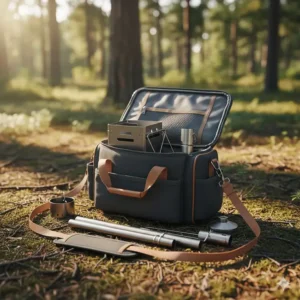
Priced at $90-$130 CAD, this 304 stainless steel stove adapts to multiple fuel types and configurations. The cross-entrance design allows easy fire-power adjustment, while the included nylon carry bag protects your pack from soot.
Quebec campers appreciate its adaptability: “Used it with wood in backcountry, alcohol at established campgrounds where wood gathering is restricted. Brilliant design.”
✅ Pros:
- Multiple fuel compatibility (wood, alcohol, tablets)
- Quick assembly without tools
- Innovative multi-use design
❌ Cons:
- Stainless steel discolours after use (functionality unaffected)
- Requires practice to master various configurations
Availability: Prime eligible on Amazon.ca.
7. GFTIME Tent Stove – Family-Sized Comfort
For family camping or group trips, the GFTIME Tent Stove provides the heating capacity larger tents demand, with features that make operation safe and convenient.
Key Specifications:
- Firebox capacity: Fits logs up to 35 cm (14″)
- Chimney height: 5 sections totaling 1.8m (6 ft)
- Includes: Heat-resistant gloves, Phillips screwdriver
At $180-$250 CAD, this stove offers generous capacity for heating larger canvas tents. The folding legs and removable components pack inside the firebox for transport, while the included gloves and tools show thoughtful design.
“Heats our 5m × 5m (16′ × 16′) prospector tent comfortably,” reports a Yukon family camper. “Kids stay warm while we cook dinner. The glass door lets them watch the fire safely.”
✅ Pros:
- Large firebox for extended burn times
- Complete accessory package
- Suitable for group/family tents
❌ Cons:
- 7.5 kg weight limits portability
- Requires vehicle access for transport
Availability: Ships across Canada, typically 4-7 business days delivery.
How to Choose Camping Wood Stove in Canada
Step 1: Determine Your Primary Use Case
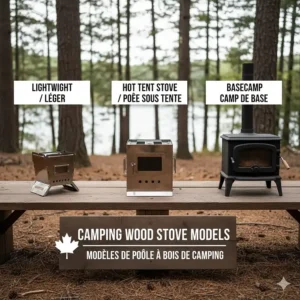
Canadian camping scenarios vary dramatically. Backcountry canoe trippers need ultralight options like the Lixada Titanium, while wall tent hunters benefit from larger models like the Winnerwell Nomad. Ice fishers require compact designs for shacks, whereas family car campers can accommodate heavier, more feature-rich stoves.
Step 2: Match Stove Size to Shelter Volume
A critical calculation: measure your tent’s interior volume in cubic metres. As a general rule, you need approximately 2,000-3,000 BTU per cubic metre to maintain comfort in winter conditions. Too small a stove means inadequate heating; oversized units create dangerous overheating.
Step 3: Consider Material Quality and Durability
Stainless steel (especially 304 grade) offers the best corrosion resistance for humid environments like coastal BC or the Maritimes. Titanium provides ultimate weight savings for backpacking. Carbon steel works well for stationary setups but requires more maintenance to prevent rust.
Step 4: Evaluate Chimney System Compatibility
Ensure the stove’s chimney diameter matches your tent’s stove jack. Most hot tents accommodate 6-7 cm (2.5-3″) pipes. Consider chimney height requirements—pyramid tents need taller pipes than wall tents. Verify all sections nest for transport.
Step 5: Check Provincial Regulations and CSA Compliance
British Columbia, Alberta, and other provinces may restrict wood-burning devices during fire bans. CSA-approved stoves often receive exemptions. Always verify local regulations before purchasing, especially for provincial parks where rules vary by jurisdiction.
Step 6: Calculate Total Cost of Ownership
Beyond the initial stove price, factor in accessories: spark arrestors ($30-50 CAD), heat shields ($40-80 CAD), chimney extensions ($50-100 CAD per section), and carrying cases ($30-60 CAD). Premium stoves like Winnerwell include more accessories, potentially offering better overall value.
Step 7: Assess Portability Requirements
Backpackers need stoves under 1 kg that pack flat. Car campers can accommodate 8-10 kg units with more features. Consider whether you’ll portage the stove or drive to campsites—this single factor determines which category suits your needs.
Understanding Wood Stove Materials
Stainless Steel Construction
The most popular choice among Canadian campers, stainless steel wood stoves offer excellent durability and heat retention. Grade 304 stainless steel contains chromium and nickel, providing superior corrosion resistance crucial for Canada’s varied climates. These stoves handle repeated heating cycles without warping, though they’re heavier than titanium alternatives.
Stainless steel’s thermal mass means stoves stay warm longer after the fire dies, radiating heat throughout the night. However, this same property requires longer heat-up times compared to titanium. For winter camping in provinces like Manitoba or Saskatchewan where sustained cold is common, this thermal stability proves advantageous.
Titanium Advantages and Considerations
Titanium wood stoves weigh 60-80% less than equivalent stainless steel models, making them ideal for backcountry adventures. The material’s 3,000°F melting point exceeds any campfire temperature, ensuring durability. Titanium also heats up rapidly, providing quick warmth when you need it most.
The trade-off? Titanium cools down faster once the fire diminishes, requiring more frequent stoking overnight. These stoves also cost 2-3 times more than stainless steel equivalents. For ultralight backpackers and thru-hikers, the weight savings justify the premium. Weekend car campers often find better value in stainless steel options.
Carbon Steel Budget Options
Carbon steel stoves like the YRenZ model deliver solid performance at entry-level prices. The material conducts heat effectively and costs significantly less than stainless steel or titanium. However, carbon steel requires diligent maintenance—moisture causes rust, especially in humid regions like Ontario or Quebec.
Proper care includes keeping the stove dry during storage, applying heat-resistant paint annually, and wiping down surfaces after use. With maintenance, carbon steel stoves provide years of reliable service. They’re excellent choices for hunters with established camps or seasonal shelters where the stove remains relatively stationary.
Safety Considerations for Canadian Campers
CSA and Fire Safety Standards
Canadian regulations govern outdoor wood-burning appliances to prevent wildfires and ensure user safety. In British Columbia, outdoor stoves must be CSA-approved or ULC-certified during Category 1 campfire prohibitions. These certifications verify the stove meets emission standards and safety requirements.
Before purchasing, verify your stove complies with regulations in your province. Provincial regulations vary—what’s permitted in Alberta might be restricted in Ontario. Parks Canada campgrounds have specific requirements for stoves used in their facilities. Always check current fire restrictions before heading out; wildfire conditions can change rapidly during dry seasons.
Clearance Requirements and Heat Shields
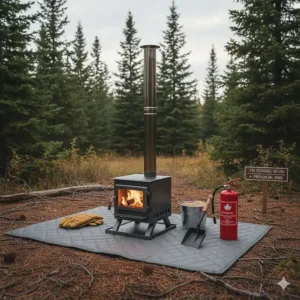
Canadian installation codes specify minimum clearances between uncertified stoves and combustible materials. Standard requirements call for 120 cm (48 inches) from combustibles for radiant stoves, though heat shields can reduce this to 45-60 cm (18-24 inches).
Inside tents, position stoves on non-combustible bases like metal plates or fire-resistant mats. Maintain at least 90 cm (36 inches) clearance from tent walls—more for synthetic fabrics. Never leave stoves unattended while burning, and ensure complete extinguishment before sleeping. Carbon monoxide detectors designed for camping provide added safety insurance.
Proper Chimney Installation
Chimney fires cause most tent stove accidents. Install pipes with small openings facing down and large openings up—this prevents creosote drip-back and ensures proper draft. Secure all connections firmly; loose joints leak smoke and create fire hazards.
Run chimneys through stove jacks made of fire-resistant materials rated for 600°C (1,112°F) or higher. Position pipe exits at least 15 cm (6 inches) from any combustible tent material. Use spark arrestors in areas with dry conditions or during fire bans—these simple screens prevent embers from escaping.
Fuel Efficiency and Environmental Impact
Maximizing BTU Output
Dry hardwoods like maple, oak, and birch provide the highest heat output per kilogram—approximately 20-24 million BTUs per cord. Softwoods like pine and spruce burn faster but still deliver 14-18 million BTUs per cord. For optimal efficiency, use wood with moisture content below 20%.
Dead standing trees often provide drier wood than fallen logs, especially in winter when ground contact increases moisture. Process wood into pieces that fit your firebox without forcing—roughly 2.5-5 cm (1-2 inches) shorter than maximum capacity allows proper air circulation.
Sustainable Foraging Practices
Canadian crown lands generally permit gathering dead-and-down wood for personal use, but provincial and federal parks often restrict collection. Before foraging, verify regulations for your specific area. Sustainable gathering means taking only what you need from various locations rather than denuding single areas.
Focus on dead branches still attached to trees (standing deadwood) rather than ground material, which provides habitat for insects and microorganisms. Never cut live trees or strip bark. Leave large fallen logs for ecosystem health—they shelter wildlife and enrich soil as they decompose.
Leave No Trace Principles
Minimize your impact by using established fire rings when available. Burn wood completely to white ash before scattering—partially burned wood creates unsightly debris. Pack out any aluminum foil, plastic, or other materials that don’t burn completely.
During fire bans, switch to alcohol or gas stoves rather than violating regulations. These restrictions protect Canada’s forests during high-risk periods. Respect closures—they exist for valid safety and environmental reasons that benefit all outdoor enthusiasts.
Cooking Capabilities and Techniques
Cast Iron Cookware Compatibility
Cast iron dutch ovens and skillets excel on wood stove flat-tops, distributing heat evenly for superior cooking results. The 6-10 mm (¼-⅜ inch) thickness of quality cast iron prevents hot spots that plague thinner pots.
For best results, preheat cookware gradually on lower heat areas of the stovetop before moving to hotter zones. This prevents thermal shock and warping. Dutch ovens with legs allow coals underneath for more even baking—perfect for bannock bread or campfire cinnamon rolls.
Temperature Control Methods
Wood stove cooking requires different techniques than home ranges. The stovetop’s temperature varies by location—highest near the chimney, coolest at edges. Use this gradient strategically: boil water near the chimney, simmer stews at edges.
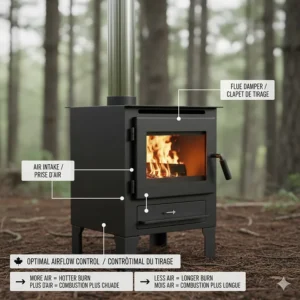
Control heat by adjusting dampers and air intakes rather than fuel amount. More oxygen equals hotter fires; restricting airflow moderates temperatures. Learn to read smoke—thin, nearly invisible smoke indicates efficient combustion, while thick, dark smoke signals incomplete burning and wasted heat.
One-Pot Meal Strategies
Maximize efficiency with one-pot meals that minimize cleanup and fuel consumption. Layer ingredients by cooking time: start with proteins and root vegetables, add quicker-cooking items later. Stir occasionally, using the stove’s heat gradient to prevent sticking.
Soups, stews, and chilis thrive on wood stoves, developing deep flavours through long, slow cooking. Prepare ingredients at home, freeze in portion sizes, and let them thaw during the day. By evening, simply heat and enjoy—conserving both fuel and effort after long days outdoors.
Winter Camping Optimization
Heat Management in Extreme Cold
When temperatures plummet below -20°C, strategic stove management becomes critical. Build fires using the “top-down” method: place large logs on the bottom, medium pieces in the middle, and kindling on top. This creates a sustained burn as fire works downward.
Maintain overnight warmth by loading the firebox completely before bed, then closing dampers to slow combustion. This extends burn time from 2-3 hours to 5-7 hours. Wake mid-night to add fuel if needed—the brief interruption beats shivering until dawn.
Position your sleeping area to benefit from radiant heat without overheating. Most campers sleep best 2-3 metres (6-10 feet) from the stove. Too close causes sweating and dehydration; too far means chilly mornings.
Condensation and Moisture Control
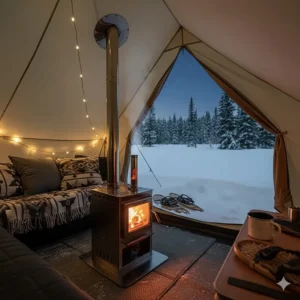
Wood stoves’ dry heat prevents the condensation problems that plague propane heaters. Combustion consumes oxygen but doesn’t add moisture to tent air, keeping gear and sleeping bags dry.
Ventilation remains important despite cold weather. Crack tent vents or windows slightly to ensure fresh air circulation and prevent carbon monoxide buildup. The chimney creates natural draft, pulling air through these openings while venting combustion gases safely outside.
Hang wet clothing near the stove but not directly above it—excessive heat damages fabrics and creates fire risk. Items 60-90 cm (24-36 inches) from the stove dry overnight without damage.
Emergency Heat Generation
During severe weather, knowing how to generate maximum heat quickly can prevent hypothermia. Keep emergency fire-starting materials in waterproof containers: lighter, ferro rod, fatwood, and waterproof matches provide redundancy.
In true emergencies, increase oxygen flow by opening all dampers and air intakes fully. Feed the fire continuously with small, dry wood pieces—this creates roaring heat rapidly. Once temperatures stabilize, reduce airflow to conserve fuel.
Maintenance and Longevity
Cleaning and Ash Removal
Regular ash removal maintains proper airflow and prevents corrosion. Empty ash pans when they’re 3/4 full—overfilling restricts oxygen to the fire and reduces efficiency. Let ashes cool completely before disposal; buried coals can reignite hours later.
Clean glass windows with damp cloth and ash paste—a surprisingly effective method. The mild abrasive action removes soot without scratching. For stubborn buildup, specialty glass cleaners designed for wood stoves work excellently.
Preventing Rust and Corrosion
Stainless steel resists rust but isn’t completely immune. After trips, wipe down all surfaces with dry cloth to remove moisture. Store stoves in dry locations with good air circulation—damp basements accelerate corrosion.
For carbon steel models, apply high-temperature stove paint annually. This creates a protective barrier against moisture and oxygen. Touch up scratches promptly; exposed metal rusts quickly when wet.
Off-Season Storage Best Practices
Before storage, clean the stove thoroughly, removing all ash and debris. Creosote left in chimneys can absorb moisture and cause corrosion. Disassemble chimney sections, clean individually, and store vertically if possible to prevent warping.
Cover stoves with breathable fabric rather than plastic—trapped condensation causes rust. Store accessories together in labeled containers so nothing gets lost. Inspect gaskets and seals; replace any that show cracking or deterioration before next season.
Regulatory Compliance Across Canada
Provincial Fire Ban Variations
Each Canadian province maintains independent fire regulations that change based on weather conditions and wildfire risk. British Columbia’s wildfire status system implements category-based restrictions, while Ontario uses forest fire rating systems to determine allowed activities.
During extreme conditions, some provinces ban all wood-burning devices including portable stoves. CSA-approved stoves burning liquid or gas fuels often receive exemptions. Before trips, check current restrictions through provincial natural resources departments or park offices.
National Parks Requirements
Parks Canada regulations govern camping in national parks from coast to coast. These rules may differ from provincial standards. Some parks restrict wood gathering entirely, requiring campers to bring processed firewood or use alternative fuels.
Backcountry campsites in national parks sometimes prohibit wood stoves altogether due to fire risk or environmental concerns. Front-country campgrounds generally allow CSA-approved stoves following posted guidelines. Contact specific parks before visiting to understand current policies.
Municipal Bylaws and Restrictions
Urban and suburban municipalities increasingly regulate wood-burning appliances due to air quality concerns. Cities like Montreal and parts of the Greater Toronto Area restrict or ban wood stoves even for outdoor recreational use.
Rural areas generally have fewer restrictions, but always verify local bylaws before using wood stoves on private property or at commercial campgrounds. Some municipalities require permits for any wood-burning device, even temporary installations.
Cost-Benefit Analysis
Budget Options ($50-$150 CAD)
Entry-level stoves like the REDCAMP and basic Lixada models deliver surprising value for occasional users. These compact options suit weekend warriors and beginners exploring winter camping without major financial commitment.
While lacking features like glass windows or extensive chimney systems, budget stoves perform their core function reliably. Expect shorter lifespans and simpler construction, but for light use, they represent excellent stepping stones into wood-burning camping.
Mid-Range Performance ($150-$350 CAD)
This sweet spot includes stoves like the OneTigris Tiger Roar and YRenZ models. They balance features, durability, and affordability effectively. Glass windows, adjustable dampers, and included accessories make these stoves comfortable and convenient.
Mid-range options suit serious recreational campers who venture out monthly during winter. Construction quality supports regular use while pricing remains accessible. These stoves often provide the best performance-per-dollar for Canadian campers.
Premium Investments ($350+ CAD)
High-end stoves like the Winnerwell Nomad represent lifetime purchases for dedicated winter campers. Premium materials, precision engineering, and extensive features justify higher prices. These stoves excel in demanding conditions—sustained cold, heavy use, and backcountry environments.
Consider premium options if you camp 20+ nights annually or depend on your stove for safety in extreme conditions. The superior durability and performance pay dividends over decades of use. Many premium stoves last 15-20 years with proper maintenance.
Comparing Wood Stoves to Alternative Heating
Propane Heaters vs Wood Stoves
Propane heaters offer convenience—twist a valve and instant heat appears. However, fuel costs accumulate quickly. Twenty-pound propane cylinders ($30-40 CAD) provide roughly 40 hours of heat at medium settings, while wood costs nothing in most backcountry areas.
Propane’s moisture output creates condensation problems in tents, dampening sleeping bags and gear. Wood stoves produce dry heat that actually helps dry wet equipment. The trade-off? Wood requires gathering, processing, and stoking throughout the night.
Alcohol Stoves for Cooking
Alcohol stoves excel for minimalist cooking but provide inadequate heating for Canadian winters. They’re incredibly lightweight and simple, but fuel costs add up on longer trips. Denatured alcohol runs $15-20 CAD per litre and burns quickly.
For summer backpacking or cooking-only needs, alcohol stoves make excellent sense. But they can’t compete with wood stoves’ heating capacity or fuel availability during winter adventures.
Electric Heating Solutions
Battery-powered electric heaters work only briefly—even large lithium batteries provide just 2-4 hours of meaningful heat. For RV camping with shore power or generator access, electric heaters offer clean, convenient warmth.
In backcountry settings without power, electric heating remains impractical. The weight of batteries capable of overnight heating far exceeds portable wood stoves. For true wilderness camping, wood-burning remains the most practical heating solution.
User Experience and Real-World Testing
Breaking In Your New Stove
New stoves benefit from proper break-in procedures. Start with small, low-temperature fires outdoors to cure any manufacturing oils and allow materials to temper gradually. This prevents warping and extends stove life.
Expect some discolouration during initial burns—completely normal for stainless steel. The metal develops a characteristic patina that actually protects underlying material. Avoid high temperatures during the first 2-3 burns, gradually increasing heat as the stove ages.
Learning Curve and Skill Development
Mastering wood stove operation requires practice. Expect imperfect results initially—fires that won’t start, excessive smoke, or temperature control difficulties. These challenges decrease as you develop intuition for damper settings, wood selection, and fire building.
Canadian campers should practice at home or during mild weather before relying on stoves in extreme conditions. The skills learned—fire building, temperature management, and safety procedures—prove invaluable when conditions matter most.
Common Mistakes to Avoid
New users often overload fireboxes, restricting airflow and causing smoky, inefficient burns. Start with smaller fuel loads, gradually adding wood as fires establish. This approach creates cleaner, hotter burns that produce more usable heat.
Another frequent error: closing dampers too early or too much. Fires need adequate oxygen to burn efficiently. Find the sweet spot where flames remain active without roaring—this maximizes heat output while conserving fuel.
Climate-Specific Considerations for Canada
Coastal BC Humidity Challenges
British Columbia’s coastal regions present unique challenges—high humidity means finding dry wood requires more effort. Carry fire-starting materials and processed kindling to ensure reliable ignition.
The region’s mild temperatures (rarely below -10°C) mean smaller stoves often suffice. Focus on moisture management more than extreme heat generation. Stainless steel construction handles humidity better than carbon steel in these environments.
Prairie Province Wind Factors
Alberta, Saskatchewan, and Manitoba winters bring fierce winds that can affect chimney performance. Taller chimneys create better draft but catch more wind. Position tents to minimize wind exposure to stove pipes.
Consider stoves with spark arrestors in prairie environments—wind can carry embers surprising distances across snow-covered fields. The region’s abundant deadfall provides excellent fuel, but extreme cold demands larger stoves for adequate heating.
Eastern Canada Snow Loads
Ontario, Quebec, and Maritime provinces receive heavy snowfall requiring robust tent structures. Ensure your stove’s chimney system can extend high enough to clear snow accumulation on tent roofs.
These regions’ mixed forests provide diverse wood types. Hardwoods like maple and birch produce excellent coals; softwoods ignite easily for starting fires. Learn to identify and harvest both types for optimal burning.
Advanced Techniques for Experienced Campers
Overnight Burn Optimization
Achieving 8-hour burns requires strategic wood selection and stove loading. Choose dense hardwood pieces 7-10 cm (3-4 inches) in diameter. Load the firebox tightly, minimizing air gaps but allowing some circulation.
Close dampers to 25-30% open, creating slow, sustained combustion rather than rapid burning. Place one or two large pieces perpendicular to others—this creates airflow channels that maintain burning without flames racing through the firebox.
Multi-Stove Setups
Large group camps sometimes employ multiple smaller stoves rather than one massive unit. This provides redundancy and allows temperature zoning—sleeping area, cooking zone, and gathering space can each have tailored heating.
Coordinate chimney placements to avoid smoke interference. Space stoves at least 3 metres apart and position chimneys to account for prevailing winds. This setup works excellently for extended base camps or group hunting operations.
Emergency Backup Systems
Always carry backup fire-starting methods even with established stoves. Waterproof matches, multiple lighters, and ferrocerium rods provide redundancy when wet conditions challenge ignition.
Consider bringing small amounts of chemical fire starters (like Wet Fire cubes) for emergencies. While you won’t need them regularly, they’re invaluable during severe weather when everything’s soaked and temperatures threaten safety.
FAQ
❓ Are camping wood stoves legal in Canadian national parks?
❓ What size camping wood stove do I need for a 4m × 4m canvas tent in Canada?
❓ How much does a quality camping wood stove cost in Canada?
❓ Can I use a camping wood stove inside a nylon tent?
❓ What's the difference between titanium and stainless steel camping stoves?
Conclusion: Finding Your Perfect Canadian Wood Stove
After reviewing dozens of camping wood stoves available in Canada, several patterns emerge. For serious winter campers who frequently venture into backcountry conditions, the Winnerwell Nomad 1G Medium justifies its premium price through exceptional durability and performance. The 304 stainless steel construction, glass viewing window, and comprehensive chimney system deliver reliability when it matters most.
Budget-conscious campers or those new to winter camping find excellent value in the OneTigris Tiger Roar or YRenZ Portable Tent Stove. These mid-range options provide essential features—adjustable dampers, heat-resistant glass, and included accessories—without premium pricing. They’re perfect for hunters, ice fishers, and weekend warriors exploring winter camping.
Backpackers and ultralight enthusiasts face a choice: the REDCAMP Folding Wood Stove offers remarkable value at under $65 CAD, while the Lixada Titanium provides ultimate weight savings for those prioritizing pack weight above all else.
The beauty of camping wood stoves lies in their simplicity and self-sufficiency. Unlike propane heaters requiring fuel purchases or electric systems demanding batteries, wood stoves transform Canada’s abundant forests into your personal heating system. You’re never out of fuel when surrounded by deadfall and standing dead trees.
As Canadian winters intensify and backcountry adventurers seek year-round opportunities, quality wood stoves enable comfortable camping from October through April. Whether you’re elk hunting in Alberta’s foothills, ice fishing on Saskatchewan lakes, or winter camping in Algonquin’s interior, the right stove transforms cold endurance into cozy enjoyment.
Don’t let winter lock you indoors. With proper gear, knowledge, and one of these excellent camping wood stoves, Canada’s winter wilderness becomes your playground rather than your adversary. Start small if you’re uncertain—a budget stove and weekend trip teach volumes about wood-burning camping. Your adventures await, and they’re much warmer than you might imagine.
Recommended for You
- 7 Best Chaise Bercante Camping 2026 Canada – Rocking Chair Reviews
- 7 Best Camping Chairs Canada 2026: Ultimate Comfort Guide
- 7 Best Heated Camping Chairs Canada 2026 (Winter Ready)
Disclaimer: This article contains affiliate links to Amazon.ca. If you purchase products through these links, we may earn a small commission at no additional cost to you.
💬 Just one click – help others make better buying decisions too!😊
