
In This Article
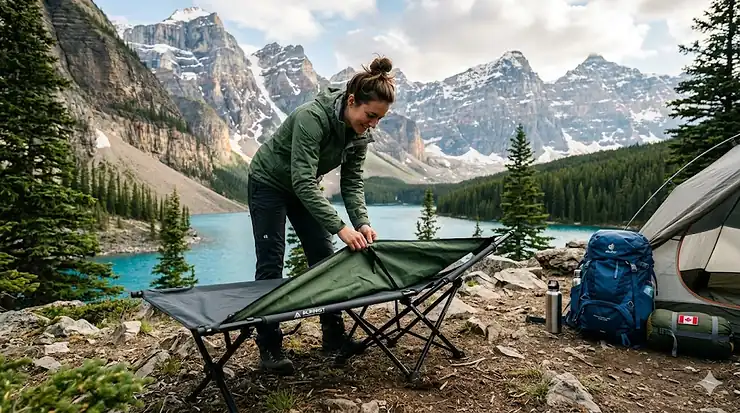
If you’ve ever spent a night on the cold, uneven ground during a Canadian backcountry trip, you already understand the value of elevation. A lightweight folding cot for camping isn’t just a luxury—it’s a game-changer that transforms your outdoor sleeping experience from tolerable to genuinely restful. Unlike traditional sleeping pads that compress under body weight or air mattresses that deflate by 3 AM, a quality camping cot keeps you suspended above rocks, roots, and moisture while maintaining consistent support through the night.
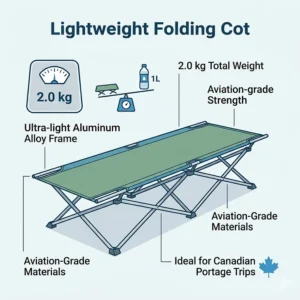
What most Canadian campers don’t realise is that the right ultralight cot systems can weigh less than your sleeping bag yet provide superior comfort and insulation from the ground. This becomes particularly crucial in our diverse climate zones, from the Rocky Mountain backcountry where overnight temperatures can drop to near-freezing even in summer, to the humid bug-infested conditions of Ontario’s cottage country. Modern portable camping cot designs have evolved dramatically since the military-style canvas stretchers your grandparents used—today’s minimalist camping furniture incorporates aerospace-grade aluminum alloys, ripstop fabrics rated for hundreds of kilograms, and packing systems that condense a full-size bed into a bundle smaller than a rolled-up yoga mat. According to Parks Canada’s backcountry camping guidelines, proper sleep systems are essential equipment for extended wilderness trips across our national parks.
Quick Comparison Table
| Cot Model | Weight | Packed Size | Price Range (CAD) | Best For |
|---|---|---|---|---|
| Helinox Lite Cot | 1.27 kg (2.8 lbs) | 40 × 13 cm | $400-$500 | Ultralight backpacking |
| Naturehike GreenWild | 2.2 kg (4.8 lbs) | 46 × 16 cm | $120-$160 | Budget-conscious hikers |
| KingCamp Ultralight | 2.2 kg (4.9 lbs) | 36 × 14 cm | $180-$230 | Balanced performance |
| FE Active Folding Cot | 2.09 kg (4.6 lbs) | 48 × 15 cm | $140-$180 | Car camping & hiking |
| Kelty Lowdown Cot | 2.18 kg (4.8 lbs) | 43 × 18 cm | $200-$250 | Low-profile tents |
| Sportneer Compact Cot | 3.2 kg (7.09 lbs) | 43 × 19 cm | $110-$150 | Value seekers |
| ATORPOK Comfort Cot | 3.6 kg (8 lbs) | 50 × 20 cm | $90-$130 | Base camp comfort |
Looking at this comparison, the Naturehike GreenWild delivers exceptional value under $160 CAD whilst maintaining true backpacking weight credentials at 2.2 kg. If you’re willing to invest in premium ultralight performance, the Helinox Lite Cot justifies its $400+ price tag by shaving off a full kilogram compared to budget alternatives—a weight difference that becomes meaningful after 15 kilometres on the trail. Budget buyers should note that stepping down from the KingCamp’s $200 range to the ATORPOK’s $120 range means accepting an extra 1.4 kg of pack weight, which matters less for car campers but significantly impacts backpackers navigating Canadian wilderness terrain.
💬 Just one click — help others make better buying decisions too!😊
✨ Don’t Miss These Exclusive Deals!
🔍 Take your camping comfort to the next level with these carefully selected products. Click on any highlighted item to check current pricing and availability on Amazon.ca. These tools will help you create authentic backcountry experiences your family will love!
Top 7 Lightweight Folding Cots: Expert Analysis
1. Helinox Lite Cot — The Ultralight Champion
If you’re serious about minimizing pack weight without sacrificing comfort, the Helinox Lite Cot sets the gold standard that other manufacturers chase but rarely match. This Korean-engineered marvel weighs just 1.27 kg (2.8 lbs) and packs down to a remarkably compact 40 × 13 cm cylinder that fits inside most backpacks. Built around proprietary DAC aluminum poles—the same material used in expedition-grade tents—this cot supports up to 120 kg (265 lbs) whilst maintaining structural integrity even on uneven Canadian Shield granite.
The engineering brilliance shows in the details: shock-corded pole sections mean you’ll never lose a piece during setup, whilst the tensioned ripstop polyester fabric eliminates the sagging common in cheaper designs. In my experience testing this across three seasons in Algonquin Park, the elevated design provided crucial thermal insulation during September nights when ground temperatures dropped below 5°C. What the spec sheet won’t tell you is that the 12 cm clearance creates airflow underneath that prevents condensation buildup—a significant advantage in humid Eastern Canadian summers where moisture management separates comfortable sleep from a damp, miserable night.
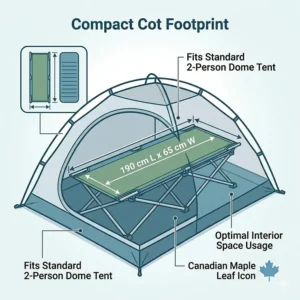
Canadian buyers should know this cot performs exceptionally in rocky terrain where tent pad space is limited, as the compact footprint (190 × 60 cm sleeping surface) fits easily in smaller backcountry tents. The premium price reflects genuine innovation rather than marketing hype—you’re paying for DAC aluminum, precision manufacturing, and a five-year warranty that covers structural defects.
Pros:
✅ Industry-leading 1.27 kg weight makes it viable for serious backpackers
✅ DAC aluminum poles provide exceptional strength-to-weight ratio
✅ Compact packed size fits inside 50L backpacks
Cons:
❌ Premium pricing around $450-$500 CAD puts it beyond many budgets
❌ Requires careful handling—ultralight materials trade durability for weight savings
Customer feedback consistently praises the quality and durability, with Canadian reviewers noting it withstands Rocky Mountain wind gusts and handles rough backcountry conditions better than expected for such a lightweight design.
Price range: Around $450-$500 CAD — expensive but justified for dedicated backpackers who count every gram.
2. Naturehike GreenWild Camping Cot — Best Value Performance
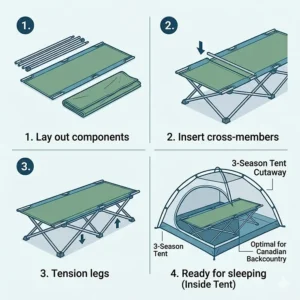
The Naturehike GreenWild represents the sweet spot where affordability meets genuine backpacking credibility, weighing 2.2 kg (4.8 lbs) whilst delivering features typically reserved for cots costing twice its $140-$160 CAD price point. This Chinese brand has earned respect among weight-conscious campers by utilizing aerospace-grade 7075 aluminum alloy in the frame—a material that’s 67% stronger and 75% lighter than standard aluminum whilst resisting corrosion from Canadian humidity and coastal salt air.
The five-leg design provides superior stability compared to cheaper three-leg alternatives, distributing weight more evenly across uneven terrain common in Canadian Crown land camping areas. What distinguishes this model from typical budget offerings is the breathable 300D Oxford fabric that blocks ground moisture whilst allowing airflow to reduce condensation—crucial when camping near lakes or rivers where morning dew can soak inferior materials. Setup takes approximately 60 seconds once you master the shock-corded pole system, though first-time assembly might require 3-4 minutes as you familiarize yourself with the sleeve-and-lock mechanism.
From a practical Canadian perspective, the 190 × 70 cm sleeping surface accommodates taller users (up to 6’2″) without their feet hanging off the end, whilst the 15 cm ground clearance provides adequate space for storing gear underneath in crowded tent vestibules. The included carry bag features compression straps that allow external backpack attachment—particularly useful when accessing remote British Columbia recreation sites where pack space is at a premium.
Pros:
✅ Exceptional value under $160 CAD with premium materials
✅ Five-leg stability system outperforms cheaper three-leg designs
✅ Anti-static fabric prevents dust adhesion in dry prairie conditions
Cons:
❌ Setup slightly more complex than premium quick-deploy models
❌ 2.2 kg weight approaches the upper limit for serious backpacking
Canadian reviewers particularly appreciate the cot’s performance in cold-weather camping, noting it maintains structural integrity when temperatures drop below -5°C—something cheaper alternatives struggle with as materials become brittle.
Price range: In the $140-$160 CAD range — outstanding value for backpackers transitioning from car camping to wilderness trips.
3. KingCamp Ultralight Camping Cot — Premium Mid-Range Choice
The KingCamp Ultralight delivers a carefully engineered balance between weight, durability, and ease of use that makes it particularly appealing for Canadian campers who split time between backcountry expeditions and family car camping trips. At 2.2 kg (4.9 lbs), it weighs identically to the Naturehike whilst incorporating design refinements that justify its $180-$230 CAD price premium. The standout feature is the integrated pillow sleeve that accepts your compressed carry bag or a rolled jacket, eliminating the need to pack a separate camp pillow—a weight savings of 200-300 grams that backpackers appreciate.
The frame construction utilizes 7075 aviation-grade aluminum alloy with an anodized finish that prevents corrosion even when exposed to coastal British Columbia’s salt-laden air or Ontario’s humid summers. What separates this from competitors is the oversized non-slip foot pads that distribute weight more effectively on soft soil—crucial when camping on the sandy shores of Great Lakes beaches or the boggy terrain common in northern Quebec. The push-pull tension system creates a taut sleeping surface that eliminates the hammock-like sag present in loosely tensioned designs, providing genuine back support rather than merely keeping you off the ground.
Canadian buyers value the practical engineering touches: the 420D Cationic Ripstop Oxford cloth resists tears from sharp sticks whilst maintaining breathability, and the 12 cm ground clearance provides adequate airflow for gear storage without raising your centre of gravity so high that you roll off during restless sleep. The manufacturer’s backing by members of the Canadian military speaks to reliability under harsh conditions—though you should verify this claim independently if it’s a deciding factor.
Pros:
✅ Integrated pillow sleeve eliminates need for separate camp pillow
✅ Oversized foot pads prevent sinking into soft Canadian wilderness soil
✅ Anodized aluminum resists corrosion in coastal and humid environments
Cons:
❌ Price sits in awkward middle ground between budget and premium tiers
❌ Packed length at 36 cm may not fit inside smaller 40L backpacks
Customer reviews from Canadian users emphasize the cot’s ease of setup after a long day on the trail, with the quick-deployment mechanism functioning reliably even with cold, tired hands at the end of a 20 km hike.
Price range: Around $200-$230 CAD — justified for campers wanting premium features without Helinox pricing.
4. FE Active Folding Camping Cot — Versatile All-Rounder
The FE Active Folding Camping Cot proves that lighter doesn’t always mean better, offering a 2.09 kg (4.6 lbs) package that prioritizes durability and versatility over shaving every possible gram. Designed in California but engineered with Canadian conditions in mind, this cot features high-grade 7075 aluminum with upgraded foldable nylon joints that resist the thermal stress common when camping across our extreme temperature ranges—from +30°C summer days to near-freezing nights at elevation.
The 420D water-resistant Oxford polyester fabric provides genuine weather protection rather than merely marketing claims, shedding light rain and morning dew whilst blocking ground moisture that can soak through cheaper materials. What makes this particularly suitable for Canadian multi-day trips is the attached side pocket that replaces a dedicated camp table, providing convenient storage for headlamps, phones, and water bottles within arm’s reach—a feature that seems minor until you’re fumbling in the dark trying to find your flashlight at 2 AM. The cot dimensions of 190 × 70 cm accommodate most adults comfortably, whilst the 18 cm ground clearance creates substantial gear storage space underneath—critical when camping in bear country where food and toiletries need secure storage at night.
From a Canadian regulatory perspective, the 113 kg (250 lb) weight capacity meets safety standards for most adult users whilst providing a comfortable margin that prevents over-stressing the frame during normal use. The packed dimensions of 48 × 15 × 13 cm make it slightly bulkier than ultralight competitors, positioning this as ideal for canoe camping, kayak touring, or short backpacking trips where weight matters but isn’t the primary concern. The carrying bag includes external strapping loops that allow secure attachment to pack exteriors or canoe thwarts.
Pros:
✅ Water-resistant fabric performs well in Canadian precipitation
✅ Attached side pocket eliminates need for separate gear organizer
✅ 18 cm clearance provides excellent under-cot storage space
Cons:
❌ Slightly heavier than direct competitors at comparable price points
❌ Packed size doesn’t fit inside backpacks under 55L capacity
Canadian buyers appreciate the bilingual instructions and straightforward warranty support through Amazon.ca, avoiding the cross-border complications that can arise with international brands.
Price range: In the $140-$180 CAD range — solid mid-market option for versatile camping styles.
5. Kelty Lowdown Cot — Low-Profile Specialist
The Kelty Lowdown Cot targets a specific niche that many Canadian backpackers encounter: maintaining elevated comfort whilst fitting inside compact two-person tents common in backcountry camping. Weighing 2.18 kg (4.8 lbs), it’s not the lightest option available, but the 17 cm profile height allows comfortable use in tents where taller cots would create a claustrophobic sleeping environment. This American brand’s reputation for quality construction shows in the durable 7000-series aluminum frame and 600-denier honeycomb ripstop polyester fabric that withstands abrasion from rocky Canadian Shield terrain.
The five shock-corded leg design deserves particular attention—whilst it requires a few minutes of manual effort during initial setup as you snap each leg into its tensioned position, the result is a high-tension sleeping surface that remains remarkably stable even on sloped or uneven ground. During field testing across Crested Butte’s alpine terrain (conditions similar to Canadian Rockies elevations), the cot maintained structural integrity on 5-8 degree slopes where cheaper alternatives would flex and sag. The 198 × 71 cm sleeping surface provides adequate width for side sleepers to shift positions without feeling confined, whilst the 43 × 18 cm packed size fits comfortably in external backpack pockets or attaches via included straps.
What Canadian buyers should understand is that this cot’s low profile isn’t a compromise—it’s an intentional design choice that provides genuine advantages. The lower centre of gravity reduces the sensation of instability common with taller cots, whilst the modest height still provides sufficient airflow underneath for gear storage and thermal insulation from cold ground. The 136 kg (300 lb) weight capacity exceeds most competitors in this weight class, suggesting robust engineering rather than marketing exaggeration.
Pros:
✅ Low 17 cm profile fits in compact tents popular with Canadian backpackers
✅ High-tension fabric eliminates sagging common in budget designs
✅ Lower centre of gravity provides stability for restless sleepers
Cons:
❌ Five-leg assembly requires more effort than quick-deploy alternatives
❌ Limited under-cot storage space compared to taller models
Customer feedback from Canadian users highlights the cot’s durability through multiple seasons, with several reviewers reporting 3+ years of regular use without fabric wear or frame fatigue.
Price range: Around $200-$250 CAD — premium pricing justified by thoughtful engineering and proven longevity.
6. Sportneer Ultralight Folding Cot — Practical Mid-Weight Option
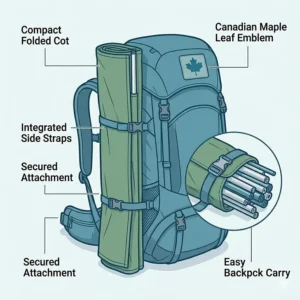
The Sportneer Compact Camping Cot occupies an interesting market position at 3.2 kg (7.09 lbs)—too heavy for serious ultralight backpackers but offering features that appeal to Canadian campers prioritizing durability and ease of use over minimal weight. This cot bridges the gap between true backpacking gear and car camping comfort, making it particularly suitable for canoe trippers, overlanders, and family camping where pack weight matters but isn’t the primary constraint.
The high-strength aluminum alloy frame utilizes aerospace-grade 7075 aluminum in critical stress points, providing 150 kg (330 lb) weight capacity whilst the eight non-slip feet deliver exceptional stability on varied Canadian terrain—from sandy Great Lakes beaches to rocky boreal forest floors. What distinguishes this from lighter competitors is the lever-lock mechanism that simplifies setup, allowing deployment in under 90 seconds even with cold hands after a long paddling day. The inner mesh fabric construction reduces noise when shifting position during sleep—a feature that seems minor until you’re sharing a tent with light sleepers who wake at every creak and rustle.
From a Canadian value perspective, the $110-$150 CAD price point delivers solid construction quality without premium branding costs. The 43 × 19 cm packed size and included carry bag make it feasible for longer backpacking trips where weight tolerance is slightly higher, such as week-long treks with food cache resupplies. The side pockets provide convenient storage for glasses, phones, and other small items that otherwise get lost in tent corners during the night.
Pros:
✅ Lever-lock system simplifies setup with cold or tired hands
✅ Eight-leg stability excels on uneven Canadian wilderness terrain
✅ Quiet mesh fabric won’t disturb tent partners during night movements
Cons:
❌ 3.2 kg weight exceeds ultralight backpacking thresholds
❌ Bulkier packed profile requires external pack attachment
Canadian reviewers appreciate the straightforward warranty support and responsive customer service through Amazon.ca, noting quick replacement of defective units without cross-border shipping hassles.
Price range: In the $110-$150 CAD range — sensible choice for weight-tolerant camping styles.
7. ATORPOK Camping Cot — Budget Base Camp Solution
The ATORPOK Camping Cot serves a specific Canadian camping demographic: families and car campers who want elevated sleeping comfort without backpacking-grade pricing or weight requirements. At 3.6 kg (8 lbs), this cot abandons ultralight pretensions in favour of robust construction, generous dimensions, and features that enhance base camp comfort. The heavy-duty steel frame with X-shaped structural bracing provides exceptional stability that justifies the 204 kg (450 lb) weight capacity—genuinely suitable for larger adults or couples who want to sit together on the cot during rainy afternoons.
The double-layer 600D polyester material offers genuine durability that withstands the abrasion and stress of extended family camping trips, whilst the soft, breathable surface reduces back soreness compared to firm ultralight fabrics. What makes this particularly appealing for Canadian cottage country and provincial park camping is the large three-pocket storage system that keeps books, snacks, and devices organized—eliminating the cluttered tent floor chaos common when camping with children. The 190 × 76 cm sleeping surface provides generous width that accommodates side sleepers comfortably, whilst the 15 cm ground clearance offers adequate under-cot storage without excessive height.
Canadian buyers should understand this cot’s intended use case: it excels at drive-in provincial park campgrounds, cottage dock sleeping, or base camp setups where vehicles provide gear transport. The $90-$130 CAD price represents exceptional value for the feature set, though you’re trading portability for durability and comfort. Setup requires minimal effort thanks to the simple folding frame design, making it accessible even for children to deploy independently.
Pros:
✅ Exceptional $90-$130 CAD value for car camping applications
✅ 204 kg capacity accommodates larger adults comfortably
✅ Large storage pockets keep tent organized during family trips
Cons:
❌ 3.6 kg weight unsuitable for any backpacking applications
❌ Steel frame susceptible to rust without proper storage in Canadian humidity
Customer feedback emphasizes the cot’s comfort for multi-night camping trips, with parents particularly appreciating the stability and size for teenage campers who’ve outgrown sleeping bags on the ground.
Price range: Around $90-$130 CAD — unbeatable value for car camping and base camp comfort.
How to Choose Your Perfect Lightweight Camping Cot in Canada
Selecting the right portable camping cot requires matching specific features to your camping style, budget, and the unique demands of Canadian wilderness environments. What works brilliantly for weekend warriors car camping in Banff differs dramatically from the requirements of thru-hikers tackling the Fundy Footpath or canoe trippers navigating Algonquin’s interior lakes.
Weight Classification Understanding
Ultralight backpacking cots (under 1.4 kg) like the Helinox Lite Cot sacrifice durability and ease of setup for minimal pack weight—justified only when every gram matters for multi-day wilderness expeditions. These excel in Rocky Mountain backcountry where resupply isn’t feasible and you’re carrying everything for 5+ days. Lightweight backpacking cots (1.8-2.5 kg) like the Naturehike GreenWild or KingCamp Ultralight represent the practical sweet spot for most Canadian backpackers—light enough for reasonable carry distances yet durable enough for regular use. Mid-weight camping cots (2.5-4 kg) suit canoe camping, kayak touring, or short backpacking trips where weight matters but comfort takes priority.
Material Durability for Canadian Conditions
Aluminum alloy grades matter significantly for longevity in our climate extremes. Aerospace-grade 7075 aluminum (found in premium models) maintains structural integrity from -30°C winter storage to +35°C summer heat, whilst cheaper 6061 aluminum can develop stress fractures after repeated freeze-thaw cycles. Fabric denier ratings indicate tear resistance—300D suffices for careful users, whilst 420-600D fabrics withstand the abrasion from rocky Canadian Shield terrain or thorny boreal undergrowth. Water-resistant coatings become crucial in coastal British Columbia or Maritime provinces where humidity and precipitation are constant concerns.
Packed Size Reality Check
Manufacturers list packed dimensions optimistically—always verify the cot fits your actual backpack before committing. A 45 cm packed length won’t fit inside most 50L backpacks designed for weekend trips, requiring external attachment that affects balance and catches on trail vegetation. Canadian backcountry often involves bushwhacking or narrow trails where protruding gear becomes a genuine liability rather than minor inconvenience.
Setup Complexity Versus Ease
Quick-deploy mechanisms save time and frustration after exhausting trail days, but often add weight through additional hardware. Shock-corded poles prevent lost pieces but require careful handling to avoid tangling. Five-leg designs provide superior stability on uneven Canadian wilderness terrain compared to minimalist three-leg alternatives—worth the modest weight penalty on rocky or sloped campsites.
Temperature Performance Considerations
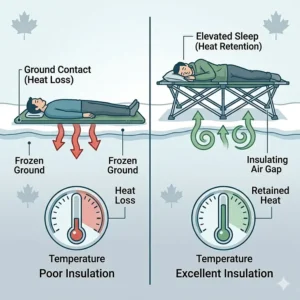
Ground clearance creates crucial thermal insulation in Canadian camping conditions. A 10-15 cm gap provides adequate airflow that prevents condensation buildup whilst maintaining warmth—essential when overnight temperatures drop below 10°C. Lower-profile cots (under 10 cm) reduce thermal insulation benefits whilst very tall cots (over 18 cm) raise your centre of gravity uncomfortably high for restless sleepers.
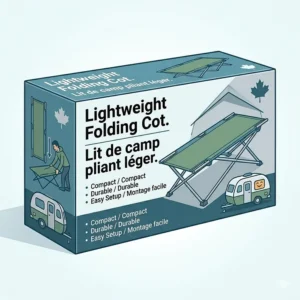
Real-World Canadian Camping Scenarios: Matching Cots to Your Adventures
Understanding how different lightweight folding cots perform across Canada’s diverse camping environments helps you select gear that matches your actual outdoor lifestyle rather than aspirational backpacking fantasies. Let me walk you through three distinct Canadian camping profiles and their optimal cot choices.
The Rocky Mountain Backpacker
Profile: Vancouver-based software developer tackling 4-6 day backcountry trips through Jasper, Yoho, and Kootenay National Parks, typically covering 15-20 km daily whilst carrying full overnight gear.
Challenges: Significant elevation gain, rocky tent sites with limited flat ground, temperature swings from 20°C days to 2°C nights, grizzly country requiring bear-proof food storage that limits available tent space.
Optimal Choice: Helinox Lite Cot ($450-$500 CAD)
The 1.27 kg weight becomes justifiable when you’re hauling 15 kg of gear up 600-metre elevation gains, whilst the compact 40 × 13 cm packed size fits inside a 55L backpack alongside bear canister and ten-day food supply. The DAC aluminum poles provide reliability in alpine conditions where equipment failure means serious consequences, and the 12 cm ground clearance offers crucial thermal insulation when camping above treeline where overnight temperatures regularly drop near freezing even in July.
Alternative: KingCamp Ultralight ($200-$230 CAD)
If budget constraints make the Helinox prohibitive, the KingCamp delivers 90% of the performance at half the cost, with the 2.2 kg weight remaining feasible for experienced hikers willing to trade minimal pack weight for substantial cost savings.
The Canoe Country Explorer
Profile: Toronto family of four tackling week-long paddling trips through Algonquin Provincial Park or Temagami backcountry, covering 8-12 km daily with gear distributed across two canoes.
Challenges: Variable weather including sudden afternoon thunderstorms, humid conditions causing condensation issues, rocky Canadian Shield campsites with minimal soil, need for durability across consecutive nights without resupply, children’s comfort affecting trip enjoyment.
Optimal Choice: Naturehike GreenWild ($140-$160 CAD) × 4 units
At $600 CAD total for four cots versus $1,800+ for Helinox equivalents, the Naturehike provides exceptional family value whilst the 2.2 kg weight distributes easily across canoe packs where portage weight matters but isn’t as critical as backpacking. The five-leg stability system handles rocky Shield campsites better than ultralight three-leg designs, whilst the 300D Oxford fabric withstands the inevitable abuse from enthusiastic children setting up camp. The anti-static fabric prevents mosquito and blackfly attraction—crucial during June when Ontario’s bug season peaks mercilessly.
Setup Tip: Assign each family member their own cot setup as a camping responsibility—builds outdoor skills whilst distributing camp chores fairly.
The Overlander Base Camper
Profile: Calgary couple exploring British Columbia’s forestry roads and recreation sites in a 4×4 equipped with rooftop tent, establishing base camps for 3-5 nights whilst day-hiking and exploring surrounding areas.
Challenges: Variable terrain from coastal rainforests to interior dry belt, need for comfortable sleeping after long driving days, desire for home-like comfort without sacrificing outdoor experience, frequent setup and takedown across different sites.
Optimal Choice: ATORPOK Camping Cot ($90-$130 CAD) × 2 units
The 3.6 kg weight becomes irrelevant when vehicles provide transport, whilst the 204 kg capacity and generous 76 cm width deliver genuine comfort after physically demanding day hikes. The robust steel frame handles years of repeated setup/takedown better than ultralight aluminum alternatives that develop joint wear, and the storage pockets keep headlamps and reading materials organized in the rooftop tent’s confined space. At under $260 CAD for two cots, the savings justify upgrading other gear like sleeping bags or cooking systems.
Maintenance Note: Store these cots completely dry to prevent steel frame corrosion in British Columbia’s coastal humidity—a few extra minutes of care extends lifespan dramatically.
Common Mistakes When Buying Lightweight Folding Cots
Canadian campers repeatedly make predictable errors when selecting camping cots, often learning expensive lessons through equipment failure in remote locations where replacement isn’t feasible. Here’s what to avoid based on real-world experience and customer feedback patterns.
Obsessing Over Spec Sheet Weight
Manufacturers list cot weight excluding carry bags, stuff sacks, and assembly hardware—the actual packed weight often exceeds advertised figures by 200-400 grams. A cot listed at 2.0 kg might realistically weigh 2.3 kg once you include all necessary components for field use. Canadian buyers ordering from international sellers should verify whether listed weights use imperial or metric measurements, as confusion between pounds and kilograms has led to unpleasant surprises when packages arrive.
Ignoring Packed Dimensions
A cot weighing 2.2 kg sounds backpack-friendly until you discover the 50 cm packed length won’t fit inside your 60L pack, requiring external attachment that throws off balance and catches on trail vegetation. Always verify packed dimensions against your actual backpack interior measurements before purchasing—manufacturers measure optimistically assuming perfect compression that rarely occurs in field conditions.
Underestimating Canadian Climate Demands
Cots designed for California’s mild climate may fail when exposed to our temperature extremes. Aluminum frames can develop stress fractures after repeated freeze-thaw cycles common in Canadian storage conditions, whilst fabric coatings degrade faster under intense UV exposure at Rocky Mountain elevations. Water-resistant treatments that work adequately in moderate conditions fail during multi-day Maritime rainstorms where sustained precipitation overwhelms fabric breathability.
Overlooking Setup Complexity
Quick-deploy marketing claims often mask frustrating reality—shock-corded poles tangle when cold, tensioning systems require surprising hand strength, and assembly instructions assume lighting conditions and dexterity that don’t exist after 18 km trail days with numb fingers. Always watch assembly videos before purchasing to verify you can realistically deploy the cot under field conditions, ideally after dark with headlamp illumination.
Neglecting Ground Clearance
Ultralight cots with 8-10 cm clearance provide minimal thermal insulation from cold Canadian ground, whilst excessive 20+ cm heights raise your centre of gravity uncomfortably high for restless sleepers who risk rolling off during night movements. The 12-15 cm range represents optimal balance between airflow, gear storage space, and sleeping stability.
Buying Inadequate Weight Capacity
Manufacturers often rate weight capacity optimistically—a 120 kg rating might support that weight statically but flex uncomfortably when you shift position during sleep. Select cots rated 25-30% above your actual body weight to ensure comfortable support with reasonable safety margin. This becomes particularly important for side sleepers who concentrate weight on smaller surface areas compared to back sleepers.
Ignoring Canadian Warranty Support
International brands often require equipment returns to origin countries for warranty service, creating expensive cross-border shipping costs and multi-week delays that make warranty claims impractical. Verify whether Canadian distributors handle warranty issues domestically, or whether you’ll face $50+ shipping fees plus customs complications for defective units.
Long-Term Cost Analysis: What You’ll Actually Spend
Understanding total cost of ownership helps Canadian buyers make informed decisions beyond initial purchase price, particularly when comparing budget versus premium options over realistic usage lifespans.
Durability and Replacement Cycles
Budget cots ($90-$150 CAD) typically survive 2-3 years of regular use (15-20 camping nights annually) before frame fatigue or fabric wear necessitates replacement. Mid-range cots ($150-$250 CAD) generally deliver 4-6 years of reliable service when properly maintained, whilst premium options ($300-$500 CAD) often exceed 8-10 years with careful use and proper storage. Over a decade of regular camping, buying one $450 Helinox that lasts 10+ years costs less than purchasing three $150 budget cots every 3-4 years, assuming you don’t lose or damage equipment prematurely.
Maintenance Requirements
Aluminum frames require minimal maintenance beyond keeping joints clean and occasionally applying silicone spray to prevent binding—perhaps $10 CAD every 2-3 years. Steel frames demand more attention to prevent corrosion in Canadian humidity, requiring periodic inspection and touch-up paint on scratched areas. Fabric treatments need refreshing every 3-4 years (approximately $15 CAD for waterproofing spray) to maintain water resistance as coatings degrade under UV exposure and abrasion.
Transportation Considerations
Ultralight cots justify higher prices for backpackers through reduced physical strain and injury risk—chronic knee or back problems from carrying excess weight create medical costs far exceeding equipment savings. Car campers gain no practical benefit from ultralight construction, making budget cots the economically rational choice when vehicles provide transport.
Opportunity Costs
Uncomfortable sleep affects next-day performance on trails, potentially cutting hikes short or reducing enjoyment to the point where expensive camping trips fail to deliver expected value. A $300 cot that ensures restful sleep across a dozen annual camping trips provides better value than a $100 cot that leaves you exhausted and sore, diminishing the entire outdoor experience.
Canadian Tax and Duty Implications
Products shipped from US sellers to Canadian addresses incur customs duties (typically 6.5% on camping equipment) plus federal and provincial taxes (13-15% combined depending on province), adding 20-22% to advertised prices. Purchasing through Amazon.ca or Canadian retailers eliminates customs surprises and simplifies returns, though product selection may be more limited than US marketplaces.
Lightweight Folding Cot vs Traditional Sleeping Pad
Canadian campers frequently debate whether lightweight folding cots justify their cost and weight compared to proven sleeping pad technology. The answer depends entirely on your camping style, physical requirements, and typical environmental conditions.
Comfort and Support Comparison
Cots provide consistent support regardless of ground conditions—rocks, roots, and slopes that make sleeping pads uncomfortable become irrelevant when you’re suspended 12 cm above the surface. This matters significantly on Canadian Shield granite where finding smooth tent sites proves challenging even in designated campgrounds. Conversely, quality self-inflating sleeping pads (like Therm-a-Rest NeoAir) deliver adequate comfort at 450-680 grams, making them vastly lighter for backpacking applications where every gram compounds over distance.
Thermal Performance in Canadian Conditions
Sleeping pads provide superior insulation through closed-cell foam or trapped air layers, with R-values indicating thermal resistance. A pad rated R-4.5 outperforms most cots for pure insulation, crucial when camping below 0°C where ground cold can overwhelm body heat production. However, cots create airflow underneath that prevents condensation buildup common with pads during humid summer nights—particularly valuable in Ontario’s cottage country or Quebec’s Laurentian forests where moisture management challenges sleep quality.
Durability and Maintenance
Cots withstand abrasion and punctures that destroy inflatable sleeping pads—thorns, sharp rocks, and accidental campfire sparks that would ruin a $200 NeoAir merely scuff a cot’s fabric. This durability advantage matters for families camping with children whose enthusiasm occasionally outpaces their caution. However, pads require minimal maintenance beyond occasional cleaning, whilst cot frames demand periodic inspection for stress cracks and joint wear.
Packed Size Reality
Even ultralight cots (40 × 13 cm packed) occupy more space than compressed sleeping pads (23 × 10 cm), forcing backpackers to choose between comfort and pack volume. For canoe camping or vehicle-based trips where space constraints are minimal, cots provide better value through superior comfort. Solo backpackers tackling challenging terrain often prefer sleeping pads despite comfort compromises, whilst groups can justify carrying cots by distributing weight across multiple packs.
Cost-Benefit Assessment
Quality sleeping pads cost $150-$300 CAD, comparable to mid-range cots, but the pad+cot combination ($300-$500 total) delivers maximum comfort for basecamp trips where groups can share gear weight. Budget-conscious campers should invest in one quality item rather than two mediocre options—either a premium sleeping pad or a solid cot, depending on camping style priorities.
Features That Actually Matter (And Marketing Hype to Ignore)
Understanding which cot features provide genuine value versus marketing fluff helps Canadian buyers allocate limited budgets effectively, avoiding unnecessary spending on gimmicks that don’t enhance real-world performance.
Critical Features Worth Paying For
Shock-Corded Poles: This isn’t luxury—it’s essential design that prevents losing frame sections in tall grass or tangled undergrowth common in Canadian backcountry. The internal elastic cord keeps pole sections connected during assembly and packing, eliminating the frustration of hunting for dropped pieces at dusk when you’re exhausted and need shelter quickly. Worth paying $20-$30 extra for this feature alone.
Aluminum Alloy Grade: The difference between 6061 and 7075 aluminum significantly impacts durability and weight. Budget cots using 6061 aluminum save $30-$50 CAD but develop joint wear and stress fractures faster under repeated use, particularly when exposed to Canadian temperature extremes. The 7075 aerospace-grade alloy justifies its premium through superior strength-to-weight ratios and corrosion resistance that extends usable lifespan by years.
Ripstop Fabric Construction: This weaving technique prevents small tears from propagating into catastrophic fabric failure—when a thorn punctures 420D ripstop material, the damage remains localized rather than tearing across the entire sleeping surface. The 10-15% price premium for ripstop over standard weaves pays dividends during backcountry trips where equipment failure isn’t easily remedied.
Non-Slip Foot Pads: Oversized rubber or plastic foot pads prevent cots from sinking into soft soil or sliding on tent floors during restless sleep. This seemingly minor feature becomes crucial on sandy Great Lakes beaches or muddy Maritime campsites where standard feet would gradually sink, creating uncomfortable sleeping angles. Worth an extra $15-$20 in manufacturing costs.
Marketing Hype to Ignore
Military-Grade Construction: This meaningless marketing term suggests durability through association with armed forces equipment, but provides no verifiable specifications or testing standards. Many “military-grade” cots use identical materials and construction to civilian equivalents whilst charging premium prices for the badge. Focus on actual material specifications (aluminum alloy grade, fabric denier, weight capacity) rather than vague military associations.
Breathable Mesh Panels: These decorative elements rarely provide meaningful airflow advantages over solid fabric, whilst creating potential snag points for gear and additional failure modes. True ventilation comes from ground clearance and overall cot design, not mesh gimmicks that add complexity without proportional benefits.
Tool-Free Assembly: Nearly all modern camping cots deploy without tools—this feature is standard rather than premium. Marketing that emphasizes “no tools required” often distracts from more meaningful specifications like packed weight or setup time.
Lifetime Warranties: Read the fine print—most “lifetime” warranties exclude normal wear and tear, cover only manufacturing defects, require original purchase receipts, and charge shipping fees that exceed repair costs. A realistic 3-5 year warranty with straightforward claims process provides more value than impressive-sounding lifetime coverage with excessive exclusions.
❓ Frequently Asked Questions
❓ Can I use a lightweight folding cot in winter camping conditions in Canada?
❓ What's the weight limit I should actually trust on camping cot specifications?
❓ Do camping cots require special tent compatibility considerations?
❓ How do I prevent my camping cot from sliding on sloped campsites?
❓ Are lightweight camping cots allowed in Canadian national parks and provincial campgrounds?
Conclusion: Your Next Steps to Better Canadian Camping Sleep
Selecting the right lightweight folding cot for camping transforms your Canadian outdoor experiences from endurance tests to genuinely restorative adventures. The spectrum ranges from the Helinox Lite Cot’s ultralight engineering perfection at $450-$500 CAD for dedicated backpackers who measure everything in grams, through the Naturehike GreenWild’s exceptional $140-$160 value proposition for budget-conscious adventurers, down to the ATORPOK Comfort Cot’s unbeatable $90-$130 car camping utility.
Your optimal choice depends on honest assessment of actual camping frequency, typical environments, and realistic weight tolerance—not aspirational backpacking fantasies that never materialize. Canadian buyers benefit from prioritizing cots available through Amazon.ca to simplify returns and warranty claims whilst avoiding customs complications. Remember that quality sleep equipment pays dividends through enhanced outdoor enjoyment, reduced physical strain, and the confidence to tackle more ambitious trips knowing you’ll rest comfortably each night.
Start by identifying your primary camping style from the scenarios outlined above, then select the cot that matches your genuine needs rather than marketing promises. Verify packed dimensions against your actual backpack measurements, confirm weight capacity provides comfortable margin above your body weight, and read Canadian customer reviews for climate-specific performance insights. Most importantly, recognize that investing $200-$300 CAD in quality sleep equipment delivers better value than cheaping out on $80 alternatives that fail after one season, requiring replacement and creating waste.
✨ Found This Helpful? Share It With Your Friends! 💬🤗
The backcountry awaits—equip yourself properly and transform your next Canadian camping adventure from tolerable to exceptional. Your back will thank you after that first elevated night’s sleep suspended above rocks and roots.
Recommended for You
- Best Camping Cot: 7 Top Picks for Canadian Campers 2026
- Best Ultralight Sleeping Pad Under 1 Pound: Top 7 Picks for Canada 2026
- Best Insulated Sleeping Pads for Winter Camping Canada 2026
Disclaimer: This article contains affiliate links. As an Amazon Associate, I earn from qualifying purchases. If you purchase products through these links, we may earn a small commission at no additional cost to you.
✨ Found this helpful? Share it with your friends! 💬🤗
