
In This Article
Picture this: you’ve invested in a premium -20°C sleeping bag, layered up with merino wool thermals, and set up camp under the crisp Canadian winter sky. Yet at 2 AM, you’re shivering awake as the cold seeps through from below. Sound familiar?
Here’s the thing most winter campers learn the hard way—your sleeping bag can only do so much when you’re lying directly on frozen ground. An insulated sleeping pad winter-rated with proper R-value isn’t just a comfort upgrade; it’s your primary defence against heat loss through conduction. According to Parks Canada’s winter camping guidelines, inadequate ground insulation is the number one reason campers get cold at night, even with quality sleeping bags.
The ground conducts heat away from your body up to 160 times faster than air. In Canadian winters where temperatures regularly plummet to -15°C or lower, that heat loss can mean the difference between restful sleep and a miserable night. The solution? An insulated sleeping pad winter-rated with an R-value of 5.0 or higher.
Whether you’re planning a weekend at Banff’s Tunnel Mountain or tackling backcountry routes in Algonquin, this guide covers everything you need to know about choosing the right insulated sleeping pad for winter camping in Canada. From understanding sleeping pad R-value for winter camping to comparing air pad vs foam pad winter performance, we’ve tested and researched the best options available on Amazon.ca in 2026.
Quick Comparison Table: Top Winter Sleeping Pads at a Glance
| Product | R-Value | Weight | Thickness | Price (CAD) | Best For |
|---|---|---|---|---|---|
| Therm-a-Rest NeoAir XTherm NXT | 7.3 | 440g | 7.6cm | $329-$379 | Ultralight winter backpacking |
| NEMO Tensor Extreme Conditions | 8.5 | 454g | 8.9cm | $387-$420 | Extreme cold expeditions |
| Sea to Summit Ether Light XT Extreme | 6.2 | 725g | 10cm | $299-$349 | Comfort-focused side sleepers |
| Klymit Insulated Static V | 4.4 | 680g | 6.4cm | $119-$144 | Budget-conscious 3-season+ |
| TREKOLOGY UL R7 | 7.2 | 500g | 7.6cm | $79-$99 | Best value winter pad |
| Therm-a-Rest Z Lite Sol | 2.6 | 410g | 2cm | $59-$69 | Backup/layering option |
| Big Agnes Rapide SL Insulated | 4.8 | 538g | 10cm | $249-$289 | Balanced comfort & warmth |
💬 Just one click – help others make better buying decisions too! 😊
Top 7 Insulated Sleeping Pads: Expert Analysis for Canadian Winter Camping 🏔️
1. Therm-a-Rest NeoAir XTherm NXT – The Gold Standard
Therm-a-Rest NeoAir XTherm NXT sets the benchmark for warmth-to-weight ratio in winter sleeping pads. With an ASTM-tested R-value of 7.3, this pad is rated for temperatures down to -32°C—perfect for Canadian winter camping from the Yukon to Ontario.
Key Specifications:
- R-Value: 7.3 (ASTM F3340)
- Weight: 440g (regular)
- Thickness: 7.6cm
- Packed Size: 23cm x 10cm
Price: $329-$379 CAD on Amazon.ca
The XTherm NXT uses Triangular Core Matrix construction with reflective insulation sleeping pad technology—ThermaCapture™ layers that reflect radiant heat back to your body. The 70D ripstop nylon bottom withstands rugged Canadian terrain, while the WingLock™ valve inflates three times faster than standard valves.
Canadian Customer Feedback: Buyers from Alberta and BC praise its performance in -25°C conditions. One reviewer noted, “Used this at Lake Louise in January—slept warm all night even when temps hit -28°C.” However, some mention it can be noisy when you shift positions.
✅ Pros: Exceptional warmth-to-weight ratio, compact pack size, reliable in extreme cold
❌ Cons: Higher price point, slight crinkle noise, narrower than some prefer
Available on Amazon.ca with free shipping for Prime members
2. NEMO Tensor Extreme Conditions – Warmest Ultralight Pad
NEMO Tensor Extreme Conditions boasts an industry-leading R-value of 8.5, making it the warmest ultralight insulated sleeping pad winter option available in Canada. Designed for expeditions and Arctic conditions, this pad delivers exceptional warmth without excessive weight.
Key Specifications:
- R-Value: 8.5 (ASTM F3340)
- Weight: 454g (regular mummy)
- Thickness: 8.9cm
- Four layers of suspended Thermal Mirror™ film
Price: $387-$420 CAD on Amazon.ca
The Apex baffle system suspends four layers of metallized film inside the pad for incredible insulation. Unlike cheaper pads, the floating construction prevents that annoying crinkling sound common in insulated pads. The 40D nylon bottom adds durability for extended winter trips.
Canadian Customer Feedback: Winter backcountry enthusiasts in the Rockies report staying warm in temperatures below -30°C. One reviewer shared, “Best investment for winter camping in Jasper—worth every penny.”
✅ Pros: Highest R-value available, whisper-quiet, excellent comfort at 8.9cm thick
❌ Cons: Premium price, slightly heavier than XTherm, limited availability
Check current stock on Amazon.ca—often sells out during peak season
3. Sea to Summit Ether Light XT Extreme – Plush Comfort for Cold Nights
Sea to Summit Ether Light XT Extreme prioritizes comfort with its 10cm Air Sprung Cell construction while delivering a solid R-value of 6.2. This pad is ideal for Canadian campers who prioritize comfort alongside warmth.
Key Specifications:
- R-Value: 6.2 (ASTM F3340)
- Weight: 725g (regular tapered)
- Thickness: 10cm
- Air Sprung Cell technology
Price: $299-$349 CAD on Amazon.ca
The Air Sprung Cells use flexible loops to create large air pockets that distribute pressure evenly—perfect for side sleepers. Exkin Platinum® reflective fabric and Thermolite® insulation work together to prevent convective heat loss. The integrated Airstream™ pumpsack inflates the pad in just 3-4 breaths.
Canadian Customer Feedback: Ontario campers appreciate the 10cm thickness for comfort on frozen ground. However, some users report durability concerns with the air cells developing leaks at weld points after 40-50 nights of use.
✅ Pros: Exceptional comfort for side sleepers, quick inflation system, warm enough for most Canadian winters
❌ Cons: Heavier than competitors, durability issues reported, bulkier packed size
Ships free across Canada via Amazon.ca Prime
4. Klymit Insulated Static V – Best Budget Winter Pad
Klymit Insulated Static V offers impressive value for Canadian campers entering winter camping without breaking the bank. With an ASTM-tested R-value of 4.4 and Klymalite™ synthetic insulation, this pad handles temperatures down to approximately -10°C.
Key Specifications:
- R-Value: 4.4 (ASTM F3340)
- Weight: 680g
- Thickness: 6.4cm
- V-chamber design with body mapping
Price: $119-$144 CAD on Amazon.ca
The unique V-chamber design and deep welds work with your sleeping bag’s insulation to enhance warmth. Side rails keep you centred on the pad throughout the night. While the sleeping pad thickness winter rating isn’t sufficient for extreme cold, it’s perfect for shoulder-season camping and milder Canadian winters.
Canadian Customer Feedback: Popular among budget-conscious campers in BC and Quebec. One review states, “Used it in Algonquin in November at -12°C with a good sleeping bag—stayed warm enough.” Note that this pad works best when paired with a high-quality winter sleeping bag.
✅ Pros: Affordable price point, lightweight, body-mapped comfort, durable 75D polyester
❌ Cons: Not rated for extreme cold, less insulation than premium options, inflates with 20-30 breaths
Frequently goes on sale on Amazon.ca—watch for deals
5. TREKOLOGY UL R7 – Exceptional Value with High R-Value
TREKOLOGY UL R7 delivers a remarkable sleeping pad R-value for winter camping of 7.2 at an incredibly affordable price point. This makes it one of the best value propositions for Canadian winter campers in 2026.
Key Specifications:
- R-Value: 7.2
- Weight: 500g
- Thickness: 7.6cm
- Premium insulation with reflective layers
Price: $79-$99 CAD on Amazon.ca
Despite the budget-friendly price, this pad doesn’t skimp on features. It includes a built-in pump sack for easy inflation and uses multiple insulation layers to achieve its impressive R-value. The hexagonal design provides stability and comfort throughout the night.
Canadian Customer Feedback: Surprisingly positive reviews from winter campers across Canada. Users report staying warm in -20°C conditions when paired with appropriate sleeping bags. One Canadian reviewer noted, “Skeptical about the price, but this pad performed as well as my friend’s Therm-a-Rest at 1/3 the cost.”
✅ Pros: Outstanding value, high R-value, lightweight, includes pump sack
❌ Cons: Less established brand, some quality control concerns, may not last as long as premium options
Best-seller in insulated sleeping pads on Amazon.ca
6. Therm-a-Rest Z Lite Sol – Essential Backup & Layering Pad
Therm-a-Rest Z Lite Sol isn’t a standalone winter solution with its R-value of 2.6, but it’s an essential tool for serious winter campers. This closed-cell foam pad never fails and provides critical additional insulation when layered under an air pad.
Key Specifications:
- R-Value: 2.6
- Weight: 410g
- Thickness: 2cm
- Closed-cell foam construction
Price: $59-$69 CAD on Amazon.ca
Understanding R-value rating explained: R-values are additive, meaning you can stack sleeping pads to combine their insulation. Many experienced Canadian winter campers use the Z Lite Sol under their inflatable pad, adding 2.6 to their total R-value. According to ASTM F3340 standards explained by Therm-a-Rest, this layering technique is highly effective.
Canadian Customer Feedback: Praised as an essential piece of kit by experienced winter campers. Also serves as insulation for sitting around camp and never requires inflation.
✅ Pros: Indestructible, no inflation needed, excellent for layering, doubles as seat pad
❌ Cons: Less comfortable alone, bulky to pack, minimal cushioning
Perfect addition to any winter sleep system—available on Amazon.ca
7. Big Agnes Rapide SL Insulated – Balanced All-Rounder
Big Agnes Rapide SL Insulated strikes a balance between comfort, warmth, and weight with its R-value of 4.8. While not rated for the coldest Canadian winter nights, it excels for late fall and early spring camping.
Key Specifications:
- R-Value: 4.8 (ASTM F3340)
- Weight: 538g
- Thickness: 10cm
- PrimaLoft® insulation
Price: $249-$289 CAD on Amazon.ca
This pad uses PrimaLoft® Silver insulation and a heat-reflective layer to maximize warmth retention. The included Pumphouse Ultra™ bag makes inflation quick and prevents moisture from your breath entering the pad—crucial for preventing ice formation in winter conditions.
Canadian Customer Feedback: Popular among shoulder-season campers in Ontario and the Maritimes. Reviewers appreciate the 10cm thickness for comfort but note it’s best for temperatures above -15°C.
✅ Pros: Comfortable thickness, good warmth-to-weight balance, quality construction
❌ Cons: Not sufficient for extreme cold alone, mid-range price, moderately heavy
Available with fast shipping across Canada on Amazon.ca
Understanding Sleeping Pad R-Value for Winter Camping ❄️
What Exactly Is R-Value?
R-value measures thermal resistance—essentially, how well a material resists heat flow. For sleeping pads, higher R-values mean better insulation from the cold ground. Think of it like the insulation rating in your home’s walls; more R-value equals less heat loss.
The ASTM F3340-18 standard, adopted industry-wide in 2020, provides a standardized testing method. Before this, manufacturers used different testing protocols, making comparisons nearly impossible. Now, when you see an ASTM-rated R-value, you know exactly what you’re getting regardless of brand.
R-Value Requirements for Canadian Winter Camping
Based on Parks Canada recommendations and field testing, here’s what you need:
R-Value 1.0-2.0: Summer camping only (above 10°C)
R-Value 2.0-4.0: Three-season camping (5°C to 15°C)
R-Value 4.0-5.0: Cool conditions (-5°C to 5°C)
R-Value 5.0-7.0: Winter camping (-15°C to -5°C)
R-Value 7.0+: Extreme cold expeditions (below -15°C)
For most Canadian winter camping scenarios—think January nights in Banff, February in Algonquin, or March in the Yukon—you want an R-value of at least 5.0. If you tend to sleep cold or plan on true winter expeditions, aim for 6.0 or higher.
The Power of Layering: Stacking R-Values
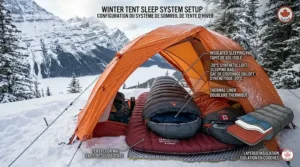
Here’s a secret many beginners don’t know: R-values are additive. If you place a foam pad (R-value 2.6) under an inflatable pad (R-value 4.8), your total system provides R-value 7.4. This technique is popular among experienced Canadian winter campers for several reasons:
- Added insurance: If your air pad fails, you still have insulation
- Puncture protection: The foam pad protects your air pad from sharp objects
- Cost-effective warmth: Sometimes cheaper than buying one ultra-high R-value pad
- Versatility: Use just the air pad for warmer trips
Air Pad vs Foam Pad Winter: Which Is Better for Canadian Conditions? 🤔
Inflatable Air Pads
Advantages:
- Superior comfort and cushioning
- High R-values in lightweight packages
- Compact packed size for backpacking
- Better warmth-to-weight ratios
Disadvantages:
- Vulnerable to punctures from sharp ice or frozen ground
- Can fail catastrophically
- Require careful inflation in sub-zero temperatures
- Moisture from breath can freeze inside pad
Best for: Winter backpackers prioritizing weight and pack size who can accept some risk and carry repair kits.
Closed-Cell Foam Pads
Advantages:
- Indestructible—never fails
- No inflation needed (works immediately)
- Unaffected by punctures or freezing
- Provides insulation even when compressed
- Can use as seat pad or gear protector
Disadvantages:
- Bulky and awkward to carry
- Less comfortable (minimal cushioning)
- Lower R-values per thickness
- Not ideal as sole pad for side sleepers
Best for: Winter campers prioritizing reliability, those using sleds or canoes where bulk isn’t an issue, or as a layering component.
The Hybrid Solution
Many experienced Canadian winter campers use both: a closed-cell foam pad underneath an inflatable pad. This provides the comfort of air, the security of foam, and combined R-values for maximum warmth. It’s the setup recommended by guides operating in Algonquin, Banff, and other Canadian winter camping destinations.
Reflective Insulation Sleeping Pad Technology Explained 🔬
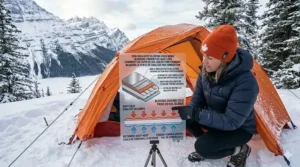
Modern winter sleeping pads don’t just trap air—they use advanced reflective insulation sleeping pad technology to minimize heat loss through radiation. Here’s how it works:
ThermaCapture™ and Thermal Mirror™ Technologies
These systems incorporate ultra-thin metallized films inside the pad. These reflective layers bounce your radiant body heat back toward you instead of letting it escape into the cold ground. Think of it like the reflective emergency blankets from first aid kits, but integrated into the pad’s structure.
The Therm-a-Rest NeoAir XTherm review Canada consistently highlights how ThermaCapture technology contributes to its exceptional 7.3 R-value without adding significant weight. The NEMO Tensor uses Thermal Mirror™ film in multiple suspended layers, achieving even higher insulation values.
Why Reflective Technology Matters in Canadian Winters
At -20°C (common in Canadian winters), your body loses heat through three mechanisms:
- Conduction: Direct heat transfer to the ground (biggest concern)
- Convection: Heat carried away by air movement inside the pad
- Radiation: Heat radiating away from your body
Traditional foam only addresses conduction and partially addresses convection. Reflective technologies specifically target radiation, which accounts for up to 20% of heat loss. In extreme cold, that 20% can be the difference between comfort and hypothermia.
How to Choose the Right Insulated Sleeping Pad for Winter Camping in Canada 🎯
Step 1: Determine Your Camping Style
Car camping: Weight and packed size matter less. Prioritize comfort and value. Consider thicker pads like the Sea to Summit Ether Light XT.
Backpacking: Every gram counts. Look for high R-value-to-weight ratios like the Therm-a-Rest XTherm NXT or NEMO Tensor.
Canoe tripping: Bulk is acceptable. Consider layering systems or self-inflating pads.
Step 2: Assess Your Temperature Range
Match your R-value to the coldest temperatures you’ll encounter. Add a safety margin—if you expect -15°C, get a pad rated for -20°C or colder.
Step 3: Consider Your Sleep Position
Back sleepers: Can use thinner pads (6-7.5cm)
Side sleepers: Need thicker pads (9cm+) to prevent hips/shoulders from bottoming out
Stomach sleepers: Similar to back sleepers
Step 4: Factor in Your Cold Tolerance
Everyone’s different. If you know you sleep cold, increase your target R-value by 1.0-2.0. Women and older adults generally need more insulation.
Step 5: Budget Appropriately
Under $100: TREKOLOGY UL R7, Klymit Static V (shoulder season)
$100-$200: Klymit Insulated Static V Luxe
$200-$300: Sea to Summit Ether Light XT, Big Agnes Rapide SL
$300+: Therm-a-Rest XTherm NXT, NEMO Tensor Extreme
Remember: this is life-safety equipment in Canadian winters. A $300 sleeping pad that keeps you warm is cheaper than hypothermia treatment or cutting your trip short.
Step 6: Check Availability and Shipping in Canada
Not all pads are readily available in Canada. Verify Amazon.ca stock and shipping times, especially before peak winter season (November-January). Some products ship from the US with longer delivery times and potential duty charges.
✨ Don’t Miss These Exclusive Deals!
🔍 Take your winter camping to the next level with these carefully selected products available in Canada. Click on any highlighted item to check current pricing and availability on Amazon.ca. These tools will help you create authentic outdoor experiences your family will love!
Pro Tips for Using Your Insulated Sleeping Pad in Canadian Winters 🏕️
Inflation Techniques for Sub-Zero Temperatures
Never inflate with your breath below freezing. The moisture from your breath will freeze inside the pad overnight, reducing insulation and potentially damaging internal baffles. Always use a pump sack (included with most premium pads) or a separate inflation bag.
If you must use breath inflation in an emergency, inflate the pad inside your tent or sleeping bag to keep it warm, and allow extra time for any moisture to evaporate before the temperature drops at night.
Preventing Punctures on Frozen Ground
Clear your sleeping area thoroughly:
- Remove all sharp sticks, rocks, and ice chunks
- Create a smooth surface in the snow
- Lay down your closed-cell foam pad first (if layering)
- Place your air pad on top
Consider carrying a small piece of Tyvek or a groundsheet for extra protection on particularly rough terrain.
Dealing with Condensation
Moisture is the enemy in winter camping. Store your sleeping pad inside your tent overnight (never in the vestibule where it can freeze). In the morning, if condensation has formed on the pad’s exterior, wipe it thoroughly with a towel before packing. Never pack a wet sleeping pad in freezing conditions—it will freeze solid.
Emergency Repairs in the Field
Always carry:
- Self-adhesive repair patches (come with most pads)
- Duct tape or Tenacious Tape
- Small tube of Aquaseal or similar adhesive
For winter conditions, patches adhere better if you warm them slightly (body heat or inside your jacket) before applying. Clean the area as best you can and apply firm pressure for 30 seconds.
Seasonal Shopping: When to Buy Your Winter Sleeping Pad in Canada 🛒
Best deals: September-October (end of summer camping season)
Good availability: November-January (peak winter season)
Limited stock: February-March (inventory clearing for spring gear)
Full price: April-August (off-season for winter gear)
Many retailers offer Black Friday deals (late November) and Boxing Week sales (late December-early January). However, popular models like the Therm-a-Rest NeoAir XTherm often sell out during these sales. If you find your ideal pad on sale, don’t hesitate.
Consider shopping at Canadian retailers like MEC, Sail, or Atmosphere for in-person advice and easier returns, though Amazon.ca typically offers the widest selection and competitive pricing with fast Prime shipping across Canada.
Comparison: Benefits vs Traditional Alternatives
| Feature | Modern Insulated Air Pad | Traditional Closed-Cell Foam | Self-Inflating Pad |
|---|---|---|---|
| R-Value per Weight | Excellent (7+ at 500g) | Moderate (2.6 at 400g) | Good (4-5 at 900g) |
| Comfort | Excellent (7.5-10cm thick) | Poor (2cm maximum) | Very Good (5-7.5cm) |
| Reliability | Good (with care) | Excellent (never fails) | Moderate (foam can compress) |
| Pack Size | Excellent (1L or less) | Poor (bulky roll) | Moderate (3-4L) |
| Price | $150-$420 CAD | $50-$90 CAD | $100-$250 CAD |
| Setup Time | 2-5 minutes (with pump) | Instant | 10-20 minutes |
| Best For | Backpackers, weight-conscious | Reliability-focused, backup | Car campers, value seekers |
Price Range & Value Analysis: Winter Sleeping Pads in Canada
| Price Tier | What You Get | Best Options | Value Rating |
|---|---|---|---|
| Under $100 | R-value 4-5, heavier, less durable | TREKOLOGY UL R7, Klymit Static V | ⭐⭐⭐⭐ |
| $100-$200 | R-value 4-5, better materials, established brands | Klymit Insulated Static V Luxe | ⭐⭐⭐ |
| $200-$300 | R-value 5-6.5, premium features, reliable | Big Agnes Rapide SL, Sea to Summit Ether XT | ⭐⭐⭐⭐ |
| $300+ | R-value 6.5-8.5, top performance, proven durability | Therm-a-Rest XTherm NXT, NEMO Tensor EC | ⭐⭐⭐⭐⭐ |
Canadian perspective: Factor in shipping and potential duty. Products fulfilled by Amazon.ca avoid surprise charges, while third-party sellers may add fees. Winter camping gear is a long-term investment—a premium pad lasting 5+ years costs less per night than replacing budget options annually.
Frequently Asked Questions ❓
❓ What R-value do I need for winter camping in Ontario parks?
❓ Is the Therm-a-Rest NeoAir XTherm worth the price for Canadian winters?
❓ Can you use a summer sleeping pad for winter camping in Canada?
❓ How thick should my sleeping pad be for winter side sleeping?
❓ What's the best budget insulated sleeping pad for winter camping in Canada?
Conclusion: Investing in Warmth and Comfort for Canadian Winter Adventures 🌟
Choosing the right insulated sleeping pad winter-rated for Canadian conditions transforms winter camping from an endurance test into an enjoyable adventure. Whether you’re watching the northern lights from Jasper, exploring the frozen forests of Algonquin, or winter camping in Quebec’s backcountry, proper ground insulation is non-negotiable.
The sleeping pad R-value for winter camping should be your primary consideration—everything else is secondary. For most Canadian winter scenarios, an R-value between 5.0 and 7.0 provides the safety and comfort you need. Extreme adventurers tackling the Yukon or high-altitude winter mountaineering should opt for R-values of 7.0 or higher.
Remember that your sleeping pad works as a system with your sleeping bag. Even the warmest -30°C bag won’t keep you comfortable without adequate ground insulation. According to field research and Parks Canada guidelines, improper pad selection remains the primary cause of cold sleeping experiences.
For Canadian winter camping enthusiasts on a budget, the TREKOLOGY UL R7 delivers incredible value. Those prioritizing weight for backcountry trips should consider the Therm-a-Rest NeoAir XTherm NXT, while comfort-focused campers will appreciate the Sea to Summit Ether Light XT Extreme. Whatever your choice, buying from Amazon.ca ensures reliable shipping across Canada and hassle-free returns.
Winter camping in Canada’s stunning national and provincial parks offers unforgettable experiences—pristine snow-covered landscapes, peaceful solitude, and the unique beauty of nature in winter. With the right insulated sleeping pad, you’ll stay warm, comfortable, and ready to make lasting memories in our incredible Canadian wilderness.
Stay warm out there, and happy camping! 🏕️🍁
Recommended for You 📚
- 7 Best Women’s Winter Sleeping Bags Canada 2026 (Expert Tested)
- 7 Best Down vs Synthetic Sleeping Bag Extreme Cold 2026 Canada
- 7 Best Winter Sleeping Bags Canada Under $500 (2026 Guide)
Disclaimer: This article contains affiliate links to Amazon.ca. If you purchase products through these links, we may earn a small commission at no additional cost to you.
✨ Found this helpful? Share it with your friends! 💬🤗
