
In This Article
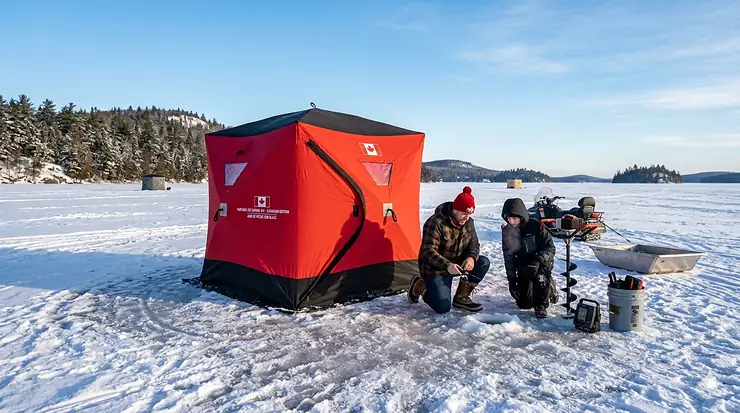
Picture this: It’s minus twenty outside, winds are howling across the frozen lake, but you’re sitting comfortably in your warm portable ice fishing hut, hot coffee in hand, watching your line through the hole in the ice below. That’s the magic a quality portable ice fishing hut brings to your winter fishing adventures.
The Canadian ice fishing season is legendary—from Ontario’s Lake Simcoe to Saskatchewan’s Lac La Ronge, anglers brave the cold to pursue walleye, perch, pike, and lake trout. But here’s the thing: you don’t need to freeze to catch fish anymore. Modern portable ice fishing huts have revolutionized winter angling, offering unprecedented warmth, convenience, and mobility that our grandparents could only dream about.
Whether you’re a seasoned ice angler or someone curious about trying this quintessentially Canadian pastime, choosing the right portable ice fishing hut can transform your experience from teeth-chattering endurance test to genuinely enjoyable outdoor adventure. In this comprehensive guide, I’ll walk you through the seven best portable ice fishing huts available in Canada for 2026, complete with real pricing in CAD, honest pros and cons, and everything you need to make an informed decision.
Quick Comparison Table: Top Portable Ice Fishing Huts
| Product | Type | Capacity | Fishable Area | Price Range (CAD) | Best For |
|---|---|---|---|---|---|
| Eskimo FatFish 949i | Hub-Style | 3-4 Person | 61 sq ft | $400-$600 | Wide-bottom design, extra space |
| Otter Vortex Pro Cabin | Hub-Style | 2-3 Person | 48 sq ft | $620-$700 | Premium quality, thermal insulation |
| Clam X-400 Thermal Hub | Hub-Style | 3-4 Person | 64 sq ft | $450-$550 | Budget-friendly, solid performance |
| Eskimo QuickFish 2 | Pop-Up | 2 Person | 25 sq ft | $150-$200 | Quick setup, lightweight |
| Outsunny 4-Person Pop-Up | Pop-Up | 3-4 Person | 48 sq ft | $180-$250 | Best value, entry-level |
| VEVOR Insulated Hub | Hub-Style | 6-8 Person | 60 sq ft | $300-$400 | Large groups, spacious interior |
| Clam Nanook XT Thermal | Flip-Over | 2 Person | 34 sq ft | $700-$1,050 | Portability, flip-over convenience |
💬 Just one click – help others make better buying decisions too! 😊
Top 7 Portable Ice Fishing Huts: Expert Analysis
1. Eskimo FatFish 949i – Best Wide-Bottom Hub Shelter
The Eskimo FatFish 949i stands out with its innovative flared, wide-bottom design that provides significantly more fishable area than traditional pop-up shelters. With 61 square feet of interior space, this is one of the most spacious 3-4 person huts on the market.
Key Specifications:
- Insulated IQ fabric (35% warmer than non-insulated)
- All-metal hub system with fiberglass poles
- Dimensions: 99″ x 99″ floor space
Price: $400-$600 CAD (available on Amazon.ca and specialty retailers)
Canadian Customer Feedback: Ontario anglers praise the extra headroom and floor space, particularly appreciating how the wide bottom doesn’t sacrifice portability. Several Quebec users noted it handles strong winds better than traditional designs.
✅ Pros:
- Exceptional interior space from flared design
- Fully insulated for Canadian winters
- Quick pop-up setup in under 60 seconds
❌ Cons:
- Heavier than ultra-light options (requires good sled)
- Premium price point for entry-level anglers
Best For: Anglers who fish with family or friends and want maximum comfort without permanently mounting a shelter.
2. Otter Vortex Pro Cabin – Premium Thermal Hub Shelter
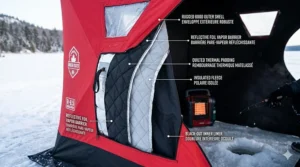
Otter’s reputation for quality shines through in the Otter Vortex Pro Cabin, featuring their patented THERMALTEC 600 denier triple-layer fabric system. This shelter represents the gold standard for anglers who fish in extreme Canadian conditions.
Key Specifications:
- Triple-layer thermal insulation system
- 48 square feet fishable area
- Full door stabilizing poles for structure
Price: $620-$700 CAD (available through Canadian Tire and specialty fishing retailers)
Canadian Customer Feedback: Manitoba ice fishers consistently rate this as the warmest shelter they’ve tested, with some reporting comfortable temperatures inside even during -30°C exterior conditions when paired with a propane heater.
✅ Pros:
- Exceptional warmth retention in extreme cold
- Reduced condensation compared to competitors
- Premium build quality and durability
❌ Cons:
- Higher investment for recreational anglers
- Requires proper anchoring in high winds
Best For: Serious ice anglers who fish frequently in harsh Canadian winters and prioritize warmth and quality.
3. Clam X-400 Thermal Hub – Best Value Hub Shelter
The Clam X-400 Thermal Hub delivers impressive performance at a mid-range price point, offering 64 square feet of fishable area with full thermal insulation. Clam’s reputation for innovation in ice fishing gear is evident in this well-designed shelter.
Key Specifications:
- 64 square feet interior (4-sided hub)
- Thermal fabric with quilted insulation
- Compact pack-down size for transport
Price: $450-$550 CAD (available through The Fishin’ Hole and other Canadian retailers)
Canadian Customer Feedback: Alberta anglers appreciate the balance of size, warmth, and portability, with many noting it’s an excellent “Goldilocks” option—not too expensive, not too basic, just right for weekend warriors.
✅ Pros:
- Excellent value for thermal performance
- Spacious for 3-4 anglers with gear
- Reputable brand with good warranty support
❌ Cons:
- Not as premium as Otter or high-end Eskimo models
- Standard hub design without unique features
Best For: Weekend ice anglers who want thermal protection without breaking the bank.
4. Eskimo QuickFish 2 – Best Pop-Up for Mobility
Sometimes you need speed and simplicity over maximum space. The Eskimo QuickFish 2 is the original quick-setup portable shelter, perfected over years of design iteration. This 2-person pop-up is ideal for run-and-gun fishing.
Key Specifications:
- 25 square feet fishable area
- Lightning-fast 60-second setup
- Ultra-portable at approximately 30 lbs
Price: $150-$200 CAD (widely available on Amazon.ca and Walmart Canada)
Canadian Customer Feedback: Ontario perch anglers love the mobility, frequently moving spots throughout the day. Saskatchewan users note it’s perfect for solo fishing or father-son outings.
✅ Pros:
- Extremely quick setup and takedown
- Lightweight for easy transport on foot
- Budget-friendly entry point to portable shelters
❌ Cons:
- Limited space for larger groups
- Non-insulated version requires good outerwear
Best For: Mobile anglers who drill multiple holes and move frequently, or solo/duo fishers on a budget.
5. Outsunny 4-Person Pop-Up – Best Budget-Friendly Option
For newcomers to ice fishing or occasional anglers, the Outsunny 4-Person Pop-Up offers remarkable value. While not as feature-rich as premium options, it provides essential wind and snow protection at an entry-level price.
Key Specifications:
- 48 square feet interior space
- Ventilation windows and dual doors
- Includes carry bag and ice anchors
Price: $180-$250 CAD (available on Amazon.ca and Best Buy Canada)
Canadian Customer Feedback: First-time ice anglers across Canada report this shelter exceeded expectations for the price, though experienced anglers note the fabric isn’t as durable as premium brands for long-term heavy use.
✅ Pros:
- Excellent price-to-space ratio
- Good for trying ice fishing without major investment
- Includes all essential accessories
❌ Cons:
- Fabric quality not comparable to Eskimo/Otter/Clam
- Limited insulation for extreme temperatures
- May require replacement after 2-3 seasons of heavy use
Best For: Budget-conscious anglers or those new to ice fishing who want to test the waters before investing in premium gear.
6. VEVOR Insulated Hub – Best for Large Groups
When you’re heading out with a serious crew, the VEVOR Insulated Hub provides ample space for 6-8 anglers with proper organization. This hexagonal hub design maximizes interior volume while maintaining portability.
Key Specifications:
- 60+ square feet fishable area
- 420D insulated fabric layers
- Hub-style poles for quick setup
Price: $300-$400 CAD (available on Amazon.ca)
Canadian Customer Feedback: Groups fishing on Quebec and Ontario lakes appreciate the spacious interior, noting it comfortably fits multiple anglers with heaters, gear, and even folding chairs without feeling cramped.
✅ Pros:
- Spacious for large groups or ice camping
- Competitive pricing for size provided
- Good insulation performance for the cost
❌ Cons:
- Requires vehicle transport (too large for foot traffic)
- Brand recognition not as established as Eskimo/Clam/Otter
Best For: Groups of 4+ anglers, ice camping enthusiasts, or those who prioritize interior space above all else.
7. Clam Nanook XT Thermal – Best Flip-Over Sled Shelter
The Clam Nanook XT Thermal represents the flip-over category’s premium offering. This design integrates the sled and shelter into one unit that flips behind you, offering unmatched portability combined with full thermal protection.
Key Specifications:
- Integrated sled design
- 34 square feet fishable area (2 person)
- Thermal quilted fabric
Price: $700-$1,050 CAD (available through Canadian fishing specialty retailers)
Canadian Customer Feedback: Northern Ontario anglers who walk onto lakes consistently rate flip-overs as their preferred design, with the Nanook XT’s thermal insulation making it the best-in-class choice for serious cold-weather pursuits.
✅ Pros:
- Ultimate portability—pull everything in one unit
- Excellent thermal performance for flip-over design
- Benchmark quality from Clam’s decades of experience
❌ Cons:
- Highest price point in this comparison
- Limited to 2 anglers maximum
- Requires learning curve for first-time flip-over users
Best For: Serious ice anglers who walk onto lakes frequently and want a premium, self-contained fishing solution.
Understanding Portable Ice Fishing Hut Types
Not all portable ice fishing huts are created equal. Understanding the three main categories helps you choose the right design for your fishing style.
Hub-Style Shelters
Hub-style shelters use a pole system that pops open like an umbrella, creating a freestanding structure. These offer the best space-to-packed-size ratio and dominate the market for good reason. Brands like Eskimo, Otter, and Clam have perfected hub designs with metal hubs and fibreglass poles that withstand Canadian winters. They typically provide 40-100+ square feet of fishable area and accommodate 2-8 anglers depending on size.
The main advantage? Speed and simplicity. Most hub shelters deploy in under two minutes, even in harsh conditions. They’re ideal for anglers who drive ATVs or snowmobiles to fishing spots and want maximum interior space without sacrificing portability.
Pop-Up Shelters
Pop-up shelters represent the budget-friendly, ultra-portable option. These lightweight tents use flexible poles that spring into shape when removed from their carry bag. While they don’t offer the same spacious interior as large hub shelters, pop-ups excel for solo anglers or those who frequently reposition.
The trade-off here is straightforward: you sacrifice some space and often thermal performance for exceptional mobility and lower cost. For Ontario panfish anglers who drill twenty holes per outing, a pop-up shelter can’t be beat.
Flip-Over Sled Shelters
Flip-over designs integrate the sled and shelter into one clever unit. You load your gear into the sled, pull it to your spot, drill holes, then flip the shelter portion over you. This design originated in Minnesota and has found devoted followers across Canada’s walking-access lakes.
The beauty of flip-overs lies in their self-contained nature. You’re not carrying a separate sled and shelter—everything moves as one unit. For anglers who access remote lakes on foot or prefer minimalist setups, flip-overs offer an elegant solution despite their premium pricing.
Insulated vs. Non-Insulated: What Canadian Anglers Need
The insulation question often stumps first-time buyers. Here’s the truth: if you’re fishing in Canada, insulated wins almost every time.
Why Insulation Matters in Canadian Conditions
Insulated portable ice fishing huts feature quilted fabric with thermal barriers that trap heat inside the shelter. This makes an enormous difference when exterior temperatures plunge below -20°C, which happens regularly across most Canadian ice fishing regions. Modern insulated fabrics from Eskimo, Otter, and Clam can maintain interior temperatures 15-20°C warmer than outside when used with a small propane heater.
The science is simple but effective. Multiple fabric layers with air pockets slow heat transfer, just like your winter parka. This means you can use a smaller, lighter propane heater (often just 1-pound canisters instead of bulky 20-pound tanks) and stay comfortable longer. You’ll also experience dramatically less condensation—a major problem in non-insulated shelters where your breath and heater moisture freezes on the ceiling and rains ice crystals back down on you.
When Non-Insulated Makes Sense
That said, non-insulated shelters have their place. If you primarily fish during late February and March when temperatures moderate, or if you’re in British Columbia’s milder coastal regions, a basic shelter might suffice. Non-insulated options cost $100-200 less and weigh significantly less—important considerations for backpack anglers.
You can also retrofit non-insulated shelters with reflective insulation materials from hardware stores, though this DIY approach rarely matches purpose-built thermal fabrics in performance.
Essential Features to Consider Before Buying
Floor Space and Fishable Area
Marketing materials can be misleading here. A “4-person” shelter might fit four anglers who know and like each other very much, but realistically provides comfortable fishing for two or three. Pay attention to actual square footage: 25-30 sq ft suits solo/duo fishing, 40-60 sq ft works for 2-4 anglers, and 80+ sq ft accommodates larger groups.
Consider what you’re bringing inside too. Two anglers with electronics, portable heater, tackle boxes, and lunch coolers need more room than two minimalist ice jiggers with just rods and bait.
Setup Speed and Ease
Canadian ice conditions can turn nasty quickly. When winds pick up and snow starts blowing sideways, you want a shelter that deploys fast. Hub-style shelters generally win here, with most quality models setting up in under two minutes even with cold, fumbling fingers.
Practice setup at home before your first trip. Seriously. Learning how poles connect and fabric tensions work in your heated garage beats figuring it out while your buddy shivers on the ice watching you struggle.
Anchoring and Stability
Wind is ice fishing’s constant companion, especially on large exposed lakes common across Saskatchewan and Manitoba. Quality shelters include multiple anchoring options: ice screws, straps, and sometimes internal weight bags.
Look for shelters with reinforced anchor points sewn into the skirt fabric, not just loops that can tear out. Otter’s quick-release buckle systems and Eskimo’s deluxe tie-downs represent best-in-class anchoring solutions that actually work when 50 km/h gusts try relocating your shelter across the lake.
Ventilation and Condensation Control
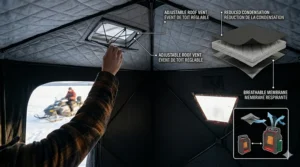
This seems counterintuitive—why would you want ventilation in a shelter you’re trying to keep warm? Because proper airflow prevents dangerous carbon monoxide buildup from propane heaters and reduces condensation that freezes and drips back down.
Quality shelters include adjustable vent windows and roof vents that create airflow without creating drafts. Some premium models like the Otter Vortex series use specialized fabric designs that allow moisture to escape while retaining heat.
How to Choose the Right Portable Ice Fishing Hut for Your Needs
Assess Your Fishing Style
Are you a hole-hopper who drills thirty spots searching for active fish, or do you prefer settling in for all-day sits over known productive areas? Mobile anglers prioritize lightweight pop-ups or compact 2-person hubs they can easily reposition. Patient anglers benefit from larger, more comfortable shelters with space for chairs, heaters, and extended sessions.
Consider Your Group Size
Be realistic about who typically joins you. If you mostly fish solo or with one buddy, a 2-3 person shelter provides ample room without lugging unnecessary weight and bulk. Family outings with kids or regular group trips justify larger 4-6 person hubs that keep everyone together and comfortable.
Evaluate Your Transport Method
Walking onto neighbourhood lakes? You need lightweight, portable options under 40 lbs that pack compact. Driving a truck or ATV? You can handle heavier, more spacious shelters that would be impractical to carry significant distances. Saskatchewan lake trout anglers accessing remote spots via snowmobile often choose mid-size hubs that balance portability and comfort.
Budget Appropriately
Entry-level shelters start around $150-250 CAD and work fine for occasional use or testing if ice fishing suits you. Mid-range thermal hubs ($400-700 CAD) represent the sweet spot for regular weekend anglers—good quality without premium pricing. Top-tier options ($700-1,200+ CAD) suit dedicated ice anglers who fish multiple times weekly and demand the best performance Canadian winters can challenge.
Consider cost-per-use: a $600 shelter used twenty times per season over five years costs just $6 per outing—less than two Tim Hortons coffees.
Safety Considerations for Ice Hut Use in Canada
Ice Thickness Requirements
According to Ontario government regulations, minimum ice thickness for safety varies by activity. Walking requires at least 10 cm (4 inches) of clear, solid ice. Snowmobiles need 12.5-18 cm (5-7 inches), while vehicles require 20-30 cm (8-12 inches) or more.
These are minimums. Experienced Canadian anglers typically won’t walk onto ice under 15 cm (6 inches) given variable conditions across single lakes. Always check ice thickness as you move away from shore using a spud bar or auger—near-shore ice is often much thicker than mid-lake ice, especially early season.
Carbon Monoxide Awareness
Propane heaters inside enclosed shelters create carbon monoxide—an odourless, colourless gas that can kill. This isn’t theoretical; multiple Canadian ice anglers suffer CO poisoning annually. Always ensure proper ventilation when using heaters, crack windows or vents even when running heat, and consider a battery-powered CO detector (they cost under $30 and can save your life).
Never use un-vented combustion heaters designed for outdoor use only. Stick to catalytic propane heaters rated for indoor use, like the popular Mr. Heater Buddy series widely used across Canada.
Registration Requirements
Some provinces require ice hut registration. Ontario mandates registration for huts in Fisheries Management Zones 9-12 and 14-20, with specific removal dates to prevent huts from going through ice during spring thaw. Registration is free through the Ontario Fish and Wildlife Licensing Service, but required by law with fines for non-compliance.
Check your provincial regulations before your first outing—requirements vary across Canada and can change seasonally.
Portable Ice Fishing Hut Accessories Worth Considering
Lighting Solutions
Canadian winter days are short. Fishing during prime early morning and evening bites means working in darkness. LED strip lights or purpose-built ice shelter lighting systems transform your hut’s usability. Look for battery-powered options that won’t create fumes, with several brands offering USB-rechargeable systems that last full days.
Portable Heaters
The most popular heaters for Canadian ice fishing remain propane catalytic models. The Mr. Heater Portable Buddy (4,000-9,000 BTU) and Little Buddy (3,800 BTU) dominate the market for good reason—they’re reliable, efficient, and widely available across Canada. For insulated shelters under 50 sq ft, the Little Buddy running on 1-lb propane canisters provides adequate warmth in most conditions.
Shelter Floors and Insulation
Premium anglers increasingly add flooring to their portable shelters. Purpose-built ice fishing floors from Otter and Clam offer insulation from cold ice below while creating a clean, dry workspace. Budget alternative? Interlocking foam exercise mat tiles from Canadian Tire work surprisingly well for under $40 and add significant comfort during all-day sessions.
Storage Solutions
Gear organization inside cramped shelters prevents frustration and lost tackle. Wall-mounted organizers, corner consoles, and rod holders designed specifically for ice shelters keep essentials accessible without cluttering precious floor space. Eskimo and Otter offer complete accessory ecosystems designed to integrate with their shelters.
Maintenance and Storage Tips for Canadian Winters
Post-Season Cleaning
Before storing your portable ice fishing hut for summer, thorough cleaning prevents mildew and fabric degradation. Set it up in your yard on a dry day, then:
- Sweep out all debris, dead minnows, and tackle remnants
- Wash fabric with mild soap and water, focusing on any stained areas
- Rinse thoroughly and allow complete drying (damp fabric stored creates mildew)
- Check and tighten all hub connections, replacing any damaged poles
Proper Storage
Store your shelter in a cool, dry location away from direct sunlight. UV exposure degrades fabric over time, reducing insulation effectiveness and creating weak points. Garages work well; hot attics less so. Keep it loosely packed in its bag rather than compressed tight—this prevents fabric creasing and stress on seams.
Seasonal Inspections
Before each ice season, inspect your shelter thoroughly. Check for:
- Torn fabric or damaged zippers
- Cracked or bent poles
- Weakened anchor points or frayed straps
- Condensation damage or mildew (musty smell indicates problems)
Small repairs (fabric patches, zipper lubricant) prevent mid-season failures when you’re stuck on a frozen lake with no alternatives.
Provincial Ice Fishing Regulations and Best Practices
Ontario Ice Fishing Rules
Ontario allows ice fishing with two lines in most waters, provided you remain within 60 metres of your lines with clear, unobstructed view at all times. Some Fisheries Management Zones have specific regulations, so consult the current Ontario Recreational Fishing Regulations Summary before each season.
Ice hut registration applies in many zones, with mandatory removal dates (typically late February to mid-March depending on location) to prevent huts from going through melting ice. Fines for abandoned or unregistered huts can reach several hundred dollars.
Quebec and Maritime Provinces
Quebec ice fishing regulations vary by zone, with the province’s extensive French and English resources available through government websites. Maritime provinces generally follow similar frameworks with zone-specific rules for species, limits, and seasons.
Western Canada Considerations
Alberta prohibits ice fishing through ice into flowing waters in some zones, with specific regulations detailed in the Alberta Guide to Sportfishing Regulations. Saskatchewan and Manitoba offer some of North America’s best ice fishing with generally liberal regulations, though trophy lakes may have special restrictions to protect populations.
Always verify current regulations—they change periodically, and ignorance isn’t a legal defense if conservation officers check your setup.
Environmental Considerations and Leave No Trace
Pack Out Everything
Ice fishing generates waste: bait containers, fishing line scraps, food wrappers, and more. Canadian lakes deserve better than becoming trash receptacles. Bring a dedicated garbage bag and remove everything you brought onto the ice, plus any litter you encounter from less conscientious anglers.
Dead bait and fish remains? These can go through the ice hole (they’re organic and provide food for aquatic organisms), but packaging, line, and tackle must come back to shore for proper disposal.
Prevent Invasive Species Spread
Cleaning your ice fishing gear between water bodies helps prevent invasive species transport. This includes your portable shelter—minnows, plant fragments, and even microscopic organisms can hitchhike. A quick inspection and wipedown takes minutes but protects Canadian fisheries for future generations.
Respect Ice Fishing Communities
Popular ice fishing lakes develop informal “cities” of shelters during peak season. Set up away from existing anglers (give them space to fish and move around), avoid driving through established fishing areas, and respect quiet hours if camping overnight. The ice fishing community is generally welcoming, but courtesy ensures it stays that way.
✨ Don’t Miss These Exclusive Deals!
🔍 Take your ice fishing to the next level with these carefully selected products available in Canada. Click on any highlighted item to check current pricing and availability on Amazon.ca or specialty retailers. These tools will help you create authentic winter fishing memories your family will treasure!
Comparing Portable Ice Fishing Huts vs. Permanent Shelters
Portable Advantages
Mobility defines the portable ice fishing hut’s core appeal. You can fish different lakes throughout the season, following species-specific bite patterns or simply exploring new water. When the fish move (which they do throughout winter), you move with them—something impossible with permanent structures.
Portables also avoid the hassle of hauling heavy permanent shelters on and off ice at season start and end. With a portable, you simply fold it up, toss it in your truck, and head home. No worrying about ice shifting, theft, or forgotten shelters going through during spring breakup.
When Permanent Makes Sense
If you fish the same lake repeatedly (cottage owners, dedicated tournament anglers, or those with private lake access), permanent shelters offer unmatched comfort. Think full-size beds, cooking facilities, even satellite TV in extreme examples. These are ice palaces, not fishing shelters.
Permanent shelters also suit ice camping enthusiasts planning multi-day expeditions to remote Saskatchewan or Manitoba lakes. Set up once, fish for days, and enjoy a proper base camp for ice adventures.
Most serious Canadian ice anglers eventually own both: a portable for exploration and mobility, plus a permanent for their favourite home lake where they spend most weekends.
Understanding Canadian Ice Fishing History and Culture
According to Wikipedia, ice fishing evolved from a survival necessity for Arctic communities into the recreation we enjoy today. Archeological findings across Canada’s north show sophisticated ice fishing tools dating back thousands of years, with Indigenous peoples—particularly the Ojibwe of northern Ontario—pioneering techniques still used in modern fishing.
The Antrea Net found in Karelia, over 10,000 years old, represents the world’s oldest archaeological net discovery and demonstrates the deep history of under-ice fishing. For First Nations communities across Canada, ice fishing remains an important connection to traditional food sources and cultural practices protected under treaty rights.
Modern recreational ice fishing exploded in popularity during the 1980s and 1990s, driven by innovations from Minnesota inventor Dave Genz (father of modern ice fishing) who revolutionized portable shelter design. His “Fish Trap” concept evolved into today’s flip-over and hub shelters made by companies like Clam, Eskimo, and Otter.
Today, ice fishing represents a multi-billion dollar industry across North America, with Canadian provinces like Ontario, Manitoba, and Saskatchewan leading in participation rates. The sport combines tradition, technology, and community in ways unique to winter fishing culture.
Climate Considerations Across Canadian Regions
Ontario and Quebec
The Great Lakes region offers Canada’s longest ice fishing seasons, typically running December through March. Lake Simcoe, Nipissing, and the Kawartha Lakes see thousands of anglers weekly during peak season. Temperatures regularly drop to -15°C to -25°C, making insulated shelters essential for comfortable fishing.
Quebec’s vast territory provides everything from urban lake access near Montreal to remote wilderness fishing in the northern regions. The province’s cold winters favour full thermal shelters, with many anglers investing in premium options for frequent use.
Prairie Provinces
Saskatchewan, Manitoba, and Alberta feature some of Canada’s most extreme ice fishing conditions. Temperatures can plunge below -30°C with wind chills pushing -40°C or colder. Here, insulated shelters aren’t optional—they’re survival equipment.
The trade-off? When properly equipped, prairie ice fishing offers unmatched opportunities. Trophy lake trout, massive pike, and world-class walleye fisheries draw anglers from across North America. Large hub shelters accommodating groups with heaters and cooking equipment dominate the landscape.
British Columbia
BC’s coastal regions enjoy milder winters with limited hard-water opportunities, but the interior Okanagan, Kootenays, and northern regions offer excellent ice fishing. Temperatures moderate compared to prairie provinces, sometimes allowing uninsulated shelters or even fishing without shelters during sunny midday periods.
Frequently Asked Questions
❓ How thick does ice need to be to safely use a portable ice fishing hut in Canada?
❓ Do I need to register my portable ice fishing hut in Canada?
❓ What's better for Canadian winters: hub-style or flip-over portable ice fishing huts?
❓ Can I use a portable ice fishing hut for overnight ice camping in Canada?
❓ How much do quality portable ice fishing huts cost in Canada?
Conclusion: Finding Your Perfect Portable Ice Fishing Hut
The portable ice fishing hut market offers remarkable variety for Canadian anglers, from budget-friendly pop-ups perfect for testing if winter fishing suits you, to premium thermal hubs that transform brutal cold into comfortable all-day fishing sessions. After reviewing dozens of models and considering feedback from ice anglers across Canada’s diverse regions, several clear winners emerge for different use cases.
For most Canadian ice fishers, mid-range insulated hub shelters like the Clam X-400 Thermal Hub or Eskimo FatFish 949i represent the sweet spot—reliable thermal performance, spacious interiors, and pricing that doesn’t require second mortgages. These shelters handle typical Canadian winter conditions with aplomb while remaining portable enough for regular use.
Premium seekers who fish frequently in extreme conditions should seriously consider the Otter Vortex Pro Cabin or Clam Nanook XT Thermal flip-over. These represent best-in-class quality with thermal performance unmatched by budget competitors. The investment pays dividends when you’re comfortable during -30°C cold snaps while friends in cheaper shelters pack up early.
Budget-conscious anglers or newcomers will find the Outsunny 4-Person Pop-Up or Eskimo QuickFish 2 provide excellent entry points without significant financial commitment. Yes, they sacrifice some features and long-term durability, but they deliver essential wind and snow protection at prices that won’t prevent buying other necessary ice fishing gear.
Remember: the best portable ice fishing hut for you depends on your specific fishing style, typical group size, transportation method, and budget. A solo angler walking onto neighbourhood lakes needs very different equipment than a group of six friends driving ATVs to Saskatchewan walleye honey holes. Consider your actual usage patterns honestly, then choose accordingly.
Canadian winters offer incredible ice fishing opportunities from coast to coast. With the right portable ice fishing hut keeping you warm, dry, and focused on fishing rather than freezing, you’ll discover why millions of anglers consider ice fishing the highlight of their outdoor year. Tight lines out there, and stay safe on the ice! 🎣❄️
Recommended for You
- 7 Best Ice Fishing Shelters Canada 2026
- 7 Best Ways to Prevent Water Bottle Freezing Camping Canada 2026
- 7 Best Insulated Water Bottles Winter Canada 2026 Guide
Disclaimer: This article contains affiliate links to Amazon.ca and other Canadian retailers. If you purchase products through these links, we may earn a small commission at no additional cost to you.
✨ Found this helpful? Share it with your friends! 💬🤗
