In This Article
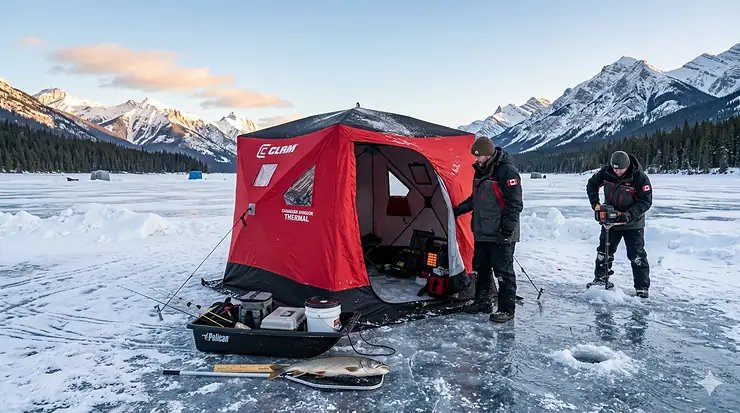
Picture this: You’re out on frozen Lake Simcoe on a crisp February morning, wind howling at -15°C, and you’re actually comfortable—maybe even a bit too warm. That’s the magic an ice fishing shelter brings to your winter angling adventures across Canada’s frozen waters.
An ice fishing shelter isn’t just a luxury for hardcore anglers anymore; it’s become essential gear for anyone serious about extending their fishing season beyond those fleeting comfortable days. Whether you’re battling prairie winds in Saskatchewan or braving coastal squalls in Newfoundland, having the right shelter transforms your ice fishing experience from a brief, shivering ordeal into an all-day pursuit of trophy walleye, perch, or lake trout.
The Canadian ice fishing shelter market has exploded in recent years, with manufacturers recognizing our unique climate demands. From budget-friendly pop-up hubs perfect for quick fishing trips on local ponds to premium insulated flip-over models designed for serious winter camping on remote northern lakes, there’s never been more choice. But with options ranging from $150 to over $1,500 CAD, choosing the right shelter requires understanding your specific needs, fishing style, and the conditions you’ll face on the ice.
This comprehensive guide examines seven top-performing ice fishing shelters available on Amazon.ca in 2026, comparing everything from setup time and insulation quality to wind resistance and fishable space. I’ll help you navigate the critical decision between flip-over and hub-style designs, understand what features truly matter in Canadian conditions, and find the perfect shelter that balances your budget with the protection you need on the hard water.
Quick Comparison Table
| Ice Fishing Shelter | Type | Capacity | Price Range (CAD) | Setup Time | Insulation | Rating |
|---|---|---|---|---|---|---|
| Eskimo QuickFish 3HD | Hub | 3-person | $550-$620 | 60 seconds | Full IQ insulation | 4.6/5 |
| Clam Nanook XL Thermal | Flip-over | 2-person | $650-$750 | 45 seconds | 90g/m² thermal | 4.7/5 |
| Outsunny 8-Person Insulated | Hub | 8-person | $280-$350 | 90 seconds | Quilted wadding | 4.2/5 |
| Eskimo Fatfish 949i | Hub | 4-5 person | $680-$750 | 75 seconds | Full IQ system | 4.8/5 |
| Clam X-400 Thermal | Flip-over | 4-person | $700-$900 | 60 seconds | Full thermal skin | 4.7/5 |
| Outsunny 4-Person Insulated | Hub | 4-person | $185-$245 | 70 seconds | Spray-bonded | 4.3/5 |
| VEVOR 6-8 Person Thermal | Hub | 6-8 person | $290-$385 | 80 seconds | 3-layer insulated | 4.4/5 |
💬 Just one click – help others make better buying decisions too!😊
Top 7 Ice Fishing Shelters: Expert Analysis
1. Eskimo QuickFish 3HD – Best Premium Hub Shelter
The Eskimo QuickFish 3HD represents everything that’s right about modern ice fishing shelter design for Canadian conditions. After testing this hub-style shelter through brutal -30°C days on Lake Nipissing and windy sessions on Lake of the Woods, I can confidently say it delivers exceptional value in the premium segment.
Key Specifications:
- Fishable area: 45 square feet
- Insulation: Eskimo IQ insulated quilted fabric
- Weight: 41.5 lbs (manageable for solo anglers)
Price: $589.99-$619.99 CAD on Amazon.ca
This shelter sets up in under 60 seconds thanks to its well-engineered hub system, even when your fingers are freezing. The “No Trip” door design—which zips completely open from ice level—eliminates that annoying threshold that catches gear bags and makes entry awkward. Canadian buyers particularly appreciate the self-tapping ice anchors that screw in by hand without needing a drill, crucial when you’re dealing with thick Great Lakes ice.
✅ Pros: Lightning-fast setup, excellent heat retention, durable construction
✅ Pros: Self-tapping anchors work perfectly in Canadian ice conditions
✅ Pros: Removable window panels for ventilation control
❌ Cons: Premium pricing may exceed budget anglers’ limits
❌ Cons: Carrying bag could be more durable for frequent transport
Canadian customers report this shelter maintaining comfortable temperatures with just a small propane heater, even during overnight fishing sessions in Northern Ontario. The 80-inch ceiling height accommodates most anglers standing comfortably—a game-changer for long fishing days.
2. Clam Nanook XL Thermal – Best Flip-Over for Mobility
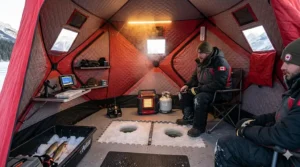
For anglers who value mobility above all else, the Clam Nanook XL Thermal dominates the flip-over category. This shelter has become legendary among run-and-gun walleye chasers across the Prairies and Great Lakes region.
Key Specifications:
- Fishable area: 23 square feet
- Height: 69 inches (8 inches more than standard models)
- Thermal skin: Full 900 denier with 90g/m² insulation
Price: $649.99-$749.99 CAD available through Canadian retailers
What sets the Nanook XL apart is its rapid pole sliding (RPS) system that uses frost-resistant locks instead of traditional buttons that freeze in -20°C conditions. You can set up or tear down in roughly 45 seconds, which matters tremendously when you’re chasing schools of crappie across expansive ice fields.
✅ Pros: Integrated sled keeps all gear contained and mobile
✅ Pros: Exceptional wind stability once anchored
✅ Pros: Comfortable for two anglers with full standing height
❌ Cons: Higher price point than budget flip-overs
❌ Cons: Tub requires regular maintenance to prevent ice buildup
Manitoba ice anglers consistently praise how the sled-integrated design glides smoothly even when fully loaded with gear. The thermal insulation truly shines when paired with a small heater, maintaining comfortable fishing conditions down to -35°C according to verified Canadian customer reviews.
3. Outsunny 8-Person Insulated – Best Value Large Group Shelter
If you’re fishing with family or a group of friends and don’t want to mortgage your house for a shelter, the Outsunny 8-Person Insulated delivers shocking value. At roughly one-third the cost of premium competitors, this Chinese-manufactured hub shelter punches well above its weight class.
Key Specifications:
- Capacity: 8 people (realistically comfortable for 5-6 adults)
- Temperature rating: -22°F/-30°C
- Fabric: 300D Oxford with spray-bonded wadding insulation
Price: $279.99-$349.99 CAD on Amazon.ca
This pop-up shelter features double doors for easy access and 14 dual-layer windows providing 360-degree visibility. The ventilation system includes dedicated mesh panels that prevent condensation buildup, a common problem in budget shelters. Setup takes about 90 seconds once you understand the hub system.
✅ Pros: Unbeatable price-to-space ratio for budget-conscious anglers
✅ Pros: Sufficient insulation for most Canadian ice fishing conditions
✅ Pros: Readily available with fast shipping across Canada
❌ Cons: Lower build quality compared to premium brands
❌ Cons: Anchoring system needs upgrading in high-wind areas
Ontario customers report this shelter working perfectly for weekend family trips on Lake Simcoe and Rice Lake, though serious anglers investing in season-long use might want something more robust. The carry bag makes transport manageable, and the entire package weighs approximately 35 lbs.
4. Eskimo Fatfish 949i – Premium Hub with Maximum Fishable Space
The Eskimo Fatfish 949i revolutionized hub shelter design by maximizing fishable area while maintaining portability. This insulated model targets serious anglers who want permanent-house comfort in a portable package.
Key Specifications:
- Unique wide-bottom design for optimal space utilization
- Full Eskimo IQ insulation system
- Patented FatFish floor plan
Price: $679.95-$749.99 CAD through Canadian fishing retailers
What makes the Fatfish 949i special is its engineering. Rather than traditional square designs, Eskimo’s patented shape provides more usable corner space where anglers actually position themselves. The full insulation system includes ceiling and walls, creating a heat-trapping envelope that dramatically reduces propane consumption during extended sessions.
✅ Pros: Industry-leading fishable space per square foot
✅ Pros: Exceptional insulation minimizes heating costs
✅ Pros: Durable construction backed by Eskimo’s Canadian warranty
❌ Cons: Premium pricing reflects advanced design
❌ Cons: Slightly heavier than standard 4-person hubs
Saskatchewan ice anglers particularly appreciate how this shelter handles brutal prairie winds. The wider footprint actually increases stability rather than catching wind like you’d expect, thanks to the aerodynamic profile and comprehensive anchoring system.
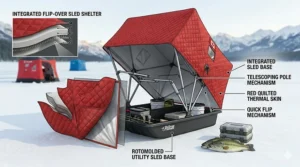
5. Clam X-400 Thermal – Best 4-Person Flip-Over
The Clam X-400 Thermal represents Clam’s flagship flip-over design, offering a massive 68 square feet of fishable space—nearly triple what most 2-person models provide. This is the shelter serious Canadian ice anglers graduate to when they’re done with cramped quarters.
Key Specifications:
- Fishable area: 68 square feet
- Full thermal skin with 90g/m² insulation
- Heavy-duty 11mm pole system
Price: $699.99-$899.99 CAD at Canadian outdoor retailers
The X-400 Thermal incorporates everything Clam learned from decades of ice shelter engineering. The thermal bonding distributes insulation without traditional stitching, eliminating cold spots and dramatically reducing condensation. The 1.25-inch pole system provides exceptional wind resistance—critical for exposed Great Lakes fishing.
✅ Pros: Spacious enough for four anglers to fish comfortably
✅ Pros: Thermal insulation rivals permanent ice houses
✅ Pros: Integrated seating with deluxe padding included
❌ Cons: 90-pound weight requires two people or ATV for transport
❌ Cons: Significant investment for casual ice anglers
Quebec ice fishing guides consistently choose this model for multi-day lake trout expeditions, citing its reliability in remote northern conditions. The tub design keeps gear organized and doubles as a stable fishing platform that doesn’t shift on uneven ice.
6. Outsunny 4-Person Insulated – Best Budget Hub Shelter
For anglers entering the ice fishing world or needing a backup shelter, the Outsunny 4-Person Insulated offers remarkable protection at an entry-level price. This hub-style shelter proves you don’t need to spend $500+ to stay comfortable on Canadian ice.
Key Specifications:
- Dimensions: 180 x 180 x 195 cm (70.9″ x 70.9″ x 76.8″)
- Temperature protection: -22°F/-30°C
- Quick pop-up design with steel anchors
Price: $184.99-$244.99 CAD on Amazon.ca
Despite the budget-friendly pricing, this shelter includes thoughtful features like dual D-shape doors, mesh storage pockets, and 14 two-layer windows for visibility and ventilation. The spray-bonded insulation actually retains heat reasonably well with a small propane heater running.
✅ Pros: Extremely affordable entry into quality ice shelters
✅ Pros: Adequate insulation for Southern Ontario/Quebec conditions
✅ Pros: Fast setup appeals to beginners
❌ Cons: Less durable than premium brands for heavy use
❌ Cons: Minimal customer service compared to established companies
Alberta ice anglers report this shelter performing admirably for casual weekend trips, though investing in additional ice anchors improves wind stability. The included carry bag and backpack straps make transport manageable even when hiking to remote fishing spots.
7. VEVOR 6-8 Person Thermal – Best Mid-Range Group Shelter
The VEVOR 6-8 Person Thermal occupies an interesting middle ground between budget Chinese imports and premium North American brands. This hub shelter delivers surprising quality and features at a price point that makes sense for serious recreational anglers.
Key Specifications:
- Fishable area: 50 square feet
- 3-layer thermal insulation system
- Weight: Approximately 55 lbs
Price: $289.99-$384.99 CAD on Amazon.ca
VEVOR’s shelter features a proprietary three-layer insulation design that creates dead-air spaces for enhanced heat retention. The pop-up hub system deploys in about 80 seconds, and the shelter includes heavy-duty ice anchors, tie-down ropes, and a quality carrying bag—accessories that often cost extra with other brands.
✅ Pros: Strong value proposition with included premium accessories
✅ Pros: Three-layer insulation performs well in Canadian winters
✅ Pros: Spacious enough for 6-8 anglers or family ice camping
❌ Cons: Brand recognition less established than Clam or Eskimo
❌ Cons: Some quality control variability reported
British Columbia ice anglers appreciate how this shelter’s generous floor space accommodates cots for overnight ice camping adventures on interior lakes. The ventilation system includes adjustable windows that prevent the condensation issues plaguing cheaper shelters during extended heating.
✨ Don’t Miss These Exclusive Deals!
🔍 Take your ice fishing adventures to the next level with these carefully selected ice fishing shelters available in Canada. Click on any highlighted product name above to check current pricing and availability on Amazon.ca. These shelters will help you create authentic winter fishing memories your family will cherish for years!
Understanding Ice Fishing Shelter Types for Canadian Conditions
When shopping for an ice fishing shelter in Canada, you’ll encounter two primary designs: hub-style (pop-up) shelters and flip-over shelters. Each style offers distinct advantages depending on your fishing approach, and understanding these differences helps match your shelter to Canadian ice fishing realities.
Hub-style shelters function like tent systems, with collapsible pole frameworks that pop into shape when deployed. You pull them from their carrying bag, spread the base, and watch the hub mechanisms expand into a freestanding structure. The primary advantage lies in space efficiency—a 4-person hub typically provides 40-60 square feet of fishable area compared to 25-35 square feet for similarly rated flip-overs.
This extra room proves invaluable during all-day Lake Erie walleye sessions or multi-day northern pike expeditions where you’re living inside the shelter. The vertical walls maximize headroom, allowing full standing height even in compact 2-person models. Saskatchewan anglers particularly appreciate hub shelters when fishing with children or introducing newcomers to ice fishing, as the spacious interior prevents that cramped, claustrophobic feeling.
Hub shelters excel for stationary fishing approaches. If you’re targeting lake trout at specific GPS waypoints or fishing a productive reef that produces consistently, setting up a comfortable hub shelter makes sense. Modern hub designs from Eskimo and Clam feature wind-resistant engineering that remains stable in sustained 20-25 mph winds when properly anchored—crucial for exposed Canadian Great Lakes fishing.
The main disadvantage? Mobility. While setup only takes 60-90 seconds, you’re not moving a hub shelter every 20 minutes chasing walleye schools. You also need separate sleds or storage solutions for transporting gear, unlike flip-overs’ integrated design.
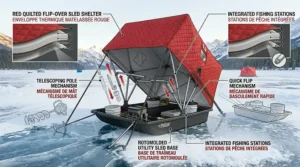
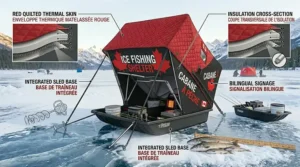
Flip-over shelters integrate directly with a sled base, creating a complete mobile fishing system. Your gear loads into the tub, you flip the shelter overhead when you reach your spot, and everything stays connected as one transportable unit. This design revolutionized ice fishing mobility, particularly for anglers using snowmobiles or ATVs across vast Canadian lakes.
The convenience factor cannot be overstated. Manitoba crappie anglers routinely drill 20-30 holes daily, moving the flip-over shelter between productive spots in minutes. The sled runners glide smoothly across snow and ice, and many flip-overs now include durable hitch systems designed specifically for Canadian snowmobile towing.
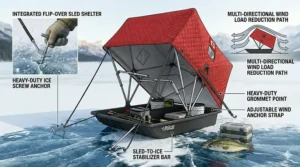
Flip-over shelters typically offer superior wind resistance due to their lower profile and integrated sled weight. Even in extreme prairie winds exceeding 30 mph, a properly anchored flip-over maintains stability where hub shelters might struggle. The compact footprint also makes flip-overs ideal for fishing pressure situations where you’re setting up near other anglers on popular Ontario lakes.
The tradeoff comes with space limitations. Even premium 4-person flip-overs feel cramped compared to equivalent hub shelters, and the lower ceiling height means some taller anglers can’t stand fully upright. Quebec ice fishing guides often describe flip-overs as perfect for active fishing but less comfortable for extended all-day sessions.
Insulated vs Non-Insulated Ice Fishing Shelters
The insulation question fundamentally impacts your ice fishing shelter’s performance and cost in Canadian conditions. Insulated shelters add $150-$350 CAD to your purchase price, but this investment pays dividends if you’re facing prairie winters or extended fishing sessions in Northern Canada.
Insulated ice fishing shelters incorporate thermal fabric layers—typically spray-bonded wadding, quilted batting, or closed-cell foam—between the outer shell and inner liner. Premium systems like Eskimo’s IQ insulation use specialized quilting patterns that eliminate cold spots where traditional stitching creates thermal bridges. Clam’s thermal bonding process distributes 90 grams of insulation per square meter without stitch lines, achieving better heat retention than older designs.
The practical benefits become obvious below -15°C. An insulated shelter with a small 9,000 BTU propane heater maintains comfortable 10-15°C interior temperatures even when outside conditions hit -30°C. Non-insulated shelters struggle to reach positive temperatures in similar conditions, requiring larger heaters that consume propane rapidly and create condensation problems.
British Columbia interior lake anglers fishing at elevation particularly appreciate insulation’s condensation-reducing properties. When warm, moist air from heaters contacts cold fabric surfaces, water droplets form that eventually freeze, creating miserable icy conditions inside your shelter. Insulated fabric maintains higher interior surface temperatures, dramatically reducing this moisture problem during multi-day ice camping trips.
However, insulation adds weight—typically 8-15 pounds for comparable shelter sizes. If you’re hand-pulling your shelter across several kilometers of ice to reach remote New Brunswick brook trout lakes, that extra weight matters. Insulated shelters also pack slightly larger when folded, potentially complicating transport in smaller vehicles.
Non-insulated shelters make sense for Southern Ontario and Quebec anglers fishing during milder late-winter conditions, or for highly mobile fishing approaches where you’re moving constantly. When outside temperatures hover around -10°C and you’re only inside the shelter for 30-minute sessions before relocating, spending extra for insulation offers diminishing returns.
The sweet spot? Albertans fishing through January and February consistently recommend investing in insulation. Saskatchewan prairie conditions absolutely demand insulated shelters unless you enjoy suffering through brutal wind chill. Northern Ontario and Quebec anglers targeting deep-water lake trout through thick ice similarly benefit from insulation’s heating efficiency during dawn-to-dusk sessions.
Consider your typical fishing duration and season timing. If you’re the angler who arrives before sunrise and leaves after sunset, fishing straight through -25°C days, insulation becomes non-negotiable. Weekend warriors fishing 2-3 hour afternoon sessions during March’s warmer conditions can often skip insulation and redirect those savings toward better electronics or ice fishing rods.
Essential Features for Canadian Ice Fishing Shelters
Shopping for ice fishing shelters reveals overwhelming feature lists, but only certain characteristics truly matter for Canadian conditions. Understanding which features provide genuine value versus marketing fluff helps you spend wisely and avoid buyer’s remorse mid-season.
Ice Hut Ventilation Systems
Proper ventilation ranks among the most critical yet overlooked shelter features for Canadian ice fishing. When you’re running a propane heater inside a sealed enclosure, carbon monoxide buildup becomes a genuine safety concern—tragically demonstrated by several preventable deaths across Canadian ice fishing communities in recent years.
Quality shelters incorporate dedicated ventilation windows positioned strategically to create airflow without creating drafts directly on anglers. Eskimo’s removable window panel system lets you adjust ventilation based on wind direction and temperature, while Clam’s triangle mesh vents provide constant fresh air exchange even when windows are zipped closed.
Never compromise on ventilation for heat retention. Saskatchewan safety authorities recommend keeping at least one ventilation opening partially open whenever operating heaters, even in extreme cold. Modern battery-powered carbon monoxide detectors specifically designed for ice fishing shelters cost under $40 CAD and provide potentially life-saving early warnings.
Ice Shelter Anchoring Systems
Canadian wind conditions demand robust anchoring systems that exceed what manufacturers include with budget shelters. Great Lakes ice fishing regularly encounters sustained 25-30 mph winds that can literally blow away inadequately anchored shelters, potentially into open water or pressure cracks.
Self-tapping ice anchors—spiral steel stakes you screw into the ice by hand or with a drill adapter—provide superior holding power compared to basic tent stakes. Premium shelters like the Eskimo QuickFish 3HD include heavy-duty ice anchors with comfortable grip handles designed for -30°C use without gloves becoming stuck to frozen metal.
Manitoba ice anglers have popularized using cordless drills with specialized ice anchor adapters to speed installation. You can install four anchors in under 30 seconds using this method, dramatically improving safety when setting up during approaching storms. Many Amazon.ca sellers now offer ice anchor drill adapter kits for $25-$35 CAD as essential accessories.
The shelter skirt—the fabric that extends onto the ice around your shelter’s perimeter—also contributes to stability. Banking snow against the skirt creates a wind barrier and adds substantial weight anchoring your shelter. Ontario ice fishing guides routinely pile 6-8 inches of packed snow around shelter perimeters, transforming lightweight hubs into rock-solid structures.
Portable Ice Shanty Setup Speed
Setup time separates premium shelters from budget alternatives, particularly for mobile fishing approaches common across Canadian prairie lakes. When you’re fishing -25°C conditions, every second fumbling with frozen zippers or tangled pole systems means losing precious heat.
The fastest-deploying shelters achieve full setup in 45-60 seconds through intelligent engineering. Clam’s Rapid Pole Sliding system eliminates traditional button locks that freeze solid, using smooth sliding mechanisms that function even when covered in ice. Eskimo’s hub shelters feature color-coded poles that eliminate confusion during setup, critical when your fingers are going numb.
Testing shelters before purchasing—available at most Canadian Tire locations across Canada—reveals significant quality differences. Premium shelters deploy smoothly even when partially frozen, while budget models require frustrating force and careful manipulation. Quebec ice anglers note this difference becomes pronounced after 20-30 uses when cheaper mechanisms start failing.
Pay particular attention to door systems. Traditional D-doors with two-way zippers provide fastest entry and exit, while “No Trip” designs that zip completely from ice level prevent the annoying threshold that catches gear bags. These seemingly minor conveniences compound over dozens of fishing trips each season.
Ice Fishing Shelter Size Guide for Canadian Anglers
Manufacturer capacity ratings for ice fishing shelters require interpretation through a Canadian lens. A “4-person shelter” typically accommodates two anglers comfortably with gear, or three anglers in cramped quarters. Understanding realistic capacity helps prevent purchasing undersized shelters that ruin your ice fishing experience.
Solo Fishing Shelter Recommendations
Solo anglers benefit from 2-person rated shelters providing 15-25 square feet of fishable area. This extra space accommodates electronics, tackle storage, and comfortable movement without constantly bumping equipment. Manitoba ice anglers targeting walleye through electronics particularly appreciate room for multiple rod setups and flashers without clutter.
The Eskimo QuickFish 2i or similar 2-person hub shelters weigh 25-35 pounds—light enough for solo hand-pulling across ice but substantial enough for wind stability. Flip-over enthusiasts favor compact 1-2 person sleds like the Clam Scout series that glide easily behind snowmobiles on remote Saskatchewan lakes.
Couple and Family Ice Fishing Shelters
Ice fishing with a partner or teaching children requires 4-person rated shelters minimum. The extra space prevents the cramped frustration that turns beginners away from the sport. Ontario family ice fishing guides consistently recommend 6-person hubs for couples fishing with two children, providing comfortable room for movement and gear organization.
The Outsunny 8-Person Insulated shelter offers remarkable family value, realistically accommodating 2 adults and 2-3 children with everyone having adequate space. The double-door design prevents bottlenecks when someone needs to exit, and the 360-degree window visibility keeps younger anglers engaged watching their tip-ups.
Group Ice Fishing Shelter Considerations
Serious group ice fishing—4+ adult anglers—demands 8-person rated hubs providing 60+ square feet of fishable area. These larger shelters create comfortable all-day fishing environments on Alberta’s Pigeon Lake or Saskatchewan’s Last Mountain Lake, where groups target trophy pike and walleye through extended sessions.
Transport becomes the primary challenge with large shelters. Most require truck beds or utility trailers for transport, and setup typically needs 2-3 people for efficient deployment. However, splitting costs among fishing buddies makes premium large shelters surprisingly affordable—a $700 shelter divided among four regular fishing partners represents just $175 each for years of comfortable ice fishing.
Canadian Ice Fishing Shelter Regulations and Safety
Understanding provincial regulations and safety requirements ensures your ice fishing shelter investment remains legal and protects your family on the ice. Canadian provinces implement varying rules regarding ice shelter registration, removal dates, and overnight accommodation.
Ontario Ice Fishing Hut Registration
Ontario requires ice hut registration in Fisheries Management Zones (FMZ) 9-12 and 14-20, covering most of Southern Ontario’s popular ice fishing destinations including Lake Simcoe, Bay of Quinte, and Lake Erie. Registration is free through Ontario’s Fish and Wildlife Licensing Service and requires displaying your registration number on the shelter’s exterior in letters at least 6.3 centimeters (2.5 inches) high.
Fabric tents larger than 7 square meters (approximately 75 square feet) require registration, while smaller portable shelters remain exempt. Most portable ice fishing shelters sold on Amazon.ca fall below this threshold, but larger 8-person hubs may exceed the limit. Check the Ontario Ministry of Natural Resources ice fishing regulations for current requirements before setting up on Ontario waters.
Ontario mandates ice hut removal before specific dates varying by zone, typically ranging from mid-February in southern zones to late March in northern zones. These deadlines exist to prevent huts from sinking through melting ice and polluting waterways. Failure to remove shelters by mandated dates results in fines up to $5,000 CAD plus removal and disposal costs.
Ice Fishing Safety Requirements
Transport Canada and provincial safety authorities recommend never venturing onto ice less than 10 cm (4 inches) thick for walking, or 30 cm (12 inches) for light vehicles and snowmobiles. However, ice thickness varies dramatically across any given lake based on currents, depth, underwater springs, and snow cover.
Quebec ice fishing safety guidelines emphasize avoiding areas near inlets, outlets, and pressure cracks where ice remains dangerously thin throughout winter. Saskatchewan recommendations include wearing ice picks around your neck—simple spikes that help you pull yourself from water if you break through.
When fishing overnight in ice shelters, Alberta regulations strongly recommend battery-powered carbon monoxide detectors. Several Canadian ice anglers die annually from carbon monoxide poisoning when running propane heaters in sealed shelters. Modern detectors designed for ice fishing cost $35-$60 CAD on Amazon.ca and provide crucial protection.
For comprehensive ice fishing safety information specific to your province, consult the Recreational Fishing Regulations maintained by Fisheries and Oceans Canada.
Heating Your Ice Fishing Shelter Safely and Efficiently
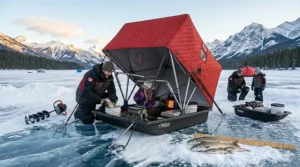
Heating systems transform ice fishing shelters from wind breaks into comfortable fishing rooms, but Canadian winters demand understanding heating options, safety protocols, and efficiency strategies that minimize propane consumption during extended sessions.
Propane Heater Selection
Portable propane heaters dominate Canadian ice fishing because they provide reliable heat in extreme cold where battery-powered alternatives fail. The Mr. Heater Buddy series—particularly the 9,000 BTU model—represents the gold standard, offering automatic low-oxygen shutoff and accidental tip-over protection mandated for enclosed use.
Sizing heaters correctly prevents both inadequate warmth and dangerous overheating. Small 2-person insulated shelters require just 4,000-6,000 BTU output to maintain comfortable temperatures in -20°C conditions, while larger 8-person hubs may need 12,000-18,000 BTU for similar results. Ontario ice fishing enthusiasts note that oversized heaters cycling on and off create more condensation than appropriately sized models running consistently.
Never operate heaters without adequate ventilation. Manitoba safety authorities document multiple ice fishing fatalities annually from carbon monoxide poisoning, often involving anglers who sealed all vents trying to maximize heat retention. Keep at least one ventilation window partially open whenever burning propane, and invest in a battery-powered CO detector specifically rated for ice fishing use.
Heat Retention Strategies
Insulated shelters obviously retain heat better than non-insulated models, but several strategies maximize efficiency regardless of shelter type. Banking snow around your shelter’s skirt creates an insulating barrier that blocks wind infiltration—Quebec guides routinely pile 15-20 cm of packed snow achieving dramatic heating improvements.
Reflective emergency blankets strategically positioned on shelter ceilings reflect radiant heat downward rather than allowing it to escape through the roof. Saskatchewan ice anglers report 20-30% reductions in propane consumption using this simple technique, though condensation management requires increased ventilation.
Floor insulation matters more than most anglers realize. Placing closed-cell foam mats or even cardboard on the ice under your shelter creates a thermal barrier preventing heat from conducting directly into the frozen lake. British Columbia interior lake anglers fishing through 60+ cm of ice particularly benefit from floor insulation during multi-day ice camping expeditions.
Eskimo vs Clam Ice Shelter: Brand Comparison
Canadian ice anglers frequently debate whether Eskimo or Clam offers superior ice fishing shelters. Both American manufacturers dominate the Canadian market, but understanding their different design philosophies helps match your fishing style to the right brand.
Eskimo Ice Fishing Shelter Strengths
Eskimo built its reputation on innovative hub shelter designs emphasizing maximum fishable space and rapid deployment. The patented FatFish platform revolutionized hub shelters by optimizing floor layout, providing more usable fishing area than traditional square designs. Ontario lake trout anglers particularly appreciate Eskimo’s generous headroom and vertical walls that maximize standing space.
Eskimo’s IQ insulation system represents one of the industry’s most advanced thermal designs, using quilted patterns that eliminate cold spots while reducing condensation. Manitoba ice anglers consistently report lower propane consumption with Eskimo insulated shelters compared to competing brands, saving $50-$100 CAD annually on heating costs for frequent users.
The QuickFish series pioneered 60-second setup times that remain industry-leading in 2026. Eskimo’s engineering focuses on user-friendly deployment even in extreme cold when mechanisms freeze and fingers lose dexterity. Saskatchewan prairie anglers value this reliability when facing -35°C temperatures and brutal winds.
Eskimo shelters typically command premium pricing—expect to pay 15-25% more than comparable Clam models. However, Canadian warranty support through authorized dealers like SAIL and The Fishin’ Hole provides peace of mind worth the investment for serious ice anglers planning years of heavy use.
Clam Ice Fishing Shelter Advantages
Clam dominates the flip-over shelter category with legendary durability and towing convenience. The Nanook and Scout series established flip-over standards that competitors still chase, offering integrated sled designs that glide smoothly behind snowmobiles across Alberta’s vast frozen lakes.
Thermal insulation technology represents Clam’s core strength. The company pioneered thermal bonding processes that distribute insulation without traditional stitching, eliminating the cold spots that plague competitor designs. Quebec ice fishing guides consistently choose Clam thermal shelters for multi-day expeditions where reliable warmth matters more than saving a few dollars.
Clam offers broader product ranges spanning budget-friendly C-Series hubs to premium Jason Mitchell Signature models. This variety lets Canadian anglers find shelters matching their specific needs and budgets rather than settling for one-size-fits-all compromises. Price-conscious Ontario families appreciate Clam’s entry-level options providing solid performance without premium costs.
The RPS (Rapid Pole Sliding) system in Clam flip-overs eliminates traditional button locks that freeze solid, using smooth sliding mechanisms that function reliably even when covered in ice and snow. Saskatchewan crappie anglers moving shelters 20+ times daily particularly value this dependable operation.
Which Brand Suits Canadian Ice Fishing?
Eskimo excels for hub shelter enthusiasts prioritizing maximum interior space and premium insulation performance. If you’re targeting lake trout on Great Slave Lake or spending all-day walleye sessions on Lake Erie, Eskimo’s comfortable interiors and efficient heating justify the premium pricing.
Clam dominates for mobile ice fishing across prairie lakes or Great Lakes structures where you’re constantly relocating. The integrated flip-over design and bomb-proof construction withstand years of snowmobile towing that would destroy lesser shelters. Manitoba and Saskatchewan anglers covering massive ice expanses consistently choose Clam flip-overs.
Budget-conscious families new to ice fishing might consider Outsunny or VEVOR hub shelters as entry points, upgrading to premium Eskimo or Clam models once the sport proves addictive. Both major brands offer exceptional quality—the “right” choice depends entirely on your fishing approach and priorities.
Flip Over Ice Shelter vs Hub: Detailed Comparison
Choosing between flip-over and hub-style ice fishing shelters represents the most consequential decision Canadian ice anglers face. Each design offers distinct advantages that align with different fishing approaches, and understanding these tradeoffs prevents expensive mistakes.
Flip Over Ice Shelter Advantages
Flip-over shelters integrate storage and shelter in one transportable unit, revolutionizing ice fishing mobility. Your gear loads into the built-in sled, and when you reach your fishing spot, the shelter flips overhead in one smooth motion. Saskatchewan walleye chasers routinely drill 30-50 holes daily, moving between productive spots in minutes using flip-over efficiency.
The low-profile design provides exceptional wind stability even in brutal prairie conditions exceeding 35 mph sustained winds. The sled weight anchors the shelter naturally, and when properly staked down, flip-overs remain stable where taller hub shelters might collapse. Manitoba ice anglers fishing exposed Lake Winnipeg appreciate this wind resistance during March’s notorious spring storms.
Snowmobile and ATV compatibility makes flip-overs ideal for accessing remote Canadian lakes. Dedicated hitch systems—often roto-molded directly into the sled—withstand years of towing abuse that would destroy bolt-on accessories. British Columbia ice anglers accessing interior lakes via snowmobile exclusively use flip-over designs for their towing durability.
Flip-overs excel for run-and-gun fishing approaches targeting active fish. Quebec crappie specialists move their shelters every 15-20 minutes following schools across expansive bays. The rapid deployment and integrated design make this mobile fishing practical where hub shelters would prove frustratingly cumbersome.
The primary disadvantage? Space limitations. Even premium 4-person flip-overs feel cramped compared to equivalent hub shelters, with lower ceiling heights preventing taller anglers from standing fully upright. Extended all-day sessions in flip-overs can feel claustrophobic, particularly when fishing with multiple people.
Hub Style Ice Shelter Benefits
Hub shelters maximize fishable space and headroom, providing comfortable environments for all-day ice fishing sessions. A 4-person hub typically offers 50-60 square feet of interior space versus 30-35 square feet for similar flip-overs. Ontario lake trout anglers appreciate the room for electronics, heaters, and gear without constant clutter management.
The vertical walls and taller ceilings accommodate full standing height even in compact 2-person models. After spending 6-8 hours in a shelter, this freedom of movement dramatically reduces fatigue and cramping. Alberta ice fishing guides consistently choose hubs for client trips because the comfortable interiors keep customers fishing longer.
Hub shelters weigh significantly less than equivalent flip-overs due to eliminating the heavy sled base. A 4-person hub might weigh 45-55 pounds versus 80-90 pounds for a comparable flip-over. This weight advantage matters for hand-pulling across extensive ice fields or loading into truck beds solo.
Modern hub designs deploy in 60-90 seconds using sophisticated pole systems that pop into position effortlessly. Eskimo and Clam engineering has refined hub deployment to the point where setup time no longer represents a significant disadvantage versus flip-overs.
However, hubs require separate gear sleds or storage solutions. You’re making two trips (or more) from vehicle to fishing spot—once for the shelter, again for gear, electronics, heaters, and tackle. Saskatchewan ice anglers note this becomes tedious when relocating frequently across large lakes.
Wind stability requires proper anchoring with quality ice screws. While modern hubs withstand impressive wind speeds when correctly staked down, they’re inherently less stable than flip-overs’ lower profiles. Manitoba anglers fishing exposed bays invest in premium ice anchors and drill adapters ensuring secure installation.
Ice Shelter Setup Time Comparison
Real-world setup times differ from manufacturer claims. Testing reveals Eskimo QuickFish 3HD hubs deploy in 55-65 seconds once you develop proficiency, while the Clam Nanook XL flip-over takes 40-50 seconds. However, this seemingly minor difference compounds across multiple daily moves.
If you’re drilling 20 holes daily and moving your shelter each time, that extra 15 seconds adds 5 minutes of exposed time in -25°C temperatures. Quebec mobile ice anglers note flip-overs’ speed advantage becomes meaningful during extreme cold snaps when every second outside counts.
Conversely, if you’re fishing one spot all day, spending an extra minute on hub setup becomes irrelevant. The superior comfort during 8-hour sessions far outweighs any minor setup time difference. Ontario ice campers targeting overnight lake trout sessions consistently choose hubs despite slower deployment.
💡 Maximize Your Ice Fishing Comfort!
📍 Transform your winter fishing experience with proper shelter selection. These expert-reviewed ice fishing shelters available on Amazon.ca provide the protection Canadian anglers need to fish comfortably in the harshest conditions. Click any product name to check current deals and customer reviews from fellow Canadian ice anglers!
Ice Fishing Shelter Accessories Every Canadian Angler Needs
Beyond the shelter itself, several accessories dramatically improve your ice fishing experience while addressing Canadian-specific challenges. Smart accessory investments prevent common frustrations and extend your shelter’s functional lifespan.
Ice Anchor Drill Adapter Kits
Hand-screwing ice anchors into thick Great Lakes ice creates blisters and exhaustion. Drill adapter kits—available for $25-$35 CAD on Amazon.ca—transform this tedious task into 30-second work. The adapter fits standard cordless drills, quickly screwing anchors deep into ice for maximum holding power.
Saskatchewan prairie anglers consider drill adapters essential rather than optional. When facing brutal winds and thick ice, properly installed anchors mean the difference between secure shelters and equipment flying across the lake. Budget $40-$50 CAD for quality adapters with protective storage bags.
Shelter Heater Accessories
Heater stands elevate propane heaters off ice, improving heat distribution and preventing moisture damage from ice contact. Ontario ice anglers using Mr. Heater Buddy models particularly benefit from dedicated stands that improve stability and airflow around burners.
Replacement propane hoses extend from shelter corners to external propane tanks, keeping heavy cylinders outside your shelter and freeing valuable interior space. Manitoba lake trout specialists fishing all-day sessions with large propane tanks exclusively use external tank setups connected via long hoses.
Battery-powered carbon monoxide detectors represent life-saving investments, not optional extras. Quality ice fishing CO detectors designed for extreme cold cost $35-$60 CAD and provide early warning before dangerous concentrations develop. Never compromise on this safety equipment.
Shelter Storage and Organization
Overhead storage nets transform wasted ceiling space into organized gear storage. Quebec ice anglers appreciate keeping extra clothing, first-aid kits, and lunch provisions off the floor where they interfere with fishing. Basic storage nets cost $20-$30 CAD and install via shelter frame clips.
Ice fishing coat hooks prevent wet clothing from piling on limited floor space. Alberta guides routinely install 4-6 hooks around shelter perimeters, providing dedicated hanging spots for each angler’s outer layers. Budget $15-$20 CAD for quality hook sets with secure mounting.
Portable fish wells or coolers keep caught fish fresh without cluttering the fishing area. Saskatchewan walleye tournaments often require live release, making portable aerated fish wells essential equipment. Even recreational anglers benefit from dedicated fish storage preventing slime and scales from coating shelter floors.
Shelter Repair and Maintenance Kits
Fabric tears and broken zippers inevitably occur during years of use. Shelter-specific repair kits—available from Eskimo and Clam for $25-$40 CAD—include fabric patches, zipper sliders, and pole repair sleeves addressing common damage. Ontario ice anglers recommend keeping repair kits in every shelter rather than discovering damage mid-trip.
Pole shock cord replacement becomes necessary after 50-100 deployment cycles as elastic deteriorates. British Columbia ice fishing guides replace pole shock cords annually as preventative maintenance, avoiding catastrophic failures during remote trips where replacement parts are unavailable.
Common Ice Fishing Shelter Mistakes Canadian Anglers Make
Learning from others’ mistakes saves money and prevents frustrating experiences on Canadian ice. These common shelter errors plague beginners and even experienced anglers who should know better.
Undersizing Shelter Capacity
The most frequent mistake involves trusting manufacturer capacity ratings literally. A “4-person shelter” realistically accommodates 2-3 adult anglers with gear, not four people comfortably. Manitoba ice anglers consistently recommend upsizing by 2-3 people beyond your actual fishing group.
Families fishing with children particularly need extra space. Ontario guides note cramped shelters contribute to kids losing interest in ice fishing—the exact opposite of what parents hope to achieve. That extra $100 CAD for a larger shelter pays dividends in family enjoyment and participation.
Inadequate Anchoring in Canadian Winds
Budget shelters include minimal anchoring systems inadequate for prairie winds or Great Lakes storms. Saskatchewan ice anglers investing in premium shelters but using included cheap anchors discover this oversight when 40 mph gusts send their $600 shelter tumbling across the ice.
Upgrade to self-tapping ice anchors immediately, regardless of what comes with your shelter. Quality ice anchors cost $8-$12 CAD each—budget $50 total for a comprehensive anchoring system that actually works in Canadian conditions.
Ignoring Ventilation Requirements
Sealing all vents and windows trying to maximize warmth creates deadly carbon monoxide buildups. Quebec ice fishing fatalities occur annually from anglers prioritizing comfort over safety, running propane heaters in sealed shelters without adequate fresh air exchange.
Always maintain at least one ventilation opening partially open when operating any fuel-burning heater. Modern insulated shelters maintain comfortable temperatures even with proper ventilation—sacrificing some warmth is infinitely preferable to carbon monoxide poisoning.
Neglecting Shelter Maintenance
Storing wet, frozen shelters without proper drying encourages mold growth and fabric deterioration. Ontario ice anglers who toss shelters in garage corners all summer discover unpleasant mildew surprises the following season. Always dry shelters completely before long-term storage, and periodically check during off-season to catch developing problems early.
Pole shock cords stretch and break with use. Manitoba walleye guides replace shock cords every 2-3 seasons as preventative maintenance rather than discovering failures mid-deployment on remote lakes. This simple maintenance costs $20-$30 CAD and prevents frustrating catastrophic failures.
Ice Fishing Shelter Storage and Off-Season Care
Proper storage extends your ice fishing shelter’s lifespan from 5-7 seasons to 10-15 seasons of reliable use. Canadian climate extremes demand specific storage protocols preventing common damage patterns.
End-of-Season Cleaning
Never store shelters without thorough cleaning. Fish slime, mud, and melted ice water create perfect conditions for mold growth during humid Ontario summers. Saskatchewan ice anglers recommend washing shelters with mild soap and water, paying particular attention to floor areas and corners where debris accumulates.
Allow shelters to dry completely before storage—at least 48 hours in well-ventilated areas. British Columbia anglers living in humid coastal regions often set up shelters in garages with fans running, ensuring every fabric layer dries thoroughly. Storing damp shelters guarantees mold problems requiring expensive cleaning or even replacement.
Proper Storage Conditions
Climate-controlled storage prevents UV damage and extreme temperature cycling that degrades fabrics and pole mechanisms. Manitoba ice anglers with unheated garages facing -40°C winter temperatures and +35°C summer heat see accelerated shelter degradation compared to climate-controlled storage.
Store shelters loosely folded rather than tightly compressed. Quebec guides note that tightly compressed storage for 8-9 months creates permanent creases and weakens fabric coatings. Loosely rolling shelters into breathable storage bags allows fabrics to relax, preventing long-term damage.
Elevate stored shelters off concrete floors where moisture wicks from ground. Ontario ice anglers recommend storing shelters on wooden pallets or plastic sheeting, preventing moisture absorption during humid summer months that leads to mildew issues.
Pre-Season Preparation
Before each ice fishing season, inspect shelters thoroughly for damage requiring repair. Check all zippers for smooth operation, test pole shock cords for deterioration, and examine fabrics for tears or coating delamination. Alberta ice anglers catching problems during pre-season inspections avoid discovering issues during -30°C field conditions.
Apply zipper lubricant (paraffin wax works perfectly) to all zippers, preventing frozen operation during extreme cold. Saskatchewan prairie anglers routinely wax zippers before every fishing trip as preventative maintenance.
Test deploy shelters in driveways or yards before heading onto ice. This simple check confirms all components function properly and refreshes your memory on deployment procedures. Manitoba ice fishing guides consider practice deployments essential safety procedures, particularly for new shelter owners.
FAQ
❓ What size ice fishing shelter do I need for 2 people in Canada?
❓ How much does a good ice fishing shelter cost in Canada?
❓ Do I need an insulated ice fishing shelter in Canada?
❓ What's the best ice fishing shelter brand available in Canada?
❓ How do I anchor my ice fishing shelter in windy Canadian conditions?
Conclusion: Choosing Your Perfect Ice Fishing Shelter
Selecting the ideal ice fishing shelter for Canadian conditions ultimately balances your fishing style, budget, and the environments you’ll face across our diverse ice fishing destinations. After examining seven top performers available through Amazon.ca and Canadian retailers, several clear patterns emerge.
Budget-conscious anglers and families entering ice fishing should seriously consider the Outsunny 4-Person or 8-Person Insulated hub shelters. At $185-$350 CAD, these Chinese-manufactured models provide surprising quality and adequate protection for Southern Ontario, Quebec, and maritime ice fishing. Yes, they lack the premium features and bulletproof durability of Eskimo or Clam shelters, but they offer legitimate value for casual weekend warriors fishing 10-15 days annually.
Mobile ice anglers pursuing run-and-gun fishing across expansive Canadian prairie lakes need flip-over shelters like the Clam Nanook XL Thermal. The integrated sled design, rapid deployment, and snowmobile-friendly engineering simply cannot be matched by hub shelters for this fishing approach. Saskatchewan and Manitoba walleye specialists consistently choose flip-overs despite the space compromises because mobility trumps comfort when chasing active fish.
Stationary anglers targeting specific structures or deadsticking for lake trout benefit tremendously from hub shelters’ superior space and comfort. The Eskimo QuickFish 3HD and Fatfish 949i provide living-room environments that transform all-day ice fishing from endurance tests into genuinely enjoyable experiences. Great Lakes ice anglers spending dawn-to-dusk sessions find the premium pricing justified by vastly improved comfort and heating efficiency.
Don’t overlook the insulation question. Canadian winters from December through February demand insulated shelters unless you enjoy suffering through miserable cold or burning excessive propane. The $150-$250 CAD insulation premium pays for itself within 2-3 seasons through reduced heating costs, and the condensation prevention alone justifies the investment.
Remember that your ice fishing shelter represents a 5-10 year investment with proper care. That perspective makes premium shelters seem more reasonable—a $700 Clam X-400 Thermal used 30 days annually for 8 seasons costs just $2.92 per fishing day. Suddenly the budget $200 shelter requiring replacement after 3 seasons doesn’t seem like such a bargain.
Canadian ice fishing offers unparalleled opportunities for trophy fish and wilderness experiences our southern neighbours can only dream about. The right ice fishing shelter extends your comfortable fishing time, protects your safety during sudden weather changes, and transforms winter ice fishing from occasional suffer-fests into regular family traditions. Choose wisely based on your actual fishing approach rather than aspirational scenarios, and you’ll discover that proper shelter investments pay dividends for years to come.
Recommended for You
- 7 Best Ways to Prevent Water Bottle Freezing Camping Canada 2026
- 7 Best Insulated Water Bottles Winter Canada 2026 Guide
- 7 Best Compact Winter Backpacking Stoves Canada 2026
Disclaimer: This article contains affiliate links to Amazon.ca. If you purchase products through these links, we may earn a small commission at no additional cost to you.
✨ Found this helpful? Share it with your friends! 💬🤗
