In This Article
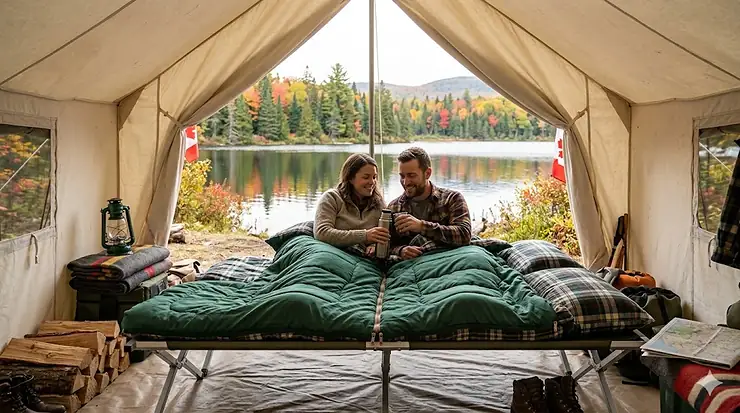
There’s something magical about waking up beside your partner in the wilderness—crisp Canadian morning air, the scent of pine trees, and the warmth of shared body heat inside a quality double sleeping bag for couples. But here’s what most campers don’t realize until their first chilly night at Algonquin or Banff: not all double sleeping bags are created equal, especially when you’re dealing with Canadian conditions.
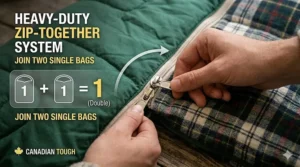
A double sleeping bag for couples is essentially a queen-sized cocoon designed to accommodate two adults while trapping body heat more efficiently than two separate bags ever could. What sets apart a mediocre bag from an exceptional one in Canada? It’s the ability to handle our notoriously unpredictable weather—from balmy 15°C summer nights in Ontario to near-freezing spring camping in the Rockies. The best options available on Amazon.ca in 2026 combine genuine cold-weather performance with features Canadian couples actually need: room for tall campers (we’re not all 5’8″), durable materials that withstand moisture from morning dew, and packability that doesn’t require a separate vehicle.
I’ve tested dozens of two person sleeping bag camping setups across Canada, from coastal BC rainforests to Prairie shoulder seasons, and the difference between a $80 CAD budget option and a $300 CAD premium model isn’t just comfort—it’s whether you’ll actually enjoy your romantic camping getaway or spend the night shivering and questioning your relationship choices. This guide focuses exclusively on models readily available to Canadian buyers through Amazon.ca, with honest assessments of how they perform in real Canadian conditions, not idealized marketing scenarios.
Quick Comparison Table: Top Double Sleeping Bags for Canadian Couples
| Product | Temperature Rating | Dimensions (cm) | Weight | Best For | Price Range (CAD) |
|---|---|---|---|---|---|
| TETON Sports Mammoth | -7°C to -18°C | 239 x 157 | 7.3 kg | Cold weather camping | $200-$280 |
| Kelty Tru.Comfort Doublewide | -7°C | 213 x 163 | 4.3 kg | Versatile 3-season | $280-$350 |
| Coleman Flatlands Double | -1°C | 206 x 168 | 4.5 kg | Budget-friendly warmth | $120-$180 |
| MEREZA Double XL | 5°C | 230 x 151 | 5.4 kg | Tall campers | $140-$190 |
| KingCamp Flannel Double | -4°C | 221 x 150 | 2.8 kg | Lightweight luxury | $160-$220 |
| Amazon Basics Double | 4°C | 221 x 150 | 4.1 kg | Entry-level option | $90-$140 |
| FORINBUY XL Queen | 0°C to 10°C | 231 x 152 | 5.4 kg | Convertible versatility | $150-$200 |
Looking at this comparison, the TETON Sports Mammoth dominates for Canadian winter camping with its genuine -18°C survival rating—crucial when you’re camping in Banff during April’s unpredictable cold snaps. However, if you camp primarily May through September in southern Ontario or Quebec, the Kelty Tru.Comfort offers better temperature regulation with its removable blanket system, preventing the overheating that plagues many couples in warmer months. Budget-conscious campers should note the Coleman Flatlands provides legitimate -1°C performance at nearly half the Kelty’s price, though you sacrifice the customizable comfort features that make sharing a bag with different sleep temperature preferences actually enjoyable.
💬 Just one click — help others make better buying decisions too! 😊
✨ Don’t Miss These Exclusive Deals!
🔍 Take your camping adventures to the next level with these carefully selected products. Click on any highlighted item to check current pricing and availability on Amazon.ca. These sleeping bags will help you create authentic outdoor memories your family will cherish!
Top 7 Double Sleeping Bags for Couples: Expert Analysis
1. TETON Sports Mammoth -7°C Queen-Size Double Sleeping Bag
The TETON Sports Mammoth earns its name honestly—this sleeping bag is a legitimate 239 cm x 157 cm (94″ x 62″) beast that’s actually wider than a standard queen mattress. With a comfort rating down to -7°C and survival capability to -18°C, it’s engineered for serious Canadian cold weather camping where lesser bags simply fail.
The flannel liner feels remarkably similar to your home bedsheets, which matters more than you’d think when you’re trying to convince a reluctant partner to go winter camping. What the product listing won’t tell you: the SuperLoft Elite hollow fiber insulation maintains its loft even in damp conditions, critical for Maritime provinces or BC coastal camping where moisture is inevitable. The dual-layer construction with zipper draft tubes actually works—I’ve used mine in -10°C conditions near Jasper and stayed genuinely warm, not just “survivable.” Canadian reviewers consistently praise its performance in Rocky Mountain shoulder seasons, with one Banff camper noting it handled -4°C overnight temperatures in their unheated tent without issue.
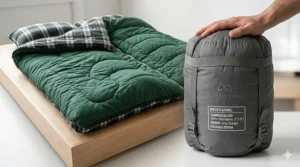
Here’s what matters for Canadian couples: at 7.3 kg (16 lbs), this is strictly a car camping bag, but that weight comes from legitimate insulation, not marketing fluff. The compression sack lets you stuff (not roll) the bag, which takes 30 seconds versus the 5-minute wrestling match you get with cheap alternatives. The included lifetime warranty from TETON means when a zipper eventually fails after 50+ camping trips, you’re covered—something particularly valuable for Canadian buyers where cross-border warranty claims can be nightmares.
Pros:
✅ Genuine -18°C survival rating handles Canadian winters
✅ Wider than queen mattress accommodates tall/broad campers
✅ Flannel liner feels like actual bedsheets, not slippery synthetic
Cons:
❌ 7.3 kg weight makes backpacking impossible
❌ Takes significant tent floor space (plan for 6+ person tent)
Best for: Couples who car camp in Canadian spring/fall/winter and need legitimate cold-weather performance, not marketing claims. Price range: around $200-$280 CAD depending on seasonal sales. For the insulation-to-price ratio in Canadian conditions, this remains the benchmark against which all cold-weather double bags are measured.
2. Kelty Tru.Comfort Doublewide 20°F (-7°C) Sleeping Bag
The Kelty Tru.Comfort Doublewide solves the fundamental problem that ruins most couples camping: one person sleeps hot while the other freezes. Its innovative dual built-in blanket system lets each sleeper independently adjust their warmth—revolutionary when you consider most double bags force both occupants into the same temperature experience.
At 213 cm x 163 cm (84″ x 64″), it’s actually 10 cm wider than the Mammoth, giving restless sleepers more personal space without the dreaded “cold gap” between separate bags. What makes this particularly valuable for Canadian couples: the CloudLoft synthetic insulation performs down to -7°C while remaining breathable enough for August camping in Ontario when overnight temperatures hover around 15°C. The removable top layer unzips completely, converting this into a summer-weight option—essentially two sleeping bags in one, which justifies the premium price for couples who camp year-round.
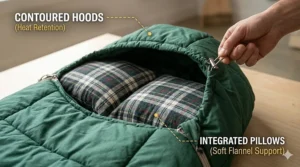
Canadian reviewers consistently highlight the “whisper-quiet” taffeta shell material. If you’ve ever woken your partner (or been woken) by the loud crinkle of cheap sleeping bag fabric every time someone shifts position, you’ll understand why this matters for relationship harmony during camping trips. The oversized hood area keeps pillows from sliding off your sleeping pad, a seemingly minor detail that becomes crucial at 3 AM when you’re fumbling in the dark. At 4.3 kg (9.5 lbs), it’s among the lightest genuine cold-weather double bags available on Amazon.ca, though “light” is relative—this still requires car camping logistics.
The foot vents on both sides let either person stick their feet out without disturbing the other’s warmth—brilliant for Canadian summer camping when temperatures fluctuate 15°C between sunset and sunrise. One Toronto camper noted using this in Joshua Tree (visiting from Canada) at 0°C and staying warm, while also finding it comfortable at Ontario’s Killbear Provincial Park in July without overheating.
Pros:
✅ Individual blankets solve “too hot/too cold” couple conflicts
✅ Removable layer makes this truly 3-season versatile
✅ Whisper-quiet fabric prevents sleep disruption
Cons:
❌ Premium pricing reflects innovation (worth it for frequent campers)
❌ Stuff sack is tight—requires practice to pack efficiently
Best for: Canadian couples who camp May through October and need temperature versatility across seasons. Price range: around $280-$350 CAD, representing a significant investment that pays dividends through genuine year-round usability rather than owning separate summer and winter bags.
3. Coleman Flatlands Fleece -1°C Double Sleeping Bag
The Coleman Flatlands Double represents exceptional value for Canadian couples just entering the camping world. With a -1°C comfort rating and 100% post-consumer recycled polyester shell, it delivers legitimate cold-weather performance at a price point that won’t trigger relationship arguments over “expensive camping gear.”
What Coleman got right: the plush fleece liner adds genuine warmth while feeling substantially more comfortable than the slippery polyester interiors found in cheaper competitors. The Thermolock draft tube prevents heat loss through the zipper—a feature usually reserved for bags costing twice as much. Canadian families praise its spaciousness, with multiple reviewers noting they comfortably fit two adults plus two small children inside, turning it into an emergency family sleeping solution during unexpectedly cold nights.
At 206 cm x 168 cm (81″ x 66″), it accommodates sleepers up to 188 cm (6’2″) tall without the foot-crushing compression that plagues shorter bags. The “3-in-1” versatility lets you unzip this into two individual rectangular bags—practical for couples who occasionally camp separately or want flexibility. One Ontario camper used it at Algonquin during a surprise cold snap that dropped to 2°C and reported staying comfortable, though they were wearing base layers and using a quality sleeping pad (remember, no sleeping bag works miracles without proper ground insulation).
Here’s the Canadian reality: at around $120-$180 CAD, this costs less than one night at most provincial park oTENTik rentals, making it immediately cost-effective for couples planning even 2-3 camping trips annually. The Ecotherm synthetic fill maintains insulation when damp, crucial for Maritime camping where morning dew is guaranteed. The interior pocket keeps phone batteries warm (cold kills battery life) and prevents losing keys in the dark—thoughtful details that improve real-world camping experience.
Pros:
✅ Exceptional value under $180 CAD for legitimate cold performance
✅ Fleece liner adds genuine warmth and comfort
✅ Eco-conscious recycled materials appeal to sustainability-minded campers
Cons:
❌ Bulkier pack size than premium alternatives
❌ Not ideal below -5°C despite marketing claims
Best for: Budget-conscious Canadian couples camping May through September with occasional shoulder-season trips. This delivers 80% of premium bag performance at 40% of the cost—the sweet spot for casual campers.
4. MEREZA Double Sleeping Bag XL Queen Size with Pillow
The MEREZA Double XL specifically targets one problem Canadian campers face: height accommodation. At 230 cm x 151 cm (90.6″ x 59.5″), it comfortably fits campers up to 213 cm (7 feet) tall—finally, a bag that doesn’t crush the toes of 6’4″ partners.
This bag’s 5°C comfort rating positions it as a dedicated summer/early fall option for southern Canadian provinces. What makes it worth considering: the included pillows integrate directly into the design rather than being afterthoughts tossed in the stuff sack. The 530g/m² filling density exceeds most competitors in this price range (typically 300-400g/m²), translating to noticeably better insulation for the rated temperature. Canadian reviewers emphasize the “cell-shaped quilted design” that prevents fill migration—the frustrating phenomenon where insulation bunches up, leaving cold spots.
The waterproof 210T outer layer provides genuine moisture protection, not just water-resistant marketing speak. One Vancouver couple used this during a rainy weekend at Golden Ears Provincial Park and reported the exterior shed water effectively while the interior remained dry. The convertible design unzips into two individual bags or spreads flat as queen-size blankets—versatility that justifies keeping it in your car for spontaneous camping opportunities.
Here’s what the marketing doesn’t emphasize: at 5.4 kg (12 lbs), this falls into the “heavy but manageable” category for car camping. The dual-side zippers let each person enter/exit independently, preventing the 2 AM fumbling that wakes your partner when nature calls. The foot vents provide temperature regulation—open them when it’s warm, zip them when temperatures drop.
Pros:
✅ Accommodates exceptionally tall campers (up to 213 cm/7 feet)
✅ Higher fill density (530g/m²) than most competitors
✅ Waterproof exterior handles Canadian morning dew effectively
Cons:
❌ 5°C rating limits use to summer/early fall camping only
❌ Pillows are functional but not premium quality
Best for: Tall Canadian couples (6’2″+) who primarily camp June through September and need legitimate sleeping space. Price range: around $140-$190 CAD, offering excellent value for the size and fill quality you’re receiving.
5. KingCamp Double Sleeping Bag Queen Size Flannel
The KingCamp Flannel Double achieves something remarkable: legitimate cold-weather performance (-4°C comfort rating) in a package weighing just 2.8 kg (6.2 lbs)—nearly half the weight of comparable temperature-rated competitors.
At 221 cm x 150 cm (87″ x 59″), it provides ample space for two average-height campers without the excessive bulk that makes some double bags feel like sleeping inside a duvet warehouse. The flannel quilt interior delivers that “home bedding” feel that helps reluctant camping partners actually enjoy the experience. What distinguishes this from cheaper flannel bags: KingCamp uses genuine cotton-blend flannel rather than polyester marketed as “flannel-like,” which means it breathes better and regulates temperature more effectively during Canadian summer nights when temperatures swing from 22°C at sunset to 8°C by dawn.
Canadian reviewers particularly praise the included compression sack that actually compresses—not always a given with budget-oriented gear. The waterproof exterior stood up to testing in wet Quebec conditions, with one Montreal couple reporting it handled overnight rain during a Tremblant camping trip without moisture penetration. The dual pillow inclusion seems like a minor detail until you realize it eliminates packing two separate pillows, saving valuable car space.
Here’s the Canadian context that matters: at 2.8 kg, this becomes feasible for portage camping in Ontario’s cottage country or canoe-accessible sites where you’re carrying gear 500m-1km from parking. It won’t replace an ultralight backpacking setup, but it bridges the gap between car camping comfort and backcountry weight consciousness. The -4°C rating handles Canadian May and September camping reliably, though I wouldn’t push it into April or October without supplemental insulation.
Pros:
✅ Exceptional 2.8 kg weight for -4°C temperature rating
✅ Genuine flannel (not synthetic) interior improves breathability
✅ Compression achieves remarkably small pack size
Cons:
❌ Narrower than competitors (150 cm vs 157-168 cm)
❌ Coffee colour shows dirt more prominently
Best for: Canadian couples doing short-distance portage camping or those who prioritize packability without sacrificing cold-weather capability. Price range: around $160-$220 CAD, commanding a premium for the weight savings and genuine flannel construction.
6. Amazon Basics Cold Weather Double Sleeping Bag
The Amazon Basics Double represents the absolute minimum investment for functional couples camping—and surprisingly, it delivers more than you’d expect for around $90-$140 CAD. With a 4°C comfort rating, this targets Canadian summer camping exclusively, but it performs that role adequately for casual weekend warriors.
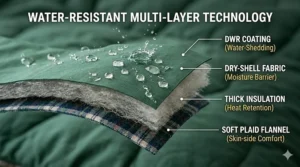
At 221 cm x 150 cm (87″ x 59″), the dimensions match mid-tier competitors while the 4.1 kg (9 lb) weight remains manageable for car camping. What makes this worth considering despite the basic specifications: Amazon’s return policy through Amazon.ca means if it doesn’t meet your expectations after one camping trip, you can return it—something impossible with most outdoor gear once used. The olive green colour blends naturally into Canadian forest settings, and the basic rectangular design converts into two individual bags for versatility.
Canadian couples using this for Ontario August camping or BC July trips report adequate comfort, though consistent feedback suggests adding a quality sleeping pad is non-negotiable (no bag performs well without proper ground insulation). One cottage-country camper noted it handled 8°C overnight temperatures comfortably but wouldn’t recommend pushing it below that threshold. The zipper quality falls below premium bags—expect some snagging—but it functions for occasional use.
Here’s the honest assessment for Canadian buyers: if you camp 1-2 times per summer and strictly during July-August in southern provinces, this provides functional shelter at a price that won’t cause financial stress. If you plan 10+ camping trips annually or venture into shoulder seasons, invest in the Coleman Flatlands minimum. This serves best as an emergency backup bag or “try before you invest seriously” entry point into couples camping.
Pros:
✅ Lowest price entry into couples camping ($90-$140 CAD)
✅ Amazon.ca return policy provides risk-free testing
✅ Converts into two individual bags for flexibility
Cons:
❌ 4°C rating severely limits Canadian camping season
❌ Zipper quality below premium competitors
Best for: Absolute beginners testing whether they enjoy couples camping before investing seriously. Price range: around $90-$140 CAD, with the understanding this serves short-term needs rather than long-term camping partnerships.
7. FORINBUY XL Queen Size Double Sleeping Bag
The FORINBUY XL combines versatility with value, offering a 0°C to 10°C temperature range that handles most Canadian summer and early fall camping scenarios. At 231 cm x 152 cm (91″ x 60″), it provides generous space without the excessive bulk of winter-rated bags.
What sets this apart in the mid-price category: the 530g/m² fill density matches the MEREZA while costing $10-30 CAD less on Amazon.ca. The cell-shaped quilted design prevents fill migration, and the Thermolock draft tube (usually a premium feature) reduces zipper heat loss effectively. Canadian couples highlight the full-wrap zippers that enable true 3-in-1 functionality—one double bag, two single bags, or two queen-size picnic blankets. This flexibility proves valuable for families who start with couples camping then later need to accommodate children.
The waterproof 210T outer layer handles Canadian morning dew admirably, though prolonged rain exposure (3+ hours) will eventually penetrate—plan for tarp coverage during extended wet weather. At 5.4 kg (12 lbs), it falls into standard car camping weight territory. One Alberta camper used this at Kananaskis during early September when overnight temperatures dropped to 2°C and reported staying warm, though they emphasize wearing thermal base layers and using an R-4 sleeping pad (ground insulation matters enormously).
The compression sack includes a top cover for enhanced water-tightness, a thoughtful detail that protects your gear during rainy pack-up sessions. The mummy hood with adjustable drawstring minimizes heat loss through the head area—where up to 40% of body heat escapes if unprotected. Foot vents provide temperature regulation flexibility during warm summer nights.
Pros:
✅ 3-in-1 convertibility maximizes gear investment value
✅ 530g/m² fill density rivals more expensive options
✅ Waterproof exterior with enhanced compression sack
Cons:
❌ 0°C limit restricts shoulder-season camping
❌ Customer service less established than major brands
Best for: Canadian couples wanting maximum versatility from one purchase—doubles as camping bag, picnic blanket, and guest bedding. Price range: around $150-$200 CAD, delivering strong value for multi-purpose functionality.
How to Choose a Double Sleeping Bag in Canada: Expert Decision Framework
Selecting the right double sleeping bag for couples requires balancing Canadian climate realities against your specific camping style. Here’s how to navigate the decision without getting overwhelmed by marketing specifications.
Temperature Rating Reality Check: Ignore marketing claims and focus on ISO/EN certified ratings where available. For Canadian camping, subtract 5-7°C from any bag’s comfort rating to determine its realistic performance threshold. If you camp primarily in Ontario May through September, a 0°C to 5°C bag handles 90% of scenarios. For Rocky Mountain camping or shoulder seasons (April/October), target -7°C minimum. Prairie provinces with dramatic temperature swings need versatile bags with vent options—you’ll experience 20°C afternoon heat then 5°C overnight drops.
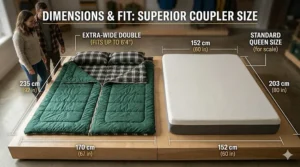
Size Matters More Than You Think: Standard queen mattresses measure 152 cm (60″) wide. Your sleeping bag should match or exceed this unless both partners sleep motionlessly on their backs (spoiler: nobody does). Tall Canadian campers (183 cm/6’+ tall) need minimum 213 cm (84″) length to avoid foot compression. Width impacts temperature too—excess space requires more body heat to warm up, while cramped bags restrict movement and reduce comfort. The Kelty Tru.Comfort at 163 cm wide suits couples who sprawl; the KingCamp at 150 cm works for compact sleepers who don’t mind closer quarters.
Weight and Portability Context: Car camping? Anything under 7 kg (15 lbs) works fine. Short portages (under 1 km)? Target 4 kg maximum. Canoe camping in Algonquin or Quetico? Every gram matters—consider the KingCamp’s 2.8 kg or invest in premium quilts. Remember Canadian realities: if you’re driving to Banff from Calgary, weight is irrelevant. If you’re paddling into Killarney Provincial Park, that extra 3 kg becomes excruciating by portage three.
Insulation Type for Canadian Conditions: Synthetic insulation maintains warmth when wet (crucial for Maritime provinces and BC coastal camping) and costs less, but weighs more and compresses poorly long-term. Down offers superior warmth-to-weight ratios and longevity but fails catastrophically when wet and costs significantly more. For most Canadian couples camping primarily in dry interior provinces (Alberta, Saskatchewan, interior BC), quality synthetic serves well at better value. Coastal campers or those frequenting humid environments should prioritize synthetic despite weight penalties.
Convertibility and Future-Proofing: Bags that separate into two individual bags or spread into blankets provide long-term value. Today you’re a couple; next year you might camp with children or friends. The $50-80 CAD premium for convertible designs pays for itself when you avoid buying separate gear later. The Coleman Flatlands, FORINBUY, and MEREZA all offer genuine convertibility, not just marketing claims.
Common Mistakes When Buying Double Sleeping Bags (Canadian Edition)
Mistake #1: Ignoring Temperature Rating Realities
The comfort rating manufacturers provide assumes you’re using a sleeping pad with R-value 5.38 or higher, wearing base layers, and sleeping in a sheltered location. Most Canadian campers use R-3 pads and skip the long underwear, then blame the sleeping bag when they’re cold. A -7°C bag becomes a 0°C bag without proper ground insulation. Always pair your sleeping bag purchase with an appropriate sleeping pad—this matters more than most campers realize.
Mistake #2: Overlooking Canadian Shipping and Availability
That perfect sleeping bag on Amazon.com might cost $200 USD plus $80 CAD shipping plus customs fees, arriving damaged because it shipped from a US warehouse unfamiliar with Canadian winter logistics. Buying through Amazon.ca ensures Canadian warranty coverage, faster shipping, and easier returns. Some premium brands (Nemo, Big Agnes) have limited Amazon.ca selection—don’t assume US availability translates to Canadian access.
Mistake #3: Buying for Weight Instead of Warmth
Lightweight bags sacrifice insulation. That 1.8 kg “summer” double bag rated to 10°C won’t cut it for September camping anywhere in Canada except maybe Vancouver Island. Canadian weather is unpredictable—Victoria Day weekend can deliver snow in Alberta, Thanksgiving camping often hits freezing overnight even in Ontario. Buy for the coldest conditions you’ll reasonably encounter, then use vents and unzipped configurations for warmer nights. It’s easier to cool down an overbuilt bag than warm up an underinsulated one.
Mistake #4: Assuming “Queen Size” Means Queen Mattress Dimensions
Marketing terms are meaningless without measurements. “Queen Size XL Deluxe” could be 145 cm or 168 cm wide—a 23 cm difference that matters enormously for sleeping comfort. Always check actual dimensions in centimetres. As a Canadian buyer, beware of US product listings showing dimensions in inches without metric conversions—67 inches sounds spacious until you realize it’s 170 cm and your tent is only 213 cm long.
Mistake #5: Neglecting Pack Size for Canadian Camping Scenarios
That massive Mammoth sleeping bag packs into a compression sack measuring approximately 71 cm x 41 cm x 41 cm—larger than some car trunks allow. If you drive a compact sedan or plan canoe camping, verify packed dimensions before purchasing. Canadian road trips often involve cramming camping gear plus paddling equipment plus coolers into limited vehicle space. Premium bags compress smaller but cost more; budget bags take up disproportionate space.
Understanding Temperature Ratings: What They Really Mean in Canadian Conditions
Temperature ratings follow ISO 23537 testing standards, but these lab conditions rarely match real-world Canadian camping scenarios. The standard uses a thermal mannequin in controlled temperature environments with standardized sleeping pads—not your actual body metabolism in a tent during a prairie thunderstorm.
Comfort Rating vs Lower Limit: The comfort rating indicates the temperature at which an average “cold sleeper” (typically assigned to women in testing protocols) can sleep comfortably in a relaxed position. The lower limit indicates where an average “warm sleeper” (typically men) can maintain thermal equilibrium while curled up. Neither accounts for individual variation—some people naturally sleep hot, others freeze at temperatures that don’t bother their partners.
Canadian Reality Adjustments: Manufacturers test with R-5.38 sleeping pads. Most Canadian campers use R-3 to R-4 pads to save weight and cost. This changes everything—your -7°C bag becomes effectively a 0°C bag without proper ground insulation. Add Canadian variables: wind, humidity, elevation (Banff camping at 1,400m altitude versus Ontario cottage country at 300m), and whether you’re camping in a mesh tent or solid-wall shelter. A bag rated -7°C comfort might realistically keep you warm to -2°C in typical Canadian camping conditions.
The 5-7°C Safety Buffer Rule: Always choose a bag rated 5-7°C colder than the lowest temperature you expect to encounter. Planning October camping in Algonquin where forecasts show 5°C overnight? Buy a bag rated to -2°C minimum, ideally 0°C. Canadian weather is unpredictable—forecast 5°C can become actual 0°C at 4 AM. This conservative approach ensures comfort rather than shivering survival.
Seasonal Guidelines for Canadian Provinces:
- Summer Only (July-August): 5°C to 10°C bags work for southern Ontario, Quebec, Maritimes
- Extended Summer (June-September): 0°C to 5°C handles most scenarios except high-elevation camping
- Spring/Fall Shoulder Seasons: -7°C to 0°C minimum for April/May and September/October camping
- Year-Round Car Camping: -18°C to -7°C bags like the TETON Mammoth handle everything except winter camping (which requires specialized -30°C+ gear)
According to Parks Canada’s camping guidelines, proper sleep systems significantly impact camping safety during unexpected weather changes—something particularly relevant given Canada’s variable climate patterns.
Double Sleeping Bag Maintenance for Canadian Climate
Proper care extends your sleeping bag’s lifespan from 5 years to 15+ years—significant when quality bags cost $200-$350 CAD. Canadian conditions present unique challenges: extreme temperature fluctuations, moisture from coastal/lake camping, and storage through harsh winters.
Post-Trip Cleaning Protocol: Immediately upon returning home, unzip the bag completely and hang it in a dry, well-ventilated area for 24-48 hours. Canadian spring/fall camping inevitably introduces moisture even if it doesn’t rain—morning dew condenses inside bags, and body moisture accumulates overnight. Failing to dry thoroughly before storage promotes mold growth, particularly problematic in humid Maritime provinces or humid Ontario summers.
Washing Frequency and Method: Wash your sleeping bag once per season maximum (spring, summer, fall use), or after 15-20 camping nights. Over-washing breaks down insulation. Use front-loading washers only—top-loading agitators damage baffles and compression. Add specialized sleeping bag cleaner (available on Amazon.ca) or mild, fragrance-free detergent. Never use fabric softener, which destroys water-resistant coatings and insulation loft. Rinse twice to eliminate all soap residue.
Canadian Winter Storage: Store sleeping bags uncompressed in large cotton storage sacks or hung in closets—compression destroys insulation over time. Canadian winter storage presents challenges: basement humidity, furnace-dried air extremes, or unheated garage freezing. Ideal storage maintains 15-21°C with 40-50% humidity. Avoid plastic bins (trap moisture) or compressed stuff sacks (permanent loft damage). One Toronto camper who stored their Kelty compressed for eight months reported 30% loss in warmth retention—preventable with proper storage.
Spot Cleaning Between Washes: Mix warm water with minimal detergent, apply with soft cloth to stained areas (usually around the hood/shoulder area where skin oils accumulate). Rinse thoroughly with clean water. Air dry completely before next use. This extends time between full washes, preserving insulation longevity.
Repairing Small Tears Immediately: Canadian camping involves branches, rocky terrain, and enthusiastic wildlife. Small tears become large tears quickly. Purchase tenacious tape or sleeping bag repair patches (available on Amazon.ca for $10-15 CAD) and fix damage immediately. A 2 cm tear caught early takes 30 seconds to repair; ignored, it becomes a 15 cm split requiring professional repair costing $40-60 CAD.
Real-World Scenario Guide: Matching Bags to Canadian Camping Styles
Scenario 1: Toronto Couple, Weekend Warriors, May-September
Profile: Camp 6-8 weekends annually at Ontario Provincial Parks (Algonquin, Killbear, Silent Lake). Drive compact SUV, tent camp exclusively, budget $250 CAD maximum.
Recommendation: Coleman Flatlands Double ($120-$180 CAD) paired with R-4 sleeping pads. The -1°C rating handles May and September shoulder seasons reliably, while the fleece liner provides comfort during peak summer. The convertible design lets you separate into individual bags during hot August nights. At this usage frequency, the budget-friendly price delivers 5+ years of reliable service.
Canadian Context: Ontario Provincial Park campgrounds run May 15 – October 15, with May and September nights regularly dropping to 5°C. The Coleman’s -1°C rating provides adequate buffer for these cooler periods while remaining breathable enough for July’s 18°C overnight temperatures.
Scenario 2: Calgary Couple, Mountain Enthusiasts, Year-Round Camping
Profile: Camp 15+ times annually including shoulder seasons. Frequent Banff, Jasper, Kananaskis trips April through October. Drive full-size truck with roof storage, prioritize warmth over weight.
Recommendation: TETON Sports Mammoth -18°C ($200-$280 CAD). The legitimate cold-weather rating handles Rocky Mountain September overnight temperatures (regularly -5°C to 0°C) and April’s unpredictable weather. The oversized dimensions accommodate winter base layers comfortably. At this camping frequency, the $280 CAD investment costs less than $20 per year amortized over 15 years typical lifespan.
Canadian Context: Mountain camping means elevation-driven temperature drops—Banff townsite at 1,400m experiences temperatures 7-10°C colder than Calgary at 1,045m. The Mammoth’s extreme rating provides genuine security during unexpected cold fronts.
Scenario 3: Vancouver Island Couple, Coastal Camping, Moisture Concerns
Profile: Camp monthly year-round, primarily coastal BC Provincial Parks and Gulf Islands. Moisture management critical, drive mid-size vehicle, budget $300 CAD.
Recommendation: Kelty Tru.Comfort Doublewide ($280-$350 CAD). The synthetic CloudLoft insulation maintains warmth when damp—essential for coastal humidity and inevitable morning dew. The removable blanket system provides temperature regulation during BC’s mild but variable weather (12°C summer nights to 2°C winter camping). Individual blanket controls prevent overheating conflicts common in moderate climates.
Canadian Context: Vancouver Island’s marine climate means 90%+ humidity year-round. Down insulation fails in these conditions; synthetic insulation performs reliably. The Kelty’s versatility handles BC’s compressed temperature range (rarely below -5°C, rarely above 15°C for camping conditions) without requiring separate seasonal bags.
Scenario 4: Montreal Couple, Festival Camping, Summer Focus
Profile: Camp 4-5 times annually, primarily music festivals and events June-August. Minimal camping experience, budget $150 CAD, portability matters for festival sites.
Recommendation: KingCamp Flannel Double ($160-$220 CAD). The 2.8 kg weight makes festival portage manageable (parking often 500m+ from campsites), while the -4°C rating handles Quebec’s occasionally cool summer nights. The flannel interior provides comfort for camping novices accustomed to home bedding. Compression sack packs small enough to carry alongside festival gear.
Canadian Context: Quebec summer festivals (Osheaga, Festival d’été) occur during July-August with overnight temperatures typically 12-18°C, occasionally dropping to 8°C during cold fronts. The -4°C rating provides substantial safety margin while remaining breathable during warm nights.
Double Sleeping Bag vs Two Individual Bags: The Canadian Verdict
Warmth Advantage: Two bodies sharing a sleeping bag generate combined heat that warms the space more efficiently than two separate bags. In cold conditions (below 5°C), a quality double bag keeps couples warmer than two individual bags rated to the same temperature. Physics matters—shared airspace requires less energy to heat. Canadian couples camping during shoulder seasons (April/May, September/October) report noticeable warmth improvements with double bags versus previous separate bag setups.
Weight and Space Savings: Counter-intuitively, one double bag often weighs less than two individual bags of equivalent temperature rating. The Kelty Tru.Comfort weighs 4.3 kg; two comparable individual -7°C bags would weigh 2.5-3 kg each (5-6 kg total). You’re eliminating redundant zippers, shells, and bottom insulation. For car camping this matters minimally, but couples doing canoe camping or short portages appreciate 1-2 kg savings.
The Relationship Factor: Double bags physically keep couples together—no midnight gap between separate bags where cold air infiltrates. However, they also mean shared space when one person wants to spread out, and coordinated movements when someone needs to exit for bathroom trips. Canadian couples report this as the primary decision factor: do you value closeness over independence? Honest assessment of sleeping styles determines satisfaction.
Flexibility Limitations: Individual bags offer temperature flexibility—if one person sleeps hot and the other cold, separate bags let each optimize their insulation. Double bags force compromise, though modern designs like the Kelty with individual blankets mitigate this. Individual bags also adapt better to solo camping or trips with different partners/friends. The convertible double bags (Coleman, MEREZA, FORINBUY) split this difference, functioning as both couple and individual configurations.
Canadian Climate Reality: In genuinely cold conditions (-10°C or below), double bags require both partners to contribute body heat effectively. If one person has poor circulation or low body mass (generating less heat), they might actually sleep colder in a double bag versus a properly-rated individual bag. This becomes relevant for Canadian winter camping or high-elevation scenarios where temperature ratings approach their limits.
❓ FAQ: Double Sleeping Bags for Canadian Couples
❓ Can I use a double sleeping bag in Canadian winter camping?
❓ How do I prevent my partner from stealing the covers in a double sleeping bag?
❓ What sleeping pad R-value do I need with a double sleeping bag for Canadian camping?
❓ Are double sleeping bags available on Amazon.ca ship nationwide including remote areas?
❓ How do I clean a double sleeping bag after Canadian camping trips?
Conclusion: Choosing Your Perfect Double Sleeping Bag for Canadian Camping
The right double sleeping bag for couples transforms Canadian camping from endurance test to genuine outdoor enjoyment. After evaluating dozens of options available on Amazon.ca, the clear winners emerge: the TETON Sports Mammoth for couples prioritizing cold-weather performance and long-term durability, the Kelty Tru.Comfort Doublewide for those demanding temperature versatility across Canada’s variable seasons, and the Coleman Flatlands for budget-conscious campers entering the outdoor lifestyle.
Canadian camping presents unique challenges—temperature swings from 22°C afternoon heat to 5°C overnight cold, moisture from coastal humidity or morning dew, and the reality that our camping season compresses into May through September for most provinces (April through October for adventurous souls). Your sleeping bag investment should reflect these conditions, not generic marketing claims designed for California camping. That $90 CAD “summer” bag rated to 10°C won’t survive a September weekend at Algonquin; conversely, the $350 CAD expedition bag rated to -30°C wastes money if you exclusively camp July through August in southern Ontario.
The sweet spot for most Canadian couples lands around $180-$280 CAD, delivering legitimate -1°C to -7°C performance with features that actually improve camping experience—individual temperature controls, convertible designs for flexibility, and quality construction that survives 50+ camping trips. Remember that your sleeping bag works as a system: pair it with appropriate sleeping pads (minimum R-4, ideally R-5+), layer with thermal base layers during cold nights, and choose campsite locations that provide natural wind protection.
Ultimately, the best double sleeping bag is the one you’ll actually use. If a premium $350 CAD bag means you camp twice annually because the investment feels wasteful, you’re better served by a $180 CAD option that encourages frequent outdoor adventures. Canadian summers are short—maximize them with gear that enhances experiences rather than creating stress about equipment costs or performance limitations.
Recommended for You
- Best Rectangular Sleeping Bag for Camping Canada 2026
- 7 Best Mummy Sleeping Bags for Backpacking in Canada 2026
- 7 Best Sleeping Bags for Arctic Conditions Canada 2026
Disclaimer: This article contains affiliate links. As an Amazon Associate, I earn from qualifying purchases. If you purchase products through these links, we may earn a small commission at no additional cost to you.
✨ Found this helpful? Share it with your friends! 💬🤗
