In This Article
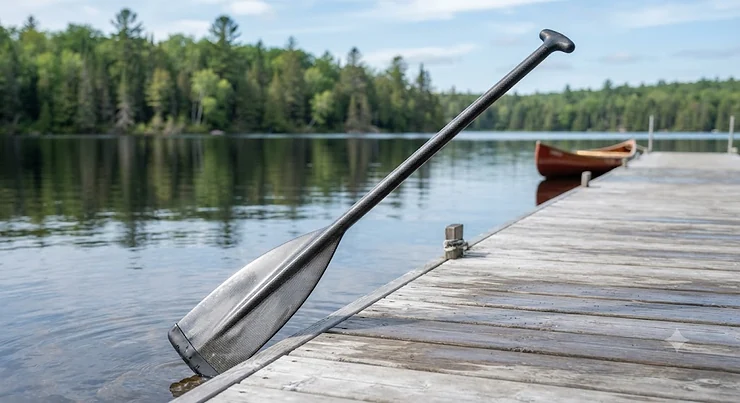
Your shoulders will tell you the truth about a paddle long before the spec sheet does. Around stroke four thousand of a long portage day, an extra 150 grams stops being a rounding error and starts feeling like a small, spiteful anchor riding on the end of your arms. That’s really what this whole guide is about: finding a lightweight canoe paddle that disappears in your hands instead of announcing itself every single stroke. So, what is a lightweight canoe paddle? It’s a paddle built from materials like carbon fibre, laminated wood, or hybrid composites specifically to minimize both total weight and “swing weight” — the effort needed to move the blade through each stroke — without sacrificing the strength you need on real water.
Canadians have a particular relationship with this piece of gear. The canoe carried First Nations people across this land for centuries before it became essential to European fur traders exploring the interior, and that history runs deep enough that Canadians once voted the canoe one of the country’s defining symbols — a legacy that still shapes why so many of us treat paddle choice as more than a shopping decision. If you’re outfitting yourself for weekend lake trips, multi-day portage routes through the Canadian Shield, or a first solo canoe, the paddle you choose affects your comfort more than almost any other single piece of gear — arguably more than the canoe itself. This guide walks through seven real, currently available lightweight canoe paddle options for the amazon.ca marketplace, covering budget wood laminates through full carbon builds, along with the buying knowledge — swing weight, carbon fibre construction, and Canadian safety rules — that most product listings simply skip.
Quick Comparison Table
| Paddle | Approx. Weight | Primary Material | Price Range (CAD) | Best For |
|---|---|---|---|---|
| Bending Branches Arrow | ~22-24 oz | Laminated hardwood | C$90-C$130 | First-time buyers, casual lake paddling |
| Grey Owl Tenderfoot | ~18-20 oz | Laminated basswood | C$110-C$150 | Traditionalists wanting a light wood feel |
| Bending Branches Catalyst | ~20-22 oz | Recycled wood + fiberglass | C$140-C$175 | Eco-conscious weekend trippers |
| Sawyer Cedar Voyager | ~20-23 oz | Cedar/fir laminate, fiberglass | C$180-C$230 | Flatwater tripping, portage-heavy routes |
| Werner Bandit Carbon | ~22-24 oz | Full carbon, reinforced tip | C$280-C$340 | Whitewater and river paddlers |
| Black Bart Troublemaker | ~13-15 oz | Full carbon | C$350-C$420 | Solo flatwater paddlers wanting a race feel |
| ZRE Power Surge | ~8.5-9 oz | Hollow-core carbon | C$420-C$520 | Marathon paddlers, ultralight trippers |
A quick glance at that table already tells the real story: the jump from wood laminate to full carbon isn’t gradual, it’s a cliff. The ZRE Power Surge weighs roughly a third of what the budget-friendly Bending Branches Arrow weighs, which sounds academic until you’re 20 kilometres into a headwind. Note that these are researched price bands rather than fixed figures — Amazon pricing fluctuates constantly, so always check current pricing before buying rather than relying on any number printed here.
💬 Just one click — help others make better buying decisions too!😊
Top 7 Lightweight Canoe Paddles: Expert Analysis
Seven paddles, three build philosophies, and one goal: get weight off your joints without emptying your wallet unnecessarily. Below is the honest breakdown — what’s actually inside each shaft, who each paddle suits, and where the compromises hide.
1. Bending Branches Arrow — best all-rounder for new paddlers
The Bending Branches Arrow is where most Canadian cottage-country paddlers start, and for good reason. It’s hand-laminated from basswood, red alder, and maple into a seven-layer blade, which in practice means it resists warping far better than a single-species wood paddle while staying noticeably light in the hand. The blade tip carries Bending Branches’ Rockgard edge protection, so scraping rocky put-ins on Muskoka or Kawartha lakes won’t chew through the wood the way a bare laminate would. This is the paddle for someone buying their first “real” paddle after years of using whatever came with a rental canoe — it’s forgiving, predictable, and easy to control on a J-stroke without a lot of prior technique. Aggregated review sentiment across major retailers consistently praises its balance of light swing weight and durability for the price, though a handful of long-term owners note the varnish needs occasional touch-ups after a few seasons of sun exposure. At this price point, that’s a fair trade.
Pros:
- ✅ Genuinely light for a solid wood laminate build
- ✅ Rockgard tip survives rocky Canadian Shield put-ins
- ✅ Comfortable, forgiving grip for beginners
Cons:
- ❌ Varnish needs occasional re-coating over time
- ❌ Flexes more than composite paddles under hard strokes
Priced around C$90-C$130, the Bending Branches Arrow is arguably the best value entry point on this whole list — you’re not paying for carbon, but you’re also not stuck with a heavy, waterlogged big-box paddle either.

2. Grey Owl Tenderfoot — lightest traditional wood option, made in Canada
If keeping your dollars inside Canada matters to you, the Grey Owl Tenderfoot is the pick to know about. Grey Owl Paddles builds out of Ontario, and the Tenderfoot is marketed — and consistently described by owners — as the lightest traditional paddle in their lineup, thanks to a thin laminated basswood blade and slim shaft profile. What that means practically is a paddle that genuinely feels like an extension of your arm rather than a tool you’re wrestling with; several long-time owners describe it as “weightless” in actual use, a sentiment that shows up repeatedly in independent paddler reviews rather than being manufacturer marketing. It’s best suited to experienced flatwater and moving-water paddlers who prioritize feel and finesse over raw durability — this isn’t the paddle you want banging off submerged granite on a whitewater run. Because it’s a finer, lighter wood layup, it demands slightly more care than a rugged recreational paddle, but owners who treat it well report it lasting many seasons without complaint.
Pros:
- ✅ Among the lightest wood paddles available anywhere
- ✅ Canadian-made, supporting a domestic paddle builder
- ✅ Refined feel favoured by experienced technique-focused paddlers
Cons:
- ❌ Thinner blade is less forgiving of rock strikes
- ❌ Premium wood construction costs more than basic laminates
Expect to pay in the C$110-C$150 range, which puts the Grey Owl Tenderfoot just above pure entry-level pricing but still well under composite territory.
3. Bending Branches Catalyst — best eco-conscious mid-range pick
The Bending Branches Catalyst is a genuinely interesting product: it’s built entirely from recycled wood scraps that would otherwise be discarded, then wrapped in a two-ounce fiberglass coating for durability. In practice, that fiberglass shell is what elevates this paddle above pure wood laminates — it adds a layer of impact resistance and stiffness that helps transfer more of your stroke energy into forward motion rather than flex. The palm grip is a small detail that matters more than it sounds; it spreads pressure across your hand during long cruising days, which measurably reduces blister risk compared to a bare T-grip. Sustainability aside, this is simply a well-built mid-tier paddle, and Bending Branches donates a portion of proceeds from every sale to river conservation groups, which is a nice bonus for buyers who care about that sort of thing without it being the deciding factor. Reviewers who’ve paddled both the Arrow and the Catalyst tend to note the Catalyst feels slightly stiffer and more “connected” on the power phase of the stroke.
Pros:
- ✅ Fiberglass coating adds stiffness over plain wood laminates
- ✅ Palm grip reduces hand fatigue on long days
- ✅ Portion of sales supports river conservation causes
Cons:
- ❌ Heavier than dedicated carbon options in this guide
- ❌ Limited availability compared to Bending Branches’ core lineup
The Bending Branches Catalyst typically lands around C$140-C$175, positioning it as a step-up mid-range choice rather than a true budget pick.
4. Sawyer Cedar Voyager — best wood-composite hybrid for tripping
The Sawyer Cedar Voyager takes a different approach than the other wood paddles here: it’s laminated from Western Red Cedar and Douglas Fir, two woods chosen specifically because cedar is remarkably light while fir adds torsional stiffness the cedar alone can’t provide. The blade faces are fiberglass reinforced, and the edges are trimmed in Dynel ToughEdge — a fabric normally reserved for extreme whitewater blades, which is a slightly overbuilt choice for a flatwater tripping paddle, but it does mean the tip survives years of gravel-bar landings that would chip a plain wood edge. This is the paddle for someone doing serious multi-day portage routes through Algonquin, Temagami, or the Boundary Waters who wants tripping durability without hauling a heavy paddle across every carry. Owners consistently describe the blade profile as smooth entering and exiting the water, with minimal flutter on the recovery stroke — a trait that matters enormously when you’re doing thousands of strokes a day rather than a leisurely afternoon paddle.
Pros:
- ✅ Cedar/fir blend balances light weight with real stiffness
- ✅ Dynel ToughEdge survives repeated rocky landings
- ✅ Smooth, low-flutter blade entry favoured by trippers
Cons:
- ❌ Pricier than standard wood laminate paddles
- ❌ Available lengths are somewhat limited compared to composite lines
Budget C$180-C$230 for the Sawyer Cedar Voyager — it sits right at the boundary between “nice wood paddle” and “entry into composite territory.”
5. Werner Bandit Carbon — best for whitewater and moving water
Once you cross into full carbon, the calculus changes: you’re no longer choosing between light and durable, you’re choosing between light and light-and-tough. The Werner Bandit Carbon is built for exactly that second category. It’s a full carbon-shaft canoe paddle designed specifically for whitewater and river use, with a reinforced blade tip meant to survive rock strikes at speed — something a wood laminate simply cannot do without splitting eventually. What most buyers overlook about carbon whitewater paddles is that they’re not actually the lightest option in a given brand’s lineup; the reinforcement needed to survive impact adds mass back in, so the Bandit sits closer in weight to a good wood paddle than to a pure racing carbon shaft. That’s the trade-off, and it’s the right one for moving water. Paddlers who run rivers with this paddle report it holding up to years of rock contact that would have destroyed a wood blade in a single season, which is really the entire value proposition here.
Pros:
- ✅ Full carbon shaft cuts swing weight dramatically
- ✅ Reinforced tip survives whitewater rock strikes
- ✅ Trusted brand with strong parts and warranty support
Cons:
- ❌ Heavier than pure flatwater carbon paddles by design
- ❌ Premium price for a paddle most casual lake users don’t need
At C$280-C$340, the Werner Bandit Carbon is a specialist’s tool — brilliant for the right water, overkill for a Sunday paddle on a calm lake.
6. Black Bart Troublemaker — best straight-shaft racer for solo paddlers
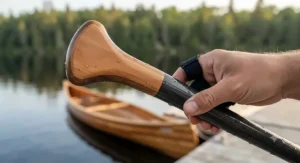
The Black Bart Troublemaker is a niche paddle that’s earned a loyal following among serious solo flatwater paddlers, and once you understand the design, it’s easy to see why. It’s a full carbon straight-shaft paddle with a symmetric blade and grip, built along similar lines to the racing paddles used in marathon canoe competition, but finished for everyday tripping use rather than pure sprint racing. The symmetric design means the blade performs identically on either face, which sounds like a minor detail until you realize it lets you switch sides mid-stroke without any adjustment in feel — genuinely useful for a kneeling solo paddler covering long, straight stretches of flatwater. Based on the spec comparison with heavier composite paddles in this guide, the Troublemaker’s low swing weight is what drives most of the enthusiasm from owners; several forum-based paddlers who switched from wood bent-shaft paddles describe a noticeable reduction in shoulder fatigue on multi-hour outings. It isn’t built for rock gardens, and its slim profile means it rewards clean technique more than a forgiving recreational blade would.
Pros:
- ✅ Symmetric blade works identically on both faces
- ✅ Exceptionally low swing weight for long solo days
- ✅ Race-derived design favoured by experienced flatwater paddlers
Cons:
- ❌ Not built to withstand rock strikes or whitewater
- ❌ Less forgiving for paddlers still building technique
Expect a price in the C$350-C$420 range for the Black Bart Troublemaker, reflecting its small-batch, performance-focused construction.
7. ZRE Power Surge — lightest production canoe paddle available
At the very top of the lightweight spectrum sits the ZRE Power Surge from Zaveral Racing Equipment, and the numbers here are almost hard to believe until you hold one. Independent owner reports put a complete Power Surge paddle at roughly 8.5 to 9 ounces depending on length — for comparison, that’s lighter than many smartphones, and less than half the weight of the wood laminate paddle at the top of this list. It achieves that through a hollow-core carbon construction rather than a solid carbon layup, which trims mass from the interior of the blade and shaft rather than just the surface. Owners who’ve switched to this paddle from traditional wood, including some managing arthritis or reduced grip strength, describe being able to paddle for hours without the arm fatigue that used to cut their trips short — one long-time reviewer noted contacting the manufacturer directly for sizing guidance, which points to a company that treats custom fit as part of the product rather than an afterthought. This is a specialist’s paddle: exceptional for flatwater touring and marathon-style paddling, and genuinely transformative for older or lower-strength paddlers who want to keep tripping without punishing their joints, but it’s not the paddle you want scraping over rocks.
Pros:
- ✅ Lightest production canoe paddle on the market
- ✅ Hollow-core carbon dramatically reduces arm and shoulder fatigue
- ✅ Manufacturer offers direct, personalized sizing guidance
Cons:
- ❌ Premium pricing reflects its small-batch, custom-fit build
- ❌ Not designed for whitewater or rocky-bottom paddling
At roughly C$420-C$520, the ZRE Power Surge is the priciest paddle on this list, but for a specific kind of paddler — someone doing serious mileage or dealing with joint fatigue — it’s arguably the paddle that changes how many years they keep paddling at all.
Top 7 Lightweight Canoe Paddles: Specs and Ratings at a Glance
| Paddle | Shaft Type | Blade Material | Feel | Price Range (CAD) | Best For |
|---|---|---|---|---|---|
| Bending Branches Arrow | Straight, wood | 7-laminate hardwood | Soft, forgiving | C$90-C$130 | Beginners |
| Grey Owl Tenderfoot | Straight, wood | Laminated basswood | Refined, light | C$110-C$150 | Technique-focused paddlers |
| Bending Branches Catalyst | Straight, wood | Recycled wood + fiberglass | Stiff, connected | C$140-C$175 | Eco-conscious paddlers |
| Sawyer Cedar Voyager | Straight, wood/fiberglass | Cedar/fir laminate | Smooth entry | C$180-C$230 | Multi-day tripping |
| Werner Bandit Carbon | Straight, full carbon | Reinforced carbon | Tough, responsive | C$280-C$340 | Whitewater/rivers |
| Black Bart Troublemaker | Straight, full carbon | Symmetric carbon | Whippy, precise | C$350-C$420 | Solo flatwater racers |
| ZRE Power Surge | Straight, hollow carbon | Hollow-core carbon | Nearly weightless | C$420-C$520 | Marathon/tripping |
Reading this table side by side, the pattern is clear: wood paddles trade a bit of weight for a gentler price and a more forgiving blade on impact, while carbon paddles trade durability against rocks for dramatic weight savings. The ZRE Power Surge and Black Bart Troublemaker sit at one extreme for flatwater specialists, while the Werner Bandit Carbon proves carbon can still be built tough when the application calls for it. If you paddle mixed terrain — some rock gardens, some open lake — a mid-range wood-composite hybrid like the Sawyer Cedar Voyager is genuinely the more rational choice than jumping straight to the lightest carbon on the shelf.
✨ Ready to narrow it down? Check current availability and pricing on the paddle that matches your trip style before your next outing.
Practical Usage Guide: Setup, Care, and Your First 30 Days
Getting a new paddle right starts before you ever touch water. First, size it correctly: a general rule for a straight-shaft canoe paddle is that the grip should reach roughly to your chin or nose when you stand the paddle vertically on the ground, though bent-shaft paddles typically run 5-8 cm shorter. Buying the wrong length is the single most common first mistake, and no amount of lightweight construction fixes a paddle that’s simply the wrong size for your torso and canoe height.
In the first 30 days, resist the urge to store a wood or wood-composite paddle in direct sun or a hot trunk — UV exposure and heat are what crack varnish and dry out laminate glue joints faster than any amount of water use. Rinse any paddle with fresh water after a lake or river day, especially if you’ve paddled anywhere with sediment, and let it air dry fully before storing it flat or hung by the grip, never blade-down leaning in a corner where moisture pools. Carbon paddles need far less maintenance — a quick rinse and wipe is usually enough — but inspect the ferrule joint (if it’s a two-piece paddle) every few outings, since that’s the first part to develop play on almost any paddle, wood or composite alike.
Real-World Scenarios: Which Paddler Are You?
Picture three paddlers standing at the same put-in. The first is a university student borrowing a canoe for weekend trips on a budget that barely survived tuition — for them, the Bending Branches Arrow or Grey Owl Tenderfoot delivers real weight savings over a rental-grade paddle without wrecking the bank account. The second is a family cottage owner in their fifties doing 5-8 km paddles a few times a week who’s started noticing shoulder soreness the next morning — the Sawyer Cedar Voyager or Bending Branches Catalyst gives them a meaningful weight reduction and better blade feel without the learning curve of a full-carbon racing shaft.
The third is a retired paddler managing early arthritis who still wants to run 20 km portage days every summer — this is precisely the buyer profile the ZRE Power Surge was built for, since the difference between a 24-ounce paddle and a 9-ounce paddle over 10,000 daily strokes isn’t marginal, it’s the difference between finishing the trip comfortably and not going at all. Matching the paddle to the paddler, not just to the trip, is the real decision framework here.
Problem → Solution: Fixing Common Canoe Paddle Pain Points
Problem: Shoulder and forearm fatigue on long paddling days. Solution: Drop total weight and swing weight together — a carbon shaft like the one on the Werner Bandit Carbon or Black Bart Troublemaker removes mass specifically from where it matters most for repetitive strokes.
Problem: Blade chipping or splitting after hitting submerged rocks. Solution: Choose reinforced edges — the Bending Branches Arrow‘s Rockgard tip or the Sawyer Cedar Voyager‘s Dynel ToughEdge are both built specifically for this.
Problem: Paddle feels “flexy” and inefficient on power strokes. Solution: Move toward a stiffer laminate or fiberglass-coated build like the Bending Branches Catalyst, which transfers more stroke energy forward instead of absorbing it as flex.
Problem: Grip is uncomfortable on multi-hour trips. Solution: Look for a palm grip design rather than a bare T-grip, which spreads pressure across the hand rather than concentrating it at pressure points.
Problem: Uncertainty about correct paddle length. Solution: Measure against your torso height and canoe seat height before buying rather than guessing — this single step prevents most of the “my new paddle feels wrong” complaints in aggregated reviews.
How to Choose a Lightweight Canoe Paddle
Choosing well comes down to running through the same criteria experienced paddlers use every time, in this order:
- Match length to your body and canoe. Stand the paddle vertically; the grip should hit roughly chin height for a straight shaft, slightly less for a bent shaft.
- Decide your water type first. Whitewater and rocky rivers demand reinforced tips like the Werner Bandit Carbon; calm flatwater rewards pure lightness like the ZRE Power Surge.
- Set a realistic weight target. Anything under roughly 20 ounces feels noticeably lighter on long days; under 12 ounces is a different category entirely.
- Check blade shape for your stroke style. Wider blades suit powerful, infrequent strokes; narrower blades suit a faster cadence favoured by distance paddlers.
- Weigh material against budget honestly. Carbon buys weight savings, not necessarily durability — wood-composite hybrids often survive abuse better per dollar spent.
- Read aggregated review sentiment, not just star ratings. A 4.5-star average hides a lot; look for recurring specific complaints (ferrule play, varnish wear) rather than the headline number.
- Confirm grip style suits your hands. A palm grip reduces blister risk on long trips; a T-grip offers more precise control for technical maneuvering.
Paddle Canada, the national body that certifies paddling instructors and safety equipment standards, is also one of the most reliable places to actually test different paddle weights and blade shapes hands-on before committing to a purchase — something no amount of online research fully replaces.
Carbon Fibre Paddle Construction: What’s Actually Inside That Shaft
“Carbon fibre” gets used as a marketing catch-all, but the construction underneath varies enormously between a C$150 paddle and a C$500 one. At the entry level, “carbon” often means a fiberglass blade with a carbon-wrapped shaft — you get some weight savings on the part you’re gripping, but the blade itself still carries most of the paddle’s mass. Move up a tier, like the Werner Bandit Carbon, and you get a full carbon shaft paired with a reinforced carbon-composite blade, engineered specifically to survive impact without adding excess bulk.
At the top end, paddles like the ZRE Power Surge use hollow-core carbon construction, where the interior of the blade and shaft is literally void space wrapped in a precisely engineered carbon shell — this is what gets a full paddle down to single-digit ounces. The trade-off is that hollow-core construction is less forgiving of hard impacts than a solid carbon layup, which is exactly why paddlers running rock-strewn rivers stick with reinforced solid carbon builds like the Bandit instead. Neither approach is objectively “better” — they’re solving different problems, and matching the construction to your actual water conditions matters more than chasing the lowest number on a spec sheet.
Swing Weight and Fatigue: Why Grams Matter More Than the Scale Number
Here’s what most buyers overlook: the number printed on a product listing — total static weight — isn’t actually what your arms feel most during a stroke. What matters more is swing weight, meaning how much effort it takes to rotate the paddle through the stroke arc, which depends heavily on where the mass sits along the shaft and blade, not just how much mass exists in total. Two paddles can weigh nearly the same on a kitchen scale and feel completely different on the water if one concentrates weight near the blade tip and the other distributes it more evenly toward the grip.
This isn’t just paddler folklore — it’s grounded in real biomechanics research on paddling sports. Studies on paddling technique have consistently linked repetitive mechanical loading to shoulder pain in kayak and canoe paddlers, with more than half of flatwater paddlers in some research samples reporting shoulder injuries over time, and that repetitive stroke fatigue compounds with every extra gram of swing weight you’re moving thousands of times a day. That’s precisely why paddlers managing joint issues gravitate toward hollow-core options like the ZRE Power Surge — it’s not vanity weight-shaving, it’s a legitimate strategy for reducing cumulative shoulder and forearm load over a multi-day trip. You can read more on paddling biomechanics research through NCBI if you want to dig into the science behind why this actually matters.
Top Canoe Paddles Under $100 CAD
Not everyone needs — or wants to pay for — a premium carbon build, and the good news is the sub-C$100 tier isn’t a wasteland of heavy, waterlogged junk anymore. The Bending Branches Arrow frequently lands in or near this range depending on length and retailer promotions, delivering genuine laminated-wood lightness with Rockgard tip protection for a fraction of a composite paddle’s price. Beyond the paddles featured in depth above, budget shoppers should also look at basic aluminum-shaft, polypropylene-blade recreational paddles from mainstream outdoor brands — they’re heavier than anything else in this guide, but they’re nearly indestructible and genuinely fine for casual, occasional lake use where shaving ounces isn’t a priority.
The honest advice here: if you paddle fewer than a handful of times a season, spending under C$100 on a solid wood laminate is completely rational, and the weight difference versus a C$400 carbon paddle simply won’t matter over a couple of short outings a year. Save the composite upgrade for once you know you’re paddling often enough to feel the difference.
Premium Paddle Brands Available in Canada
Once you’re ready to spend more, the premium tier is where brand reputation actually starts correlating with measurable performance differences rather than marketing gloss. Werner, an American-made brand, is widely available through Canadian specialty paddling retailers and online marketplaces including Amazon.ca, and its whitewater-focused carbon paddles like the Werner Bandit Carbon have built a reputation over decades for surviving abuse that would destroy lesser composites. Zaveral Racing Equipment, maker of the ZRE Power Surge, ships internationally and has become something of a cult favourite among Canadian marathon canoe racers and ultralight trippers, partly because founder Zav Zaveral has a reputation for personally advising customers on sizing — a level of service you won’t get from a mass-market listing.
On the domestic side, Grey Owl Paddles, based in Ontario, remains one of the more accessible premium-adjacent options for paddlers who want Canadian-made craftsmanship without importing from the United States. Smaller boutique carbon builders like Black Bart round out the premium field with race-derived designs sold in more limited quantities, which typically means longer lead times but a more specialized product. When shopping any of these brands through Amazon.ca, always check the seller and current shipping origin, since cross-border availability and lead times can shift — check current price and availability rather than assuming stock is guaranteed.
Lightweight Canoe Paddle vs Traditional Wood Alternatives
| Factor | Lightweight Composite/Carbon | Traditional Solid Wood |
|---|---|---|
| Typical weight | 8-24 oz | 24-32 oz |
| Fatigue over full-day paddling | Noticeably lower | Higher, especially past hour three |
| Upfront cost | Higher, especially full carbon | Lower |
| Maintenance | Minimal — rinse and dry | Requires periodic re-oiling/varnish |
| Impact tolerance | Varies by construction | Generally more forgiving of dings |
The honest takeaway from this table is that traditional solid wood isn’t obsolete — it’s simply optimized for a different priority. If you value a warm, quiet blade entry and don’t mind a bit of annual maintenance, a well-built solid wood paddle can genuinely outlast a composite one in terms of usable years. But for anyone doing repeated long-distance days, the fatigue reduction from a lighter composite or carbon shaft, like the Sawyer Cedar Voyager or Black Bart Troublemaker, tends to outweigh the extra upfront cost within just a season or two of regular use.
Common Mistakes When Buying a Lightweight Canoe Paddle
The single biggest mistake is buying by weight alone without checking length and blade shape — a featherweight paddle that’s the wrong size will tire you out faster than a slightly heavier paddle that fits correctly. Second is assuming “carbon” always means “premium quality”; as covered above, entry-level carbon-wrapped shafts with cheap blades exist, and they don’t deliver the same fatigue reduction as a genuinely engineered build like the ZRE Power Surge. Third, buyers frequently skip checking whitewater versus flatwater suitability, then wonder why their delicate racing-style paddle chipped on the first rocky river trip — that’s a mismatch between the Black Bart Troublemaker‘s intended use and reality, not a manufacturing flaw. Finally, plenty of shoppers fixate on brand name over aggregated review substance; a lesser-known Canadian builder like Grey Owl can genuinely outperform a bigger name for specific use cases, so read past the logo.
Long-Term Cost and Maintenance: What You’ll Actually Spend
| Paddle Tier | Approx. Upfront Cost | Typical Lifespan | Annual Maintenance Cost |
|---|---|---|---|
| Budget wood (e.g., Bending Branches Arrow) | C$90-C$130 | 5-10 years with care | Low — occasional varnish |
| Mid-range composite (e.g., Sawyer Cedar Voyager) | C$180-C$230 | 10-15+ years | Minimal |
| Premium carbon (e.g., ZRE Power Surge) | C$420-C$520 | 15-20+ years | Negligible |
Looking at the cost-per-year math rather than the sticker price changes the picture considerably: a well-maintained carbon paddle amortized over 15-20 years often ends up cheaper annually than replacing a couple of budget wood paddles that warp or crack over the same period. That said, total cost of ownership only favours carbon if you’re actually paddling often enough to put real hours on it — for occasional users, the Bending Branches Arrow‘s lower upfront cost remains the more rational long-term spend.
Safety, Regulations, and Compliance for Canadian Paddlers
Your paddle choice doesn’t just affect comfort — it intersects with Canadian boating law in one specific way worth knowing. Transport Canada requires that paddlers carry certain safety items on canoes and kayaks, and the baseline requirement is a properly sized Canadian-approved PFD along with a sound-signalling device, and a paddle itself actually counts as your required manual propelling device under the regulations, meaning you legally need at least one functional paddle aboard regardless of how many people are in the canoe. It’s worth checking Transport Canada’s official guidance on operating human-powered craft before any trip, since requirements can shift by boat length and paddling location, particularly around night paddling and larger group excursions. Beyond legal minimums, carrying a genuine spare paddle — even a cheap, heavier backup — is basic backcountry practice; a snapped shaft 15 km from the takeout with no spare turns a minor equipment failure into a real emergency.
Frequently Asked Questions
❓ What is the lightest lightweight canoe paddle available in Canada?
❓ How much does a good lightweight canoe paddle cost in Canada?
❓ Is a carbon fibre canoe paddle worth the extra cost?
❓ What size lightweight canoe paddle do I need?
❓ Where can I buy a lightweight canoe paddle in Canada?
Conclusion
There’s no single “best” lightweight canoe paddle — there’s only the best one for the water you actually paddle and the trips you actually take. A weekend cottage paddler chasing loons on a calm lake gets little practical benefit from a C$500 hollow-core racing shaft, while a paddler logging serious portage mileage every summer will feel every gram the ZRE Power Surge or Black Bart Troublemaker saves them, trip after trip. What matters most is treating paddle choice the way experienced paddlers do: match the material and weight to your water conditions first, your body second, and your budget third, rather than chasing the lightest number on a listing page.
Whichever direction you go — a Canadian-made wood laminate like the Grey Owl Tenderfoot, a tough carbon workhorse like the Werner Bandit Carbon, or a featherweight specialist like the ZRE Power Surge — the right paddle should genuinely fade into the background of your trip, leaving you thinking about the scenery instead of your shoulders.
✨ Ready to pick your paddle? Check current prices and availability on the option that matches your paddling style before your next trip out.
Recommended for You
- Canoe Paddle for Canoe Tripping: 7 Top Picks for 2026 (Budget to Pro)
- Tumpline for Canoe Portage: 7 Top Picks; Guide for 2026
- Folding Canoe Cart: 7 Best Picks for Canadian Paddlers (2026)
Disclaimer: This article contains affiliate links. As an Amazon Associate, I earn from qualifying purchases. If you purchase products through these links, we may earn a small commission at no additional cost to you.
✨ Found this helpful? Share it with a fellow paddler! 💬
