
In This Article
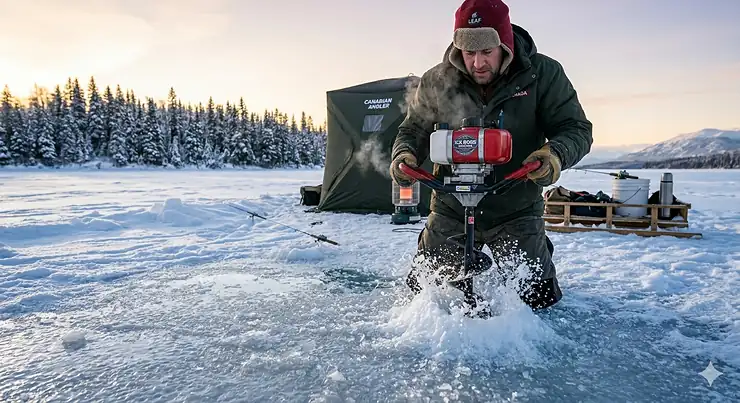
There’s something magical about walking onto a frozen Canadian lake on a crisp winter morning, auger in hand, ready to drill your way to that perfect fishing spot. But here’s the thing—not all ice augers are created equal, especially when you’re dealing with the thick ice conditions we get across Ontario, Quebec, and the Prairies.
I’ve spent countless weekends on frozen lakes from Lake Simcoe to Lesser Slave Lake, and I can tell you that choosing the right ice auger Canada option makes the difference between a productive fishing day and a frustrating workout session. Whether you’re punching through 30 cm (12 inches) of early-season ice or battling through 90 cm (36 inches) of late March freeze, having the proper equipment transforms your experience.
According to Wikipedia, ice fishing gear has evolved tremendously, with ice augers becoming highly specialized tools. The size of the hole depends on your target fish—generally 20 cm (8 inches) is suggested—but Canadian anglers need equipment that can handle our unique conditions: extreme cold, variable ice quality, and the need to drill multiple holes when fish are finicky.
The Canadian ice fishing market has exploded with options lately. From budget-friendly drill attachments around $40 CAD to premium 40V electric powerhouses exceeding $600 CAD, there’s something for every angler and budget. But which one deserves your hard-earned loonies? Let’s drill down into the details.
Quick Comparison Table: Top Ice Auger Canada Picks
| Product | Type | Hole Size | Price (CAD) | Best For | Rating |
|---|---|---|---|---|---|
| ION Alpha 8″ Gen 3 | Electric/Cordless | 8 inches | $550-650 | All-around performance | 4.8/5 |
| StrikeMaster Lithium 40V | Electric/Cordless | 8-10 inches | $500-700 | Quiet, powerful drilling | 4.7/5 |
| VEVOR 8″ Nylon Auger | Drill Attachment | 8 inches | $75-100 | Budget-conscious anglers | 4.4/5 |
| Eskimo Hand Auger 6″ | Manual | 6 inches | $110-130 | Portability & backup | 4.5/5 |
| EGO Power+ IG0800 | Electric/Cordless | 8 inches | $320-380 | Quick drilling sessions | 4.3/5 |
| ION R1 8″ Gen 1 | Electric/Cordless | 8 inches | $210-280 | Mid-range value | 4.4/5 |
| VEVOR 20V Electric | Electric/Cordless | 8 inches | $200-250 | Versatile 2-in-1 design | 4.2/5 |
💬 Just one click – help others make better buying decisions too! 😊
Top 7 Ice Auger Canada Options: Expert Analysis
1. ION Alpha 8-Inch Gen 3 40V Lithium-ion – The Lightweight Champion
If you’ve been following the ice fishing scene in Canada, you’ve heard the buzz about the Alpha series. This auger weighs under 9 kg (20 lbs) yet delivers cutting speeds up to 3.4 inches per second. That’s faster than most anglers can say “walleye.”
Key Specifications:
- 40V lithium-ion battery (4Ah included)
- Up to 610 cm (2000 inches) per charge
- Built-in LED drilling light
- Variable speed trigger with reverse function
Price Range: $550-650 CAD on Amazon.ca
Canadian buyers on Amazon.ca consistently praise its performance in extreme cold. One Manitoba angler reported drilling 25 holes through 60 cm of ice on a single charge with battery power to spare. The reverse function is particularly clever—it flushes slush back down the hole, eliminating the need for an ice skimmer.
✅ Pros: Exceptionally lightweight, best-in-class cutting speed, 3-year warranty including battery
❌ Cons: Premium price point, composite models even lighter but pricier
Canadian Availability: Ships within Canada from Amazon.ca with free delivery on orders over $35
2. StrikeMaster Lithium 40V 8-Inch – The Whisper-Quiet Performer
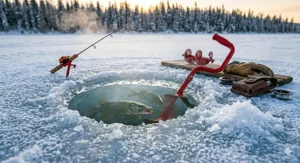
StrikeMaster has been a trusted name in Canadian ice fishing for decades, and their 40V lithium series doesn’t disappoint. What sets this apart? The noise level—or lack thereof. Canadian anglers report being able to drill holes without spooking fish, a huge advantage when targeting pressured lakes near urban centres.
Key Specifications:
- 40V lithium battery system
- 99 cm (39-inch) auger flight (longest in class)
- Instant start, no pull cords
- Available through Canadian retailers
Price Range: $500-700 CAD
The extra-long auger flight means you likely won’t need an extension even in thick late-season ice. One Edmonton angler mentioned measuring 99 cm from blade top to motor bottom—significantly longer than competing Ion augers at 86 cm. This matters when you’re dealing with our notorious Canadian ice thickness.
✅ Pros: Remarkably quiet operation, long auger flight, proven reliability
❌ Cons: Replacement blades cost $90 CAD (vs $65 for competitors), heavier than ION Alpha
Canadian Availability: Available through Canadian sporting goods retailers and online
3. VEVOR 8-Inch Nylon Ice Auger Drill Bit – The Budget King
Not everyone needs a $600 auger, and that’s where VEVOR shines. This drill attachment transforms your existing 18-20V cordless drill into a capable ice fishing tool. At roughly $75-100 CAD, it’s the most affordable entry point for Canadian ice anglers.
Key Specifications:
- 99 cm (39-inch) length with extension rod
- Nylon construction (rust-proof, lightweight at 2.9 kg)
- Includes drill adapter, top plate, blade guard
- Compatible with most cordless drills
Price Range: $75-100 CAD on Amazon.ca
Canadian reviewers emphasize one critical point: you need a powerful drill. A minimum 750 in-lbs torque is recommended. One Ontario user reports excellent results pairing it with a Ridgid R861152 18V brushless drill. The nylon flights won’t rust—a real advantage when you’re storing gear in a damp garage between trips.
✅ Pros: Extremely affordable, lightweight, includes extra blades, rust-proof
❌ Cons: Requires separate drill purchase, slower than dedicated augers, manual effort needed
Canadian Availability: Ships to Canada via Amazon.ca
4. Eskimo Hand Auger 6-Inch HD06 – The Reliable Classic
Sometimes the old ways are the best ways. This hand-powered auger weighs just 2.9 kg (6.5 pounds) and requires zero batteries, fuel, or electricity. Perfect for early-season ice fishing when thickness is manageable or as a backup when your electric auger’s battery dies 10 km from shore.
Key Specifications:
- 6-inch cutting diameter
- Dual flat blades (long-lasting design)
- Cross-bolt takedown system
- Adjustable handle with pommel grip
Price Range: $110-130 CAD
Canadian ice fishing veterans appreciate having a hand auger as insurance. It’s also ideal for mobile anglers who hike to remote lakes where every gram matters. The cross-bolt system prevents over-tightening and allows quick disassembly for transport.
✅ Pros: Never needs charging, extremely portable, reliable, quiet
❌ Cons: Physical effort required, slower drilling, limited to thinner ice
Canadian Availability: Available through Canadian tackle shops including The Fishin’ Hole
5. EGO Power+ IG0800 8-Inch – The Ergonomic Choice
EGO made their name in battery-powered lawn equipment, and they’ve brought that expertise to ice fishing. The IG0800 features an anti-kickback system—a genuine safety feature when you’re drilling through inconsistent ice conditions common in Canadian lakes.
Key Specifications:
- 56V lithium-ion battery system
- Ergonomic handle design
- Anti-kickback technology
- 8-inch hole diameter
Price Range: $320-380 CAD on Amazon.ca
The ergonomic handles reduce fatigue during extended drilling sessions. If you’re the type who pre-drills 30 holes before settling in for the day (and many serious Canadian walleye anglers are), this comfort factor matters. The anti-kickback system prevents dangerous blade catch scenarios.
✅ Pros: Excellent safety features, comfortable grip, reputable brand
❌ Cons: Battery compatibility with EGO lawn tools only, mid-range performance
Canadian Availability: Amazon.ca ships within Canada
6. ION R1 8-Inch Electric Ice Auger – The Value Champion
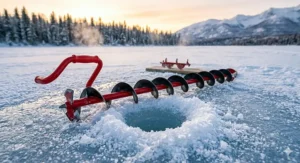
The R1 represents ION’s entry-level offering, but don’t let that fool you. It delivers 35% more power than previous Gen 1 models and cuts 30% faster. At $210-280 CAD, it sits in the sweet spot between budget drill attachments and premium augers.
Key Specifications:
- 5Ah Gen 1 battery (60% more capacity)
- Up to 488 cm (1600 inches) per charge
- Dual LED lights
- Reverse function for slush removal
Price Range: $210-280 CAD on Amazon.ca
At 10.4 kg (23 pounds), it’s heavier than the Alpha series but still manageable. Canadian reviewers note excellent cold-weather performance—the battery delivers consistent power even at -20°C, crucial for our climate. The dual LED positioning under the powerhead illuminates your drilling area perfectly in dark ice huts.
✅ Pros: Strong value proposition, reliable performance, 3-year warranty
❌ Cons: Heavier than premium models, composite polymer head instead of steel
Canadian Availability: Amazon.ca with Canadian shipping
7. VEVOR 20V Electric Ice Auger – The 2-in-1 Innovator
Here’s something unique: a complete cordless ice auger with battery included for $200-250 CAD. VEVOR’s 20V model includes both ice and earth auger bits, making it genuinely versatile for Canadian property owners who need post-hole digging in summer.
Key Specifications:
- 20V 4000mAh battery included
- 20 cm (8-inch) diameter
- Brushless motor for efficiency
- Dual-purpose design (ice + earth drilling)
Price Range: $200-250 CAD
One caveat from Canadian users: the steep blade angle cuts aggressively, which can make it harder to control during breakthrough. However, one Saskatchewan angler drilled 18 holes through 50 cm ice and still had two-thirds battery remaining. That’s impressive for a budget-friendly complete system.
✅ Pros: Complete system with battery, 2-in-1 functionality, affordable
❌ Cons: Aggressive cutting can jar on breakthrough, heavier than alternatives
Canadian Availability: Ships to Canada via VEVOR.ca and Amazon.ca
Understanding Ice Auger Types for Canadian Conditions
When you’re shopping for an ice auger Canada option, you’ll encounter three main categories, each with distinct advantages for our climate and ice conditions.
Electric/Cordless Augers: The Modern Standard
Electric ice augers have revolutionized Canadian ice fishing over the past decade. Battery technology has improved dramatically—modern lithium-ion systems perform reliably even at -30°C. The silence factor alone makes them worth considering; you won’t announce your presence to every fish within 100 metres.
Most models use 40V or higher battery systems. Higher voltage doesn’t always mean better performance, but it generally correlates with drilling capacity. A 40V battery typically handles 20-40 holes through 60 cm ice before needing a recharge. Cold reduces efficiency, so smart anglers keep spare batteries warm inside their jackets.
Hand Augers: The Backup Heroes
Never underestimate a quality hand auger. They’re perfect for early-season fishing when ice is 15-30 cm thick, and they make excellent backups. Ontario ice fishing regulations allow two lines in most waters, meaning you might drill numerous holes—a hand auger keeps you fishing when batteries die.
The physical effort is real, though. Drilling through 60 cm of ice with a hand auger is a workout. But they’re nearly indestructible, require zero maintenance, and never leave you stranded.
Drill-Powered Attachments: The Budget Gateway
These clever devices convert your existing cordless drill into an ice auger. They’re legitimate tools if paired with an appropriate drill. You need minimum 18V power with high torque—preferably 750+ in-lbs. Brushless motors handle the load better than brushed versions.
The downside? You’re manually supporting the entire drill-auger assembly during operation. After 10-15 holes, your arms know they’ve been working. But at $40-100 CAD, they’re unbeatable for occasional ice anglers or those testing the waters before committing to premium equipment.
StrikeMaster vs Jiffy Ice Auger: The Canadian Perspective
This debate has raged in Canadian ice fishing circles for decades. Both brands have loyal followings, and for good reason—they’re both excellent. But there are meaningful differences worth considering.
Power and Performance Comparison
StrikeMaster augers, particularly the 40V lithium models, emphasize torque and cutting speed. The Lazer blade technology holds edges longer, crucial when drilling through sand-contaminated ice near shorelines. Canadian reviews consistently mention the instant-start reliability—no pull cords failing in -25°C temperatures.
Jiffy has built their reputation on gas-powered reliability. Their propane models are legendary in northern Canada where extreme cold can challenge battery performance. Propane burns cleaner than gasoline and starts more reliably in severe cold. However, Jiffy’s electric offerings have lagged behind StrikeMaster in recent years.
Pricing and Value in Canada
StrikeMaster replacement blades run approximately $90 CAD for 10-inch models versus $65 CAD for comparable alternatives. Over the auger’s lifespan, this adds up. However, the blades require sharpening less frequently, potentially offsetting the cost difference.
Jiffy gas augers require ongoing fuel costs and maintenance (spark plugs, carburetors, fuel stabilizer). Electric StrikeMaster models eliminate these expenses but have battery replacement costs after 3-5 years of heavy use.
Cold Weather Performance
Both brands function in extreme Canadian cold, but differently. StrikeMaster’s lithium batteries maintain performance down to about -30°C. Below that, keeping batteries warm between uses becomes critical. Jiffy propane models work reliably to -40°C and colder—a genuine advantage for northern anglers.
The verdict? For most southern Canadian anglers (Ontario, Quebec, southern Prairies), StrikeMaster’s electric lineup offers better convenience. For northern territories and extreme cold specialists, Jiffy propane deserves serious consideration.
Electric Ice Auger Canada Review: What Actually Works in Our Climate
Canadian winters test equipment differently than American ones. Our prolonged cold snaps, variable ice conditions, and thick ice development require augers that can genuinely perform, not just survive.
Battery Performance in Canadian Cold
Lithium-ion batteries lose capacity as temperature drops. At -20°C, expect 20-30% reduced performance compared to manufacturer specifications (usually tested at 0°C). This isn’t a defect—it’s chemistry.
Smart Canadian anglers use multiple strategies: storing batteries inside jackets between uses, purchasing second batteries, and choosing higher-capacity batteries when available. ION offers 4Ah, 5Ah, and larger options. The capacity difference matters when you’re drilling through 75 cm of March ice.
Cutting Performance Through Variable Ice
Canadian ice isn’t uniform. You’ll encounter clear blue ice (hardest), white ice (with air bubbles), and layered ice with varying densities. Quality electric augers like the ION Alpha and StrikeMaster 40V handle transitions smoothly. Budget models can bog down or stall during density changes.
The reverse function found on premium models proves invaluable. When ice shavings accumulate in the hole, reverse rotation flushes them down rather than requiring manual skimming. This saves minutes per hole—meaningful when you’re drilling 30+ holes.
Reliability and Warranty Considerations
ION and StrikeMaster both offer 3-year warranties covering batteries—important for Canadian buyers. Standard manufacturer warranties often exclude batteries after one year. Given that replacement batteries cost $150-300 CAD, the extended coverage provides peace of mind.
Check whether warranties cover Canadian purchasers specifically. Some American brands limit warranty service, requiring expensive cross-border shipping for repairs.
Hand Auger vs Power Auger: Making the Right Choice
This decision comes down to your fishing style, physical capability, ice thickness expectations, and budget. Let’s examine the trade-offs honestly.
Physical Effort and Drilling Speed
Drilling a single 8-inch hole through 30 cm of ice with a hand auger takes roughly 30-45 seconds of steady effort. Through 60 cm? Two to three minutes of hard work. A power auger does the same job in 5-10 seconds with minimal effort.
If you drill 5 holes per outing through moderate ice, a hand auger works fine. If you’re drilling 20-40 holes searching for active fish, a power auger transforms your experience. Canadian tournament anglers almost universally use power augers for this reason.
Portability and Access
Hand augers excel for backcountry fishing. They weigh 3-7 kg versus 9-12 kg for electric models. When you’re snowshoeing 2 km to a remote lake, that difference matters enormously. Hand augers also break down for easier transport in backpacks.
Power augers suit vehicle-accessible lakes where you park close to fishing spots. They’re perfect for Lake Simcoe perch anglers or Winnipeg walleye enthusiasts who drive trucks onto the ice.
Cost and Maintenance Analysis
Quality hand augers cost $100-200 CAD and require virtually zero maintenance beyond occasional blade sharpening ($20-30 CAD every few seasons). Power augers demand $300-700 CAD initially, plus battery replacements ($150-300 CAD every 3-5 years) and blade changes ($40-90 CAD).
Over ten years, a hand auger might cost $200 total. A power auger could run $800-1200 when accounting for batteries and blades. The convenience costs money—decide if it’s worth it based on your fishing frequency.
Ice Auger Blade Sharpening: Maintaining Peak Performance
Dull blades make drilling miserable. They require excessive downward pressure, drain batteries faster, and can even damage your auger’s motor. Proper blade maintenance extends equipment life and preserves your sanity.
Recognizing Dull Blades
Sharp blades cut effortlessly, producing fine ice shavings that clear easily. Dull blades chatter, vibrate excessively, and produce coarse chips or powder. If you’re pressing down hard to maintain cutting speed, your blades need attention.
Sand-contaminated ice near shorelines dulls blades fastest. Rocky lake bottoms where the auger occasionally contacts underwater structure also accelerate wear. According to ice fishing experts, Canadian regulations require proper ice thickness checks—meaning you’ll drill test holes frequently, increasing blade wear.
Sharpening Methods and Costs
Professional sharpening services charge $20-40 CAD per set. Many sporting goods stores offer this service, completing work in 2-3 days. For frequent anglers, learning DIY sharpening makes sense.
A quality file costs $15-25 CAD. Work slowly, maintaining the original blade angle (typically 30-35 degrees). Remove equal material from both blades to preserve balance. Unbalanced blades cause vibration and irregular holes.
Some premium blades feature special coatings or hardening that complicates home sharpening. These often require professional service or replacement. Factor this into your purchasing decision—easily-sharpened steel blades offer long-term cost advantages.
Blade Replacement Options
Replacement blades range from $30-90 CAD depending on size and brand. Generic blades fit some models but verify compatibility carefully. Poorly-fitting blades won’t cut properly and risk damaging your auger.
Canadian anglers should stock spare blades before ice season. Nothing’s worse than discovering dull blades Saturday morning with the lake frozen perfect. Most augers make blade changes simple—10 minutes with basic tools.
Auger Hole Diameter: Matching Size to Target Species
Hole size directly impacts your success with different fish species. Too small and you can’t land fish; too large and you’re wasting drilling time and battery power. Here’s how Canadian anglers should think about diameter.
6-Inch Holes: The Panfish Standard
Perfect for yellow perch, crappie, and smaller walleye (under 45 cm). A 6-inch hole drills quickly, conserves battery, and provides adequate clearance for these species. Many Ontario and Quebec panfish specialists prefer this size for mobility—you can drill numerous holes efficiently.
The limitation? You can’t land larger fish without difficulty. A 2 kg walleye fits awkwardly through a 6-inch hole. Pike, lake trout, or trophy walleye simply won’t fit.
8-Inch Holes: The Versatile Choice
This diameter handles 95% of Canadian ice fishing situations. It accommodates walleye, northern pike up to 80 cm, lake trout, burbot, and whitefish. The extra clearance makes landing fish easier and reduces lost fish due to hole-size restrictions.
Eight-inch holes also accommodate modern electronics better. Flashers, underwater cameras, and sonar transducers fit comfortably with room for fishing lines. This matters when you’re stationary fishing rather than hole-hopping.
10-Inch Holes: The Trophy Standard
Serious lake trout anglers and muskie chasers need 10-inch holes. Landing a 90 cm lake trout through an 8-inch hole courts disaster. The extra diameter provides necessary clearance for net and fish.
The trade-off? Drilling time and battery consumption increase significantly. A 10-inch hole requires roughly 40% more cutting than 8-inch. If you’re drilling 20 holes, that reduced battery life matters. Choose 10-inch only when targeting genuinely large fish.
Ice Thickness Capacity Auger: Canadian Winter Demands
Canadian ice conditions vary tremendously, from 30 cm early-season ice to 120 cm+ late March ice in northern regions. Your auger must match these conditions.
Standard Auger Lengths
Most electric augers feature 86-99 cm flights. This handles ice up to 75-85 cm comfortably—adequate for southern Canadian lakes through most winter. However, late-season ice or northern lakes can exceed this capacity.
When ice approaches your auger’s maximum length, drilling becomes difficult. Ice chips can’t evacuate properly, causing the auger to bog down. You’re forced to partially withdraw, clear chips, and re-enter—frustrating and time-consuming.
Extension Options
Quality augers offer extension attachments, adding 25-40 cm to drilling depth. Extensions cost $50-120 CAD and install relatively easily. ION, StrikeMaster, and VEVOR all offer extensions for their respective models.
The downside? Extensions add weight and can introduce flex or wobble. The auger becomes less portable and slightly harder to control. Only add extensions when necessary rather than using them constantly.
Northern Canada Considerations
Anglers in Yukon, Northwest Territories, and northern provinces should prioritize longer augers initially. By late winter, 100+ cm ice thickness is normal. Gas-powered models with longer flights or purpose-built extended augers make sense.
Battery performance also suffers in extreme cold. At -35°C, even quality lithium batteries struggle. Propane augers maintain power reliability, explaining their continued popularity in Canada’s north despite electric models’ advantages elsewhere.
Cordless Ice Auger Battery Life: Maximizing Performance
Battery life determines how many holes you can drill before heading home—critical for Canadian anglers who often travel significant distances to fishing spots.
Understanding Battery Capacity
Battery capacity measures in amp-hours (Ah). A 4Ah battery stores less energy than a 6Ah battery. For ice fishing, higher capacity usually matters more than marketing claims about speed.
Real-world performance: A 4Ah 40V battery typically drills 20-30 eight-inch holes through 60 cm ice under ideal conditions. At -20°C? Expect 15-25 holes. The cold penalty is unavoidable with current lithium-ion technology.
Cold Weather Battery Management
Canadian anglers must treat batteries carefully. Before fishing, store batteries at room temperature. During fishing, keep spares inside your jacket or heated ice hut. Cold batteries lose 30-50% capacity compared to warm ones.
Some anglers use insulated battery pouches with chemical warmers, maintaining batteries near 0°C even when ambient temperatures drop to -30°C. This tricks the battery into performing closer to rated capacity.
Charging and Storage Best Practices
Never store lithium batteries fully discharged—this permanently reduces capacity. Maintain 40-60% charge during off-season storage. Canadian winters mean long storage periods (often 6-8 months), so this matters.
Charge batteries at room temperature, never frozen. Charging frozen batteries risks permanent damage. After ice fishing, allow batteries to warm to room temperature (minimum +10°C) before charging. This protects long-term battery health.
✨ Don’t Miss These Exclusive Deals!
🔍 Take your ice fishing to the next level with these carefully selected products available in Canada. Click on any highlighted item to check current pricing and availability on Amazon.ca. These tools will help you create authentic fishing memories your family will love!
Choosing the Right Ice Auger Canada: Decision Framework
With dozens of models available, how do you actually choose? Here’s a practical framework based on Canadian conditions and real angler needs.
Budget-Based Recommendations
Under $150 CAD: Choose drill-powered attachments like the VEVOR 8-inch nylon auger. Pair with a quality 18-20V drill you likely already own. Perfect for occasional anglers or those trying ice fishing.
$200-400 CAD: The ION R1 or EGO Power+ models deliver excellent value. Complete systems with batteries, reliable performance, and adequate drilling capacity for southern Canadian conditions.
$500+ CAD: Premium options like ION Alpha or StrikeMaster 40V provide best-in-class performance, superior battery life, and features like variable speed and LED lighting. Worth it for frequent anglers.
Fishing Style Considerations
Mobile Anglers (hole-hopping for active fish): Prioritize lightweight models under 9 kg with fast cutting speeds. The ION Alpha Plus composite model weighs under 7 kg—perfect for covering ice efficiently.
Stationary Anglers (pre-drilling then settling): Focus on battery capacity and drilling depth. The StrikeMaster 40V with its long auger flight handles thick ice without extensions.
Backcountry Enthusiasts: Hand augers or ultra-light drill attachments make sense. The Eskimo 6-inch hand auger weighs only 3 kg and never needs charging.
Regional Considerations
Southern Ontario/Quebec: Standard 40V electric augers with 86-99 cm flights handle typical ice conditions perfectly. The ION Alpha or StrikeMaster 40V are ideal choices.
Prairie Provinces: Variable ice conditions and potentially extreme cold suggest either high-capacity electric models with spare batteries or reliable propane augers. The StrikeMaster Lithium 40V performs well here.
Northern Territories: Extreme cold and thick ice favour propane augers or high-capacity electric models with aggressive cold-weather preparation. Extended-length augers prevent frustration in 100+ cm ice.
Safety Considerations for Canadian Ice Fishing
Using ice augers safely goes beyond the obvious “don’t stick your hand near spinning blades.” Canadian ice fishing regulations emphasize safety, and auger operation plays a role.
Ice Thickness Verification
Augers help verify ice safety. Drill test holes while approaching your fishing spot, checking thickness progression. Clear blue ice should be minimum 10 cm for walking, 15 cm for snowmobiles, 20-30 cm for cars, and 40+ cm for trucks.
White ice (with air pockets) requires greater thickness for equivalent strength—roughly 1.5x these minimums. Near-shore ice is often thickest; ice farther out can be thinner, especially early and late season.
Operational Safety
Never drill while holding the auger between your legs or with unstable footing. Breakthrough can catch you off-guard, potentially causing falls. Maintain balanced stance slightly behind the auger.
Keep bystanders—especially children—at least 3 metres away during drilling. Ice chips fly unpredictably, and the rotating auger presents obvious hazards. Modern electric augers with variable speed triggers reduce risk versus full-throttle gas models.
Weather and Cold Exposure
Prolonged drilling in severe cold risks frostbite on exposed skin. Canadian anglers should wear insulated gloves during drilling. Some electric models now feature heated handles (though rare in our market).
Pay attention to wind chill. At -25°C with 30 km/h winds, exposed skin can freeze in under 10 minutes. Plan drilling sessions accordingly, and warm up inside a shelter between extended drilling periods.
FAQ
❓ How much does a good ice auger cost in Canada?
❓ Can electric ice augers handle thick Canadian ice?
❓ What size ice auger hole is best for walleye in Canada?
❓ How do I sharpen ice auger blades in Canada?
❓ Do cordless ice augers work in extreme Canadian cold?
Conclusion: Choosing Your Perfect Ice Auger Canada Solution
After drilling hundreds of holes across Canadian ice over the years, I’ve learned that the “best” ice auger depends entirely on your specific needs, fishing style, and budget. There’s no single perfect choice—but there’s definitely a perfect choice for you.
For most southern Canadian anglers fishing accessible lakes with moderate ice thickness, the ION Alpha 8-inch Gen 3 represents the sweet spot of performance, weight, and value. Its 3.4 inches-per-second cutting speed and under-9-kg weight make drilling 20-30 holes effortless, even through 60 cm ice.
Budget-conscious anglers or those new to ice fishing should seriously consider the VEVOR 8-inch drill attachment. At $75-100 CAD, it’s accessible enough to remove financial barriers while delivering legitimate drilling capability when paired with an appropriate cordless drill.
For northern anglers or those facing extreme conditions, the StrikeMaster Lithium 40V offers the longest auger flight (99 cm) and exceptional cold-weather reliability, justifying its premium price for serious enthusiasts.
Remember: the ice auger is your gateway to everything beneath. Whether you’re targeting perch through 30 cm of early December ice or drilling for lake trout through 75 cm of March freeze, having confidence in your equipment transforms the experience from work into pure enjoyment.
Check ice thickness before venturing out, maintain your equipment properly, and respect our beautiful Canadian winters. Tight lines and safe fishing! 🍁
Recommended for You
- 7 Best Portable Ice Fishing Huts Canada 2026
- 7 Best Ice Fishing Shelters Canada 2026
- 7 Best Ways to Prevent Water Bottle Freezing Camping Canada 2026
Disclaimer: This article contains affiliate links to Amazon.ca. If you purchase products through these links, we may earn a small commission at no additional cost to you.
✨ Found this helpful? Share it with your friends! 💬🤗
