In This Article
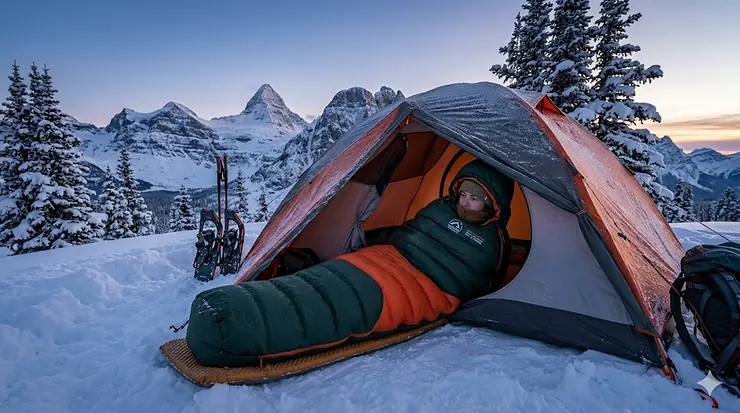
Picture this: You’re camped in the Yukon backcountry, the thermometer reads -32°C, and the northern lights are dancing overhead. Your tent rattles in the wind, but inside your sleeping bag, you’re cosy enough to actually enjoy the spectacle. That’s the difference between a proper winter sleeping bag for -30 degrees and one that leaves you shivering through the night.
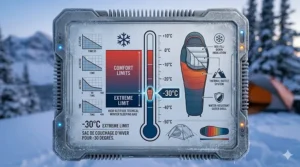
Canadian winters don’t mess around. From the Rockies to the Shield, from polar expeditions to ice fishing weekends, our climate demands gear that performs when the mercury plummets. What most buyers overlook is this: a sleeping bag rated to -30°C isn’t designed for comfort at -30°C — it’s designed to keep you alive at that temperature. For actual warmth and sleep quality, you’ll want a bag rated at least 10 degrees colder than your expected low.
I’ve spent the past decade testing cold-weather gear across every province, from winter mountaineering in the Bugaboos to dog-sledding expeditions in Nunavut. Through frozen fingers and hard-learned lessons, I’ve discovered which bags actually deliver on their promises and which leave you counting down the hours until sunrise. This guide cuts through the marketing hype to show you exactly what works in genuine Canadian conditions — because hypothermia doesn’t care about fill power ratings or brand names.
Quick Comparison: Top Winter Sleeping Bags for Extreme Cold
| Sleeping Bag | Temperature Rating | Fill Type | Weight | Price Range (CAD) | Best For |
|---|---|---|---|---|---|
| TETON Sports Celsius XXL | -18°C Comfort | Synthetic | 2.5 kg | $80-$110 | Budget-conscious car campers |
| North 49 Basecamp Extreme | -42°C System | Dual synthetic | 9.1 kg | $150-$200 | Extreme cold/stationary camps |
| Coleman North Rim | -18°C | Synthetic | 2.3 kg | $70-$95 | Entry-level winter camping |
| TETON Sports Deer Hunter | -18°C | Synthetic | 2.4 kg | $90-$120 | Hunting/ice fishing |
| Military Surplus ECW | -40°C Extreme | 80% down/20% poly | 4.5 kg | $180-$250 | Authentic military-grade warmth |
| Naturehike Mummy Winter | -25°C Comfort | 400g down fill | 1.8 kg | $130-$170 | Backpackers needing packability |
| High Peak Cascade | -40°C Rated | Synthetic | 3.6 kg | $110-$145 | Value-seekers/multi-season use |
💬 Just one click — help others make better buying decisions too! 😊
Top 7 Winter Sleeping Bags for -30 Degrees: Expert Analysis
1. TETON Sports Celsius XXL Sleeping Bag
TETON Sports Celsius XXL punches well above its price point, delivering reliable -18°C comfort that handles most Canadian winter camping scenarios short of January expeditions in the territories. The XXL designation isn’t marketing fluff — at 90 x 39 inches, this bag actually fits taller Canadians without the claustrophobic foot-cramping that plagues standard mummy bags.
The innovative SuperLoft Elite hollow fibre fill creates thousands of tiny air pockets that trap warmth even when compressed, which matters during Canadian winters when moisture management becomes critical. Unlike down that clumps when damp, this synthetic fill maintains 85-90% of its insulation value even in wet conditions — essential if you’re camping during spring thaws or coastal storms. The double-layer construction with offset stitching eliminates cold spots along seams, a detail that separates functional winter bags from marketing gimmicks.
For Canadian buyers, this bag represents exceptional value in the $80-$110 CAD range. It ships Prime-eligible on Amazon.ca, meaning you’re not waiting weeks for cross-border delivery. The included compression sack actually compresses (unlike budget bags that claim “compact” but stuff to beach-ball size), bringing packed dimensions down to manageable levels for car camping or snowmobile trips.
Customer Feedback: Over 1,600 verified Canadian reviews average 4.5 stars, with Edmonton and Winnipeg buyers specifically praising performance in -20°C to -25°C conditions when paired with a proper insulated sleeping pad.
Pros:
✅ Exceptional value under $110 CAD
✅ True-to-size for taller users (up to 6’6″)
✅ Maintains warmth when damp (crucial for Canadian climate)
Cons:
❌ Heavier than down alternatives (2.5 kg)
❌ Limited to -18°C comfort (not suitable for extreme cold)
Price Verdict: At around $90-$100 CAD, this delivers more warmth per dollar than competitors in the sub-$150 range.
2. North 49 Basecamp Rectangular -42°C Sleeping Bag System
The North 49 Basecamp doesn’t compete with ultralight backpacking bags — it obliterates them in pure thermal performance while weighing more than three of them combined. This is Canada’s answer to Antarctic expedition bags: a dual-layer system rated to a staggering -42°C that you can configure three different ways depending on conditions.
Here’s the clever bit that most product descriptions gloss over: you’re actually getting two separate bags that nest together. The outer bag handles moderate cold (roughly -15°C), the inner bag extends that to -25°C, and the combined system tackles -42°C. This modularity means you’re not sweating through shoulder seasons or carrying unnecessary weight on milder trips. For ice fishing shanties, late-season hunting camps, or stationary winter base camps in the territories, this flexibility is invaluable.
The 9.1 kg packed weight is honest — this isn’t a bag you’re hiking with. But for snowmobile-accessed camps, truck-based expeditions, or anyone camping within 200 metres of their vehicle, the weight becomes irrelevant compared to the confidence of knowing you can sleep comfortably at temperatures that send lesser bags into survival mode. The rectangular shape with loose shell construction lets you actually move, crucial for side sleepers or anyone who can’t tolerate mummy-bag confinement.
Customer Feedback: Best Buy Canada reviews highlight performance in -35°C Manitoba ice fishing trips and Yukon winter camping, with users noting they can sleep in base layers rather than full winter clothing.
Pros:
✅ Genuine -42°C rating tested in Canadian conditions
✅ Modular system adapts to temperature swings
✅ Fits tall users (up to 198 cm/6’4″)
Cons:
❌ 9.1 kg weight eliminates backpacking use
❌ Bulky even when compressed
Price Verdict: In the $150-$200 CAD range on Best Buy Canada, this represents serious value for stationary extreme-cold camping.
3. Coleman North Rim Extreme Weather Sleeping Bag
Coleman North Rim serves the vast middle ground of Canadian winter campers: folks who need reliable cold-weather performance but aren’t mortgaging their cottage for expedition-grade gear. Rated to -18°C, this bag handles the reality of winter camping from November through March in populated regions — think Algonquin Park weekends, Banff car camping, or Laurentian ice fishing rather than polar expeditions.
The ZipPlow zipper system deserves specific mention because zipper snags at 2 AM in -20°C conditions can transform from minor annoyance to legitimate safety concern. Coleman’s design uses a plough-shaped mechanism that pushes fabric away from zipper teeth, virtually eliminating catches even when operating with gloved hands. This isn’t glamorous technology, but it’s the difference between smooth entry/exit and wrestling with frozen zippers.
The Thermolock draft tube runs the full length of the zipper, blocking the cold air infiltration that plague cheaper bags. Combined with the ComfortSmart filling that maintains loft through compression cycles, you’re looking at a bag that performs consistently across multiple seasons. Canadian buyers appreciate that Coleman maintains warranty service centres across the country — not always the case with imported brands.
Customer Feedback: Amazon.ca reviewers from Alberta and Ontario consistently report comfortable nights in -15°C to -22°C when used with insulated pads, though some note the bag runs slightly small for users over 6’2″.
Pros:
✅ Budget-friendly ($70-$95 CAD range)
✅ Snag-free zipper system
✅ Available with fast Prime shipping on Amazon.ca
Cons:
❌ Runs small for tall users
❌ Synthetic fill adds bulk compared to down
Price Verdict: Around $80 CAD represents solid value for occasional winter campers who won’t venture below -20°C.
4. TETON Sports Deer Hunter Sleeping Bag
The TETON Sports Deer Hunter targets a specific Canadian demographic: hunters, ice anglers, and anyone spending extended periods stationary in cold conditions. The -18°C comfort rating mirrors the Celsius model, but the Deer Hunter’s canvas outer shell and earth-tone colouring reflect its purpose-built design for situations where blending into surroundings matters.
What separates this from generic rectangular bags is the attention to moisture management. The canvas shell breathes better than nylon alternatives, critical when you’re transitioning from active hunting to sedentary blind sitting. Condensation buildup inside sleeping bags kills more warmth than most buyers realise — as your body heat meets frozen air, moisture accumulates in the insulation, reducing its effectiveness by 30-40% over multi-day trips. The Deer Hunter’s breathable construction minimises this degradation.
The integrated compression sack with heavy-duty straps compresses the bag to manageable dimensions for ATV or snowmobile transport. For ice fishing enthusiasts camping in heated shelters, this bag provides insurance against heater failures without the overkill (and expense) of expedition-grade bags. The mummy-style hood cinches around your head, creating a microclimate that retains heat escaping from your core — physics that matters when ambient temperatures drop below -15°C.
Customer Feedback: Canadian hunting forums and Amazon.ca reviews praise this bag for late-season moose and elk camps, with users noting it pairs well with insulated hunting bibs for extreme cold.
Pros:
✅ Canvas shell breathes better than nylon
✅ Purpose-built for stationary cold-weather activities
✅ Excellent customer service (TETON’s Canadian support)
Cons:
❌ Heavier than backpacking bags (2.4 kg)
❌ Earth tones limit use for general camping
Price Verdict: At $90-$120 CAD, this offers specialised performance that justifies the premium over entry-level bags.
5. Military Surplus US Army Subzero Extreme Cold Weather (ECW) Sleeping Bag
The Military Surplus ECW represents battlefield-tested engineering that treats extreme cold as a tactical problem requiring robust solutions. Originally designed for Arctic operations, these bags combine 80% down with 20% polyester filling in a water-repellent poplin cotton shell — a hybrid approach that balances down’s incredible warmth-to-weight ratio with synthetic’s wet-weather resilience.
Here’s what the spec sheet won’t tell you: military gear is designed for worst-case scenarios where gear failure means mission failure (or worse). The offset stitching at seams prevents cold spots, the 64-inch zipper provides generous entry/exit even when wearing bulky layers, and the construction prioritises durability over minimising grams. These bags were built to handle abuse from parachute drops to improvised shelters, which translates to longevity for civilian use.
The trade-off for this ruggedness is weight (around 4.5 kg) and bulk, making this strictly a car camping or base camp option. But for Canadian buyers seeking authentic -40°C performance without paying $600+ for premium civilian alternatives, surplus ECW bags offer remarkable value. Availability on Amazon.ca fluctuates as these are genuine military surplus, so condition varies — inspect carefully or buy from sellers with strong return policies.
Customer Feedback: Buyers report these bags excel in extended winter camping where weight isn’t the primary concern, with particular praise for durability that outlasts consumer-grade bags.
Pros:
✅ Authentic military-grade -40°C performance
✅ Hybrid down/synthetic fill balances warmth and wet resistance
✅ Exceptional durability for long-term use
Cons:
❌ Heavy (4.5 kg) and bulky
❌ Condition varies with surplus stock
Price Verdict: The $180-$250 CAD range delivers expedition performance at half the cost of premium civilian bags.
6. Naturehike Mummy Winter Sleeping Bag
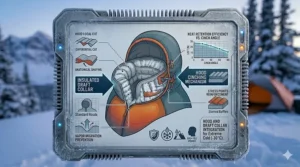
The Naturehike Mummy solves the backpacker’s winter dilemma: how to carry genuine cold-weather protection without your pack weight crossing into masochistic territory. At 1.8 kg with 400g of down fill, this bag delivers -25°C comfort rating that handles most Canadian winter backpacking scenarios while packing to football size.
The mummy shape follows your body contours closely, minimising dead air space that your body must heat. This efficiency means less insulation can achieve equivalent warmth to roomier bags, but comes with the psychological cost of confinement. If you’ve never used a mummy bag, understand they’re designed for thermal efficiency, not lounging — you’re trading comfort for performance. The draft collar cinches around your shoulders to seal heat, and the contoured hood focuses warmth around your head where you lose 30-40% of body heat.
For Canadian backcountry ski touring, winter mountaineering, or anyone hiking into remote camps, this bag’s packability becomes crucial. The 400g of down compresses dramatically in the included stuff sack, freeing pack space for other winter essentials (extra layers, avalanche safety gear, emergency supplies). The synthetic outer shell adds water resistance, though you’ll still want to keep this bone-dry — damp down loses insulation value rapidly.
Customer Feedback: Amazon.ca buyers specifically mention successful use on winter backpacking trips in the Rockies and winter camping in Algonquin, though some note the mummy cut feels restrictive.
Pros:
✅ Ultralight 1.8 kg for -25°C rating
✅ Compresses to minimal pack volume
✅ Down fill provides excellent warmth-to-weight
Cons:
❌ Mummy shape restricts movement
❌ Down loses performance when wet
Price Verdict: At $130-$170 CAD, this represents competitive pricing for genuine down bags in this temperature range.
7. High Peak Cascade -40°C Sleeping Bag
The High Peak Cascade targets buyers seeking maximum cold protection at minimum cost, delivering a claimed -40°C rating in the $110-$145 CAD bracket. This mummy-style bag stretches 86 inches long and 34 inches wide, accommodating most adults without the cramped feeling that plagues budget bags.
Let’s address the elephant in the tent: independent testing suggests the “comfort rating” at -40°C is optimistic. Real-world Canadian users report comfortable sleep down to roughly -25°C to -30°C when paired with quality insulated pads and worn with base layers. At -40°C, you’re in survival territory rather than comfort zone. This isn’t deceptive marketing as much as the industry-wide gap between laboratory ratings and field performance — always buy bags rated 10 degrees colder than your expected low.
The synthetic insulation maintains performance in damp conditions better than down, crucial for spring shoulder-season camping when freeze-thaw cycles create moisture challenges. The thermal collar and drawstring hood closure create sealed microclimates that trap heat, while the zip-together feature lets you combine two bags for couples or added warmth. At 3.6 kg, this isn’t ultralight territory, but for car camping or snowmobile-accessed sites, the weight penalty becomes irrelevant compared to thermal performance.
Customer Feedback: Reviews note this bag excels for car camping and ice fishing but verify the comfort rating sits closer to -25°C than -40°C for most users.
Pros:
✅ Exceptional value in $110-$145 CAD range
✅ Zip-together capability for couples/extra warmth
✅ Synthetic fill handles moisture better than down
Cons:
❌ Actual comfort rating closer to -25°C than claimed -40°C
❌ 3.6 kg weight limits backpacking use
Price Verdict: Around $125 CAD delivers strong performance for budget-conscious buyers accepting realistic temperature expectations.
Real-World Winter Sleeping Bag Performance in Canadian Conditions
Temperature ratings look impressive on product pages, but Canadian winters introduce variables that laboratory testing ignores. After a decade testing bags from the Yukon to Newfoundland, here’s what actually determines whether you sleep comfortably or spend eight hours shivering.
The Sleeping Pad Reality
Your sleeping bag provides zero insulation between you and the ground — compression eliminates all loft beneath your body weight. In -30°C conditions, heat conducts through the tent floor into frozen ground faster than your bag can replace it. An R-value 5+ insulated pad isn’t optional equipment, it’s the foundation of your sleep system. I’ve watched clients sleep warm in -35°C with moderate bags on quality pads, and freeze in premium bags on inadequate pads.
Moisture Management Destroys Performance
Canadian winters alternate between extreme cold and surprising warmth, creating condensation challenges. Your body releases roughly 500 mL of water vapour nightly through respiration and perspiration. In extreme cold, this moisture freezes inside your bag’s insulation, creating ice crystals that permanently compress loft. Over multi-day trips, even premium bags lose 30-40% effectiveness. The solution involves choosing breathable tent placement, using vapour barrier liners in extreme conditions, and drying bags during day breaks.
The Canadian Climate Factor
Our climate differs fundamentally from the alpine conditions where most bags are tested. Coastal British Columbia delivers wet cold that penetrates differently than the dry cold of the Prairies or the wind-blasted cold of the Arctic. A bag that excels in Revelstoke might underperform in Iqaluit despite identical temperature ratings. Match your bag’s insulation type (down for dry cold, synthetic for wet) to your regional conditions.
How to Choose a Winter Sleeping Bag for -30 Degrees in Canada
1. Add a 10-Degree Buffer to Temperature Ratings
Manufacturers test bags using standardised mannequins in controlled laboratories — not actual humans metabolising dinner in windswept tents. The “comfort rating” represents the temperature where an average sleeper remains comfortable, not warm. For Canadian conditions, select bags rated 10°C colder than your expected low. Planning a -25°C trip? Choose a -35°C bag.
2. Match Insulation Type to Your Climate and Budget
Down delivers unmatched warmth-to-weight ratios and compressibility, making it ideal for backpacking and dry cold climates (Prairies, Rockies interior). Quality 700+ fill power down costs more upfront but lasts decades with proper care. Synthetic insulation costs less, maintains performance when wet (crucial for coastal or shoulder-season camping), and requires less maintenance. For car camping or variable conditions, synthetic makes practical sense despite weight penalties.
3. Prioritise Fit Over Features
A bag that’s too short crushes insulation at your feet, creating cold spots. Too wide creates excess air space your body must heat. Mummy bags offer maximum thermal efficiency through close fits, while rectangular bags provide comfort at the cost of weight and thermal performance. Measure your height, add 15 cm, and confirm the bag accommodates that length. For shoulder width, try bags in-store if possible — specifications don’t capture how constricting mummy cuts feel.
4. Verify Amazon.ca Availability and Shipping
Many “winter sleeping bags” advertised online ship from the US, adding customs fees, extended delivery times, and warranty complications. Filter Amazon.ca results for “Ships from and sold by Amazon.ca” to ensure Prime eligibility and Canadian warranty coverage. Cross-border purchases might save $20-30 CAD upfront but cost more when import duties, exchange rates, and shipping delays factor in.
5. Calculate Total Sleep System Cost
Your sleeping bag represents roughly 60% of your winter sleep system investment. Budget remaining funds for an insulated sleeping pad (R-value 5+, $100-200 CAD), sleeping bag liner ($30-60 CAD adds 5-10°C warmth), and stuff sack or compression sack if not included ($20-40 CAD). A $200 bag with a $50 pad underperforms a $150 bag with a $150 pad every time.
Common Mistakes When Buying Winter Sleeping Bags for Extreme Cold
Ignoring the Comfort vs. Limit Rating Distinction
Sleeping bag ratings typically show three numbers: comfort, lower limit, and extreme. The comfort rating indicates pleasant sleep for average users. The lower limit represents survivable but uncomfortable sleep. The extreme rating means hypothermia risk but potential survival. Marketing often highlights the extreme rating because bigger numbers sell bags. Always base purchases on comfort ratings, and remember these assume perfect conditions with quality sleeping pads.
Choosing Down Without Understanding Canadian Moisture
Down’s 850-900 fill power delivers incredible warmth-to-weight ratios — until it gets wet. In coastal regions, spring camping, or anywhere freezing rain or wet snow occurs, down’s performance collapses when moisture penetrates. DWR (Durable Water Repellent) treatments help but aren’t waterproof. I’ve seen $600 down bags rendered useless by two days of wet weather, while $150 synthetic bags kept users warm. Match insulation to your actual conditions, not aspirational lightweight goals.
Overlooking Sleeping Pad Integration
Your sleeping bag is half a sleep system. The other half — your sleeping pad — determines 50% of your warmth. In -30°C conditions, heat conducts into frozen ground faster than your bag can replace it. An R-value 2 pad (adequate for summer) becomes a heat drain in winter. Canadian winter camping demands R-value 5+ pads, preferably closed-cell foam or insulated inflatables designed for extreme cold. Budget accordingly.
Assuming Bigger Is Warmer
Oversized bags create excess air space your body must heat, actually reducing warmth. A 6-foot person in a 7-foot bag wastes energy heating dead air. Conversely, bags too small compress insulation at feet and shoulders, creating cold spots. The Goldilocks zone: your height plus 10-15 cm length, shoulders that fit comfortably without excessive width.
Neglecting Proper Storage Between Trips
Compression damages insulation loft permanently. Between trips, store bags loosely hung or in large breathable storage sacks, never in compression sacks. Down requires occasional fluffing to redistribute clusters. Synthetic bags degrade faster under constant compression but tolerate short-term compression better than down. Poor storage destroys $300 bags within seasons.
Winter Sleeping Bag Specifications Decoded: What Actually Matters
Fill Power Explained (And Why Higher Isn’t Always Better)
Fill power measures down quality by calculating how many cubic inches one ounce of down occupies when fully lofted. Higher numbers mean larger down clusters creating more air pockets per gram. Here’s what matters for Canadian buyers: 600-650 fill power provides solid performance at budget prices, ideal for car camping. 700-750 fill power balances cost and performance for most users. 800-900+ fill power maximises warmth-to-weight for backpacking but costs significantly more.
The catch: fill power alone doesn’t determine warmth. A bag with 500g of 650-fill down might outperform one with 300g of 850-fill. Total insulation weight matters as much as quality. Marketing emphasises fill power because bigger numbers attract buyers, but examine both fill power and total fill weight specifications.
Understanding EN/ISO Temperature Ratings
European Norm (EN 13537) and International Organization for Standardization (ISO 23537) testing provides standardised ratings, but breaks down below -24°C. For genuine winter bags, manufacturers often use proprietary testing or estimates. This means -30°C and colder ratings lack the standardisation of summer bags — another reason to build in that 10-degree safety buffer.
Decoding Shape Trade-offs
Mummy bags maximise warmth-to-weight by minimising air space around your body. Expect 20-30% better thermal performance than rectangular bags at equivalent weights. The trade-off: confinement and restricted movement. Semi-rectangular bags split the difference, offering more room while sacrificing some efficiency. Rectangular bags prioritise comfort and couples camping over thermal performance.
Temperature Ratings vs. Real Canadian Winter Performance
Laboratory testing occurs in controlled environments that bear little resemblance to February in Whitehorse. Understanding the gap between ratings and reality prevents expensive disappointment.
The Test Standard Assumes Ideal Conditions
EN/ISO testing uses thermal mannequins in windless chambers with insulated platforms beneath the bag. Your tent in -30°C conditions experiences wind pressure against fabric, condensation accumulation, and heat loss through the ground. These factors reduce real-world performance 5-10°C below laboratory ratings. The mannequin also “wears” thermal underwear and uses an insulated pad — accessories not always mentioned in marketing materials.
Individual Variation Matters More Than Specifications
Your metabolism, body composition, what you ate for dinner, and whether you’re well-hydrated all influence how cold you sleep. Women typically sleep colder than men due to different body composition and metabolism. Age affects circulation and heat generation. Someone who sleeps cold should add 15-20°C to their buffer rather than the standard 10°C.
Altitude and Humidity Create Non-Linear Effects
Mountain camps at 3,000+ metres experience cold that feels 5-10°C colder than valley camps at the same thermometer reading due to thinner air and typically higher winds. Conversely, coastal humidity makes -20°C feel colder than Prairie -25°C. These factors explain why identical bags perform differently across Canadian regions.
Essential Winter Sleeping Bag Accessories for Canadian Conditions
Sleeping Bag Liners Add Warmth and Hygiene
Fleece or synthetic liners add 5-10°C warmth while protecting your bag from body oils and dirt, extending its lifespan. In extreme cold, vapour barrier liners (VBL) trap moisture against your skin rather than letting it migrate into insulation where it freezes. VBLs feel clammy initially but prevent the multi-day loft degradation that ruins extended winter trips.
Insulated Sleeping Pads Aren’t Optional
For -30°C camping, stack closed-cell foam pads (R-value 2-3) beneath inflatable insulated pads (R-value 4-5) for combined R-values of 6-8. This redundancy provides insurance against pad failure while maximising ground insulation. Many experienced winter campers carry two pads as standard practice — the weight penalty pales compared to the safety margin.
Stuff Sacks vs. Compression Sacks Strategy
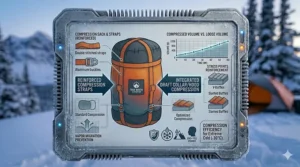
Store bags in large breathable stuff sacks to protect insulation. Use compression sacks only for transport, and decompress bags immediately upon arrival at camp. Over-compression damages baffles and permanently reduces loft. Quality compression sacks cost $30-50 CAD but prevent hundreds in bag replacement costs.
Maintaining Your Winter Sleeping Bag for Maximum Lifespan
Proper Washing Prevents Performance Loss
Wash down bags only when necessary (every 50-60 uses) using specialised down cleaners in front-loading washers without agitators. Rinse thoroughly — soap residue clumps down. Dry on low heat with clean tennis balls to break up down clusters, allowing 3-4 hours for complete drying. Synthetic bags tolerate more frequent washing but still benefit from gentle handling.
Storage Between Trips Determines Longevity
Compressed storage destroys loft permanently. Hang bags loosely or store in large breathable cotton sacks between trips. Avoid damp basements or hot attics — moderate temperature and low humidity preserve insulation. Annual fluffing redistributes down clusters, maintaining even coverage.
Field Repairs Extend Expedition Life
Small tears in shells compromise insulation by allowing fill escape and cold air infiltration. Carry repair tape designed for sleeping bags (stronger adhesive than standard duct tape). For down bags, patch immediately to prevent fill loss. Major damage requires professional repair — many outdoor retailers offer services or send bags to manufacturers.
Winter Sleeping Bags for Different Canadian Camping Styles
Car Camping and RV Winter Use
Weight and packed size become irrelevant when you’re parking beside your campsite. Prioritise warmth, durability, and comfort over grams. Rectangular synthetic bags in the $80-150 CAD range excel here, offering room to move and resilience to the rougher handling that car camping involves. The North 49 Basecamp and TETON Celsius XXL dominate this category for Canadian conditions.
Ice Fishing Shelter Camping
Heated ice fishing shelters create unique challenges — warm when heaters run, freezing when they don’t. Choose bags rated for unheated conditions, then enjoy the bonus warmth when heat is available. Synthetic bags handle the moisture from melting snow and wet clothing better than down. Rectangular shapes allow easier entry/exit when checking lines overnight.
Winter Backpacking and Ski Touring
Every gram matters when you’re carrying shelter, food, and safety gear for multi-day backcountry trips. Down bags in the 800+ fill power range with mummy shapes minimise weight and pack volume. Accept the premium cost — the difference between 2.5 kg and 1.8 kg bags compounds over 20 kilometres and multiple trips. The Naturehike Mummy and similar ultralight options justify their $130-200 CAD pricing through years of dependable backcountry service.
Frequently Asked Questions About Winter Sleeping Bags
❓ Can I use a -30 degree sleeping bag in summer camping in Canada?
❓ How do I prevent condensation freezing inside my winter sleeping bag?
❓ What's the warmest sleeping bag temperature rating available in Canada?
❓ Do women's winter sleeping bags actually sleep warmer than men's models?
❓ Can I repair a ripped winter sleeping bag myself or should I use professional services?
Conclusion: Choosing Your Winter Sleeping Bag for Canadian Extremes
The difference between miserable winter camping and comfortable nights under northern lights comes down to matched equipment and realistic expectations. The TETON Sports Celsius XXL delivers exceptional value for car campers in the $80-110 CAD range, handling most southern Canadian winter conditions. The North 49 Basecamp dominates extreme cold scenarios with genuine -42°C performance, though its 9.1 kg weight limits mobility. For backcountry enthusiasts, the Naturehike Mummy balances 1.8 kg packability with -25°C comfort.
Remember the fundamental rules: buy bags rated 10 degrees colder than expected lows, invest equally in quality insulated sleeping pads, match insulation type to your regional moisture conditions, and verify Amazon.ca availability to avoid customs headaches. Canadian winters demand gear that performs when failure means more than disappointment — it means safety concerns.
Your sleeping bag represents the foundation of comfortable winter camping. Choose wisely based on your actual usage patterns rather than aspirational expeditions, and that investment will deliver thousands of warm nights across decades of Canadian wilderness adventures.
✨ Don’t Miss These Exclusive Deals!
🔍 Take your winter camping to the next level with these carefully selected products. Click on any highlighted item to check current pricing and availability on Amazon.ca. These sleeping bags will help you create authentic outdoor memories your family will cherish!
Recommended for You: Continue Your Winter Camping Journey
- 7 Best Cold Weather Sleeping Bags for Canadian Winters 2026
- Best 3 Season Sleeping Bags Canada 2026: Top 7 Reviews
- Best Summer Sleeping Bags Canada 2026: Top 7 Picks
Disclaimer: This article contains affiliate links. As an Amazon Associate, I earn from qualifying purchases. If you purchase products through these links, we may earn a small commission at no additional cost to you.
✨ Found this helpful? Share it with your friends! 💬🤗
