In This Article
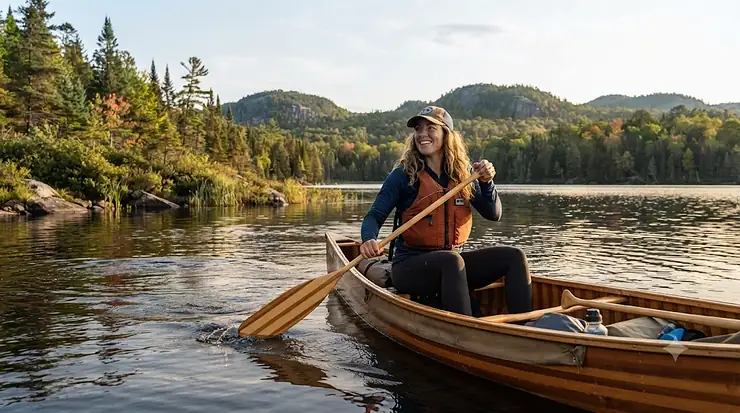
Here’s the blunt truth nobody puts on the box: an adult PFD for canoeing only works if you’re actually wearing it, and you’ll only wear it if it fits like it belongs on your body instead of borrowed from a stranger. A personal flotation device is a wearable safety garment designed to keep a conscious paddler’s head above water after an unexpected capsize, and under Transport Canada’s boating safety rules it must carry a Transport Canada, Canadian Coast Guard, or Fisheries and Oceans approval label to be legal on the water. That’s the textbook definition. The lived reality is messier — most paddlers end up with a PFD that either rides up around their ears on every stroke or sits in the bottom of the canoe because it’s too stiff and sweaty to bother with.
This guide skips the marketing fluff and gets into what actually matters when you’re shopping for an adult PFD for canoeing: real products with real specs, honest analysis of who each one suits, and the regulatory details Transport Canada expects you to know before you push off from shore. We researched seven genuine, currently available models spanning budget, mid-range, and premium tiers, then dug into aggregated review sentiment to flag where the marketing copy and the on-water experience diverge. You’ll also find dedicated breakdowns of PFD sizing and fit, buoyancy rating for paddlers, and how Transport PFD approval actually works, because those three details cause more return-and-reorder headaches than anything else in this category.
Whether you’re outfitting a solo tripper heading into Algonquin’s interior or buying your first vest for weekend paddles on a local lake, the goal here is the same: a PFD you’ll forget you’re wearing until the moment you desperately need to remember it’s there.
Quick Comparison Table
| Product | Buoyancy | Best For | Price Range (CAD) |
|---|---|---|---|
| ONYX Universal Paddle Vest | ~15.5 lb | Budget-first beginners | Under C$80 |
| MTI Adventurewear Journey | ~16 lb | Ultralight warm-weather paddling | C$70–C$95 |
| Extrasport Eddy | ~16 lb | Value with real storage | C$90–C$115 |
| Stohlquist Trekker | ~16.5 lb | High-back kayak/canoe crossover | C$120–C$150 |
| Salus Eddy-Flex | ~15.5 lb | Canadian-made comfort | C$140–C$160 |
| NRS Ninja | ~16 lb | Athletic, low-profile fit | C$180–C$210 |
| Mustang Survival Khimera | up to 20.5 lb (dual) | Premium hybrid flotation | C$250–C$300 |
Line them up and a pattern jumps out fast: buoyancy numbers barely move between the cheapest and priciest vest on this list, so the extra money you spend as you climb the price ladder is buying fit engineering, breathability, and material quality rather than raw flotation. The ONYX Universal Paddle Vest and MTI Adventurewear Journey anchor the budget end and still clear the legal buoyancy bar comfortably, while the Mustang Survival Khimera justifies its premium price with a fundamentally different dual-flotation design rather than just nicer foam. If you’re torn between two options in adjacent price tiers, the deciding factor should almost always be torso length and how the vest sits when you paddle, not the number stamped on the flotation tag.
💬 Just one click — help others make better buying decisions too! 😊
Top 7 Adult PFDs for Canoeing: Expert Analysis
Choosing an adult PFD for canoeing isn’t just about grabbing whatever’s cheapest at the outdoor store — the difference between a vest that stays put and one that chokes you on the third portage is almost entirely in the foam geometry and adjustment system. Below are seven real, currently sold models, ranked loosely from budget to premium, each broken down by what the spec sheet says and what that actually means once you’re three hours into a headwind.
1. ONYX Universal Paddle Vest — best entry-level pick for occasional paddlers
The standout here is the Flex-Cut foam design, which trims a noticeable amount of bulk compared to older slab-foam vests in the same price bracket. The perforated, tapered foam panels reduce weight and hug the torso rather than boxing it in, while six adjustable straps and neoprene shoulder pads keep the fit locked down through repetitive paddling strokes. Its open-side, mesh-back construction promotes airflow, which matters more than people expect on a muggy August afternoon on a slow-moving river.
Based on the spec comparison against other sub-C$80 vests, the ONYX Universal Paddle Vest punches above its price point mainly because of that Flex-Cut foam — most competitors at this tier still use flat foam blocks that dig into the ribs during long paddling sessions. It’s best suited to beginner and occasional paddlers who want a legitimately comfortable vest without committing to a C$150 purchase, though serious trippers doing multi-day portages may eventually want more adjustment range.
Reviewers consistently report that the vest stays snug through active paddling and doesn’t ride up excessively, though a recurring theme in aggregated feedback is that the limited size range (essentially two sizing options) can leave smaller-framed paddlers with extra bulk around the shoulders.
Pros:
- ✅ Flex-Cut foam noticeably reduces bulk versus competitors
- ✅ Six-point adjustment keeps fit locked during paddling
- ✅ Mesh back and open sides genuinely improve breathability
Cons:
- ❌ Only two size options limits fit precision
- ❌ Some reports of front ride-up near the chin
Priced under C$80 at most Canadian retailers, the ONYX Universal Paddle Vest delivers legitimate value for anyone who paddles a handful of weekends a year rather than every week of the summer.
2. MTI Adventurewear Journey — lightest PFD in this lineup
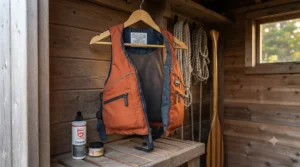
At under a pound, the MTI Adventurewear Journey is the lightest adult PFD for canoeing on this list, and that weight savings comes from sculpted 3D foam panels rather than simply thinning out the flotation material. The design uses four points of adjustment and fully open sides, which trades a bit of structure for a genuinely unrestricted paddling stroke — something a stiffer, heavily padded vest can’t match on a hot day.
What most buyers overlook about this model is that its slim, low-bulk profile makes it a strong secondary vest for warm-weather flatwater trips, even if it’s not the vest you’d pick for a cold-water spring paddle or a long expedition requiring extra pockets. The updated version adds a smartphone-sized front pocket and a tethered signal whistle, both practical touches for day-trip canoeing where you want quick access to essentials without a dry bag.
Aggregated customer sentiment frequently highlights how unnoticeable the vest feels once it’s on — a common thread in family and casual-paddler reviews is that it fits comfortably across a surprisingly wide range of body types for such a minimalist design, including smaller-framed teens and larger adults in the higher size range.
Pros:
- ✅ Lightest vest in this roundup at under 1 lb
- ✅ Open-side cut maximizes paddling range of motion
- ✅ Smartphone pocket and whistle add practical utility
Cons:
- ❌ Minimal structure means less support for larger loads
- ❌ Fewer storage options than pocket-heavy competitors
Typically priced in the C$70–C$95 range, this is a smart pick for paddlers who prioritize barely-there comfort over maximum storage.
3. Extrasport Eddy — best lesser-known alternative with real storage
The RetroGlide fit system paired with a quad-hinged foam design is the quiet standout here — most budget-adjacent PFDs use a single rigid foam block, while the hinged construction lets the Extrasport Eddy move with your torso rather than against it. Mesh side panels vent heat, and a neoprene-covered adjustable waist belt adds a level of cinch-down security that flatter vests in this price bracket typically skip.
On paper this means a paddler gets roughly 16 lb of design flotation in a vest built from durable 500-denier Cordura nylon — tougher fabric than several pricier competitors use, which matters if you’re dragging gear in and out of a canoe on rocky put-ins all season. Based on the spec comparison, this is a strong pick for paddlers who want genuine storage (an expanding front pocket plus accessory attachment points) without stepping up to premium pricing.
Reviewers consistently note the mesh side panels and quad-hinge foam make it comfortable for hours-long wear, though a repeated complaint in user feedback is that the mesh pocket lining can snag on hooks and small gear — worth noting if you’re a fishing-adjacent paddler who clips lures to the outside of the vest.
Pros:
- ✅ RetroGlide hinged foam moves naturally with the body
- ✅ Durable 500-denier Cordura shell outlasts thinner fabrics
- ✅ Genuine front and accessory storage for gear
Cons:
- ❌ Mesh pocket lining can snag fishing hooks
- ❌ Slightly heavier than minimalist competitors
Expect to pay in the C$90–C$115 range, making the Extrasport Eddy a smart middle-ground choice most shoppers never think to search for by name.
4. Stohlquist Trekker — best high-back option for kayak-and-canoe crossover paddlers
The WRAPTURE-shaped torso is the feature worth paying attention to — reverse articulated foam and convex interior seams contour to the body instead of forcing the body to conform to a flat foam shell, which is a meaningfully different approach from the flat-foam vests still common at lower price points. The back half splits between flotation foam and cool mesh, positioned specifically to clear high-back kayak and canoe seats.
Here’s what the spec sheet won’t tell you, but reviewers note: the Cross-Chest Cinch Harness diagonal adjustment is what actually stops the ride-up that plagues cheaper vests, rather than the eight total adjustment points alone. That distinction matters for anyone who’s fought a chin-riding PFD mid-paddle. This model suits paddlers who split time between canoes and high-seat-back kayaks and want one vest that works cleanly in both boats.
Aggregated reviews frequently praise the roomy zippered front pockets — sized for a phone in a dry bag — and note the fit holds up well for larger-framed paddlers thanks to the Graded Sizing system, though a few users mention the pockets lack D-rings for clipping gear.
Pros:
- ✅ WRAPTURE torso contours naturally to the body
- ✅ Cross-Chest Cinch Harness meaningfully reduces ride-up
- ✅ Roomy pockets fit a phone and small essentials
Cons:
- ❌ Pockets lack D-rings for gear attachment
- ❌ Higher-back cut can feel bulky in low-seat canoes
Sitting in the C$120–C$150 range at most Canadian paddling retailers, the Stohlquist Trekker earns its mid-tier price through fit engineering rather than gimmicks.
5. Salus Eddy-Flex — best Canadian-made comfort pick
Manufactured in Kitchener, Ontario, the Salus Eddy-Flex leads with contoured back foam and tapered shoulders that Canadian canoe trippers have gravitated toward for years — it’s a fixture on Algonquin Park portage trails for a reason. The Dry-Lex back lining adds breathability that matters on multi-hour summer trips, and a six-point adjustment system, including pull-forward straps, lets paddlers dial in fit without removing the vest.
Based on the spec comparison, what sets the Eddy-Flex apart from similarly priced competitors is the v-cut foam design that accommodates a female torso without requiring a separate model, plus a genuinely easy-grab front zipper that makes it fast to shed and stash under a canoe seat during portages — a detail dedicated trippers specifically look for. It’s designed and certified in compliance with Canadian General Standards Board 65.11-M88, tested by Underwriters Laboratories of Canada, so the domestic manufacturing claim comes with matching domestic certification.
Reviewers consistently describe the foam as comfortable right out of the box, often compared to a well-worn sweatshirt rather than the stiff, break-in-required feel typical of budget vests — a meaningful advantage for anyone buying a PFD they intend to wear all day, every day, on a week-long trip.
Pros:
- ✅ Comfortable straight out of the box, no break-in period
- ✅ Made in Canada with CGSB/ULC/TC certification
- ✅ Easy front-zip design speeds up portage removal
Cons:
- ❌ Premium comfort comes at a mid-upper price point
- ❌ Six colours means limited stock on popular shades
Retailing in the C$140–C$160 range across Canadian outfitters, the Salus Eddy-Flex remains one of the most consistently recommended adult PFDs for canoeing in the country.
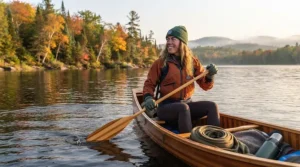
6. NRS Ninja — best athletic, low-profile fit
Originally built with freestyle kayakers in mind, the NRS Ninja carries over an athletic, low-profile chassis that happens to suit canoe tripping just as well. The redesigned Orbit Fit System layers lightweight, pre-curved Ethafoam pieces cut to conform to the body, while flotation is concentrated into smaller front and back panels rather than spread across a bulky full-torso shell.
What most buyers overlook about this model is that concentrating the foam into smaller zones, rather than removing foam outright, is what preserves buoyancy while cutting bulk — a more sophisticated engineering approach than simply using thinner foam throughout. Wide-open shoulder construction maximizes range of motion, which matters over a full day of J-strokes and correction strokes that a stiffer vest would fight against.
Aggregated review sentiment describes the fit as snug and comfortable during multi-day backcountry trips, with the wide-open shoulder design repeatedly singled out as the standout comfort feature; a smaller number of reviewers note the minimalist storage won’t satisfy paddlers who want multiple gear pockets.
Pros:
- ✅ Orbit Fit System conforms closely without excess bulk
- ✅ Wide shoulder openings maximize paddling range of motion
- ✅ Versatile enough for whitewater, touring, and flatwater use
Cons:
- ❌ Minimal storage compared to pocket-focused vests
- ❌ Athletic cut runs closer-fitting than relaxed-fit competitors
Priced around C$180–C$210, the NRS Ninja suits paddlers who value athletic mobility as much as raw comfort.
7. Mustang Survival Khimera — best premium hybrid flotation
The standout feature is right in the name: dual flotation. The Mustang Survival Khimera combines a slim foam chassis providing roughly 7.5 lb of passive buoyancy with a hidden CO2-triggered inflation chamber that adds another 13 lb on demand, for a combined 20.5 lb of buoyancy — meaningfully more than any foam-only vest on this list when fully deployed.
Based on the spec comparison, this hybrid approach solves a real trade-off that pure foam vests can’t: everyday paddling comfort with a slim, low-profile chassis, plus a reserve of extra buoyancy available exactly when conditions turn. Large armholes preserve full range of motion, and the manual inflation cord re-arms quickly with a replacement CO2 cartridge, making it practical for paddlers who cross between calm lake days and more demanding open-water conditions. It’s approved to the harmonized Level 70 buoyancy-aid standard recognized by both the U.S. Coast Guard and Transport Canada.
Reviewers consistently highlight how genuinely slim and low-profile it feels compared to a traditional foam vest, describing it as barely noticeable during long paddling or fishing sessions from a kayak or canoe; the most common complaint centres on the replacement CO2 inflator pin, which some users report can work loose and requires a paid replacement part.
Pros:
- ✅ 20.5 lb combined buoyancy exceeds foam-only competitors
- ✅ Ultra-slim profile barely restricts movement
- ✅ Re-arms quickly with a replacement CO2 cartridge
Cons:
- ❌ Premium price puts it out of reach for casual paddlers
- ❌ Inflator pin replacement parts add ongoing cost
Expect a price in the C$250–C$300 range, positioning the Mustang Survival Khimera firmly as a premium, purpose-driven purchase rather than an everyday casual buy.
Practical Usage Guide: Getting the Most From Your PFD
Buying the right adult PFD for canoeing is only step one — how you set it up and maintain it determines whether it still performs correctly two seasons from now. Start by adjusting all straps while the vest is on dry land and zipped or buckled fully, then do a “float test” in shallow water: raise your arms overhead and have someone gently tug upward on the shoulder straps. If the vest rides up past your chin, it’s either too big or not cinched tightly enough, and no amount of getting used to it will fix that on the water.
For maintenance, rinse your PFD in fresh water after every outing, especially after paddling in silty rivers or brackish coastal water, and let it air dry away from direct sunlight, which degrades foam and fabric over time. Never store a wet vest compressed in a dry bag or canoe hatch — mildew sets in fast and permanently weakens stitching. Once a season, inspect the foam panels for compression (press firmly; foam that doesn’t spring back has lost buoyancy) and check zippers, buckles, and webbing for fraying or corrosion.
A common first-30-days mistake is treating the PFD like a jacket you put on once you’re already seated in the canoe. Practice donning and adjusting it standing on shore first, then again seated, since the fit can shift noticeably between positions. If you bought an inflatable or hybrid model like the Mustang Survival Khimera, test the manual inflation mechanism in a controlled setting — a pool or calm shoreline — before you ever need it in a real capsize.
Building a Safety Gear Kit for Canoe Tripping
A safety gear kit for canoe tripping starts with your PFD, but a vest alone doesn’t cover the range of things that can go wrong on a multi-day trip. Beyond the adult PFD for canoeing you’ve chosen, a functional kit typically includes: a pealess safety whistle (many PFDs, including the MTI Adventurewear Journey, now ship with one attached), a compact first-aid kit rated for wilderness use, a waterproof throw bag with 15+ metres of floating rope for rescues, a headlamp with spare batteries, and a means of starting fire that stays dry — waterproof matches or a ferro rod stored in a sealed container.
For longer interior trips, add a marine-rated or satellite communication device, since cell coverage disappears fast once you’re a few kilometres from a road access point. It’s worth noting that Transport Canada’s own safety data points to unworn or missing PFDs as a recurring factor in recreational boating fatalities, which is exactly why every item in a proper kit should reinforce, not replace, the vest you’re already wearing. Pack a spare paddle per canoe — broken paddles are one of the most common trip-ending equipment failures — and a bailer or bilge sponge for swamped boats. Route-plan documentation matters too: leave a written trip plan with a contact on shore, including expected return time and put-in/take-out locations, a habit safety courses consistently recommend and one that costs nothing but pays off enormously if a search becomes necessary.
Building this kit around your PFD rather than treating them as separate purchases means everything fits logically: reflective tape or a small strobe light can often clip directly onto shoulder loops built into vests like the Salus Eddy-Flex, keeping your most critical safety gear attached to your body rather than floating away in an overturned canoe.
Real-World Scenarios: Matching Paddlers to PFDs
The weekend lake paddler. Someone who canoes four or five times a summer on calm, cottage-country lakes doesn’t need premium hybrid flotation — comfort and a fair price matter more than advanced features. The ONYX Universal Paddle Vest or MTI Adventurewear Journey covers this use case well: legally compliant, genuinely comfortable for a few hours, and inexpensive enough that skipping it “just this once” never feels like a rational trade-off.
The multi-day interior tripper. A paddler doing week-long portage routes through places like Algonquin or Quetico needs a vest that survives constant donning, doffing, and portaging without losing comfort or durability. The Salus Eddy-Flex, with its easy-zip design and Canadian-made durability, or the Stohlquist Trekker, with its high-back clearance and roomy pockets, both suit this scenario better than a minimalist budget vest that wasn’t built for daily heavy use.
The mixed-activity paddler. Someone who splits time between canoeing, kayak touring, and the occasional open-water crossing benefits from the athletic versatility of the NRS Ninja or the added buoyancy reserve of the Mustang Survival Khimera — both models are built to perform across a wider range of conditions than a single-purpose recreational vest.
How to Choose an Adult PFD for Canoeing
- Confirm Transport Canada approval first. No matter how comfortable a vest feels in-store, it isn’t legal for use in Canada without an approval label — check this before evaluating anything else.
- Match buoyancy to your body weight and swimming ability. Heavier paddlers and weaker swimmers benefit from vests at the higher end of the buoyancy range rather than the legal minimum.
- Try it on over the layers you’ll actually paddle in. A vest that fits perfectly over a t-shirt can feel completely different over a fleece or drysuit.
- Do the raised-arm ride-up test. If the vest rides up past your chin with arms overhead and straps cinched, it’s the wrong size or the wrong design for your torso.
- Consider your typical trip length. Day-paddlers can prioritize minimalism; multi-day trippers should prioritize durability and easy on/off design.
- Check ventilation for your climate and season. Mesh-back designs matter far more on a July flatwater trip than a cool-weather spring paddle.
- Factor in storage needs realistically. A phone pocket and whistle loop cover most casual paddlers; anglers and expedition trippers may want dedicated gear attachment points.
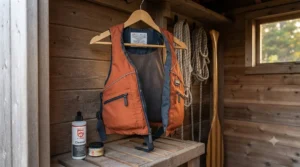
PFD Sizing and Fit: Getting It Right
PFD sizing and fit hinges on chest measurement, not height or weight — a detail that trips up a surprising number of first-time buyers who default to their regular clothing size. To size an adult PFD for canoeing correctly, measure around the fullest part of your chest with a soft tape measure, then compare that number against the manufacturer’s size chart rather than guessing based on a jacket size, since foam-vest sizing runs differently across brands.
Once you’ve got the right size range, fit is confirmed on the water, not in a store mirror. Put the vest on, cinch every strap snugly, then raise both arms overhead while a partner gently pulls up on the shoulder straps — a properly fitted adult PFD for canoeing shouldn’t ride up past your ears or chin during that test. If it does, tighten the side and waist straps further before assuming you need a different size entirely; loose straps are the single most common cause of poor PFD fit and ride-up complaints in aggregated review data across nearly every model in this guide.
Women-specific and unisex-with-v-cut designs, like the contoured foam on the Salus Eddy-Flex, address a genuine fit problem rather than a marketing gimmick — standard flat-foam vests often create discomfort or gapping across the chest for paddlers with a fuller bust, so a torso-contoured design measurably improves both comfort and how securely the vest stays in place during a capsize.
Understanding Buoyancy Rating for Paddlers
Buoyancy rating for paddlers is measured in pounds of lift (or newtons, under the newer harmonized Level system) and represents how much upward force the vest provides in the water — not a guarantee of how high your head sits above the surface, since that also depends on your own body composition and clothing. Every product profiled in this guide falls in the 15–20.5 lb range, which comfortably clears Transport Canada’s minimum requirements for adult recreational PFDs used in canoeing and similar calm-to-moderate water activities.
Here’s what the spec sheet won’t tell you, but the physics does: a higher buoyancy rating matters more for paddlers who are heavier, wear thick layered clothing, or paddle in colder water where muscle response slows and self-rescue becomes harder. For most warm-weather flatwater canoe trips, a vest in the 15–16 lb range like the ONYX Universal Paddle Vest or Extrasport Eddy provides ample buoyancy. For open-water crossings, cold-water paddling, or larger-bodied paddlers, stepping up to the higher end of that range, or a dual-flotation option like the Mustang Survival Khimera at 20.5 lb combined, adds a genuine safety margin rather than just marketing appeal.
Buoyancy level under the newer harmonized standard is now displayed as a Level number (50, 70, or 100) rather than the old Type I–V system, and Level 70 has effectively replaced the familiar Type III rating for most recreational canoeing and kayaking PFDs sold today.
Transport Canada PFD Approval: What the Label Actually Means
Transport PFD approval isn’t optional paperwork — under the Small Vessel Regulations, every person on board a recreational canoe in Canada must have access to a Canadian-approved personal flotation device or lifejacket of appropriate size, and Transport Canada’s marine safety publications confirm this approval must come from Transport Canada, the Canadian Coast Guard, or Fisheries and Oceans Canada, sometimes in combination.
You can confirm Transport PFD approval by checking the permanently attached interior tag; older vests display a CGSB standard number (such as CAN/CGSB-65.7-M88), while newer harmonized models show a Level rating (50, 70, or 100) alongside a joint U.S. Coast Guard/Transport Canada approval icon. Every product featured in this guide, from the budget-tier ONYX Universal Paddle Vest through the premium Mustang Survival Khimera, carries this dual approval, which means a single vest satisfies legal carriage requirements whether you’re paddling in Ontario or crossing into U.S. border waters.
One regulatory nuance worth understanding: Level 50 devices are now accepted for legal carriage but are restricted to sheltered waters close to rescue, while Level 70 (the rough equivalent of the old Type III) remains the standard recommendation for general canoeing. If you’re unsure which level your province’s specific boating rules require for your activity, provincial boating authorities publish activity-specific guidance worth reviewing before a trip.
Top PFDs Under $100 CAD
If budget is the primary constraint, two models from this guide land reliably under the C$100 mark at most Canadian retailers: the ONYX Universal Paddle Vest and the MTI Adventurewear Journey. Both clear Transport Canada’s approval requirements and deliver genuinely comfortable, breathable designs rather than the stiff, bargain-bin feel that “under $100” often implies in other gear categories.
| Feature | ONYX Universal Paddle Vest | MTI Adventurewear Journey |
|---|---|---|
| Weight | Standard foam-vest weight | Under 1 lb (lightest in guide) |
| Adjustment points | 6 | 4 |
| Storage | None dedicated | Smartphone pocket + whistle |
| Best For | All-around budget buyers | Warm-weather minimalists |
The trade-off between these two sub-C$100 options comes down to adjustment precision versus weight savings. The ONYX Universal Paddle Vest‘s six-point adjustment system gives a more locked-down fit for paddlers who move around a lot in the boat, while the MTI Adventurewear Journey shaves weight and bulk at the cost of a slightly less structured fit. Neither compromises on buoyancy compared to pricier options on this list — the difference you’re paying for above C$100 is comfort engineering and storage, not core safety performance.
✨ Ready to gear up on a budget? Check current pricing on these two picks before your next trip!
🔍 Don’t Miss These Exclusive Deals!
Take your next canoe trip up a notch with a properly fitted, Transport Canada-approved PFD. Click on any highlighted product above to check current pricing and availability. The right adult PFD for canoeing means more confident paddling and a genuinely safer day on the water for you and everyone in your boat.
Common Mistakes When Buying an Adult PFD for Canoeing
The single most common mistake is buying based on price alone without checking chest sizing — a too-large vest with the correct buoyancy rating can still fail the ride-up test and functionally underperform in a real capsize. Close behind that is skipping the on-water fit test entirely; a vest that feels fine standing in a store can behave very differently once you’re paddling and it’s had a chance to shift.
Another frequent error is assuming any life jacket in the garage works for canoeing specifically. Many boat-storage life jackets are designed as Type I offshore devices — bulky, designed to turn an unconscious person face-up, and genuinely uncomfortable for active paddling. An adult PFD for canoeing should be a Level 70 (formerly Type III) design built for active use in calm, inland waters where rescue is likely quick, not a repurposed offshore jacket.
Finally, paddlers frequently underestimate maintenance. A five-year-old vest that’s been left compressed in a hot trunk all summer may have lost meaningful buoyancy even if it looks fine on the outside — foam degrades from UV exposure and repeated compression, and there’s no reliable visual test besides the firmness check described in the usage guide above.
Adult PFD for Canoeing vs Inflatable PFD
| Factor | Foam Adult PFD for Canoeing | Inflatable PFD |
|---|---|---|
| Comfort in warm weather | Moderate to high | Very high |
| Immediate buoyancy | Instant, no action needed | Requires inflation (manual or auto) |
| Maintenance | Low — rinse and inspect | Higher — check CO2 cartridge regularly |
| Suitability for whitewater | Recommended | Generally not recommended |
| Typical price (CAD) | C$70–C$300 | C$150–C$350 |
A foam-based adult PFD for canoeing provides instant, maintenance-light buoyancy the moment you hit the water, which is exactly why safety authorities consistently recommend foam vests, or hybrid designs like the Mustang Survival Khimera, for active paddling over pure inflatables. Traditional inflatables require manual or automatic activation before they provide full flotation, an added step that matters in the split-second chaos of an unexpected capsize, and most manufacturers explicitly advise against them for whitewater or high-impact paddling. For flatwater canoe tripping among strong swimmers, an inflatable can offer excellent comfort and packability, but for general adult PFD for canoeing use — especially for less-experienced swimmers — a foam or dual-flotation vest remains the safer default.
Long-Term Cost & Maintenance
Total cost of ownership for an adult PFD for canoeing extends well past the sticker price. Budget vests in the C$70–C$100 range typically last three to five seasons of moderate use before foam compression and UV-related fabric wear make replacement worthwhile, while higher-quality mid-range vests like the Stohlquist Trekker or Salus Eddy-Flex often hold their fit and buoyancy performance for five to eight seasons with proper care — rinsing after use, air-drying out of direct sun, and storing uncompressed.
Hybrid inflatable-foam models like the Mustang Survival Khimera carry an additional recurring cost: replacement CO2 cartridges, typically needed after any full inflation and worth budgeting a few dollars per cartridge into your annual gear costs if you paddle in conditions where you’d realistically deploy the inflation chamber. Factor this into a cost-per-use calculation rather than comparing sticker prices alone; a C$280 hybrid vest used for 100 paddling days over its lifespan works out to a lower per-use cost than a C$90 vest replaced every two seasons due to heavy daily wear.
The real long-term value differentiator isn’t brand prestige — it’s whether the fit and comfort of the vest actually gets worn consistently. A slightly pricier PFD that a paddler reaches for every single trip delivers far more safety value over its lifetime than a cheaper one left in the garage because it’s uncomfortable.
Features That Actually Matter (And Those That Don’t)
Buoyancy rating, Transport Canada approval, and torso-contoured foam genuinely matter — these directly affect how safely and comfortably a vest performs when it counts. Adjustment points matter too, but past six or eight points, additional straps mostly add complexity without meaningfully improving fit; the Stohlquist Trekker‘s eight-point system and the Salus Eddy-Flex‘s six-point system both achieve secure fits despite the numerical difference.
Marketing terms like “tactical” styling or an excessive number of decorative pockets matter far less than manufacturers imply. What most buyers overlook is that pocket count is a personal-preference feature, not a safety one — a minimalist vest like the NRS Ninja performs its core job identically to a pocket-loaded competitor. Colour, meanwhile, does carry a real safety argument: brighter colours like the ONYX line’s high-visibility options genuinely improve how easily a paddler is spotted in the water during a rescue, which is a legitimate reason to prioritize visibility over subdued styling for solo trippers in particular.
FAQ
❓ What buoyancy rating do I need for an adult PFD for canoeing?
❓ Can I use a kayaking PFD for canoeing?
❓ How do I know if my PFD is Transport Canada approved?
❓ How much should I spend on an adult PFD for canoeing?
❓ Do adult PFDs expire?
Conclusion
The right adult PFD for canoeing isn’t the one with the most pockets or the flashiest inflation system — it’s the one that fits your specific torso well enough that you’ll actually wear it, snug enough that it passes the ride-up test, and certified enough that it’s legal wherever you paddle in Canada. Whether that ends up being the budget-friendly ONYX Universal Paddle Vest, the Canadian-made comfort of the Salus Eddy-Flex, or the dual-flotation reserve of the Mustang Survival Khimera, the underlying decision framework stays the same: confirm Transport Canada approval, match buoyancy to your body and conditions, and prioritize a fit test over a spec sheet.
Every product profiled here clears the legal bar for Transport PFD approval and delivers genuine, sourced value at its respective price point — there’s no single “best” option, only the best option for your paddling style, trip length, and budget. Take the sizing guidance seriously, build out a proper safety gear kit for canoe tripping around whichever vest you choose, and you’ll spend far less time thinking about your PFD and far more time actually enjoying the water.
✨ Don’t Miss These Exclusive Deals!
🔍 Take your canoe trips to the next level with a properly fitted, Transport Canada-approved PFD. Click on any highlighted product above to check current pricing and availability — the right adult PFD for canoeing turns a good trip into a genuinely worry-free one.
Recommended for You
- Large Canoe Trip Pack 70L: 7 Top Picks for 2026
- Nylon Portage Pack Review: 7 Best Picks for Canoe Trippers (2026)
- Canvas Duluth Pack: 7 Best Picks for 2026 (Tough & Timeless)
Disclaimer: This article contains affiliate links. As an Amazon Associate, I earn from qualifying purchases. If you purchase products through these links, we may earn a small commission at no additional cost to you.
✨ Found this helpful? Share it with your friends! 💬🤗
