In This Article
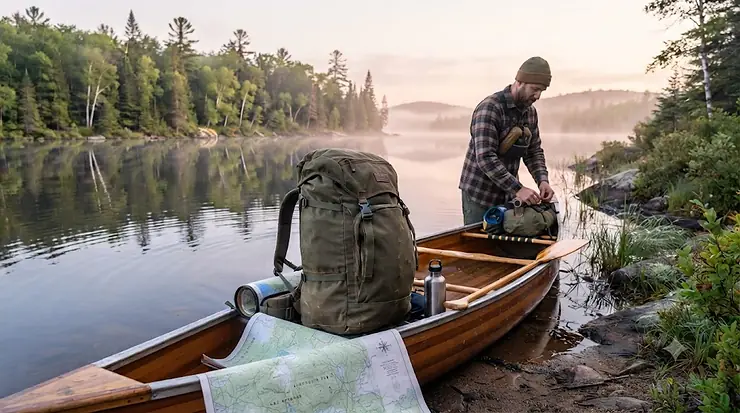
Somewhere between the parking lot and your first portage, you’ll figure out whether you bought the right pack. A large canoe trip pack 70L is the piece of gear that decides whether day four of your trip feels like an adventure or a shoulder-punishing chore. Unlike a regular hiking backpack, a proper canoe pack is built short, wide, and low-profile so it sits flat in the belly of a canoe instead of tipping the boat or snagging on a yoke. What is a large canoe trip pack 70L? It’s a portage-specific hauling bag, typically 65-85 litres, built with a tall rectangular body, a padded harness for carrying weight on land, and (usually) waterproof or water-resistant construction to survive spray, rain, and the odd dunking.
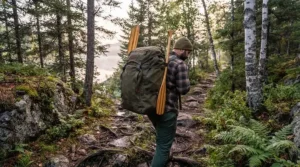
A portage, for anyone new to the term, is simply the overland trail connecting two bodies of water where paddlers carry their canoe and gear on foot — and it’s the reason canoe packs exist in their specific short, wide shape at all. This guide breaks down seven real, currently available packs across budget, mid-range, and premium tiers, based on published specs, manufacturer data, and aggregated customer review sentiment — not marketing copy. We’ll also dig into food barrel packing systems, compression straps, and how to plan a multi-day canoe route around the pack you choose, so by the end you’ll know exactly which pack matches your trip length, your budget, and your tolerance for a sore trapezius muscle. According to canoe packs designed for portages and back country canoe trips are described as large-capacity hauling bags built for that specific use, which is worth remembering the next time you’re tempted to just grab a regular travel backpack off the shelf. Let’s get into the packs.
Quick Comparison Table
| Pack | Capacity | Best For | Price Range (CAD) |
|---|---|---|---|
| SealLine Pro Dry 70L Pack | 70L | Guaranteed dry gear on wet routes | C$380-C$450 |
| Granite Gear Quetico Portage Pack | 82L | All-around comfort and durability | C$370-C$430 |
| Earth Pak Waterproof Backpack 70L | 70L | Best canoe pack under C$200 CAD | C$130-C$190 |
| Recreational Barrel Works Expedition Pack | up to 100L+ | Canadian-made rugged toughness | C$300-C$370 |
The spread here tells its own story: you can spend under C$200 and still get a functional, honestly waterproof bag, or you can spend more than double that for a harness system engineered around multi-week loads. What separates the tiers isn’t really the litre count — it’s the suspension. A cheap pack and an expensive one can both hold 70 litres of gear, but only one of them will still feel carryable on portage nine of a twelve-portage day. Keep that in mind as you read the fuller breakdown below, because the “best” large canoe trip pack 70L genuinely depends on how many portages, how many days, and how many knees are involved.
💬 Just one click — help others make better buying decisions too!😊
Top 7 Large Canoe Trip Packs: Expert Analysis
Each of the seven packs below is a real product you can currently source, spanning budget, mid-range, and premium tiers, plus a few size and material variants so you’re not stuck choosing between identical twins.
1. SealLine Pro Dry 70L Pack — true waterproof protection for expedition loads
The standout here is simple: this is a genuinely waterproof pack, not water-resistant. The SealLine Pro Dry 70L Pack uses a PVC-free welded-seam construction with a roll-top closure, which means it functions less like a backpack and more like an oversized dry bag with a harness bolted on. Cascade Designs, the manufacturer, notes the Pro line was engineered with fully adjustable suspension for serious comfort on long hauls, offering padded shoulder straps, a full-length breathable back panel, and lumbar padding, with the harness detachable if you want to strip it down for airline travel or pure dry-bag use.
Based on the spec comparison, the appeal for a 70L trip pack is obvious: if your route involves rapids, open-water crossings, or a genuine risk of a dunked canoe, this is the only pack on this list that treats “waterproof” as a guarantee rather than a marketing adjective. Reviewers consistently note the harness comfort as a strength — one buyer specifically called the 70L Pro Pack “exactly what I needed,” citing the size, dryness, and portage comfort — though a recurring complaint is the lack of side carry handles, which makes lifting it in and out of a loaded canoe more awkward than it should be for the price point.
Pros:
- ✅ Fully welded, PVC-free waterproof construction
- ✅ Detachable, padded suspension for genuine comfort
- ✅ Trusted brand with a long track record on expedition trips
Cons:
- ❌ No side lift handles, awkward to load in/out of canoe
- ❌ Premium price for a single-compartment design
At around C$380-C$450, the SealLine Pro Dry 70L Pack sits at the top of the mid-premium tier — worth it specifically if your trip crosses open water where a swamped canoe is a real possibility, less essential on sheltered lake routes.
2. Granite Gear Quetico Portage Pack — best all-around harness comfort
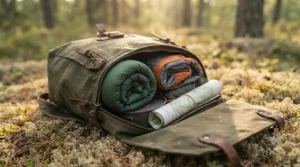
The Granite Gear Quetico Portage Pack leads with its harness, not its fabric. This is an 82-litre bag built around Granite Gear’s Vapor suspension system, which anchors weight on your hips instead of your shoulders — a meaningful difference once you’re four kilometres into a portage with a full food barrel strapped underneath. Specs confirm a main body capacity of 82 litres that expands via an overflow collar, built from 420-denier ripstop nylon Cordura, with heavy-duty side lift handles and a haul loop for getting the pack in and out of a canoe quickly.
What most buyers overlook about this model is that it isn’t waterproof — it’s a rugged, abrasion-resistant shell, not a sealed dry bag, so you’ll want a liner for genuinely wet routes. One long-time reviewer who compared it directly to other packs in the lineup noted that at 82L it landed as the right middle-ground size, roomy enough to carry a two-person kit including sleeping gear, cooking equipment, and clothing while still being manageable to carry alongside a canoe on the same trip. Owners praise the durability of the buckles and harness after years of seasonal abuse, though a recurring gripe involves the unreinforced pack bottom, which some long-term users report wearing through after two or three heavy seasons of dragging over rock and gravel.
Pros:
- ✅ Hip-loaded Vapor suspension genuinely reduces shoulder strain
- ✅ Side lift handles make canoe loading fast
- ✅ Durable 420D Cordura shell built for repeated seasons
Cons:
- ❌ Not waterproof — needs a liner for wet routes
- ❌ Unreinforced bottom panel wears with heavy long-term use
Priced around C$370-C$430, the Granite Gear Quetico Portage Pack earns its reputation as the default “serious tripper” pick — the harness alone justifies the jump over budget options if you’re doing back-to-back multi-day trips.
3. Granite Gear Superior One Portage Pack — biggest hauler for base camp trips
Step up in the same product family and you hit the Granite Gear Superior One Portage Pack, a genuinely oversized 121-litre bag intended for group trips, extended expeditions, or anyone consolidating gear for two people into a single haul. It shares the same Vapor suspension DNA as the Quetico, but scaled up: manufacturer specs list a gear capacity of 121 litres in dimensions of roughly 27.5 by 25.5 by 6.5 inches, weighing about 4 pounds 3 ounces.
Here’s what to weigh before buying this size: bigger isn’t automatically better. One paddler who tested both packs described immediately ruling out the Superior One for solo use because of its sheer volume, reasoning that if there’s 121 litres of space available it will get filled, and that cargo weight risks damaging knees and ankles over a long portage before it risks sinking the canoe. That’s the honest trade-off — this pack rewards discipline. Loaded thoughtfully for a family base-camp trip or a two-person expedition splitting gear across two packs, it’s excellent; loaded to capacity by a solo paddler, it becomes a liability on anything but the shortest carries.
Pros:
- ✅ Massive 121L capacity fits full base-camp or two-person kits
- ✅ Same proven Vapor harness system as smaller Granite Gear packs
- ✅ Heavy-duty Cordura construction handles years of abuse
Cons:
- ❌ Overkill and physically punishing for solo portaging
- ❌ Highest price point in the Granite Gear lineup
At around C$400-C$470, the Granite Gear Superior One Portage Pack is a premium buy best suited to families and groups doing shared-load logistics, not the average solo or duo weekend trip.
4. Earth Pak Waterproof Backpack 70L — best canoe pack under C$200 CAD
If your search brought you here specifically hunting a canoe pack under $200 CAD, the Earth Pak Waterproof Backpack 70L is the honest answer. Built from 500-denier PVC with a roll-top closure and side compression straps, it’s the budget-tier entry that still delivers on the core requirement — keeping gear dry. According to the manufacturer, the Summit-style construction is made with 500D PVC material for waterproof and abrasion protection, features an ergonomic back panel with reinforced contoured shoulder straps, and includes a chest strap and waist belt to relieve pressure while carrying.
On paper this means you’re trading harness sophistication for price — and that’s exactly what aggregated reviews reflect. One canoe camper’s real-world account describes fitting a two-person tent, a three-season sleeping bag, a camp pillow, a wool blanket, an air mattress, and an emergency tarp into the 85L version with room left, adding that the roll-top closure felt secure and the shoulder straps and back pad stayed comfortable under a full load, though they hadn’t yet tested it on long portages. Independent buying guides echo the value case, noting the Earth Pak’s waterproof protection and comfortable hip belt make it the best-value pick for paddlers doing frequent multi-day trips, while cautioning that the single main compartment limits organization and the midsection can collapse if not packed carefully.
Pros:
- ✅ Genuinely waterproof PVC shell for a fraction of premium price
- ✅ Hip belt and chest strap included even at budget tier
- ✅ Wide capacity range (50L-120L) if 70L isn’t your exact fit
Cons:
- ❌ Single compartment offers little internal organization
- ❌ Suspension comfort noticeably behind premium harness systems
At roughly C$130-C$190, the Earth Pak Waterproof Backpack 70L is the clear pick if your budget caps under C$200 and you’re doing weekend-to-4-day trips rather than two-week expeditions.
5. Recreational Barrel Works Expedition Canoe Pack — Canadian-made cordura toughness
Manufactured in Winnipeg, the Recreational Barrel Works Expedition Canoe Pack is worth featuring specifically because it’s a Canadian company building specifically for Canadian canoe country. RBW builds two tiers — an entry-level Tripper and this larger Expedition model — and the spec sheet backs up the toughness claim: RBW canoe packs are built from 100-denier Cordura construction and offer capacities up to 125 litres, with the Expedition model adding more volume, pockets, and adjustable straps to handle demanding portages compared to the stripped-down Tripper.
What the spec sheet won’t tell you, but Canadian outfitter shops consistently note, is that RBW packs are the default choice at rental counters across the Boundary Waters and Quetico region precisely because they survive rental-fleet abuse season after season — a strong proxy for durability under real conditions. This is not a waterproof pack out of the box; RBW sells a dedicated pack liner separately, and buyers planning wet routes should budget for that add-on. The trade-off is a genuinely rugged, repairable, made-in-Canada option at a price below the big-name premium packs.
Pros:
- ✅ Canadian-made with a strong regional reputation for durability
- ✅ 100D Cordura shell handles rocky, rough portage landings
- ✅ Adjustable strap system scales from solo to heavy expedition loads
Cons:
- ❌ Not waterproof out of the box; liner sold separately
- ❌ Fewer retail options outside Canada if warranty service is needed
Priced around C$300-C$370, the Recreational Barrel Works Expedition Canoe Pack is the mid-range pick for paddlers who want Canadian manufacturing and proven toughness without stretching to premium-tier pricing.
6. Frost River Isle Royale Bushcraft Pack — heritage waxed canvas durability
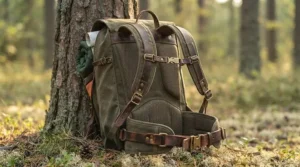
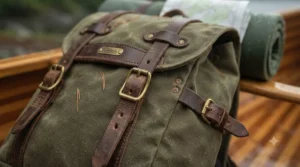
For paddlers drawn to the traditional look and feel of a canoe trip, the Frost River Isle Royale Bushcraft Pack is the lesser-known, high-quality alternative worth knowing about. Built from waxed canvas over a traditional pack frame silhouette, it’s part of a small-batch American heritage lineup that outfitter catalogues describe as offering rugged waxed canvas construction with a traditional feel, made for dependable carry in demanding conditions.
Here’s the honest trade-off: waxed canvas is heavier than modern nylon or PVC, and it isn’t waterproof in the way a roll-top dry bag is — it’s water-resistant, relying on the tight weave and wax coating to shed rain rather than seal it out entirely. What you gain is exceptional long-term durability and repairability (canvas and leather can be patched and re-waxed for decades) plus a genuinely classic aesthetic that nylon packs can’t match. This is a pack for paddlers who value tradition and are willing to re-wax the canvas periodically as part of routine gear maintenance, not for anyone wanting a maintenance-free grab-and-go bag.
Pros:
- ✅ Exceptional long-term durability with a repairable canvas shell
- ✅ Classic heritage aesthetic many paddlers specifically seek out
- ✅ Small-batch construction with strong attention to detail
Cons:
- ❌ Heavier than comparable nylon or PVC packs
- ❌ Requires periodic re-waxing to maintain water resistance
Expect to pay in the C$400-C$500 range for the Frost River Isle Royale Bushcraft Pack, positioning it as a premium, style-driven alternative rather than a pure performance pick.
7. Duluth Pack Standard #3 — the classic portage silhouette
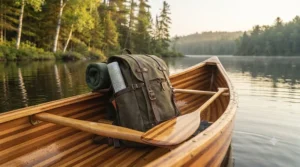
Rounding out the lineup, the Duluth Pack Standard #3 represents the original canoe pack archetype — the design that essentially defined what a portage pack looks like before nylon suspension systems existed. Built in canvas with leather straps and buckles, it’s a simple, single-compartment tall rectangular bag sized to sit low and snug in a canoe hull, which is exactly the profile modern packs like the Quetico still borrow from.
Based on the spec comparison with modern packs, the trade-offs are predictable: no hip belt, minimal padding, and a flat shoulder-strap harness that puts more load directly on your shoulders than a modern suspension system would. Reviewers consistently note the Standard #3 is best suited to shorter portage distances and paddlers who prioritize simplicity, repairability, and heritage styling over ergonomic sophistication — this is the pack many outfitting lodges still hand out precisely because it’s nearly indestructible and cheap to repair. For a first canoe trip on a route with short, infrequent portages, it remains a genuinely practical choice.
Pros:
- ✅ Extremely durable, simple construction with decades of proven use
- ✅ Low centre of gravity fits canoe hulls exceptionally well
- ✅ Easy and inexpensive to repair compared to technical fabrics
Cons:
- ❌ No hip belt — all weight rides on the shoulders
- ❌ Uncomfortable on long or frequent portage days
At around C$300-C$380, the Duluth Pack Standard #3 suits paddlers doing shorter routes with fewer portages, or anyone who wants a heritage pack that will genuinely outlast them.
Practical Usage Guide: Packing and Maintaining Your Portage Pack
Getting the most out of a large canoe trip pack 70L starts before you ever hit the water. First, pack heaviest items — food, cooking gear, water containers — low and centred against your back, since a portage pack’s comfort depends almost entirely on keeping weight close to your spine rather than pulling backward off your shoulders. Second, use a dry bag liner even inside water-resistant packs like the Granite Gear Quetico Portage Pack or Duluth Pack Standard #3; a torn liner is a five-minute fix, while soaked sleeping bags can ruin a trip.
While you’re organizing gear, it’s worth packing a water filter or treatment tablets alongside your food supplies — Health Canada’s guidance on preventing Giardia infection is a useful primer on why untreated lake and river water carries real risk on backcountry routes. A common first-30-days mistake is overtightening compression straps before the pack is fully loaded, which distorts the internal shape and makes items harder to retrieve at camp. Instead, load the bag fully, then cinch compression straps last to stabilize the load against shifting. For maintenance, rinse salt, sand, and grit from zippers and buckles after every trip, and let packs dry fully open before storage — mildew in a stuffed, damp pack is one of the fastest ways to shorten its life. Waxed canvas packs like the Frost River Isle Royale Bushcraft Pack should be re-waxed roughly once a season, or sooner if water starts soaking through rather than beading on the surface.
Real-World Scenarios: Matching a Pack to Your Trip
The weekend duo: Two friends doing a 3-day, 2-night loop with four short portages under 500 metres each. Budget matters more than ultimate comfort here — the Earth Pak Waterproof Backpack 70L covers this trip comfortably, and its lack of hip-belt sophistication is a non-issue over such short carries.
The solo BWCA tripper: A single paddler running an 8-day Boundary Waters route with a dozen portages, some over a kilometre. This is where harness quality stops being a luxury and becomes the difference between finishing the trip and quitting early — the Granite Gear Quetico Portage Pack or SealLine Pro Dry 70L Pack are the appropriate tier here, depending on whether the route crosses open, exposed water.
The family base camp trip: A family of four setting up a single base camp reached via one long carry, then day-tripping from there. Consolidating shared gear into fewer, larger packs makes sense — the Granite Gear Superior One Portage Pack, paired with a smaller secondary pack, reduces the number of trips across that one initial portage.
Food Barrel Packing Systems vs Soft Packs
Food barrel packing systems are the other major hauling option Canadian trippers weigh against soft packs, and they solve a different problem: wildlife-resistant, crush-proof food storage rather than general gear capacity. A typical food barrel setup pairs a 60L food-grade HDPE drum, described in outfitter listings as a food-grade total-opening cylindrical plastic drum with a screw-on gasketted lid, with a separate padded shoulder harness that straps around the barrel for portaging.
| Factor | Soft Pack (e.g. 70L canoe pack) | Food Barrel + Harness |
|---|---|---|
| Wildlife resistance | Low-moderate | High (rigid, hard to puncture or chew) |
| Weight distribution | Better (contoured harness, hip belt) | Fair (round shape sits awkwardly) |
| Packing flexibility | High (soft-sided, molds to space) | Low (fixed cylindrical shape) |
| Best For | General gear, clothing, shelter | Food storage on bear-active routes |
The analysis here is straightforward: food barrels win decisively on wildlife resistance and crush protection for items like eggs or bread, which is why many Quetico and Boundary Waters routes see barrels used specifically for food while soft packs like the Recreational Barrel Works Expedition Canoe Pack or Granite Gear Quetico Portage Pack carry everything else. Most experienced trippers run a hybrid system — one barrel for food, one or two soft packs for gear — rather than committing entirely to either format.
✨ Weighing barrel vs. soft pack for your next trip? Compare the full lineup above before you commit.
How to Choose a Large Canoe Trip Pack
Choosing the right large canoe trip pack 70L comes down to seven weighted factors, roughly in order of importance for most multi-day trippers:
- Trip length and portage frequency. Short, infrequent portages tolerate a simpler pack like the Duluth Pack Standard #3; long or frequent portages demand a proper hip-loaded harness.
- Waterproofing needs. Open-water or whitewater routes justify a fully sealed pack like the SealLine Pro Dry 70L Pack; sheltered lake routes can rely on water-resistant construction plus a liner.
- Group size and gear-splitting strategy. Solo trippers generally do better with one mid-size pack rather than one oversized bag; groups can consolidate into fewer, larger packs like the Granite Gear Superior One Portage Pack.
- Harness quality. A hip belt that actually transfers weight off the shoulders matters more on long portages than almost any other spec.
- Durability of the shell material. Cordura and PVC resist abrasion from rock and gravel better than lightweight nylon.
- Budget. Packs under C$200 like the Earth Pak Waterproof Backpack 70L genuinely work for shorter trips; expedition-length trips reward investing in a premium harness.
- Repairability. Canvas and Cordura packs can typically be patched in the field or by a local gear repair shop; failure of a proprietary buckle on some budget packs can end a trip early.
Portage Pack vs Traditional Hiking Backpack
It’s tempting to assume any large backpack works for a canoe trip, but the two are built around fundamentally different problems. A hiking backpack is engineered to be tall and narrow with a rigid internal frame, optimized for balance while walking on uneven terrain over many kilometres. A portage pack is engineered to be short, wide, and low-profile specifically so it fits flat against the ribs of a canoe hull without tipping the boat’s centre of gravity, and it typically sacrifices some walking-comfort engineering in exchange for that low, stable shape.
The practical result: pack a canoe trip with a standard hiking backpack and you’ll find it either doesn’t fit properly between the yoke and thwarts, or it sits too high and catches on branches and low bridges during portages. Reviewers and outfitters are consistent on this point — a portage pack is a specialized tool, not a rebranded hiking pack, and the Granite Gear Quetico Portage Pack‘s low, wide profile versus a typical 65L hiking pack’s tall, narrow shape is the clearest illustration of that design difference. The one exception is short, easy single-portage trips, where a general backpacking pack’s comfort on the trail can outweigh its awkward fit in the canoe.
Common Mistakes When Buying a Canoe Pack
The single most common mistake is buying based on litre capacity alone without considering harness quality — a 70L pack with a flimsy strap system will feel heavier on portage six than an 82L pack with a proper hip belt. A second common error is assuming “water-resistant” means the same thing as “waterproof”; packs like the Granite Gear Quetico Portage Pack shed light rain well but will not survive a swamped canoe without a liner. Third, many first-time buyers skip trying the pack on with actual weight in it, relying instead on capacity numbers and photos — torso length and hip-belt fit vary enough between brands that an in-store or return-window test matters. Finally, buyers frequently underestimate compression strap importance, assuming they’re purely cosmetic rather than functional load stabilizers — more on that below.
Compression Straps for Canoe Packs: Why They Matter
Compression straps aren’t a minor accessory; they’re what keeps a half-full or oddly shaped load from shifting and throwing off your balance mid-portage. On packs like the SealLine Pro Dry 70L Pack and Earth Pak Waterproof Backpack 70L, side compression straps cinch the pack’s profile down after loading, pulling gear tight against your back instead of letting it sway outward with each step. What most buyers overlook is that compression straps also protect the harness system itself — an underloaded pack with loose straps puts uneven strain on stitching and buckles over repeated trips, accelerating wear exactly where a repair is hardest to make in the field.
For food barrels and soft packs alike, a second, independent set of straps is worth carrying as backup — buckles do occasionally fail on a long trip, and a spare compression strap weighs almost nothing while potentially saving an entire portage day. Reviewers who log high mileage each season consistently rank strap and buckle durability among the top two or three factors separating a pack that lasts five seasons from one that fails in two.
Multi-Day Canoe Route Planning: Matching Pack Size to Distance
Multi-day canoe route planning and pack selection are more connected than most first-time trippers realize. A route with frequent short portages under a beginner classification rewards a lighter, simpler pack, since you’ll be lifting and carrying it many times over a single day. Ontario Parks itself categorizes routes by difficulty, noting that beginner routes require basic paddling, map reading, and compass skills with mostly short-distance lake travel and short portages if present, while advanced routes increase in difficulty due to remoteness, requiring developed paddling, navigation, outdoor survival, and portaging skills.
That distinction should directly shape your pack choice: an advanced, remote, multi-week route through Quetico or Wabakimi justifies the investment in a premium harness system like the Granite Gear Quetico Portage Pack, because you’ll be wearing it for hours across genuinely difficult terrain. A beginner-friendly Algonquin loop with two or three short portages tolerates a simpler, less expensive setup. Before finalizing gear, check the Ontario Parks backcountry paddling guide for your specific route’s difficulty rating and permit requirements, since route classification, portage count, and total trip length are the three biggest inputs into which pack tier actually makes sense for your money.
Long-Term Cost & Maintenance
Thinking in cost-per-trip rather than sticker price changes the calculus considerably. A C$150 budget pack used for five weekend trips a year might need replacing within three to four seasons of hard use, putting its effective cost near C$40-50 per season. A C$420 premium pack like the Granite Gear Quetico Portage Pack, built with repairable Cordura and a warrantied harness, can realistically last eight to ten seasons of similar use, working out closer to C$45-55 per season — a comparable or even better long-term value despite the higher upfront cost. Waxed canvas packs like the Frost River Isle Royale Bushcraft Pack shift the equation further: with periodic re-waxing (roughly C$15-20 in wax per year), a well-maintained canvas pack can outlast several generations of nylon packs, making it a genuinely defensible long-term investment despite the higher entry price.
The practical takeaway: for anyone doing more than two or three multi-day trips per year, total cost of ownership tends to favour the mid-to-premium tier once you account for replacement frequency, not just the number on the price tag today.
Safety and Regulations for Multi-Day Canoe Trips
No pack review is complete without a nod to the regulatory basics that apply regardless of which bag you buy. Under Canada’s Small Vessel Regulations, every canoe is legally required to carry an approved personal flotation device for each occupant, and the federal government is explicit that every pleasure craft needs the right safety gear on board, and it must be Canadian-approved by Transport Canada, the Canadian Coast Guard, or Fisheries and Oceans Canada, in good working order, and easy to reach in an emergency. Review the current requirements directly through Transport Canada’s official PFD guidance before departure, since equipment requirements can vary by vessel length and route.
Beyond flotation gear, most backcountry parks require an interior camping permit tied to specific entry points and, in some cases, specific campsites, so route planning and permitting should happen well before you finalize your pack list. Building a few minutes of regulatory homework into your pre-trip checklist costs nothing and avoids both fines and, more importantly, genuinely dangerous situations on remote water.
Portage Pack for Multi-Day Trips: What Changes at 5+ Days
A portage pack for multi-day trips has to solve a different problem than a weekend bag: food volume scales roughly linearly with trip length, while gear volume mostly stays flat after day two or three. Practically, that means a 5-day-plus trip usually needs either a genuinely larger single pack (the Granite Gear Superior One Portage Pack‘s 121L capacity exists largely for this reason) or a second pack dedicated mostly to food and a barrel system, freeing the primary 70L pack for shelter, clothing, and cooking gear.
Harness comfort also matters disproportionately more on longer trips, since you’re not just carrying the pack once but re-loading and re-carrying it across every portage of a multi-day route, sometimes daily for a week or more. This is the scenario where the extra cost of a Granite Gear Quetico Portage Pack or SealLine Pro Dry 70L Pack over a budget option pays for itself in reduced fatigue and fewer sore shoulders by day five.
Features That Actually Matter (And Those That Don’t)
Hip belts, side lift handles, and genuine waterproof seam construction are features worth paying for — they directly affect comfort and gear safety on every single portage. Marketing language around “tactical” MOLLE webbing, on the other hand, looks appealing but rarely gets used by most trippers beyond clipping on a single water bottle or knife sheath; it’s a nice-to-have, not a deciding factor. Similarly, an abundance of small exterior pockets sounds organizationally useful but often just adds weak points that snag on branches and rocks during a portage — a single main compartment with a couple of solid attachment loops, as seen on the Earth Pak Waterproof Backpack 70L, does the job for most trip types without the added failure points.
FAQ
❓ What size canoe pack do I need for a 5-day trip?
❓ Are canoe packs waterproof?
❓ What's the difference between a canoe pack and a hiking backpack?
❓ How much does a good canoe pack cost in Canada?
❓ Do I need a food barrel or is a soft pack enough?
Conclusion
There’s no single best large canoe trip pack 70L — there’s only the right pack for your specific route, budget, and trip length. Short, easy weekend routes are well served by budget-friendly options like the Earth Pak Waterproof Backpack 70L, while longer, portage-heavy expeditions reward investing in a proper harness system like the Granite Gear Quetico Portage Pack or the fully sealed SealLine Pro Dry 70L Pack. Canadian-made options like the Recreational Barrel Works Expedition Canoe Pack deserve a serious look if supporting domestic manufacturing and proven regional durability matter to you, while heritage picks like the Frost River Isle Royale Bushcraft Pack and Duluth Pack Standard #3 offer a genuinely different, repairable, tradition-rooted alternative to modern nylon construction.
Whichever pack you land on, pair it with a proper pre-trip check of your route’s permit requirements and safety gear, pack it thoughtfully rather than just capacity-first, and it should carry you comfortably across seasons of portages to come.
✨ Ready to Gear Up for Your Next Canoe Trip?
🔍 Take your portage packing to the next level with a pack matched to your actual route, not just your budget. Click through on any pack above to check current pricing and availability, and start planning a multi-day trip your shoulders will thank you for!
Recommended for You
- Nylon Portage Pack Review: 7 Best Picks for Canoe Trippers (2026)
- Canvas Duluth Pack: 7 Best Picks for 2026 (Tough & Timeless)
- Waterproof Map Case vs Binder: 7 Picks for Canoe Camping 2026
Disclaimer: This article contains affiliate links. As an Amazon Associate, I earn from qualifying purchases. If you purchase products through these links, we may earn a small commission at no additional cost to you.
✨ Found this helpful? Share it with your friends! 💬🤗
