
In This Article
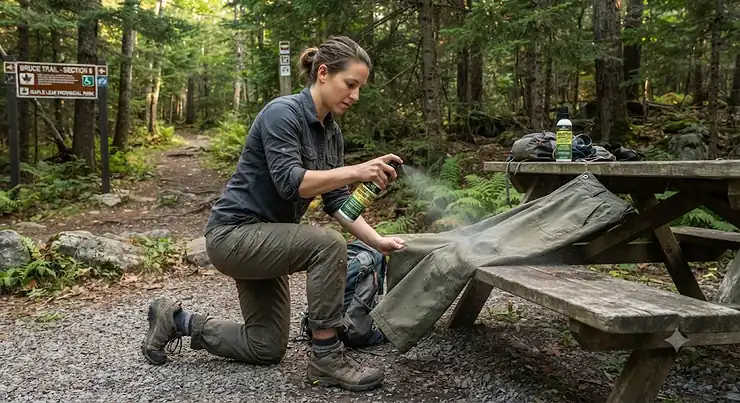
Permethrin clothing spray for hiking is a synthetic insecticide you apply to fabric — pants, socks, shirts, gaiters — rather than to skin. Once dry, it binds to the fibres and stuns or kills ticks and mosquitoes on contact. Here’s the Canadian twist: Health Canada has not approved do-it-yourself permethrin sprays, only factory-treated garments.
That twist changes everything about how you shop.
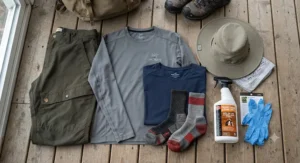
Scroll through any American hiking forum and you’ll see the ritual: lay your trail pants on the lawn, spritz them with a bottle of permethrin clothing spray for hiking, let them dry, done for six weeks. North of the border, the story is different. According to the federal Government of Canada guidance on permethrin-treated clothing, “permethrin products in the form of liquids or sprays for consumers to treat their own clothing are not approved for use in Canada.” What is approved: garments treated at the factory, sold with a Pest Control Product (PCP) number on the label, for people 16 and older.
So this guide does something a little different from the usual “top sprays” round-up. I’ll explain why that US-style bottle isn’t the smart buy for a Canadian trail, then walk through seven real products on amazon.ca that actually deliver the permethrin effect — pre-treated gaiters, socks, neckwear and shirts — plus the two registered tick repellent clothing spray and skin options that fill the gaps. Along the way we’ll cover Lyme disease prevention, where trail tick exposure really happens, and the wash-durability of permethrin treatment, which turns out to be the most underrated number on any label.
Think of it as tick armour, sorted by the parts of your body ticks actually climb.
Quick Comparison Table: Permethrin Clothing Options for Hiking
| Product | Type | Coverage Zone | Price Range (CAD) | Best For |
|---|---|---|---|---|
| InsectGuard Permethrin Treated Tick Gaiters | Pre-treated gaiter sleeves | Ankle to calf | C$35-C$55 range | InsectGuard Permethrin Treated Tick Gaiters for grassy, brushy trails |
| Insect Shield Sport Crew Socks | Pre-treated socks | Foot and ankle | C$20-C$35 range | Insect Shield Sport Crew Socks for everyday day hikes |
| BUFF CoolNet UV Insect Shield Neck Gaiter | Pre-treated neckwear | Neck, ears, head | C$30-C$45 range | BUFF CoolNet UV Insect Shield Neck Gaiter for hot, buggy summits |
| Insect Shield Bandana | Pre-treated bandana | Neck or head | C$15-C$30 range | Insect Shield Bandana for budget add-on protection |
| ExOfficio BugsAway Long-Sleeve Shirt | Pre-treated shirt | Torso and arms | C$80-C$140 range | ExOfficio BugsAway Long-Sleeve Shirt for full upper-body coverage |
| Natrapel Icaridin Insect Repellent (170 g) | 20% icaridin aerosol | Exposed skin | C$15-C$25 range | Natrapel Icaridin Insect Repellent for families and gentle feel |
| Ben’s 30% DEET Tick & Insect Repellent Eco Spray | 30% DEET pump | Exposed skin | C$15-C$25 range | Ben’s 30% DEET Tick & Insect Repellent Eco Spray for peak-season backcountry |
Read this table from the ground up, literally. Ticks quest from low vegetation and climb, so the InsectGuard Permethrin Treated Tick Gaiters and Insect Shield Sport Crew Socks guard the highest-traffic zone for the least money. The BUFF CoolNet UV Insect Shield Neck Gaiter and ExOfficio BugsAway Long-Sleeve Shirt handle what gets past the ankles, while Natrapel Icaridin Insect Repellent and Ben’s 30% DEET Tick & Insect Repellent Eco Spray cover the skin that treated fabric can’t.
💬 Just one click — help other hikers make smarter tick-season buying decisions too! 😊
Top 7 Permethrin Clothing Picks for Hiking: Expert Analysis
Before the list, a quick honesty note. Every pre-treated item below is marketed with permethrin applied at the factory. Canada requires registered pest control products to carry a PCP number, and Health Canada tells shoppers to look for it — so check the physical label or listing photos before buying, particularly for third-party sellers. The two sprays at the end are skin repellents registered in Canada, included because treated fabric does nothing for your bare wrists and neck.
| Product | Active Ingredient | Wash Durability (manufacturer claim) | Weight/Format | Best For | Reviewer Consensus |
|---|---|---|---|---|---|
| InsectGuard Permethrin Treated Tick Gaiters | Permethrin (factory-bound) | Multi-wash; check label | Slip-on or zip-on sleeves | InsectGuard Permethrin Treated Tick Gaiters for tall-grass trails | Praised for stopping ticks at the boot; fit on wide calves is a recurring note |
| Insect Shield Sport Crew Socks | Permethrin (Insect Shield) | Up to 70 launderings | Cushioned crew sock | Insect Shield Sport Crew Socks for daily wear | Comfort praised; some want more colours and sizes |
| BUFF CoolNet UV Insect Shield Neck Gaiter | Permethrin (Insect Shield) | Up to 70 launderings | Tube scarf with UPF | BUFF CoolNet UV Insect Shield Neck Gaiter for sun plus bugs | Loved for versatility; price for a tube of fabric raises eyebrows |
| Insect Shield Bandana | Permethrin (Insect Shield) | Up to 70 launderings | Cotton bandana | Insect Shield Bandana as a cheap add-on | Handy and light; small coverage area |
| ExOfficio BugsAway Long-Sleeve Shirt | Permethrin (Insect Shield) | Up to 70 launderings | Vented travel shirt | ExOfficio BugsAway Long-Sleeve Shirt for trail and travel | Breathability praised; sizing and stock on amazon.ca vary |
| Natrapel Icaridin Insect Repellent (170 g) | 20% icaridin | N/A (skin) | Aerosol | Natrapel Icaridin Insect Repellent for sensitive noses | Non-greasy, low odour; aerosol can is bulkier |
| Ben’s 30% DEET Tick & Insect Repellent Eco Spray | 30% DEET | N/A (skin) | Pump spray | Ben’s 30% DEET Tick & Insect Repellent Eco Spray for heavy pressure | Strong performance; DEET feel and smell divide people |
The pattern jumps out: the five fabric items all lean on the same permethrin-binding technology, so the real decision is which body zone you want covered first — not which chemistry wins. Based on the spec comparison, gaiters and socks deliver the most protection per dollar, while the shirt is the premium, full-coverage upgrade you add once the lower body is sorted.
1. InsectGuard Permethrin Treated Tick Gaiters — best ground-level tick barrier
These sleeves wrap the gap between your boot and your pant leg, which is exactly where a questing blacklegged tick makes first contact. The permethrin is bound into the fabric at the factory, so there’s no spraying, no drying time and no guesswork about coverage. In practice that means you pull them on at the trailhead the way you’d lace your boots — and the most tick-exposed 30 cm of your body gets its own guard.
Based on the spec comparison, this is the single highest-impact item in the lineup for anyone hiking through meadows, overgrown cottage-country paths or the long grass of eastern Ontario and Nova Scotia. Gaiters also work over any pants you already own, so you avoid buying a whole treated wardrobe. What most buyers overlook: gaiters protect your existing gear investment, because you don’t need to retire favourite trail pants that can’t be treated.
Aggregated reviewer sentiment praises how many ticks users find stalled on the fabric rather than on skin, though a recurring complaint concerns fit — people with larger calves or bulky mountaineering boots report a snug squeeze.
Pros:
- ✅ Guards the single most tick-exposed zone on your body
- ✅ Works over any pants you already own
- ✅ No spraying, drying or reapplication needed
Cons:
- ❌ Snug fit reported on wider calves and bulky boots
- ❌ Wash-durability claim should be confirmed on the label
Usually found in the C$35-C$55 range at the time of research — strong value given it protects your highest-risk zone.
2. Insect Shield Sport Crew Socks — cheapest way to start treated
Socks are the quiet heroes of Lyme disease prevention: they sit where ticks begin their climb, and you wear them on every single outing. These crew socks use Insect Shield’s permethrin process, which the company rates for up to 70 launderings — roughly a full season of hiking plus change for most people. That wash rating matters, because a treated sock you wash twice a week still holds its protection for months rather than weeks.
The cushioned crew height reaches above the ankle bone, and when you tuck your pant cuffs into them — the classic, slightly dorky Canadian public-health advice — you create a sealed, treated junction. Based on the spec comparison, this is the entry point I’d point any beginner toward: low cost, zero learning curve, and it slots into a routine you already have.
Reviewers consistently report the socks feel like normal hiking socks with no odour or residue, which dispels the common fear that treated fabric feels “chemical.” The most frequent grumble is limited colour and size choice on amazon.ca, plus availability that fluctuates between sellers.
Pros:
- ✅ Lowest-cost entry into permethrin-treated hiking clothes
- ✅ Rated for up to 70 launderings
- ✅ Feels and wears like an ordinary hiking sock
Cons:
- ❌ Limited colour and size choice on amazon.ca
- ❌ Crew height won’t cover much above the ankle
Typically in the C$20-C$35 range per pack — the best cost-per-use in this whole guide.
3. BUFF CoolNet UV Insect Shield Neck Gaiter — two jobs, one tube
This one pairs BUFF’s lightweight CoolNet UV fabric, rated for sun protection, with Insect Shield’s permethrin treatment, so the same tube shields your neck from both UV and bugs. Ticks that make it past your waistline tend to head for the hairline and behind the ears, where skin is thin and you can’t easily see them. A treated tube scarf puts a barrier right there.
The versatility is the real selling point: neck gaiter, headband, beanie-style cap, or pulled up over your face when black flies swarm on a Laurentian ridge. Based on the spec comparison, this is the best upper-body pick for summer hikers who run hot and won’t wear a long-sleeve shirt in July heat. Because it’s so light, it also earns a permanent spot in a daypack even on tick-light trails.
Reviewers consistently praise the breathability and multi-use design, though a common theme is surprise at paying premium money for a single tube of fabric. A few note that treated BUFFs are sometimes harder to find than untreated versions, so double-check that the listing says “Insect Shield.”
Pros:
- ✅ Combines UV protection with permethrin bug defence
- ✅ Covers the neck and hairline where ticks hide
- ✅ Wears a dozen ways, from headband to face cover
Cons:
- ❌ Pricey for a single piece of fabric
- ❌ Easy to confuse with untreated BUFF listings
Generally in the C$30-C$45 range — worthwhile if it replaces both a sun buff and a bug head-cover.
4. Insect Shield Bandana — budget add-on for dogs-and-kids-free hikers
The bandana is the cheapest way to add a treated layer above the waist. It carries the same Insect Shield permethrin process as the pricier items, typically rated for up to 70 launderings, in a square of cotton you can tie at the neck, wear as a sweatband, or knot around a hat brim.
Here’s what to weigh: coverage is small, so this is an add-on rather than a foundation. Paired with treated socks and gaiters, though, it plugs the neck gap for pocket change. The honest caution is age-related — Health Canada approves permethrin-treated clothing for people 16 and older, so resist the temptation to tie it on your kid or, for that matter, your dog, since the agency notes pet safety hasn’t been evaluated in Canada.
Aggregated reviewer sentiment frames it as a “why not” purchase: light, washable, easy to stash. The common complaint is that cotton stays damp on sweaty climbs and dries slowly compared with synthetic neckwear like the BUFF CoolNet UV Insect Shield Neck Gaiter.
Pros:
- ✅ Cheapest treated upper-body layer in the lineup
- ✅ Multi-use as neckerchief, sweatband or hat wrap
- ✅ Same factory treatment as premium Insect Shield gear
Cons:
- ❌ Small coverage area, not a standalone solution
- ❌ Cotton dries slowly on sweaty climbs
Usually in the C$15-C$30 range — excellent value as a supporting piece.
5. ExOfficio BugsAway Long-Sleeve Shirt — full upper-body treated coverage
ExOfficio’s BugsAway line uses Insect Shield permethrin on vented nylon travel shirts built for hot, buggy climates, with the treatment rated for up to 70 launderings. The result is a long-sleeve shirt that covers the arms and torso — the largest treated surface area in this guide — while still breathing on humid summer days.
On paper, this is the answer for serious tick-country hikers: Bruce Peninsula, the Ottawa Valley, southern Manitoba, Nova Scotia’s South Shore. Covering your arms with treated fabric shrinks the amount of skin you need to spray with repellent, which is a real win if you dislike the feel of DEET. The quick-dry nylon also means the shirt doubles as a travel piece for Costa Rica or the Amazon basin, spreading the cost across more trips.
Reviewers consistently note good breathability and a trim, outdoor-store look; the recurring frustrations are inconsistent sizing and patchy stock on amazon.ca, where specific BugsAway models rotate in and out. Confirm the label mentions Insect Shield and a PCP number before ordering.
Pros:
- ✅ Largest treated coverage area in this guide
- ✅ Breathable vented design for humid summer hiking
- ✅ Doubles as a tropical travel shirt
Cons:
- ❌ Highest price point in the lineup
- ❌ Model availability and sizing vary on amazon.ca
Expect the C$80-C$140 range — a premium that pays off for frequent tick-country hikers.
6. Natrapel Icaridin Insect Repellent (170 g) — gentle skin partner for treated clothing
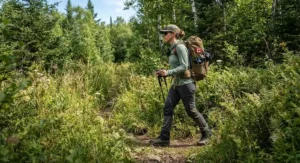
Treated fabric can’t protect bare skin, which is why Canada’s public-health advice pairs permethrin-treated clothing with a skin repellent. This Natrapel aerosol uses 20% icaridin, one of the two actives (with DEET) Canadian public health recommends against ticks. Icaridin feels light and nearly odourless, and it doesn’t soften plastics or synthetic fabrics the way DEET can.
Based on the spec comparison, this is the tick repellent clothing spray partner I’d hand to families and anyone who’s sworn off DEET because of the smell or greasy feel. Health Canada’s repellent guidance allows icaridin for children six months and older, which makes it the one product here a whole household can share — unlike the treated gear, which is adult-only. The 170 g aerosol is sized for a season of weekend use.
Aggregated review sentiment highlights the clean, non-greasy finish and pleasant lack of odour. The most common complaint is that the aerosol can is bulky for ultralight packs, and a few users note mosquito protection seems shorter than tick protection on hot days.
Pros:
- ✅ 20% icaridin, recommended against ticks in Canada
- ✅ Light, non-greasy, nearly odourless feel
- ✅ Won’t damage synthetic gear like DEET can
Cons:
- ❌ Aerosol can is bulky for ultralight packs
- ❌ Heavy sweat shortens real-world protection
Typically in the C$15-C$25 range — the smartest family-friendly skin layer on this list.
7. Ben’s 30% DEET Tick & Insect Repellent Eco Spray — maximum-strength skin backup
Ben’s is a longtime backcountry name, and this 177 mL pump sprays 30% DEET — the maximum concentration Health Canada allows for personal repellents. That ceiling matters: 30% gives the longest protection window available in a Canadian DEET product, which you’ll appreciate during peak June black-fly season in Algonquin or a full-day hike through tick-heavy hardwoods.
Here’s what to weigh: DEET at this strength is a heavyweight, and it can damage plastics, watch crystals, and some synthetic fabrics. Apply it to skin, keep it off treated clothing where it’s unnecessary, and wash hands before handling your phone. Health Canada also limits 30% DEET to people 12 and older, so this is an adult-and-teen product.
Reviewers consistently describe it as the product that “actually works” when bugs are at their worst, while the recurring complaints centre on DEET’s oily feel and chemical scent. The pump format avoids aerosol overspray, which reviewers appreciate in windy conditions.
Pros:
- ✅ Maximum 30% DEET allowed in Canada
- ✅ Pump sprays precisely with no aerosol drift
- ✅ Trusted backcountry brand with long track record
Cons:
- ❌ Can damage plastics and some synthetic fabrics
- ❌ Oily feel and strong odour divide users
Usually in the C$15-C$25 range — cheap insurance for heavy-pressure days.
Pre-Treated vs DIY Permethrin Clothing: What Canadians Need to Know
The pre-treated vs DIY permethrin clothing debate is loud online, but in Canada it’s mostly settled by regulation. DIY means buying a bottle — Sawyer Premium Permethrin is the famous one — and spraying your own gear. Pre-treated means the fabric was treated in a factory under a registered process.
Why DIY sprays aren’t the Canadian answer
Health Canada states plainly that consumer permethrin sprays and liquids for treating clothing are not approved. You’ll still spot US bottles on amazon.ca through third-party sellers, but without a Canadian PCP number, they aren’t registered for this use here. My honest take: an unregistered pesticide is not a product I can recommend to a Canadian audience, however popular it is south of the border.
How the two approaches compare on performance
On the technical side, the gap is real. US labels for DIY sprays generally claim roughly six washes or around six weeks of protection. Factory processes like Insect Shield are rated for up to 70 launderings, because the permethrin is bound to the fibre under controlled conditions rather than misted on in a backyard. That’s more than ten times the wash-durability of permethrin treatment done at home.
The verdict
For Canadian hikers, pre-treated vs DIY permethrin clothing isn’t really a coin flip. Pre-treated garments are the legal route, last longer, and spare you handling a concentrated insecticide on your patio. The trade-off is flexibility: you’re limited to garments someone has already treated.
Building a Tick-Proof Hiking Kit: A Practical Usage Guide
Owning permethrin-treated hiking clothes is half the job. Wearing them intelligently is the other half.
Before the hike
- ✅ Pull on treated socks first, then tuck your pant cuffs into them — ugly, effective.
- ✅ Add the InsectGuard Permethrin Treated Tick Gaiters over the tuck for brushy routes.
- ✅ Choose light-coloured pants so dark ticks stand out.
- ✅ Apply Natrapel Icaridin Insect Repellent or Ben’s 30% DEET Tick & Insect Repellent Eco Spray to exposed skin only — wrists, neck, backs of hands.
On the trail
Stay in the centre of the path. Ticks don’t jump or fall from trees; they wait on grass tips and shrubs at shin-to-knee height. Resting on logs and leaf litter raises exposure, so sit on a pack or sit pad.
After the hike
Run a full tick check — behind knees, waistband, armpits, hairline, behind ears. Canadian public health advice is to dry clothes on high heat to kill any hitchhikers. Treated garments should go into their own laundry load, washed on their own per label directions, rather than mixed with children’s clothing.
Maintenance schedule
Log your washes. A simple note on your phone — “BUFF: 22 washes” — tells you when a garment is nearing its 70-wash limit. Air-drying helps the treatment last, and skipping dry cleaning is standard label advice.
Common first-30-day mistakes
The big one: assuming treated clothing replaces skin repellent. It doesn’t. The second: wearing a treated bandana on a toddler. Adults only, 16 and up.
Real-World Scenarios: Matching Gear to Your Trail
The weekend day-hiker near Kingston
Maya hikes two to three times a month on Frontenac trails, some of the densest blacklegged tick habitat in Ontario. Budget: about C$80. The smart combo is Insect Shield Sport Crew Socks plus the InsectGuard Permethrin Treated Tick Gaiters, with Natrapel Icaridin Insect Repellent for skin. That covers the ground-level zone where most bites start, without a pricey shirt.
The multi-day backpacker in Nova Scotia
Liam does week-long trips on the Cape Chignecto coastal trail and similar routes, often in shoulder season when adult ticks are active. Budget is looser, about C$250. He’d benefit from the full stack: socks, gaiters, the ExOfficio BugsAway Long-Sleeve Shirt, the BUFF CoolNet UV Insect Shield Neck Gaiter, and Ben’s 30% DEET Tick & Insect Repellent Eco Spray for black-fly evenings. At 70-wash durability, the shirt outlasts several seasons of trips.
The family of four in southern Manitoba
Parents want protection; the kids are 7 and 10. Permethrin-treated clothing is off the table for the children under Health Canada rules, so the parents wear treated socks and gaiters while the whole family shares Natrapel Icaridin Insect Repellent, which is suitable from six months up. Kids get light-coloured long pants, tucked socks, and a nightly tick check.
How to Choose Permethrin Clothing Spray for Hiking (and Its Canadian Alternatives)
- Start with legality. In Canada, look for factory-treated garments with a PCP number; consumer permethrin spray isn’t approved.
- Protect from the ground up. Socks and gaiters first, because ticks climb from low vegetation.
- Check the wash rating. Up to 70 launderings is the benchmark for factory treatment; anything unstated deserves a question to the seller.
- Match fabric to climate. Vented nylon and CoolNet-style knits beat cotton on humid July climbs.
- Plan your skin layer. Pick icaridin for families and gentle feel, 30% DEET for peak-pressure days.
- Confirm age limits. Treated clothing is for 16+; kids need different tactics.
- Buy for your real trail tick exposure. A rocky alpine route in the Rockies needs less than a grassy Lake Erie shoreline.
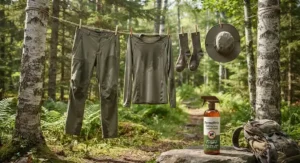
Tick Repellent Clothing Spray vs Permethrin-Treated Hiking Clothes
People often lump every tick repellent clothing spray together, but the chemistry works in two opposite ways.
| Factor | Permethrin-Treated Hiking Clothes | Skin/Clothing Repellent Spray (DEET or Icaridin) |
|---|---|---|
| How it works | Insecticide that stuns/kills on contact | Repellent that masks your scent |
| Duration | Up to 70 washes (factory treatment) | Hours; reapply per label |
| Canadian status | Factory-treated only, 16+ | Registered skin products; age limits vary |
| Best For | Long, repeated trail tick exposure | Exposed skin on every outing |
Based on this comparison, the two aren’t rivals — they’re teammates. Treated fabric creates a lasting kill zone where ticks land most, while a spray protects the skin fabric can’t reach. The US Environmental Protection Agency and Canadian public health authorities both recommend layering them, and that’s the approach every scenario above follows.
Why DEET on fabric isn’t a permethrin substitute
It’s tempting to hose down your pants with DEET instead. DEET repels rather than kills, it evaporates within hours, and at 30% it can damage synthetic fabrics and gear. Icaridin is gentler on materials, but it too fades quickly. Neither replicates the week-after-week, wash-after-wash contact effect of permethrin.
Lyme Disease Prevention on Canadian Trails
Lyme disease prevention used to feel like an American problem. Not anymore. The Public Health Agency of Canada’s Lyme disease surveillance data shows 4,785 reported cases in 2023, 5,809 in 2024, and a preliminary 7,105 in 2025 — roughly a 22% jump in a single year. Between 2009 and 2025, Canada logged more than 28,000 cases.
Those numbers track the northward spread of blacklegged ticks, partly driven by warmer winters. Risk zones now stretch across southern Manitoba, much of southern Ontario and Quebec, New Brunswick and Nova Scotia, with western blacklegged ticks in parts of British Columbia.
The 24-hour window
Here’s the encouraging part. Canadian public health notes that, in most cases, an infected tick needs to be attached for at least 24 hours to transmit the bacterium Borrelia burgdorferi. That’s why permethrin clothing matters: a tick that touches treated fabric is typically disabled before it can find skin, let alone settle in for a day.
A layered prevention stack
- ✅ Treated socks, gaiters and shirts to intercept climbing ticks.
- ✅ Icaridin or DEET on exposed skin.
- ✅ Tucked cuffs and light colours.
- ✅ A full-body tick check within hours of getting home.
- ✅ High-heat dryer cycle for trail clothes.
No single layer is perfect. Stacked together, they turn a coin-flip exposure into a very low-odds one.
Trail Tick Exposure: Where, When and How It Happens
Trail tick exposure isn’t evenly spread across a hike. Ticks “quest” — clinging to grass tips and low shrubs with outstretched front legs — and grab whatever brushes past. That’s why the bottom half of your body takes most of the risk.
Highest-risk terrain
- Tall grass and meadow edges where forest meets field
- Leaf litter in deciduous hardwood forests
- Overgrown, narrow side trails and game paths
- Cottage properties with long grass and woodpiles
Highest-risk seasons
Nymphs, the size of a poppy seed, peak in late spring and early summer and cause many infections because they’re so hard to spot. Adults are active in fall and even on mild winter days above freezing, which surprises many Canadian hikers who pack away their tick gear after Labour Day.
What this means for your gear
Your ankles and calves face the heaviest trail tick exposure on almost every route, which is why this guide ranks the InsectGuard Permethrin Treated Tick Gaiters and Insect Shield Sport Crew Socks as foundational. The upper-body pieces matter most on bushwhacks and narrow, overgrown trails, where brush hits your arms and torso directly.
✨ Don’t Miss These Tick-Season Picks! 🔍
Take your trail protection to the next level with these carefully selected products. Click on any highlighted item to check current pricing and availability — and hike this fall with fewer hitchhikers and more peace of mind!
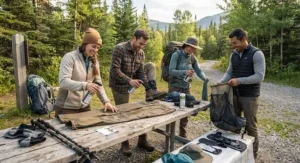
Wash-Durability of Permethrin Treatment: Long-Term Cost & Maintenance
The wash-durability of permethrin treatment is the hidden number that decides long-term value. A treated shirt that loses its protection after a handful of washes is a very expensive regular shirt.
| Treatment Type | Claimed Durability | Cost Pattern | Best For |
|---|---|---|---|
| Factory-bound (Insect Shield: Insect Shield Sport Crew Socks, BUFF CoolNet UV Insect Shield Neck Gaiter, ExOfficio BugsAway Long-Sleeve Shirt) | Up to 70 launderings | One upfront cost, lasts seasons | Frequent Canadian hikers |
| Factory-treated, claim unstated (e.g. some InsectGuard Permethrin Treated Tick Gaiters listings) | Check label | Upfront; verify lifespan | Budget ground-level coverage |
| DIY spray (US-registered, not approved in Canada) | About 6 washes or 6 weeks (US labels) | Repeat purchases | Not recommended in Canada |
The analysis here is simple arithmetic. If you hike twice a week and wash after each outing, 70 launderings covers most of a year and often two seasons. A DIY treatment at six washes would need re-spraying roughly every three weeks, so the “cheap bottle” quietly becomes the most expensive and labour-intensive option — before you even get to the regulatory problem.
Cost-per-wear math
A pair of treated socks at around C$30 worn 70 times works out to under 50 cents per hike. Even the premium ExOfficio BugsAway Long-Sleeve Shirt, at around C$110, lands near C$1.60 per wear across its rated lifespan.
Stretching the lifespan
- Wash in cold water on a gentle cycle.
- Air-dry when you can.
- Skip dry cleaning.
- Retire garments once they pass the rated wash count, even if they look fine.
Safety and Regulations: Permethrin Clothing in Canada
Canada’s rules are stricter than the US, and knowing them keeps you both legal and safe.
What’s approved
Factory-treated clothing, marked with a Health Canada PCP number, for people 16 and older, including pregnant people. According to Health Canada’s guidance on personal insect repellents, treated clothing “can remain effective for a number of wash cycles, as indicated on the clothing label.”
What to avoid
- Consumer permethrin sprays and liquids — not approved in Canada.
- Dressing children under 16 in treated clothing.
- Breastfeeding while wearing treated garments, per federal guidance.
- Prolonged contact with pets, since pet safety hasn’t been evaluated here. Cats are especially sensitive to permethrin.
Contact with kids
Health Canada says adults in treated clothing can touch and hug young children but should avoid prolonged contact, like carrying a toddler in a carrier against a treated shirt. For family hikes, that’s a practical reason to keep treated gear to socks and gaiters.
Skin repellent limits
DEET is capped at 30% in Canada, with age restrictions on higher concentrations; icaridin at 20% is the gentler family option. Always follow the product label.
Common Mistakes When Buying Permethrin Clothing for Hiking
Buying a US spray and assuming it’s fine
It’s the single most common error. Popularity online doesn’t equal Canadian registration. Stick to factory-treated items with a PCP number.
Treating the torso first
A treated shirt feels like the “serious” purchase, but ticks start at your feet. Socks and gaiters should come first.
Skipping the skin layer
Treated fabric doesn’t protect wrists, neck or hands. Pair it with Natrapel Icaridin Insect Repellent or Ben’s 30% DEET Tick & Insect Repellent Eco Spray.
Ignoring the wash count
Protection isn’t eternal. Track washes and retire garments on schedule.
Confusing untreated and treated versions
BUFF and ExOfficio sell untreated versions that look almost identical. Look for “Insect Shield” or “BugsAway” in the product name and a PCP number on the label.
Packing it away in September
Adult ticks stay active through fall and on mild winter days. Keep your kit in rotation until the ground stays frozen.
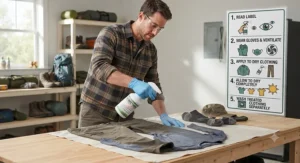
Frequently Asked Questions
❓ Can I buy permethrin clothing spray for hiking in Canada?
❓ Is permethrin-treated clothing worth the money for day hikes?
❓ Where can I buy permethrin-treated hiking clothes in Canada?
❓ What's the best tick spray for skin to pair with treated clothing?
❓ Can kids wear permethrin-treated hiking clothes in Canada?
Conclusion
Searching for permethrin clothing spray for hiking in Canada lands you in a strange spot: the bottle American hikers swear by isn’t approved here, but the protection it provides absolutely is — you just buy it already woven into the fabric. And honestly? That’s the better deal. Factory treatment lasts up to 70 washes versus a handful for DIY sprays, and you never handle a concentrated insecticide on your back deck.
Build from the ground up. The Insect Shield Sport Crew Socks and InsectGuard Permethrin Treated Tick Gaiters cover the zone where most ticks start climbing. Add the BUFF CoolNet UV Insect Shield Neck Gaiter or Insect Shield Bandana for your neck, and the ExOfficio BugsAway Long-Sleeve Shirt if you hike deep tick country often. Then finish with a skin layer — Natrapel Icaridin Insect Repellent for families, Ben’s 30% DEET Tick & Insect Repellent Eco Spray for peak-season backcountry.
With Lyme cases climbing past 7,000 a year, a smart kit and a nightly tick check are simply part of hiking in Canada now. The good news: with the right layers, ticks become a nuisance rather than a worry.
🥾 Ready to gear up?
Click any highlighted product to check current prices and availability, and hit the trail protected from ankle to collar this season! ✨
Recommended for You
- Bug Spray For Kids: 7 Safest Picks Parents Trust (2026)
- Natural Mosquito Repellent For Sensitive Skin: 7 Top Picks (2026)
- Natural Bug Repellent For Camping: 7 Proven Picks (2026)
Disclaimer: This article contains affiliate links. As an Amazon Associate, I earn from qualifying purchases. If you purchase products through these links, we may earn a small commission at no additional cost to you.
✨ Found this helpful? Share it with your friends! 💬🤗
