

In This Article
Somewhere between packing the sunscreen and finding the missing water bottle, most Canadian parents have stood in a pharmacy aisle staring at a wall of bottles, genuinely unsure which one is safe to put on a five-year-old. That hesitation is fair. Not every bottle on the shelf is formulated with kids in mind, and the difference between a product built for an adult heading into the bush and one designed for a toddler on a playground swing is bigger than the label design suggests. Choosing the right bug spray for kids isn’t about grabbing whatever’s cheapest or whatever smells the least chemical — it’s about matching the active ingredient, the concentration, and the format to your child’s age and where they’ll actually be using it.

The stakes are a little higher than they used to be, too. Toronto Public Health confirmed its first 2026 human case of West Nile virus this summer, part of a broader pattern of mosquito-borne illness showing up earlier and more widely across Ontario and the Prairies. That doesn’t mean panic — it means a genuinely good bug spray for kids has stopped being optional gear for backyard evenings, and started being as routine as sunscreen.
Here’s the short version, and we’ll build on it through this guide: children under 6 months shouldn’t wear any DEET-based repellent at all, kids from 6 months to 12 years are capped at 10% DEET by Canadian Paediatric Society guidance, and icaridin (Canada’s name for picaridin) is a genuinely solid DEET-free alternative approved from 6 months onward. Below, we’ve rounded up seven real, currently available products across budget, mid-range, and premium price points — DEET, icaridin, and fully natural — so you can match the right one to your kid’s age, your neighbourhood’s bug pressure, and whatever’s on the calendar this weekend.
Quick Comparison Table
Before the deep dive, here’s how these seven products stack up on the basics that matter most when you’re shopping specifically for children rather than for yourself.
| Product | Active Ingredient | Minimum Age | Best For |
|---|---|---|---|
| OFF! FamilyCare 7% DEET Spray | 7% DEET | 6 months+ (apply per label) | Budget-friendly low-DEET family spray |
| Natrapel Kids Icaridin Spray | 20% Icaridin | 6 months+ | Long-lasting DEET-free protection |
| Watkins Great Outdoors Icaridin Pump | 20% Icaridin | 6 months+ | Canadian-made, fragrance-light formula |
| Care Plus Icaridin Kids & Baby Spray | 20% Icaridin | 6 months+ | Gentlest icaridin option for babies |
| Muskol Family & Kids Pump | 10% DEET | 6 months+ (per label) | Classic low-DEET spray at the max CPS limit |
| Citrobug Natural Repellent Oil for Kids | Citronella + plant oils | 2 years+ | DEET-free natural option for short outings |
| Walrus Oil Logger’s Bug Repellent Balm | Cedarwood + citronella oil | 2 years+ | Mess-free balm for sensitive-skin kids |
Notice the split: two products lean on classic DEET at kid-appropriate concentrations, three build around icaridin, and two go fully natural with essential-oil actives. That split is the backbone of everything below, because the “best” bug spray for kids genuinely depends on your child’s age, how long they’ll be outside, and how much bug pressure you’re actually dealing with.
💬 Just one click — help others make better buying decisions too!😊
Top 7 Bug Sprays for Kids: Expert Analysis
We picked these seven based on real active-ingredient transparency, availability across Canadian retailers including Amazon.ca, and how each one performs specifically for children’s skin and Canadian regulatory guidance — not just general bug-repelling power. Every product gets the same honest treatment: real specs, what those specs mean for your family in practice, and where each one actually falls short.
1. OFF! FamilyCare 7% DEET Spray — lowest-DEET pump spray built for the whole family
OFF! FamilyCare 7% DEET Spray sits at the low end of the DEET spectrum specifically so it can double as a grab-and-go bottle for both parents and kids without anyone needing to check the concentration twice. At 7% DEET, it lands comfortably under the 10% ceiling Health Canada and the Canadian Paediatric Society set for children aged 2 to 12, which means you’re not stretching the label’s intended use just to make it work for your family. The pump-spray format (rather than aerosol) also gives you more control over exactly where it lands, which matters when you’re applying it to a wriggling six-year-old at a picnic table.
Based on the concentration alone, this is best suited to families who want one bottle that covers most ages rather than buying separate adult and kids’ formulas — though at 7% DEET, expect shorter protection windows (roughly 2 to 3 hours) than a 15% or 30% adult spray would deliver, so it’s not the pick for a full day of bush camping. Aggregated reviews on major Canadian retail sites consistently note the low, mild scent compared with higher-DEET aerosols, with a recurring comment that reapplication is needed sooner than shoppers expect on hot, sweaty days.
Pros:
- ✅ 7% DEET stays comfortably under CPS’s 10% paediatric ceiling
- ✅ Pump format gives precise, controlled application
- ✅ Mild scent compared with higher-concentration DEET sprays
Cons:
- ❌ Shorter protection window than 15%+ DEET formulas
- ❌ Still not appropriate for infants under 6 months
Priced in the budget tier — typically around C$7 to C$10 for the 175 mL bottle — OFF! FamilyCare 7% DEET Spray is a sensible everyday bottle for families who want a known, well-studied active ingredient without paying a premium for it.

2. Natrapel Kids Icaridin Spray — longest label-claimed protection in a DEET-free formula
Natrapel Kids Icaridin Spray builds its case around a straightforward promise: up to 12 hours of protection from mosquitoes and ticks without a trace of DEET in the bottle. That duration claim matters in practice, because a repellent that genuinely lasts most of a day means fewer touch-ups, and fewer touch-ups means less total product contact on a child’s skin over the course of an outing. The eco-spray pump format also skips the aerosol propellant altogether, which is worth knowing if your child has ever coughed or fussed around a hissing spray can.
What most parents overlook about this pick is that icaridin isn’t some fringe alternative — it’s recommended by public health bodies specifically because it repels mosquitoes and ticks about as effectively as DEET while carrying a lower irritation profile on kids’ skin. Reviewers on outdoor retail sites consistently mention the light, almost neutral scent as a pleasant surprise compared with typical bug-spray smell, while a common thread in feedback is that the bottle empties faster than expected on multi-day camping trips given how liberally it needs to be applied for full coverage.
Pros:
- ✅ Up to 12-hour label claim reduces reapplication frequency
- ✅ Fully DEET-free, approved for kids 6 months and older
- ✅ Light, low-fragrance scent that most kids tolerate well
Cons:
- ❌ Premium pricing relative to bottle size versus DEET options
- ❌ Real-world duration on active, sweating kids often runs shorter than the label
In the mid-range around C$12 to C$16, Natrapel Kids Icaridin Spray earns its price through formulation and duration rather than novelty packaging.
3. Watkins Great Outdoors Icaridin Pump — Canadian-formulated pick with a genuinely light scent
Watkins Great Outdoors Icaridin Pump is formulated and sold specifically for the Canadian market at 20% icaridin, registered with Canada’s Pest Management Regulatory Agency, which is worth knowing since not every bottle marketed toward Canadian families actually carries that domestic registration. The 200 mL pump bottle is sized for a season of use rather than a single trip, which brings the per-application cost down noticeably compared with smaller travel formats.
Here’s what the spec sheet won’t spell out plainly: J.R. Watkins built its reputation on household and personal-care goods long before entering the repellent space, and that legacy shows up in the formulation’s restrained scent profile — it smells more like an unscented lotion than a typical bug spray, which matters for kids who are sensitive to strong smells. Aggregated customer feedback on Canadian retail sites frequently praises how non-greasy the finish is straight out of the pump, with an occasional note that the trigger mechanism needs a firm press to get an even mist on the first few uses.
Pros:
- ✅ 20% icaridin formulated and registered specifically for Canada
- ✅ Large 200 mL pump bottle lowers per-use cost over a season
- ✅ Restrained, low-fragrance scent well tolerated by scent-sensitive kids
Cons:
- ❌ Pump trigger can feel stiff during the first several uses
- ❌ Less widely stocked in smaller pharmacies than the national DEET brands
At roughly C$13 to C$17, Watkins Great Outdoors Icaridin Pump is a strong mid-range pick for families who want a Canadian-formulated, DEET-free option they can keep refilling their diaper bag or backpack from all summer.
4. Care Plus Icaridin Kids & Baby Spray — gentlest icaridin formula built specifically for the youngest kids
Care Plus Icaridin Kids & Baby Spray is explicitly labelled for children and babies from 6 months, and the formulation reflects that target audience directly: it’s non-scented, non-greasy, and designed to sit comfortably on the thinner, more reactive skin infants and toddlers have compared with older kids. At 20% icaridin, independent studies referenced by the manufacturer suggest it repels mosquitoes and ticks at least as effectively as 30% DEET, which is a meaningful claim given that 30% DEET isn’t even approved for use on children this young.
Based on the ingredient profile, this is the bottle we’d point toward first for parents outfitting an infant or young toddler for a day at the splash pad or a family cottage weekend, precisely because the whole product is engineered around that age group rather than scaled down from an adult formula. What the label doesn’t advertise loudly is the claimed protection window — up to 12 hours against mosquitoes, a full two hours less against black flies — so black-fly-heavy regions of Canada may still need a midday touch-up despite the headline duration. Aggregated reviewer sentiment consistently highlights how well it’s tolerated by eczema-prone skin, with the most common complaint being the relatively small 100 mL bottle size for the price.
Pros:
- ✅ Purpose-built formula for infants and toddlers from 6 months
- ✅ Non-scented and non-greasy, gentle on reactive skin
- ✅ Comparable efficacy to 30% DEET without any DEET
Cons:
- ❌ Smaller 100 mL bottle at a premium price per millilitre
- ❌ Shorter protection window specifically against black flies
Positioned at the premium end around C$15 to C$19, Care Plus Icaridin Kids & Baby Spray is the pick for parents prioritizing the gentlest possible formula over stretching every dollar.
5. Muskol Family & Kids Pump — the recognizable Canadian brand at the exact CPS-approved DEET ceiling
Muskol Family & Kids Pump takes Canada’s best-known repellent brand and dials the concentration down to 10% DEET — precisely the maximum the Canadian Paediatric Society and Health Canada recommend for kids aged 2 to 12. That’s a deliberate choice, not a coincidence: rather than diluting an adult formula unofficially at home, this bottle is formulated and labelled to land exactly at the ceiling parents are told to respect, with clear application guidance printed right on the pump.
What most shoppers overlook about sticking with a brand like this is the decades of real-world use behind it; Muskol has been a fixture in Canadian tackle boxes and diaper bags for generations, which means its label instructions and safety data have been refined against actual Canadian mosquito and black-fly pressure rather than a generic North American formula. Reviewers on Canadian retail platforms consistently describe it as the “default” bottle for family cottage trips, with a recurring note that the scented oil base, while mild, is still noticeably more “bug spray” smelling than the icaridin options on this list.
Pros:
- ✅ 10% DEET lands exactly at the CPS-recommended paediatric maximum
- ✅ Decades of established use across Canadian outdoor conditions
- ✅ Clear, kid-specific application instructions on the label
Cons:
- ❌ More noticeable “bug spray” scent than icaridin alternatives
- ❌ DEET-based, so still off-limits for infants under 6 months
At a budget-friendly C$6 to C$9 for the 100 mL pump, Muskol Family & Kids Pump remains one of the most accessible low-DEET repellent for kids options on Canadian shelves.
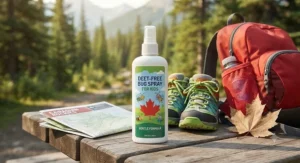
6. Citrobug Natural Repellent Oil for Kids — Quebec-made, fully DEET-free botanical option
Citrobug Natural Repellent Oil for Kids is manufactured in Quebec and built entirely around citronella and a blend of plant-derived oils, with zero DEET or icaridin in the formula. For parents who want to stay in essential-oil territory specifically — whether from personal preference or a documented sensitivity to synthetic actives — this is one of the few Canadian-made options actually marketed and labelled for children rather than repurposed from an adult product line.
The honest trade-off here is protection duration: citronella-based formulas generally need reapplying every one to two hours, considerably more often than DEET or icaridin sprays, which the Canadian Paediatric Society notes explicitly when comparing natural repellent categories. That makes Citrobug Natural Repellent Oil for Kids a better match for a two-hour backyard barbecue than an all-day hike, and parents should plan the reapplication schedule accordingly rather than assuming set-it-and-forget-it coverage. Aggregated feedback from Canadian pharmacy and health-store customers frequently praises the pleasant citrus scent kids don’t fuss about, alongside consistent notes that it needs a genuinely liberal, frequent application to hold up outdoors.
Pros:
- ✅ Fully DEET-free and icaridin-free, plant-oil formulation
- ✅ Made in Quebec, widely available through Canadian pharmacies
- ✅ Pleasant citrus scent that most kids don’t resist
Cons:
- ❌ Requires reapplication roughly every one to two hours
- ❌ Not recommended by CPS guidance for children under 2 years
In the C$10 to C$13 range, Citrobug Natural Repellent Oil for Kids works well as a light-duty, frequently-reapplied option for short outdoor stretches rather than long days at camp.
7. Walrus Oil Logger’s Bug Repellent Balm — mess-free balm format for sensitive-skin kids
Walrus Oil Logger’s Bug Repellent Balm swaps the spray bottle entirely for a solid balm built on cedarwood and citronella oil, which changes the whole application experience. Rather than misting a squirming child (or worse, catching a faceful of overspray yourself), you’re swiping a small amount directly onto exposed skin with your fingers — a real advantage for parents of kids who panic at the sound of a spray nozzle, or for applying near the ears and neck without risking eye contact.
Here’s what the ingredient list won’t spell out: because it’s a 100% vegan, plant-based balm rather than an alcohol-based spray, it tends to sit longer on skin without evaporating, which can translate to slightly steadier (if still modest) protection between applications compared with a thin essential-oil mist. That said, it shares the same fundamental limitation as other natural actives — shorter protection windows than DEET or icaridin — so it’s a better match for a stroller walk around the block than a full day at an unshaded soccer tournament. Reviewers consistently highlight the pleasant woodsy scent and mess-free application as standout features, with the most common critique being the small 2 oz tin doesn’t go far once a family starts using it regularly.
Pros:
- ✅ Mess-free balm format avoids spray drift near eyes and face
- ✅ 100% vegan, plant-based formula with no DEET or icaridin
- ✅ Pleasant, non-chemical woodsy scent kids tend to tolerate well
Cons:
- ❌ Small 2 oz (59 mL) tin depletes quickly with regular family use
- ❌ Shorter protection window typical of essential-oil-based actives
At a premium roughly C$16 to C$22 for the tin, Walrus Oil Logger’s Bug Repellent Balm is the pick for parents prioritizing gentle, mess-free application over maximum protection duration.
What Is Bug Spray for Kids?
Bug spray for kids is an insect repellent specifically formulated, concentration-tested, and labelled for children’s skin — typically built around DEET at 10% or less, icaridin up to 20%, or plant-derived actives like citronella — designed to repel mosquitoes, ticks, and black flies while accounting for children’s thinner skin and higher exposure-to-body-weight ratio compared with adults.
The distinction matters more than it looks on a shelf label. An adult-strength 30% DEET spray isn’t simply “too strong” in a vague sense — it exceeds the concentration Health Canada and the Canadian Paediatric Society specifically recommend against for anyone under 12, based on real absorption and irritation data. A genuine kid-safe insect repellent isn’t defined by cute packaging or a “gentle” marketing claim; it’s defined by a concentration and active ingredient that actually matches published paediatric guidance for your child’s specific age bracket.
How to Choose Bug Spray for Kids
- Start with your child’s exact age, not a general “kids” label. The gap between “6 months to 2 years” and “2 to 12 years” carries real differences in maximum concentration and how often you can reapply.
- Check the active ingredient before the brand name. DEET, icaridin, and plant-based oils each carry different age minimums, protection windows, and reapplication needs — the brand on the front doesn’t tell you any of that.
- Match concentration to conditions, not habit. A 7% or 10% DEET spray or a 20% icaridin formula covers most backyard and playground situations; save anything stronger for genuine bush or high-tick-density trips.
- Consider the format for your child’s temperament. Sprays are fast but can startle younger kids; pump sprays give more control than aerosols; balms and lotions suit kids who dislike mist entirely.
- Factor in reapplication realism. A natural repellent that needs reapplying every hour isn’t a bad product — but if you know you won’t actually reapply that often, a longer-duration icaridin or low-DEET option may protect your kid better in practice.
- Look for PMRA registration on the label. Every legitimate personal insect repellent sold in Canada must clear Health Canada’s Pest Management Regulatory Agency review; small-batch or imported products sometimes skip this step.
- Read the fine print on where it can be applied. Most labels for a kid-safe insect repellent explicitly warn against hands, eyes, mouths, and broken skin — details worth reading once, out loud, before the first application of the season.
Run through this checklist before tossing any bottle in the cart, because the phrase “bug spray for kids” on a label is a marketing category, not a regulatory guarantee — the checklist above is what actually confirms a product fits your specific child.
Canadian Paediatric Society Repellent Age Guidelines
The Canadian Paediatric Society repellent age guidelines break down cleanly by age band, and they’re worth memorizing rather than re-Googling every summer. For infants under 6 months, the guidance is unambiguous: no DEET-based repellent at all, full stop — physical barriers like fine mesh netting over a stroller or long, breathable clothing are the recommended protection instead. From 6 months to 2 years, DEET is permitted but capped at 10% concentration and limited to one application per day. From 2 to 12 years, that same 10% ceiling applies, but up to three applications daily are considered acceptable under typical outdoor exposure.
Once a child crosses into the 12-and-over bracket, the ceiling jumps to 30% DEET following standard label instructions, roughly matching adult guidance. Icaridin follows a simpler rule across the board: it’s approved for children 6 months and older at concentrations up to 20%, without the tiered daily-application limits that DEET carries, and Health Canada’s own approved-ingredients guidance lists it alongside DEET as an effective, federally reviewed option for both mosquitoes and ticks. Reading these numbers against the product roundup above, Muskol Family & Kids Pump and OFF! FamilyCare 7% DEET Spray both respect the DEET ceiling precisely, while Natrapel Kids Icaridin Spray, Watkins Great Outdoors Icaridin Pump, and Care Plus Icaridin Kids & Baby Spray all sit within the icaridin allowance with room to spare.
✨ Don’t Miss These Exclusive Deals! 🔍
Stock up on the repellent that actually matches your child’s age bracket — click any highlighted pick above to check today’s price before the long weekend!
Low-DEET Repellent for Kids: DEET vs Icaridin vs Natural
Choosing between a low-DEET repellent for kids, an icaridin-based spray, and a fully natural option comes down to weighing three things against each other: protection duration, skin tolerance, and how disciplined your family actually is about reapplying. DEET remains the most extensively studied insect-active ingredient in the world, and at kid-appropriate concentrations (7-10%), it delivers reliable, well-documented protection — the trade-off is a more noticeable scent and a firmer daily-application cap for younger kids. Icaridin performs comparably to DEET in independent testing while generally causing less skin irritation and carrying a longer real-world duration, which is exactly why three of the seven picks above use it. Natural, plant-based actives like citronella avoid synthetic ingredients entirely but require meaningfully more frequent reapplication to maintain any real protection.
| Factor | Low-DEET (7-10%) | Icaridin (up to 20%) | Natural/Essential-Oil |
|---|---|---|---|
| Typical protection window | 2.5-4.5 hours | 5-12 hours | 1-2 hours |
| Minimum recommended age | 6 months | 6 months | 2 years |
| Daily application limit | 1-3 times (age-dependent) | No strict daily cap | Reapply as needed |
| Best For | Everyday DEET familiarity | All-day outings, ticks | Short, low-pressure outings |
The clearest takeaway from this comparison is that icaridin-based picks like Care Plus Icaridin Kids & Baby Spray and Watkins Great Outdoors Icaridin Pump genuinely split the difference most parents are after — DEET-comparable protection without DEET’s stricter daily-use ceiling for younger kids. Low-DEET options like Muskol Family & Kids Pump remain a perfectly reasonable, budget-friendly default for families who’ve simply always used DEET without issue, while natural picks like Citrobug Natural Repellent Oil for Kids suit short, supervised outdoor stretches where frequent reapplication isn’t a hassle.

Bug Spray for School-Age Children Outdoors: What to Expect
Bug spray for school-age children outdoors has to survive a genuinely different environment than a backyard barbecue — recess, gym class, field trips, and after-school sports all mean sweat, friction from clothing, and long stretches where a parent isn’t around to reapply anything. That reality should shape the product choice directly: a 7% or 10% DEET pump spray or a 20% icaridin formula, applied before the school day starts, tends to hold up better through a full day of activity than a short-duration natural option that assumes a caregiver is nearby to top it up.
With West Nile virus activity confirmed across multiple Ontario and Prairie municipalities this season, the stakes for school-age outdoor exposure are real rather than theoretical — recess and after-school outdoor time now regularly falls during peak mosquito activity in early evening. For kids old enough to apply their own repellent under supervision (generally 10 and up, per CPS guidance), a pump spray like Natrapel Kids Icaridin Spray or Watkins Great Outdoors Icaridin Pump is easier and safer to self-apply accurately than an aerosol, since kids can see and control exactly how much lands on exposed skin. For younger school-age kids still relying on a parent or teacher for application, a single solid morning application of a longer-duration icaridin spray beats trying to coordinate a midday reapplication that likely won’t happen.
Practical Usage Guide: Applying Bug Spray on Kids the Right Way
Getting the application right matters almost as much as picking the right bottle. Start with sunscreen first, and let it absorb for a few minutes before applying repellent on top — applying them in reverse order, or mixing a combination product, can reduce the effectiveness of both. Spray a small amount into your own hands first, then apply it to your child’s face, ears, and neck by hand rather than spraying directly at them; direct facial spraying risks eyes, mouths, and inhalation, especially with younger kids who tend to flinch or turn suddenly.
Cover exposed skin and the outer layer of clothing, but skip hands entirely for younger kids, since they inevitably end up in mouths. Avoid any broken skin, sunburn, rashes, or cuts, where absorption increases and irritation risk climbs. Once your child is back indoors for the day, wash treated skin with soap and water — this isn’t strictly required by every label, but it’s a sensible habit that limits total daily exposure, particularly for repeat outdoor days during peak mosquito season. Store the bottle below roughly 25°C (77°F) out of direct sunlight and away from where younger kids can reach it unsupervised; heat and UV exposure can degrade active ingredients faster than the label’s shelf-life estimate assumes.
Reapplication Schedules for Children: How Often Is Too Often?
Reapplication schedules for children depend almost entirely on the active ingredient, and mixing that up is one of the more common mistakes parents make. A 10% DEET spray like Muskol Family & Kids Pump or OFF! FamilyCare 7% DEET Spray typically holds for 2.5 to 4.5 hours before protection meaningfully drops off, which for kids aged 2 to 12 lines up with the CPS’s own cap of up to three applications per day — essentially one application per activity block. Icaridin-based products like Care Plus Icaridin Kids & Baby Spray and Natrapel Kids Icaridin Spray stretch considerably further, often 5 to 12 hours per the label, which for most single-day outings means one solid morning application is genuinely enough.
Natural, citronella-based options like Citrobug Natural Repellent Oil for Kids sit at the opposite end, needing reapplication roughly every one to two hours to maintain meaningful protection — a real consideration if you’re not going to be present to reapply it yourself. HealthLinkBC’s guidance on insect repellents is a useful reference point here, since it reinforces that “more frequent” isn’t automatically “safer”: exceeding the label’s daily-application limit on any active ingredient, DEET or otherwise, increases total skin exposure without necessarily improving protection. The practical rule of thumb: set a phone reminder matched to your specific product’s label duration, rather than reapplying reactively whenever you notice the first bite.
Playground and Day-Camp Use: Real-World Scenarios
Playground and day-camp use present two genuinely different repellent puzzles, and matching the right product to each scenario saves both money and frustration. For a couple of hours at the neighbourhood playground after dinner, a lighter-duty option like Citrobug Natural Repellent Oil for Kids or Walrus Oil Logger’s Bug Repellent Balm covers the exposure window without over-applying a DEET or icaridin product your kid doesn’t really need for a short outing close to home.
Day camp is a different story entirely — full days outdoors, often eight or more hours, frequently with counsellors rather than parents handling reapplication (or, more commonly, no reapplication happening at all once the morning application is done). That’s exactly the scenario where a long-duration icaridin spray like Watkins Great Outdoors Icaridin Pump or Care Plus Icaridin Kids & Baby Spray earns its higher price tag: one thorough morning application before the bus arrives can realistically cover most or all of a camp day, which a two-hour natural spray simply can’t promise. If your child’s camp has a specific insect-repellent policy (some restrict aerosols, or require repellent to be sent in a labelled, clearly-marked bottle), check it before the first day — a pump spray with a printed label tends to clear those policies more easily than an unlabelled travel bottle decanted at home.
Common Mistakes When Buying Bug Spray for Kids
The single most common mistake is grabbing an adult-strength DEET product because it’s what’s already in the house, without checking the concentration against your child’s actual age bracket — a 30% DEET spray meant for a teenager or adult simply isn’t appropriate for a 4-year-old, regardless of how diluted the application feels. A closely related error is assuming “natural” automatically means gentler or safer; citronella and other essential oils are genuine skin sensitizers for some kids and still carry their own age restrictions (typically not recommended under 2 years) under Canadian guidance.
Another frequent misstep is buying based on scent or packaging alone rather than the active ingredient printed on the back label — two bottles marketed nearly identically as “kids’ formula” can contain meaningfully different concentrations or entirely different actives. Parents also commonly under-budget for reapplication: buying the smallest, cheapest bottle of a short-duration natural spray for a week-long camping trip often costs more in the end than one larger bottle of a longer-lasting icaridin product would have. Finally, plenty of shoppers skip checking for PMRA registration entirely, assuming any bottle sold at a Canadian retailer has automatically cleared that review — it’s worth a quick label check, especially with smaller or imported brands.
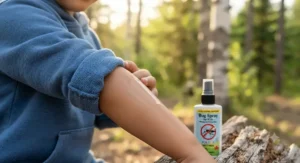
Kid-Safe Insect Repellent: Features That Actually Matter (And Those That Don’t)
A genuinely kid-safe insect repellent comes down to a short list of features that actually matter: an age-appropriate concentration printed clearly on the front label, a PMRA registration number confirming it’s cleared Health Canada’s review, and a format (pump, lotion, or balm) that matches how easily your specific child tolerates application. Everything past that list is largely preference rather than safety.
What doesn’t matter nearly as much as marketing suggests: “all-natural” branding on its own, novelty scents marketed specifically at kids, or premium packaging. None of those affect how well a product actually repels mosquitoes or how safe it is on a child’s skin — they affect how appealing the bottle looks on a shelf. Based on the spec comparisons throughout this guide, the products that consistently perform best for families — Care Plus Icaridin Kids & Baby Spray and Watkins Great Outdoors Icaridin Pump among them — earn that position through concentration, registration, and documented duration, not through branding language.
Buyer’s Decision Framework: Which Bug Spray Fits Your Family?
If you have an infant between 6 months and 2 years, default to an icaridin spray like Care Plus Icaridin Kids & Baby Spray, since it stays gentle on developing skin while still offering real, extended protection without DEET’s stricter once-daily cap at that age. If you’re outfitting a school-age child for full camp days, choose a longer-duration option like Watkins Great Outdoors Icaridin Pump or Natrapel Kids Icaridin Spray, because a single morning application realistically needs to last the whole day without adult supervision to reapply.
If your family has always used DEET without issue and you want a familiar, budget-friendly bottle, Muskol Family & Kids Pump or OFF! FamilyCare 7% DEET Spray both respect the paediatric concentration ceiling without asking you to switch active ingredients. And if you’re specifically avoiding synthetic actives for short, supervised outdoor stretches — an evening at the playground, a quick trip to the park — Citrobug Natural Repellent Oil for Kids or Walrus Oil Logger’s Bug Repellent Balm cover that use case without any DEET or icaridin at all.

Frequently Asked Questions
❓ What bug spray is safe for kids?
❓ Can I use regular bug spray on my child?
❓ How often should you reapply bug spray on kids?
❓ Is DEET or picaridin safer for kids?
❓ What age can a baby wear bug spray?
Conclusion
Picking the right bug spray for kids really comes down to three questions: how old is your child, how long will they actually be outside, and how disciplined is your family going to be about reapplying. Across this guide, the pattern holds steady — icaridin-based picks like Care Plus Icaridin Kids & Baby Spray, Watkins Great Outdoors Icaridin Pump, and Natrapel Kids Icaridin Spray offer the longest protection windows with the gentlest skin profile, low-DEET options like Muskol Family & Kids Pump and OFF! FamilyCare 7% DEET Spray remain reliable, budget-friendly defaults for families already comfortable with DEET, and natural picks like Citrobug Natural Repellent Oil for Kids and Walrus Oil Logger’s Bug Repellent Balm suit shorter, more supervised outings where synthetic actives aren’t the priority.
Whichever bottle ends up in your bag this summer, match the concentration to your child’s actual age bracket, set a reapplication reminder that fits that product’s real duration, and keep the label handy for the first few uses. The mosquito and tick season isn’t getting any shorter across most of Canada — a little label-reading now saves a lot of guesswork later.
✨ Ready to stop guessing and start protecting the whole family properly? Check current prices on today’s pick and get the right bottle in the bag before the next outdoor outing! 🦟🧴
Recommended for You
- Natural Mosquito Repellent For Sensitive Skin: 7 Top Picks (2026)
- Natural Bug Repellent For Camping: 7 Proven Picks (2026)
- DEET vs Picaridin: 7 Bug Sprays Ranked for Canada 2026
Disclaimer: This article contains affiliate links. As an Amazon Associate, I earn from qualifying purchases. If you purchase products through these links, we may earn a small commission at no additional cost to you.
✨ Found this helpful? Share it with your friends! 💬🤗
