In This Article
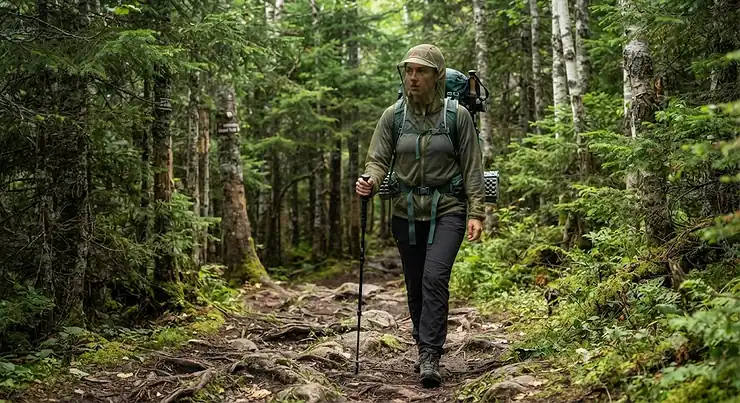
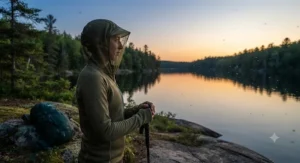
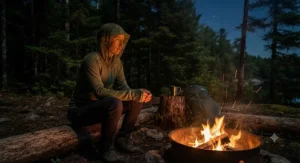
Picture a June evening on a Canadian Shield lake. The water is glass, the loons are warming up, and the fire has finally caught. Then the whine starts. First one mosquito. Then twelve. Then, somewhere around dusk, what feels like the entire population of Northern Ontario, all of them holding a grudge.
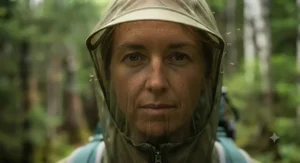
This is exactly the moment a mosquito jacket for camping earns its spot in your pack.
So, what is a mosquito jacket for camping? It’s a lightweight, hooded top — usually fine polyester mesh or densely woven fabric — with an integrated face screen and sealed cuffs and hem that physically block biting insects from reaching your skin, letting you cook, fish and relax at camp without dousing yourself in repellent every hour.
That physical barrier is the whole point. The Public Health Agency of Canada’s West Nile virus prevention advice recommends long sleeves, light-coloured, loose-fitting clothing and netting over your hat, especially around dawn and dusk. A good bug jacket rolls all of that into one garment that weighs less than a can of beans.
But not all bug jackets are equal. Some are breathable mesh that disappears into a hip pocket. Others are dense, woven shirts built for blackfly season in the boreal forest. A few carry factory-applied permethrin. Mesh density, fit, packability and what you wear underneath all change how well a jacket actually works.
In this guide, I break down seven real jackets available to Canadian shoppers, explain what the spec sheets mean once the sun drops, and walk through layering, sizing and care so your next trip is about the view — not the welts. Let’s get into it. 🏕️
Quick Comparison Table: Top Mosquito Jackets at a Glance
| Product | Construction | Face Access | Approx. Price (CAD) | Best For |
|---|---|---|---|---|
| The Original Bug Shirt | Dense woven polyester + no-see-um mesh vents | Zippered face screen | C$110-C$150 range | The Original Bug Shirt: blackfly-heavy backcountry trips |
| Coghlan’s Bug Jacket | Polyester mesh, ~1,600 holes/sq in | Zippered head net | Around C$25-C$40 | Coghlan’s Bug Jacket: budget car camping |
| BugBaffler Insect Protective Hooded Shirt | No-see-um mesh, knit cuffs | Front neck zipper | C$55-C$90 range | BugBaffler Insect Protective Hooded Shirt: all-day comfort in heat |
| Ben’s InvisiNet Bug Jacket & Mitts | Permethrin-treated mesh, nylon reinforcement | Zippered neck | Around C$40-C$60 | Ben’s InvisiNet Bug Jacket & Mitts: ultralight trekkers |
| Tough Outdoors Mosquito Suit | No-see-um polyester jacket + pants | Zippered head cover | C$30-C$50 range | Tough Outdoors Mosquito Suit: full-body campsite coverage |
| Aventik No-See-Um Mesh Mosquito Jacket | Fine polyester mesh | Full-face hood | Under C$40 | Aventik No-See-Um Mesh Mosquito Jacket: stashing in a pocket “just in case” |
| Original Bug Shirt Elite Edition | Cotton or polyester, adjustable hood | Dual-slider face zipper | C$130-C$170 range | Original Bug Shirt Elite Edition: long seasons and serious bug country |
Reading the table, the split is clear: the two Original Bug Shirt models trade weight and cost for a dense woven body that mosquitoes can’t bite through, while the mesh options — Coghlan’s Bug Jacket, Aventik No-See-Um Mesh Mosquito Jacket and Tough Outdoors Mosquito Suit — win on price and packability. Ben’s InvisiNet Bug Jacket & Mitts sits in the middle, adding permethrin and mitts at a mid-range price. If you camp mostly at drive-in sites, a mesh jacket is plenty; if you portage into blackfly country, the woven shirts justify their premium.
💬 Just one click — help others make better buying decisions too!😊
Top 7 Mosquito Jackets for Camping: Expert Analysis
Prices below are ranges at the time of research — check current price on amazon.ca, as listings and availability change often.
1. The Original Bug Shirt — best all-round woven protection, made in Ontario
The Original Bug Shirt has been handmade in Powassan, Ontario, since 1991, and its big idea is refreshingly blunt: mesh alone isn’t enough. The body is densely woven polyester, with no-see-um mesh only in the sleeves, sides and face screen.
Why does that matter? According to the manufacturer, mesh lets mosquitoes bite through wherever it touches your skin — think shoulders under a pack strap. The woven panels solve that, while the mesh sections vent heat. An adult shirt weighs roughly 340 g (12 oz), and it folds into its own zippered pocket with a belt clip. The zippered hood fits over a ball cap, and wrist closures plus a drawstring waist seal the gaps.
Based on the spec comparison, this is the jacket for canoe trippers and anglers in Algonquin, Temagami or northern Saskatchewan, where blackflies and mosquitoes arrive in waves. It’s heavier than pure mesh, so ultralight hikers may balk. Review sentiment on retailer and outfitter listings tends to centre on durability and bite-proof coverage, with the main trade-off being warmth on still, humid afternoons.
Pros:
- ✅ Woven body stops bites where fabric touches skin
- ✅ Made in Canada with decades of field refinement
- ✅ Packs into its own pocket with belt clip
Cons:
- ❌ Heavier than any all-mesh jacket here
- ❌ Limited colour choice on the Original model
Expect it in the C$110-C$150 range — a premium, but cost-per-trip drops fast if you camp every summer.
2. Coghlan’s Bug Jacket — best budget pick from a Canadian brand
Coghlan’s Bug Jacket comes from the Winnipeg-based camping brand that has stocked Canadian Tire shelves for decades, and it nails the basics for very little money.
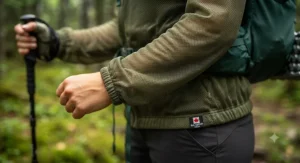
The polyester mesh runs at about 1,600 holes per square inch — fine enough that the brand rates it for no-see-ums, not just mosquitoes. In practice, finer holes mean the tiny biting midges that slip through standard screen can’t get in, though airflow drops slightly compared with coarser netting. The integrated head net has a zippered face opening, drawstrings cinch the wrists and waist, and it comes in sizes XS through XL. The mesh is also listed as flame retardant, which is reassuring around a campfire, though you still shouldn’t lean over the flames.
Here’s what to weigh: it’s pure mesh, so a mosquito can still probe through where the fabric presses against bare skin. Wear a long-sleeve shirt underneath (more on layering later) and that weakness mostly disappears. For families car camping at provincial parks, it’s hard to argue with the value. Review snapshots at Canadian and U.S. retailers generally praise the price-to-protection ratio, while durability of thin mesh around brush is the recurring caution.
Pros:
- ✅ Very affordable, with sizes down to XS
- ✅ Fine mesh rated against no-see-ums
- ✅ Zippered face opening for snacks and drinks
Cons:
- ❌ Thin mesh can snag on branches and brush
- ❌ Bites possible where mesh touches bare skin
Typically around C$25-C$40 — the best value entry point on this list.
3. BugBaffler Insect Protective Hooded Shirt — best for heat and all-day wear
BugBaffler Insect Protective Hooded Shirt is made in the USA and built around genuine no-see-um mesh with a seamless hood roomy enough for a hat — a small detail that makes a big difference on a sunny portage.
The design choices are smart. Stretch knit cuffs hug your wrists instead of flapping, a soft elastic band holds the hem at your hips, and a front neck zipper lets you open the face for a drink without pulling the hood off. Sizing goes by body weight, from Petite through XXL, and it comes in olive or white mesh with a black hood panel. That black panel is clever: dark mesh in front of your eyes cuts glare, improving visibility compared with light mesh.
On paper, this is the most comfortable pure-mesh shirt in the lineup for hot, humid Prairie and Ontario summers, because the knit cuffs mean no drawstrings to fiddle with. Families should note there are youth and children’s versions too. Review sentiment on the brand’s testimonials and retailer pages leans heavily toward comfort and effectiveness; as with all mesh, bites through the fabric are possible without an underlayer.
Pros:
- ✅ Black hood panel improves visibility
- ✅ Knit cuffs seal without drawstrings
- ✅ Weight-based sizing, including youth models
Cons:
- ❌ Imported pricing can climb on amazon.ca
- ❌ No chest pocket or stuff sack
Look for it in the C$55-C$90 range depending on seller — strong value for frequent campers.
4. Ben’s InvisiNet Bug Jacket & Mitts — lightest permethrin-treated option
Ben’s InvisiNet Bug Jacket & Mitts pairs a high-visibility mesh with factory-applied permethrin, then throws in mesh mitts — a combination nobody else here matches.
It weighs about 105 g (3.7 oz) and packs down to roughly 17 x 5 x 20 cm, with the front pocket doubling as the stuff sack. Nylon reinforcement at the shoulders and waist protects the high-wear zones where pack straps rub, which is exactly where cheaper mesh fails first. The elasticized hood, cuffs and hem seal out insects, and the zippered neck gives you eating access. The permethrin layer is the real differentiator: insects that land on the treated fabric are irritated and tend to leave before biting.
Here’s the Canadian nuance. The Public Health Agency of Canada’s guidance on permethrin-treated clothing says these garments are approved for people 16 and older, and recommends looking for a Health Canada PCP number on the label. So this isn’t the pick for your 12-year-old. For adult solo hikers, though, it’s arguably the best weight-to-protection ratio here. Outdoor roundups consistently single out the dual mesh-plus-permethrin approach; stock at Canadian retailers can be patchy.
Pros:
- ✅ Ultralight at about 105 g packed
- ✅ Mitts included for full-hand coverage
- ✅ Reinforced shoulders resist pack-strap wear
Cons:
- ❌ Permethrin not approved for wearers under 16
- ❌ Only two sizes: S/M and L/XL
Around C$40-C$60, and when it’s in stock, it’s a standout mid-range buy.
5. Tough Outdoors Mosquito Suit — best full-body coverage for the campsite
Tough Outdoors Mosquito Suit (sold previously under the Tough Outfitters name) gives you a hooded no-see-um mesh jacket plus matching pants — head-to-ankle coverage for about the price of a single premium head net.
The jacket uses breathable polyester no-see-um mesh with a zippered head cover, so you can eat without unzipping the whole hood. Adjustable drawcords close the wrists, waist and ankles, and the whole set stuffs into a compact pouch. Listed weights vary by retailer and version, so treat it as “light enough not to notice in a daypack” rather than a precise gram figure.
Why pants matter: at a campsite, you spend a lot of time sitting on logs and stools, and mosquitoes love ankles and the back of your knees. A jacket-only setup leaves that zone exposed unless you’re wearing thick trousers. For gardeners, anglers on the dock, and anyone doing camp chores at dusk, a two-piece suit simply covers more real estate. One outdoor roundup notes it’s widely praised in customer reviews for cutting down bites, which matches what the spec sheet suggests. The trade-off is durability: thin mesh pants and brush are not friends.
Pros:
- ✅ Jacket and pants for full-body coverage
- ✅ Zippered head cover for easy eating
- ✅ Budget-friendly price for a two-piece set
Cons:
- ❌ Mesh pants tear easily off-trail
- ❌ Sizing runs generous for some builds
Usually in the C$30-C$50 range — excellent value for stationary campsite use.
6. Aventik No-See-Um Mesh Mosquito Jacket — best “throw it in your pocket” backup
Aventik No-See-Um Mesh Mosquito Jacket is the jacket you forget you packed — until the bugs show up and you’re very glad you did.
Aventik uses a fine, high-density polyester mesh yarn with a full-face hood in a one-piece design, plus elasticized drawstrings at the waist and cuffs. Some versions come with a zippered front and others are pull-over; roundups list the mesh around 1,500 holes per square inch, fine enough to stop most no-see-ums. The brand also advertises UV resistance, which makes sense for anglers who spend hours on open water. The real headline, though, is packability: the brand describes it as small enough to carry in a pocket.
Based on the spec comparison, this is best thought of as insurance. Day hikers, paddlers doing short trips, or anyone car camping in shoulder season can toss it in a hip belt pocket and forget about it. It lacks the reinforcement and structure of the premium options, so it’s not the one to live in for a week in blackfly season. Reviews on the brand site are positive but few in number, and Amazon review counts couldn’t be independently verified at the time of research — so weigh the spec sheet more than the stars.
Pros:
- ✅ Extremely packable for emergency use
- ✅ Fine mesh rated for no-see-ums
- ✅ Zipper or pull-over styles available
Cons:
- ❌ No reinforcement at high-wear points
- ❌ Limited verified long-term review data
Usually under C$40 — cheap insurance against a ruined evening.
7. Original Bug Shirt Elite Edition — best premium pick for long bug seasons
Original Bug Shirt Elite Edition is the upgraded version of the Powassan classic, and it’s built for people who spend weeks — not weekends — in bug country.
The key changes: an adjustable hood and waist, ribbed cuffs with extra adjustable elastic, a front pocket, and a no-see-um face screen with dual sliders, so you can open just a slot for a sip of coffee. It’s offered in polyester or natural cotton, plus camo and other colourways, in sizes XS to 3XL. The solid fabric blocks about 98.9% of UVA/UVB according to the manufacturer (SPF 90.9), which matters on long days on the water.
What most buyers overlook is the cotton option. Cotton breathes and feels nicer in dry heat, but it holds moisture and dries slowly — fine for a cottage dock, less ideal on a rainy canoe trip where polyester makes more sense. For tree planters, surveyors, guides and serious trippers, the Elite’s fine-tuned seals are worth the extra money. Outfitter listings and the brand’s long track record point toward exceptional durability; the main complaint is simply price.
Pros:
- ✅ Dual-slider face zipper for precise access
- ✅ Sizes from XS to 3XL, several fabrics
- ✅ Very high UV protection on solid panels
Cons:
- ❌ Most expensive jacket on this list
- ❌ Cotton version dries slowly when wet
Expect the C$130-C$170 range — a buy-once, use-for-a-decade kind of purchase.
Top 7 Products Compared: Specs and Value
| Product | Weight (approx.) | Mesh / Fabric | Extras | Price Range (CAD) | Best For |
|---|---|---|---|---|---|
| The Original Bug Shirt | ~340 g | Woven poly + no-see-um vents | Self-stuffing pocket, belt clip | C$110-C$150 | The Original Bug Shirt: canoe trips |
| Coghlan’s Bug Jacket | Light (not published) | ~1,600 holes/sq in mesh | Flame-retardant mesh | C$25-C$40 | Coghlan’s Bug Jacket: families on a budget |
| BugBaffler Insect Protective Hooded Shirt | Light (not published) | No-see-um mesh | Knit cuffs, black hood panel | C$55-C$90 | BugBaffler Insect Protective Hooded Shirt: hot days |
| Ben’s InvisiNet Bug Jacket & Mitts | ~105 g | Permethrin-treated mesh | Mitts, stuff-sack pocket | C$40-C$60 | Ben’s InvisiNet Bug Jacket & Mitts: ultralight hiking |
| Tough Outdoors Mosquito Suit | Varies by listing | No-see-um poly mesh | Pants, pouch | C$30-C$50 | Tough Outdoors Mosquito Suit: campsite chores |
| Aventik No-See-Um Mesh Mosquito Jacket | Pocket-sized | ~1,500 holes/sq in mesh | UV resistance | Under C$40 | Aventik No-See-Um Mesh Mosquito Jacket: backup layer |
| Original Bug Shirt Elite Edition | ~340 g+ | Cotton or woven poly | Dual-slider face zip, pocket | C$130-C$170 | Original Bug Shirt Elite Edition: long seasons |
The numbers tell a story about trade-offs rather than winners. Ben’s InvisiNet Bug Jacket & Mitts is roughly a third of the weight of The Original Bug Shirt, yet the woven shirt is the only style that doesn’t depend on an underlayer to stop bites through the fabric. Meanwhile, Coghlan’s Bug Jacket and Tough Outdoors Mosquito Suit deliver most of the protection for a fraction of the premium price — ideal if you camp a handful of weekends a year.
✨ Don’t Miss These Exclusive Deals! 🔍
Take your camping comfort to the next level with these carefully selected bug jackets. Click on any highlighted item to check current pricing and availability on amazon.ca. These picks will help you create bite-free evenings by the fire that your whole crew will love!
Layering Under a Bug Jacket: The Practical Setup Guide
Here’s the dirty secret of mesh bug jackets: the mesh keeps mosquitoes away from your skin only if there’s a gap between the two. Wherever mesh presses flat against your forearm or shoulder, a determined mosquito can push its proboscis straight through. Layering under a bug jacket fixes that — and it’s the single most useful skill in this whole guide.
The three-layer campsite formula
- Base: a thin, long-sleeve synthetic or merino shirt in a light colour. It creates the “air gap” that mesh needs and wicks sweat. Light colours matter: Canadian public-health advice notes mosquitoes are drawn to dark clothing.
- Mid (evenings only): a light fleece or wind shirt once the temperature dips below about 12°C. Put the bug jacket over it — mesh is roomy enough on most models if you size up.
- Shell: the bug jacket itself, cinched at wrists and hem.
First-use tips and your first 30 days
- Do a fit test at home. Raise your arms overhead and sit down. If the hem rides up above your belt, size up.
- Tuck and cinch. Tuck pant legs into socks, and pull the jacket hem over your waistband, never under.
- Keep a buff or cap under the hood. The brim holds mesh away from your face, so mosquitoes can’t reach your nose through it.
- Common first-month mistake: wearing a tight T-shirt underneath and wondering why your shoulders are bitten. Loose, long-sleeve base layers fix it.
Maintenance schedule
Shake it out after each trip, rinse in cold water every few outings, and hang to dry. The Original Bug Shirt Company specifically warns against the dryer, which can make mesh brittle — good advice for every jacket here. Patch small holes with tent-repair tape before they grow.
Real-World Scenarios: Which Jacket Fits Your Kind of Camping?
Specs only matter in context. Here are three common Canadian camper profiles, matched to the jackets that make the most sense.
Profile 1: The weekend family at a provincial park
Budget is roughly C$150 for four people, trips happen four or five times a summer, and the campsite has a picnic table, a fire pit and a parking spot. The priority is simple, affordable coverage for kids and adults at dusk.
Match: Coghlan’s Bug Jacket for everyone, including the XS size for smaller kids, with a Tough Outdoors Mosquito Suit for whichever parent handles cooking duty. Because younger kids can’t wear permethrin-treated clothing, physical mesh is the best family solution.
Profile 2: The canoe tripper heading into blackfly season
A seven-day trip in late May or June through Algonquin or Quetico. Budget is flexible because this is a once-a-year big adventure, and the jacket will be worn for hours under a PFD and a portage pack.
Match: The Original Bug Shirt or Original Bug Shirt Elite Edition. The woven body prevents bites under pack straps, and polyester dries quickly after rain. It costs more, but spread over years of trips, the cost-per-use is modest.
Profile 3: The solo ultralight hiker
Every gram counts, and trips run two to four nights on the trail. The hiker is an adult and comfortable with treated clothing.
Match: Ben’s InvisiNet Bug Jacket & Mitts, at about 105 g, with the Aventik No-See-Um Mesh Mosquito Jacket as a budget alternative if Ben’s is out of stock.
Problem → Solution: Fixing the Most Common Bug Jacket Frustrations
Even the best mosquito-proof jacket has quirks. Here are the problems campers run into most, and how to solve them.
Problem 1: “I’m still getting bitten on my shoulders.” Solution: that’s mesh touching skin. Add a loose, long-sleeve base layer, or switch to a woven-body design like The Original Bug Shirt, which was designed around exactly this failure point.
Problem 2: “The face screen makes everything look foggy.” Solution: dark mesh in front of your eyes improves visibility, which is why BugBaffler Insect Protective Hooded Shirt uses a black hood panel. A cap brim that holds the mesh a few centimetres from your eyes also helps enormously.
Problem 3: “I can’t eat without letting bugs in.” Solution: choose a zippered face opening. Coghlan’s Bug Jacket, Tough Outdoors Mosquito Suit and the dual-slider Original Bug Shirt Elite Edition all let you open a small slot rather than lifting the hood.
Problem 4: “My jacket tore on the first bushwhack.” Solution: mesh and brush don’t mix. Stay on trail, or pick a reinforced option such as Ben’s InvisiNet Bug Jacket & Mitts. Carry repair tape either way.
Problem 5: “My hands get destroyed at dusk.” Solution: mitts. Ben’s InvisiNet Bug Jacket & Mitts includes them; for other jackets, a pair of light gloves tucked under elastic cuffs does the job.
How to Choose a Mosquito Jacket for Camping
Choosing the right mosquito jacket for camping comes down to seven decisions. Work through them in order and the right pick usually jumps out.
- Decide: mesh or woven body. Mesh is lighter and cheaper; woven fabric stops bites where it touches skin. Portage-heavy trips favour woven.
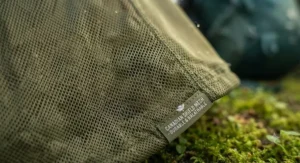
- Check mesh fineness. Look for no-see-um mesh (roughly 1,000+ holes per square inch). Standard mosquito netting stops mosquitoes but not the tiny midges common near Canadian lakes.
- Look at face access. A zippered face or neck opening saves you from lifting the hood — the moment bugs usually get in.
- Match weight to trip type. Backpackers want 150 g or less; car campers can ignore weight almost entirely.
- Consider permethrin carefully. Treated clothing adds a second defence, but in Canada it’s for wearers 16 and older only.
- Size up for layering. You’ll wear a base layer and often a fleece underneath, so a roomy fit is a feature, not a flaw.
- Think about colour. Light colours attract fewer mosquitoes, while a dark face panel improves visibility.
Here’s the bigger picture: no single spec wins by itself. A super-fine mesh jacket that fits too tight will get you bitten more than a coarser mesh jacket worn over a proper base layer. Fit and layering often matter more than any number on the tag.
Mesh Denier and Breathability: What the Numbers Actually Mean
If you’ve ever shopped for netting, you’ve probably seen two different numbers: hole count (holes per square inch) and denier. They measure different things, and understanding both is the key to finding a breathable mosquito jacket for camping.
Hole count: the bug-stopping number
Hole count tells you how small the openings are. Standard mosquito netting is fine for mosquitoes, but no-see-ums (biting midges) are tiny enough to slip through coarse screens. Commercial no-see-um netting is often around 1,000 holes per square inch; Coghlan’s Bug Jacket is listed at about 1,600, and the Aventik No-See-Um Mesh Mosquito Jacket is described around 1,500. More holes per inch means smaller openings — and better protection against the smallest pests.
Denier: the durability number
Denier measures the mass of the yarn — specifically, grams per 9,000 metres of fibre. A 20-denier (20D) yarn, common in no-see-um netting, is very thin and light. Higher denier yarns are thicker, stronger and more abrasion-resistant, but they also block more airflow.
The breathability trade-off
Here’s the tension: tighter weave and thicker yarns stop more bugs and last longer, but they reduce airflow. Fabric suppliers describe this trade-off plainly — tighter mesh improves bug blocking, but airflow drops versus more open mesh. That’s why the most breathable designs aren’t the ones with the most holes; they’re the ones that balance fine openings with thin yarn and strategic ventilation. The hybrid approach of The Original Bug Shirt — woven where protection matters, mesh where you sweat — is essentially an answer to this exact problem.
Bottom line: for a breathable mosquito jacket, look for no-see-um mesh on thin (low-denier) yarn, a loose cut, and mesh panels under the arms and along the sides.
Packable Jacket Weight: How Light Is Light Enough?
Packable jacket weight matters very differently depending on how you camp. At a drive-in campsite, the difference between 100 g and 340 g is irrelevant. On a 20 km backcountry day with a 15 kg pack, every item gets scrutinized.
What the weights look like
- Ultralight mesh (around 100-150 g): Ben’s InvisiNet Bug Jacket & Mitts is about 105 g and packs to roughly the size of a sandwich. The Aventik No-See-Um Mesh Mosquito Jacket is marketed as pocket-sized.
- Standard mesh (weight often unpublished): Coghlan’s Bug Jacket and BugBaffler Insect Protective Hooded Shirt are light, but check listings for current figures, as brands don’t always publish exact weights.
- Woven hybrids (~340 g): The Original Bug Shirt weighs about 12 oz, or roughly the same as a small water bottle — heavier, but still easy to clip to a belt.
Choosing a lightweight bug jacket for campsites
For a lightweight bug jacket for campsites where you’re mostly stationary — cooking, reading, chatting by the fire — prioritize coverage and comfort over grams. A jacket plus mesh pants weighs less than your camp chair and does more for your evening.
For portaging or backpacking, think about the full kit. Carrying 340 g of bug shirt means you might skip a second repellent bottle or a heavier long-sleeve layer, so the net weight penalty is smaller than it looks. That’s the kind of maths the spec sheet never shows you.
Mosquito Jacket vs Bug Spray vs Permethrin Clothing
A bug jacket isn’t the only way to stay bite-free, and the smartest campers often combine methods. Here’s how they compare.
| Method | Protection Type | Reapplication | Age Limits in Canada | Best For |
|---|---|---|---|---|
| Mesh bug jacket | Physical barrier | None | None | Coghlan’s Bug Jacket: families and kids |
| Woven bug shirt | Physical barrier, bite-through proof | None | None | The Original Bug Shirt: heavy bug seasons |
| Permethrin-treated jacket | Barrier + insecticide on fabric | Wears off over washes | 16+ | Ben’s InvisiNet Bug Jacket & Mitts: adult hikers |
| DEET / icaridin repellent | Chemical on skin | Every few hours | Varies by age and concentration | Exposed skin outside the jacket |
The table highlights something important: physical jackets are the only option with no age restrictions and no reapplication, which is why they’re so valuable for families. Repellents still have a place for exposed skin, but they wear off and have age-based rules. A jacket plus a small amount of repellent on hands and ankles is a strong combination for most campers.
In practice, the jacket carries the heavy load. Instead of re-applying repellent to your arms, neck and face every couple of hours, you only treat whatever’s exposed. That means fewer chemicals, less mess on your camp food, and less reliance on remembering to reapply at exactly the wrong moment.
✨ Your Bite-Free Summer Starts Here! 🛒
Ready to reclaim your campfire evenings? Pick the jacket that matches your trips from our top 7 list above and check current pricing on amazon.ca — your future self, sitting calmly by the lake at dusk, will thank you. 🔥
What Makes a Jacket Truly Mosquito-Proof?
“Mosquito-proof jacket” is a phrase that gets thrown around loosely in listings, so it’s worth defining. A genuinely mosquito-proof jacket needs four things working together:
- Openings small enough that insects can’t crawl through — no-see-um mesh if you camp near water.
- Sealed edges at wrists, hem and neck. Elastic, knit cuffs or drawcords all work; loose sleeves don’t.
- A face barrier that stays off your skin, supported by a cap brim.
- Bite-through protection, either from woven fabric or from a loose layer underneath.
Miss any one and you’ll find out fast. The gap usually isn’t the mesh itself — it’s the cuff that slid up your wrist while you were splitting kindling, or the hem that rode above your waistband when you sat down.
Common Mistakes When Buying a Bug Jacket
- Buying your usual size. Bug jackets go over other layers. Size up if you’re between sizes.
- Ignoring face access. Without a zippered opening, you’ll lift the hood to eat, and the bugs will be waiting.
- Choosing standard netting near water. Lakeside no-see-ums slip through coarse mesh. Pay for no-see-um grade.
- Buying permethrin clothing for kids. In Canada it’s approved only for wearers 16 and older.
- Tumble-drying. Heat makes mesh brittle and shortens its life dramatically.
Over the long run, the cost equation favours buying right once. A C$30 jacket that tears on its second trip costs more per use than a C$130 woven shirt that lasts ten summers.
Safety and Regulations for Canadian Campers
A bug jacket is chemical-free protection, which is exactly why it pairs so well with Canada’s rules on repellents. Health Canada’s guidance on personal insect repellents sets DEET concentration limits of up to 30% for adults and children over 12, lower limits for younger kids, and no DEET for infants under six months — for whom netting is recommended instead.
For permethrin-treated garments like Ben’s InvisiNet Bug Jacket & Mitts, look for a Health Canada Pest Control Product (PCP) number on the label. Home-applied permethrin sprays aren’t approved for clothing in Canada, so factory-treated garments are the legal route. And near the fire, remember that mesh is thin — even flame-retardant mesh like Coghlan’s Bug Jacket should stay clear of open flames.
FAQ: Mosquito Jackets for Camping
❓ Where can I buy a mosquito jacket for camping in Canada?
❓ How much does a good bug jacket cost?
❓ Is a bug jacket worth it over repellent?
❓ Can kids wear mosquito jackets?
❓ Do bug jackets work against blackflies?
Conclusion: Pick Your Mosquito Jacket for Camping and Reclaim Dusk
A mosquito jacket for camping is one of the few pieces of gear that transforms a trip for very little money and weight. The right one depends on how you camp. Families at provincial parks will get enormous value from Coghlan’s Bug Jacket or the Tough Outdoors Mosquito Suit. Heat-sensitive campers should look at the BugBaffler Insect Protective Hooded Shirt, while ultralight adults will love Ben’s InvisiNet Bug Jacket & Mitts. Want an emergency backup? The Aventik No-See-Um Mesh Mosquito Jacket lives in a pocket. And for canoe trippers heading into blackfly country, The Original Bug Shirt and the Original Bug Shirt Elite Edition — made right here in Ontario — remain the gold standard.
Whatever you pick, remember the formula: fine mesh, sealed edges, a loose layer underneath, and a cap under the hood. Get those right, and dusk becomes the best part of the day again — golden light, calm water, and not a single itch.
🏕️ Ready to camp without the swarm? Choose your jacket from the list above and check current pricing on amazon.ca before your next trip — bug season waits for no one! 🦟🚫
Recommended for You
- Mosquito Head Net Guide 2026: 7 Best Picks That Actually Work
- Permethrin Clothing Spray For Hiking: 7 Proven Tick Picks 2026
- Bug Spray For Kids: 7 Safest Picks Parents Trust (2026)
Disclaimer: This article contains affiliate links. As an Amazon Associate, I earn from qualifying purchases. If you purchase products through these links, we may earn a small commission at no additional cost to you.
✨ Found this helpful? Share it with your friends! 💬🤗
