
In This Article
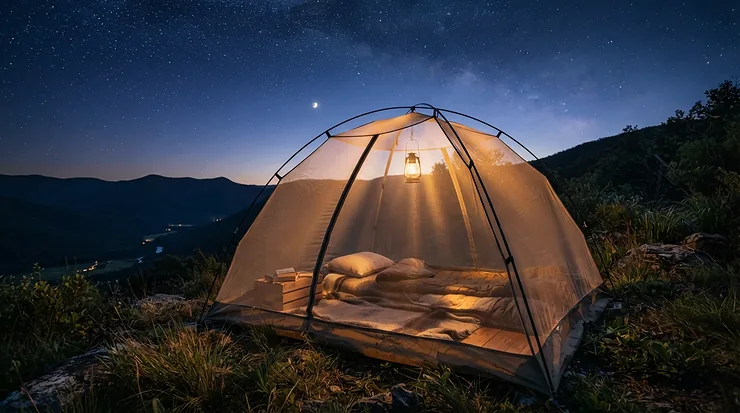
Dusk arrives. The burgers are sizzling. And then the whine starts, right by your ear. A mosquito net tent exists to end that story before it begins.

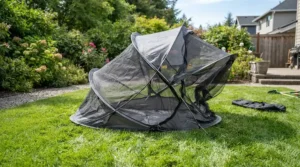
What is a mosquito net tent? It is a lightweight, fine-mesh shelter that keeps mosquitoes, black flies and other biters away from you while still letting air through. It comes as a pop-up dome for sleeping, a screen house for lounging, or a floorless bug shelter. The idea is old: mosquito netting has a documented history stretching back centuries, and the modern versions simply pack down smaller.
Here is the catch. “Mosquito net tent” covers a wild range of products. A one-person pop-up cocoon and a 3 m × 3 m screen house are both sold under that banner, and they solve entirely different problems. Buy the wrong one and you either sweat through a night in a sleeve of mesh or stand in a gazebo that was never meant to be slept in.
This guide sorts it out for Canadian buyers. You’ll get seven real options across budget, mid-range and premium, plus honest analysis of freestanding vs pole-supported tents, a setup time comparison, and advice on the ideal use for short trips. If you want an affordable mosquito tent for backyard evenings, a budget bug tent for car camping, or a cheap pop-up mosquito tent for the cottage dock, the picks below cover all three.
One note on method: specs and sentiment below come from manufacturer listings and published reviews. Nothing here claims hands-on testing, and where review data couldn’t be verified, the article says so.
Quick Comparison: Mosquito Net Tent Options at a Glance
| Product | Type | Size / Weight | Claimed Setup | Price Range (CAD)* | Best For |
|---|---|---|---|---|---|
| Mysora Pop-Up Mosquito Net Tent | Pop-up sleeper | 200 × 80 × 56 cm | Seconds | C$25–C$45 | Cheapest solo naps and scout groups |
| CMINGJ Portable Pop-Up Mosquito Net | Pop-up sleeper | 198 × 99 × 89 cm | Seconds | C$35–C$60 | Roomier solo sleeping |
| Night Cat Pop-Up Mosquito Tent | Pop-up sleeper | 224 × 64 × 79 cm, 1 kg | ~3 seconds | C$60–C$100 | Car camping with a cot |
| EVEN NATURALS Luxury Mosquito Net Pop Up Tent | Pop-up bed/patio net | 203 × 180 × 160 cm, 1.36 kg | Seconds | C$50–C$90 | Backyard lounging, travel beds |
| Onewind Shelter Mosquito Net | Floorless bug shelter | 120 × 80 cm door | A few minutes | C$60–C$110 | Cowboy camping |
| Alvantor 10×10 Pop Up Screen House | Screen house | 3 × 3 m, 5–7 kg | 30–60 seconds | C$130–C$200 | Backyard and campsite hangouts |
| Coleman Skylodge 10×10 Instant Screen House | Screen house | 3 × 3 m, 6.8 kg | ~1 minute | C$200–C$300 | Families wanting standing height |
*Ballpark ranges at the time of research. Check current price on amazon.ca before buying.
The table splits cleanly into two camps. The first four are sleep-and-lounge pods under C$100, while the last two are 3 m screen rooms that cost two to three times as much. Onewind sits in the middle as a floorless specialist. If you’re after a cheap pop-up mosquito tent for one person, start at the top; if you want to host four friends and a cooler, scroll to the bottom.
💬 Just one click — help others make better buying decisions too!😊
Top 7 Mosquito Net Tent Picks: Expert Analysis
1. Mysora Pop-Up Mosquito Net Tent — cheapest bug-proof nap in the group
The Mysora is the “why not?” purchase of the category. It’s a pop-up mesh shelter measuring 78.7 × 31.5 × 22 in (about 200 × 80 × 56 cm), and it’s sold in single units and bulk packs of four, six and eight, which tells you who it’s aimed at: scout troops and cabin-rental hosts.
Here’s what the numbers mean in practice. A 56 cm ceiling is a lie-flat cocoon. You slide in, zip up and sleep, but you won’t sit up and read in there. Think of it as a sleeping-bag cover with fresh air rather than a room.
On paper, that makes it a fit for budget campers who just need bite protection overnight, or kids on a backyard sleepover. Heavy sleepers who toss around will find the walls close in fast.
Aggregated review sentiment? Not verifiable in this research, so none is claimed here. Check the current review count and recent complaints before ordering, particularly around zipper durability.
Pros:
- ✅ Lowest entry price in this lineup
- ✅ Multi-pack options for groups
- ✅ Folds flat for tight trunk space
Cons:
- ❌ Too low to sit up inside
- ❌ Review data was hard to verify
Price: roughly C$25–C$45 per unit. A fair deal if you accept the cocoon.

2. CMINGJ Portable Pop-Up Mosquito Net — more headroom, two bottom options
The CMINGJ is the Mysora‘s roomier cousin at 78 × 39 × 35 in (about 198 × 99 × 89 cm). That extra 33 cm of height is the difference between a coffin and a bivouac. You can prop yourself on an elbow, change clothes or shuffle a phone charger without wrestling the roof.
It ships in several configurations: single door with netting bottom, double door with fabric bottom and grey edging. That bottom choice matters more than it sounds. A mesh floor breathes on hot nights but lets damp and crawlers up through the gaps. A fabric floor stops ground chill and ants, but traps more warmth. In shoulder-season Ontario or B.C. camping, fabric is the safer bet. For a July heatwave, mesh.
Free-installation pop-up design means no poles to thread. It’s meant for babies, nap time, patio and camping, per the listing.
As with its budget sibling, verified review summaries weren’t available during research. Read the latest reviews on the zipper and seam stitching.
Pros:
- ✅ Noticeably taller than the cheapest pop-ups
- ✅ Floor options suit different climates
- ✅ Double-door variant eases entry
Cons:
- ❌ Wider footprint demands flat ground
- ❌ No verified review data found
Price: roughly C$35–C$60 depending on variant. Good value for the headroom.
3. Night Cat Pop-Up Mosquito Tent — best for car camping with a cot
The Night Cat is the one to watch for car campers. It weighs about 1 kg, packs to roughly 48 × 48 × 3 cm, and opens in a claimed three seconds. The inner space is about 2.2 × 0.64 × 0.79 m, which the maker says fits one adult under 1.8 m (6 ft) alongside a single sleeping pad.
The standout trick is the fold. Night Cat’s listing describes twisting the frame into a figure-eight twice, which shrinks the pack roughly 40% versus traditional three-loop pop-ups. Nobody enjoys the first repack, but one or two practice rounds in the driveway save a campground meltdown.
It also fits over a camping cot, which is exactly the setup that keeps you off damp ground. Paired with a ground tarp, it becomes a minimalist bug bedroom. For a budget bug tent for car camping, that’s a tidy formula.
Reviewers of Night Cat’s wider pop-up line repeatedly praise how quickly the tent opens and call repacking the learning curve. That matches the listing’s own advice to practise.
Pros:
- ✅ Opens almost instantly
- ✅ Packs smaller than classic pop-ups
- ✅ Works on the ground or over a cot
Cons:
- ❌ Fits adults under about 1.8 m only
- ❌ Folding takes practice
Price: around C$60–C$100. Worth it for camp-and-sleep use.
4. EVEN NATURALS Luxury Mosquito Net Pop Up Tent — the backyard crowd-pleaser
Big, airy and surprisingly versatile, the EVEN NATURALS measures about 203 × 180 × 160 cm and weighs 1.36 kg. The polyester mesh is rated at 300 holes per square inch, a fine weave that matters for small biters. That’s roomy enough for a bed from twin to king, or four camp chairs with foot space.
And that second use is where it shines. One buyer reported using it in the garden for reading, stretched out to fit four camp chairs, and also on holiday, where it fit a king bed and kept bites at bay overnight. The same reviewer flagged the one quirk: the bottom is mesh, so you need your own mattress or mat inside.
That makes it an affordable mosquito tent for backyard use. Pop it open on the patio at dusk, drag in chairs and a lantern, and you’ve got a bug-free lounge for the price of a pizza night.
It isn’t a storm shelter. Mesh walls will not keep out rain, so treat it as a fair-weather room.
Pros:
- ✅ Seats several people or covers a full bed
- ✅ Light at 1.36 kg despite the size
- ✅ Fine 300-hole mesh with no chemical treatment
Cons:
- ❌ Mesh floor needs a mat or mattress
- ❌ Not rain protection
Price: about C$50–C$90. Strong value for patios and rentals.
5. Onewind Shelter Mosquito Net — the minimalist’s floorless bug shelter
The Onewind is built for a specific kind of camper: the one sleeping under the stars or inside a single-wall tent who wants a layer of netting around the head and shoulders. The listing pitches it for cowboy camping with 360-degree protection and a double-sided zippered entrance measuring 120 × 80 cm.
No floor is the defining feature, and it cuts both ways. You save weight and bulk, and you can lay it over any groundsheet you like. But crawling bugs have a clear path unless you seal the perimeter, so a tarp or footprint becomes mandatory.
This is the pole-supported (non-freestanding) end of the market. Floorless designs typically rely on a hang point, trekking poles or stakes to hold their shape, so check what’s included before ordering. Switch to this for short, light trips; skip it for first-time campers who want zero fiddling.
Several 2026 reviews appear on the listing, but their content couldn’t be confirmed here. Skim them for notes on pitch stability in wind.
Pros:
- ✅ Very compact and light
- ✅ Large dual zipper door
- ✅ Pairs with your own groundsheet
Cons:
- ❌ No floor, so crawlers need managing
- ❌ Needs support points to pitch
Price: roughly C$60–C$110. Best for experienced, light-travelling campers.
6. Alvantor 10×10 Pop Up Screen House — lightest 3 m room in its class
When you need real elbow room, the Alvantor delivers a 3 × 3 m hexagon of mesh walls that seats four to six adults. Different listings and reviewers cite weights between 11 and 15 lb (5–6.8 kg), so verify the exact version. Either way it’s among the lighter 10×10 pop-ups around, and it ships in a carry bag roughly a metre across.
The fabric is 600D Oxford with UPF 50+ sun protection (the listing says it blocks 99% of UV), and unusually, all six walls are mesh. That means a 360-degree breeze, which is a blessing in August and a liability in a downpour. Round-ups consistently point out it is a bug and sun shelter, not a rain shelter, so treat the “not waterproof” label seriously.
Setup claims range from 30 to 60 seconds. Round-ups also note it stays stable only when properly anchored, so stakes and guy lines are non-negotiable. Any pop-up frame becomes a kite in a gust.
It’s an excellent affordable mosquito tent for backyard parties, and a strong pick if you can live without rain protection.
Pros:
- ✅ Genuinely quick pop-up setup
- ✅ Lightweight for its size
- ✅ Six mesh walls for airflow
Cons:
- ❌ Not waterproof
- ❌ Needs solid anchoring in wind
Price: about C$130–C$200. Good value for fair-weather hosting.
7. Coleman Skylodge 10×10 Instant Screen House — the standing-height family pick
If you want a screen room you can walk upright in, the Coleman Skylodge is the dependable name. It measures 3 × 3 m, stands 2.1 m (7 ft) at the centre and 1.8 m (6 ft) at the entry, and weighs about 6.8 kg (14.9 lb). Two entryways let a family flow in and out without a traffic jam.
The frame uses a hub with attached telescoping poles, and Coleman claims a one-minute setup. UPF 50+ fabric covers sun, and a carry bag handles transport. That matters on a Saturday when the cooler, camp chairs and three kids already fill the trunk.
Reviewers on one major retailer rate the line 4.6 out of 5 across 161 ratings, with buyers mentioning quick assembly with minimal help and solid quality for a first Coleman tent. As a screen house, treat weather protection as limited, and stake it down.
It costs more and weighs more than the Alvantor, and you’re paying for brand polish, standing height and a hub frame that feels purpose-built.
Pros:
- ✅ Walk-in height at 2.1 m
- ✅ Two entryways for families
- ✅ Strong retailer ratings
Cons:
- ❌ Heavier than the lightest pop-ups
- ❌ Highest price in this lineup
Price: roughly C$200–C$300. Worth it for families who use it all summer.
How to Choose a Mosquito Net Tent
Picking well comes down to six decisions, taken in this order.
- Decide the job first. Sleeping, lounging or both? A sleeping pod and a screen house are different tools. Don’t buy one hoping it’ll do the other’s work.
- Check the floor. Mesh floors breathe; fabric floors block crawlers and damp. In cooler Canadian shoulder seasons, fabric usually wins.
- Match the size to people and gear. A 1.8 m (6 ft) adult needs more than a 2.2 m pod once you add a pad. Screen houses seat four to six, but chairs and a cooler shrink that fast.
- Weigh frame type. Pop-up hoops are fast but fiddly to repack; hub poles are sturdier but heavier. More on this in the freestanding vs pole-supported tents section below.
- Respect your weather. Almost every mosquito net tent here is not rain-ready. If your trip includes a forecast, pair it with a tarp.
- Budget for the extras. Stakes, guy lines, a groundsheet and a sandbag or two protect the purchase.
✨ Don’t Miss These Exclusive Deals!
🔍 Take your backyard and campsite to the next level with these carefully selected products. Click on any highlighted item to check current pricing and availability. These shelters will help you create bug-free evenings your family will love!
Freestanding vs Pole-Supported Tents: What It Means for Bug Shelters
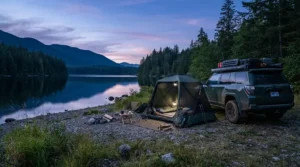
The jargon trips people up. A freestanding tent holds its shape from its frame alone. A pole-supported (also called non-freestanding) tent needs stakes and often trekking poles to take form, according to Switchback Travel’s tent guide. The same guide notes that freestanding designs can be pitched on more kinds of terrain, while non-freestanding designs are generally lighter and more compact.
Applied to mosquito shelters, the pop-up sleepers (Mysora, CMINGJ, Night Cat, EVEN NATURALS) are self-supporting hoops, so they pitch anywhere, including decks. Alvantor and Coleman Skylodge are freestanding frames too, but should still be anchored. Onewind sits on the pole-supported side.
| Feature | Freestanding | Pole-Supported |
|---|---|---|
| Needs stakes to hold shape | No (but anchoring still advised) | Yes |
| Weight and pack size | Heavier, bulkier | Lighter, smaller |
| Terrain flexibility | Decks, rock, patios | Needs soft or stakeable ground |
| Setup learning curve | Low | Moderate |
| Best For | Backyards, families, car camping | Light travel, experienced campers |
The takeaway is simple. For freestanding vs pole-supported tents, freestanding wins for convenience and pole-supported wins for weight. Backyard hosts and car campers should lean freestanding almost every time. Only buy pole-supported if every gram on your back counts.
Setup Time Comparison: Seconds, Minutes, or “Where’s the Third Person?”
Setup time is the quiet deciding factor. A shelter that takes ten minutes of swearing stays in the trunk, and a shelter that pops open in seconds gets used. The figures below are manufacturer or reviewer claims, not independent stopwatch results.
| Product | Claimed Setup | Stakes Needed? | Learning Curve | Best For |
|---|---|---|---|---|
| Night Cat Pop-Up Mosquito Tent | ~3 seconds | Optional | Repacking takes practice | Quick solo camps |
| Mysora Pop-Up Mosquito Net Tent | Seconds | Optional | Low | Budget naps |
| Alvantor 10×10 Pop Up Screen House | 30–60 seconds | Strongly advised | Low | Fast backyard rooms |
| Coleman Skylodge 10×10 Instant Screen House | ~1 minute | Advised | Low | Families |
| Onewind Shelter Mosquito Net | A few minutes (estimate) | Likely | Moderate | Minimalists |
Notice what’s missing: manual-frame screen houses. One round-up lists a budget CAMPROS model that needs about ten minutes with three people. That’s the cost of cheaper hardware. The pop-up and instant models trade a little money for a lot of time.
For short trips, the setup time comparison tilts hard toward the pop-ups. Saving ten minutes at each end of a weekend adds up to a full extra hour of beer-in-hand sunset time.
Affordable Mosquito Tent for Backyard: Building a Bug-Free Zone
A backyard is the easiest place to love a mosquito net tent, because you’re already home. No hauling, no packing, no campground rules.
The best affordable mosquito tent for backyard use is usually the EVEN NATURALS for small groups or the Alvantor for bigger gatherings. The first costs about the same as a restaurant dinner and covers a bed-sized rectangle; the second turns a patio corner into a screened pavilion. Because yards come with flat ground and nearby storage, weight and pack size barely matter.
Think about location. Mosquitoes breed in standing water, so a shelter downwind of a rain barrel or birdbath is fighting uphill. Place it away from stagnant water, near a breeze if possible, and keep a fan inside for the stubborn evenings.
Also consider the season. Late-summer evenings are prime mosquito time across much of Canada, and the extended warm spells of 2026 mean that screen-room use stretches into October. If you’re reading this mid-autumn, off-season shopping is worth a look; check current price rather than assuming a deal.
Budget Bug Tent for Car Camping: What to Buy and What to Skip
Car camping changes the math, because the vehicle absorbs weight and bulk. That frees you to buy comfort instead of grams.
A good budget bug tent for car camping starts with the Night Cat. Its cot-compatible design keeps you elevated, and the 1 kg weight barely registers in the trunk. Add a camping cot, a ground tarp and a sleeping bag appropriate for the night, and you’ve built a bug-proof bedroom for well under a tent-and-gear splurge.
Families should consider the Coleman Skylodge or Alvantor as a campsite living room. Eat dinner inside, keep kids out of the bite zone, and sleep in a regular tent. Many campers find this combination more comfortable than one sleeping tent with sealed walls.
What to skip: the ultralight floorless nets, unless you enjoy fiddling. For a first season, convenience beats cleverness every time.
Cheap Pop-Up Mosquito Tent: Where Savings Are Real, and Where They Aren’t
“Cheap” can mean smart or false economy. Pop-up mosquito tents under C$60 (the Mysora and CMINGJ) deliver the core job, a mesh barrier, at a fraction of the cost of any frame tent. For occasional use, that’s genuinely excellent value.
Where do savings run thin? Zippers, seams and the spring-steel frame. These are the parts that fail first on any budget shelter, and review counts for the cheapest models were hard to verify in this research. Read recent reviews for notes on zipper snags and frame kinks before ordering.
Long-term cost matters too. A C$30 net that survives two summers costs about C$15 a season. A C$250 screen house that lasts eight summers costs about C$31 a season but does far more. Total cost of ownership favours whichever you’ll actually use.
The best cheap pop-up mosquito tent, then, is the one matched to your honest usage: weekend naps and kids’ sleepovers suit the budget tier; frequent family hosting suits a sturdier frame.
Ideal Use for Short Trips: Weekends, Overnighters and Day Trips
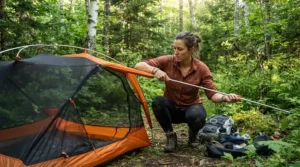
A short trip is where a mosquito net tent earns its keep, because you don’t have time to waste on fussy gear. The ideal use for short trips is a shelter that opens fast, fits in a car boot or a daypack, and survives one or two nights without drama.
For a weekend at the cottage, the Night Cat or EVEN NATURALS are the stars. Both pop open in seconds and fold small enough to share a closet with the rest of your camping gear. For a day at the beach or a picnic, the Alvantor gives sun and bug cover in 30 to 60 seconds.
For a solo overnight with minimal weight, Onewind works, provided you carry a groundsheet and know how to pitch floorless nets.
The pattern is clear. Short trips reward speed and simplicity. Save the hub-pole and manual-frame structures for week-long stays when pitching time is a smaller fraction of the holiday.
Mosquito Net Tent vs Traditional Alternatives
| Option | Bug Protection | Packed Size | Setup | Cost | Best For |
|---|---|---|---|---|---|
| Pop-up mosquito net tent (Night Cat) | Full enclosure | Small | Seconds | Low | Sleeping, naps |
| Screen house (Alvantor, Coleman Skylodge) | Full room | Medium | ~1 minute | Medium–high | Groups, lounging |
| Hanging net (Woods 2-Person Pop-Up Hanging Mesh Mosquito Net) | Around sleepers | Small | Minutes, needs hang point | Low | Cots, hammock-style setups |
| Standard camping tent | Mesh panels only | Medium | Minutes | Medium | All-weather sleeping |
| Repellent only | Partial | Tiny | None | Low | Short exposures |
A hanging net such as the Woods pop-up (a Canadian Tire product that retails around C$40) is a handy benchmark. It hangs from a single point and fits two sleeping bags, but has no floor and no zipper, per its listing. That makes a freestanding pod easier for anyone without a convenient branch or beam.
Repellent alone is the weakest solution for extended exposure, and a real tent beats it for comfort. But the best strategy layers both. Use the net tent as your base and repellent on the walk to the washroom.
Practical Usage Guide: Your First 30 Days With a Mosquito Net Tent
Setup is the easy part. Daily habits decide whether the shelter lasts.
Week one: practise. Open and fold your pop-up three times at home. The figure-eight fold is easy once your hands know it and miserable at 9 p.m. in the dark. Check every zipper, and inspect seams for pinholes against bright light.
Pitch smart. Choose flat, slightly elevated ground away from standing water. For screen houses, stake every corner and add guy lines, even on a calm day. Gusts arrive unannounced.
Seal the gaps. Tuck the mesh bottom under a groundsheet, or lay a tarp underneath. Close doors fully; a half-open zipper is an open invitation.
Mind the skin. Insects can bite through mesh if your skin presses against it, as the mosquito net reference article points out, so keep sleeping bags and limbs off the walls.
Maintain. Shake out debris, wipe with mild soap and water, dry completely and store loose. Skip chemical sprays on mesh unless the maker approves them.
Common first-month mistakes: over-tightening stakes until frames warp, folding wet and encouraging mould, and forgetting the groundsheet. Fix those three and your shelter outlives most expectations.
Real-World Scenarios: Three Canadian Buyers, Three Picks
The Muskoka weekender. Two adults, one dog, a Friday-to-Sunday cottage stay, a car full of gear and a C$100 budget. The Night Cat over a cot handles sleeping, while the EVEN NATURALS covers the dock lounge. Total outlay stays near C$150, and nothing weighs more than a bag of groceries.
The Calgary backyard host. A family of five with a patio and mosquito-heavy June evenings. A 3 m screen house like the Alvantor turns the yard into an outdoor dining room. The deciding factor is anchoring: Prairie wind is real, so stakes and sandbags matter. Expect about C$130–C$200 and a fair-weather-only policy.
The solo Maritimes camper. A single traveller with a small tent, tight packing and a short budget. The Mysora or CMINGJ offers an ultra-cheap bug barrier for nights on the ground, while seasoned light-packers may prefer Onewind for weight savings. The family-size Coleman Skylodge is overkill here.
The principle is consistent. Match the shelter to the headcount, the weather and the effort you’re willing to spend. Overbuying is as common as underbuying.
Safety and Mosquito Season in Canada
Mosquito bites aren’t just itchy. The Public Health Agency of Canada reminds Canadians that West Nile virus is mainly spread by infected mosquito bites, with human cases reported in B.C., Alberta, Saskatchewan, Manitoba, Ontario and Quebec. Most infected people have no symptoms, but there is no specific treatment or vaccine.
That makes physical barriers like a mosquito net tent a sensible layer. Pair it with Health Canada–registered personal repellents. Health Canada’s guidance names DEET and icaridin among the approved options, and notes that area repellents like lanterns and coils don’t protect people as well as personal repellents.
For infants under six months, don’t use DEET repellents. A net over the stroller or crib is the safer approach. Always check the label for age guidance.
Fire safety deserves a mention too. Mesh and nylon burn readily, so keep screen houses well clear of campfires, stoves and lanterns, even when a listing mentions flame-retardant fabric.
FAQ
❓ Are mosquito net tents waterproof?
❓ Can I use a pop-up mosquito tent over a camping cot?
❓ How do I fold a pop-up mosquito tent back down?
❓ Do mosquito net tents stop black flies and no-see-ums?
❓ Do I still need bug spray inside a mosquito net tent?
Conclusion
A mosquito net tent won’t make summer’s pests disappear, but it will turn dusk from a retreat into a pleasure. The right choice depends on one question: are you sleeping, lounging, or both?
For the thriftiest option, the Mysora Pop-Up Mosquito Net Tent and CMINGJ Portable Pop-Up Mosquito Net cover solo sleepers. The Night Cat Pop-Up Mosquito Tent is the sweet spot for car campers, and the EVEN NATURALS Luxury Mosquito Net Pop Up Tent is the garden’s best friend. Onewind Shelter Mosquito Net rewards experienced light-packers. And when you need a proper room, the Alvantor 10×10 Pop Up Screen House is the lightweight value pick, while the Coleman Skylodge 10×10 Instant Screen House is the family-friendly standing-height upgrade.
Whatever you choose, practise the setup, anchor everything and layer it with proper repellent. Do that, and the whine at your ear becomes someone else’s problem.
Recommended for You
- Bug Gloves For Gardening: 7 Best Picks For Canada In 2026
- Bug Hat With Net For Kids Camping: 7 Best Picks In 2026
- Ultra-Fine Mesh Head Net For No-See-Ums: 7 Best Picks
Disclaimer: This article contains affiliate links. As an Amazon Associate, I earn from qualifying purchases. If you purchase products through these links, we may earn a small commission at no additional cost to you.
✨ Found this helpful? Share it with your friends! 💬🤗
