In This Article
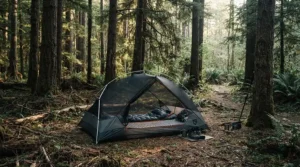
Every Canadian backpacker knows the sound. It starts as a faint whine near your ear at dusk, then it’s a chorus, then you’re eating dinner while doing a frantic interpretive dance. Welcome to June in the boreal forest.
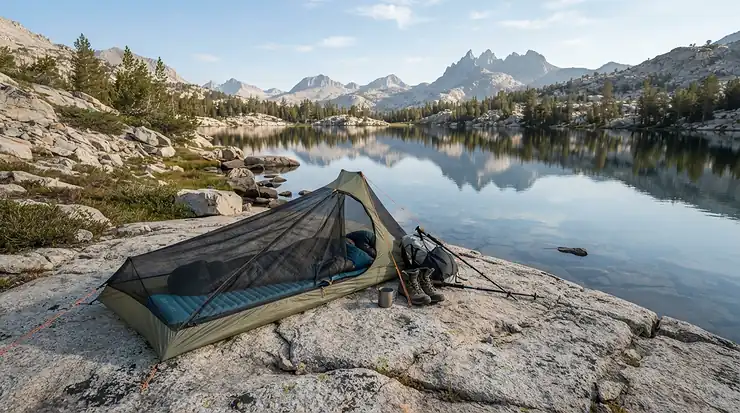
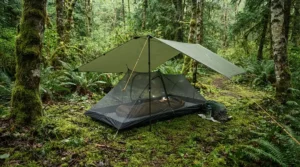
A lightweight solo bug bivy is the polite, featherweight answer to that chaos. It’s a mesh-and-floor cocoon that keeps mosquitoes, black flies and ticks out while letting every breath of night air in. Pair it with a tarp and you’ve built a rain-ready sleep system for a fraction of what a tent weighs. Skip the tarp on a clear night and you’re sleeping under the stars, bite-free.
Canada has 161 species of black flies, and mosquitoes that stick around well past the black fly peak. That’s exactly why an affordable one-person mosquito shelter earns its place in a pack. Not every trip needs a full tent, but nearly every summer trip needs a bug barrier.
In this guide, I’ve compared seven real, available options using published specs and aggregated reviewer feedback. We’ll cover solo backpacking gear weight, the real bivy vs tent trade-offs, and which minimalist trail shelters suit which kind of hiker. If you want a packable bivy for backpacking trips that won’t wreck your budget or your shoulders, you’re in the right place.
Quick ground rule: prices below are ranges in Canadian dollars and change often. Check current pricing before you buy.
Quick Comparison: Lightweight Solo Bug Bivy Options at a Glance
| Product | Type | Published Weight | Approx. Price Range (CAD) | Best For |
|---|---|---|---|---|
| Borah Gear Bug Bivy | Net-top bug bivy | ~5.5 oz (156 g) | C$130-C$170 | Lowest weight on a sensible budget |
| Hyperlite Mountain Gear Bug Bivy | Bug bivy, tarp-ready | ~5.7 oz (162 g) | C$320-C$350 | Weight-obsessed buyers with a bigger budget |
| Mountain Laurel Designs Bug Bivy | All-mesh, 3″ bathtub floor | ~6.5 oz (184 g) | C$170-C$200 | Tarp campers who want a proven design |
| Outdoor Research Bug Bivy | Pole-supported | ~1 lb (454 g) | C$120-C$150 | Headroom and easy availability |
| Outdoor Research Bug XT Bivy | Double-pole, 2026 update | Check listing | C$180-C$210 | Roomy interior, bug-heavy terrain |
| SlingFin SplitWing Mesh Body | Mesh bug bivy | ~11.2 oz (318 g) | C$95-C$120 | Value-focused shoppers |
| Paria Outdoor Breeze Mesh Bivy | Mesh bivy | Check listing | Budget tier | Tight budgets, summer-only use |
Looking at the table, the Borah Gear Bug Bivy and Hyperlite Mountain Gear Bug Bivy sit in nearly identical weight territory, so the real decision is C$150 or so in price difference versus fabric toughness. The Outdoor Research Bug Bivy gives up weight for a pole that keeps netting off your face, which matters more than spec-sheet nerds admit. Budget hunters should note that the SlingFin SplitWing Mesh Body and Paria Outdoor Breeze Mesh Bivy trade some refinement for a much gentler price.
💬 Just one click — help others make better buying decisions too!😊
What Is a Lightweight Solo Bug Bivy?
A lightweight solo bug bivy is a one-person mesh shelter, typically under about 1 kg and often well under 200 g, that encloses your sleeping pad and bag to block biting insects. It uses no-see-um netting on top and a waterproof or water-resistant floor, and it’s designed to be used under a tarp or in dry weather.
That definition separates it from two cousins. A bivy sack is a fabric shell that adds a little warmth and splash protection. A net tent is a free-standing or semi-freestanding mesh room. According to SectionHiker’s bug shelter primer, ultralight bivy sacks generally aren’t waterproof on top, since they’re meant to sit under a separate waterproof shelter.
So think of a bug bivy as a screened-in sleeping bag cover. Your tarp handles rain. The bivy handles bugs, ground moisture and the occasional crawling visitor.
Top 7 Lightweight Solo Bug Bivy Picks: Expert Analysis
1. Borah Gear Bug Bivy — lightest sensible bug protection per dollar
This one earns its spot by delivering real bug protection at a published trail weight of around 5.5 oz. Per SectionHiker’s review specs, it’s built from 0.7 oz no-see-um netting with a 1.3 oz silpoly floor. Borah offers several sizes and zipper configurations, which matters because a poor fit is the number one reason bivies get left at home.
In practice, that net-heavy construction means plenty of airflow and far less condensation than a solid-topped bivy. The same review notes the net also blocks ticks and other crawlers, so it’s useful beyond mosquito season. It’s best matched to mild-to-medium bug pressure under a pyramid or flat tarp, rather than as a standalone storm shelter.
Reviewers on specialist gear sites generally describe it as light, well-made and reasonably priced. A common caveat: small-batch cottage gear can vary slightly in finished weight, so don’t treat the listed number as gospel.
Pros:
- ✅ Very low weight for the protection offered
- ✅ Multiple sizes and zipper options available
- ✅ Netting limits condensation compared with solid tops
Cons:
- ❌ Not a rain shelter without a tarp overhead
- ❌ Made-to-order lead times can slow your purchase
Expect roughly C$130-C$170 depending on size and options. Strong value verdict for the weight.
2. Hyperlite Mountain Gear Bug Bivy — Dyneema toughness in a roomy cut
Hyperlite’s take is described as spacious, with multiple attachment points on top so you can pitch it with or without a tarp. That flexibility is the headline. A published weight near 5.7 oz puts it in the same league as the cheapest featherweights, yet it’s built around Dyneema Composite Fabric for the floor.
Why does that matter? Dyneema floors shrug off moisture and don’t stretch or sag the way thin nylon can. Based on the spec comparison, this is the model for people who plan to use the shelter for years, not seasons. The attachment points also let you hang it from a pyramid shelter’s apex like a proper inner, which transforms the ground-level experience.
Reviewers who track the ultralight category generally position it at the premium end, and the price reflects that. If your solo backpacking gear weight list already uses a lot of cuben-style fabrics, this fits right in.
Pros:
- ✅ Dyneema floor resists wetness and abrasion
- ✅ Multiple top attachment points for flexible pitching
- ✅ Spacious cut for a bug bivy
Cons:
- ❌ Premium price compared with nylon rivals
- ❌ Overkill if you camp only a few nights a year
Expect around C$320-C$350. A fair price only if you’ll use it heavily.
3. Mountain Laurel Designs Bug Bivy — all-mesh simplicity with a 3″ bathtub
MLD built its reputation on gear that just works, and this bug bivy is a good example. It’s an all-mesh design with a 3″ bathtub floor, listed at roughly 6.5 oz in comparison charts.
That short bathtub wall is the clever bit. It keeps splashback and ground-level water out while preserving the airy, open feel that makes sleeping in warm weather bearable. A taller wall would block more splash but trap more heat. Reviewers who compare it with solid-top bivies tend to praise how much more breathable the all-mesh approach is.
It slots neatly under MLD’s own tarps and pyramid shelters, but works with most flat tarps too. If you want predictable, documented performance and an established maker, this is a safe choice. Expect to pay more than for entry-level netting, but less than for Dyneema.
Pros:
- ✅ All-mesh body keeps ventilation excellent
- ✅ Low bathtub wall balances splash defence and airflow
- ✅ Well-documented design from an established maker
Cons:
- ❌ Heavier than the Borah and Hyperlite options
- ❌ Mid-range price for a mesh-focused design
Around C$170-C$200. Solid value for reliability.
4. Outdoor Research Bug Bivy — a pole keeps the net off your face
The weight is higher at about 1 lb (454 g), and the packed size is roughly 4 x 14 inches. So why bother? Because of the single shock-corded overhead pole. It holds the mesh up and away from your face, which stops bugs from biting through the netting on warm nights.
That’s the detail ultralight spec-chasers undervalue. If you’ve ever tried to sleep with mesh draped on your nose while a mosquito patiently pokes it, you’ll understand. The listing also includes a waterproof floor, sleeping pad straps, three stake loops, two guy line loops and a small internal mesh pocket. The pole is removable if you want to shave weight and rely on a tarp for support.
Reviewers on retail pages report that it keeps bugs out well, with some noting the netting needs extra support to stay off your body. Easier to find in Canadian retail than cottage-brand gear, which is a real convenience.
Pros:
- ✅ Pole creates real headroom above your face
- ✅ Includes pad straps and a mesh pocket
- ✅ Widely stocked at Canadian retailers
Cons:
- ❌ Roughly three times the weight of the lightest options
- ❌ Netting can still touch you without careful staking
Typically C$120-C$150. Good value for comfort-first hikers.
5. Outdoor Research Bug XT Bivy — double-pole roominess for bug-heavy terrain
Updated for 2026, this model uses a double DAC pole design that lifts the mesh canopy off your body, creating a roomier interior. The retailer description pitches it for summer backpacking, thru-hiking and bug-heavy alpine camping, and as an inner bivy in fair weather.
DAC poles are the same family used in many premium tents, so expect better durability and flex than basic pole materials. The trade-off is more weight and bulk than a net-only design. I couldn’t verify a precise published weight for this listing, so check the current spec sheet before assuming it’s a lightweight solo bug bivy in the strictest sense.
Who’s it for? People who find a flat mesh bivy claustrophobic. Airy shelter feel is the whole point. Since it’s new, review volume is thin, so treat early impressions as preliminary.
Pros:
- ✅ Double pole design adds real interior space
- ✅ Airy feel suits warm, buggy nights
- ✅ Can work as an inner bivy in fair weather
Cons:
- ❌ Verified weight and review volume are limited
- ❌ More packed bulk than net-only designs
Around C$180-C$210. Worth it if comfort beats grams.
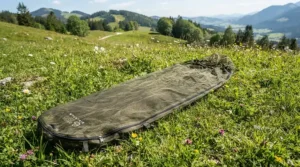
6. SlingFin SplitWing Mesh Body — budget-friendly mesh at a heavier weight
At roughly 11.2 oz (318 g) in comparison listings, this is heavier than the ultralight leaders but notably cheaper. It’s designed as a mesh body that adds bug protection to a tarp or shelter setup.
Here’s the honest maths. You’re carrying about double the weight of the lightest choices, but you’re typically saving C$50 or more. For weekend trips where every gram isn’t policed, that’s a legitimate trade. It’s a sensible stepping stone if you’re testing whether minimalist trail shelters suit you before spending big.
I couldn’t confirm a deep pool of independent reviews, so rely on the published specs and be cautious about assumptions. Always check fit with your pad width.
Pros:
- ✅ Lower price than most cottage competitors
- ✅ Mesh design gives strong ventilation
- ✅ Good entry point into tarp-plus-bivy systems
Cons:
- ❌ Roughly double the weight of leading options
- ❌ Limited independent review data available
Roughly C$95-C$120. Decent value for casual users.
7. Paria Outdoor Breeze Mesh Bivy — the affordable one-person mosquito shelter
SectionHiker calls this a very affordable bug bivy option, and the manufacturer positions it as a one-person ultralight shelter to pair with a tarp. Retail feedback includes a 4.8 average from 13 ratings, though that’s a small sample.
Reviewers mention it’s roomy enough for a long, wide pad and light for the low price. One noted the top entry feels a bit awkward under a low-pitched tarp, which is a real consideration in rain. Another wished for a larger footprint to keep debris off feet.
That’s a fair picture. It’s an affordable one-person mosquito shelter that won’t win weight contests but will keep bugs off. I couldn’t verify an exact published weight, so check before ordering.
Pros:
- ✅ Budget-tier price for a proven concept
- ✅ Roomy for long, wide sleeping pads
- ✅ Pairs well with a lightweight tarp
Cons:
- ❌ Top entry can be fiddly under a low tarp
- ❌ Small review sample so far
Budget tier; check current price. A strong starter pick.
Head-to-Head: Which Lightweight Solo Bug Bivy Wins Where?
| Priority | Winner | Why |
|---|---|---|
| Lowest weight | Borah Gear Bug Bivy | ~5.5 oz published trail weight |
| Toughest floor | Hyperlite Mountain Gear Bug Bivy | Dyneema Composite Fabric floor |
| Best ventilation | Mountain Laurel Designs Bug Bivy | All-mesh with short bathtub wall |
| Most headroom | Outdoor Research Bug XT Bivy | Double-pole canopy |
| Easiest to find | Outdoor Research Bug Bivy | Common at Canadian retailers |
| Lowest cost | Paria Outdoor Breeze Mesh Bivy | Budget-tier pricing |
The pattern is clear: weight and durability cost money, while space and convenience cost grams. The Borah Gear Bug Bivy is the sweet spot for most solo hikers because it scores well on both weight and price. Choose the Hyperlite Mountain Gear Bug Bivy only if you value long-term toughness over wallet comfort.
How to Choose a Lightweight Solo Bug Bivy
- Decide your bug pressure. Mild to medium bug seasons suit net-top designs, while heavy black fly or mosquito zones reward sealed zippers and tight mesh.
- Match it to your tarp. A bivy only works if a roof sits above it. A pyramid or flat tarp that clears your feet and head matters more than the bivy’s specs.
- Check your pad width. A 25-inch shoulder width suits many standard pads, but wide pads need larger sizes.
- Weigh floor fabric. Silpoly is cheap and light, while Dyneema lasts longer but costs more.
- Pick your zipper. SectionHiker notes that side zippers and end doors are easier to exit than centre or ridgeline zips, which matters at 3 a.m.
- Consider poles or no poles. A pole costs weight but prevents netting from touching your face.
- Budget for the total system. A bivy plus tarp plus stakes is the real cost, not just the shelter on its own.
Bivy vs Tent Trade-Offs: What You Actually Give Up
Here’s the honest bivy vs tent trade-offs breakdown. A one-person tent gives you headroom, weather protection and a place to sit out a storm. A bug bivy gives you bug protection, low weight and tiny packed size.
Where a tent wins: sustained rain, strong wind, cold shoulder seasons and any trip where you may be stuck inside for a day. Where a bivy wins: warm-weather trips, fast-and-light mileage, bikepacking, and stealth sites where a small footprint matters.
The real insight is that they’re not rivals so much as tools. If your usual trips run June through September in moderate weather, a bivy plus a tarp can legitimately replace a tent. If you backpack in wet shoulder seasons, tents earn their weight. One backpacking forum reviewer compared a heavier solid-topped bivy’s weight to a tent costing about C$400, which shows how quickly bivy savings disappear when you choose a bulky model.
Ask yourself: how often will I truly be pinned down by weather? Be honest, because your answer decides everything.
Minimalist Trail Shelters Compared: Where the Bug Bivy Fits
| Shelter Type | Typical Weight Range | Weather Protection | Bug Protection | Best For |
|---|---|---|---|---|
| Bug bivy + tarp | Light | Good (tarp-dependent) | Excellent | Fast solo summer trips |
| Solid bivy sack | Light to medium | Moderate | Variable | Emergency or alpine use |
| Net tent | Medium | Low | Excellent | Group camps, roomy bug zones |
| One-person tent | Heavier | Excellent | Excellent | All-season versatility |
Among minimalist trail shelters, the bug bivy plus tarp combo hits a particularly nice balance for summer. You get bug-proof sleeping and weather cover while still carrying less than a full tent. The table also shows why solid bivy sacks suit different goals: they’re about weather and warmth, not insects.
If your main enemy is mosquitoes, don’t buy a shelter designed to fight rain. If your main enemy is storms, don’t rely on mesh.
Solo Backpacking Gear Weight: What a Bug Bivy Really Saves
Solo backpacking gear weight is a game of ounces that become pounds. A 5.5 oz bivy (about 156 g) paired with a lightweight tarp can shave a significant chunk from a classic two-to-three-pound tent. Even the heavier 1 lb (454 g) Outdoor Research Bug Bivy keeps your shelter weight modest when combined with a light tarp.
But beware the false economy. A tent often includes its own floor, stakes and guylines. A tarp-plus-bivy system needs them bought separately. Add them up before you celebrate.
A practical method: weigh each component on a kitchen scale and total the system. Compare that with your tent’s real-world weight, not the marketing weight. You’ll often find a lightweight solo bug bivy saves less than you’d think if you pick heavy fabrics, and more than you’d think if you pick wisely.
Features That Actually Matter (And Those That Don’t)
Matter: no-see-um mesh density, a reliable zipper, a waterproof floor, and a size that fits your pad. If any of these fail, the whole shelter fails.
Don’t matter as much: fancy colours, extra pockets and branding. The Outdoor Research Bug Bivy includes a small internal mesh pocket, which is handy but not essential.
Depends on you: poles. If you toss and turn, you’ll appreciate a pole. If you sleep like a log, you may not need one.
What the spec sheet won’t tell you, but reviewer reports suggest, is that ventilation often beats waterproofing for comfort. A solid-topped bivy can trap breath moisture and soak your bag. One reviewer specifically switched from a solid-topped bivy to the Borah Gear Bug Bivy for this reason.

Common Mistakes When Buying a Lightweight Solo Bug Bivy
- Skipping the tarp. A bug bivy isn’t a rainproof shelter on its own, so plan a roof.
- Ignoring size. Too narrow, and your sleeping bag compresses and loses loft.
- Buying for the best-case trip. Your worst weather decides your shelter, not your best.
- Forgetting a ground sheet. Reviewers of budget models note thin floors can wear through on rough ground.
- Chasing grams at any cost. Saving 30 g isn’t worth a floor that fails on trip two.
Each of these is fixable before you buy, which is the good news.
Packable Bivy for Backpacking Trips: Setup and Maintenance Guide
A packable bivy for backpacking trips needs more care than it appears. Follow this routine:
Setup: Pick a flat, debris-free spot. Lay your ground sheet, place the bivy, and stake the corners so netting stays off your face. If your model uses a pole, test it in daylight before your first night out.
First-use tips: Practise getting in and out with your boots off. Keep your headlamp reachable. Zip fully closed before you light a stove-warmed tent-side meal, because insects find you quickly at dusk.
Maintenance schedule: After each trip, air-dry the bivy fully before storage. Wipe the floor with a damp cloth, and avoid machine washing unless the maker says so.
Common first-30-day mistakes: Packing it damp, over-tightening ultralight shock cord (it’s thin, as reviewers note on similar gear), and stuffing it into a tight sack nightly.
Treat it gently and it’ll last years. Gear this light rewards respect.
Real-World Scenarios: Matching the Bivy to the Hiker
The weekend Algonquin canoe-tripper. Budget around C$150, camping near water in June, heavy mosquito pressure. The Borah Gear Bug Bivy under a flat tarp covers bugs cheaply and weighs little for portages.
The thru-hiker section hiker. Long mileage, varied conditions, high gear scrutiny. The Hyperlite Mountain Gear Bug Bivy rewards heavy use with durability, and its attachment points handle changing setups.
The first-timer on a tight budget. One summer trip planned, wants to try minimalist trail shelters. The Paria Outdoor Breeze Mesh Bivy or SlingFin SplitWing Mesh Body lets you test the concept without a major spend.
The comfort-first stargazer. Hates claustrophobia. The Outdoor Research Bug XT Bivy gives you space while still using a lightweight-leaning design.
The common thread? Match the shelter to your worst realistic night, not your best.
Bugs in Canada: Seasons, Safety and What to Expect
Timing matters. The CAA Atlantic summer bug guide notes mosquitoes are abundant from May to September across most of Canada, with peak activity from dusk to dawn, while black flies are most prevalent from mid-May to late June and are mainly a daytime nuisance.
That means your bug bivy has two jobs: a daytime black fly break when you’re resting, and a night-long mosquito barrier. Parks Canada also reminds backcountry visitors to be prepared for biting insects such as blackflies, mosquitoes and ticks, and to treat all backcountry water.
Practical advice: camp away from still water, wear light-coloured long sleeves, and avoid scented products. A bivy handles the night; repellent and clothing handle the day. Always check local park rules for permits, fire bans and seasonal closures before you go.
Long-Term Cost and Price Range: Is a Bug Bivy Worth It?
| Product | Approx. Price Range (CAD) | Longevity Expectation | Value Verdict |
|---|---|---|---|
| Borah Gear Bug Bivy | C$130-C$170 | Several seasons with care | Excellent |
| Hyperlite Mountain Gear Bug Bivy | C$320-C$350 | Long, due to Dyneema floor | Good if used often |
| Mountain Laurel Designs Bug Bivy | C$170-C$200 | Several seasons | Very good |
| Outdoor Research Bug Bivy | C$120-C$150 | Several seasons | Good |
| Outdoor Research Bug XT Bivy | C$180-C$210 | Unknown, new model | Fair until reviewed |
| SlingFin SplitWing Mesh Body | C$95-C$120 | Moderate | Good for budget |
| Paria Outdoor Breeze Mesh Bivy | Budget tier | Moderate | Strong starter |
Looking at cost per use, a C$150 bivy used 15 nights a year for five years works out to a couple of dollars per night. That’s cheaper than a single missed night of sleep. The premium Hyperlite Mountain Gear Bug Bivy only pays off if you’re out frequently, because its price is roughly double the mid-range. Prices may vary, so always check the current listing.
FAQ
❓ Do I need a tarp with a bug bivy?
❓ How much does a lightweight solo bug bivy weigh?
❓ Is a bug bivy better than a net tent?
❓ Can I use a bug bivy in cold weather?
❓ Where can I buy an affordable one-person mosquito shelter in Canada?
Conclusion
If your trips cluster between late spring and early autumn and you hate carrying a tent for nights that are warm and dry, a lightweight solo bug bivy is one of the best investments in your pack. It cuts weight, shrinks your packed volume and keeps the bugs that define Canadian summers out of your sleeping bag.
For most solo hikers, the Borah Gear Bug Bivy offers the best balance of low weight and fair price. The Hyperlite Mountain Gear Bug Bivy suits durability-minded high-mileage hikers, and the Mountain Laurel Designs Bug Bivy is a dependable all-rounder. If comfort matters, look at the Outdoor Research Bug Bivy or Outdoor Research Bug XT Bivy, and if you’re watching your wallet, the SlingFin SplitWing Mesh Body and Paria Outdoor Breeze Mesh Bivy are worth a look.
Remember the golden rule of minimalist trail shelters: choose for your worst night, not your best. Weigh the whole system, pair your bivy with a good tarp, and respect the weather. Do that, and you’ll sleep bite-free all summer.
Recommended for You
- Mosquito Net Tent: 7 Best Budget Picks For Canada In 2026
- Bug Gloves For Gardening: 7 Best Picks For Canada In 2026
- Bug Hat With Net For Kids Camping: 7 Best Picks In 2026
Disclaimer: This article contains affiliate links. As an Amazon Associate, I earn from qualifying purchases. If you purchase products through these links, we may earn a small commission at no additional cost to you.
✨ Found this helpful? Share it with your friends! 💬🤗
