
In This Article
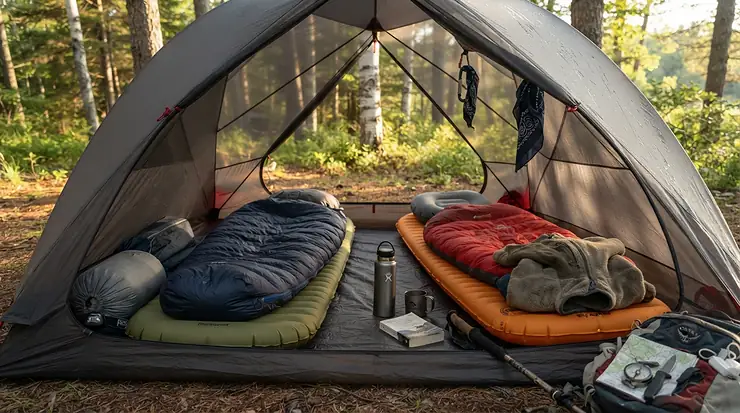
A bug tent for camping is a freestanding mesh shelter, usually a solid roof over screened walls, that keeps mosquitoes, black flies and no-see-ums away from your cooking, eating and lounging space while the breeze still gets through. Some versions add a floor and double as sleeping quarters. The idea descends from the humble mosquito net, just scaled up until you can fit a picnic table inside.
Anyone who has camped in Canada between May and August knows why this matters. You can choose between swatting and sweating in long sleeves, or sitting inside a screened room while the buzzing happens somewhere else. One is a vacation. The other is a negotiation with biting insects, and the insects don’t negotiate.
Here’s the catch: the category is crowded, and plenty of listings read like twins. A pop-up that weighs 12 lb and a frame that weighs 27 lb can both say “bug-free.” They are not the same purchase. This guide compares seven real models on the things that decide whether you’re happy in July: tent capacity and floor space, weatherproofing features, mesh quality, setup effort and long-term durability. It also covers how to choose a top-rated mosquito tent for camping without being swayed by star-count theatre, and what the ratings can and can’t tell you.
One note on method: everything below is built from published specs and aggregated reviewer sentiment, not personal testing. Where verifiable review data is thin, I say so.
Quick Comparison: Bug Tent for Camping Options at a Glance
Here’s the lineup, sorted by what each model is best at. Prices are rough CAD ranges at the time of research and shift often, so check current pricing before you commit.
| Product | Footprint | Weight | Weather stance | Price range | Best For |
|---|---|---|---|---|---|
| Clam Quick-Set Escape | 3.5 m (11.5 ft), 8.7 m² | ~16.8 kg (37 lb) | Water-resistant taped roof | C$450-C$600 | Families wanting fast setup |
| Eureka Northern Breeze 10 | 3 × 3 m, 9.3 m² | ~11-12.5 kg (24-27 lb) | 3000 mm roof, rain flaps | C$700-C$900 | Wet-weather, multi-day trips |
| Big Agnes Sugarloaf Camp | 3 × 3 m, 9.3 m² | ~6.6 kg (14.5 lb) | Mud flaps, floorless | C$550-C$750 | Weight-conscious groups |
| Marmot Limestone Lanai | ~3.2 m wide, ~10.2 m² | ~5.6 kg (12.3 lb) | 3-season | C$330-C$450 | Roomy, mid-priced comfort |
| Coleman Skylodge 10 x 10 | 3 × 3 m | ~6.8 kg (14.9 lb) | Bugs and sun focus | C$190-C$260 | Easy car-camping value |
| Alvantor Pop Up Screen House 10×10 | 3 × 3 m | ~5.4-6.8 kg (12-15 lb) | Not waterproof | C$150-C$250 | Fair-weather, light carry |
| CAMPROS CP Screen House 10×10 | 3 × 3 m | Check listing | Budget, light use | C$130-C$220 | Occasional weekenders |
The pattern is clear. Eureka Northern Breeze 10 buys you weather defence at the top of the price ladder, while the Alvantor Pop Up Screen House 10×10 and CAMPROS CP Screen House 10×10 trade durability for savings. The Coleman Skylodge 10 x 10 sits in the middle on price and convenience. And if hauling weight is your pinch point, the Big Agnes Sugarloaf Camp and Marmot Limestone Lanai are the lightest of the sturdier frames.
💬 Just one click — help others make better buying decisions too!😊
Top 7 Bug Tent for Camping Picks: Expert Analysis
1. Clam Quick-Set Escape — best pop-up for fast family setup
The hub-style frame opens in roughly 45-60 seconds, which is the headline feature here. At 3.5 m (11.5 ft) across with about 8.7 m² (94 sq ft) of floor, it clears a standard picnic table with room to walk around. Walls are tear-resistant no-see-um mesh with an extra-wide skirt, and the roof panel is taped and water-resistant. The kit includes 7 stakes, 5 tie-down ropes and 11 mm fiberglass poles.
On paper, the fine mesh is what makes this one a northern-lakes contender, since no-see-ums slip through coarser netting. The cost is weight: about 16.8 kg (37 lb) means a proper carry, not a hand-swing. Based on the spec sheet, this suits drive-in campsites where you set up once and stay.
Reviewer sentiment is mostly positive on visibility and bug exclusion, with families praising the picnic-table fit. Common complaints are the heft, tight mesh that moves less air, and, in at least one report, plastic stakes breaking and a frustrating warranty experience. Treat the stakes as disposable and budget for metal ones.
Pros:
- ✅ Very fast hub-style setup
- ✅ Fine no-see-um mesh with wide skirt
- ✅ Fits a picnic table with room spare
Cons:
- ❌ Heavy at about 37 lb
- ❌ Stock stakes draw complaints
Expect a price in the C$450-C$600 range; the speed and mesh justify it for families, less so for solo campers.
2. Eureka Northern Breeze 10 — best weatherproofing for multi-day stays
This is the pick when forecasts look rude. The frame is shock-corded aluminum, the roof is 150D polyester rated to 3000 mm, and full rain and wind flaps zip down to seal the sides, then flip up as sun awnings. Floor area is 9.3 m² (100 sq ft), with about 2.3 m (7 ft 8 in) of centre height and a 1.8 m (6 ft) walk-in height. A 3-year warranty is listed by US retailers, and the optional snap-in floor is sold separately.
What the spec sheet implies: those taped seams and storm flaps turn a screen house into something closer to a shelter. Canadian retailer Altitude Sports openly says it’s likely the priciest screen house sold in Canada, which at least counts as honest marketing.
Owners describe easy setup and reliable rain protection, plus a catch: sealed up on a hot afternoon, it gets warm, so pitch it in shade and open the roof vents. Stated weights run from roughly 11 to 12.5 kg depending on what’s counted.
Pros:
- ✅ Genuinely rain-capable with sealing flaps
- ✅ Durable aluminum frame
- ✅ Flaps double as sun awnings
Cons:
- ❌ Highest price in this list
- ❌ Runs warm with flaps closed
Plan on roughly C$700-C$900. It’s a long-haul purchase, so spread the cost over seasons.
3. Big Agnes Sugarloaf Camp Screen House Shelter — lightest sturdy frame for groups
At about 6.6 kg (14.5 lb) with 9.3 m² of floor area (120 x 120 in), this is the lightest of the poled frames here. It’s floorless, with mud flaps that tuck under a footprint or lie flat to block crawlers, two zippered doors, and interior loops for lanterns. A seven-foot peak means most adults stand without ducking, and it’s designed to pitch over a picnic table.
The floorless design matters: bugs love a gap, and the mud flaps are the answer to it. It’s also easier to level on lumpy campsite ground than a rigid-floor design. A comparison site scored it 8.7 overall and called it a strong group-camping basecamp.
Verified owner feedback is thin, with a single 4-out-of-5 retailer review I could find, so I can’t give a reliable consensus. The premium is for build and weight savings, not for a long review trail.
Pros:
- ✅ Light for a 3 m shelter
- ✅ Mud flaps seal ground gaps
- ✅ Seven-foot peak height
Cons:
- ❌ Premium price for the size
- ❌ Few verifiable owner reviews
Expect roughly C$550-C$750; better value if you carry gear far from the car.
4. Marmot Limestone Lanai — roomy mid-priced comfort
Listed at about 5.6 kg (12.3 lb) with roughly 10.2 m² (109.8 sq ft) of floor, the Marmot Limestone Lanai is the only one here that edges ahead on space. Per a comparison database, it’s a 3-season design with a polyester taffeta floor, so confirm the exact floor layout in the listing before buying.
Why that matters: more floor area per kilogram is the quiet efficiency metric for family camping. The same database scored it 8.5 overall, slightly behind the Big Agnes, but ahead on space and comfort. The trade-off is that I couldn’t find enough owner reviews to summarize honestly, so lean on the specs and the return policy.
Who benefits: couples or small families who want room to stretch out without paying Northern Breeze money. If you need rock-solid wind behaviour or storm flaps, look elsewhere.
Pros:
- ✅ Most floor area of the lightweights
- ✅ Light at around 12 lb
- ✅ Mid-range price for the space
Cons:
- ❌ Limited verifiable review data
- ❌ Not a storm shelter
Roughly C$330-C$450 puts it between budget pop-ups and premium frames, and that’s where it earns its keep.
5. Coleman Skylodge 10 x 10 Instant Screenhouse — easiest value for car camping
The frame is pre-attached, with telescoping poles and pinch-free buttons, and Coleman claims a one-minute setup. It’s 3 m square, 2.1 m (7 ft) at centre, 1.8 m (6 ft) at the entry, with two doors and UPF 50+ sun protection. It weighs about 6.8 kg (14.9 lb) and is stocked at Canadian retailers like Home Hardware.
That mix is the sweet spot for first-timers: fast, familiar and easy to find locally. The compromise is that weather claims are modest. Treat it as a bug-and-sun shelter, not a rain fortress.
Reviewers on retailer pages mention that the canopy feels big and gives good shade; some note it packs bulky. Retailer-hosted reviews skew positive, so read them with that in mind.
Pros:
- ✅ Quick pre-attached frame
- ✅ Two doors, UPF 50+ roof
- ✅ Sold through Canadian retailers
Cons:
- ❌ Limited storm credentials
- ❌ Bulky when packed
Roughly C$190-C$260 is a fair price for the convenience.
6. Alvantor Pop Up Screen House 10×10 — lightest budget pop-up
At 12-15 lb (about 5.4-6.8 kg, depending on the listing), it’s the lightest 3 m option, with six mesh walls, a 600D Oxford roof and UPF 50+. It pops open almost instantly, so setup is about the fastest here.
What the numbers imply: low weight means low wind resistance. One roundup cites a limit around 24-30 km/h-class gusts converted loosely, actually listed in mph at 24-30, which is a brisk breeze, so stake and weight it properly. The listing is clear that it isn’t waterproof. A Canadian east-coast writer praised the 6-foot version against mosquitoes and gnats but wouldn’t leave it unattended in gusts.
Other reviewers mention stability when freestanding and sagging panels where hook-and-loop closures meet. One roundup also said mesh on the small 6 x 6 model wasn’t fine enough for no-see-ums.
Pros:
- ✅ Very light and fast to pop up
- ✅ Good ventilation, UPF 50+
- ✅ Lowest cost of the branded options
Cons:
- ❌ Not waterproof, limited wind tolerance
- ❌ Mesh fineness varies by model
Roughly C$150-C$250; excellent for fair-weather weekends, questionable for storms.
7. CAMPROS CP Screen House 10×10 — budget pick for occasional trips
Roundups repeatedly flag this model as the budget entry for people who only camp a few times a year, with a 10 x 10 ft mesh-walled canopy and larger 13 x 13 versions. That’s about all I could verify, so check weight and mesh grade in the listing.
The honest take: at this price, you’re buying shade and a mesh barrier, not a decade of service. If you’re curious whether a bug tent for camping suits your style, it’s a low-risk experiment. If you camp every long weekend, you’ll probably outgrow it.
Verifiable owner review data was limited, so I can’t state a consensus. Weigh it as an entry ticket rather than a long-term tool.
Pros:
- ✅ Lowest entry cost
- ✅ Simple 3 m footprint
- ✅ Options up to 13 x 13 ft
Cons:
- ❌ Thin verified durability evidence
- ❌ Likely lighter-duty materials
Roughly C$130-C$220; fine for occasional use, risky for heavy rotation.
Top-Rated Mosquito Tent for Camping: What the Ratings Really Tell You
“Top-rated” is a phrase that deserves suspicion. A top-rated mosquito tent for camping might have 4.6 stars from buyers who pitched it once in a backyard, which tells you about setup, not about a week of rain. Ratings reward ease and first impressions; they rarely capture year three.
So read ratings in layers. First, check how many reviews there are and whether recent ones mention the same failure. Second, look for complaints about things you care about: stakes, seams, zippers, wind. Third, favour reviews that mention multi-day use. In this lineup, the Eureka Northern Breeze 10 and Clam Quick-Set Escape have the clearest long-use narratives, while the Marmot Limestone Lanai and Big Agnes Sugarloaf Camp rely more on specs and editorial scores.
A practical trick: sort reviews by lowest star and read the first ten. If the problems are cosmetic, the tent is probably fine. If they cluster around a snapped pole or leaking roof, take it seriously.

How to Choose a Bug Tent for Camping
Short answer: match the tent to your weather, group size and carry distance. Here’s the checklist in order of importance.
- Decide your weather ceiling. If you camp in rain-prone regions, prioritize a rated roof and flaps, like the Eureka Northern Breeze 10. If you only go in dry stretches, a light pop-up works.
- Check mesh grade. Fine no-see-um mesh stops tiny biters; coarser netting won’t. This matters most near lakes and boreal woods.
- Pick a footprint by headcount, not by marketing. A “6-person” label usually means standing room, not dining room. See the capacity section below.
- Weigh the carry. If it rides from the trunk to a site 20 m away, weight barely matters. If you portage, it matters enormously.
- Choose floor or floorless. Floorless handles uneven ground and lets you pitch over a table; a floor adds a bug barrier underfoot.
- Assess setup style. Pop-ups are quick but less wind-ready; poled frames take longer but hold better.
- Check the support. Warranty terms and replacement parts availability decide whether a bent pole ends your season.
For another useful reference, Outdoor Canada’s guide to effective insect repellents is worth reading alongside your tent research, since the best shelter and a good repellent work as a team.
Tent Capacity and Floor Space: Sizing It Honestly
Marketing capacity is optimistic. Tent capacity and floor space only mean something once you subtract the picnic table, chairs and cooler. A rule of thumb from the spec sheets: a 3 m (10 ft) square holds a table and four seated adults, and a 3.5 m (11.5 ft) hexagon adds a little elbow room.
| Product | Floor space | Realistic seating (with table) | Picnic table fit | Best For |
|---|---|---|---|---|
| Clam Quick-Set Escape | ~8.7 m² | 5-6 | Yes, with walking space | Family dining |
| Eureka Northern Breeze 10 | ~9.3 m² | 4-5 | Yes, or under awnings | Wet-weather basecamp |
| Big Agnes Sugarloaf Camp | ~9.3 m² | 4-5 | Yes (designed for it) | Light group camps |
| Marmot Limestone Lanai | ~10.2 m² | 5-6 | Yes | Roomy comfort |
| Coleman Skylodge 10 x 10 | ~9.3 m² | 4 | Yes, snug | Car camping duos/trios |
| Alvantor Pop Up Screen House 10×10 | ~9.3 m² | 4 | Yes, snug | Light weekends |
Seating figures are my estimates from footprint and typical furniture, not manufacturer claims. Notice that the Marmot Limestone Lanai has the most floor area while the hexagon Clam Quick-Set Escape has the best shape for circulation. Corners are dead space in a square, so a hexagon uses its area better than the numbers suggest. If you’re between sizes, size up; extra space is cheap and cramped space is expensive in patience.
Weatherproofing Features That Actually Matter
Not every “weather-resistant” tag deserves belief. Here are the weatherproofing features that actually earn their keep.
- Roof rating. A 3000 mm rating like the one on the Eureka Northern Breeze 10 is meaningful; a vague “water-resistant” claim is not.
- Taped seams. Stitching holes leak without tape. The Clam Quick-Set Escape tapes its roof panel.
- Side flaps or wind panels. Mesh walls let rain blow in sideways. Zip-down flaps, or accessory panels, are the difference between a damp table and a dry one.
- Anchoring. Guylines, sandbags and proper stakes matter more than any fabric spec. Light pop-ups like the Alvantor Pop Up Screen House 10×10 need weights in gusts.
- UPF rating. Sun matters too; many models here claim UPF 50+.
The real-world reading: for light showers, the roofs on several models cope. For steady rain, only the sealed-flap designs hold up. Seal edges, drain water off the roof, and never trust a pop-up in wind. Canada’s weather changes fast, so build in margin.
Durable Bug Tent for Multi-Day Trips: Long-Term Cost and Maintenance
A durable bug tent for multi-day trips costs more upfront, but spread across seasons the maths changes. A C$150 pop-up that lasts two summers costs C$75 per year; a C$800 aluminum-frame model that lasts ten costs C$80 per year with far fewer headaches. These are illustrative figures, not predictions.
What drives durability: frame material (aluminum beats fiberglass in repeated flexing), fabric denier, zipper size (the Eureka Northern Breeze 10 emphasizes beefy zippers), and UV exposure. Fiberglass poles, as on the Clam Quick-Set Escape, can splinter after hard seasons, so inspect them before each trip.
Maintenance is simple. Dry it fully before storage, because mildew is the silent killer. Brush off sap and dirt, wash mesh with mild soap, and keep spare stakes and pole-repair sleeves in the bag. For multi-day stays, retighten guylines each evening; ground softens and ropes loosen. Do this and even a mid-priced model can outlive its warranty.
Family-Size Mosquito Tent: Picking for the Whole Crew
A family-size mosquito tent is a different animal from a couple’s shelter. Kids run in and out, so entry design matters: two doors, smooth zippers, and a floor or skirt that won’t trap small feet. The Clam Quick-Set Escape and Marmot Limestone Lanai lead on space, and the Eureka Northern Breeze 10 has a larger 12 ft sibling for bigger groups.
Think in zones: dining table, a play corner, and a gear spot. Plan for about 2 m² per person as a comfortable minimum, and add a third for gear. Check the youngest members’ needs too: Alberta Health Services advises that babies under six months should not use DEET repellents, and suggests mosquito netting plus avoiding peak insect times instead. A screened shelter is a real asset for families with infants.
Finally, think about the people who’ll set it up. A pop-up lets one parent finish before the kids unravel; a poled frame needs two adults and more patience. Choose the one your actual family can pitch.
Bug Tent vs Regular Tent vs Mosquito Net
A bug tent is not a replacement for a sleeping tent. It’s a daytime and evening living room. Here’s how the options compare.
| Option | Main strength | Main weakness | Best For |
|---|---|---|---|
| Bug tent (screen house) | Big shared bug-free space | Doesn’t replace a sleeping tent | Cooking, dining, lounging |
| Regular camping tent | Sleeping shelter, weather-proof | Stuffy, small for daytime | Sleeping |
| Hanging or cot mosquito net | Light and cheap | Little space, bites through contact | Solo sleeping, hammocks |
| Repellent only | Zero gear to carry | Reapplication, skin contact | Short hikes |
The table makes one point plainly: each tool solves a different problem. A screen house excels where you spend waking hours, a net solves sleeping, and repellent covers moving around. Combining a bug tent with a good repellent for trail time is the most complete setup.
One caution from net basics: insects can bite through mesh if your skin presses against it, so keep chairs and limbs off the walls.
Safety Guide: Bugs, Repellents and Canadian Guidance
Mosquito bites are more than an annoyance. The Public Health Agency of Canada says avoiding bites is the best way to prevent West Nile virus, and notes mosquitoes are often most active around dawn and dusk. It also recommends covering up with light-coloured clothing and using repellent containing DEET or icaridin.
A bug tent supports that advice, but it doesn’t replace it. When you leave the shelter for a walk or a trip to the outhouse, repellent still matters. Spray repellents outdoors, well away from food and not inside the tent. Health Canada keeps a public page on insect repellents covering registered products and use by age.
Also check for ticks after outings. A bug tent keeps flying insects out, but it won’t stop a tick that hitched a ride in on your sock.
Campsite Setup Considerations: A Practical Guide
Where you pitch matters almost as much as what you pitch. These campsite setup considerations turn a good tent into a good experience.
Pick the spot. Look for breezy, slightly elevated ground. Moving air keeps bugs down, and avoiding hollows keeps water from pooling. Stay away from standing water, because mosquitoes breed there. Shade also helps, especially with the heat build-up some models show.
Orient it. Face the main door away from prevailing wind, and put the table inside before final staking.
Anchor properly. Use all stakes and guylines. For pop-ups like the Alvantor Pop Up Screen House 10×10, add sandbags or water jugs on the corners.
Seal the edges. Tuck skirts and mud flaps, as on the Big Agnes Sugarloaf Camp, so crawling bugs can’t sneak under.
Control entry. Brief, snappy door use beats leaving flaps open. A quick shake of jackets before coming in removes hitchhikers.
First 30 days mistakes. Skipping tension adjustments, storing damp, and parking under sappy trees. Avoid these and everything lasts longer.
Real-World Scenarios: Which Bug Tent Fits Your Trip?
Specs are abstract; trips are specific. Here are three profiles.
The Muskoka weekend family. Four people, a car-camping site, two nights, a C$500 budget. The Clam Quick-Set Escape fits the table and the schedule, and pops up while the kids are still unpacking snacks. If your budget runs lower, the Coleman Skylodge 10 x 10 gets you most of the way.
The two-week lakeside stay. A couple on a long base-camp trip with unpredictable weather. The Eureka Northern Breeze 10 earns its premium here, since flaps and a taped roof keep a wet day from becoming a lost day. Spread across several summers, the cost eases.
The lightweight group. Three friends hauling gear from parking to a remote site. The Big Agnes Sugarloaf Camp or Marmot Limestone Lanai save kilograms, and the floorless or lighter designs adapt to uneven ground.
Match profile first, product second. That order saves money.
Problem-Solution Guide: Common Bug Tent Headaches
Problem: it’s stuffy inside. Mesh helps, but fully closed flaps trap heat. Pitch in shade, open roof vents (the Eureka Northern Breeze 10 has them), and unzip leeward panels.
Problem: tiny bugs still get in. Check seams, zipper ends and ground gaps. Floorless designs need skirts tucked and weighted. If no-see-ums persist, your mesh may be too coarse; models like the Clam Quick-Set Escape advertise fine mesh.
Problem: it wobbles in wind. Add every guyline, weight corners, and orient the narrow side into gusts. Take light pop-ups down in storms; the Alvantor Pop Up Screen House 10×10 isn’t built for severe wind.
Problem: rain sneaks sideways. Use wind panels or flaps, and angle the tent so rain doesn’t hit open walls. A tarp over the windward side is a cheap fix.
Problem: stakes bend or snap. Swap stock plastic stakes for metal ones and carry spares. It costs little and prevents many early failures.
FAQ
❓ What size bug tent for camping fits a family of four?
❓ Is a mosquito tent for camping waterproof?
❓ Do I need a floor in a bug tent for camping?
❓ How much wind can a pop-up bug tent handle?
❓ Will a bug tent for camping stop no-see-ums and black flies?
Conclusion
A good bug tent for camping doesn’t remove the wilderness; it removes the whining that comes with it. The right pick depends on your habits. Choose the Eureka Northern Breeze 10 if weather and long stays rule your plans, the Clam Quick-Set Escape if fast family setup matters most, and the Big Agnes Sugarloaf Camp or Marmot Limestone Lanai if weight and space drive the decision. For smaller budgets, the Coleman Skylodge 10 x 10, Alvantor Pop Up Screen House 10×10 and CAMPROS CP Screen House 10×10 cover fair-weather trips at modest cost.
Remember the fundamentals: size for real furniture, check mesh grade and roof rating, anchor generously, and pair the shelter with sensible repellent habits. It’s October now, and off-season shopping is a quiet way to be ready before the first black fly of spring.
Recommended for You
- Lightweight Solo Bug Bivy: 7 Best Picks For Canada In 2026
- Mosquito Net Tent: 7 Best Budget Picks For Canada In 2026
- Bug Gloves For Gardening: 7 Best Picks For Canada In 2026
Disclaimer: This article contains affiliate links. As an Amazon Associate, I earn from qualifying purchases. If you purchase products through these links, we may earn a small commission at no additional cost to you.
✨ Found this helpful? Share it with your friends! 💬🤗
