
In This Article
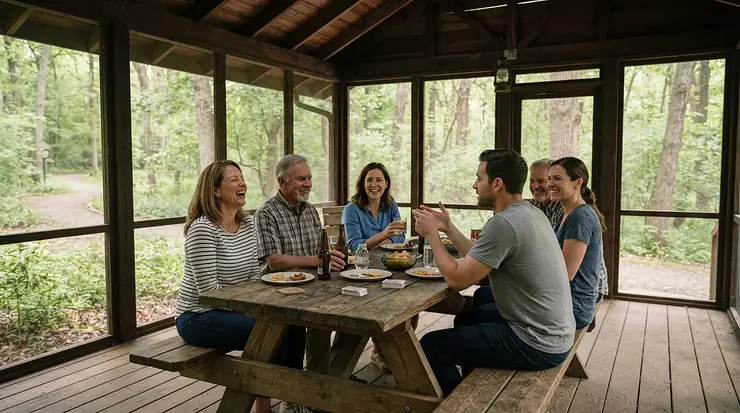
A bug shelter for family camping is a freestanding or pop-up canopy with fine mesh walls and a solid fabric roof. It gives your whole group a mosquito-, blackfly- and wasp-free place to eat, play cards and wait out dusk without retreating into a stuffy tent. Think of it as a dining room with a screen door, minus the walls and the rent.
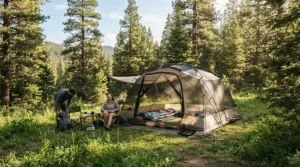
Here’s the Canadian reality. Mosquitoes are most active at dusk and dawn, which is exactly when you’re cooking supper and the kids are wound up after a day of swimming. In much of the country, that’s followed by blackflies in spring, deer flies in July and no-see-ums near the water. The Public Health Agency of Canada notes that West Nile virus is mainly spread by infected mosquito bites, and that there’s no specific treatment or vaccine. A physical barrier isn’t just comfort; it’s one more layer of sensible protection.
So you want one. The trouble is that “screen house” listings all promise the same thing: instant setup, UPF 50+, room for the whole gang. This guide cuts through that with real specs, honest trade-offs and aggregated owner feedback from public reviews. I haven’t field-tested these shelters myself, and I won’t pretend otherwise. What you’ll get instead is careful analysis of seven shelters, from lightweight pop-ups to a premium aluminum-framed classic, plus guidance for campground life, canoe-trip life and everything between.
Bug Shelter for Family Camping at a Glance: Quick Comparison Table
Before the deep dives, here’s the whole field on one screen. Weights are converted from manufacturer and retailer listings, so treat them as close approximations. Price ranges are rough Canadian-dollar bands at the time of research and will move, so check current pricing before you decide.
| Shelter | Footprint | Approx. Weight | Standout Trait | Best For |
|---|---|---|---|---|
| Alvantor Pop Up Screen House (10×10) | 3 × 3 m | ~5.4 kg | Lightest full-size pop-up | Families who haul gear in one trip |
| Clam Quick-Set Escape (11.5 ft) | ~3.5 m hexagon | Heavier than most pop-ups | No-see-um mesh, 60-second setup | Bug-heavy lakeside sites |
| Coleman Skylodge (10×10) | 3 × 3 m | ~6.8 kg | Familiar brand, two doors | First-time buyers wanting simplicity |
| East Oak Pop Up Screen House (10×10) | 3 × 3 m | ~10.6 kg | Sturdier frame, long warranty | Windier campgrounds |
| Eureka Northern Breeze 10 | 3 × 3 m | ~12.5 kg | Aluminum frame, rain curtains | Serious, long-term use |
| VEVOR Camping Gazebo (12×12) | ~3.7 m hexagon | ~16 kg | Wind cloths included | Big groups on a budget |
| CAMPROS CP Screen House (13×13) | ~4 × 4 m | ~10.9 kg | 140 sq ft of space | Large-capacity family reunions |
Look at the weight column first. The gap between roughly 5 kg and 16 kg is the gap between “I’ll carry it from the parking pad” and “I’ll negotiate with my back.” If you’re after an easy-setup bug tent for families, the pop-ups on the top half of this table will serve you best, while the heavier pole-and-hub models trade speed for strength. Price tracks durability more than size here, so the premium Eureka Northern Breeze 10 costs far more than the budget CAMPROS CP Screen House (13×13) for a reason you can feel in a gust of wind.
💬 Just one click — help others make better buying decisions too!😊
Top 7 Shelters for Bug-Free Family Camping: Expert Analysis
1. Alvantor Pop Up Screen House (10×10) — lightest full-size pick at about 12 lb
At roughly 12 lb (about 5.4 kg), this is the model that makes a full-size screen house feel like normal camping gear rather than a project. The weight matters because a lighter shelter is one you’ll actually bring, especially to sites where you carry gear from a parking pad.
The fiberglass frame pops open on its own, with no pole threading. Six mesh walls, a UPF 50+ roof and a peak height around 2.1 m give you real standing room inside a 3 × 3 m footprint. In practice, that’s enough for a picnic table and a couple of camp chairs, though not a sprawling living room.
Based on the spec comparison, the Alvantor Pop Up Screen House (10×10) suits families who want speed and portability over weather armour. Several roundups stress it’s a sun-and-bug shelter, not a rain shelter, and one cautions against steady winds above about 40 km/h. Reviewers also disagree about the mesh: retailer copy claims protection from no-see-ums, while one roundup describes it as standard insect-grade. If blackflies or midges are your enemy, read recent reviews for your region first.
Pros:
- ✅ Very light for a full 3 × 3 m footprint
- ✅ Automatic pop-up with no pole assembly
- ✅ Strong airflow from six mesh walls
Cons:
- ❌ Not designed for rain or steady wind
- ❌ Mesh fineness reported inconsistently by reviewers
Expect to pay around C$180-C$300 depending on size and colour. Strong value for fair-weather camping, but pack a tarp.
2. Clam Quick-Set Escape (11.5 ft) — no-see-um mesh in a 60-second pop-up
The Escape is the original six-sided Quick-Set design from Clam, and the thing it does best is keep out the tiniest biters. Its no-see-um mesh is finer than the standard insect screen on many budget pop-ups, which matters near water, where midges slip through ordinary netting.
Clam describes a setup of roughly 45 to 60 seconds with no assembly. The shelter uses a hub-style, flex-tested fiberglass frame and a 210D poly-oxford roof, with wide skirting along the bottom to discourage bugs crawling under the edges. The hexagonal shape gives you roughly 3.5 m across, which is more usable than the square footprint of similar-priced models because there are no dead corners.
Owners on gear sites describe it as quick, durable and roomy, and one Minnesota reviewer says it rescued a trip in mosquito country. The honest caveat is weight: it’s noticeably heavier than the lightest pop-ups. Treat it as rain-resistant rather than rainproof, since one roundup flags that it isn’t fully waterproof.
Pros:
- ✅ Fine no-see-um mesh for midge country
- ✅ Hexagonal shape wastes less floor space
- ✅ Fast, poleless setup
Cons:
- ❌ Heavier than ultralight pop-up rivals
- ❌ Not fully waterproof in sustained rain
Budget around C$300-C$480. Pricey, but the best match here for bug-heavy lakeside camping.
3. Coleman Skylodge (10×10) — familiar name, two big doors, one-minute setup
Coleman’s pitch is simplicity: a lightweight hub, attached telescoping poles and pinch-free buttons that keep fingers safe on a rushed setup. For a lot of parents, a brand they recognize at the campground store is half the decision.
The spec sheet lists a 10 × 10 ft footprint, a 7 ft (2.1 m) centre height, a roughly 6 ft entry and a weight of about 14.9 lb (6.8 kg). Two entryways make moving coolers and chairs easier than fighting a single door, and the UPF 50+ roof handles midday glare. A larger 15 × 13 ft version exists if you need more floor space.
The analytical take: the Coleman Skylodge (10×10) is a dependable fair-weather option, and it’s the one I’d point a first-time buyer toward. Reviewers describe the one-minute setup as realistic once you’ve practised it. Ratings on retailer pages sit around 4.1 out of 5 with a modest review base, and the recurring theme is that it’s best in calm, dry conditions. It’s not the sturdiest frame here.
Pros:
- ✅ Quick setup with a lightweight hub
- ✅ Two doors for easy gear traffic
- ✅ Backed by a recognized brand
Cons:
- ❌ Best suited to fair weather only
- ❌ Lighter-duty frame than premium rivals
Expect around C$180-C$260. Good value if your camping is mostly sunny weekends.
4. East Oak Pop Up Screen House (10×10) — sturdier frame and a longer warranty
East Oak earns its place for one reason: a steel-reinforced frame at a mid-tier price. If your campground sits on an exposed point where the wind howls off the lake, frame strength moves from “nice to have” to “the whole point.”
Listed specs include a 96 sq ft floor, a peak height near 2.3 m, a UPF 50+ roof, finer D33 mesh and a weight around 23.4 lb (10.6 kg). That’s roughly double the weight of the lightest pop-up, but the trade is visible: a sturdier skeleton and a three-year warranty on at least some listings. Warranties don’t stop a gust, but they do signal what a maker expects to survive.
What most buyers overlook is that weight and stability are two sides of the same coin. The East Oak Pop Up Screen House (10×10) is the pick when you’d rather carry a few more kilograms than chase a collapsed canopy across a field. Review sentiment I could find was positive and focused on frame solidity, though the sample sizes are smaller than for the biggest-name models.
Pros:
- ✅ Steel-reinforced frame for added stability
- ✅ Finer mesh than many pop-up rivals
- ✅ Longer warranty on listed versions
Cons:
- ❌ Roughly twice the weight of the lightest pop-ups
- ❌ Smaller review base than market leaders
Plan on about C$200-C$330. Fair value for windy sites.
5. Eureka Northern Breeze 10 — aluminum frame and rain curtains, built for years
This is the shelter you buy when you’re done replacing things. Eureka’s own marketing admits it’s likely among the most expensive screen shelters sold in Canada, and the spec sheet explains the bill: a 6065 aluminum frame, no-see-um mesh, taped seams, a rainfly and heavy zippers with multiple entry options.
Specs list a 3 × 3 m footprint, about 9.3 m² of floor, a peak height near 2.3 m and a weight around 12.5 kg. Setup uses shock-corded aluminum poles joined at a top hub, so it takes a few minutes rather than seconds. In return, you get external rain and wind flaps that Eureka says create a nearly waterproof seal, which is uncommon among screen houses.
Here’s the real-world meaning: the Eureka Northern Breeze 10 handles a summer storm with the sides dropped, and that makes it a shelter for multi-day camps rather than just sunny picnics. Retailer reviewers praise the design and durability, with a few noting nitpicks. Availability on Amazon.ca for specific models varies, so confirm current stock; Canadian outdoor retailers also carry it.
Pros:
- ✅ Aluminum frame with strong wind performance
- ✅ Rain curtains double as awnings
- ✅ Fine no-see-um mesh throughout
Cons:
- ❌ Highest price in this lineup by a wide margin
- ❌ Slower setup than any pop-up here
Budget roughly C$450-C$750. Premium money, premium longevity.
6. VEVOR Camping Gazebo (12×12) — wind cloths included for under-budget privacy
If you want maximum square footage without a premium price, this hexagonal pop-up is the value bet. Its main selling point is the package: six wind cloths, eleven ground stakes, five guy ropes and door-frame poles, so the extras other brands sell separately come in the box.
Specs include a 300D Oxford fabric, a maximum height of 90 in (2.3 m), roughly 144 sq ft of floor and a weight of about 35 lb (16 kg). The maker claims space for 8-10 people, though a more realistic expectation is about six seated with chairs and a table. It also carries an IPX3 water-resistance rating, which means light spray rather than a downpour.
Based on the spec comparison, the VEVOR Camping Gazebo (12×12) fits large families who want shade, bug protection and some privacy on a modest budget. The trade-offs are weight and weather: one roundup calls heavy rain this tent’s weak spot, and the review pool on some listings is small. Sold in Canada through multiple retailers, so check listings carefully.
Pros:
- ✅ Six wind cloths and stakes included
- ✅ Roughly 144 sq ft of floor space
- ✅ Hexagon layout wastes little room
Cons:
- ❌ Heavy at about 16 kg to carry
- ❌ Weak in sustained heavy rain
Expect around C$170-C$300. Great square footage per dollar if you don’t mind the heft.
7. CAMPROS CP Screen House (13×13) — 140 sq ft for big family gatherings
When the whole extended family arrives, this is the shelter with room to spare. Its 13 × 13 ft footprint offers about 140 sq ft of floor and 86 in (2.2 m) of centre height, which means two picnic tables, or one table and a lounging area, can coexist.
Listed weight is about 24 lb (10.9 kg), considerably lighter than the 12×12 VEVOR despite the larger footprint. It uses a traditional pole-and-hub structure with a 190T UV-resistant top, so setup takes patience and, according to reviewers on the 10×10 version, more than one pair of hands. There’s no floor, so lay a tarp if you want a clean surface.
The analytical angle: the CAMPROS CP Screen House (13×13) is the large capacity screen tent for camping for families who value space per dollar over speed. One review roundup judged its no-see-um protection as average, so in a true midge hot spot you may get a few visitors. Editorial ratings run in the low 4s out of 5.
Pros:
- ✅ Very generous floor space for the cost
- ✅ Lighter than comparable large models
- ✅ Tall centre height for adult movement
Cons:
- ❌ Setup is slower and works best with helpers
- ❌ Mesh only average against tiny no-see-ums
Plan on around C$150-C$260. Excellent for large groups with a tight budget.
Here’s the complete specs-and-value view of all seven side by side, so you can compare apples to apples.
| Shelter | Setup Style | Mesh Notes | Weather Handling | Approx. Price Range (CAD) | Best For |
|---|---|---|---|---|---|
| Alvantor Pop Up Screen House (10×10) | Automatic pop-up | Reports vary | Fair weather | C$180-C$300 | Light, quick weekend trips |
| Clam Quick-Set Escape (11.5 ft) | Hub pop-up | No-see-um | Rain-resistant | C$300-C$480 | Midge-heavy lakeside sites |
| Coleman Skylodge (10×10) | Telescoping hub | Standard screen | Fair weather | C$180-C$260 | First-time buyers |
| East Oak Pop Up Screen House (10×10) | Pop-up | Fine D33 | Moderate wind | C$200-C$330 | Exposed campgrounds |
| Eureka Northern Breeze 10 | Shock-corded poles | No-see-um | Strongest here | C$450-C$750 | Multi-day, all-weather camps |
| VEVOR Camping Gazebo (12×12) | Hexagon pop-up | B3 gauze | Light spray | C$170-C$300 | Large groups, budget |
| CAMPROS CP Screen House (13×13) | Pole-and-hub | Average no-see-um | Fair weather | C$150-C$260 | Big family reunions |
The pattern is clear: speed and weather armour pull in opposite directions. The Alvantor Pop Up Screen House (10×10) and Coleman Skylodge (10×10) win on convenience, while the Eureka Northern Breeze 10 wins on endurance. If you camp more than a handful of weekends a year, the extra spend on the sturdier East Oak Pop Up Screen House (10×10) or the Eureka Northern Breeze 10 usually pays for itself in fewer replacements.
✨ Don’t Miss These Exclusive Deals!
🔍 Take your camp setup to the next level with these carefully selected shelters. Click on any highlighted product name to check current pricing and availability on Amazon.ca. A little mesh goes a long way toward making your family trips genuinely relaxing!
Easy-Setup Bug Tent for Families: A First-Use and Maintenance Guide
Even the best easy-setup bug tent for families becomes a headache if you meet it for the first time at dusk with hungry kids. The fix is boring and effective: do a dry run in the backyard the weekend before your trip. Practise opening, anchoring and collapsing it until you can do it without reading the card.
On the day, choose your pitch before you unpack. Look for level ground, away from dead branches, and orient the door away from the prevailing wind so gusts don’t funnel through when you unzip. Stake the corners first, then add guy lines if the shelter has them. Pop-ups with a light frame lift like kites in a gust, so use weights (sandbags or filled water jugs) if stakes won’t hold in sandy soil.
Closing time matters more than opening time. Dry the fabric completely before packing it, because mildew sets in fast and ruins both the mesh and the smell. If you’re packing up wet, hang it at home within a day. A soft brush cleans mesh better than harsh scrubbing, and a mild soap solution handles sap. Keep zippers moving by wiping off grit.
Common first-month mistakes include forgetting to zip doors in the evening (bugs follow the light), leaving a lantern burning against the roof, and skipping the ground tarp, which lets crawling insects stroll in. With these habits, a shelter should last many seasons rather than one summer.
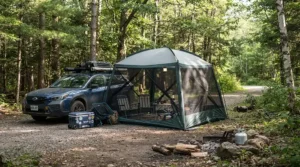
Real-World Scenarios: Matching a Shelter to Your Family
Specs mean little until you picture your own weekend, so here are three realistic family profiles and the shelters that suit them.
The weekend car-camping family of four. You drive to a provincial park, set up for two nights and cook at the picnic table. A pop-up like the Alvantor Pop Up Screen House (10×10) or Coleman Skylodge (10×10) is the logical fit, because setup speed and light weight matter more than storm armour. Add a tarp for surprise showers and the shelter does everything you need.
The lakeside regulars with a toddler. You return to the same northern lake every July, where no-see-ums and blackflies appear at dusk. The Clam Quick-Set Escape (11.5 ft) earns its higher cost here, because finer mesh is exactly what that environment demands. A child can play on a ground mat in the screened space without constant swatting.
The big extended-family reunion. Eight to twelve people, several tables, a budget limit. The CAMPROS CP Screen House (13×13) or VEVOR Camping Gazebo (12×12) gives you room, and splitting the cost among relatives makes either easy to justify. For every scenario, think about the number of seated adults, not the “person capacity” on the box, which is almost always optimistic.
How to Choose a Bug Shelter for Family Camping: 7 Steps
If you only read one section, make it this one. The right bug shelter for family camping comes down to seven decisions, in this order.
- Count the seats, not the people. Manufacturers rate capacity by standing bodies. Plan for one chair per person plus a table, which usually halves the advertised number.
- Decide your bug enemy. Mosquitoes alone are stopped by standard mesh; blackflies and no-see-ums need finer weave.
- Weigh your carry. A 5 kg shelter and a 16 kg shelter feel like different hobbies when you’re walking in from a parking area.
- Judge your wind exposure. Open lakeside sites punish lightweight frames; sheltered forest sites forgive them.
- Check weather claims honestly. “Waterproof” on a screen house often means water-resistant; read the fine print.
- Confirm the extras. Stakes, guy lines, wind panels and a carry bag add real value when included.
- Test the setup claim. If a listing promises one minute, look for reviewers confirming it with kids around.
Multi-Person Mosquito Shelter: How Big Is Big Enough?
A multi-person mosquito shelter lives or dies by floor plan, not by the number printed on the box. A 10 × 10 ft footprint sounds spacious until you add a picnic table, four chairs, a cooler and a toddler’s play mat. Suddenly you’re doing a slow dance around furniture.
The practical rule: a 3 × 3 m shelter comfortably seats four to six around a table. A 3.7 m hexagon like the VEVOR Camping Gazebo (12×12) stretches to six or seven. For eight or more, you want the CAMPROS CP Screen House (13×13) or a two-shelter setup. Hexagonal models like the Clam Quick-Set Escape (11.5 ft) use their floor more efficiently than squares, because there’s no wasted corner.
Height matters too, especially for tall adults. A 2.1 m peak is fine at the centre but drops near the edges, so test your headroom if you’re over 1.9 m. And remember that more people mean more door traffic, and every unzipped door is an open invitation. Models with two doors, like the Coleman Skylodge (10×10), let you split entry and exit so one door stays closed.
Large Capacity Screen Tent for Camping: When More Room Is Worth the Trade-Offs
A large capacity screen tent for camping sounds like pure upside, but size has a cost you feel in three places: weight, setup effort and wind load. A bigger canopy catches more air, so it needs better anchoring, and the frame must be stronger to keep it standing.
That’s why the two largest shelters here take different approaches. The VEVOR Camping Gazebo (12×12) relies on wind cloths and guy ropes; the CAMPROS CP Screen House (13×13) relies on a traditional pole-and-hub frame. Neither is as fast as a pop-up, and both benefit from a second person during setup.
The trade-off math is simple. If you host big groups two or three times a summer, a large capacity screen tent for camping is a smart buy and easily shared across households. If your typical party is four, a 10×10 saves effort and money, and you can always add a second small shelter for overflow. Think of size as a tool for your busiest weekends, not your everyday trips.
Campground vs Backcountry Use: Know Where Your Shelter Belongs
Here’s the honest truth about campground vs backcountry use: nearly everything on this list is a campground shelter. Even the lightest model at about 5.4 kg is more than most backpackers want on top of a tent, stove and food, and fibreglass poles are awkward on a pack.
At a drive-in campground, you carry the shelter from the car and set it over the picnic table. Weight is a convenience factor, and the only real limit is space on your site. Many provincial and national park sites are fairly compact, so measure before buying a very large model.
For canoe trips or short portages, a 12 lb pop-up like the Alvantor Pop Up Screen House (10×10) becomes plausible, especially if the site is a regular base camp. Beyond that, true backcountry travellers typically rely on ultralight personal bug nets or a tarp with netting, which pack to a fraction of the size. In other words, choose by your trip style. A family doing three nights at a lake campground belongs in the shelters above; a family hiking in belongs in a different product category entirely.
Child-Friendly Shelter Features That Actually Matter
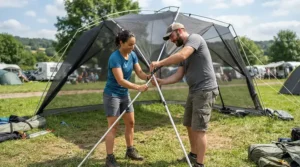
Marketing loves to call things “family-friendly,” but only a handful of child-friendly shelter features change your experience. Start with the doors: smooth zippers that kids can’t pinch, and ideally pull tabs a small hand can grab, make the difference between a calm supper and a parade of bugs sneaking in.
Next, think about visibility. Mesh walls let you see children from anywhere in the shelter, which is a quiet safety win. A fully floored space can help with crawling babies, though most screen houses have no floor, so bring a tarp and a mat.
Repellent still matters. The Canadian Paediatric Society’s Caring for Kids guidance on insect repellents lists approved ingredients and age limits, including that icaridin is for children six months and older. For babies under six months, public-health guidance generally points to netting over strollers and carriers rather than repellent, so a screened shelter is a natural fit.
Finally, check the frame. Spring-loaded pop-ups and telescoping poles can pinch, so look for pinch-free designs like the Coleman Skylodge (10×10) and keep small hands clear during setup. Anchor everything well, because a shelter that lifts in a gust is a hazard with kids nearby.
Shared-Space Ventilation: Why Airflow Beats Mesh Count
Shared-space ventilation is the unsung hero of a good screen house. Mesh keeps bugs out, but without airflow, a crowded shelter turns into a sauna by mid-afternoon, and a hot shelter means kids wander outside and straight into the swarm.
Six mesh walls, as on the Alvantor Pop Up Screen House (10×10), push breeze through from almost every direction. Peak vents, as on the Eureka Northern Breeze 10, let warm air escape from the top, which matters when you’ve got six people breathing under a solid roof. The trade-off is that more open mesh also means more exposure to blowing rain and wind, which is why wind cloths, like those on the VEVOR Camping Gazebo (12×12), are valuable: you can close one side and open another as conditions change.
Orientation helps. Face the open side toward the breeze, and set up away from still, swampy hollows where mosquitoes breed. According to CBC reporting on West Nile season, Culex mosquitoes are common carriers in southern Ontario and prefer to feed near standing water, so site choice is part of your defence. A breezy, open pitch cuts bugs before the mesh even comes into play.
Bug Shelter vs Traditional Alternatives: What Actually Works Best
Many families try to solve bugs with a patchwork of repellents, bug jackets and campfire smoke. They help, but they don’t replace a shelter. Here’s how the main options compare.
| Option | Bug Protection | Shared Social Space | Setup Effort | Best For |
|---|---|---|---|---|
| Regular tent only | Good while zipped in | Poor, cramped | Low | Sleeping, not hanging out |
| Repellent and clothing | Moderate, needs reapplying | Excellent | Minimal | Short exposure, hiking |
| Smoke and citronella | Weak, inconsistent | Fair | Low | Atmosphere, not protection |
| Screen shelter | Strong, constant | Excellent | Low to moderate | Alvantor Pop Up Screen House (10×10) or Clam Quick-Set Escape (11.5 ft) for families |
The takeaway is that a screen shelter isn’t a replacement for repellent; it’s the thing that lets you stop reapplying it every two hours while you eat. Repellents handle you on the move, and a shelter handles you at rest. For long dinners and rainy-evening card games, the East Oak Pop Up Screen House (10×10) or Eureka Northern Breeze 10 wins hands down, because you’re protected without any chemistry on your skin.
Safety, Regulations and Fire Rules for Canadian Campers
A few safety habits matter more than any spec. First, keep stoves, lanterns and campfires well away from nylon and polyester. Most screen house fabrics aren’t flame-proof, and mesh melts fast, so cook outside the shelter or at a safe distance, and never run a heater or open flame inside.
Second, understand what a screen house isn’t. It isn’t a sleeping tent, it has no floor, and it doesn’t make a safe place to leave small children unattended near water or traffic. Treat it as supervised living space.
Third, follow park rules. Many provincial and national parks limit structure size or placement on a site, and some restrict items near fire pits. Check your park’s page before you arrive.
On repellents, Health Canada reviews all active ingredients before they can be sold here. The official Government of Canada insect repellent guidance explains approved ingredients, applications and age considerations. Use repellent on skin and clothing as directed, and let the shelter reduce how often you need it.
Finally, anchor everything. Even a “windproof” pop-up can become a sail, so stake it, weigh it down and take it down early if a storm approaches.
Frequently Asked Questions
❓ Do screen houses really keep out no-see-ums?
❓ Are screen tents waterproof enough for rain?
❓ How many people fit in a 10×10 bug shelter?
❓ Can you sleep in a screen house at night?
❓ How do you stop a pop-up screen house blowing away?
Final Thoughts
Pick the shelter that matches how you actually camp, not the one with the biggest number on the box. For most families, the Alvantor Pop Up Screen House (10×10) or Coleman Skylodge (10×10) delivers fast, light, fair-weather comfort. If bugs are fierce, the Clam Quick-Set Escape (11.5 ft) earns its higher price with finer mesh. For windy sites, the East Oak Pop Up Screen House (10×10) brings extra stability, and for long-term, all-weather use, the Eureka Northern Breeze 10 is the heirloom option. Big groups on a budget should look at the VEVOR Camping Gazebo (12×12) or CAMPROS CP Screen House (13×13).
Remember the bigger picture, too. The right bug shelter for family camping works best alongside sensible repellent use, careful site choice and good anchoring. Do those things and your best summer evenings can finally happen outside, with the kids laughing, the supper hot and the mosquitoes pressing their noses uselessly against the mesh.
Prices change constantly, so check current availability and pricing on Amazon.ca before you buy.
✨ Ready to reclaim your campsite evenings?
🔍 Pick the shelter that fits your family, click the highlighted product name to check current pricing and availability, and get ready for your best bug-free camping season yet!
Recommended for You
- Mosquito Bivy Vs Bug Tent For Backpacking: 7 Proven Picks 2026
- Bug Tent For Camping: 7 Best Bite-Free Picks In 2026
- Lightweight Solo Bug Bivy: 7 Best Picks For Canada In 2026
Disclaimer: This article contains affiliate links. As an Amazon Associate, I earn from qualifying purchases. If you purchase products through these links, we may earn a small commission at no additional cost to you.
✨ Found this helpful? Share it with your friends! 💬🤗
