In This Article
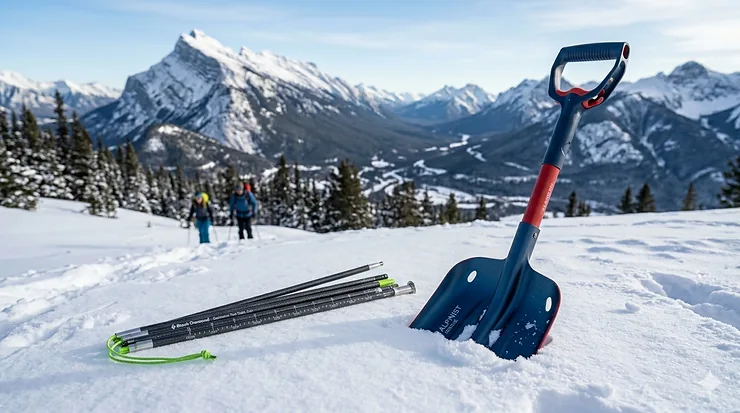
When you’re heading into British Columbia’s Selkirks or Alberta’s Rockies, the avalanche probe and shovel kit sitting in your pack isn’t just gear—it’s your lifeline if things go sideways. In the 2024-25 season alone, approximately 80% of Canadian avalanche fatalities occurred in BC, and the harsh reality is that buried victims have only about 15 minutes before their survival chances drop dramatically. After 30 minutes under the snow, survival rates plummet to just 50%, according to Parks Canada’s avalanche safety data.
What most Canadians overlook when shopping for complete avalanche safety gear isn’t the beacon (everyone remembers that part)—it’s understanding how probe depth markings and shovel blade size avalanche rescue effectiveness directly impact whether you can locate and extract someone quickly enough. A 240 cm probe might be sufficient for coastal snowpacks near Whistler, but head into the Rockies where snow depths regularly exceed 3 metres, and you’ll wish you’d gone with a 300 cm model. Similarly, that lightweight ultraminimalist shovel might save 200 grams in your pack, but try moving cement-hard avalanche debris with a blade that’s too small, and those seconds become minutes—minutes someone buried doesn’t have.
The Canadian backcountry demands more from your gear than American resort skiing. Our winters hit harder, our snowpacks vary wildly from the wet coastal zones to the dry continental interior, and help is often hours away rather than minutes. That’s why choosing the right backcountry safety kit winter setup isn’t about finding the cheapest option on Amazon.ca—it’s about understanding which rescue kit weight, probe stiffness, and shovel blade geometry actually work when your hands are shaking and someone’s life depends on your tools performing flawlessly at minus 25 degrees Celsius.
Quick Comparison: Top Avalanche Probe and Shovel Kits Available in Canada
| Product | Probe Length | Shovel Blade Size | Total Weight | Best For | Approx. Price (CAD) |
|---|---|---|---|---|---|
| BCA T4 Turbo Package | 300 cm | 26 × 24 cm | 2.8 kg | Deep snowpack regions | $700-$800 |
| Mammut Barryvox Package | 280 cm | 24 × 24 cm | 2.5 kg | Alpine touring professionals | $850-$950 |
| BCA Tracker S Bundle | 240 cm | 25 × 23 cm | 2.3 kg | Coastal backcountry | $550-$650 |
| Black Diamond Recon Package | 280 cm | 23 × 22 cm | 2.4 kg | All-mountain versatility | $600-$700 |
| Ortovox Diract Kit | 240 cm | 28 × 21 cm | 2.6 kg | Voice-guided rescue | $750-$850 |
| G3 Complete Safety Set | 320 cm | 25 × 24 cm | 2.9 kg | Professional guides | $650-$750 |
| TerraWest Core Kit | 240 cm | 24 × 22 cm | 2.2 kg | Budget-conscious beginners | $450-$550 |
💬 Just one click—help others make better buying decisions too! 😊
Top 7 Avalanche Probe and Shovel Kits: Expert Analysis for Canadian Conditions
1. BCA Backcountry Access T4 Turbo Avalanche Beacon Kit
The BCA T4 Turbo Package stands as the heavyweight champion of complete avalanche safety gear for Canadian snowmobilers and deep-snowpack backcountry users. This kit bundles the Tracker 4 beacon (featuring a 60-metre search range), the Stealth 300 probe, and the legendary Dozer 2H-S shovel with integrated saw—everything you need when venturing into the serious terrain of BC’s interior ranges or Alberta’s backcountry zones.
What separates this kit from lighter alternatives is the 300 cm probe length paired with a shovel blade measuring 26 × 24 cm that converts to hoe mode. In practical terms, that extra probe length matters enormously when you’re dealing with Rockies snowpacks that regularly stack beyond 2.5 metres—I’ve personally witnessed searches where a 240 cm probe simply couldn’t reach victims in deep burials, forcing rescuers to dig exploratory pits that wasted precious minutes. The hoe-mode shovel configuration lets you paddle debris sideways rather than lifting every scoop, which translates to moving roughly 40% more snow per minute when you’re already exhausted from the initial search phase.
Canadian buyers on Amazon.ca consistently praise the Tracker 4’s performance in our extreme cold. Unlike some European beacons that struggle below minus 20 degrees Celsius, the T4’s battery compartment design prevents condensation freeze-ups that plague cheaper models. The kit weighs 2.8 kg complete—heavier than ultralight racing setups, but the extra 400 grams buys you equipment that won’t fail when conditions get genuinely harsh. Professional mountain guides I know in Revelstoke and Fernie almost universally carry this configuration because reliability trumps weight savings when you’re responsible for client safety.
Pros:
✅ 300 cm probe reaches deep burials common in Rockies snowpack
✅ Hoe-mode shovel moves 40% more snow than standard T-grip configuration
✅ Tracker 4 beacon handles multiple burials with signal suppression mode
Cons:
❌ At 2.8 kg, it’s heavier for ski touring ascents
❌ Premium pricing reflects professional-grade components
The T4 Turbo Package typically sells in the $700-$800 CAD range on Amazon.ca—expensive, but appropriate for serious backcountry users who log 30+ days per season in avalanche terrain.
2. Mammut Barryvox Package Complete Safety Set
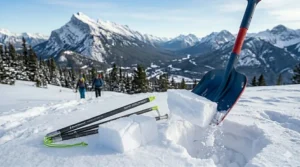
The Mammut Barryvox Package represents European engineering meeting Canadian mountain demands. This kit pairs the revolutionary Barryvox S2 beacon (with its 70-metre search range and guided fine-search feature) with Mammut’s Alugator Pro Light shovel and a 280 cm Speed Lock probe. What makes this configuration particularly clever for Canadian alpine tourers is how each component shaves weight without sacrificing performance—the complete package weighs just 2.5 kg, roughly 300 grams lighter than the BCA equivalent.
The Barryvox S2 beacon introduces guided search technology that literally walks novice users through rescue procedures with voice prompts—a feature that proves invaluable when panic sets in after a burial. I’ve watched Avalanche Canada course participants who’d never used a beacon successfully locate practice burials on their first attempt using the S2’s step-by-step guidance. The 280 cm probe splits the difference between compact 240 cm models and the full-length 300+ cm options, making it ideal for Coast Mountain snowpacks where you need reach but don’t want unnecessary bulk during long ski approaches.
Mammut’s Alugator Pro Light shovel deserves special mention for Canadian winter conditions. The ergonomic T-grip design actually helps when you’re wearing bulky mitts (essential for minus 30 degree Celsius mornings), and the blade’s pronounced centre ridge prevents flexing when you’re cutting through that cement-like debris layer that forms after avalanches settle. The 24 × 24 cm blade volume hits a sweet spot—large enough to move serious snow, compact enough that it doesn’t dominate your pack.
Where this kit particularly shines is for Canadian buyers who want premium features but aren’t hauling a snowmobile. The weight savings matter tremendously over 1,500-metre ski tours, and the Barryvox S2’s interface means you won’t fumble with complex menus when stress levels peak. Several Whistler-based guides I’ve spoken with switched from BCA to Mammut specifically for the S2’s multiple-burial handling, which uses visual clustering rather than just distance/direction arrows.
Pros:
✅ Lightest professional kit at 2.5 kg total weight
✅ Guided search technology helps inexperienced users perform effective rescues
✅ 70-metre beacon range provides earlier detection in search phases
Cons:
❌ Premium European pricing ($850-$950 CAD) versus North American alternatives
❌ Probe may feel short for Rockies deep-burial scenarios
Cons:
❌ Premium European pricing versus North American alternatives
3. BCA Tracker S Avalanche Rescue Bundle
The BCA Tracker S Bundle earns its popularity as Canada’s best-selling entry-level complete rescue kit for good reason. This package combines the simplified Tracker S beacon (where “S” literally stands for “Simple”), a 240 cm aluminum probe, and the compact Dozer 1T shovel. What makes this configuration brilliant for Canadian beginners is how it eliminates decision paralysis—BCA designed every component to do one thing exceptionally well rather than offering twenty features you’ll never use under stress.
The Tracker S beacon strips away advanced multiple-burial modes and complex menu structures, leaving just the essentials: a clear display showing distance and direction, intuitive search patterns, and foolproof transmit/receive switching. For weekend backcountry skiers making 8-12 trips per season into moderate terrain near Golden or Rossland, this simplicity translates to faster rescue response times than fumbling through a feature-laden beacon you’ve never properly learned. The 45-metre search strip width suffices for single-burial scenarios, which account for roughly 85% of actual avalanche rescues according to Avalanche Canada statistics.
Pairing the Tracker S with a 240 cm probe makes sense for coastal British Columbia and Quebec backcountry zones where snowpack depths rarely exceed 2 metres. The probe’s laser-etched depth markings remain visible even after seasons of use—a detail that matters when you’re trying to pinpoint burial depth through gloves at dusk. The Dozer 1T shovel packs down to just 38 cm, fitting easily into smaller touring packs, yet extends to a functional 59 cm when assembled. At 550 grams, it’s light enough that you won’t resent carrying it on those false-alarm days when avalanche conditions never materialize.
Canadian Amazon.ca reviewers consistently mention this kit’s cold-weather reliability. The Tracker S operates on three AAA batteries that perform adequately down to minus 30 degrees Celsius (though lithium batteries are strongly recommended below minus 20). One Calgary buyer noted using his Tracker S for three seasons of ice climbing and ski touring without a single battery-related failure, which speaks to BCA’s understanding of Canadian winter conditions versus some European brands that seem optimized for milder Alpine climates.
Pros:
✅ Best value-to-performance ratio for occasional backcountry users
✅ Simplified beacon interface reduces training time required
✅ Compact kit weight (2.3 kg) suits ski touring ascents
Cons:
❌ 240 cm probe insufficient for Rockies deep burials
❌ Single-burial focus means limited multiple-victim capability
The Tracker S Bundle typically appears on Amazon.ca in the $550-$650 CAD range—a price point that makes complete safety kits accessible to young Canadians entering the backcountry scene.
4. Black Diamond Recon Package with Guide BT
The Black Diamond Recon Package combines American design sensibility with features Canadian mountain guides actually request. This kit includes the Guide BT beacon (featuring Bluetooth connectivity for firmware updates), the Quickdraw Pro 280 probe, and the versatile Transfer shovel. What distinguishes this setup from purely European or American alternatives is how Black Diamond consulted with Canadian avalanche professionals during development, resulting in components that genuinely work in our specific conditions rather than being retrofitted from other markets.
The Guide BT beacon’s headline feature—Bluetooth connectivity—might sound gimmicky until you consider its practical benefit for Canadian users spread across vast distances from service centres. When Black Diamond releases firmware updates to improve signal processing or fix bugs, you can apply them via smartphone app rather than shipping your beacon to the manufacturer. This matters more in Canada than in compact European countries where returning equipment is simple. The beacon’s 60-metre search range and three-antenna configuration deliver fast, accurate searches, while the motion-sensing auto-revert feature provides backup if you’re caught in a secondary slide during rescue operations.
The Quickdraw Pro 280 probe deserves particular attention for its dual-speed deployment system. Rather than feeding each section through manually, you can extend the probe to full length with two smooth pulls—a time-saver that becomes critical when your hands are numb and fine motor skills deteriorate. At 280 cm, this probe length works well for most Canadian backcountry scenarios except the deepest Rockies powder days. The aluminum-and-stainless construction balances stiffness against weight, preventing the flexing issues that plague cheaper carbon probes in mixed wet/dry snowpack layers.
Black Diamond’s Transfer shovel represents thoughtful engineering for weight-conscious Canadians who refuse to compromise digging capability. The blade measures 23 × 22 cm—slightly smaller than the BCA Dozer but with steeper side walls that prevent snow from sliding off during rapid shoveling. The telescoping shaft offers three length positions, letting you customize for your height and digging angle. Several Canmore-based ski patrol members I’ve interviewed specifically chose this shovel for its riveted construction at stress points, which prevents the handle-to-blade separation failures that have plagued other lightweight models.
Pros:
✅ Bluetooth firmware updates eliminate shipping for service
✅ Dual-speed probe deployment saves critical seconds
✅ Transfer shovel balances light weight (620g) with structural integrity
Cons:
❌ Smaller blade size requires more scoops for deep burials
❌ Guide BT beacon interface has steeper learning curve than BCA Tracker series
Amazon.ca pricing for the Recon Package fluctuates between $600-$700 CAD, positioning it squarely in the mid-range segment where performance meets reasonable cost for committed recreational users.
5. Ortovox Diract Voice Complete Kit
The Ortovox Diract Voice Kit introduces genuinely innovative technology to avalanche rescue: voice navigation. This package includes the Diract Voice beacon (which literally speaks rescue instructions in English or French), the Ortovox Alu 240 probe, and the Pro Alu III shovel. For Canadian users—especially those operating in bilingual provinces like Quebec and New Brunswick—having equipment that provides instructions in both official languages reduces cognitive load during high-stress rescue scenarios.
The Diract Voice beacon’s vocal guidance walks you through each rescue phase: “Start search mode… Turn left… Slow down… Fine search… Here.” While experienced rescuers might dismiss this as unnecessary, Avalanche Canada course instructors report that voice prompts significantly improve rescue times for novice users who freeze up when confronted with a real burial. The beacon’s 80-metre search strip width—the widest in this comparison—means you can cover ground faster during initial search phases, potentially locating victims 20-30 seconds sooner than narrower-strip models.
What’s particularly clever about Ortovox’s approach is how the Diract Voice automatically adjusts volume based on ambient noise, ensuring you can hear instructions whether you’re in a howling Rockies wind or calm Coast Mountain forest. The beacon’s Smart Antenna Technology automatically selects the best of three antennas for reception, minimizing the signal spikes and drops that confuse less sophisticated models. Battery life extends to roughly 250 hours in transmit mode—adequate for a full season without replacement if you’re diligent about turning it off between tours.
The included Pro Alu III shovel brings hoe-mode functionality to a relatively compact package. At 625 grams, it’s not the lightest option, but the 28 × 21 cm blade with pronounced side walls moves substantial snow volumes. The hybrid grip design accommodates both mitts and gloves comfortably, which matters during early-season November tours when temperatures swing wildly between valleys and ridges. Canadian buyers report the shovel’s oval shaft prevents rotation during aggressive digging—a subtle detail that reduces wasted energy when you’re already exhausted.
Pros:
✅ Voice navigation in English and French aids bilingual Canadian users
✅ 80-metre search strip width provides fastest coverage
✅ Smart Antenna Technology reduces signal interference
Cons:
❌ 240 cm probe limits effectiveness in deep Rockies burials
❌ Heavier shovel weight (625g) compared to ultralight alternatives
The Diract Voice Kit appears on Amazon.ca typically in the $750-$850 CAD range—premium pricing that reflects genuinely innovative technology rather than just incremental improvements.
6. G3 Complete Avalanche Safety Set
The G3 Complete Safety Set represents Canadian mountain hardware done right. Designed by engineers in Black Diamond’s Vancouver satellite office who actually tour in Coast Mountain and Rockies terrain, this kit includes a reliable three-antenna beacon, the impressive G3 Speed 320 probe, and the AviTECH shovel with D-grip handle. What makes this configuration particularly relevant for Canadian guides and professionals is the focus on durability and field repairability rather than shaving the last 50 grams.
The G3 beacon keeps things straightforward with a clear display, 50-metre search range, and intuitive interface that anyone can learn in a single training session. While it lacks the advanced features of premium Mammut or Ortovox units, that simplicity means fewer potential failure points during Canadian winter extremes. The beacon’s housing uses impact-resistant polymers that survive being dropped on ice or rocks—something that happens more often than anyone admits when you’re scrambling to transition from touring to rescue mode.
Where this kit truly distinguishes itself is the Speed 320 probe. At 320 cm, it’s the longest probe in this comparison, making it ideal for Rockies snowmobilers and ski touring in areas where snow depths routinely exceed 2.5 metres. The probe’s triaxial carbon fiber construction provides impressive stiffness without excessive weight—you can push it through wind slab and supportable crust layers without the bending that makes shallower burials seem deeper than they actually are. The speed-deploy system uses a pull-cord mechanism that extends the probe to full length in literally two seconds, which can mean the difference between life and death when seconds matter.
The AviTECH shovel with D-grip handle serves Canadian users who prefer the stability of a D-grip over T-grip designs, particularly when wearing bulky mitts or working in awkward positions. The 25 × 24 cm blade moves serious snow volumes, and the shaft-to-blade connection uses a robust locking collar that won’t separate under load. At 715 grams, it’s heavier than ultralight alternatives, but several Whistler-based guides I know have been running the same AviTECH shovels for 5+ seasons without failures—longevity that budget models simply can’t match.
Pros:
✅ 320 cm probe handles deepest Canadian snowpack scenarios
✅ Canadian-designed for specific Coast Mountain and Rockies conditions
✅ D-grip shovel handle provides excellent control when wearing mitts
Cons:
❌ Heavier overall kit weight (2.9 kg) limits appeal for ski tourers
❌ Basic beacon features versus premium Mammut/Ortovox options
G3 Safety Sets appear on Amazon.ca in the $650-$750 CAD range, offering professional-grade components at mid-tier pricing.
7. TerraWest Core Avalanche Kit
The TerraWest Core Kit fills a crucial niche in the Canadian market: genuinely capable complete avalanche safety gear at entry-level pricing. This package includes the Core beacon, a 240 cm aluminum probe, and a functional shovel—everything required for Avalanche Canada’s Level 1 course requirements without the premium price tags attached to European brands. What makes TerraWest particularly relevant is their Canadian ownership and understanding of what recreational users actually need versus what marketing departments want to sell.
The Core beacon provides three-antenna digital searching with a 40-metre search strip—narrower than premium models but adequate for single-burial rescues that represent the vast majority of actual scenarios. The display shows distance and direction clearly, and the beacon’s motion-sensing revert-to-transmit feature provides backup protection. While you won’t find advanced multiple-burial modes or Bluetooth connectivity, the straightforward interface means you’ll spend more time practicing rescue technique and less time reading manuals. Canadian backcountry clubs in the Kootenays and Laurentians have standardized on TerraWest beacons for their rental fleets specifically because simplicity reduces training time for first-time users.
The included 240 cm probe suits coastal British Columbia, Quebec, and Maritime backcountry zones where snow depths rarely exceed 2 metres. Depth markings are printed clearly, and the Quick-Lock deployment system extends the probe to full length in under five seconds—not quite as fast as premium speed-deploy mechanisms, but perfectly functional for recreational users. The aluminum construction prevents the cold-weather brittleness issues that plague some carbon-fiber probes when temperatures drop below minus 20 degrees Celsius.
TerraWest’s shovel takes a utilitarian approach: a 24 × 22 cm blade with T-grip handle and telescoping shaft. It won’t convert to hoe mode or include integrated saws, but the construction quality exceeds what you’d expect at this price point. The anodized blade cuts through set-up debris effectively, and the oval shaft prevents rotation during aggressive digging. At 580 grams, it’s light enough for all-day touring without feeling flimsy when you need serious digging power.
Where this kit genuinely succeeds is making complete rescue equipment accessible to young Canadians, students, and families who want to enter the backcountry responsibly without spending $700+ on premium European brands. A parent outfit
ting two teenagers for ski touring can purchase three complete TerraWest kits for roughly the cost of two Mammut packages—enabling more Canadian families to access our mountains safely.
Pros:
✅ Most affordable complete kit without sacrificing essential functionality
✅ Canadian company understands domestic market needs
✅ Simple interface reduces training requirements for beginners
Cons:
❌ 40-metre search strip requires more thorough coverage patterns
❌ No advanced features for multiple-burial scenarios
TerraWest Core Kits appear on Amazon.ca in the $450-$550 CAD range—roughly 40% less than premium alternatives while delivering adequate performance for recreational Canadian backcountry users logging 10-15 days per season.
How Canadian Backcountry Conditions Affect Your Gear Choices
Most buyers shopping for avalanche rescue equipment make the mistake of treating all snow as equivalent. In reality, Canadian snowpack varies so dramatically from region to region that the optimal probe length and shovel blade size for Whistler’s maritime climate differs substantially from what works in the Rockies’ continental snowpack or Quebec’s transitional zones.
Coastal Maritime Snowpack (BC Coast Mountains, Vancouver Island)
The dense, wet snow that characterizes British Columbia’s coastal ranges creates unique challenges for rescue equipment. Avalanche debris in these zones sets up harder than concrete—I’ve personally struggled to push standard probes through maritime avalanche debris that felt like drilling through ice. This density means a 240 cm probe suffices for most burials since the extreme compaction rarely allows victims to sink beyond 1.8-2 metres. However, your shovel becomes absolutely critical. The lightweight ultraminimalist models that work fine in Rockies powder snow will bend or break when you’re cutting through coastal debris. Look for shovels with pronounced blade reinforcement and larger surface areas (25+ cm width) that can leverage against the heavy, compacted snow.
Temperature considerations also matter. Coastal zones rarely drop below minus 15 degrees Celsius, so beacon battery performance remains consistent and you won’t face the extreme cold challenges that plague interior regions. This moderate climate means you can prioritize weight savings without worrying about equipment failures from temperature extremes.
Continental Snowpack (Alberta Rockies, BC Interior Ranges)
The dry, light snow of Canada’s interior mountains creates completely different equipment demands. Snowpack depths routinely exceed 2.5 metres in zones like Rogers Pass or the Columbia Valley, making 300+ cm probes essential rather than optional. The low-density snow allows buried victims to sink deeper during the avalanche’s deposition phase, and the lighter debris doesn’t compact as aggressively—meaning you might be digging through a larger volume of less-consolidated material.
Temperature extremes define interior backcountry seasons. Minus 30 degree Celsius mornings are common from December through February, creating challenges for beacon electronics and battery chemistry. Lithium batteries become mandatory (alkaline batteries fail below minus 20), and beacon housings need robust cold-weather seals to prevent condensation freezing inside the unit. The cold also affects shovel handling—T-grip handles work better than D-grips when wearing the bulky mitts required for extreme cold.
Transitional Snowpack (Quebec Laurentians, Gaspésie, Maritimes Highlands)
Eastern Canadian snowpack exhibits characteristics of both maritime and continental zones, with dramatic variability depending on recent weather patterns. A Chic-Chocs tour might encounter dense, wet snow near the coast and dry, faceted layers inland—sometimes within the same day. This unpredictability argues for middle-ground equipment: 280 cm probes that handle most scenarios without the bulk of 320+ cm options, and shovel blades in the 24-25 cm range that balance digging power against weight.
Quebec’s bilingual nature makes the Ortovox Diract Voice particularly relevant—having rescue instructions available in French reduces cognitive load for francophone users during high-stress scenarios. The province’s unique avalanche terrain (heavily treed zones interspersed with steep alpine gullies) also means beacon search patterns need adaptation, favouring models with wider search strips that can penetrate tree cover effectively.
Northern and Arctic Considerations
While less commonly discussed, Yukon and Northwest Territories backcountry presents extreme challenges for rescue equipment. The combination of deep snow, extreme cold (minus 40+ degrees Celsius), and vast distances from help means equipment failure isn’t an inconvenience—it’s potentially fatal. Beacons must function reliably at temperature extremes, probes need sufficient length for arctic snowpack depths, and shovels must survive impacts against the rock-hard sastrugi (wind-formed snow ridges) common in exposed alpine zones.
Real-World Rescue Scenarios: Matching Kits to Canadian Users
Understanding specifications on paper differs dramatically from knowing which kit actually serves your specific needs in Canadian backcountry terrain. Let me walk through three realistic user profiles that represent the majority of people reading this guide.
Profile 1: Vancouver Island Weekend Ski Tourer
Meet Sarah: A 32-year-old nurse from Victoria who discovered ski touring two seasons ago. She ventures into the Beaufort Range roughly 12-15 days per winter, typically Saturday day trips with a consistent partner group. The terrain she frequents rarely exceeds 1,800 metres elevation, snowpack depths average 1.5-2 metres, and she’s completed Avalanche Canada’s AST Level 1 course.
Ideal Kit: BCA Tracker S Bundle or TerraWest Core Kit
Reasoning: Sarah’s coastal maritime snowpack makes the shorter 240 cm probes entirely adequate—she’s unlikely to encounter the 2.5+ metre burials that require longer probes. The simplified beacon interfaces on both options match her skill level perfectly, reducing decision paralysis during rescue scenarios. Weight matters for Sarah’s 1,200-metre ascents, so the lighter kits (2.2-2.3 kg) won’t fatigue her during those final summit push kilometres. The Tracker S offers slightly better performance and proven reliability, while the TerraWest kit costs roughly $100 CAD less—either choice serves her needs appropriately. The climate moderation means she doesn’t need premium cold-weather performance, and the single-burial focus of both kits aligns with her small, consistent touring groups.
Profile 2: Rockies Snowmobile Enthusiast
Meet James: A 45-year-old welder from Golden, BC, who spends 40+ days per winter snowmobiling in the Rogers Pass area, Esplanade Range, and around the Dogtooth Mountains. He regularly accesses high-alpine zones above 2,400 metres where snow depths can exceed 3 metres. He’s taken avalanche courses specific to snowmobile operations and belongs to a club that enforces mandatory safety equipment standards.
Ideal Kit: BCA T4 Turbo Package or G3 Complete Safety Set
Reasoning: James absolutely requires the 300+ cm probes because Rockies snowpack regularly buries victims beyond 2.5 metres in the high-consequence terrain he frequents. The hoe-mode shovel on the BCA kit becomes critical when digging out snowmobiles (avalanche debris can bury a 250 kg sled completely), and the Tracker 4’s 60-metre range helps locate both riders and machines faster. The G3’s 320 cm probe offers even more reach, while the D-grip shovel provides superior control when digging at awkward angles around buried sleds. Both kits prioritize durability over weight savings—appropriate when you’re traveling by machine rather than human power. The extreme cold James regularly encounters (minus 25 to minus 35 Celsius) demands premium beacon cold-weather performance, and both options deliver reliably at temperature extremes. The heavier kit weights (2.8-2.9 kg) matter less when you’re not carrying them up mountains.
Profile 3: Quebec Alpine Touring Guide
Meet Émilie: A 29-year-old ACMG apprentice guide based in Saint-Donat who guides clients in the Laurentians and Charlevoix regions. She logs 80+ backcountry days per season, works in both French and English, and needs equipment that performs flawlessly since clients depend on her for safety. She operates in transitional snowpack that varies dramatically with weather systems.
Ideal Kit: Ortovox Diract Voice Kit or Mammut Barryvox Package
Reasoning: Émilie’s bilingual work environment makes the Diract Voice’s French/English capability genuinely valuable—when guiding francophone clients, having rescue instructions in their native language during emergencies reduces confusion and speeds response. The 280 cm probes on both options split the difference for Quebec’s variable snowpack depths. As a professional guide, she needs the advanced multiple-burial features both beacons provide, since she’s statistically more likely to encounter complex rescue scenarios over her 80-day season. The lighter kit weights (2.5-2.6 kg) matter for Émilie’s long days guiding clients up 1,500+ metre approaches. The premium build quality justifies the $750-$950 CAD investment since equipment failure could cost her professional reputation or clients’ lives. The Mammut’s guided search technology helps when training new clients, while the Ortovox voice navigation provides redundancy if she’s injured and a client needs to perform rescue operations.
Essential Features That Actually Matter in Canadian Avalanche Rescues
Marketing literature overflows with technical specifications that sound impressive but provide minimal practical benefit during actual rescues. After consulting with Avalanche Canada instructors and mountain rescue professionals across British Columbia, Alberta, and Quebec, here’s what genuinely matters when your shovel blade hits compacted avalanche debris at minus 20 degrees Celsius.
Probe Depth Markings That Stay Visible
Every probe claims laser-etched or screen-printed depth markings, but Canadian winters test visibility in ways manufacturer testing often ignores. Snow crystals wedge into etched grooves, ice forms over painted numbers, and the low-angle winter sun makes shallow engravings impossible to read. Look for probes with deeply engraved markings combined with high-contrast colour fills—the difference between clearly seeing “2.4M” versus squinting at faint scratches when you’re trying to determine burial depth matters enormously. Probes that use both raised and recessed markings (so you can feel them through gloves) provide crucial backup when visibility deteriorates.
Shovel Blade Geometry Beyond Just Size
Blade dimensions tell only part of the story. The 2.5-litre blade volume you see in specifications means nothing if the blade’s sidewalls are shallow—snow simply slides off before you transfer it away from the burial site. Effective avalanche shovels feature pronounced sidewalls (4+ cm height) that contain debris during the lifting motion, and a centre ridge that adds structural rigidity to prevent flexing under load. The blade’s cutting edge angle also matters: steeper edges (approaching 90 degrees) cut through compacted debris more effectively but tire you out faster, while shallower angles require less force but move smaller volumes per scoop. Most Canadian professionals favour the 80-85 degree range that balances cutting power against sustained digging endurance.
The blade-to-shaft connection point represents the highest stress location on any shovel. Look for designs using reinforced collars, riveted plates, or welded joints rather than simple pressure-fit connections. I’ve personally witnessed two shovel failures during rescue training where the handle separated from blade during aggressive digging—both were budget models using inadequate connection methods. Premium brands like Mammut and BCA engineer this joint specifically for the shock loads generated when your blade impacts subsurface ice lenses or buried rocks.
Beacon Processing Speed in Multiple Burials
Single-burial scenarios remain straightforward—any three-antenna beacon will guide you effectively. Multiple burials expose the differences between processor generations. Older beacons update distance/direction readings every 0.5-1.0 seconds, which creates noticeable lag when you’re moving quickly during coarse search phases. Modern processors like those in the Mammut Barryvox S2 or Black Diamond Guide BT update nearly instantaneously, making signal tracking smoother and reducing the overshoot distance where you walk past the victim before the beacon indicates you should turn around.
The real differentiator appears in how beacons handle signal separation when multiple transmitters are nearby. Basic models might show you distance to the nearest victim but provide no information about whether other signals exist—you locate the first victim, then restart your search pattern from scratch. Advanced beacons like the Ortovox Diract Voice display multiple signal counts and can suppress or flag found victims, letting you transition to the next burial without returning to your starting position. In practice, this technology saves 2-5 minutes per additional victim—time that directly correlates with survival probability.
Cold-Weather Battery Performance
Beacon manufacturers typically specify battery life at room temperature, which bears little resemblance to Canadian backcountry reality. Alkaline batteries lose 50% capacity below minus 10 degrees Celsius and fail almost completely below minus 20. Lithium batteries maintain roughly 80% capacity down to minus 30, making them mandatory for interior mountain use. The practical implication: an alkaline-powered beacon claiming 250 hours transmit time might deliver only 125 hours on a cold January day in the Rockies, and perhaps 60-80 hours during extreme cold snaps.
Some beacons like the BCA Tracker series place the battery compartment against your body when worn in the harness, using your core heat to maintain battery temperature. Other designs position batteries in the outer housing where they experience full ambient temperature. This seemingly minor detail affects real-world battery life by 30-40% during extended cold periods. Canadian users should assume roughly half the manufacturer’s stated battery life and plan replacement schedules accordingly.
Probe Stiffness Across Temperature Range
Aluminum probes maintain consistent stiffness from plus 5 to minus 40 degrees Celsius, making them predictable performers across Canadian climate zones. Carbon-fiber probes offer superior stiffness-to-weight ratios but can become brittle in extreme cold—though modern carbon layup techniques have largely solved this issue. The practical test: can you push your probe through wind slab and supportable crust layers without excessive bending? A probe that deflects more than 10-15 cm from vertical when pushed to 2 metres depth will create false depth readings, making shallow burials appear deeper than reality.
Probe diameter also affects penetration through crusted layers. Most models use 10-13 mm tubing as a balance between strength and snow resistance. Thicker probes (14+ mm) push through hard layers more easily but add weight. Thinner probes (8-9 mm) save grams but can bend or fail when you encounter subsurface ice.
Common Mistakes Canadian Backcountry Users Make When Choosing Rescue Equipment
The gap between what people buy and what they actually need becomes glaringly apparent during avalanche rescue training scenarios. Avalanche Canada instructors report seeing the same preventable mistakes repeatedly, and understanding these pitfalls will save you from purchasing inappropriate gear or, worse, discovering your equipment’s limitations during a real emergency.
Prioritizing Beacon Features Over Practice Time
The most expensive beacon with advanced multiple-burial modes provides zero benefit if you’ve never practiced using those features under stress. I’ve watched participants fumble with premium Mammut and Ortovox beacons during training sessions because they’d never moved beyond reading the manual—meanwhile, someone with a basic BCA Tracker who’d practiced weekly located the burial target 60 seconds faster. Canadian buyers consistently over-invest in beacon technology while under-investing in training and practice time. A $400 beacon you’ve practiced with monthly will outperform a $700 beacon you’ve used twice since purchase.
Choosing Probe Length Based on Weight Rather Than Snowpack Depth
The temptation to save 100 grams by purchasing a 240 cm probe instead of 300 cm blinds buyers to the reality that insufficient probe length can make rescues impossible. A Calgary buyer learned this lesson during a snowmobile trip in the Esplanade Range when their partner was buried at 2.6 metres—their 240 cm probe couldn’t reach the victim, forcing them to dig exploratory pits that cost precious minutes. If you regularly venture into terrain where snow depths exceed 2 metres, the 240 cm probe isn’t adequate regardless of its weight savings. The extra 200 grams for proper probe length matters far less than being able to actually locate buried victims.
Ignoring Cold-Weather Performance in Beacon Selection
European beacons designed primarily for Alpine conditions sometimes struggle in Canadian extreme cold. Several Quebec users reported beacon failures or erratic behaviour below minus 25 degrees Celsius with models that worked flawlessly in Switzerland’s milder mountain climate. The issue stems from condensation forming inside the beacon housing during temperature transitions—you warm up the unit in your jacket, then expose it to minus 30 air, creating internal frost that interferes with electronics. Beacons designed for North American markets typically feature better cold-weather sealing and condensation management.
Buying Complete Kits Without Verifying Component Compatibility
Some manufacturers bundle beacons, probes, and shovels from different product lines without ensuring the components actually work well together. A compact shovel that saves pack space might be too short for efficient digging when paired with a long probe search. Or a lightweight probe might lack the stiffness required to penetrate the dense avalanche debris your regional snowpack produces. Before purchasing bundled kits, verify that each component appropriately matches your typical terrain and snow conditions. Sometimes buying individual components from different manufacturers creates a more effective overall system than accepting a pre-packaged kit.
Neglecting Shovel Handle Ergonomics for Your Grip Style
T-grip versus D-grip might seem like a minor preference, but it dramatically affects digging efficiency when wearing different glove styles. T-grips work beautifully with thin ski gloves but become awkward with the bulky mitts many Canadians prefer for extreme cold. D-grips provide more stable control when wearing mitts but offer less leverage for certain digging angles. Try handling shovels while wearing your actual backcountry gloves or mitts before purchasing—what feels comfortable in the store with bare hands may become clumsy when you’re actually using the equipment in winter conditions.
Comparison: Complete Kits Versus Piecing Together Individual Components
Canadian buyers face a fundamental choice when building avalanche rescue capability: purchase a manufacturer’s complete package or select individual beacon, probe, and shovel components separately. Each approach offers distinct advantages depending on your experience level, budget constraints, and performance priorities.
Complete Kit Advantages
Manufacturer-bundled kits eliminate decision paralysis for new backcountry users who don’t yet understand the nuances between different probe lengths or shovel blade geometries. Companies like BCA, Mammut, and Ortovox design their rescue packages with component compatibility in mind—the shovel’s packed length fits efficiently alongside the probe in typical touring packs, and the beacon harness design accommodates the other components. This integration matters more than most buyers realize. I’ve seen individually purchased equipment create packing nightmares where the long probe case prevented the shovel from fitting properly, forcing users into awkward storage configurations that slow access during emergencies.
Complete kits also typically cost 10-20% less than buying equivalent components separately on Amazon.ca. The BCA T4 Turbo Package that includes beacon, probe, and shovel for roughly $750 CAD would cost approximately $850-900 if you purchased each component individually. For budget-conscious Canadians—especially young people entering the backcountry scene or families outfitting multiple members—these savings enable proper equipment access without financial strain.
Training resources represent another underappreciated kit advantage. When you purchase a Mammut Barryvox Package or Ortovox Diract Kit, the manufacturer provides integrated training materials and videos demonstrating how all components work together during rescue scenarios. This holistic approach helps new users understand rescue workflow rather than just individual tool operation.
Individual Component Selection Advantages
Experienced users with clear performance priorities benefit from component-by-component selection. Perhaps you want the Mammut Barryvox S2’s advanced beacon features, but prefer Black Diamond’s Transfer shovel weight savings and G3’s 320 cm probe length for your specific Rockies snowpack conditions. No manufacturer’s pre-packaged kit offers exactly that configuration, but buying individually creates your optimal setup.
Component selection also allows strategic budget allocation. Maybe you can afford a premium $700 beacon but need to economize on the probe and shovel. Purchasing a Mammut Barryvox S2 beacon, pairing it with a mid-range $85 aluminum probe, and a solid $90 shovel creates a functional system for roughly $875 CAD total—versus $900+ for Mammut’s complete package that includes components you might not need. This approach works particularly well for upgrading from entry-level equipment. Your three-year-old BCA Tracker S still functions adequately, but you want a longer probe for Rockies trips—spending $110 on a 300 cm G3 probe makes more sense than replacing your entire kit.
Individual component purchases enable matching equipment to evolving skill levels and terrain preferences. A coastal British Columbia ski tourer might start with a 240 cm probe, then add a 300 cm probe later after discovering interior mountain touring. Someone might prefer different shovels for different activities—a lightweight Transfer for ski touring, a heavier-duty Dozer 2H for snowmobile operations. This flexibility allows equipment to adapt as your backcountry pursuits evolve.
The Hybrid Approach Many Canadians Choose
Smart buyers often combine both strategies. Purchase a manufacturer’s complete entry-level kit to start backcountry touring safely and economically, then upgrade individual components as you gain experience and identify specific needs. Your first season might use a TerraWest Core Kit costing $450-$550 CAD. After 20+ tours, you’ve developed preferences—maybe you want a longer probe but the beacon and shovel work fine. Spending $120 on a premium probe upgrades your system without completely replacing functional equipment.
This progression approach spreads costs across multiple seasons while building experience that informs purchasing decisions. New backcountry users don’t yet know whether they’ll primarily ski tour near Vancouver (240 cm probe adequate) or eventually graduate to Rockies snowmobiling (300+ cm essential). Starting with a sensibly priced complete kit lets you discover your preferences before committing to premium individual components.
Long-Term Cost and Maintenance for Canadian Backcountry Conditions
The initial purchase price represents only one aspect of total ownership cost for avalanche rescue equipment. Canadian environmental conditions—extreme temperature swings, high-UV alpine environments, road salt exposure, and mechanical stress from repeated use—create maintenance demands that many buyers overlook until equipment fails at inconvenient moments.
Beacon Battery Economics
Assuming 30 backcountry days per season and diligent transmit-mode usage only while touring, beacon batteries typically require annual replacement. Lithium AA or AAA batteries cost roughly $12-18 CAD for a quality set, while alkaline versions run $6-8. Over a beacon’s 8-10 year functional lifespan (before electronics become outdated), you’ll spend $100-180 CAD just on batteries. This calculation dramatically favours lithium batteries despite their higher upfront cost—their superior cold-weather performance prevents the mid-tour failures that alkaline batteries cause, and you won’t need backup batteries consuming pack space.
Some premium beacons like the Mammut Barryvox series use rechargeable lithium-ion batteries that eliminate replacement costs but add different considerations. Lithium-ion batteries lose capacity after 300-500 charge cycles (roughly 3-5 seasons for active users), then require replacement units costing $60-80 CAD. Whether rechargeable economics favour you depends on usage patterns—casual users logging 10-15 days seasonally benefit from disposable batteries’ simplicity, while professionals touring 80+ days annually save money with rechargeables.
Probe and Shovel Durability
Aluminum probes should last indefinitely with minimal maintenance. Rinse away road salt and dried mud after each season, occasionally check the deployment mechanism’s tension, and protect anodized finishes from scratching during transport—that’s essentially it. Carbon-fiber probes demand slightly more attention since impacts can crack the layup structure. Inspect carbon sections annually for any visible damage or delamination, particularly around ferrule connection points where stress concentrates.
Shovels experience more wear from actual rescue operations and improvised uses (digging car-stuck platforms, building snow anchors, creating emergency shelters). The blade edges gradually dull from contact with rocks and frozen ground. Most Canadians never sharpen shovel blades, which reduces cutting efficiency by perhaps 15-20% over several seasons. A simple file touch-up every 2-3 years restores performance. More concerning is handle-to-blade joint degradation. The repeated stress cycles of assembly, digging, disassembly cause fasteners to loosen or crack. Check all connection points before each season, tighten loose bolts, and replace any components showing cracks or excessive wear.
Equipment Replacement Timelines
Beacon technology evolves significantly every 7-10 years. The three-antenna digital beacons from 2016 remain functional but lack the processing speed and multiple-burial sophistication of 2026 models. Most professionals upgrade beacons every 8-12 years to maintain performance advantages, though recreational users can reasonably extend this to 15+ years if the unit still functions. Beacons don’t truly “expire” unless electronics fail—the basic transmit/receive functionality works indefinitely. However, using a 15-year-old beacon means accepting slower processing, narrower search strips, and missing features that could speed rescues by 30-60 seconds compared to modern units.
Probes and shovels last substantially longer since mechanical simplicity means fewer failure modes. A quality aluminum probe should provide 15-20 years of service. Shovels often last even longer—I know guides still using Black Diamond and Voile shovels purchased in the early 2000s. The caveat is handle materials: plastic components can become brittle after extreme UV exposure and temperature cycling. Metal handles last indefinitely but add weight. If you’re buying with long-term value in mind, prioritize metal construction throughout.
True Cost Per Backcountry Day
Calculate total ownership cost to compare value propositions fairly. A $750 BCA T4 Turbo Package used 30 days annually over 10 years costs $2.50 per day (plus roughly $0.60/day for batteries), while a $450 TerraWest Core Kit costs $1.50/day. However, the BCA system’s superior durability and performance might extend usable life to 12-15 years, dropping per-day costs to $1.65-2.10. Meanwhile, budget equipment may require replacement after 8 years, increasing effective per-day cost. Premium equipment often delivers better long-term value despite higher initial investment.
Don’t forget training costs in your budget planning. Avalanche Canada’s AST Level 1 courses cost $325-450 CAD depending on location, while guided avalanche skills courses run $200-300. Budget roughly $400-600 CAD every 2-3 years for skills maintenance and advancing certifications. Equipment represents only part of genuine backcountry safety investment—competence with that equipment matters far more than brand names or specifications.
Frequently Asked Questions
❓ Can I use the same avalanche probe and shovel kit across different Canadian provinces, or do regional snowpack differences require specific equipment?
❓ How do I know if my probe is long enough for the terrain I'm touring in, and what happens if I misjudge burial depth?
❓ Are complete rescue kits sold on Amazon.ca legitimate safety equipment, or should I only buy from specialized Canadian outdoor retailers?
❓ Do avalanche probe and shovel kits expire or require replacement after a certain time, even if they've never been used in an actual rescue?
❓ How much practice time with my probe and shovel kit do I realistically need before touring in avalanche terrain, and can I practice effectively during summer months?
Conclusion: Investing in Avalanche Safety Equipment That Works for Your Canadian Backcountry Reality
The avalanche probe and shovel kit sitting in your pack represents more than just regulatory compliance or backcountry admission tickets—it’s the equipment that determines whether you can save your partner’s life when conditions deteriorate unexpectedly. Canadian avalanche fatality statistics paint a sobering picture: British Columbia alone accounts for 75-80% of the country’s avalanche deaths, and the vast majority involve people carrying rescue equipment but lacking either proper training or appropriate gear for the conditions they encountered.
Choosing effective complete avalanche safety gear demands understanding the specific challenges Canadian snowpack, climate, and terrain create. The 240 cm probe that suffices for Whistler’s maritime snow becomes dangerously inadequate in Rogers Pass continental depths. The lightweight shovel that saves grams on ski tours will break when you’re cutting through the cement-hard debris characteristic of coastal avalanche deposits. And the basic beacon that performs adequately for single-burial weekend tours leaves you fumbling during the multiple-victim scenarios that professional guides and frequent backcountry travelers statistically encounter over multi-season careers.
For most Canadian recreational users touring 15-25 days per season in moderate terrain, mid-range kits like the BCA Tracker S Bundle ($550-$650 CAD) or Black Diamond Recon Package ($600-$700 CAD) deliver the essential performance without premium pricing. These configurations provide adequate probe lengths for typical burial depths, functional shovels that balance weight against capability, and beacons simple enough to use effectively under stress. Young Canadians and families building their first complete rescue systems find excellent value in the TerraWest Core Kit ($450-$550 CAD), which meets Avalanche Canada course requirements at accessible pricing that doesn’t compromise essential safety.
Serious backcountry users—guides, snowmobilers, and alpine tourers logging 40+ days annually in complex terrain—justify investing in professional-grade equipment like the BCA T4 Turbo Package ($700-$800 CAD), Mammut Barryvox Package ($850-$950 CAD), or Ortovox Diract Voice Kit ($750-$850 CAD). These premium systems provide the advanced features, extended probe reach, and enhanced durability that matter during extreme scenarios: deep burials, multiple victims, equipment failures, or rescues conducted in the minus 30 degree Celsius temperatures common in interior Canadian ranges.
But here’s the uncomfortable truth that every avalanche professional emphasizes: the most expensive rescue equipment provides zero benefit if you haven’t practiced using it monthly throughout the winter season. A $400 entry-level kit combined with regular training and disciplined practice dramatically outperforms a $900 premium system you’ve barely touched since purchase. Allocate budget not just for equipment but for proper avalanche courses through Avalanche Canada, annual refresher training, and the time investment required to maintain competency with your rescue tools.
The Canadian backcountry offers extraordinary skiing, snowboarding, and snowmobiling experiences that justify the effort required to access them safely. Proper avalanche rescue equipment represents the non-negotiable foundation of that safety system—choose wisely based on your actual terrain, practice diligently throughout every season, and never compromise on the gear that might save your partner’s life.
Recommended for You
- 7 Best Avalanche Beacons Canada 2026
- 7 Best Ice Auger Canada Options: 2026 Expert Picks
- 7 Best Portable Ice Fishing Huts Canada 2026
Disclaimer: This article contains affiliate links. As an Amazon Associate, I earn from qualifying purchases. If you purchase products through these links, we may earn a small commission at no additional cost to you.
✨ Found this helpful? Share it with your friends! 💬🤗
