In This Article
Picture this: you’re tucked into your sleeping bag at midnight in Algonquin Park, and the temperature has dropped to -20°C. Is your gear protecting you, or are you counting the hours until sunrise?
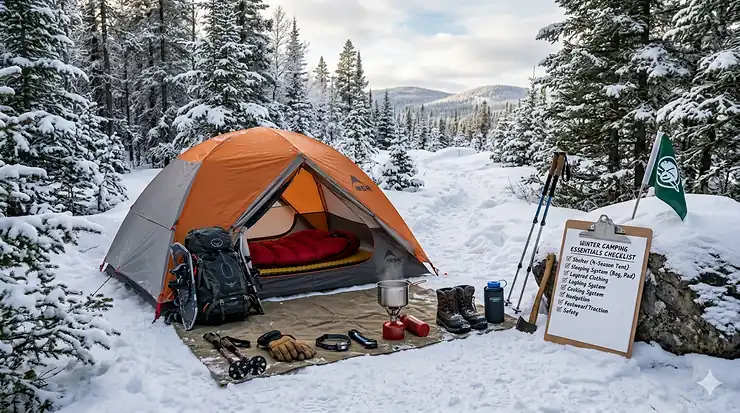
Winter camping in Canada isn’t just about grabbing any tent and heading north. When Parks Canada reports that proper equipment can mean the difference between an incredible experience and a dangerous situation, choosing the right winter camping essentials checklist becomes critical. Canadian winters bring unique challenges that most imported gear wasn’t designed to handle—from Winnipeg’s bone-chilling -40°C snaps to Vancouver Island’s relentless wet cold that penetrates everything.
What separates successful winter campers from those who pack up early? It’s understanding that your summer camping gear won’t cut it when frost creeps inside your tent. After analyzing hundreds of Canadian winter camping trips and consulting with Parks Canada safety guidelines, I’ve identified the seven non-negotiable items that form the foundation of safe cold-weather camping. Whether you’re planning your first February outing in Banff or preparing for a week-long expedition in the Yukon, this checklist covers essential vs optional gear, beginner winter camping gear requirements, and the complete winter camping setup that actually works in Canadian conditions.
The investment in proper winter camping gear for extreme cold pays dividends beyond just one trip. Quality equipment designed for temperatures below -20°C transforms winter camping from an endurance test into an adventure you’ll repeat year after year.
Quick Comparison Table: Top Winter Camping Essentials at a Glance
| Product Category | Best Budget Option | Best Premium Option | Best For Beginners | Amazon.ca Prime |
|---|---|---|---|---|
| Sleeping Bag | Around $150 CAD (-15°C) | Around $450 CAD (-30°C) | Synthetic fill bags | ✓ |
| Sleeping Pad | $80-120 CAD (R-4.0) | $250-350 CAD (R-7.0+) | Foam + inflatable combo | ✓ |
| 4-Season Tent | $200-350 CAD | $600-900 CAD | Coleman WeatherTec models | ✓ |
| Winter Stove | $50-85 CAD (canister) | $200-280 CAD (liquid fuel) | MSR PocketRocket 2 | ✓ |
| Insulated Water Bottle | $25-40 CAD | $65-85 CAD | Wide-mouth design | ✓ |
| Winter Clothing Layers | $100-200 CAD (base set) | $400-700 CAD (complete) | Merino wool base layers | ✓ |
| Headlamp | $30-50 CAD | $90-140 CAD | Lithium battery models | ✓ |
💬 Just one click — help others make better buying decisions too! 😊
Top 7 Winter Camping Essentials: Expert Analysis
1. NEMO Sonic -20 Sleeping Bag — The Canadian Winter Standard
When temperatures plummet to -25°C in places like Churchill or Yellowknife, the NEMO Sonic -20 delivers warmth that budget bags can only promise. This mummy-style sleeping bag uses 800-fill power water-resistant down insulation—meaning each ounce of down creates more air pockets to trap your body heat compared to lower-fill alternatives.
The standout feature Canadian winter campers appreciate? Thermo Gills—zippered vents that let you dump excess heat without introducing drafts. During a February trip to Riding Mountain National Park where daytime temps reached -5°C but nights dropped to -22°C, these vents prevented the sweat buildup that often soaks cheaper bags. The draft collar encircles your neck and shoulders completely, sealing warmth in zones where basic bags leak heat. For Canadian conditions where a warm chinook can swing temperatures 20 degrees overnight, this adjustability matters.
At roughly 1.36 kg (3 lbs), it’s not ultralight, but winter camping priorities shift from pack weight to survival capability. The water-resistant down treatment sheds moisture from tent condensation—a huge advantage in Canada’s humid coastal regions or when camping near open water. One Manitoba reviewer noted staying comfortable at -28°C with just a base layer and socks, while a BC camper praised how it handled three consecutive nights of freezing rain without clumping.
Pros: ✓ Genuine -20°C comfort rating tested in Canadian conditions
✓ Water-resistant down handles condensation that ruins standard down
✓ Thermo Gills prevent dangerous moisture buildup from sweating
Cons:
✗ Premium price point around $450-520 CAD
✗ Requires proper storage (never compressed long-term)
Canadian winter camping demands bags rated at least 10-15 degrees colder than your expected low. The Sonic -20 delivers that safety margin, making it worth the investment if you camp more than twice per winter season. Value verdict: around $450-520 CAD represents professional-grade insurance against hypothermia.
2. Therm-a-Rest NeoAir XTherm NXT Sleeping Pad — Your Barrier Against Frozen Ground
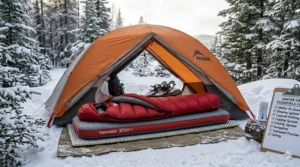
Most beginners underestimate sleeping pads until they’ve shivered through a night on snow. The ground conducts heat away from your body 160 times faster than air—your sleeping bag can’t compensate for that loss no matter how warm it’s rated. The Therm-a-Rest NeoAir XTherm NXT solves this with an R-value of 7.3, meaning it resists heat transfer exceptionally well even on snow or frozen earth.
This pad uses triangular core chambers filled with reflective ThermaCapture layers that bounce your body heat back toward you. At 10.2 cm (4 inches) thick when inflated, it keeps you elevated off ice-cold surfaces while weighing just 510 grams for the regular length. Canadian winter campers particularly value how it packs down smaller than a 1-litre Nalgene bottle—crucial when your winter pack already holds bulky insulated clothing and a -20°C sleeping bag.
The ASTM F3340 standardized R-value testing means you can trust the 7.3 rating across all manufacturers. For context, Parks Canada recommends minimum R-values of 5.0 for winter camping in national parks, but temperatures in places like the Yukon or northern Manitoba regularly push below -30°C where an R-7+ pad becomes essential rather than optional. The WingLock valve inflates the pad in roughly 30 breaths and deflates completely in seconds—important when your fingers are numb and daylight is fading fast.
Ontario reviewers consistently mention staying warm on snow at -18°C, while Alberta users report the pad maintaining loft even after 40+ nights of winter use. One thoughtful feature: the textured surface grips your sleeping bag, preventing the midnight slide-off that happens with slippery pads.
Pros:
✓ R-7.3 rating verified by standardized ASTM testing
✓ Packs incredibly small despite providing 10 cm of insulation
✓ Reflective layers work without batteries or external power
Cons:
✗ Around $280-340 CAD puts it in premium territory
✗ Makes slight crinkle noise when you shift positions
Expert opinion: Pair this with a budget closed-cell foam pad (around $35-45 CAD, R-value 2.0) underneath for total insulation above R-9 and puncture protection. That combo handles anything Canadian winters throw at you, from Baffin Island expeditions to casual Ontario provincial park weekends. Price range: around $280-340 CAD for professional-grade winter insulation.
3. MSR PocketRocket 2 Ultralight Camping Stove — Reliable Heat When You Need It Most
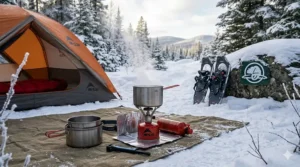
Winter camping means melting snow for water, warming yourself with hot drinks every few hours, and cooking meals when your metabolism demands maximum calories. The MSR PocketRocket 2 weighs just 73 grams but generates enough heat to boil one litre of water in 3.5 minutes—critical when temperatures drop and you need hot liquid fast to prevent dehydration.
This canister stove folds down to fit in your palm (5 cm x 5 cm x 7.5 cm) yet the serrated pot supports grip cookware securely even when you’re wearing thick gloves. The flame adjustment ranges from delicate simmer for oatmeal to full roar for rapidly melting snow, giving you control that cheaper fixed-flame stoves lack. For Canadian winter camping, this versatility matters because you’ll cook everything from morning coffee to evening stew in challenging conditions.
The challenge with canister stoves in extreme cold: fuel performance drops significantly below -10°C. Smart Canadian winter campers mitigate this by keeping canisters warm in their sleeping bags overnight and choosing isobutane-propane blends over pure butane. Even with these precautions, MSR’s pressure-regulated valve delivers consistent performance in cold weather better than unregulated competitors.
Manitoba and Saskatchewan reviewers report reliable ignition at -15°C with proper canister warming, while Yukon users note the stove works down to -25°C if you insulate the canister base with a foam pad. The protective hard-shell case prevents damage when stowed among sharp winter gear like crampons or ice axes.
Pros:
✓ Ultra-compact size doesn’t eat precious pack space
✓ Made in USA with proven durability across thousands of winter trips
✓ Pressure regulation maintains flame in cold better than budget models
Cons:
✗ Requires keeping fuel canisters warm in severe cold
✗ Canister fuel costs more per burn than liquid fuel options
First-time winter camping gear advice: This stove around $80-110 CAD represents the sweet spot between weight, performance, and price. Pair it with MSR IsoPro fuel canisters (available at most Canadian outdoor retailers) and keep a backup canister for trips longer than three days.
4. Coleman Skylodge 4-Person Instant Camping Tent — Winter-Capable Shelter Without the Complexity
While true mountaineering tents offer superior wind resistance, the Coleman Skylodge 4-Person delivers winter camping capability for Canadian conditions at a fraction of the cost. The WeatherTec system features welded corners and inverted seams that prevent water infiltration—essential when spring snow melts on your tent or freezing rain creates ice buildup.
Setup takes roughly 60 seconds thanks to pre-attached telescoping poles. This matters enormously in winter when your hands go numb after 10 minutes of exposed work, and you’re racing against fading daylight at 4:30 PM. The cabin-style design with nearly vertical walls creates usable interior space where you can actually sit up and organize gear—a luxury when you’re confined to your tent for 14-hour winter nights.
At 1.52 metres (5 feet) of centre height, this tent accommodates two adults with full winter gear spread out for drying. Canadian winter campers appreciate how the extra space prevents claustrophobia during extended storms. The WeatherTec rainfly extends far enough to create a small vestibule where you can store boots and keep snow out of your living area. One E-port allows running a power cable inside if you’re car camping with a portable battery.
The tent is rated for three seasons officially, but Saskatchewan and Alberta reviewers report using it successfully in winter conditions down to -15°C with additional guy lines and proper staking on snow. The 150D polyester fabric resists tears from wind-blown ice particles better than cheaper 75D materials. However, for severe conditions (consistent -25°C or exposed alpine environments), upgrade to a true four-season expedition tent.
Pros:
✓ Instant setup prevents frostbite risk during tent pitching
✓ WeatherTec system proven in Canadian rain and snow
✓ Cabin design allows gear organization impossible in dome tents
Cons:
✗ Heavier (around 7-9 kg) than ultralight backpacking tents
✗ Not designed for extreme alpine or consistently below -20°C conditions
This tent fills the gap between summer camping and hardcore winter expeditions. Around $220-320 CAD on Amazon.ca, it’s ideal for Canadian campers doing winter trips at provincial parks like Killarney or Algonquin where conditions are cold but not arctic. The instant setup alone justifies the price when your fingers are freezing.
5. Hydroflask 32 oz Wide Mouth Insulated Water Bottle — Hydration That Won’t Freeze
Dehydration sneaks up on winter campers because cold air suppresses thirst signals and your body loses moisture through breathing condensation. The Hydroflask 32 oz Wide Mouth uses double-wall vacuum insulation to keep liquids from freezing for 24+ hours even in -25°C conditions—something single-wall bottles can’t match.
The wide mouth (5.8 cm opening) accommodates ice cubes or allows you to pour in hot water from melted snow without splashing. More importantly for winter camping, you can drink directly without removing gloves and exposing fingers to frostbite risk. The powder-coated exterior provides grip even with wet mittens, preventing the fumbles that lead to lost bottles in deep snow.
Canadian winter camping strategy: Fill this bottle with boiling water before bed and tuck it at the foot of your sleeping bag. It radiates warmth for hours while ensuring you have liquid water available come morning—no need to fire up your stove before you’re fully awake. The stainless steel construction survives drops onto frozen ground that would crack plastic bottles, and the lack of plastic taste means your morning coffee actually tastes like coffee.
Quebec reviewers report the bottle maintaining liquid water for 18 hours at -22°C when started with near-boiling contents. Ontario users note it fits most vehicle cup holders for winter road trips to campsites. The BPA-free certification matters for Canadian health-conscious campers, and all materials meet Health Canada safety standards.
Pros:
✓ Double-wall vacuum beats foam-insulated bottles for temperature retention
✓ Wide mouth compatible with most water filters and purification tablets
✓ Lifetime warranty covers manufacturing defects
Cons:
✗ Around $55-75 CAD represents premium pricing vs basic bottles
✗ Heavier than ultralight plastic alternatives (approximately 320 grams empty)
Expert tip: Bring two bottles—one for cold water, one for hot drinks. The weight penalty is worth it when you can sip warm tea throughout the day to maintain core temperature. Price range around $55-75 CAD buys hydration insurance against winter dehydration and frozen water supplies.
6. Icebreaker Merino Wool Base Layer Set — The Foundation Your Clothing System Needs
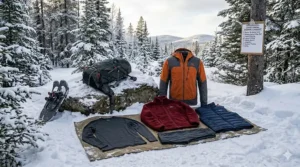
Synthetic base layers might cost less, but merino wool’s natural properties make it the gold standard for winter camping safety equipment. The Icebreaker Merino Wool base layer regulates temperature better than any synthetic because wool fibres absorb up to 30% of their weight in moisture before feeling wet—then release it as vapour rather than leaving you clammy.
This matters enormously during winter camping when you’re generating heat hiking to your campsite, then cooling rapidly once you stop moving. Cotton kills in winter (holding moisture against your skin causing rapid heat loss), while cheap synthetics develop odours after one day. Merino wool’s natural antibacterial properties mean you can wear the same base layer for five consecutive days without smelling like a hockey bag—important when you’re confined to a tent with a partner.
The 200-250 weight fabric strikes the sweet spot for Canadian winter conditions from BC’s coastal dampness to Prairie provinces’ dry cold. Thinner 150-weight wool works for mild winters or high-activity ski touring, while 260+ weight becomes necessary for static activities like ice fishing or winter photography where you’re not generating much body heat.
Canadian reviewers consistently praise how Icebreaker maintains warmth even when wet from unexpected creek crossings or heavy snow. The flatlock seams prevent chafing during long winter hikes with heavy packs. One clever detail: the slightly longer back hem stays tucked in when you’re bending to pitch tents or organize gear.
Pros:
✓ Merino naturally resists odours unlike synthetic fabrics
✓ Regulates temperature across 20-degree swings better than cotton or polyester
✓ Maintains insulation when wet—critical for winter safety
Cons:
✗ Premium price around $120-180 CAD for top and bottom set
✗ Requires gentler washing than synthetics (cold water, air dry)
First-time winter camping gear recommendation: Start with one quality merino set. The investment around $120-180 CAD pays back immediately in comfort and safety. Later, add mid-layers and insulated jackets, but your base layer is the foundation everything else builds on.
7. Petzl Actik Core Rechargeable Headlamp — Light That Works When Alkaline Batteries Die
Winter darkness lasts 14-16 hours in Canada’s southern regions and approaches 24 hours in the territories. The Petzl Actik Core solves the power problem with a rechargeable lithium-ion battery that maintains output even at -30°C—temperatures where standard alkaline batteries provide less than 20% of their rated capacity.
The 600-lumen maximum output illuminates campsite setup, cooking, and emergency situations, while the 7-lumen red light mode preserves night vision when navigating to the outhouse. The red light also signals your location to partners without destroying their dark-adapted vision—critical for group safety in winter conditions.
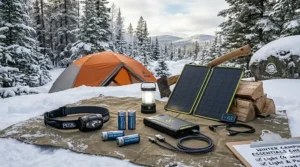
What separates this from cheaper headlamps? The hybrid power system accepts both the rechargeable Actik Core battery and standard AAA alkalines as backup. For multi-day winter trips where you can’t recharge, pack spare alkalines and swap them in when the primary battery depletes. The battery level indicator prevents the nasty surprise of total darkness mid-task.
The IPX4 weather resistance handles blowing snow and freezing rain—common conditions in Canadian winter camping. The tilting head mechanism locks firmly even when wearing thick gloves, and the elastic headband stretches to fit over winter toques without creating pressure points. At 75 grams with battery, it’s light enough that you forget you’re wearing it during extended night photography sessions or aurora viewing.
Alberta campers report 120-hour runtime on low mode during a week-long winter trip, while BC reviewers mention the red mode lasting multiple nights on a single charge. The USB-C charging port connects to the same power banks you use for phones—no need to pack separate chargers.
Pros:
✓ Lithium-ion performs at -30°C where alkalines fail completely
✓ Hybrid design accepts standard AAA batteries as emergency backup
✓ 600 lumens sufficient for winter camp tasks and emergency signals
Cons:
✗ Around $90-135 CAD costs more than basic battery headlamps
✗ Requires remembering to charge before trips (though AAA backup mitigates this)
This headlamp around $90-135 CAD represents the intersection of reliability, performance, and winter-specific features. Cheaper models fail in Canadian cold, while more expensive options add features (Bluetooth connectivity, smartphone apps) that winter camping doesn’t require.
How to Choose Your First Winter Camping Essentials Checklist
Selecting beginner winter camping gear starts with honest assessment of where you’ll actually camp. Are you planning weekend trips to Ontario provincial parks where temperatures rarely dip below -15°C, or preparing for Yukon expeditions where -35°C is standard? Your location drives every gear decision.
Start with the Big Three: Sleeping bag, sleeping pad, and shelter consume 70% of your budget and determine your comfort ceiling. Allocate roughly $850-1,200 CAD across these three categories for reliable Canadian winter performance. Trying to save money here means shivering through nights or worse—hypothermia risk that ruins your camping enthusiasm permanently.
Temperature Rating Reality Check: Canadian winters demand sleeping bags rated at least 10-15 degrees colder than your expected overnight low. If Environment Canada forecasts -12°C, your bag should handle -25°C comfortably. Why the gap? Temperature ratings assume perfect conditions—dry bag, warm meal beforehand, you’re not exhausted. Real winter camping rarely provides perfect conditions, so build in safety margins.
R-Value Mathematics: Sleeping pads need minimum R-5.0 for winter camping, but R-6.5 to 7.5 provides the margin that prevents cold-sleep misery. Remember that R-values are additive—a $35 foam pad (R-2.0) under a $150 inflatable (R-4.5) creates a combined R-6.5 system for less money than a single premium winter pad. This combo also protects your expensive inflatable from punctures on frozen ground.
The Stove Dilemma: Canister stoves like the MSR PocketRocket 2 offer simplicity and lighter weight but struggle below -15°C. Liquid fuel stoves (MSR WhisperLite, around $180-220 CAD) work reliably at -40°C but require more maintenance. First-time winter campers should start with canister stoves and learn cold-weather techniques (keeping canisters warm, using winter-blend fuel) before investing in liquid fuel systems.
Winter Clothing Layers Simplified: Think three-layer system, not single heavy jacket. Base layer (merino wool) manages moisture, mid layer (fleece or synthetic insulation) provides warmth, outer layer (waterproof shell) blocks wind and precipitation. This flexibility adapts to Canadian weather swings—strip layers during active hiking, add them back during static camp tasks.
Canadian-specific considerations matter. Check if gear uses metric measurements for stake lengths and tent dimensions. Verify that electronic items (headlamps, GPS) tolerate cold rather than assuming “weatherproof” means winter-capable. Look for customer reviews from Canadian winter users rather than relying solely on manufacturer claims tested in milder climates.
Common Beginner Mistakes to Avoid:
Buying ultralight summer gear thinking “I’ll just add clothes”—winter insulation requirements and condensation management demand purpose-built equipment. Saving money on sleeping pads—you’ll regret this decision the first night when cold radiates through from frozen ground. Assuming all synthetic insulation performs equally—quality synthetics like PrimaLoft cost more but maintain loft when wet unlike budget polyester. Ignoring Canadian voltage and plug compatibility for electronic gear purchased from US retailers—some imported items require adapters. Packing too much food thinking more weight equals more warmth—proper gear keeps you warm, while excess weight exhausts you faster.
Winter Camping Setup: From Car to Campsite
Arriving at your Canadian winter campsite in fading 4 PM daylight with numb fingers, you need efficiency. This proven setup sequence prevents the chaos that leads to lost gear in snow and dangerous mistakes.
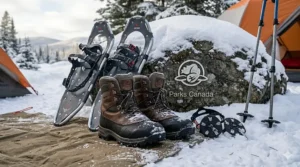
First 15 Minutes—Essential Camp Infrastructure: Stomp down a tent platform in snow using snowshoes or boots. Compact snow insulates better than loose powder, and a firm base prevents your tent floor from sagging into holes overnight. Orient your tent door away from prevailing winds (check Environment Canada forecasts beforehand). Stake tent corners with snow anchors or bury stuff sacks filled with snow—regular stakes don’t hold in frozen ground.
Next 20 Minutes—Sleeping System Preparation: Immediately unpack your sleeping bag and let it loft inside the tent. Down bags especially need 30-60 minutes to reach full insulation capacity after being compressed in stuff sacks. Inflate your sleeping pad and position it on a foam groundsheet. Set up any gear you’ll need during the night (headlamp, water bottle, pee bottle) within arm’s reach. This preparation now prevents fumbling in darkness later.
Stove Setup Strategy: Create a dedicated cooking area on compacted snow away from your tent. Boil water immediately upon arrival—you’ll use it for rehydrating dinner, filling water bottles, and making warm drinks. Keep full water bottles in insulated sleeves or bury them in snow (which maintains constant 0°C rather than fluctuating with air temperature). Set aside boiled water for morning coffee so you can drink warm liquid before emerging from your sleeping bag.
Food Storage in Canadian Winter: Bears hibernate, but wolverines, foxkers, and ravens remain active in Canadian winter. Hang food bags properly or use bear canisters as you would in summer. Parks Canada requires proper food storage year-round in many locations. The added benefit: food hung in trees won’t freeze solid like food left in tent vestibules.
Morning Departure Protocol: Pack sleeping bag last—you can stay warm inside it while organizing everything else. Melt snow for water to avoid depleting bottles. Check campsite thoroughly in daylight for dropped items (small gear vanishes in snow). Fill in toilet holes properly even in winter. Leave the site cleaner than you found it per Leave No Trace principles that matter year-round.
Canadian winter camping setup rewards preparation. Practice this sequence at home before your first winter trip. Time yourself setting up tent and stove while wearing thick gloves—fumbling with unfamiliar gear at -20°C teaches painful lessons you can avoid with practice.
Winter Camping Safety Equipment: What Actually Keeps You Alive
Parks Canada emphasizes that proper safety equipment prevents most winter camping emergencies. Beyond the comfort items covered earlier, these pieces serve genuinely life-saving functions in Canadian wilderness conditions.
Navigation Tools That Work in Cold: Smartphone GPS drains batteries at -15°C three times faster than at room temperature. Carry a dedicated GPS unit (Garmin inReach around $400-550 CAD) that tolerates cold and provides satellite messaging for emergencies. Paper maps and compass require no batteries—essential backup when electronics fail. Know how to navigate using these tools before you need them in a whiteout.
Communication Devices for Canadian Wilderness: Cell coverage vanishes 5 kilometres from most Canadian highways. Satellite communicators like Garmin inReach or SPOT (around $150-450 CAD plus subscription) allow two-way messaging even from Nunavut. They’re worth the investment if you camp in remote areas where self-rescue is difficult. Register your trip plan with Parks Canada or provincial authorities, and carry emergency contact cards listing nearest hospitals and Park Warden numbers.
First Aid Adapted for Cold: Standard first aid kits fail in winter without cold-specific items. Add instant hand warmers, thermal blanket, water purification tablets that work in cold water, and blister treatment. Most importantly, carry knowledge—take a Wilderness First Aid course focusing on hypothermia recognition, frostbite treatment, and cold-weather injuries. Canadian Red Cross offers winter-specific wilderness medicine courses in most provinces.
Fire Starting Redundancy: Carry three independent fire-starting methods. Matches (waterproof/windproof), lighter (kept warm in inner pocket), and ferrocerium rod (works wet and cold). Practice using each method with numb fingers before you need them in emergencies. Know local fire regulations—many Canadian parks prohibit campfires in winter to preserve deadwood for wildlife.
Avalanche Safety in Mountain Regions: If you winter camp anywhere in BC, Alberta, or Yukon mountains, avalanche gear is non-negotiable. Transceiver (around $300-500 CAD), probe (around $40-70 CAD), and shovel (around $50-90 CAD) form the basic avalanche rescue kit. More importantly, take an Avalanche Canada AST 1 course before winter camping in avalanche terrain. Check daily avalanche forecasts at www.avalanche.ca before every trip.
Hypothermia Recognition Protocol: Know the signs—uncontrollable shivering, fumbling hands, confusion, slurred speech. Early-stage hypothermia is reversible if you act quickly: add dry insulation layers, consume warm sweet liquids, increase activity level moderately, seek shelter from wind. Late-stage hypothermia (person stops shivering, becomes lethargic) requires immediate emergency evacuation. This is why satellite communication matters in remote areas.
Canadian wilderness offers limited margin for error in winter. The combination of extreme cold, short daylight, and distance from help means proper winter camping safety equipment decides whether emergencies become minor inconveniences or life-threatening situations. Budget accordingly—your safety deserves investment equal to your comfort.
Essential vs Optional Gear: What First-Time Winter Campers Actually Need
After talking with dozens of first-time winter campers, one pattern emerges: they pack too much optional gear and skimp on essentials. This guide clarifies the difference.
Non-Negotiable Essentials—Don’t Camp Without These:
Winter-rated sleeping bag (-20°C minimum for Canadian conditions), high R-value sleeping pad (minimum R-5.0), four-season or convertible three-season tent, insulated sleeping pad (foam backup), winter clothing layers (merino base, insulating mid-layer, waterproof shell), insulated winter boots rated to -40°C, winter camping stove with extra fuel, headlamp with extra batteries, water bottles with insulation, comprehensive first aid kit, navigation tools (map, compass, GPS), emergency communication device, repair kit for gear, toque and insulated mitts (carry extras), sunglasses and sunscreen (snow blindness happens fast).
These items total around $1,400-2,200 CAD for entry-level quality. Expensive? Yes. But attempting Canadian winter camping without them creates genuine safety risks.
Highly Recommended—Will Dramatically Improve Experience:
Sleeping bag liner (adds 5-10°C warmth for $40-80 CAD), camp pillow (actual sleep matters), insulated mug for warm drinks, portable battery pack (keeps electronics alive in cold), small LED lantern (better than headlamp for tent tasks), trekking poles with snow baskets (essential for snowshoeing to remote sites), gaiters (keep snow out of boots), hand warmers (chemical heat packs provide backup warmth), insulated seat pad (prevents heat loss through frozen ground), stuff sacks for organization (chaos wastes time in cold).
Adding these items costs roughly $300-500 CAD but transforms winter camping from survival exercise into enjoyable adventure.
Optional Luxury Items—Nice to Have, Not Critical:
Portable solar panel charger (unreliable in short winter days), camp chair (weight rarely worth it in winter), portable espresso maker (regular coffee works fine), bluetooth speaker (disturbs wildlife and other campers), fancy camp cooking set (basic pot and bowl suffice), ultralight titanium cookware (stainless steel works fine for beginners), GPS watch with mapping (phone GPS adequate for most trips), DSLR camera (smartphones capture most memories).
Winter camping rewards ruthless prioritization. Every gram you carry requires more calories to transport and generates more fatigue. Focus budget and pack space on items that directly contribute to warmth, safety, and basic comfort.
The Budget Hierarchy: If you’re breaking into winter camping with limited funds, allocate money this way: 1) Sleeping bag ($300-500 CAD minimum for genuine winter capability), 2) Sleeping pad ($120-200 CAD for R-6+ insulation), 3) Winter boots ($150-250 CAD—frostbite prevention), 4) Shelter ($200-400 CAD—rent or buy used initially), 5) Clothing layers ($200-350 CAD—merino base layers non-negotiable), 6) Everything else as budget allows.
Many Canadian outdoor retailers (MEC, Atmosphere, Sail) offer rental programs for expensive items like four-season tents and winter sleeping bags. Rent twice before buying to confirm winter camping matches your interests. Some provincial parks operate equipment libraries lending basic gear for nominal fees—check Parks Canada and provincial park websites for programs.
Complete Winter Camping Packing List for Canadian Conditions
This comprehensive list covers everything Canadian winter campers need organized by category. Adjust based on trip length and destination, but avoid eliminating items from the essential categories.
Sleeping System: Winter sleeping bag (-20°C minimum rating), sleeping pad (R-6+ rating), foam backup pad (R-2.0 for stacking), sleeping bag liner (optional warmth boost), pillow or stuff sack filled with clothes, repair kit for sleeping pad.
Shelter: Four-season or sturdy three-season tent, extra tent stakes for snow, snow anchors or stuff sacks for dead-manning, footprint or tarp under tent, guy lines for additional stability, tent repair kit (duct tape, pole sleeve), emergency bivy or space blanket.
Cooking System: Winter stove (canister or liquid fuel), extra fuel canisters (consumption doubles in cold), windscreen for stove, insulated pot with lid, insulated mug, utensils (spoon, knife), lighter and waterproof matches, fire starter (for emergencies where permitted), pot scrubber and biodegradable soap.
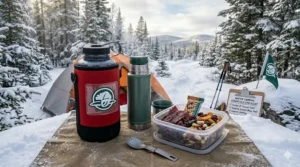
Water: Two insulated water bottles minimum, water treatment (filter or purification tablets), thermos for hot drinks, wide-mouth bottles (easier with gloves), bottle insulators or cozies.
Clothing Layers: Base layer top and bottom (merino wool), mid-layer insulation (fleece or synthetic jacket), outer shell jacket (waterproof/breathable), insulated winter pants, down or synthetic puffy jacket, extra base layer top, extra socks (minimum three pairs), extra underwear, toque and balaclava, insulated mitts and glove liners, neck gaiter or buff, gaiters (keep snow out of boots).
Footwear: Insulated winter boots (-40°C rating), camp booties or insulated slippers, extra insulation insoles, waterproofing treatment.
Navigation & Communication: Paper maps of area, compass, GPS device, satellite communicator (inReach/SPOT), fully charged phone in waterproof case, portable battery pack, headlamp with extra batteries, emergency whistle.
Safety & First Aid: Winter-specific first aid kit, emergency shelter (bivy/space blanket), fire-starting kit (multiple methods), knife or multi-tool, duct tape and repair supplies, sun protection (glasses, sunscreen, lip balm), hand/foot warmers, emergency food (high-calorie bars), trekking poles with snow baskets.
Personal Items: Toiletries (biodegradable soap, toothbrush, toilet paper in zip-lock), pee bottle (for nighttime use), trowel or snow saw (for toilet), medication (keep in inner pocket to prevent freezing), book or cards (for tent-bound hours), camera with extra batteries.
Documentation: Trip plan (leave copy with friend), emergency contact information, Parks Canada permit if required, vehicle registration, health insurance card, cash (some areas lack ATMs).
Total pack weight for winter camping typically ranges 16-25 kg depending on trip length and whether you’re sharing gear with partners. Practice packing everything at home before your first trip to identify missing items and confirm your pack capacity.
Winter Camping Gear for Extreme Cold: When Standard Equipment Isn’t Enough
Canadian winter camping in the territories, northern provinces, or alpine environments requires gear beyond the standard recommendations. When temperatures consistently hit -30°C or colder, your margin for error shrinks to nothing.
Sleeping Bags for Arctic Conditions: Below -25°C, you need bags rated to -40°C or colder. The Western Mountaineering Puma GWS (-40°F/-40°C rating, around $800-950 CAD) represents the gold standard, using 850+ fill power down in thick baffles. For synthetic options that work when wet, the US Military MSS (Modular Sleep System, around $300-450 CAD) combines patrol bag and intermediate bag for genuine -40°C capability without the down price tag.
Extreme Cold Sleeping Pads: Stack two high R-value pads—something like a Therm-a-Rest NeoAir XTherm (R-7.3) over a Z Lite foam pad (R-2.6) creates a combined R-9.9 system. Sea to Summit Comfort Plus Insulated (R-5.3) or Exped DownMat HL Winter (R-7.1) offer alternative configurations. The point: R-8 minimum for consistent -30°C camping, R-10+ for -40°C.
Mountaineering Tents: The Coleman Skylodge won’t survive Yukon wind or northern Manitoba blizzards. Upgrade to true four-season expedition tents like The North Face Mountain 25 (around $800-1,100 CAD), Hilleberg Jannu (around $1,400-1,800 CAD), or Mountain Hardwear EV 2 (around $650-850 CAD). These tents use geodesic dome designs that shed wind and accumulated snow while maintaining structural integrity in extreme conditions.
Liquid Fuel Stoves: Canister stoves fail reliably below -20°C despite manufacturer claims. The MSR WhisperLite Universal (around $200-260 CAD) burns white gas, kerosene, or unleaded gasoline—critical fuel flexibility when camping in remote Canadian locations where canister availability is questionable. The MSR XGK EX (around $220-280 CAD) handles even lower temperatures and melts snow faster for water production.
VBL (Vapour Barrier Liner) Systems: Extreme cold camping creates a moisture problem—your body produces roughly 1 litre of moisture overnight through breathing and perspiration. This moisture migrates into sleeping bag insulation, reducing its effectiveness night after night. VBL sleeping bag liners (around $150-250 CAD) trap moisture against your skin (sounds unpleasant but works) preventing it from degrading insulation. After 5-7 nights in -35°C, VBL systems keep you warmer than non-VBL setups.
Expedition Parkas and Pants: Standard winter jackets don’t cut it below -30°C. Canada Goose Expedition Parka (around $1,400-1,800 CAD), Arc’teryx Dually Belay Parka (around $900-1,200 CAD), or Feathered Friends Volant (around $850-1,100 CAD) provide the insulation thickness needed for static activities in extreme cold. Pair with insulated expedition pants from brands like Rab or Mountain Equipment.
Extreme cold winter camping costs significantly more—budget $3,500-6,000 CAD for a complete kit versus $1,500-2,500 CAD for standard Canadian winter camping. However, if you’re planning Baffin Island expeditions, winter dogsled trips in the Yukon, or February camping in northern Manitoba, this investment represents essential safety equipment, not optional upgrades.
❓ FAQ: Winter Camping Essentials Checklist for Canadians
❓ Can you winter camp in Canadian National Parks?
❓ What sleeping bag temperature rating do I need for Ontario winter camping?
❓ How do you prevent water from freezing while winter camping in Canada?
❓ Do I need avalanche safety gear for winter camping in Alberta?
❓ What's the best budget winter camping setup for beginners in Canada?
Conclusion: Your Winter Camping Journey Starts with the Right Checklist
Canadian winter camping transforms frozen landscapes into playgrounds when you carry the right winter camping essentials checklist. From the NEMO Sonic sleeping bag keeping you warm at -25°C to the Therm-a-Rest NeoAir XTherm protecting you from frozen ground, each essential item serves a specific survival and comfort function that cheaper alternatives simply can’t match.
The seven must-have items detailed in this guide—winter sleeping bag, insulated sleeping pad, capable shelter, reliable stove, insulated water bottles, merino base layers, and cold-weather headlamp—form the foundation every Canadian winter camper builds upon. Whether you’re planning your first February weekend in Algonquin or preparing for a Yukon winter expedition, prioritizing these essentials over optional gear keeps you warm, safe, and eager for your next winter adventure.
Remember that winter camping rewards preparation exponentially more than summer camping. Practice setting up your tent wearing thick mitts. Test your stove at -15°C. Sleep one night in your sleeping bag in your backyard during January. These dress rehearsals identify equipment gaps and skill deficits when mistakes cost nothing worse than returning indoors.
Start small—a single night at a provincial park drive-in site. Build experience gradually rather than attempting week-long remote expeditions immediately. Winter camping skills compound over seasons, and your confidence grows with each successful trip.
The investment in proper winter camping gear for extreme cold pays dividends beyond just gear performance. Quality equipment designed for Canadian conditions inspires confidence to explore places summer campers never see: the silence of snow-laden forests, northern lights dancing across frozen lakes, the crystalline beauty of hoar frost transforming ordinary trees into ice sculptures. These experiences belong to campers carrying beginner winter camping gear lists that prioritize safety and proven performance over cutting corners.
Recommended for You
- 7 Best Avalanche Probe and Shovel Kits Canada 2026
- 7 Best Avalanche Beacons Canada 2026
- 7 Best Ice Auger Canada Options: 2026 Expert Picks
Disclaimer: This article contains affiliate links. As an Amazon Associate, I earn from qualifying purchases. If you purchase products through these links, we may earn a small commission at no additional cost to you.
✨ Found this helpful? Share it with your friends! 💬🤗
