In This Article
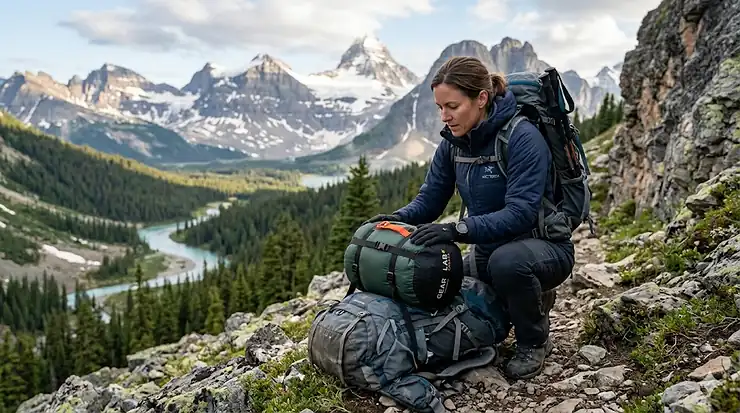
Picture this: you’ve just finished a long portage through Algonquin Provincial Park, the skies have opened up, and you’re wondering whether your sleeping bag is still dry inside your pack. If you’ve been there, you already understand why a compression dry bag for sleeping bag isn’t just a nice-to-have — in Canada, it’s essential kit.
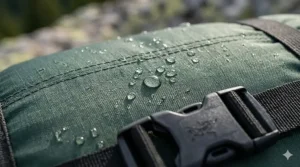
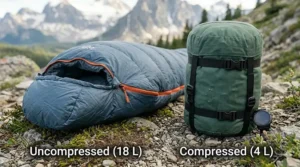
A compression dry bag for sleeping bag is exactly what it sounds like: a waterproof storage bag with adjustable compression straps that physically squeezes air out of your sleeping bag, reducing its packed volume by up to 60% while simultaneously keeping it bone dry. According to Wikipedia’s overview of dry bags, a true dry bag uses a roll-top or sealed closure to create a watertight barrier, making it fundamentally different from a standard stuff sack that merely bunches gear together.
In a country where you can paddle a pristine lake in Ontario on a sunny morning and get lashed by a cold front by afternoon, or where spring canoe trips on British Columbia rivers routinely involve unexpected soakings, protecting your sleep system is non-negotiable. A wet down sleeping bag loses virtually all of its insulating ability — and in Canadian backcountry conditions, that’s not just uncomfortable, it’s a safety issue.
The good news? The market for waterproof compression bags has matured considerably, with options at every price point available right on Amazon.ca (CAD). Whether you’re a minimalist backpacker on the Ridgeline Trail, a canoe tripper loading up a portage pack in Quetico, or a family prepping for a car-camping weekend at a national park — this guide covers every use case. I’ve researched real products available on Amazon.ca, compared specs and real-world performance, and organized it all into one definitive guide for 2026.
Quick Comparison Table: Top Compression Dry Bags for Sleeping Bags in Canada
| Product | Type | Best Sizes | Waterproof | Best For | CAD Price Range |
|---|---|---|---|---|---|
| Sea to Summit eVent Evac Compression Dry Bag | Compression + Dry Bag | 5L–35L | ✅ Full | Ultralight backpacking, canoe camping | $$$ |
| SealLine Blocker Compression Dry Sack | Compression + Dry Bag | 5L–30L | ✅ Full | Paddling, canoe pack compression | $$-$$$ |
| Frelaxy Compression Sack | Compression Sack | 11L–52L | ⚠️ Water-resistant | Budget hiking, car camping | $ |
| REDCAMP Nylon Compression Stuff Sack | Compression Sack | 10L–40L | ⚠️ Resistant | Budget hiking, family camping | $ |
| Azarxis Compression Stuff Sack | Compression Sack | 14L–23L | ⚠️ Resistant | Budget travellers, casual campers | $ |
| ALPS Mountaineering Compression Stuff Sack | Compression Sack | S/M/L | ⚠️ Resistant | Recreational campers | $$ |
| TRIWONDER Sleeping Bag Compression Sack | Compression Sack | 15L–25L | ⚠️ Resistant | Entry-level backpackers | $ |
Table Analysis: The most important takeaway from this comparison is the divide between true waterproof compression dry bags (Sea to Summit, SealLine) and water-resistant compression sacks (Frelaxy, REDCAMP, and others). In most Canadian backcountry conditions — particularly canoe camping or wet coastal hiking — that distinction can mean the difference between a dry, warm sleep system and a soggy, lofted-out mess. Budget sacks work fine for car camping trips where your pack never touches the water; for anything more serious, invest in a proper compression dry sack with waterproof construction.
💬 Just one click — help others make better buying decisions too! 😊
Top 7 Compression Dry Bags for Sleeping Bags in Canada: Expert Analysis
1. Sea to Summit eVent Evac Compression Dry Bag
The Sea to Summit eVent Evac Compression Dry Bag is the benchmark product in this category — the one every other bag gets compared to, for good reason.
What makes it genuinely different is the eVent fabric base. Unlike standard compression bags that rely purely on compression straps to squeeze out volume, the eVent membrane in the base allows air to push out through the fabric as you tighten the straps — but prevents water from entering. The result is a bag that compresses a 3-season down sleeping bag to roughly one-third of its original volume with minimal effort, and maintains full waterproofing at 2,000mm hydrostatic head throughout. The 70-denier nylon body is recycled and Bluesign-approved, with a PFC-free DWR finish and double-stitched, tape-sealed seams. Available in sizes from 5L up to 35L.
For Canadian canoe trippers and backcountry campers, this is the product I’d reach for first. The reason? When your pack tips out of a canoe during a portage on a Quebec lake — and eventually, it will — this bag provides the kind of confidence that cheaper alternatives simply don’t. Reviewers who have used it over multiple river trips consistently highlight how it simplifies packing; one user noted after more than five years of trips that their sleeping bag still performs perfectly despite being compressed and expanded repeatedly. The bag is Prime-eligible on Amazon.ca and ships across most Canadian provinces.
✅ Air-permeable eVent base for active compression
✅ Fully waterproof — not just water-resistant
✅ Lifetime warranty from Sea to Summit
❌ Premium price point — sits at the higher end in CAD
❌ Heavier than ultralight non-waterproof alternatives
At the $50–$80 CAD range depending on size, the value is clear: this is gear you buy once and use for a decade.
2. Sea to Summit Ultra-Sil Compression Dry Sack
The Sea to Summit Ultra-Sil Compression Dry Sack offers the same compression-focused philosophy as the eVent Evac, but in an ultralight 30-denier Cordura nylon shell that weighs as little as 74 grams (2.6 oz) in the 10L size — barely more than a smartphone.
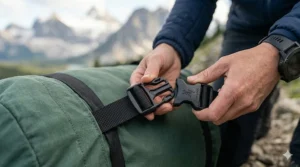
The key difference from the eVent model is the base: the Ultra-Sil uses a 40D air-permeable, waterproof nylon base that still vents air when compressed, maintaining full 2,000mm waterhead protection. The roll-top hypalon closure with four compression straps provides even, uniform squeezing from all sides. A patent-pending field-replaceable buckle is a small but brilliant detail — lose a buckle mid-trip in the Yukon and you can swap it with a Phillips screwdriver rather than retiring the bag. Comes in sizes from 3.3L to 20L, making it ideal for high-performance down bags that compress tightly.
This is the bag for Canadian ultralight enthusiasts and weight-conscious thru-hikers on routes like the Great Divide Trail. The 10L version fits a quality 3-season down sleeping bag with room to spare; the 14L handles a mid-range 3-season bag comfortably. Customers consistently praise its durability given how thin the fabric feels, with one noting they kept a sleeping bag compressed during a cold-weather five-day trip and emerged with everything bone dry. Available on Amazon.ca and typically Prime-eligible.
✅ Ultralight — 74–105g depending on size
✅ Full waterproof protection, tape-sealed seams
✅ Field-replaceable buckle system
❌ More delicate than heavier-duty options — avoid dragging across rocks
❌ Smaller size range than some alternatives
Priced in the $40–$70 CAD range, this is justifiably the top choice for weight-conscious Canadians.
3. SealLine Blocker Compression Dry Sack
The SealLine Blocker Compression Dry Sack is the workhorse of the group — built for serious abuse, and confirmed available directly on Amazon.ca in multiple sizes.
It’s constructed from 70-denier polyurethane-coated nylon (heavier than the Sea to Summit options, but meaningfully tougher) with fully welded seams that outperform standard sewn-and-taped construction for puncture and abrasion resistance. The standout feature is a waterproof Purge Air valve — a small one-way port that actively vents trapped air after the roll-top is sealed, allowing you to continue compressing the bag without breaking the waterproof seal. This is a genuinely clever solution for cramming a bulky synthetic sleeping bag into a canoe portage pack. The flat-sided Pack Tight rectangular shape is also notable: it packs 20% more efficiently than round bags when loaded alongside other rectangular gear in a barrel or portage pack. Available in 5L, 10L, 20L, and 30L.
What most Canadian canoe campers overlook is how much the shape of a dry bag matters. When you’re organizing gear in a 65L Granite Gear canoe pack for a week-long trip in the Boundary Waters or Killarney Provincial Park, round bags leave wasted dead space at corners. The SealLine Blocker’s rectangular profile solves this elegantly. Canadian paddling reviewers have specifically praised it for multi-day river trips, where it holds up to both submersion and the daily repetition of packing and unpacking at portages.
✅ Fully welded seams for maximum durability
✅ Purge Air valve for sealed-bag compression
✅ Rectangular shape packs more efficiently in canoe portage packs
❌ Heavier than ultralight alternatives
❌ Bulkier when empty compared to rolled-fabric competitors
In the $35–$65 CAD range, it delivers exceptional value for serious paddlers.
4. Frelaxy Compression Sack
The Frelaxy Compression Sack is the best-selling budget compression sack on Amazon.ca, and for good reason — it delivers 40% more storage capacity than a standard stuff sack at a fraction of the price of premium dry bags.
Constructed from 210T tear-resistant polyester (not waterproof, but meaningfully water-resistant with a DWR coating), it weighs between 80–160 grams depending on size and uses four adjustable straps: two heavy compression straps running the length of the bag, plus two quick-release buckle straps for even cinching. Sizes run from 11L through to 52L, making it one of the few options that can realistically handle an oversized winter sleeping bag. A pull handle on the base makes carrying convenient when the bag is fully packed and compressed.
Here’s the honest take on the Frelaxy: it is not waterproof. In Canadian backcountry conditions — river crossings, rain-soaked portages, canoe trips on open lakes — a Frelaxy compression sack inside an outer waterproof pack is fine, but it offers no independent waterproofing. Use it in a car camping context, inside a large barrel dry bag, or for frontcountry trips where your pack stays out of the water, and it’s genuinely excellent value. Budget Canadian campers and families heading to provincial park campgrounds will find this more than adequate. Amazon.ca reviewers frequently note fitting an MEC Draco Jr. kids’ down bag with ease, and it handles adult Kelty bags without issue.
✅ Exceptional value — best budget option on Amazon.ca
✅ Available in 5 sizes up to 52L (fits large winter sleeping bags)
✅ 40% better compression than standard stuff sacks
❌ Not waterproof — water-resistant only
❌ Long-term durability lower than premium options
Budget friendly in the $15–$30 CAD range — hard to beat for car camping.
5. REDCAMP Nylon Compression Stuff Sack
The REDCAMP Nylon Compression Stuff Sack is another strong budget performer on Amazon.ca, with a slightly more durable nylon construction than the Frelaxy and a 365-day manufacturer warranty that gives Canadian buyers extra peace of mind.
Made from 210T polyester with ripstop nylon reinforcement, it offers four adjustable compression straps and a rectangular top/bottom profile that aids even packing in a backpack. The 17L medium size (22 × 16 × 46 cm when compressed) is the sweet spot for most 3-season sleeping bags, and the XL handles larger winter-weight bags. A convenient bottom handle makes it easy to grab from a car boot or canoe hatch. One Canadian reviewer specifically tested fitting a Kelty Cosmic 20 sleeping bag — a popular budget Canadian camping bag — with complete success. The top lid zips to hold small accessories separately, which is a handy touch the Sea to Summit bags don’t include.
For a Canadian family of four loading up a minivan for a summer trip to Kejimkujik or Prince Albert National Park, four REDCAMP sacks (one per sleeping bag) from Amazon.ca makes excellent logistical sense. They’re compact when empty, protect against incidental splashes and light rain, and organize the back of a vehicle brilliantly. Just be clear on what they are: a water-resistant compression sack, not a waterproof dry bag. For true waterproofing, they’d need to be inside a barrel or dry bag.
✅ Ripstop nylon construction — more durable than standard polyester
✅ 365-day manufacturer warranty — useful for Canadian buyers
✅ Zippered top lid pocket for accessories
❌ Not independently waterproof
❌ Bottom handle stitching has torn for some users under heavy load
Available in the $15–$25 CAD range with Prime shipping on Amazon.ca.
6. Azarxis Compression Stuff Sack
The Azarxis Compression Stuff Sack occupies a slightly different space: it uses 600D Oxford cloth — noticeably heavier and more abrasion-resistant than the 210T polyester used by most budget competitors — making it better suited to the kind of repeated rough packing that family camping trips involve.
Available in 14L and 23L sizes on Amazon.ca (sold by Azarxis CA directly, which means faster Canadian shipping), it uses a four-strap compression system with high-density nylon webbing belts that hold under tension without creeping loose. The thicker fabric also provides better incidental rain protection than thinner competitors, although it still isn’t a true dry bag with taped seams. The trade-off for that durability is weight — at over 200g, it’s noticeably heavier than the Frelaxy or REDCAMP in the same size range.
Where the Azarxis really shines is durability for casual family campers who don’t want to baby their gear. Families driving up to Ontario’s cottage country or camping at Fundy National Park in New Brunswick will subject a compression sack to more abuse than most backpackers — repeatedly thrown in and out of car boots, stuffed behind boat seats, squeezed into overpacked truck beds. The 600D cloth handles that kind of treatment confidently. Canadian buyers note the CA-based seller means faster delivery to most provinces.
✅ 600D Oxford cloth — significantly more abrasion-resistant than thin polyester
✅ Sold by Canadian seller on Amazon.ca — faster domestic shipping
✅ Great for family camping and casual use
❌ Heavier than ultralight alternatives
❌ Limited size range (14L and 23L only)
Priced in the $20–$35 CAD range — excellent value for families.
7. TRIWONDER Sleeping Bag Compression Sack
The TRIWONDER Sleeping Bag Compression Sack rounds out this list as the most approachable entry-level option — simple, functional, and available in 15L and 25L sizes that cover most recreational sleeping bag needs on Amazon.ca.
TRIWONDER uses a straightforward four-strap compression system over a drawstring top closure, making it genuinely easy to use for beginners who’ve never packed a compression sack before. The 25L size (Large, available in green) handles sleeping bags up to about 3.5 lbs without difficulty, covering the vast majority of synthetic bags used for Canadian summer camping. The nylon fabric is lightweight (around 120g) and offers basic splash resistance, though again — not a waterproof dry bag. What reviewers consistently note is how easy and frustration-free the top closure is compared to roll-top designs, which matters when you’re packing up in the rain at a backcountry site.
For Canadians who are getting into camping for the first time — perhaps taking advantage of Parks Canada’s camping programs for beginners — this is a low-risk, affordable way to experience the benefits of compression packing without committing to a premium product. It won’t keep your sleeping bag dry if your canoe tips, but for frontcountry camping where you’re hiking from a car to a designated site, it’s more than adequate.
✅ Easiest to use — great for beginners
✅ 25L size handles most recreational sleeping bags
✅ Affordable entry point
❌ Drawstring top less secure than roll-top closures
❌ Not waterproof
Budget priced in the $12–$20 CAD range — the friendliest introduction to compression packing.
✨ Don’t Miss These Exclusive Deals!
🔍 Take your sleep system to the next level with these carefully selected products. Click on any highlighted item to check current pricing and availability on Amazon.ca. These bags will help you sleep dry and comfortable no matter where your Canadian adventure takes you!
How to Pack and Use Your Compression Dry Bag for a Sleeping Bag
Using a compression dry bag correctly makes a real difference in both compression performance and the long-term health of your sleeping bag. Here’s how to do it properly in Canadian conditions.
Step 1: Start with a dry sleeping bag. Moisture trapped inside before you pack is just as damaging as moisture that gets in from outside. Before a multi-day trip, air out your bag at home overnight, and at camp, air it for 20–30 minutes before packing.
Step 2: Stuff — don’t roll. Rolling creates uniform pressure that stresses seams over time. Instead, push the footbox of the sleeping bag into the compression sack first, then stuff loosely in handfuls. For down bags especially, this randomizes stress points and preserves loft long-term.
Step 3: Don’t compress down bags beyond what you need. Compression damages down baffles over time if sustained for extended periods. The Canadian camping practice of compressing bags in the morning and unpacking them at camp (rather than leaving them compressed for weeks in storage) is the right approach. Sea to Summit’s own guidance, and the experience of reviewers who’ve used the eVent Evac for 100+ trips, confirms: day-of compression and same-day unpacking causes no perceptible loft loss.
Step 4: On a canoe trip, secure the compression valve before tightening straps. If you have a SealLine Blocker with a Purge Air valve, make sure it’s fully closed before the roll-top seal goes down — otherwise you’ll open the waterproof barrier while trying to compress.
Step 5: Store uncompressed at home. This is the mistake most Canadians make: leaving the sleeping bag compressed in the sack between trips. Storage in a large mesh bag or cotton sack allows loft to recover and extends the life of both down and synthetic insulation. Parks Canada’s own camping gear guidance notes that proper storage significantly extends the usable life of sleeping bags — and that applies whether you’re buying a $80 CAD bag or a $600 one.
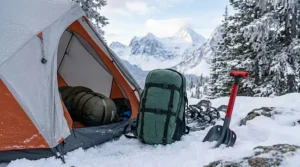
Canadian winter note: In below-zero temperatures, compression sack buckles and roll-top closures become stiff and brittle. Choose bags with larger, glove-friendly buckles (the SealLine Blocker scores well here) if you’re doing winter camping in Alberta or northern Ontario.
Canadian Camper Profiles: Which Compression Dry Bag Fits Your Adventure? 🇨🇦
Different Canadian outdoor contexts call for entirely different compression bag strategies. Here are three realistic profiles to help you self-identify.
The Ontario Canoe Tripper (Algonquin, Killarney, Quetico): You’re spending 5–10 days paddling, portaging, and sleeping in a tent. Your portage pack is a 65L Granite Gear or MEC barrel, and gear gets wet constantly — not just from rain, but from paddle drip, wet gunwales, and the occasional swim. For you, true waterproofing is non-negotiable. The Sea to Summit eVent Evac or SealLine Blocker Compression Dry Sack are the right choices. The SealLine Blocker’s rectangular shape and Purge Air valve make it particularly brilliant for canoe pack compression alongside other barrel gear. Don’t try to save $30–$40 CAD here with a water-resistant sack — it will cost you a wet sleeping bag at precisely the wrong moment.
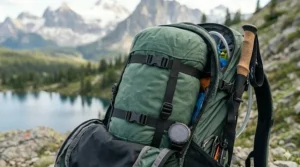
The Weekend Backpacker (BC Coast, Rockies, Laurentians): You’re watching every gram, covering 20 km (12.4 miles) per day, and carrying a 35-45L pack. Your sleeping bag is a quality 3-season down bag that compresses beautifully. The Sea to Summit Ultra-Sil Compression Dry Sack at 74g is your ideal solution — it compresses the bag down to a third of its volume, keeps it waterproof in unexpected downpours, and adds almost nothing to your carry weight. Size down from what you think you need: a high-quality down bag fits easily in a 10L sack.
The Car Camping Family (National Park frontcountry, provincial park sites): You’re loading a minivan, hiking 200 metres to a campsite, and sleeping bags never go near open water. Budget compression sacks — Frelaxy, REDCAMP, or Azarxis — are perfectly adequate here. Four bags at $15–$25 CAD each solves the “we can never fit everything in the car” problem elegantly and leaves money for the food budget. Water resistance is fine for this context; you don’t need and won’t use full waterproofing. The Azarxis 600D cloth holds up best to the family-camping abuse of kids throwing gear around.
How to Choose a Compression Dry Bag for Sleeping Bag in Canada
Choosing the right compression dry bag for sleeping bag takes more than comparing specs on a product page. Here’s a structured approach for Canadian buyers.
1. Determine your actual waterproofing requirement. This single question determines 80% of the buying decision. If your bag will ever be in a canoe, kayak, raft, or paddleboard environment — or you hike in coastal BC or wet Maritime provinces — choose a true dry bag with taped seams and a roll-top closure. If you’re car camping or hiking with a pack that stays off the water, a water-resistant compression sack saves you $30–$50 CAD.
2. Size your bag to your sleeping bag fill type. A rough guide used by professionals: summer down bag → 8–10L; 3-season down bag → 10–14L; 3-season synthetic bag → 13–20L; 4-season down bag → 18–25L; 4-season synthetic bag → 25–35L. Always size up one step if you’re camping in Canadian shoulder seasons (May and September) when you’ll want a heavier bag than mid-summer.
3. Consider the closure system for your climate. Roll-top closures are most waterproof but require dexterity — tricky with cold hands in a Canadian spring. Drawstring closures are faster and warmer-weather friendly but offer less waterproofing. If you’re paddling or camping in colder conditions, test the buckle mechanism with gloves on before committing.
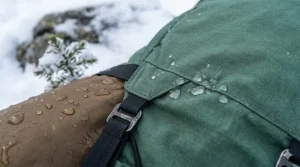
4. Check actual fabric weight, not just “waterproof” claims. Many budget sacks claim to be “waterproof” when they are, in fact, water-resistant. A true waterproof bag has taped or welded seams and a hydrostatic head rating (look for 2,000mm+). A water-resistant bag just has a DWR coating on the exterior that will wet out in sustained rain.
5. Factor in Canadian Prime shipping availability. Most of the products in this guide are Prime-eligible on Amazon.ca, meaning free shipping for members. On non-Prime items, orders under $35 CAD may incur shipping fees. For remote northern shipping to areas like NWT, Nunavut, or northern Quebec, delivery timelines can extend significantly — plan orders 2–3 weeks ahead for remote destinations.
6. Don’t neglect the air venting mechanism. Budget compression sacks rely purely on open tops to expel air before sealing. Premium bags (SealLine Blocker’s Purge Air valve, Sea to Summit’s eVent base) expel air through the bag material or a one-way valve after sealing — this means you achieve tighter compression without reopening the waterproof barrier.
7. Evaluate long-term cost against frequency of use. A Sea to Summit eVent Evac at $65–$80 CAD might seem steep compared to a $20 REDCAMP, but over 10 years of twice-a-year backcountry trips, that’s $3–$4 CAD per use. A wet sleeping bag that requires replacement costs $200–$600 CAD. The math is not close.
Compression Dry Sack vs Regular Stuff Sack: What’s the Real Difference?
This is one of the most misunderstood distinctions in camping gear, and it matters more in Canadian outdoor contexts than almost anywhere else.
A regular stuff sack simply provides a container to push your sleeping bag into — it reduces the puffiness of the bag through basic compression of the loft without a structured system, and offers no significant waterproofing (most are nylon with a light water-resistant treatment at best). They’re often included with sleeping bags at purchase.
A compression dry sack does two distinct things: it applies mechanical compression through external straps to actively reduce volume (by 50–70% in quality bags), and it creates a waterproof environment through sealed construction. The combination means your sleeping bag takes up dramatically less space AND arrives at your campsite dry, regardless of conditions.
The third product type — a compression sack without dry bag properties — sits in the middle: it compresses effectively but doesn’t waterproof. The Frelaxy, REDCAMP, and Azarxis products in this guide fall into this category. They’re excellent for space-saving, adequate for splash protection, but insufficient for true immersion or sustained heavy rain when used independently.
For Canadian canoe trippers specifically, gear experts writing for publications like GearJunkie consistently emphasize that the question isn’t whether you need a dry bag — it’s which dry bag — because Canadian paddling environments make gear submersion a question of when, not if. That framing is spot on.
What to Expect: Real-World Performance in Canadian Conditions
Specs tell one story; Canadian conditions tell another. Here’s what actually happens to compression dry bags across common Canadian camping environments.
Cold temperatures and compression efficiency: Below 5°C (41°F), most nylon fabrics become noticeably stiffer and less pliable. Budget compression sacks with thin polyester become harder to compress, and the straps are trickier to cinch evenly. Sea to Summit’s 30D Ultra-Sil and SealLine’s 70D coated nylon handle cold temperatures significantly better than the generic 210T polyester used by budget options. If you’re doing a late-September trip in Ontario or an early June trip in the Rockies, you’ll notice the difference.
Humidity and moisture management in the Canadian shoulder season: Canadian springs are notoriously damp — humidity is high, morning condensation in tents is significant, and even “dry” weather days can leave gear with ambient moisture. A true waterproof compression dry bag eliminates this concern entirely; a water-resistant sack may still allow moisture migration through the fabric over multiple damp days. For extended trips in shoulder seasons, the premium products earn their price premium purely on this point.
Portaging and abrasion: During canoe portages — which in places like Ontario’s Killarney Provincial Park can be 2–3 km (1.2–1.9 miles) over rocky terrain — dry bags get dragged, dropped on granite, and scraped over roots. The Sea to Summit products use Cordura yarns in their Ultra-Sil fabric specifically for abrasion resistance despite the light denier. Budget 210T polyester bags can develop small holes under this kind of use — not immediately critical on a single trip, but worth knowing for multi-week expeditions.
Humidity and storage in Canadian winter: Canadians who store camping gear in cold garages or unheated sheds during winter months should never store sleeping bags compressed. The combination of sustained compression, cold temperatures, and fluctuating humidity is the fastest way to damage down loft. Unpacking sleeping bags into large mesh stuff sacks for off-season storage is best practice regardless of the compression bag you use.
Common Mistakes When Buying a Compression Dry Bag in Canada 🚫
Mistake 1: Confusing “water-resistant” with “waterproof.” This is the single most common error, and Canadian buyers are particularly vulnerable because the language varies by product listing. If a product description doesn’t include hydrostatic head rating (minimum 2,000mm), taped or welded seams, and a roll-top or sealed closure — it is not waterproof. A DWR coating is not waterproofing.
Mistake 2: Buying too small for the actual sleeping bag. Manufacturers publish generous compression estimates. When in doubt, size up — especially for synthetic sleeping bags, which don’t compress as efficiently as down, and for Canadian winter bags (-20°C/-4°F rated bags) which are bulkier by definition. A bag that’s too small damages seams and buckles as you force the straps closed.
Mistake 3: Ignoring Canadian shipping availability. Some products visible on Amazon.ca listings actually ship from US sellers who charge import duties or have extended delivery times. Before purchasing, confirm that the seller ships from Canadian inventory or is a Prime-eligible fulfilled item. The SealLine Blocker and Azarxis CA listings are fulfilled domestically.
Mistake 4: Leaving the sleeping bag compressed during long-term storage. Every manufacturer in this guide — Sea to Summit, SealLine, Frelaxy — recommends against long-term compressed storage of down sleeping bags. Loft recovery after months of compression is incomplete. This is especially relevant for Canadian campers who pack away summer gear from September to May.
Mistake 5: Using a compression bag as the sole waterproofing for canoe camping without a backup system. Even the best waterproof compression bags can suffer buckle failures, small punctures, or closure errors. Smart canoe campers use a double system: sleeping bag in a waterproof compression dry sack, inside a larger waterproof portage pack or barrel. Parks Canada’s canoe camping guidance for La Mauricie National Park emphasizes gear protection as fundamental to backcountry safety — and that principle scales to all Canadian canoe routes.
Save Space: Canoe Pack Compression Guide for Canadian Paddlers 🛶
Canadian canoe camping is one of the most gear-intensive outdoor pursuits precisely because everything — tent, sleeping system, food, cooking gear, emergency kit — has to fit into portage packs that you’ll carry repeatedly over land between lakes. The compression of your sleep system storage becomes a genuinely strategic packing problem, not just a convenience preference.
Here’s the compression math that matters: a typical 3-season synthetic sleeping bag occupies roughly 20–30L uncompressed. A quality compression dry bag squeezes it to 8–12L. On a 10-day trip in Quetico Provincial Park with 15–20 portages, that 12–18L of recovered space is the difference between fitting everything into two packs versus three — which is the difference between two carries and three carries at every single portage. Over 15 portages of 1.5 km each (about a mile), that’s potentially 45 km (28 miles) less hiking with a full load. Canoe pack compression isn’t optional; it’s arithmetic.
For canoe pack compression specifically, the SealLine Blocker’s rectangular Pack Tight shape is the most thoughtful design on this list. Round compression bags leave curved dead spaces in barrel packs and rectangular portage packs — wasted volume that adds up over a fully loaded system. The Blocker’s flat sides let it nest flush against other rectangular gear. Combined with a Purge Air valve that keeps expelling air even after the roll-top is sealed, it’s the most efficient canoe camping option in this guide.
The Sea to Summit eVent Evac is the better choice when weight is the priority (and on longer canoe routes, every kilogram matters in a portage pack). Both are available on Amazon.ca and should be considered core canoe camping gear, not accessories.
FAQ: Compression Dry Bags for Sleeping Bags in Canada
❓ What is the best size compression dry bag for a sleeping bag in Canada?
❓ Are compression dry bags available on Amazon.ca with free shipping?
❓ Can I use a compression stuff sack for canoe camping in Canada?
❓ Will compression damage my down sleeping bag over time?
❓ What's the difference between a compression dry sack and a regular dry bag?
Conclusion: Your Sleep System Deserves Protection It Can Count On
After reviewing all seven products available on Amazon.ca and considering the full range of Canadian outdoor environments — from Nova Scotia kayaking to Yukon canoe expeditions, from Rockies backpacking to Ontario provincial park car camping — the choice becomes clearer once you answer the core question: do you need true waterproofing, or just compression?
For serious backcountry users, canoe campers, and anyone whose gear regularly gets close to water, the Sea to Summit eVent Evac Compression Dry Bag or the SealLine Blocker Compression Dry Sack are the only appropriate answers. The premium in CAD is real, but so is the peace of mind. A wet sleeping bag in a remote Canadian campsite is a misery event at minimum and a safety issue at worst.
For frontcountry campers, car trippers, and beginners exploring what canoe camping might be like, the Frelaxy, REDCAMP, or Azarxis options deliver excellent compression function at budget prices that leave room in the gear budget for other essentials. They’re honest about what they are: space savers, not waterproofers.
Whatever you choose, prioritize a compression system that fits how you actually camp — not how you imagine you might camp. One well-chosen compression dry bag for sleeping bag, paired with the right sizing and packing technique, will serve you reliably through hundreds of Canadian nights under the stars.
✨ Don’t Miss These Exclusive Deals!
🔍 Ready to protect your sleep system? Click on any product highlighted above to check current pricing and availability on Amazon.ca. Whether you’re packing for Algonquin, the Bowron Lake Circuit, or Jasper National Park, the right compression dry bag for sleeping bag is one click away.
Recommended for You
- 7 Best 60L Dry Bags for Canoe Camping in Canada (2026)
- 7 Best Dry Bags for a Multi-Day Kayak Trip in Canada (2026)
- Best 30L Dry Bag for Canoe Camping in Canada: 7 Top Picks (2026)
Disclaimer: This article contains affiliate links. As an Amazon Associate, I earn from qualifying purchases. If you purchase products through these links, we may earn a small commission at no additional cost to you.
✨ Found this helpful? Share it with your friends! 💬🤗
