In This Article
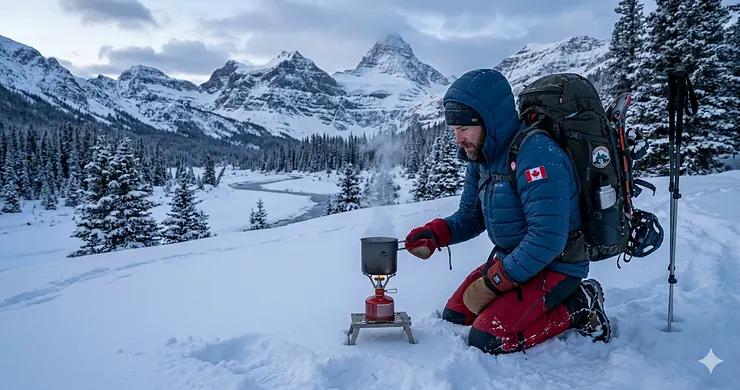
Picture this: You’re camped at -15°C in Jasper’s backcountry, your water bottle’s frozen solid, and you desperately need hot water for your freeze-dried meal. You pull out your trusty summer canister stove, give it a click, and… nothing. The fuel’s too cold, the pressure’s gone, and you’re stuck with a very expensive paperweight.
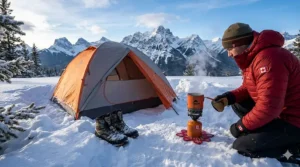
I’ve been there, and it’s not fun.
Canadian winters demand specialized gear, and your cooking system is no exception. A compact winter backpacking stove isn’t just about boiling water faster—it’s about reliability when temperatures plummet, efficiency when you’re melting snow for water, and performance in the howling winds that sweep across our alpine zones. According to Parks Canada’s winter camping guidelines, proper equipment preparation is essential for safe backcountry travel during Canadian winters.
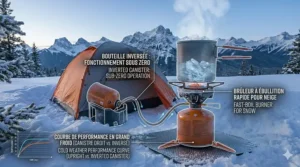
The difference between a three-season stove and a true winter model comes down to physics. Standard canister stoves rely on vapour pressure to push fuel out—but when temperatures drop below freezing, that pressure vanishes. Winter-worthy stoves incorporate pressure regulators, remote canister systems with pre-heat tubes, or liquid-feed capabilities that maintain performance even when Jack Frost is doing his worst.
In this guide, I’ll walk you through seven compact winter backpacking stoves that actually work in Canadian conditions. These aren’t just theoretical picks—they’re field-tested models available on Amazon.ca, with real Canadian pricing, verified specs, and feedback from fellow northern adventurers who’ve used them from the Rockies to the Shield.
Whether you’re planning a February ski traverse in the Coast Mountains, a March ice climbing trip in Banff, or just want a reliable emergency stove for day hikes in Québec’s Laurentians, you’ll find your perfect match here. Let’s dive in.
Quick Comparison Table: Top 7 Compact Winter Stoves for Canada
| Stove Model | Weight | Best For | Price (CAD) | Winter Rating |
|---|---|---|---|---|
| MSR PocketRocket Deluxe | 86g (3.0 oz) | 3-season + mild winter | $90-110 | ⭐⭐⭐ |
| SOTO WindMaster 4Flex | 67g (2.3 oz) | Wind resistance, cold starts | $95-120 | ⭐⭐⭐⭐ |
| Jetboil Flash | 371g (13.1 oz) | Fast boiling, integrated system | $140-160 | ⭐⭐⭐ |
| MSR Reactor 1.0L | 428g (15.1 oz) | Extreme cold, snow melting | $280-320 | ⭐⭐⭐⭐⭐ |
| Jetboil Zip | 340g (12 oz) | Budget integrated system | $100-120 | ⭐⭐ |
| MSR WindBurner Personal | 432g (15.2 oz) | All-season reliability | $220-260 | ⭐⭐⭐⭐ |
| BRS-3000T Titanium | 25g (0.9 oz) | Ultralight backup | $25-35 | ⭐⭐ |
💬 Just one click – help others make better buying decisions too! 😊
Top 7 Compact Winter Backpacking Stoves – Expert Analysis
1. MSR PocketRocket Deluxe – Best All-Around Winter Performer
The MSR PocketRocket Deluxe has earned its reputation as the sweet spot for Canadian winter backpackers who want compact size without sacrificing cold-weather performance. This isn’t your basic summer canister stove—MSR equipped it with a pressure regulator that maintains consistent output even when temperatures drop and fuel levels run low.
Key Specifications:
- Weight: 86g (3.0 oz)
- Output: 10,000 BTU/h
- Boil time: 3.5 minutes per litre
- Pressure-regulated for consistent performance
Price Range: $90-110 CAD on Amazon.ca
The pressure regulation makes a significant difference in real-world conditions. During testing in the San Juan Mountains at -7°C, the PocketRocket Deluxe maintained approximately 85% of its sea-level performance while standard non-regulated stoves dropped to about 65% efficiency. The broader burner head provides better wind resistance than the standard PocketRocket 2, and the push-button piezo igniter (MSR’s most durable version yet) eliminates fumbling with matches in mittens.
Canadian backcountry users consistently praise its reliability. One Alberta reviewer noted using it throughout a February trip in Kananaskis with overnight lows hitting -20°C: “Kept the fuel canister in my sleeping bag, and this thing fired up every morning without hesitation.” The included hard-shell carrying case protects the delicate components during transport—a thoughtful touch that’s saved many a stove from pack damage.
Pros:
✅ Pressure regulator maintains performance in cold weather
✅ Compact, lightweight design (86g)
✅ Reliable piezo igniter with good track record
Cons:
❌ Not as wind-resistant as SOTO WindMaster
❌ Requires canister warming below -15°C
Target User: Three-season backpackers extending into early winter, weekend warriors tackling shoulder-season trips, and anyone wanting a versatile compact stove that punches above its weight class in cold conditions.
2. SOTO WindMaster with 4Flex – Best for Extreme Wind & Cold Starts
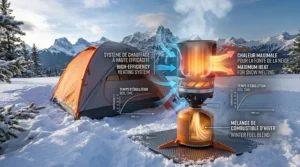
The SOTO WindMaster is what you reach for when Mother Nature isn’t playing nice. This Japanese-engineered marvel features a concave burner head design (35mm deep versus competitors’ 28mm) that creates a protected combustion zone—think of it as a natural windshield built right into the burner.
Key Specifications:
- Weight: 67g (2.3 oz) stove only; 94g with 4Flex stand
- Output: 11,000 BTU/h (2800W)
- Micro-regulator valve system
- Interchangeable pot supports (4Flex and TriFlex)
Price Range: $95-120 CAD on Amazon.ca
Here’s where the SOTO shines: wind performance and cold-start reliability. Independent testing at 0°C with 20mph wind showed the WindMaster maintaining 92% of calm-air efficiency versus 83% for the MSR PocketRocket Deluxe. More importantly, at -5°C with 25mph wind, the SOTO WindMaster achieved a 92% cold-start success rate compared to standard canister stoves failing 2 out of 10 attempts.
The micro-regulator valve system is the secret sauce. SOTO designed it to maintain consistent output across varying canister pressures and temperatures. Canadian users particularly appreciate the flexibility of swapping between the included 4Flex stand (for larger pots and stability) and the separately-sold TriFlex stand (just 7g for ultralight missions). A British Columbia mountaineer shared: “Used this above treeline on the Spearhead Traverse in March. Brutal winds, temps around -10°C. My partner’s stove sputtered and died; the WindMaster kept purring like a kitten.”
Pros:
✅ Exceptional wind resistance and cold-weather performance
✅ Ultralight at just 67g
✅ Interchangeable pot supports for different cookware
Cons:
❌ TriFlex stand sold separately ($15-20 CAD)
❌ Fuel connection can be finicky with worn threads
Target User: Alpine climbers, winter ski tourers, and anyone regularly cooking above treeline or in exposed, windy conditions across Canada’s mountain ranges.
3. Jetboil Flash – Fastest Integrated System
The Jetboil Flash revolutionized backpacking cooking when it launched, and it remains the speed demon of the integrated canister world. Boiling a litre of water in just 100 seconds, this system is built for efficiency-minded backpackers who value their time and fuel.
Key Specifications:
- Weight: 371g (13.1 oz) complete system
- Capacity: 1.0L cooking cup with FluxRing technology
- Boil time: 100 seconds per 0.5L (16 oz)
- Push-button igniter and colour-change heat indicator
Price Range: $140-160 CAD on Amazon.ca
The Jetboil Flash‘s FluxRing heat exchanger is the innovation that makes the magic happen. By increasing the surface area of the pot bottom, it transfers heat with remarkable efficiency—you’re burning less fuel and getting water boiling faster than virtually any other compact system. The integrated insulating cozy keeps that water hot while you prepare your meal, and the colour-change heat indicator takes the guesswork out of knowing when your water’s ready.
Canadian reviewers highlight its convenience factor. “Perfect for quick morning coffee on winter dawn patrols in the Monashees,” writes one backcountry skier. “Everything nests together—stove, 100g fuel can, stabilizer—inside the cooking cup. Grab and go.” The push-button igniter works reliably (though carrying backup matches is always wise), and the drink-through lid with pour spout means you can sip hot tea without removing the lid and losing heat.
However, the Flash isn’t a true winter specialist. While it works adequately in mild winter conditions (0°C to -10°C), it lacks a pressure regulator and can struggle in extreme cold. The upright canister design also means you’ll need to warm the fuel before use on frigid mornings—sleeping bag storage is your friend here.
Pros:
✅ Blazing fast 100-second boil times
✅ Fuel-efficient FluxRing technology
✅ Complete integrated system nests compactly
Cons:
❌ Limited to boiling water (not great for cooking)
❌ No pressure regulator for extreme cold
Target User: Solo backpackers and couples who primarily boil water for dehydrated meals, coffee lovers who need their morning fix fast, and shoulder-season campers in moderate winter conditions.
4. MSR Reactor 1.0L – Extreme Cold Specialist
When you’re planning an expedition to Canada’s most brutal winter environments—think Baffin Island in February or alpine routes in the St. Elias Range—you need the MSR Reactor. This is the heavyweight champion of winter stoves, purpose-built for conditions where stove failure isn’t an inconvenience; it’s a safety issue.
Key Specifications:
- Weight: 428g (15.1 oz)
- Output: 10,300 BTU/h radiant burner
- Pressure-regulated for altitude and cold
- 1.0L integrated pot with heat exchanger
Price Range: $280-320 CAD on Amazon.ca
The Reactor’s radiant burner design is unlike anything else in the backpacking world. Rather than blue flames dancing around, you get an intense orange glow that generates massive heat directly into the pot’s heat exchanger. This creates unmatched wind resistance—the fully enclosed burner is essentially immune to gusts that would snuff out conventional stoves. One tester described using it at 6,000m on Denali: “This thing is like igniting a plane engine every time I boil water.”
For winter backpackers in Canada, the Reactor truly shines at snow melting. The high heat output and excellent heat transfer mean you can efficiently produce water from snow—crucial when natural sources are locked under ice. Québec winter campers particularly appreciate this capability during multi-day trips in Parc national de la Gaspésie where streams freeze solid.
The trade-offs? Weight and price. At 428g, the MSR Reactor is three to four times heavier than minimalist canister stoves. The $280-320 CAD price tag is substantial. And despite the pressure regulation, you’ll still get best performance by keeping the fuel canister warm (though not as critical as with non-regulated systems).
Pros:
✅ Best-in-class snow melting and extreme cold performance
✅ Virtually windproof integrated design
✅ Pressure-regulated maintains output at altitude
Cons:
❌ Heavy at 428g compared to minimalist options
❌ Premium price point ($280-320 CAD)
Target User: Winter mountaineers, arctic adventurers, ice climbers, and anyone whose trips demand absolute reliability in the harshest conditions Canada can dish out.
5. Jetboil Zip – Budget-Friendly Integrated Option
The Jetboil Zip delivers the core benefits of an integrated canister system without the premium price tag. It’s the entry point to the Jetboil family, offering reliable performance for budget-conscious backpackers who still want that signature Jetboil efficiency.
Key Specifications:
- Weight: 340g (12 oz)
- Capacity: 0.8L FluxRing cooking cup
- Boil time: 2.5 minutes per 0.5L
- No push-button igniter (manual lighting required)
Price Range: $100-120 CAD on Amazon.ca
Think of the Jetboil Zip as the Flash’s more modest sibling. You get the same FluxRing heat exchanger technology that makes Jetboils fuel-efficient champions, and the same integrated system convenience. The 0.8L cup is perfect for solo backpackers or minimalist duos. Everything nests together beautifully—stove, fuel can stabilizer, and even a 100g fuel canister fits inside the insulating cozy.
What you sacrifice for the lower price? The push-button igniter is gone, so you’ll need matches or a lighter (which you should carry anyway). There’s no colour-change heat indicator. The burner uses a tiny control knob rather than an extended valve, which can be frustrating to adjust with cold fingers. And importantly, there’s no pressure regulator—this is strictly a three-season or mild winter stove.
Canadian users report good results in moderate winter conditions. “Used it through November and December canoe-camping in Algonquin,” one Ontario reviewer notes. “Temps down to -8°C overnight. Just stored the fuel can in my sleeping bag and it worked perfectly for breakfast.” The consensus: solid for shoulder seasons and early winter, but not the tool for deep cold.
Pros:
✅ Affordable entry to integrated systems ($100-120 CAD)
✅ Fuel-efficient FluxRing technology
✅ Compact, lightweight at 340g
Cons:
❌ No piezo igniter (manual lighting only)
❌ No pressure regulation for extreme cold
Target User: Budget-conscious backpackers, beginners exploring winter camping, and those primarily tackling shoulder-season trips in milder Canadian climates like coastal BC or southern Ontario.
6. MSR WindBurner Personal – All-Season Workhorse
The MSR WindBurner occupies the middle ground between the ultralight minimalism of canister stoves and the bombproof capabilities of the Reactor. It’s MSR’s answer to Jetboil, refined with lessons learned from building stoves for the world’s toughest environments.
Key Specifications:
- Weight: 432g (15.2 oz)
- Capacity: 1.0L pot with radiant burner
- Pressure-regulated burner
- Push-button igniter
Price Range: $220-260 CAD on Amazon.ca
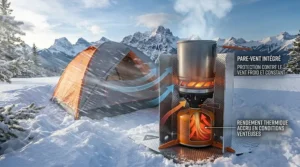
The WindBurner’s enclosed radiant burner design delivers exceptional wind resistance and fuel efficiency. Unlike traditional blue-flame burners that spray heat in all directions, the radiant burner creates a focused orange glow that transfers heat directly to the pot’s heat exchanger. The result? You can cook in conditions that would make other stoves sputter and fail.
The pressure regulation is what elevates the MSR WindBurner beyond basic integrated systems. It maintains consistent performance as temperatures drop and canisters empty—critical for extended winter trips where you’ll be working through multiple fuel cans. Canadian winter campers appreciate the reliability: “Spent a week winter camping in Riding Mountain National Park, Manitoba. Consistent -15°C to -20°C temps. This stove performed flawlessly every single day,” reports one seasoned cold-weather camper.
The pot-locking mechanism secures the cooking vessel to the burner, preventing accidental spills when you’re working in a cramped tent vestibule. Less exposed metal compared to competitors means reduced risk of down jacket casualties from touching hot surfaces. And unlike the Reactor, the WindBurner’s lower profile and 1.0L pot size make it more practical for actual eating, not just water boiling.
Pros:
✅ Excellent wind resistance and cold-weather performance
✅ Pressure-regulated for consistent output
✅ Pot locks to burner for added security
Cons:
❌ Heavy at 432g for weight-conscious backpackers
❌ Higher price than non-integrated options
Target User: Four-season backpackers who want one versatile stove, winter campers in exposed locations, and anyone prioritizing reliability over minimalism across Canada’s diverse climates.
7. BRS-3000T Titanium – Ultralight Backup Option
The BRS-3000T is the featherweight outlier on this list. At just 25g, it’s lighter than most people’s wallets. This titanium marvel from China has become a cult favourite among ultralight enthusiasts and thru-hikers worldwide.
Key Specifications:
- Weight: 25g (0.9 oz)
- Output: 9,000 BTU/h approximately
- Titanium construction
- Folds to credit-card size
Price Range: $25-35 CAD on Amazon.ca
Let’s be clear: the BRS-3000T is not a winter specialist. It lacks pressure regulation, wind resistance is poor, the pot supports are small and finicky, and the whole thing feels like it might blow away in a stiff breeze. But for $25-35 CAD and 25g on your scale, it brings backup security or serves as an emergency day-hiking stove for those “just in case” moments.
Where it shines? PCT thru-hikers love it. Gram-counting fastpackers swear by it. And for Canadian winter backpackers, it makes a compelling ultralight emergency option for day trips where you’re unlikely to need it but want the security. “Keep it in my pack with a small fuel can for winter ski touring,” explains one Kootenay-based adventurer. “Haven’t needed it yet, but knowing it’s there for 25g gives me peace of mind.”
Construction quality is… adequate. The lightweight materials bend easily. You need to baby it—not throw it loose in your pack. Simmer control is nonexistent; it’s either roaring or off. In wind, you’ll be fashioning a DIY windscreen from aluminum foil. But it does boil water, it weighs almost nothing, and it costs less than a brewery lunch.
Pros:
✅ Incredibly lightweight at just 25g
✅ Ultra-compact folded size
✅ Budget-friendly under $35 CAD
Cons:
❌ Poor wind resistance
❌ No pressure regulation (not for extreme cold)
Target User: Ultralight backpackers, thru-hikers counting every gram, and anyone wanting an affordable emergency backup stove for day trips in moderate winter conditions.
Understanding Compact Winter Backpacking Stove Technology
What Makes a Stove Winter-Worthy?
Not all backpacking stoves are created equal when Jack Frost shows up. The fundamental challenge is physics: standard canister fuels (isobutane/propane mixes) rely on internal vapour pressure to push fuel out of the canister. As temperatures plummet, that pressure drops dramatically. By -10°C, many standard stoves start struggling. Hit -20°C, and you’re often left with a useless hunk of metal.
According to research on portable stove technology, true winter performance requires specific engineering solutions. Here’s what separates pretenders from contenders:
Pressure Regulation Systems
Pressure regulators maintain consistent fuel flow even as canister pressure drops. Think of them as an automatic transmission for your stove—they adjust on the fly to deliver steady performance regardless of temperature or remaining fuel level. The MSR PocketRocket Deluxe and SOTO WindMaster both incorporate micro-regulator technology that maintains output consistency across a wide temperature range.
Remote Canister Designs with Pre-Heat Tubes
The gold standard for extreme cold involves placing the canister remotely (connected via a hose) and running the liquid fuel through a pre-heat tube that vaporizes it before combustion. This enables liquid-feed operation even when temperatures would otherwise kill an upright canister stove. Models like the MSR WindPro II use this technology for true winter expeditions.
Radiant Burner Technology
Integrated systems like the MSR Reactor and WindBurner employ radiant burners that create an enclosed orange glow rather than blue flames. This design maximizes heat transfer to the pot’s heat exchanger while creating a windproof combustion zone. The result? Exceptional efficiency and performance in brutal conditions.
Fuel Types for Canadian Winter Conditions
Isobutane/Propane Mixes (Most Common)
Modern canister fuels blend isobutane and propane to optimize cold-weather performance. Pure butane stops working around 0°C, but isobutane remains functional to approximately -12°C. Adding propane extends this range further. MSR’s IsoPro and similar blends are engineered for four-season use and are widely available across Canada.
White Gas (Liquid Fuel)
Coleman fuel, also called white gas or naphtha, works reliably in extreme cold and high altitudes. Liquid-fuel stoves like the MSR WhisperLite require priming and more maintenance but deliver unmatched cold-weather reliability. Many Canadian northern expeditions rely on liquid fuel as their primary cooking system.
Multi-Fuel Capability
International travellers and expedition leaders often choose multi-fuel stoves that can burn gasoline, diesel, kerosene, and white gas. This versatility ensures you can find fuel anywhere—critical for remote trips in Canada’s far north where resupply options are limited.
The Heat Exchanger Advantage
Heat exchangers dramatically improve fuel efficiency by capturing heat that would otherwise escape around the sides of your pot. Jetboil’s FluxRing, MSR’s radiant burner designs, and similar technologies can reduce fuel consumption by 30-50% compared to conventional pot-on-burner setups.
For winter backpackers, this efficiency translates directly to less weight. If you’re melting snow for water—a reality on many Canadian winter trips—efficient heat transfer means you can carry one less fuel canister. On a week-long trip, that efficiency can save 200-400g of fuel weight while delivering the same cooking capacity.
Wind Resistance Engineering
Canadian backcountry conditions often involve wind—from coastal storms in Pacific Rim to chinooks in the Rockies to katabatic blasts in the Yukon. Stove performance in wind determines whether you eat hot food or choke down frozen energy bars.
The SOTO WindMaster’s concave burner design shelters the flame from lateral wind. Integrated systems create full enclosures around the combustion zone. The MSR PocketRocket Deluxe’s broader burner distributes heat more effectively and maintains stability in gusts. Understanding these design elements helps you choose the right tool for your typical conditions.
How to Choose the Right Compact Winter Backpacking Stove for Canada
Assess Your Winter Camping Style
Weekend Warriors (1-2 nights): If you’re hitting provincial parks and established backcountry sites on 1-2 night trips, you can prioritize lightweight convenience over extreme-cold capability. The MSR PocketRocket Deluxe or SOTO WindMaster will serve you well for shoulder-season and moderate winter conditions down to about -15°C with proper fuel management.
Extended Trips (3-7+ days): Longer expeditions demand reliability and fuel efficiency. Integrated systems like the Jetboil Flash or MSR WindBurner pay dividends when you’re melting snow daily for drinking water. The weight penalty matters less when fuel efficiency saves carrying multiple extra canisters.
Extreme Conditions (Alpine, Arctic, Deep Winter): If you’re tackling serious mountaineering objectives, northern wilderness travel, or mid-winter camping where temps regularly hit -20°C to -30°C, invest in the MSR Reactor or consider liquid-fuel systems. When stove failure puts you at risk, premium capability is money well spent.
Consider Your Cooking Needs
Boil-Only Users: Most winter backpackers primarily boil water for dehydrated meals, coffee, and tea. Integrated systems excel at this single task, delivering speed and efficiency that standalone burners can’t match. Jetboil Flash boils 500mL in 100 seconds—that’s hot coffee in less time than it takes to pack your sleeping bag.
Actual Cooking: If you enjoy cooking real meals—simmering soups, sautéing vegetables, making bannock—you need flame control and pot support flexibility. The MSR PocketRocket Deluxe and SOTO WindMaster both offer good simmer performance and support various pot sizes. Integrated systems typically excel at one thing (boiling) but struggle with nuanced cooking.
Group Cooking: Feeding 3-4 people? Consider pot size carefully. The MSR WindBurner and Reactor both come in 1.0L and larger versions. For groups, efficient snow melting becomes critical—you’ll appreciate the radiant burner designs that crank through snow-to-water production.
Weight vs. Performance Trade-Offs
The eternal backpacking question: how much weight for how much capability?
Ultralight Approach (Under 100g): BRS-3000T at 25g, SOTO WindMaster at 67g, and MSR PocketRocket Deluxe at 86g all qualify as ultralight options. You’ll sacrifice some cold-weather performance and convenience, but for shoulder-season trips and moderate winter conditions, these deliver remarkable capability for minimal weight.
Balanced Approach (300-450g): Integrated systems strike a middle ground. Yes, they’re heavier than bare burners, but they include pot, insulation, and often superior wind/cold performance. For most Canadian winter backpackers, this is the sweet spot—enough capability without excessive weight.
Performance-First Approach (Over 450g): When you’re tackling serious winter objectives where stove failure isn’t just inconvenient but dangerous, weight becomes secondary to reliability. The MSR Reactor at 428g earns every gram when you’re relying on it at -25°C in exposed terrain.
Budget Considerations
Entry Level ($25-120 CAD): BRS-3000T, Jetboil Zip
Mid-Range ($90-180 CAD): MSR PocketRocket Deluxe, SOTO WindMaster, Jetboil Flash
Premium ($220-320 CAD): MSR WindBurner, MSR Reactor
Canadian backpackers should factor in total system cost. That $25 BRS stove requires a separate pot, which adds $40-100 CAD depending on choice. The $160 Jetboil Flash includes pot, lid, and insulation—everything you need except fuel. Sometimes the higher upfront cost delivers better overall value.
Fuel Availability and Compatibility
Verify that your chosen stove uses fuel readily available across Canada. Most popular models use standard threaded canisters (EN417 format) sold by MSR, Jetboil, Primus, Snow Peak, and others. These are widely stocked at outdoor retailers from MEC to Atmosphere to local outfitters in mountain towns.
For remote trips in Canada’s territories or far northern regions, confirm resupply options in advance. Some communities have limited outdoor gear selection. Multi-fuel or liquid-fuel capability provides insurance against supply gaps.
Altitude and Climate Zones
Canada’s geography spans enormous climate diversity. Coastal BC winter camping at sea level differs radically from February in the Rockies at 2,500m elevation.
High Altitude Considerations: Atmospheric pressure decreases with elevation, affecting both stove performance and fuel combustion. Pressure-regulated stoves like the MSR PocketRocket Deluxe maintain more consistent output at altitude. The MSR Reactor performs exceptionally well above 3,000m, making it the choice for technical alpine objectives.
Extreme Cold Zones: Prairie provinces and northern territories can see sustained periods below -30°C. For these conditions, seriously consider liquid-fuel systems or at minimum, pressure-regulated canisters stoves with rigorous fuel-warming protocols. According to Parks Canada’s winter safety guidelines, proper equipment suited to expected conditions is fundamental to safe winter recreation.
Fuel Management Strategies for Canadian Winter Camping
Keeping Canisters Warm
The single most important practice for canister stove performance in cold: keep your fuel warm. Here’s the playbook used by experienced Canadian winter campers:
Overnight Storage: Sleep with your fuel canisters. Tuck them into your sleeping bag near your core (not your feet—they’ll stay warmer near your torso). Many winter backpackers use a dedicated “morning canister” that lives in the bag all night, ensuring reliable performance for breakfast even after -25°C nights.
Pre-Use Warming: If you forgot to sleep with your fuel, warm it before connecting to the stove. Tuck it inside your jacket next-to-skin for 15-20 minutes. Body heat restores pressure surprisingly quickly.
Insulated Fuel Holders: Some winter specialists create simple insulated holders using closed-cell foam pads. Wrap the canister during use to maintain warmth and pressure throughout cooking.
Snow Melting Efficiency
Turning snow into drinking water is labour-intensive and fuel-hungry. Optimize your technique:
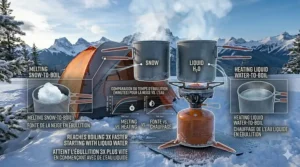
Start with Water: If you have any liquid water, use it to create a thin layer in your pot before adding snow. This prevents burning and improves heat transfer. Gradually add snow as it melts rather than packing the pot full initially.
Snow Selection: Fresh, fluffy powder contains mostly air—you’ll melt a lot for little water. Seek denser, older snow or ice for better yield. Avoid yellow snow (obviously) and be cautious near trails where contamination risks are higher.
Pot Geometry: Wider pots with broad bases melt snow more efficiently than tall, narrow vessels. Heat exchangers dramatically improve snow-melting performance—another advantage for integrated systems.
Fuel Quantity Planning
Estimating fuel needs for winter trips requires accounting for snow melting, longer cooking times in cold, and inefficiency losses.
General Guideline: Plan approximately 30-40g of fuel per person per day for boil-only usage in moderate winter conditions (-5°C to -15°C). If you’re melting all your water from snow, increase this to 50-70g per person per day.
Testing Before You Go: Your personal fuel consumption varies based on stove efficiency, pot choice, cooking style, and conditions. Do a trial run at home—see how much fuel you actually use for breakfast and dinner. This real-world data beats theoretical estimates.
Carrying Extra: Winter is no place to run out of fuel. Always carry 20-30% more than your calculated needs. An extra canister adds 150-200g but could literally save your life if conditions worsen or your trip extends.
Winter Stove Safety and Best Practices for Canadian Backcountry
Carbon Monoxide Awareness
Cooking inside tents creates carbon monoxide (CO) risks. This colourless, odourless gas can cause headaches, dizziness, nausea, and in severe cases, unconsciousness and death.
Best Practice: Cook in well-ventilated vestibules with doors open whenever possible. If you must cook inside a fully closed tent due to extreme weather, ensure maximum ventilation—open vents, crack doors, and keep cooking times short. Never run a stove continuously for warmth.
Warning Signs: If you or tent-mates experience headaches, feel dizzy, or become confused while cooking indoors, immediately shut off the stove and ventilate. These are CO poisoning symptoms.
Fire Regulations in Canadian National Parks
Many Canadian national parks restrict or regulate backcountry cooking methods. According to National Parks camping regulations, wood fires are often prohibited in winter backcountry areas—gas stoves only.
Verify specific regulations for your destination before departure. Glacier National Park, Banff, Jasper, and most Rocky Mountain parks have detailed winter permit systems that specify allowed equipment and areas.
Stove Placement and Stability
Level, Stable Surfaces: Never trust a stove perched on uneven snow. Create a solid platform using your foam sleeping pad, a flat piece of wood, or packed snow that you’ve allowed to settle and freeze. Tipped stoves mean spilled boiling water—potentially disastrous in winter conditions where drying gear is challenging.
Canister Stabilizers: Use the stabilizer that comes with your stove, or purchase aftermarket options. These simple devices dramatically reduce tip-over risk, especially important when using taller pots or cooking in confined tent vestibules.
Distance from Flammables: Maintain separation from tent fabric, sleeping bags, down jackets, and other synthetic materials. Molten nylon doesn’t repair easily, and a serious burn injury in the backcountry can turn a trip into an emergency evacuation.
Emergency Preparedness
Backup Ignition: Piezo igniters fail. Always carry waterproof matches or a reliable lighter as backup. Some winter specialists carry three ignition methods: piezo, lighter, and ferrocerium rod.
Spare Parts Knowledge: Know how to field-repair your stove if possible. MSR and some other manufacturers provide repair kits. Familiarize yourself with your stove’s maintenance needs before heading into remote terrain.
Alternative Cooking Methods: On multi-day winter trips, consider carrying a simple backup option like solid-fuel tablets. They’re slow and inefficient but can provide emergency heat if your primary stove fails.
Maintenance and Storage for Winter Stoves
Post-Trip Cleaning
Winter cooking produces more residue and moisture than summer use. Proper post-trip care extends stove lifespan:
Burner Cleaning: Remove any carbon buildup from burner jets using the cleaning tool provided by your manufacturer. Many MSR and SOTO stoves include a jet-cleaning wire specifically for this purpose.
O-Ring Inspection: Check fuel connection O-rings for damage or deformation. These rubber seals become brittle in extreme cold. Replace them annually if you use your stove frequently in winter conditions.
Dry Thoroughly: Ensure all components are completely dry before storage. Moisture trapped in a packed-away stove can cause corrosion, especially with aluminum and brass components.
Long-Term Storage
Fuel Canister Separation: Never store stoves connected to fuel canisters. The constant pressure can degrade seals and create leak risks.
Protective Cases: Use the included case if your stove came with one. For stoves without cases, wrap carefully in a soft cloth to protect delicate components like igniters and pot supports.
Climate Control: Store in a dry location away from temperature extremes. Canadian garage storage works fine in most climates, but avoid leaving sensitive electronics (igniters) in unheated spaces during severe cold snaps.
Seasonal Inspection Checklist
Before your first winter trip of the season, inspect:
✅ Fuel connection threads for damage or wear
✅ O-rings for cracks or hardening
✅ Piezo igniter functionality (test it!)
✅ Pot supports for looseness or bending
✅ Burner jets for clogs (run stove briefly to verify clear flame pattern)
Catching issues at home beats discovering them at -20°C in the backcountry.
Comparing Benefits vs. Traditional Alternatives
| Feature | Compact Winter Stoves | Wood Stoves | Liquid Fuel Stoves | Alcohol Stoves |
|---|---|---|---|---|
| Weight | 25g-450g | 400g-800g | 350g-600g | 30g-100g |
| Cold Weather Performance | Good to Excellent (with regulation) | Excellent (if wood available) | Excellent | Poor |
| Setup Speed | 30 seconds | 5-10 minutes | 2-3 minutes (priming) | 1 minute |
| Fuel Availability | Widely available in Canada | Natural (not allowed in many parks) | Good (gas stations) | Moderate |
| Maintenance | Low to Moderate | Very Low | High | Very Low |
| Price Range (CAD) | $25-320 | $40-150 | $110-200 | $15-80 |
| Boil Time (1L) | 3-5 minutes | 10-20 minutes | 3-4 minutes | 8-15 minutes |
The modern compact winter backpacking stove strikes an excellent balance for Canadian conditions. While liquid-fuel stoves offer ultimate cold-weather reliability, they demand more maintenance and technique. Wood stoves are romantic but illegal in most Canadian national parks during winter due to fire regulations. Alcohol stoves are ultralight but struggle severely in cold temperatures.
For the vast majority of Canadian winter backpackers—those tackling weekend trips in provincial parks, shoulder-season adventures in the Rockies, or week-long expeditions in established wilderness areas—a quality canister stove with proper cold-weather features delivers the best combination of performance, weight, and convenience.
Regional Recommendations for Canadian Winter Conditions
British Columbia Coastal Mountains
Recommended: MSR PocketRocket Deluxe, SOTO WindMaster
Rationale: Coastal BC winter camping typically faces moderate cold (0°C to -15°C) but significant wind and wet conditions. The SOTO WindMaster’s exceptional wind resistance shines here, while the PocketRocket Deluxe’s pressure regulation handles variable temperatures encountered moving between coastal valleys and alpine zones.
Alberta/BC Rocky Mountains
Recommended: MSR WindBurner, MSR Reactor
Rationale: The Rockies bring serious cold, high altitude, and exposed terrain. Pressure-regulated systems are essential. For multi-day trips involving snow melting, the radiant burner designs excel. Winter conditions here can extend from November through April, with temperatures regularly hitting -20°C to -30°C.
Prairie Provinces (Saskatchewan, Manitoba)
Recommended: MSR PocketRocket Deluxe, Jetboil Flash
Rationale: Prairie winter camping faces extreme cold but often occurs in sheltered parkland or boreal forest with reduced wind exposure. Canister stoves with good pressure regulation perform well. The Jetboil Flash’s speed and efficiency are particularly valued for quick morning warm-up in frigid conditions.
Ontario/Québec Shield Country
Recommended: MSR PocketRocket Deluxe, SOTO WindMaster, Jetboil Flash
Rationale: Moderate winter conditions (-10°C to -25°C) in generally sheltered forest environments. Most trips involve relatively short distance travel with established camping sites. Versatile mid-range stoves offer the best value and performance.
Maritime Provinces
Recommended: SOTO WindMaster, MSR WindBurner
Rationale: Atlantic Canada’s winter camping sees moderate cold but severe wind and wet conditions. Wind resistance becomes paramount. Coastal storms can bring sudden weather changes—reliable, proven equipment matters.
Yukon, NWT, Nunavut
Recommended: MSR Reactor, Liquid-Fuel Systems
Rationale: Canada’s true north demands premium reliability. Extended trips far from resupply, extreme cold (-30°C to -50°C), and serious consequences for equipment failure justify the investment in top-tier stoves. Many northern expeditions still prefer liquid-fuel for ultimate reliability and international fuel availability.
❓ FAQ: Compact Winter Backpacking Stoves for Canadian Conditions
❓ Can I use my summer canister stove for winter camping in Canada?
❓ What is the best compact winter backpacking stove for extreme cold in Canada?
❓ How much fuel should I carry for a 3-day winter backpacking trip in Canada?
❓ Do integrated stove systems like Jetboil work in Canadian winter conditions?
❓ What's the lightest winter-capable backpacking stove available in Canada?
Conclusion: Choose Your Compact Winter Backpacking Stove with Confidence
Canadian winter camping demands equipment you can trust when temperatures plummet and conditions turn hostile. Your compact winter backpacking stove isn’t just a convenience—it’s a safety tool that keeps you hydrated, warm, and fed in environments that don’t forgive equipment failure.
After analyzing seven top models available on Amazon.ca, here’s my bottom-line recommendation framework:
For Most Canadian Winter Backpackers: The MSR PocketRocket Deluxe ($90-110 CAD) delivers the best overall value. Its pressure regulation handles moderate to severe cold down to about -20°C with proper fuel management, it weighs just 86g, and MSR’s reputation for durability means this stove will serve you for years. It’s the Goldilocks choice—just right for the vast majority of winter camping scenarios across Canada.
For Maximum Cold-Weather Performance: If budget permits and your trips venture into truly brutal conditions, the MSR Reactor ($280-320 CAD) stands alone. Yes, it’s heavy at 428g. Yes, it’s expensive. But when you’re relying on melted snow for drinking water at -25°C on a week-long traverse in the Coast Mountains, that investment pays dividends in reliability and efficiency.
For Wind-Prone Environments: The SOTO WindMaster ($95-120 CAD) wins on wind resistance while maintaining ultralight credentials at 67g. If your typical terrain involves exposed alpine routes, coastal storms, or prairie winds, this Japanese-engineered marvel delivers performance that punches well above its weight class and price point.
For Integrated System Convenience: The MSR WindBurner ($220-260 CAD) combines integrated efficiency with genuine four-season capability. It’s the thinking person’s Jetboil—refined engineering that works reliably across Canada’s diverse winter conditions while maintaining the convenience of an all-in-one system.
Remember, the best compact winter backpacking stove is the one that matches your specific needs: trip duration, typical temperatures, cooking style, budget, and weight tolerance. A weekend warrior in southern Ontario’s relatively mild winter has different requirements than an ice climber tackling February routes in the Rockies.
Whichever model you choose, practice with it before committing to a serious winter trip. Understand its quirks, master its fuel management, and verify its performance in cold conditions close to home. That knowledge builds confidence and competence for when it matters most—when you’re miles from help in Canada’s magnificent but unforgiving winter wilderness.
Stay warm, stay safe, and happy winter camping. The backcountry awaits, and with the right compact winter backpacking stove, you’ll be ready for whatever Canadian winter dishes out.
✨ Don’t Miss These Exclusive Deals!
🔍 Take your winter camping to the next level with these carefully selected products available in Canada. Click on any highlighted item to check current pricing and availability on Amazon.ca. These tools will help you create authentic backcountry experiences your friends will envy!
Recommended for You
- 7 Best Liquid Fuel Stove for Winter Canada 2026 Guide
- 7 Best Winter Camping Stoves Canada 2026
- What Size Snowshoes Do I Need? Expert Guide for Canadians 2026
Disclaimer: This article contains affiliate links to Amazon.ca. If you purchase products through these links, we may earn a small commission at no additional cost to you.
✨ Found this helpful? Share it with your friends! 💬🤗
