
In This Article
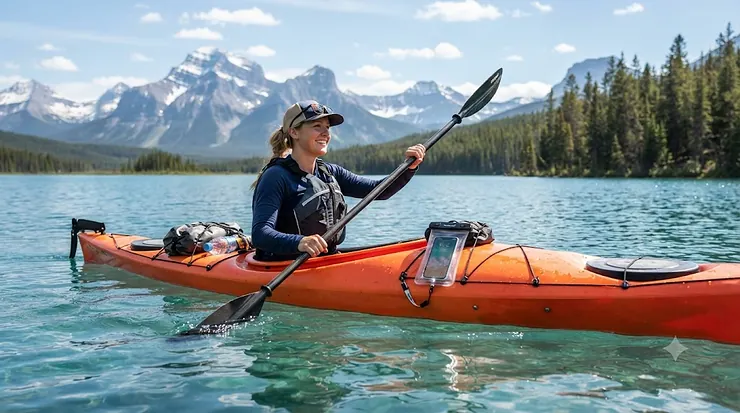
Somewhere at the bottom of a lake in Muskoka, there’s an iPhone that will never see daylight again. Its owner, a friend of a friend, tucked it into a jacket pocket for “just one quick paddle” and leaned a little too far reaching for a dropped water bottle. That’s the thing about a waterproof phone case for kayaking — nobody thinks they need one until the moment they very badly do. A waterproof phone case for kayaking is a sealed, submersion-rated pouch or hard shell (typically IPX8 or IP68 certified) built to keep your device dry, usable, and — in the better designs — floating on the surface if it goes overboard. That last part matters more than most paddlers realize. A pouch that merely blocks water but sinks like a stone still leaves you swimming after your phone in current, weeds, or murky water. This guide walks through seven real, currently available options across budget, mid-range, and premium tiers, with honest analysis of what the specs actually mean once you’re twenty minutes into a paddle on Georgian Bay with wet hands and a phone you still need to check. It’s worth remembering, too, that cold-water immersion affects the body fast, which is one more reason a phone case that keeps your device reachable and functional matters more on the water than it would on dry land.

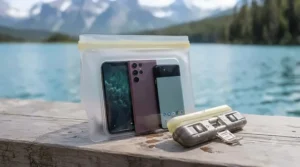
Quick Comparison Table
| Product | IP Rating | Floats? | Touchscreen Response | Best For |
|---|---|---|---|---|
| Hiearcool Waterproof Phone Pouch | IPX8 | No | Good | Budget buyers, multi-phone households |
| JOTO Universal Waterproof Phone Case | IPX8 | No | Good | Dry-bag style storage |
| CaliCase Premium Floating Phone Pouch | IPX8 (100 ft) | Yes | Very good | Everyday paddlers wanting buoyancy |
| TORRAS IP68 Double Space Pouch | IP68 | No | Very good | Anyone who paddles with their case still on |
| CASETiFY Bounce Extreme Pouch | IPX8 | Yes | Very good | Whitewater and rough-water paddlers |
| Pelican Marine IP68 Pouch (XL) | IP68 | Yes | Very good | Larger phones, long-term durability |
| RAM X-Grip Phone Mount w/ Track Ball Base | Not waterproof (mount) | N/A | Direct access | Hands-free navigation, kayak anglers |
Looking at this lineup, the split isn’t really budget versus premium — it’s floating versus non-floating, and that distinction should drive your decision more than price. Paddlers who stick to calm, shallow lakes with a shore always in reach can get away with a non-floating pouch like the Hiearcool or JOTO, since retrieval risk is lower. Anyone doing moving water, deep lakes, or coastal paddling should weight the CaliCase, CASETiFY, or Pelican more heavily, because the airbag or foam padding inside those designs is doing real safety work, not just marketing.
💬 Just one click — help others make better buying decisions too!😊
Top 7 Waterproof Phone Cases for Kayaking: Expert Analysis
1. Hiearcool Waterproof Phone Pouch — best budget pick with a huge review track record
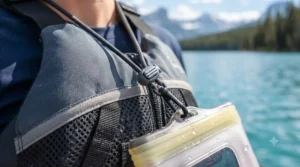
The standout here is volume of proof: this pouch has accumulated well over 100,000 reviews with a sustained rating near 4.6 stars, which is a genuinely useful signal in a category full of no-name knockoffs. It uses a triple-layer lock-down seal and an interior roomy enough — about 8.3 inches — to fit a large Android phone without removing its everyday case first, which sounds trivial until you’re standing at the put-in with cold fingers not wanting to fuss with your gear. In practice, that IPX8 seal has been tested by owners submerging phones in buckets before ever trusting it on the water, and the touch response through the clear window stays crisp enough for maps and photos. This is the pouch for a budget-conscious paddler, a family that needs two or three cases at once thanks to the multi-pack pricing, or anyone who just wants dependable backup protection on top of their phone’s own water resistance. What most buyers overlook is that it does not float — drop it and it sinks like anything else, so pair it with a lanyard clipped to your PFD rather than trusting the pouch alone. Reviewers consistently report that the fingerprint sensor doesn’t work through the material and that occasional air bubbles during sealing can trap moisture-looking condensation, which is cosmetic but startles first-time users. On price, this sits solidly under C$25 for a two-pack, which makes it close to disposable insurance — hard to beat for the money, provided you accept the sinking risk and compensate with a leash.
Pros:
- ✅ Fits large phones with their case already on
- ✅ Enormous verified review base backs the seal quality
- ✅ Multi-pack pricing suits families or backup units
Cons:
- ❌ Does not float if it goes overboard
- ❌ Fingerprint unlock doesn’t work through the pouch
2. JOTO Universal Waterproof Phone Case — best true dry-bag design for gear-heavy trips
The JOTO leans into dry-bag DNA rather than pure pouch styling, with a wider mouth opening and a roll-and-clip closure that’s genuinely easier to operate one-handed with wet hands than a snap-seal design. Compatible with phones up to 7 inches, it covers current large-format devices like a 16 Pro Max or an S23 Ultra without the cramped fit some slimmer pouches struggle with. The IPX8 rating here is backed by a simple pinch-lock along the top edge, and because the plastic is slightly thicker than bargain competitors, it resists the pinhole punctures that eventually doom cheaper pouches after repeated folding. This case suits a kayaker who treats their phone pouch as one part of a broader dry-storage system — clipped next to a dry bag with snacks and a map rather than worn as standalone neck gear. Aggregated user feedback highlights that the touchscreen stays responsive for texting and camera use, though several buyers note the plastic can fog slightly in humid, high-temperature-swing conditions, the same complaint that shows up across nearly every soft-pouch product in this category. Two cons worth flagging honestly: it lacks a built-in float mechanism, and the roll-top closure, while secure, takes a few uses to trust completely. At a price typically in the C$10-C$20 range, it remains one of the most cost-effective entries here, especially for anyone who already owns a proper dry bag and just needs the phone-specific piece to complete the kit.
Pros:
- ✅ Roll-top closure is easy with wet or cold hands
- ✅ Fits oversized modern phones up to 7 inches
- ✅ Thicker plastic resists pinhole punctures over time
Cons:
- ❌ No floating mechanism built in
- ❌ Roll-top seal needs a few uses to trust fully
3. CaliCase Premium Universal Waterproof Floating Phone Pouch — best floating pouch for everyday paddling
This is where the category gets genuinely clever: built-in foam padding sandwiched between two layers of PVC plastic means the CaliCase doesn’t just resist water, it actively floats the phone back to the surface if you let go or capsize. The IPX8 rating claims resistance to 100 feet of submersion, which is far beyond anything a recreational paddler will encounter, but the headroom means everyday splashes and brief dunks are a non-issue. Real-world feedback from paddlers who’ve used it across multi-day trips — including one owner who reported it surviving fifteen days of Grand Canyon paddling with zero water intrusion even after their separate dry bag leaked — suggests the seal holds up to sustained, repeated use rather than just a single afternoon. Aggregated reviews note that touchscreen sensitivity and camera use remain fully functional through the material, and that the universal fit accommodates most current iPhone and Android models without a snug, hard-to-remove fit. This suits the everyday lake-and-river paddler who wants meaningful insurance against the classic overboard scenario without stepping up to a premium hard case. On the downside, a small number of buyers mention the seal requires firm, deliberate pressure to fully lock — a half-hearted close is the single most common failure point across this whole product category, not just this one. Priced typically in the C$15-C$25 range, the value case here is strong: floating capability at a price point usually reserved for non-floating pouches.
Pros:
- ✅ Foam padding provides genuine float-back buoyancy
- ✅ IPX8 rated well beyond recreational paddling depths
- ✅ Touchscreen and camera stay fully usable inside
Cons:
- ❌ Seal needs firm, deliberate pressure to fully lock
- ❌ Bulkier profile than slimmer non-floating pouches
4. TORRAS IP68 Double Space Pouch — best for paddlers who don’t want to remove their everyday case
Winner of both a RedDot and a Good Design award, the TORRAS solves a specific annoyance that most competitors ignore: its “double space” interior is roomy enough to seal in a phone that’s still wearing its own rugged protective case, so you’re not stripping your everyday case off every time you head to the water. That convenience factor is bigger than it sounds for anyone who paddles regularly and doesn’t want case-removal to become a pre-trip ritual. The IP68 rating pairs with a genuinely responsive touchscreen window, and the double-lock seal has held up in independent testing without leaks even after repeated submersion. This is the pick for someone who already owns a bulky rugged case for daily drop protection and refuses to compromise that protection just to go paddling for an afternoon. Aggregated review sentiment is largely positive on seal reliability, though a recurring complaint involves trapped air bubbles during insertion, which can be mildly annoying if you’re impatient or manage dexterity challenges with fine motor tasks. It also lacks a fingerprint sensor pass-through and doesn’t float, so it belongs in the same “pair it with a lanyard” category as the Hiearcool. Typically priced in the C$20-C$30 range, the value proposition is really about convenience rather than raw protection — you’re paying to skip a repetitive hassle, not for a fundamentally different waterproofing mechanism.
Pros:
- ✅ Interior fits phone with its everyday case still on
- ✅ Award-winning double-lock seal design
- ✅ Touchscreen stays crisp and responsive
Cons:
- ❌ Does not float if dropped overboard
- ❌ Air bubbles during insertion can be fiddly
5. CASETiFY Bounce Extreme Pouch — best for whitewater and rough-water paddling
Named the top overall waterproof phone pouch in independent whitewater and multi-sport field testing that included river tubing, rafting, and 24 hours of steady rain, the CASETiFY Bounce Extreme earns its “extreme” name through genuine floatability under aggressive conditions, not just calm-lake dunking. The construction is built around the assumption that the pouch will get thrown, dragged, and repeatedly submerged rather than gently carried, which shows in a sturdier locking mechanism than most of its softer-shell competitors. Testers reported it slid off a dry box and into moving river current, and thanks to its bright colouring and floating design, it was easy to spot and retrieve after running an entire rapid. That’s precisely the buoyancy behaviour a kayaker running anything beyond flatwater should prioritize. This case is aimed squarely at paddlers who kayak whitewater, rivers with current, or ocean surf zones where a non-floating pouch turns any overboard moment into a genuine loss. Real-world reports also praise the clear windows for taking photos mid-paddle and scrolling through apps without removing the phone. On the downside, the reinforced construction adds bulk compared to slimline pouches, and the price sits toward the higher end of the pouch category rather than budget territory. Expect a price typically in the C$30-C$45 range — reasonable given it’s functioning as both a case and a mini life preserver for your phone.
Pros:
- ✅ Proven floatation in real whitewater field testing
- ✅ Bright colouring makes overboard retrieval realistic
- ✅ Clear window allows mid-paddle photography
Cons:
- ❌ Bulkier than slim, non-reinforced pouches
- ❌ Sits at a higher price point than basic pouches
6. Pelican Marine IP68 Waterproof Phone Pouch (XL) — best for durability and larger phones
Pelican built its reputation over decades in military, photography, and paddlesport gear, and that heritage shows in the Marine IP68 pouch’s soft TPU shell, transparent window, and secure locking mechanism that stays operable even with wet hands. The XL sizing fits phones up to about 6.1 inches — and current oversized flagships push that limit — while the detachable lanyard doubles as a wearable retention system for anyone who wants the phone around their neck or wrist during a paddle. One long-term reviewer noted the case slid off a dry box and into a river during volunteer ranger work; because it’s a floating design with bright colouring, it was still easy to identify and retrieve at the base of a rapid. That’s the exact behaviour you want from gear you’re trusting your phone to. Owners who’ve run it against Aquapac-style slim pouches for years describe it as noticeably bulkier — enough that one-handed photo-taking becomes trickier — but they consistently praise the locking mechanism’s firmness and long-term seam durability compared to lighter competitors that eventually tear. This suits paddlers who value brand trust, want a pouch that doubles as a flotation aid, and don’t mind a bit of extra bulk in exchange for durability that’s been proven across multiple seasons rather than one trip. Typical pricing lands in the C$25-C$40 range depending on retailer and bundle, positioning it as a mid-to-premium choice that’s earned its reputation the honest way — repeated field use, not marketing copy.
Pros:
- ✅ Decades of trusted marine and photography brand heritage
- ✅ Floats and is brightly coloured for easy retrieval
- ✅ Detachable lanyard doubles as wearable retention
Cons:
- ❌ Bulkier profile makes one-handed use harder
- ❌ Fingerprint unlock unavailable through the shell
7. RAM X-Grip Phone Mount with Track Ball Base — best hands-free mount for navigation and kayak fishing
Not every solution to “keep my phone safe on the water” is a pouch — sometimes it’s a mount that keeps the phone secured and visible without ever touching your hands. The RAM X-Grip pairs a spring-loaded cradle with a 1-inch B-size ball-and-socket system compatible with hundreds of RAM bases, meaning the same holder can move between a kayak track mount, a boat rail, and a car dashboard with a simple swap. Long-term owners report it surviving saltwater spray and UV exposure for years without failure, backed by RAM’s lifetime warranty — a meaningful signal in gear that lives outdoors permanently. What most buyers overlook is that the mount itself is not waterproof; it’s a physical security and visibility solution, not a submersion barrier, so serious kayakers pair it with one of the pouches above for full protection. This suits kayak anglers who need one-handed GPS or camera access while fighting a fish, or touring paddlers who want constant map visibility without repeatedly digging a phone out of a pocket. The spring-loaded X-design holds phones securely enough to survive choppy water without blocking the screen, and reviewers specifically recommend adding the optional tether for open-cockpit use where wind or impact could otherwise dislodge the cradle. One practical long-term tip from owners: a small drop of super glue on the rubber caps prevents the common issue of them working loose after repeated wet-hand adjustments. Pricing typically runs in the C$30-C$50 range for the mount and base combination, a one-time cost that pays off across multiple boats and seasons rather than needing replacement each trip.
Pros:
- ✅ Modular ball system works across kayak, boat, and car
- ✅ Lifetime warranty backs long-term saltwater durability
- ✅ Spring-loaded grip holds phones without blocking the screen
Cons:
- ❌ Mount itself provides no waterproofing on its own
- ❌ Requires pairing with a separate waterproof pouch
Top 7 Products at a Glance
| Product | Type | Price Range (CAD) | Best For |
|---|---|---|---|
| Hiearcool Waterproof Phone Pouch | Soft pouch | Under C$25 | Budget backup protection |
| JOTO Universal Waterproof Phone Case | Dry-bag style | C$10-C$20 | Gear-heavy trips |
| CaliCase Premium Floating Phone Pouch | Floating pouch | C$15-C$25 | Everyday floating insurance |
| TORRAS IP68 Double Space Pouch | Soft pouch | C$20-C$30 | Case-on convenience |
| CASETiFY Bounce Extreme Pouch | Floating pouch | C$30-C$45 | Whitewater and rough water |
| Pelican Marine IP68 Pouch (XL) | Floating pouch | C$25-C$40 | Durability and large phones |
| RAM X-Grip Phone Mount | Hands-free mount | C$30-C$50 | Navigation and kayak fishing |
The clearest pattern across this table is that floating capability, not brand prestige, is what separates the mid-range from the budget tier here. The CaliCase proves you don’t need to spend premium money to get buoyancy, while the RAM X-Grip is really solving a different problem entirely — visibility and hands-free access — rather than competing directly with the pouches. If your paddling stays close to shore in calm water, a non-floating option like the JOTO is genuinely adequate; if you’re on moving water or open lake crossings, the extra few dollars for a floating design is the better bet every time.
Practical Usage Guide: Setting Up Your Waterproof Phone Case for Kayaking
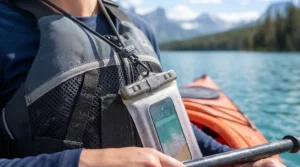
Getting a new pouch right the first time saves you from the classic rookie mistake of trusting an untested seal on open water. Before your first paddle, submerge the sealed, empty pouch in a sink or bucket for a full five minutes and check for any bubbles escaping — that’s your at-home proof test, and it takes less effort than driving to the put-in only to discover a bad seal. Once it passes, insert your phone with the screen facing the clear window, press out any trapped air before sealing, and double-check the lock by tugging gently on all sides rather than just glancing at it. For floating models like the CaliCase or Pelican, always attach the lanyard to your PFD, not just around your neck, since a neck lanyard can slip off during a capsize exactly when you need the pouch most. Maintenance is simple but easy to skip: rinse the pouch in fresh water after every saltwater trip, since dried salt crystals are the leading cause of premature seal wear, and let it air dry fully before storing it folded, which prevents the plastic from creasing at the same point repeatedly. In the first thirty days, the most common mistake paddlers make is reusing a pouch that failed its own home test “just this once” — don’t. A five-minute check costs nothing; a soaked phone costs everything.
Real-World Scenarios: Matching the Right Case to Your Paddling Style
Picture three different paddlers heading out this weekend. First, a university student commuting by kayak-share on a calm urban river for weekend photos and the occasional map check — budget and simplicity matter more than ruggedness here, making the Hiearcool or JOTO the sensible call, since the phone rarely leaves a pocket-depth risk zone. Second, a family with two kids paddling a lake cottage circuit every summer weekend, where the priority is quick sealing with cold or sunscreen-slick hands and the ability to outfit multiple phones affordably — the CaliCase‘s floating design and reasonable multi-use pricing fits that household best. Third, a river-running kayak angler who’s on moving water for hours, needs hands-free GPS access while fighting fish, and can’t afford to lose a phone mid-rapid — that’s the paddler who benefits from pairing the RAM X-Grip mount with the CASETiFY Bounce Extreme or Pelican Marine pouch for a belt-and-suspenders setup. None of these buyers need the most expensive option on the list; they need the option that matches how and where they actually paddle.
How to Choose a Waterproof Phone Case for Kayaking
- Confirm the IP rating actually matters for your use. IPX8 or IP68 both indicate submersion resistance beyond a metre, which covers virtually all recreational kayaking scenarios.
- Decide if floating capability is worth the extra bulk. Moving water, deep lakes, or ocean paddling all raise the stakes of a non-floating pouch sinking beyond reach.
- Check the interior size against your phone plus case. A pouch too tight to fit your phone’s everyday case forces a choice between convenience and daily-use protection.
- Test touchscreen response before you rely on it. Reviewers across every product here note some sensitivity loss versus a bare screen, so know what you’re accepting.
- Match the attachment style to your kayak setup. A lanyard suits casual paddlers; a PFD clip or dedicated mount suits anyone doing technical or moving water.
- Weigh brand track record over marketing claims. Products with large, sustained review histories like the Hiearcool or established heritage like Pelican carry more predictive value than a slick product photo.
- Set a realistic budget band before shopping. Most reliable options here fall between C$10 and C$50, and spending more doesn’t automatically buy better waterproofing — it usually buys convenience or durability extras.
Common Mistakes When Buying a Kayak Phone Case
The single most common error is buying based on IP rating alone and ignoring buoyancy, which leaves paddlers shocked when a “waterproof” case sinks the moment it’s dropped. A close second is choosing a pouch too small for a phone-with-case combo, which either damages the seal from over-stretching or forces owners into a daily habit of removing their protective case — a hassle that eventually leads to skipped steps and unsealed pouches. Buyers also frequently underestimate how differently touchscreens respond through different plastics; what feels responsive in a store display can feel sluggish underwater with wet fingers pressing through a slightly thicker material. Another overlooked mistake is trusting a lanyard worn loosely around the neck rather than clipped to a PFD, since a capsize can slip a neck lanyard free at precisely the wrong moment. Finally, many kayakers skip the home submersion test entirely, assuming the manufacturer’s IP68 or IPX8 rating guarantees a defect-free unit — but a rating describes the design’s tested capability, not every individual unit off the line, so five minutes of due diligence before your first paddle remains cheap insurance.
Floating Waterproof Phone Pouches vs. Fixed Kayak Mounts
These two categories solve overlapping but genuinely different problems, and understanding the distinction prevents buyer’s remorse. A floating pouch like the CaliCase or Pelican Marine protects the phone from water while giving it a fighting chance of surfacing if it goes overboard — the priority is survivability after an accident. A fixed mount like the RAM X-Grip instead prevents the accident altogether by locking the phone in place, trading portability for security and hands-free visibility during active navigation or fishing. Paddlers doing long tours or fishing trips where GPS tracking runs continuously tend to prefer the mount, since constantly pulling a pouched phone in and out of a pocket is impractical when you’re checking a map every few minutes. Casual paddlers who check their phone occasionally for photos or messages generally find a pouch simpler and less committal, since it doesn’t require drilling, clamping, or a permanent kayak modification. The honest answer for serious paddlers is that these aren’t competing purchases — a mount holding a phone that’s already inside a waterproof pouch delivers both security and submersion protection simultaneously, which is exactly the setup experienced kayak anglers tend to land on after cycling through cheaper single-purpose solutions first.
IPX8, IP68, and Submersible Phone Pouch Ratings Explained
IP ratings look similar at a glance, but the digits carry specific, testable meaning that’s worth understanding before you buy an IPX8 phone dry bag or a submersible phone pouch. The official IP Code standard breaks the rating into two digits: the first covers dust resistance — a 6 means fully sealed against dust ingress, which matters if you’re kayaking near sandy beaches or dusty put-ins — while the second, whether written as IPX8 or as the “8” in IP68, measures water submersion resistance beyond one metre for a manufacturer-specified duration. Products in this guide often advertise depths like 100 feet, though real-world kayaking rarely approaches those depths. What the spec sheet won’t tell you is that a rating describes laboratory conditions with still water — a moving river, waves, or repeated pressure changes from paddling motion stress a seal differently than a static tank test, which is exactly why the home submersion test matters regardless of the printed rating. Practically, IPX8 and IP68 both clear the bar for recreational kayaking; the meaningful differentiator between products becomes floatability, seal mechanism design, and touchscreen responsiveness rather than the rating number itself.
Touchscreen Sensitivity: What Actually Works Mid-Paddle
Every product in this guide claims touchscreen compatibility, but aggregated reviewer experience reveals real variation once wet fingers and sunlight glare enter the picture. Thinner, higher-clarity plastics used in the TORRAS and CASETiFY pouches consistently earn praise for near-normal swipe and tap response, while slightly thicker budget plastics in cases like the JOTO perform adequately for basic taps but lag on precise pinch-to-zoom map gestures. Hard-shell designs and mounted setups sidestep the issue entirely since the phone often sits exposed or behind a purpose-molded screen protector rather than a floating film of plastic. A practical field tip that shows up across multiple reviewer accounts: touchscreens respond best when your fingers are damp rather than dripping, since a thin water film between skin and plastic actually improves capacitive response, while heavy runoff can cause phantom taps. For anyone planning to navigate primarily by phone map during a paddle, prioritizing a case with reviewer-confirmed touchscreen performance — rather than assuming all IPX8 products behave identically — will save real frustration on the water.
🔍 Take Your Kayak Setup to the Next Level!
✨ Compare these seven paddler-tested picks side by side and grab the one that matches your next trip. Click through to check current pricing before you launch! 🚣♀️
Waterproof Phone Cases for Beginner Kayakers
New paddlers face a specific version of this decision because they’re often still building comfort on the water and haven’t yet developed instincts for how much gear complexity they actually want. For a first season, simplicity beats sophistication: a straightforward pouch like the Hiearcool or JOTO removes the learning curve of a mount’s ball-and-socket adjustments while still delivering dependable IPX8 protection at a price that doesn’t sting if it’s lost or damaged during those early, wobblier outings. Beginners should also lean toward a bright-coloured, floating option where possible, since retrieval skills — spotting and reaching a dropped item while still balancing a kayak — are themselves something new paddlers are still developing. A lanyard clipped to a PFD, rather than worn loosely, compensates for the reality that early capsizes and near-capsizes happen more often before boat-handling becomes second nature. As comfort grows and paddling style narrows toward touring, fishing, or whitewater, upgrading to a mount-and-pouch combination becomes a natural next step rather than a first purchase.
Buyer’s Decision Framework
If you paddle calm lakes close to shore and mostly want backup protection, choose a budget non-floating pouch like the Hiearcool or JOTO, because retrieval risk stays low and the savings are worth it. If you paddle open water, longer crossings, or unpredictable conditions, choose a floating pouch like the CaliCase or Pelican Marine, because buoyancy converts a potential total loss into a recoverable mishap. If you run rivers, rapids, or surf where impacts and current are constant, choose the CASETiFY Bounce Extreme, because its field-tested rough-water floatation and reinforced construction were built for exactly that abuse. If you fish or navigate continuously and need both hands free, add the RAM X-Grip mount on top of whichever pouch fits your water conditions, because a mount and a pouch solve different halves of the same problem. This simple either/or logic, applied honestly to your actual paddling habits rather than an aspirational “what if,” gets almost anyone to the right pick without overthinking specs that ultimately matter less than how and where you’re really on the water.
Safety, Regulations, and Emergency Communication on the Water
A waterproof phone case for kayaking is protective gear, not safety gear, and Transport Canada’s requirements for personal flotation devices make clear that certain items remain mandatory regardless of what phone protection you’re carrying. Safety-minded paddling guidance likewise emphasizes that a phone, even sealed in a top-rated waterproof case, should never be treated as a primary emergency communication tool, since cell coverage on many lakes, rivers, and coastal routes is unreliable or absent entirely. A handheld VHF marine radio remains the recommended backup for hailing other vessels or the Coast Guard on Channel 16 in areas where that service is monitored. Practically, this means your waterproof phone case is best understood as protecting a genuinely useful secondary tool — for maps, photos, and calls when coverage exists — layered underneath, not instead of, standard paddling safety practices like wearing your PFD at all times and filing a float plan before heading out. For a fuller rundown of what’s legally required aboard a human-powered craft in Canada, Mustang Survival’s guide to mandatory safety equipment is a useful reference beyond just the phone case itself.
Long-Term Cost and Value: Is a Premium Case Worth It?
Running the numbers honestly, even the priciest option in this guide — the CASETiFY Bounce Extreme around C$30-C$45 — costs a fraction of a single cracked-screen repair or a lost flagship phone, which typically runs into the hundreds or thousands of dollars in Canada depending on model and carrier plan. Budget pouches like the Hiearcool at under C$25 for a two-pack offer excellent per-use value for casual paddlers, but their lack of buoyancy means the “cost” of a loss remains the full phone replacement price if it goes overboard on open water. Floating options effectively convert that catastrophic-loss risk into a recovery scenario, which is the real value calculation worth making rather than comparing sticker prices alone. Seam and seal durability also factor into total cost of ownership: reviewer reports suggest thinner budget pouches show wear after roughly one to two seasons of regular use, while heritage brands like Pelican are more frequently described holding up across three or more seasons before any seal degradation appears. For a paddler who kayaks more than a handful of weekends per year, the modest price gap between budget and floating mid-range options pays for itself the first time gear actually goes in the water rather than staying safely in a dry bag.
Features That Actually Matter (And Marketing Claims That Don’t)
Depth ratings well beyond 100 feet, printed prominently on packaging for products that will realistically never go past arm’s length underwater, are the most overhyped spec in this category — genuinely irrelevant for kayaking, even if reassuring on paper. What actually matters is seal mechanism type: a double-lock or roll-top closure that requires a deliberate, felt “click” beats a simple zip-style seal that can be closed halfway without obvious feedback. Floatation, as covered throughout this guide, matters enormously and is frequently buried in product descriptions rather than headlined, so it’s worth confirming directly rather than assuming. Touchscreen “full compatibility” claims are true in the loosest sense for nearly every product tested, but real sensitivity varies enough between plastics that reviewer consensus is a better guide than the spec sheet. Lanyard quality is a small detail that becomes significant fast — a thin, low-profile strap is genuinely more comfortable for hours of wear than the thick nylon straps some brands bundle by default, and several long-term reviewers specifically swap out included lanyards for slimmer aftermarket ones.
FAQ
❓ Is a waterproof phone case enough to protect my phone kayaking?
❓ Does a floating phone case really work if I capsize?
❓ Can I use my phone's touchscreen through a waterproof pouch?
❓ What's the difference between IPX8 and IP68 for a phone case?
❓ Do I need a kayak phone mount if I already have a waterproof case?
Conclusion
Choosing the right waterproof phone case for kayaking really comes down to being honest about how and where you actually paddle, not chasing the highest depth rating on the package. Casual, calm-water paddlers get excellent value from budget non-floating pouches like the Hiearcool or JOTO, while anyone on open water, rivers, or coastal routes should weight floating designs like the CaliCase, CASETiFY Bounce Extreme, or Pelican Marine more heavily, since buoyancy is what turns a potential loss into a simple retrieval. Kayak anglers and touring paddlers who need constant hands-free access benefit from pairing the RAM X-Grip mount with whichever pouch suits their water conditions. None of these seven options are the wrong choice in isolation — they’re built for genuinely different paddling realities, and matching the case to your actual trips, rather than the flashiest spec sheet, is what keeps your phone dry, usable, and out of the lake for good.
💬 Ready to gear up? Check current prices on the picks above before your next trip out! 🛶
Recommended for You
- How to Pack a Canoe Barrel for a Portage Trip: 7 Genius Tips (2026)
- Bear Canister vs Food Barrel Canoe Camping: 7 Picks (2026)
- Food Safe Canoe Barrel Guide: 7 Bear-Proof Picks for 2026
Disclaimer: This article contains affiliate links. As an Amazon Associate, I earn from qualifying purchases. If you purchase products through these links, we may earn a small commission at no additional cost to you.
✨ Found this helpful? Share it with your friends! 💬🤗
