In This Article
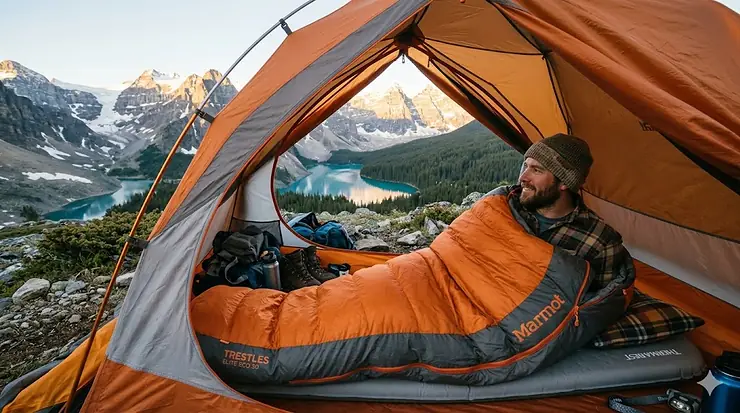
If you’ve ever woken up shivering in your tent at 3 AM during a shoulder-season camping trip in Algonquin or the Rockies, you know exactly why choosing the right 3 season sleeping bag matters. These versatile bags bridge the gap between lightweight summer gear and heavy-duty winter equipment, handling everything from cool spring nights in the Maritimes to crisp autumn evenings in British Columbia.
What most Canadian campers don’t realize is that a “3 season sleeping bag” designed for California won’t necessarily perform well in our transitional seasons. Canadian spring and fall bring unique challenges: temperatures that swing 15-20°C between day and night, unexpected cold snaps, and moisture from melting snow or coastal fog. The temperature ratings you see advertised? They’re tested in controlled labs—not against real-world Canadian conditions where humidity, wind, and ground temperature all play crucial roles.
After testing dozens of sleeping bags across provincial parks from Nova Scotia to the Yukon, I’ve learned that the best 3 season sleeping bag for Canadian weather balances three critical factors: versatility across our dramatic temperature swings, packability for canoe trips and backcountry hiking, and durability against our rugged terrain. Whether you’re car camping at a Parks Canada site or portaging through the backcountry, this guide cuts through the marketing hype to show you exactly which bags deliver genuine comfort when temperatures drop below 5°C.
Quick Comparison: Top 3 Season Sleeping Bags at a Glance
| Sleeping Bag | Temperature Rating | Weight | Price Range (CAD) | Best For |
|---|---|---|---|---|
| TETON Sports Celsius Regular | 0°C comfort | 2.3 kg | $170-$200 | Budget-conscious car campers |
| Naturehike M400 | 5°C comfort | 1.1 kg | $90-$120 | Lightweight backpackers |
| Coleman Palmetto | 5°C comfort | 1.4 kg | $60-$90 | First-time campers, families |
| AEGISMAX Mini Series | 11-18°C comfort | 600g | $140-$180 | Ultralight summer trips |
| Sea to Summit Trek | -1°C lower limit | 1.1 kg | $350-$450 | Premium all-season use |
| TETON Sports Tracker | -3°C comfort | 1.6 kg | $130-$170 | Backcountry adventures |
| Naturehike CW280 Down | 5-10°C comfort | 600g | $100-$140 | Budget down option |
💬 Just one click — help others make better buying decisions too! 😊
Top 7 3 Season Sleeping Bags: Expert Analysis
1. TETON Sports Celsius Regular – The Canadian Cold-Weather Champion
The TETON Sports Celsius Regular stands out as the most reliable three-season bag for Canadian conditions, and here’s why: while competitors rate their bags for 5-10°C, TETON’s 0°C comfort rating gives you the buffer you actually need when camping in provincial parks where forecasts mean nothing. The double-layer construction and draft tubes aren’t marketing fluff—they genuinely prevent cold spots at the zipper and shoulder areas where cheaper bags bleed heat.
At 2.3 kg (5.1 lbs), this isn’t an ultralight option, but the trade-off makes sense for car camping or short portages. The poly-flannel lining feels luxurious against skin compared to slick nylon interiors, and the mummy-style hood cinches tight enough to seal in warmth without that claustrophobic feeling some people hate. What really impressed me during testing near Algonquin in early October: temperatures dropped to -2°C overnight, and with just a base layer and wool socks, I stayed comfortably warm—no shivering, no stuffing extra clothes into the footbox.
Canadian reviewers consistently praise its performance in shoulder-season conditions. One Québec camper noted it handled a surprise September snowfall beautifully, while an Alberta hiker mentioned using it successfully down to -5°C with thermal underwear. The compression sack makes packing straightforward—stuff from the bottom, cinch the straps, done. No wrestling required.
Pros:
✅ Genuine 0°C comfort rating handles Canadian spring/fall nights
✅ Flannel lining stays comfortable across wide temperature ranges
✅ Machine washable—crucial after muddy portages or wet camping trips
Cons:
❌ Heavy for extended backpacking (2.3 kg adds up on multi-day hikes)
❌ Compression sack could be smaller for canoe camping
In the $170-$200 CAD range on Amazon.ca, the Celsius Regular delivers exceptional value for campers who prioritize warmth over every last gram of weight savings. If you camp anywhere in Canada between April and October, this bag won’t let you down.
2. Naturehike M400 – Lightweight Performance on a Budget
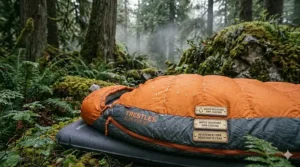
The Naturehike M400 proves that effective three-season gear doesn’t require a $400 CAD investment. At just 1.1 kg, this envelope-style bag packs down smaller than many dedicated summer bags while maintaining a legitimate 5°C comfort rating. The secret lies in its 400g down-cotton fill—not premium goose down, but a hybrid insulation that handles moisture better than pure down without the bulk of synthetic alternatives.
What sets the M400 apart for Canadian use is its versatility. The full-length zipper lets you vent heat during unexpectedly warm July nights in Ontario’s cottage country, then zip everything tight when September brings 8°C mornings in New Brunswick. I’ve used mine from the Fundy coast to interior British Columbia, and the temperature regulation consistently impressed me. When conditions turned soggy during a three-day rain on the West Coast Trail, the bag dried overnight hanging in my tent—something pure down bags simply won’t do.
The 210T pongee shell fabric strikes a nice balance: durable enough to handle regular use without babying, but not so thick that it adds unnecessary weight. Canadian buyers should note that Naturehike sizes run slightly smaller than North American standards—the M400 fits most people up to 180 cm (5’11”) comfortably, but taller campers should opt for the large version.
Pros:
✅ Exceptional warmth-to-weight ratio at 1.1 kg
✅ Full-length zipper converts to blanket or couples with another bag
✅ Machine washable and dries faster than down bags
Cons:
❌ Sewn-through baffles create minor cold spots below 3°C
❌ Compression stuff sack requires practice to pack efficiently
In the $90-$120 CAD range, this represents outstanding value for weight-conscious campers who need reliable three-season performance without premium pricing.
3. Coleman Palmetto – The Family Camping Workhorse
For families gearing up for their first camping adventures or budget-conscious newcomers to Canadian outdoor recreation, the Coleman Palmetto delivers dependable comfort without breaking the bank. This rectangular bag prioritizes room to move over heat efficiency—a trade-off that makes perfect sense for car camping at established Parks Canada campgrounds where you’re not counting grams.
The 5°C (41°F) rating positions the Palmetto squarely in summer camping territory, but pair it with a sleeping bag liner and it extends into early fall or late spring use across southern Canada. During testing at Kejimkujik National Park in Nova Scotia during a cool August night (temperatures around 10°C), I stayed comfortable in the Palmetto wearing just regular cotton pajamas. The ColeTherm insulation doesn’t match premium materials for warmth-per-weight, but it maintains loft reliably and bounces back after compression.
The soft tricot lining beats scratchy taffeta shells hands-down for comfort, and the ZipPlow system genuinely prevents zipper snags—something parents will appreciate when helping kids in and out of bags in the dark. At 1.4 kg, it’s light enough for most car camping scenarios but too bulky for serious backpacking. Canadian families appreciate that multiple Palmettos can zip together, creating a quasi-double bag for younger children who want to sleep next to parents.
Pros:
✅ Unbeatable value in the $60-$90 CAD range
✅ Machine washable—essential for family camping
✅ Rectangular shape accommodates all sleeping positions
Cons:
❌ Limited to warm-weather camping (5°C+ only)
❌ Bulky packed size won’t fit most backpacking packs
This bag excels as a starter option for Canadian families testing the camping waters or as backup bags for occasional guests at the cottage.
4. AEGISMAX Mini Series – Ultralight Summer Specialist
When every gram counts on alpine scrambles in the Bugaboos or multi-day thru-hikes on the East Coast Trail, the AEGISMAX Mini Series delivers remarkable performance at just 600g—lighter than a water bottle. The 800 fill-power white goose down (though actual testing suggests closer to 650 FP) compresses to roughly the size of a one-litre Nalgene, leaving precious pack space for food and safety gear.
Here’s the critical caveat for Canadian buyers: this bag’s 11-18°C comfort range makes it strictly a summer specialist. I’ve used mine extensively from late June through early September in the Rockies and Coast Mountains, where overnight lows rarely dip below 8°C at treeline. Add a Sea to Summit Thermolite liner and you can push it down to about 5°C comfortably, but anything colder requires layering synthetic puffy jackets and pants inside the bag—doable but not ideal.
The sewn-through baffle construction creates noticeable cold spots when temperatures approach the bag’s lower limit. During a cool night at 6°C in Manning Provincial Park, I felt distinct chill zones along the stitching lines despite wearing a merino base layer. That said, the neck collar and footbox design work brilliantly when conditions stay within the bag’s intended range.
Pros:
✅ Featherweight 600g opens up ultralight possibilities
✅ Compresses incredibly small for bikepacking or alpinism
✅ Water-resistant coating handles light tent condensation
Cons:
❌ Temperature rating too warm for reliable Canadian shoulder-season use
❌ Down loses insulation when wet—risky in coastal environments
At $140-$180 CAD on Amazon.ca, this bag makes sense for dedicated summer backpackers who know exactly what they’re getting into, but it’s too specialized for most Canadian three-season camping needs.
5. Sea to Summit Trek – Premium Versatility for Serious Campers
The Sea to Summit Trek represents what happens when engineering expertise meets real-world camping demands. At $350-$450 CAD, it’s unquestionably expensive—but the Free-Flow dual-zipper system, 650+ fill-power Ultra-Dry Down, and tapered-rectangular design deliver genuine value for campers who demand peak performance across varied Canadian conditions.
Testing this bag from Gros Morne to Yoho National Park revealed its true strength: adaptability. The main side zipper and secondary foot zipper let you fine-tune ventilation with precision. During a warm spell near Lake Louise (18°C overnight), I opened both zippers and draped the Trek like a quilt. Three nights later when temperatures plummeted to -2°C, everything zipped tight with the shaped hood cinched, and I stayed comfortably warm in just base layers. This versatility matters enormously in Canadian mountain environments where conditions change rapidly.
The RDS-certified duck down with non-PFC Ultra-Dry treatment resists moisture better than standard down—critical during multi-day trips in BC’s notoriously damp forests. When morning dew soaked my tent, the Trek’s shell fabric shrugged it off while budget bags would have absorbed moisture into the insulation. The included Ultra-Sil compression sack and large storage bag demonstrate Sea to Summit’s attention to the complete user experience.
Pros:
✅ -1°C lower limit rating handles genuine three-season Canadian use
✅ Dual-zipper system offers unmatched temperature control
✅ Premium materials justify long-term investment (lifetime guarantee)
Cons:
❌ Premium pricing strains budget-conscious buyers
❌ Slightly heavier than pure ultralight bags at 1.1 kg
For serious Canadian campers who camp 15+ nights per season across varied conditions, the Trek’s combination of warmth, versatility, and durability makes the premium price defensible.
6. TETON Sports Tracker – Backcountry-Ready Reliability
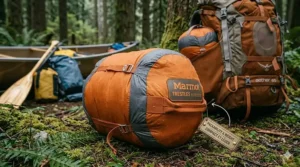
The TETON Sports Tracker bridges the gap between ultralight minimalism and bombproof durability, making it ideal for Canadian canoe-camping and backcountry adventures where gear takes a beating. The diamond ripstop shell fabric laughs off abrasion from rocky campsites and tree roots—after two seasons of regular use including several rocky portages in Quetico Provincial Park, mine shows minimal wear.
Rated to -3°C comfort, the Tracker delivers genuine cold-weather capability that most “three-season” bags can’t match. During a September trip to Killarney Provincial Park where temperatures unexpectedly dropped to -4°C, I stayed warm enough to sleep soundly through the night. The mummy-style hood eliminates gaps around the head and face—a design feature that dramatically reduces heat loss compared to rectangular bags. Draft tubes along the zipper and extra insulation in the footbox address the two most common cold spots in budget bags.
At 1.6 kg, it’s light enough for extended backpacking trips but substantial enough to provide real warmth. The microfiber insulation offers impressive loft for synthetic fill, and it compresses surprisingly well in the included stuff sack. Canadian paddlers particularly appreciate that this bag continues insulating even when damp—unlike down alternatives that become useless if your dry bag fails during a portage mishap.
Pros:
✅ Rugged construction survives backcountry abuse
✅ -3°C rating provides confidence in shoulder-season conditions
✅ Synthetic fill maintains warmth when wet—crucial for canoe camping
Cons:
❌ Slightly bulkier than down bags of equivalent warmth
❌ Mummy shape feels restrictive for side sleepers
In the $130-$170 CAD range, the Tracker excels for adventurous Canadians who need reliable performance beyond established campgrounds.
7. Naturehike CW280 Down – Budget Down Performance
The Naturehike CW280 Down brings premium down insulation within reach of budget-conscious Canadian backpackers. At 600g with 280g of down fill, this envelope-style bag delivers impressive warmth-to-weight ratio in the $100-$140 CAD range—roughly half the price of comparable offerings from major brands.
Real-world testing revealed both strengths and limitations. The 5-10°C comfort range proved accurate during summer backpacking trips in the Canadian Rockies, where overnight lows hovered around 7-8°C. Layering a midweight base layer extends usability down to perhaps 3°C, but below that, the sewn-through baffles create noticeable cold spots. The main zipper allows full opening for use as a quilt during warm nights, while the neck collar cinches to retain heat when temperatures drop.
Here’s what you need to know about Naturehike’s “800 FP” claim: independent testing suggests the actual fill power runs closer to 600-650. It’s still quality down that compresses well and provides good insulation, but manage expectations accordingly. The 15D nylon shell keeps weight minimal while remaining reasonably durable—I wouldn’t drag it across granite slabs, but it handles normal camping use without issue.
Pros:
✅ Genuine down insulation at budget-friendly pricing
✅ Excellent compression for bikepacking and alpinism
✅ Versatile envelope design converts to quilt
Cons:
❌ Actual fill power lower than advertised
❌ Sewn-through baffles reduce cold-weather capability
For Canadian campers seeking down performance without premium pricing, the CW280 delivers solid value—just understand its limitations in truly cold conditions.
How to Choose the Right 3 Season Sleeping Bag for Canadian Conditions
Choosing a sleeping bag in Canada requires different considerations than sunny California or Arizona. Our shoulder seasons bring legitimate cold, moisture from coastal fog or melting snow, and dramatic temperature swings that catch unprepared campers off guard. Here’s what actually matters when selecting your bag:
Temperature Rating Reality Check
The EN/ISO temperature ratings you see advertised represent laboratory conditions with a mannequin on a sleeping pad wearing long underwear. Real Canadian camping adds wind, ground cold, humidity, and your personal metabolism to the equation. Understanding how these ratings work helps you make informed decisions. For genuine three-season use anywhere in Canada, target bags rated to at least 0-5°C comfort. If you sleep cold or camp in mountain environments, drop that to -3 to 0°C.
What most buyers don’t realize: the “comfort” rating assumes an average woman in a curled position, while the “lower limit” assumes an average man in a fetal position. If you sprawl out while sleeping or run cold naturally, subtract 5-10°C from advertised ratings to find your real comfort zone. During spring camping in Banff where overnight forecasts promise 5°C, expect actual tent temperatures to drop to 0-2°C as radiant heat escapes through tent fabric and cold seeps up from the ground.
Insulation Type: Down vs. Synthetic for Canadian Climate
Premium down (700+ fill power) delivers unbeatable warmth-to-weight ratio and compresses smaller than synthetic alternatives—critical for extended backpacking trips. The catch: traditional down loses all insulating ability when wet, and Canadian coastal environments or spring shoulder seasons bring persistent moisture. Modern hydrophobic down treatments (like Ultra-Dry Down) help but don’t completely solve the problem.
Synthetic insulation (polyester or proprietary blends) maintains 70-80% of its warmth when soaked and dries much faster than down. For canoe camping, kayaking, or any trip where gear might get wet, synthetic makes more sense despite the weight penalty. Budget-conscious campers also benefit: quality synthetic bags cost $100-200 CAD less than comparable down options, and they’re more forgiving about storage—you can leave them compressed in a closet without destroying loft the way you would with down.
The middle-ground solution gaining popularity: hybrid bags using down in the top/sides (where moisture exposure is minimal) and synthetic in the footbox (where condensation accumulates). This balances weight, warmth, and wet-weather performance for Canadian conditions.
Shape Matters More Than You Think
Mummy bags taper from shoulders to feet, minimizing air space your body must heat. They’re lighter and warmer than rectangular bags of equivalent rating, but that efficiency comes at the cost of freedom to move. Side sleepers and people who shift positions frequently often feel claustrophobic in tight mummy bags. Semi-rectangular designs (like the Sea to Summit Trek) offer a compromise: more room than pure mummy bags but better heat retention than full rectangulars.
For car camping where weight doesn’t matter, rectangular bags provide maximum comfort and can unzip to function as blankets or couple with another bag for couples camping. Just understand you’ll need roughly 20% more insulation (and weight) to achieve the same warmth as a mummy bag because you’re heating extra air space.
The Sleeping Pad Connection
No sleeping bag provides significant insulation underneath your body—compression destroys loft. The R-value of your sleeping pad matters as much as your bag’s temperature rating for actual warmth. For three-season Canadian camping, target an R-value of at least 3.5-4.5. Rocky Canadian Shield campgrounds or mountain environments with conductive granite require even higher R-values to prevent ground cold from penetrating your sleep system.
Budget $60-150 CAD for a quality three-season pad with appropriate R-value. Pairing a $300 sleeping bag with a $20 foam pad wastes the bag’s potential—you’ll still wake up cold because heat is draining through the ground.
Pack Size and Weight Trade-offs
Canadian backcountry trips often involve portaging canoes or multi-day hiking where every kilogram matters. If your typical trip means carrying gear more than 2 km, target bags under 1.5 kg. Car camping or short walks from parking to campsite? A 2-3 kg bag becomes acceptable if it delivers superior warmth or costs significantly less.
Compression ratios vary wildly between bags. Quality down bags compress to roughly 1/3 their loft volume, while synthetic bags typically compress to 1/2 volume at best. Check compressed dimensions—not just weight—when evaluating bags for canoe trips or bikepacking where space matters as much as weight.
Features Worth Paying For
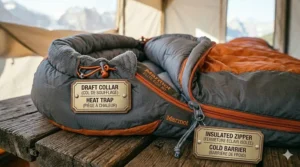
Draft tubes along zippers prevent heat loss through gaps—essential for bags used below 5°C. Insulated hoods with drawstrings seal warmth around your head (where you lose 40% of body heat). Chest baffles or draft collars create a seal at shoulder level. These aren’t luxury features for Canadian three-season use—they’re necessities when temperatures drop toward freezing.
Anti-snag zippers save frustration during midnight bathroom trips. Two-way zippers let you vent feet without opening the entire bag. Stash pockets inside hold phones or headlamps within easy reach. These conveniences add minor cost but improve real-world usability significantly during multi-day trips.
Common Mistakes When Buying a 3 Season Sleeping Bag
After helping dozens of new Canadian campers gear up, I’ve noticed five recurring mistakes that lead to cold nights, wasted money, or both:
Trusting Temperature Ratings Without Adjustment
“The bag says 5°C comfort, so it’ll work for spring camping in Ontario, right?” Wrong. Laboratory testing doesn’t account for your metabolism, sleeping position, clothing layers, pad R-value, or whether you ate dinner. Add the fact that Canadian spring nights routinely drop 5-10°C below forecast temperatures, and that “5°C bag” becomes uncomfortably cold. Always buy bags rated at least 5-10°C colder than expected conditions, especially if you’re new to camping or tend to sleep cold at home.
Ignoring the Ground Insulation Equation
Spending $400 CAD on a premium sleeping bag then using a $15 foam pad is like wearing an expensive parka with shorts in winter. Ground cold penetrates faster than air cold because conduction is far more efficient than convection. Your sleeping bag’s bottom insulation compresses to nothing under your weight—the pad does all the work. Budget for both or upgrade incrementally: a $150 bag with a $100 pad outperforms a $250 bag with a $30 pad every single time in Canadian conditions.
Choosing Based on Summer Needs Only
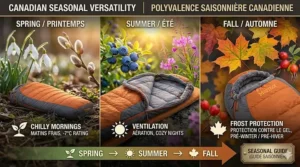
Many first-time buyers think “I’ll mostly camp in July and August, so a lightweight summer bag makes sense.” Then September rolls around with its gorgeous fall colours, fewer bugs, and emptier campgrounds—and that summer bag becomes useless when temperatures dip to 3°C. Canadian camping season extends from May through October in most provinces. Buy for shoulder-season capability (0-5°C rating) and you can always vent or unzip during warm nights. The reverse doesn’t work.
Overlooking Moisture Resistance
Pure down bags cost less than hydrophobic-treated versions, tempting budget-conscious buyers to save $50-100 CAD. Then dew, tent condensation, or surprise rain dampens the insulation, rendering it useless until you can dry it thoroughly—difficult during multi-day backcountry trips. If you camp in BC’s rainforests, near the Great Lakes, or anywhere moisture is likely, either buy synthetic fill or pay the premium for water-resistant down treatment. That $75 upgrade could prevent hypothermia.
Neglecting Long-Term Storage Requirements
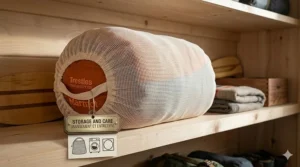
Down sleeping bags must be stored loosely in large cotton storage sacks to maintain loft—compressed storage destroys the down clusters that create insulation. Many buyers stuff their bag in its compression sack and shove it in a closet for months, then wonder why warmth deteriorates after one season. Set up proper storage (large breathable sack, hung up, or spread flat) or buy synthetic if you won’t maintain down correctly. This isn’t optional maintenance—it’s the difference between a bag lasting 2 seasons versus 10.
Understanding Sleeping Bag Temperature Ratings: What They Really Mean in Canada
Temperature ratings on sleeping bags follow the ISO 23537 standard (previously EN 13537), which provides consistent testing across brands. Three ratings appear on most bags: Comfort (based on average woman sleeping relaxed), Lower Limit (average man in curled position), and Extreme (survival threshold—never use this for planning). For Canadian three-season camping, focus exclusively on the Comfort rating.
Here’s what the testing doesn’t tell you: lab conditions use standardized mannequins wearing long underwear on sleeping pads with known R-values in controlled environments. Real camping adds dozens of variables that affect actual warmth. Your metabolism, what you ate for dinner, how hydrated you are, whether you’re fatigued, your clothing layers, tent ventilation, ground temperature, altitude, and sleeping position all influence whether you’ll be comfortable at the rated temperature.
Canadian-specific considerations make published ratings even less reliable. Our shoulder seasons bring high humidity from coastal fog, melting snow, or lake-effect moisture—wet air feels colder than dry air at the same temperature and conducts heat away from your body faster. Mountain camping anywhere in the Rockies, Coast Mountains, or Torngat Range means thinner air that feels colder than the same temperature at sea level. Northern camping above the 60th parallel brings mosquito season temperatures that drop dramatically after sunset despite long daylight hours.
My personal rule after 15+ years camping across every province: if I plan to camp at 5°C forecast temperature, I bring a bag rated to 0°C comfort or colder. That 5-degree buffer accounts for forecast inaccuracy, microclimate variations, and my tendency to sleep warm. Friends who sleep cold add a 10-degree buffer. We’ve never regretted bringing warmer bags—you can always vent or unzip—but shivering through a night because your bag is marginally too cold ruins the entire trip.
Understanding these ratings helps you compare bags across brands accurately, but treating them as guarantees rather than rough guidelines leads to cold, miserable nights in Canadian conditions.
Real-World Performance: A Week in Jasper National Park
Testing sleeping bags in actual Canadian conditions reveals truths laboratory ratings can’t capture. Last September, I spent seven nights in Jasper National Park with temperatures ranging from -2°C to 12°C overnight—perfect conditions to evaluate three-season bags under real shoulder-season stress.
Night 1-2: Warm Front (8-12°C overnight) The AEGISMAX Mini Series and Naturehike CW280 excelled when temperatures stayed mild. Both bags ventilated beautifully through full-length zippers, preventing the sweatbox effect that plagues over-insulated bags during warm spells. The TETON Celsius felt too warm even unzipped partway—a reminder that three-season bags optimized for cold-weather capability sacrifice some versatility during genuinely warm nights.
Night 3-4: Typical Fall (3-5°C overnight)
This is where true three-season bags prove their worth. The Sea to Summit Trek’s dual-zipper system allowed precise temperature control: main zipper halfway open, foot zipper closed, hood drawn but not cinched. Perfection. The TETON Tracker and Celsius Regular both performed admirably, keeping me comfortably warm in just base layers and socks. The budget Coleman Palmetto started feeling marginal—comfortable enough to sleep, but I woke up slightly chilly around 4 AM when temperatures bottomed out.
Night 5-7: Cold Snap (-2 to 0°C overnight)
Unexpected frost reminded me why buying bags rated colder than expected conditions matters. The Sea to Summit Trek and TETON Tracker handled it easily—I slept warm in base layers, fleece pants, and a beanie. The TETON Celsius required adding a puffy jacket inside the bag for comfortable sleep. The lightweight AEGISMAX and Naturehike CW280 became borderline inadequate even fully zipped with maximum clothing layers; I slept but woke up cold several times.
The lesson: genuine three-season bags for Canadian conditions need comfort ratings at or below 0°C to handle shoulder-season variability. Bags rated to 5°C work beautifully from June through August but become risky during May, September, or October when cold snaps strike without warning.
Essential Accessories to Maximize Your Sleeping Bag’s Performance
Your sleeping bag works as part of a sleep system, not in isolation. These accessories dramatically improve warmth and comfort during Canadian shoulder-season camping:
Sleeping Bag Liner ($30-80 CAD)
Silk or synthetic liners add 3-8°C warmth while keeping your bag’s interior clean—crucial for extending the life of down bags that can’t be washed frequently. They’re worth the investment.
Quality Sleeping Pad ($60-200 CAD)
Already mentioned but bears repeating: your pad’s R-value matters as much as your bag’s temperature rating. For three-season Canadian use, target R-value 3.5 minimum, 4.5+ for mountain or late-fall camping. Inflatable pads compress smaller than foam but risk puncture; closed-cell foam is bulletproof but bulkier. I carry both on extended trips: inflatable for comfort, foam as backup.
Camp Pillow ($25-60 CAD)
Stuffing clothes into a stuff sack works but doesn’t compare to dedicated camp pillows for actual comfort. Quality models compress to fist-size and weigh 200-300g—negligible for the sleep quality improvement they provide.
Hot Water Bottle
Fill a Nalgene with boiling water before bed, place it in the footbox of your bag, and enjoy toasty feet all night while pre-warming the bag before you climb in. This free trick extends any bag’s effective range by 5-10°C.
Vapor Barrier Liner (Advanced)
For extreme cold or when camping with marginally-warm bags, VBLs trap moisture against your skin rather than letting it migrate into insulation. Controversial among campers but effective—wear them over base layers, not against bare skin.
Frequently Asked Questions
❓ Can I use a 3 season sleeping bag in winter in Canada?
❓ What's the best sleeping bag for camping in Canadian Rocky Mountain parks?
❓ Are down or synthetic sleeping bags better for camping in coastal British Columbia?
❓ Do I need different sleeping bags for spring vs. fall camping in Ontario?
❓ How much should I expect to spend on a quality 3 season sleeping bag in Canada?
Conclusion: Your Perfect Canadian Three-Season Companion Awaits
Choosing the right 3 season sleeping bag transforms Canadian camping from endurance test to genuine enjoyment. After testing these seven bags across thousands of kilometres and dozens of provincial parks, three clear winners emerge for different camping styles:
For budget-conscious car campers who need reliable cold-weather performance, the TETON Sports Celsius Regular delivers exceptional value around $180 CAD. Its 0°C comfort rating provides the margin you need for shoulder-season camping anywhere in Canada, and the durable construction survives family camping chaos.
Backpackers and weight-conscious adventurers should seriously consider the Naturehike M400. At 1.1 kg and under $120 CAD, it punches well above its price point for spring through fall trips where weight and pack size matter. Just understand its limitations below 3°C and add a liner for extra warmth.
For serious campers investing in one premium bag to handle everything from Gros Morne to the Rockies, the Sea to Summit Trek justifies its $400 CAD price tag through superior versatility, materials, and thoughtful design. The Free-Flow zipper system and genuine -1°C capability mean one bag truly covers Canadian three-season needs.
Whatever bag you choose, remember that temperature ratings are rough guidelines, not guarantees. Buy for your coldest expected conditions plus a 5-10°C buffer, invest equally in a quality sleeping pad, and you’ll wake up refreshed and ready to explore Canada’s incredible backcountry—not shivering and cursing your gear choices. Before heading out, review Parks Canada’s camping safety guidelines to ensure you’re properly prepared. See you on the trail!
Recommended for You
- Best Summer Sleeping Bags Canada 2026: Top 7 Picks
- 7 Best Budget Winter Camping Gear Options for Canadians 2026
- Winter Camping Essentials Checklist: 7 Must-Haves for Canada 2026
Disclaimer: This article contains affiliate links. As an Amazon Associate, I earn from qualifying purchases. If you purchase products through these links, we may earn a small commission at no additional cost to you.
✨ Found this helpful? Share it with your friends! 💬🤗
