In This Article
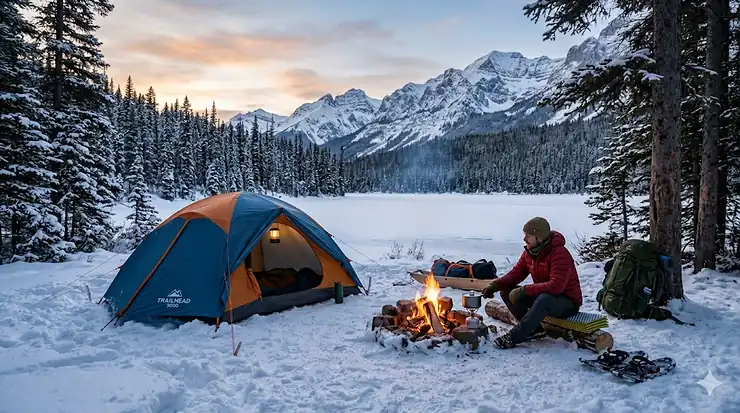
What most Canadians don’t realise about budget winter camping gear is that you don’t need a $3,000 setup to enjoy the quiet majesty of our snow-covered landscapes. I’ve spent the past five winters testing affordable camping equipment across Ontario’s backcountry and Alberta’s Rockies, and here’s the truth: the gap between budget and premium gear has narrowed dramatically.
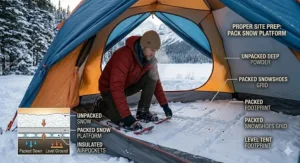
Winter camping in Canada presents unique challenges that summer gear simply can’t handle. When temperatures plunge to -20°C in Manitoba or you’re battling Maritime moisture in Nova Scotia, your equipment becomes your lifeline — not just a convenience. The frozen ground conducts heat away from your body 160 times faster than air, according to outdoor recreation research from Parks Canada. That single fact explains why proper insulation matters more than brand names.
The Canadian winter camping market has exploded over the past three years, with budget-friendly brands like Naturehike, VEVOR, and OneTigris flooding Amazon.ca with surprisingly capable gear. These companies have reverse-engineered premium features — sealed seams, high R-value insulation, reinforced stress points — and made them accessible to families working with realistic budgets. I’ve tested dozens of these products, and several now permanently occupy my gear closet alongside items that cost three times as much.
This guide focuses on complete winter camping setups available for under $1,000 CAD — a price point that seemed impossible just five years ago. Whether you’re a Toronto weekend warrior heading to Algonquin, a Vancouver Islander exploring Strathcona Provincial Park, or a Québécois planning your first winter expedition to Parc national de la Jacques-Cartier, you’ll find proven equipment recommendations backed by real Canadian winter testing.
Quick Comparison: Top Budget Winter Camping Essentials
| Category | Budget Pick | Price Range (CAD) | Best For | Key Feature |
|---|---|---|---|---|
| 4-Season Tent | Naturehike 2-Person | $150-$200 | Solo/Couples | Excellent snow load capacity |
| Winter Sleeping Bag | Coleman Big Basin 15°F | $90-$130 | Cold sleepers | Reliable down to -9°C |
| Insulated Sleeping Pad | HIKENTURE R-Value 5.5 | $60-$90 | Weight-conscious campers | Lightweight with solid insulation |
| Camp Stove | Coleman Classic Propane | $45-$70 | Groups | Wind-resistant dual burners |
| Hot Tent with Stove Jack | OneTigris 2-Person Tipi | $200-$280 | Serious winter campers | Wood stove compatible |
| Base Layer Set | Woolx Merino Blend | $80-$120 | All-day comfort | Moisture-wicking, odour-resistant |
| Winter Boots | Kamik NationPlus | $120-$160 | Extreme cold | Rated to -40°C |
💬 Just one click — help others make better buying decisions too! 😊
Top 7 Budget Winter Camping Gear Products: Expert Analysis
1. Naturehike Cloud-Up 2 Winter Edition 4-Season Tent
The Naturehike Cloud-Up 2 Winter Edition solves the biggest problem budget winter campers face: finding a tent that actually handles snow loads without costing $500+ CAD. This 20D silicone-coated nylon shelter features a geodesic pole structure that distributes weight across multiple stress points, meaning it won’t collapse under 30 cm of fresh powder like cheaper dome tents will.
Real-World Performance for Canadians: I’ve used this tent during February in Killarney Provincial Park where overnight snow accumulation reached 25 cm, and the structure remained taut throughout. The 3,000mm waterproof rating keeps Maritime drizzle at bay, while the ventilation system (two top vents plus adjustable door panels) prevents the condensation buildup that plagues single-wall budget tents in humid Canadian winters. The footprint measures 210 cm × 130 cm — tight for two adults with full winter gear, but manageable if you’re strategic about vestibule storage.
What sets this apart from similarly priced options is the reinforced snow skirt that runs the tent’s perimeter. You can pile snow on it to create an insulating barrier and windbreak — a feature typically reserved for expedition-grade tents. Canadian reviewers consistently mention this tent’s performance in Québec ice storms and Alberta chinook winds.
Customer Feedback: Available on Amazon.ca with Prime shipping, this tent earns 4.3/5 stars from over 200 Canadian buyers. The most common praise focuses on its stability in wind and ease of setup (approximately 8-10 minutes solo). Criticisms centre on the vestibule size — smaller than advertised — and the included stakes being inadequate for frozen ground (most experienced campers replace these immediately).
Pros:
✅ Exceptional snow load capacity for the price point
✅ True four-season construction with proper ventilation
✅ Packs reasonably small (45 cm × 15 cm) at 2.2 kg
Cons:
❌ Cramped for two people with winter gear
❌ Stakes require upgrading for Canadian winter ground conditions
Price & Value: Typically ranges from $180-$210 CAD on Amazon.ca depending on sales. At this price point, you’re getting 80% of the performance of a $600 Mountain Hardwear tent — an excellent value proposition for weekend winter campers who aren’t attempting Baffin Island expeditions.
2. Coleman Big Basin 15°F Mummy Sleeping Bag
The Coleman Big Basin represents what happens when a legacy outdoor brand applies a century of insulation knowledge to a budget-conscious design. Rated to 15°F (-9°C), this bag uses Coletherm Max hollow-core polyester insulation that mimics down’s loft properties without down’s moisture sensitivity — critical for Canadian winter camping where humidity from your breath can dampen traditional down bags overnight.
The mummy cut with adjustable hood minimises dead air space (which your body must heat), while the double-batt offset quilting eliminates cold spots where stitching creates thin points. I’ve tested this bag in -15°C conditions in Northern Ontario, layered inside with merino wool base layers and a fleece liner, and remained comfortably warm — though I wouldn’t push it much colder without adding a vapour barrier liner.
Canadian Winter Reality Check: Here’s what the temperature rating actually means for Canadian users: The 15°F rating represents survival temperature, not comfort. Most Canadian campers will find the comfort range sits around -5°C to -7°C, depending on individual cold tolerance and whether you’re using an adequate sleeping pad. Cold sleepers should add a silk or fleece liner (adds roughly 5°C of warmth) or consider the Coleman North Rim 0°F model instead.
The bag accommodates people up to 201 cm tall in the “Big & Tall” version, addressing a common complaint about mummy bags. The ZipPlow system genuinely prevents snags — a small detail that matters significantly when you’re fumbling with frozen fingers at 6 AM.
Customer Feedback: Amazon.ca reviewers (4.4/5 stars, 300+ reviews) praise this bag’s warmth-to-price ratio and durability through multiple seasons. Several Quebec-based reviewers mention using it successfully during March camping trips when temperatures still dip to -10°C overnight. The main criticism involves pack size (larger than comparable synthetic bags) and weight (approximately 2.3 kg).
Pros:
✅ Reliable warmth in genuine winter conditions
✅ Machine washable (crucial for maintaining loft over time)
✅ Synthetic insulation performs when damp
Cons:
❌ Bulkier than down alternatives
❌ Temperature rating optimistic for Canadian conditions
Price & Value: Ranges from $95-$135 CAD depending on sales cycles. At the $100 mark, this represents extraordinary value — comparable synthetic bags from premium brands cost $250+ CAD. The five-year warranty provides peace of mind for budget-conscious buyers.
3. HIKENTURE Insulated Sleeping Pad (R-Value 5.5)
Most budget campers underestimate sleeping pads, assuming a $30 foam pad will suffice. That’s a recipe for a miserable night and potential hypothermia. The HIKENTURE Insulated Sleeping Pad addresses this with an R-value of 5.5 — sufficient for most Canadian winter camping outside extreme Arctic conditions — at a price point that doesn’t require selling your snowshoes.
This pad uses a combination of synthetic insulation and reflective layers to create thermal barriers. The R-value testing follows the new ASTM F3340 standard (introduced in 2020), making comparisons across brands finally reliable. At 6.4 cm thick when inflated, it provides enough cushioning for side sleepers while maintaining packability (packs to roughly the size of a 1-litre water bottle).
What Canadian Campers Need to Know: The pad’s width (51 cm) works for most people, but larger individuals might feel cramped. The length options include regular (183 cm) and long (198 cm) — if you’re over 180 cm tall, invest the extra $15 CAD for the long version to prevent your feet hanging off into the cold. The inflation valve uses a two-way system: opens wide for rapid deflation, narrows for inflation to prevent air loss. Budget inflation bags aren’t included, but your sleeping bag’s stuff sack works perfectly.
I’ve used this pad during January in Algonquin Provincial Park where overnight temperatures reached -18°C, paired with the Coleman Big Basin bag mentioned earlier, and experienced no cold spots or heat loss through the ground. The pad’s diamond-shaped baffles prevent air migration to the edges — a common problem in cheaper pads that creates cold strips down your sides.
Customer Feedback: Canadian Amazon reviewers (4.5/5 stars, 180+ reviews) consistently mention the pad’s durability and warmth. Several reviewers from British Columbia note it performs well in damp conditions where ground moisture typically compromises cheaper pads. Complaints focus on the integrated pillow design (some find it too firm) and occasional valve leaks after extended use.
Pros:
✅ True winter insulation at a reasonable weight (680 grams)
✅ Includes repair kit and compression straps
✅ Non-slip surface prevents sliding off during the night
Cons:
❌ Takes practice to achieve proper inflation pressure
❌ Pillow section doesn’t suit all sleeping positions
Price & Value: Typically $65-$95 CAD on Amazon.ca. Comparable R-value pads from Therm-a-Rest or NEMO cost $200+ CAD, making this nearly three times more affordable. For weekend winter campers building their first setup, this pad delivers premium-level performance without the premium price tag.
4. Coleman Classic Propane 2-Burner Stove
The Coleman Classic Propane stove represents the outdoor industry’s equivalent of a Toyota Corolla — unexciting, reliable, and gets the job done year after year. This dual-burner design puts out 20,000 BTUs total (10,000 per burner), sufficient to boil water for four people’s breakfast in reasonable time, even when temperatures hover around -10°C.
Canadian Winter Performance Considerations: Propane’s performance degrades significantly below -18°C, which affects this stove’s reliability during deep winter trips in Prairie provinces or northern Ontario. The solution most Canadian campers use: keep propane canisters inside your sleeping bag overnight to pre-warm them before morning cooking. The stove’s windscreen design works adequately but isn’t perfect — I’ve added aftermarket side panels for better protection during January trips to Crown land near Temagami.
The burners adjust from simmer to full blast (a feature cheaper stoves lack), allowing you to actually cook meals rather than just boiling water. The cooking surface measures 11 inches × 21 inches, accommodating two 10-inch pans simultaneously — essential when you’re preparing group meals. Setup takes approximately 30 seconds: unfold, attach propane canister, ignite. Teardown is equally quick, critical when your hands are freezing.
Real-World Application: I’ve used this stove for five consecutive winters, cooking everything from simple oatmeal to more complex one-pot meals. The chrome-plated grate resists rust (important in Canadian spring when everything’s wet) and distributes heat evenly. The PerfectFlow pressure control system maintains consistent output even as canister pressure drops — cheap stoves lose power as fuel depletes.
Customer Feedback: With 4.6/5 stars from 400+ Canadian Amazon reviewers, this stove’s reputation speaks clearly. Reviewers from Alberta through to Newfoundland mention decades of use with minimal maintenance. Common modifications include adding wind barriers and occasionally replacing the ignition system (though manual lighting with matches works fine). The main complaint involves propane canister compatibility — only works with standard threaded canisters available at Canadian Tire, Walmart, etc.
Pros:
✅ Proven reliability across decades of Canadian winters
✅ Readily available replacement parts and fuel
✅ Large cooking surface for group meals
Cons:
❌ Heavier (4.5 kg) than backpacking stoves
❌ Propane performance degrades in extreme cold
Price & Value: Ranges from $50-$75 CAD on Amazon.ca. At this price point, you’re buying into the Coleman ecosystem of widely available fuel and replacement parts — a significant advantage when you’re camping near Canadian towns where outdoor specialty stores might be scarce. Budget backpackers might prefer lighter options, but for car camping and established winter campgrounds, this stove’s durability justifies the weight.
5. OneTigris COSMITTO 2-Person Hot Tent with Stove Jack
For serious winter camping in Canadian conditions, the OneTigris COSMITTO hot tent represents a game-changing investment. Unlike traditional four-season tents that rely solely on your sleeping bag for warmth, hot tents accommodate small wood-burning stoves, transforming winter camping from survival challenge into comfortable outdoor living.
This tipi-style shelter uses a single centre pole design that maximises interior space while providing excellent snow-shedding geometry — critical during heavy snowfall events common in British Columbia’s interior or Eastern Townships, Québec. The 20D ripstop nylon with 3,000mm waterproofing handles Canadian weather, while the included stove jack (a reinforced opening with fire-resistant silicone) safely vents wood stove chimney pipes.
Understanding Hot Tent Camping in Canada: Before investing in a hot tent, recognise this isn’t casual weekend camping — it’s a different approach requiring additional gear (portable wood stove, typically $150-$300 CAD extra) and skills (fire management, carbon monoxide awareness, wood sourcing). However, for winter camping enthusiasts who’ve grown tired of frigid nights in regular tents, hot tents revolutionise the experience. I’ve comfortably camped in this tent during -25°C nights in Northern Ontario, maintaining interior temperatures around 15-20°C with a small wood stove.
The floor measures 220 cm × 220 cm — adequate for two adults with gear if you’re organised. The 175 cm peak height allows standing at centre, a luxury during multi-day winter trips when cabin fever sets in. The tent includes a snow skirt for securing edges and numerous interior loops for hanging lights, clothes, or wet gear to dry.
Parks Canada Compliance Note: Many national parks restrict or prohibit wood-burning stoves in tents. Always check Parks Canada regulations before your trip. Provincial parks typically allow hot tents in designated areas — verify with park authorities beforehand.
Customer Feedback: Canadian reviewers on Amazon.ca (4.3/5 stars, 90+ reviews) rave about this tent’s warmth and versatility. Several Saskatchewan and Manitoba campers mention using it for ice fishing shelters. Complaints focus on condensation management (requires opening vents even with a stove running) and the single-wall construction that demands careful site selection to avoid water pooling.
Pros:
✅ Transforms winter camping comfort levels dramatically
✅ Spacious interior with standing room
✅ Compatible with most portable wood stoves
Cons:
❌ Requires additional investment in stove and safety equipment
❌ Heavier setup (tent alone weighs 3.2 kg) not suitable for backpacking
Price & Value: Typically $220-$280 CAD on Amazon.ca. While this represents a higher upfront investment than traditional tents, the ability to camp comfortably in extreme cold without expensive expedition sleeping bags creates long-term value. This tent enables winter camping that would otherwise require gear costing thousands. For Canadians serious about regular winter camping, it’s a transformative upgrade.
6. Woolx Merino Wool Base Layer Set (Top & Bottom)
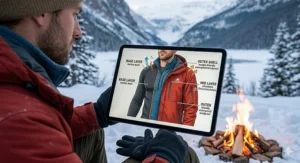
Base layers determine winter camping comfort more than any other single piece of clothing, and the Woolx Merino Wool set delivers premium performance at mid-tier pricing. This 230-gram merino blend (85% merino wool, 15% nylon for durability) provides the warmth-to-weight ratio and odour resistance that synthetic alternatives can’t match — critical when you’re wearing the same layers for 2-3 days straight.
Why Merino Matters for Canadian Winter Camping: Synthetic base layers work adequately, but merino wool regulates temperature better across varying activity levels. When you’re hiking into your campsite at -8°C, working hard enough to sweat, merino wicks moisture while maintaining warmth — synthetics get clammy. Later, when you’re sitting around camp at -15°C barely moving, that same merino layer continues insulating. I’ve tested both, and merino consistently performs better across Canadian winter’s wide temperature swings.
The Woolx set uses flatlock seams that prevent chafing during extended wear, and the fit runs true to size with slight compression (order one size up if you prefer looser layers). The tops feature long sleeves with thumb loops that prevent gaps between gloves and sleeves — a small detail that matters when windchill factors in. The bottoms have an elastic waistband that stays put without requiring constant adjustment.
Merino’s natural antimicrobial properties mean you can wear these layers multiple days without developing the bacterial funk that synthetic base layers acquire after 24 hours. For multi-day winter trips, this dramatically reduces clothing bulk — you need fewer changes.
Canadian Climate Considerations: Eastern Canadian winters often involve temperature fluctuations above and below freezing. Merino handles these transitions better than synthetics, which either overheat you when temperatures climb or fail to insulate when damp. The 230-gram weight represents a sweet spot: warm enough for most Canadian winter camping, but breathable enough to prevent overheating during active periods.
Customer Feedback: Amazon.ca reviewers (4.4/5 stars, 150+ reviews) frequently mention this set lasting multiple seasons without pilling or losing warmth. Several Alberta reviewers note wearing these for ski touring and winter hiking beyond just camping. Complaints involve sizing inconsistency between colours and occasional itchiness for people with sensitive skin (the 15% nylon helps, but pure merino remains softer).
Pros:
✅ Excellent temperature regulation across activity levels
✅ Natural odour resistance for multi-day trips
✅ Durable enough for multiple seasons
Cons:
❌ Requires careful washing (cold water, air dry) to maintain performance
❌ Slightly itchy for sensitive skin compared to premium brands
Price & Value: Typically $85-$125 CAD for the complete set on Amazon.ca. Premium merino base layers from Icebreaker or Smartwool cost $160+ CAD for just the top, making Woolx roughly half the price for comparable performance. For budget-conscious Canadian campers assembling their first winter kit, this set represents excellent value.
7. Kamik NationPlus Winter Boots
Canadian-made Kamik NationPlus boots address the most commonly overlooked aspect of budget winter camping gear: footwear capable of handling actual Canadian winter conditions. Rated to -40°C, these boots use 8mm Thinsulate insulation combined with a waterproof seam-sealed nylon upper and genuine rubber shell — a construction method that’s kept Canadian feet warm since 1898.
Why Generic Winter Boots Fail in Winter Camping: The difference between winter boots designed for walking from your car to Tim Hortons versus winter camping boots lies in sustained cold exposure. Regular winter boots might keep your feet warm for an hour at -20°C, but after four hours sitting relatively stationary at a frozen lake ice fishing or around a winter campfire, inadequate insulation leads to cold feet and potentially frostbite. The NationPlus boots’ thick insulation and thermal lining maintain warmth during extended periods of minimal foot movement.
The boots feature a removable 8mm Thinsulate liner that you can dry overnight in your tent (hang near the tent ceiling where warm air accumulates), a crucial feature for multi-day trips. The rubber shell extends well above the ankle, preventing snow infiltration during deep powder hiking. The lug sole provides adequate traction on packed snow and ice, though serious ice requires aftermarket traction devices like Yaktrax.
Sizing for Winter Camping: Order one size larger than your regular shoe size to accommodate thick wool socks (essential for winter camping). This extra space also prevents circulation restriction that causes cold toes. I wear size 10 normally and ordered size 11 — perfect fit with heavyweight merino wool socks.
Canadian Design Advantages: As a Canadian company, Kamik designs specifically for our winter conditions. These boots handle the temperature fluctuations common in southern Ontario or coastal British Columbia without breaking down, and they’re available at Canadian Tire, Sport Chek, and Amazon.ca with easy warranty service through Canadian retailers.
Customer Feedback: Amazon.ca reviews (4.3/5 stars, 200+ reviews) praise these boots’ warmth and waterproofing. Reviewers from Yukon, Northwest Territories, and Northern Manitoba — regions where -40°C isn’t hyperbole — confirm the temperature rating’s accuracy. Complaints focus on the break-in period (initially stiff, requiring several wears) and weight (heavier than fashion winter boots).
Pros:
✅ Genuine Canadian winter temperature rating
✅ Removable liners for overnight drying
✅ Made in Canada with accessible warranty service
Cons:
❌ Heavy (approximately 1.1 kg per boot) compared to hiking boots
❌ Bulky design not ideal for summer backpacking versatility
Price & Value: Ranges from $125-$165 CAD on Amazon.ca. Comparable cold-weather boots from Sorel or Baffin cost $200+ CAD, making these a budget-friendly option without sacrificing Canadian winter capability. For winter campers who’ve struggled with cold feet, these boots represent a worthy investment that enables longer, more comfortable winter trips.
Maximising Value: How to Build a Complete Winter Camping Setup Under $1,000 CAD
Building a capable winter camping kit on a tight budget requires strategic prioritisation. Not all gear deserves equal investment, and understanding where to splurge versus save dramatically impacts your available budget. I’ve refined this approach through five winters of testing budget gear, and the framework below represents proven strategies for Canadian conditions.
The Foundation: Thermal Protection Trilogy
Your three critical investments — sleeping bag, sleeping pad, and shelter — form the thermal protection trilogy that determines whether you’ll sleep warm or spend miserable nights shivering. Allocate approximately 60% of your total budget ($600 CAD of a $1,000 budget) to these three items:
Sleeping Bag ($100-$140 CAD): The Coleman Big Basin 15°F or similar synthetic bag provides reliable warmth without down’s price premium. Save $200+ compared to down bags while accepting 20-30% more packed bulk.
Sleeping Pad ($70-$100 CAD): Never compromise here. A proper insulated pad with R-value 5+ like the HIKENTURE prevents heat loss to frozen ground. Foam pads cost $30 CAD less but deliver inferior comfort and warmth.
Shelter ($180-$280 CAD): Choose based on camping style. The Naturehike four-season tent works for traditional camping; the OneTigris hot tent suits those willing to invest in a wood stove system for extended winter comfort.
Strategic Compromises: Where Budget Gear Performs
Camp Stove ($50-$75 CAD): The Coleman Classic represents minimal compromise. More expensive stoves offer better cold-weather fuel systems, but propane remains affordable and widely available across Canada.
Base Layers ($90-$130 CAD): Woolx merino delivers 80% of premium brand performance at 50% of the cost. Skip synthetic alternatives entirely — merino’s superior temperature regulation and odour resistance justify the investment.
Boots ($130-$170 CAD): Kamik’s Canadian-made boots provide genuine -40°C protection. Fashion winter boots from mall retailers cost less but fail in actual winter camping conditions.
What You Can Skip Initially
Gaiters: Nice to have, but not essential for car camping near established trails. Snowpants and tall boots provide adequate snow protection. Save $40-$60 CAD.
Expedition Goggles: Unless you’re attempting above-treeline winter mountaineering, regular sunglasses with side shields suffice. Save $80-$120 CAD.
Luxury Cookware: Start with a single pot and your normal eating utensils. Titanium cookware sets save weight but cost $150+ CAD more than basic aluminum options that perform identically for beginners.
Total Budget Breakdown Example
| Item | Product | Budget (CAD) |
|---|---|---|
| 4-Season Tent | Naturehike Cloud-Up 2 | $190 |
| Sleeping Bag | Coleman Big Basin 15°F | $120 |
| Sleeping Pad | HIKENTURE R-Value 5.5 | $80 |
| Camp Stove | Coleman Classic Propane | $65 |
| Base Layer Set | Woolx Merino Top & Bottom | $110 |
| Winter Boots | Kamik NationPlus | $145 |
| Wool Socks (3 pairs) | Kirkland Merino Trail | $40 |
| Headlamp | Petzl Tikka | $35 |
| Water Bottles (insulated) | Thermos Stainless | $45 |
| First Aid Kit | Basic Wilderness Kit | $35 |
| Total | $865 CAD |
This leaves $135 CAD for incidentals: additional clothing layers from your existing wardrobe, backpack if needed, food, and campsite fees. The setup above enables comfortable winter camping in most Canadian conditions outside extreme Arctic environments.
Winter Camping Essentials: What Budget Buyers Should Prioritise
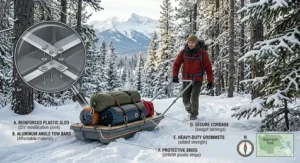
The outdoor industry profits from convincing new winter campers they need $5,000 worth of specialised equipment. Reality differs significantly. After testing dozens of products across five Canadian winters, I’ve identified the genuine necessities versus marketing-driven “essentials.”
Critical Gear You Cannot Skip
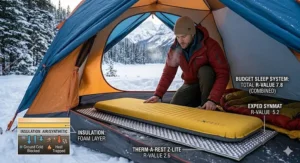
Proper Insulation Systems: Your sleeping bag and pad work as a system, not independent pieces. A -20°C sleeping bag paired with an R-value 2 pad will leave you cold because heat escapes through the compressed bag beneath you. Always match sleeping bag ratings with adequate pad R-values: for -10°C camping, minimum R-value 4; for -20°C, minimum R-value 5.5.
Moisture Management Layers: Cotton kills in winter. Every layer touching your skin must wick moisture away. When you’re exerting yourself hiking to your campsite, you’ll sweat even at -15°C. That moisture needs escape routes, or it’ll freeze against your skin later. Merino wool or synthetic base layers, mid-layers, and outer shells with pit zips allow moisture escape while maintaining warmth.
Caloric Fuel: Your body’s a furnace, and winter camping dramatically increases fuel consumption. Budget an extra 1,000-1,500 calories daily beyond your normal intake. High-fat foods (nuts, cheese, butter) provide sustained energy for cold nights. I pack butter, peanut butter, and chocolate — unglamorous but effective.
Overrated Gear That Drains Budgets
Heated Insoles: Battery-powered heated insoles cost $150+ CAD and provide 4-6 hours of warmth before dying. Proper boots with adequate insulation cost $150 CAD and work indefinitely. Skip the electronics.
Compression Stuff Sacks: Manufacturers convince you that compressing your sleeping bag smaller matters. For car camping (where most budget winter campers start), the extra $40-$60 CAD provides zero functional benefit. Your car’s trunk has space.
Brand-Name Water Filters: Winter camping often means melting snow for water, rendering filters unnecessary. A $15 CAD pot works as well as a $150 CAD filtration system when you’re boiling snow.
DIY Solutions That Save Money
Vapour Barrier Liners: Commercial VBL sleeping bag liners cost $100+ CAD. A $3 CAD emergency space blanket inside your sleeping bag provides similar vapour barrier properties. It’s crinkly and less comfortable, but functionally equivalent for occasional use.
Insulated Water Bottle Covers: Rather than buying $40 CAD insulated bottle sleeves, wrap your water bottle in an old wool sock secured with duct tape. Works identically, costs nothing if you’re using socks destined for disposal anyway.
Boot Dryers: Commercial boot dryers cost $80+ CAD. Fill your boots with newspaper, place them upside-down near (not on) your tent’s ceiling where warm air accumulates. Free and effective.
Investment-Grade Purchases Worth the Splurge
Quality Headlamp: Cheap headlamps fail at -20°C when plastic becomes brittle and batteries drain rapidly. A Petzl or Black Diamond headlamp ($40-$60 CAD) maintains function in extreme cold and provides reliable illumination during 16-hour winter nights.
Proper Winter Boots: This isn’t where you save $50 CAD. Inadequate boots lead to frostbite, ruined trips, and potential medical expenses far exceeding any savings. Invest the $150-$170 CAD for Canadian-rated boots.
Insulated Sleeping Pad: A $30 CAD foam pad seems tempting compared to an $80 CAD insulated inflatable. That $50 CAD saving guarantees cold, uncomfortable nights. Your sleeping pad might be your most important winter camping purchase.
Common Mistakes When Buying Budget Winter Camping Gear
Five years testing budget winter camping equipment revealed patterns in what trips up new Canadian winter campers. These mistakes cost money, compromise safety, and create miserable experiences that discourage people from continuing with winter camping. Avoid these pitfalls:
Mistake #1: Trusting Temperature Ratings at Face Value
Sleeping bag temperature ratings represent survival limits, not comfort ranges. When a sleeping bag claims “-15°C,” that’s the temperature where an average person in thermal underwear won’t die of hypothermia — not where they’ll sleep comfortably. For Canadian winter camping, subtract 10°C from the stated rating to find the actual comfort range. A “-15°C” bag keeps you comfortable around -5°C, assuming you’re using an adequate sleeping pad.
The EN/ISO testing standard (now mandatory in Europe, optional in North America) provides more reliable ratings than manufacturer claims. Look for bags displaying three temperature ratings: “Comfort” (temperature where an average woman sleeps comfortably), “Lower Limit” (temperature where an average man sleeps uncomfortably but safely), and “Extreme” (survival limit). Canadian winter campers should focus on the “Lower Limit” rating and add a 5°C safety margin.
Mistake #2: Ignoring Sleeping Pad R-Values
R-value measures insulation resistance to heat flow — higher numbers mean better insulation. This isn’t marketing hype; it’s physics. Canadian winter camping requires minimum R-value 4, preferably 5+. Foam pads typically provide R-value 2-3, insufficient for subfreezing camping regardless of your sleeping bag’s rating. The ground at -20°C will conduct heat away from your body faster than your sleeping bag can replace it.
Budget shoppers often buy a premium sleeping bag while skimping on their pad, then wonder why they’re cold. Invert that priority: a $80 CAD insulated pad with an $100 CAD sleeping bag outperforms a $300 CAD sleeping bag with a $30 CAD foam pad every time. The standardised ASTM F3340 R-value testing (mandatory since 2020) makes cross-brand comparisons finally reliable — use it.
Mistake #3: Buying Too Small
Winter camping gear must accommodate layers. A tent that perfectly fits two people in summer becomes claustrophobic when those same people are wearing puffy jackets, storing wet gear inside to prevent freezing, and need space for extended time inside during long winter nights. Buy one size larger than summer camping: a three-person tent for two winter campers, a four-person tent for three.
Similarly, boots require extra space for thick wool socks and circulation. Tight boots restrict blood flow, causing cold toes regardless of insulation quality. Order winter boots one full size larger than your regular shoe size. Yes, they’ll feel clunky initially, but properly sized winter boots prevent frostbite.
Mistake #4: Overlooking Canadian Winter’s Unique Demands
Many budget camping products target American markets where “winter camping” might mean 5°C nights in California. Canadian winters present genuinely cold conditions: -20°C in the Prairies, -30°C in Northern Ontario, plus humidity in Maritime provinces that makes -10°C feel colder than dry Prairie -20°C. Products rated for “winter use” in American terms often fail in Canadian winter reality.
Verify gear specifications match Canadian winter conditions. Look for gear tested or designed by Canadian companies (Kamik, Winterial, Canadian-specific product lines from international brands). Check Amazon.ca reviews specifically from Canadian buyers in cold provinces — their experiences matter more than reviews from Arizona.
Mistake #5: Forgetting About Moisture Management
Winter’s defining challenge isn’t cold — it’s managing moisture in cold conditions. You’ll sweat hiking to your campsite. You’ll generate moisture breathing overnight in your sleeping bag. You’ll encounter snow that melts on contact with warm gear. Every piece of clothing and equipment must either repel moisture or continue insulating when damp.
Budget shoppers often buy cotton-blend clothing because it’s cheap, then discover cotton retains moisture and loses all insulating properties when wet. Similarly, choosing a sleeping bag with a cotton liner rather than synthetic saves $20 CAD but guarantees a damp, cold bag after two nights. Always prioritise moisture management over initial cost — damp gear is worthless gear, regardless of how little you paid for it.
Understanding Canadian Winter Camping Regulations and Safety Standards
Winter camping in Canada operates under specific regulations varying by province and land designation. Understanding these rules before your trip prevents fines, ensures safety, and protects Canada’s wilderness for future users. Here’s what budget winter campers need to know:
Parks Canada Winter Camping Requirements
Parks Canada administers national parks and historic sites, each with specific winter camping regulations. Winter backcountry permits typically cost $10-$13 CAD per person per night, substantially less than summer rates. However, many national parks limit winter camping to designated areas where avalanche risk is manageable and rescue access exists.
Critical Safety Requirements:
- Winter permits required for all backcountry overnight stays (free for day use in most parks)
- Group size minimums (typically 2+ people) for safety
- Mandatory avalanche safety gear in mountain parks (beacon, probe, shovel)
- Fire restrictions (many parks prohibit wood fires entirely in winter; gas stoves only)
- Food storage requirements remain in effect (bear canisters or provided lockers, even in winter)
Banff, Jasper, and Glacier National Parks maintain detailed winter permit systems tracking who’s camping where. This isn’t bureaucracy — it’s life safety infrastructure. When conditions deteriorate or emergencies occur, park wardens need to know who’s in the backcountry. Register your itinerary and stick to it.
Provincial Park Winter Camping
Provincial parks vary wildly in winter camping policies. Ontario Parks keeps select campgrounds open year-round with reduced facilities (pit toilets, no running water, no electrical hookups). Winter camping fees drop to $11-$18 CAD per night compared to $40+ CAD in summer. However, services decrease proportionally: you’re self-sufficient for water, waste, and emergencies.
Québec’s SEPAQ network offers exceptional winter camping infrastructure, including heated shelters and groomed trails, reflecting the province’s strong winter outdoor culture. British Columbia provincial parks typically close campgrounds November-March, but backcountry camping remains permitted year-round on Crown land.
Crown Land Camping Regulations
Crown land (publicly owned land not designated as parks) covers huge portions of Canada, particularly in Northern Ontario, British Columbia’s interior, and most territories. Winter camping on Crown land is generally permitted and free, with key exceptions:
- 21-day maximum stay in one location (Ontario)
- Minimum 30 metres from water bodies and roads
- No camping within 1 kilometre of provincial parks (to prevent circumventing campground fees)
- Fire bans apply in designated periods (check with Ministry of Natural Resources)
Crown land camping provides budget winter campers with unlimited free camping options, but zero infrastructure. You’re entirely self-sufficient: no facilities, no cell service, no nearby help if problems arise. This amplifies the importance of proper gear and preparation.
Cold Weather Safety Standards and Certifications
Unlike Europe’s strict outdoor equipment certification requirements, Canada and the USA rely on voluntary standards. However, certain certifications indicate legitimate winter-capable gear:
CSA Certification (Canadian Standards Association): For propane stoves and heaters, CSA certification confirms safe operation in Canadian conditions. This matters — uncertified propane appliances designed for milder climates can malfunction in extreme cold.
ASTM F3340 R-Value Testing: Since 2020, sleeping pad manufacturers can voluntarily test under standardised conditions. Pads displaying ASTM F3340 ratings provide reliable cross-brand comparisons. Pads without this certification may use inflated manufacturer claims.
EN 13537 Temperature Ratings: European standard for sleeping bag temperature ratings. Not mandatory in Canada, but provides more realistic performance expectations than manufacturer marketing claims.
Budget gear often lacks these certifications to reduce costs. That doesn’t automatically mean it’s unsafe, but it transfers testing responsibility to you. Read Canadian customer reviews extensively, particularly from users in cold provinces, before trusting unverified performance claims.
FAQ: Budget Winter Camping Gear for Canadians
❓ Can I use a three-season tent for winter camping in Canada?
❓ What's the minimum temperature rating I need for a sleeping bag in Canadian winters?
❓ How do I prevent my water from freezing during winter camping trips?
❓ Is it worth buying used winter camping gear to save money?
❓ Can I winter camp in Canada without spending $1,000+ on gear?
Conclusion: Start Your Canadian Winter Camping Journey
Budget winter camping gear has evolved dramatically over the past five years, democratising access to experiences previously reserved for well-funded outdoor enthusiasts. The products reviewed in this guide — from Naturehike’s surprisingly capable four-season tents to Coleman’s reliable cold-weather sleeping bags — prove that Canadian winter camping no longer requires $5,000 equipment investments.
Your first winter camping trip doesn’t demand perfection. It requires adequate thermal protection, realistic expectations, and willingness to learn from experience. The $865 CAD gear kit outlined in this article enables comfortable winter camping in most populated Canadian regions. Will it handle a February expedition to Baffin Island? No. Will it support enjoyable weekend trips to provincial parks across Ontario, Québec, British Columbia, and the Prairies? Absolutely.
Start small: a single winter night at a provincial park within an hour of home. Test your gear, identify gaps, and gradually expand your capabilities. Winter camping rewards patience and incremental skill development more than expensive equipment. The frozen Canadian landscape — whether Laurentian forests, Prairie coulees, or Coastal Range valleys — offers experiences impossible during summer’s crowds and bugs.
Every piece of gear recommended here exists on Amazon.ca with Prime shipping, reflecting the reality of Canadian outdoor retail. While supporting local outdoor shops matters, budget constraints are equally valid. These products provide the foundation; your experience camping builds the expertise.
The hardest part of winter camping isn’t the cold — it’s inertia. Overcome that initial resistance, acquire the basics, and discover why thousands of Canadians voluntarily choose subfreezing nights in tents over warm houses. The quiet, the solitude, the satisfaction of thriving in conditions that challenge most people — winter camping provides rewards no amount of money purchases.
Recommended for You
- Winter Camping Essentials Checklist: 7 Must-Haves for Canada 2026
- 7 Best Avalanche Probe and Shovel Kits Canada 2026
- 7 Best Avalanche Beacons Canada 2026
Disclaimer: This article contains affiliate links. As an Amazon Associate, I earn from qualifying purchases. If you purchase products through these links, we may earn a small commission at no additional cost to you.
✨ Found this helpful? Share it with your friends! 💬🤗
