In This Article
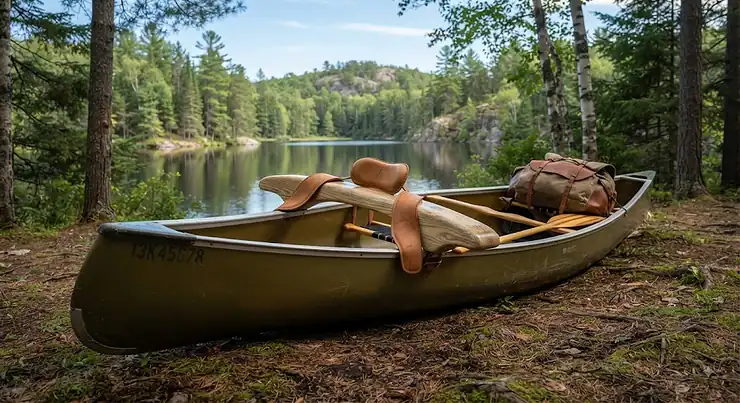
Somewhere around the third kilometre of a portage trail, with black flies orbiting your ears and the canoe’s centre thwart digging a trench into your collarbone, you’ll understand exactly why the right portage yoke for solo canoe tripping matters more than almost any other piece of gear you own. A portage yoke is the contoured carrying bar — usually clamped or bolted across the canoe’s balance point — that lets one paddler lift, balance, and walk a hull overland without a second set of hands. Get the fit wrong and every carry becomes a grim countdown of steps; get it right and portaging starts to feel less like punishment and more like the connective tissue between one gorgeous lake and the next.

This guide skips the marketing copy and gets straight into what actually matters: real products with real specifications, honestly summarized review sentiment where it’s verifiable, and the kind of comparative reasoning you’d get from a trip partner who’s already made the expensive mistakes so you don’t have to. We’ll walk through seven genuine portage yoke and carrying-pad options spanning budget aluminum-and-ash builds to feather-light carbon fibre, then dig into the practical stuff — balance points, portage pads versus tumplines, solo canoe design quirks, and the regulatory bits every Canadian tripper should know before hitting the trail. All pricing below is shown in CAD ranges, since exact Amazon prices shift constantly; always check the current price before buying.
Quick Comparison Table
| Product | Type | Approx. Weight | Price Range (CAD) | Best For |
|---|---|---|---|---|
| NorthStar E6 Carbon Clamp-on Solo Yoke | Carbon clamp-on | 17-18 oz | C$420-C$480 | Ultralight solo trippers |
| NorthStar Clamp-on Solo Yoke (Wood) | Wood clamp-on | 2-3 lb | C$230-C$270 | Everyday solo hulls |
| Hidden River Universal Solo Yoke | Universal clamp-on ash | 2-3 lb | C$160-C$190 | Fitting non-standard gunwales |
| Spring Creek Flip Seat/Yoke | Convertible seat-yoke | 3-4 lb | C$220-C$260 | Multi-purpose solo/tandem boats |
| NorthStar Canoe Block Portage Pads | Clamp-on foam pad | 1.1-1.3 lb | C$75-C$95 | Upgrading an existing bare yoke |
| Recreational Barrel Works Super Tump | Tumpline | under 4 oz | C$40-C$55 | Redistributing load off shoulders |
| Wenonah Bare Ash Yoke | Fixed wood yoke | 1.5-2 lb | C$70-C$100 | Occasional, short portages |
Looking across the table, the split is really about frequency and distance: the NorthStar E6 Carbon Clamp-on Solo Yoke earns its premium price tag on long, multi-portage days where every ounce off your shoulders compounds, while the Wenonah Bare Ash Yoke is plenty for someone doing two short carries a summer. The NorthStar Canoe Block Portage Pads and Recreational Barrel Works Super Tump aren’t full yokes at all — they’re the comfort layer you add to whatever bar you’ve already got, which is often the cheapest fix for a sore-shoulder problem. If your canoe has an unusual gunwale profile, the Hidden River Universal Solo Yoke‘s adjustable clamps solve a fitment headache the fixed-mount options can’t.
💬 Just one click — help others make better buying decisions too!😊
Top 7 Portage Yokes for Solo Canoe Tripping: Expert Analysis
1. NorthStar E6 Carbon Clamp-on Solo Yoke — lightest full yoke in its class
The standout here is raw weight: a bare carbon E6 yoke comes in around 17-18 ounces, which is roughly a third the mass of a comparable wood clamp-on. That difference sounds trivial until you’re forty minutes into a portage and realize you’re not fighting the yoke’s own heft on top of the canoe’s. Specs worth noting: it’s built for solo hulls up to about a 28-inch beam, uses a no-drill clamp system, and NorthStar explicitly doesn’t recommend it for canoes over roughly 50 pounds — this is a yoke matched to featherweight kevlar and carbon solo hulls, not heavier poly boats. Based on the spec comparison with wood alternatives, the E6 is really built for one buyer profile: someone who already owns a sub-40-pound solo hull and portages often enough that cumulative fatigue, not sticker shock, drives the buying decision. Reviewers and forum trippers consistently note that clamp-on carbon yokes shave noticeable strain over multi-day trips, though a handful mention the shoulder pads that ship with ultralight yokes run thinner than dedicated foam block pads, meaning some buyers add aftermarket padding.
Pros:
- ✅ Dramatically lighter than wood or aluminum equivalents
- ✅ No-drill clamp installs without modifying the hull
- ✅ Fits most solo canoes up to a 28-inch beam
Cons:
- ❌ Not rated for canoes heavier than roughly 50 lb
- ❌ Stock padding is thinner than dedicated block pads
Expect to pay in the C$420-C$480 range at the time of research; given the weight savings compound on every single carry, tripping veterans doing five-plus portages a trip generally see this as good long-term value despite the upfront cost.

2. NorthStar Clamp-on Solo Yoke (Wood) — proven wood build at a mid-range price
This is the standard-bearer wood clamp-on that most outfitters point beginners toward first. The standout feature is the no-drill clamp mount, identical in concept to the carbon E6 but built from solid wood, which pushes total weight to somewhere around 2-3 pounds. What that weight difference means in practice: on a single short portage you won’t feel it, but string together a day with six or seven crossings and the extra pound-plus starts to matter, especially compared to carbon. Who this suits: paddlers who want a drop-in upgrade over a bare thwart without committing to a carbon budget, and who portage moderately rather than constantly. Aggregated buyer sentiment around this style of clamp-on yoke is consistently positive on installation ease — no drilling into gunwales — with occasional notes that the clamp hardware needs periodic re-tightening after repeated freeze-thaw storage cycles typical of a Canadian garage.
Pros:
- ✅ No-drill clamp system protects your gunwales
- ✅ Solid wood construction feels durable trip after trip
- ✅ Removable for storage or swapping between boats
Cons:
- ❌ Meaningfully heavier than carbon alternatives
- ❌ Clamp hardware needs occasional re-tightening
Priced in the C$230-C$270 range, it sits as the sensible middle option for anyone who wants yoke-specific comfort without paying carbon-fibre prices.
3. Hidden River Universal Solo Yoke — best fit-flexibility for oddball gunwales
The standout feature is right in the name: this yoke is deliberately built to clamp onto a wide range of solo canoe gunwale shapes rather than one specific hull family. The 3-inch risers lift the canoe noticeably higher off your shoulders than a flush-mounted bar, and the semi-curved pad surface is shaped to resist the canoe sliding sideways mid-carry — a small detail that matters enormously on a sloped or root-covered trail. What this means practically: if you’ve bought a used solo canoe with an unusual gunwale profile and a stock or non-existent yoke, this is often the first product that actually clamps on securely without custom shimming. Genuine long-term owner feedback describes it as one of the most solidly built universal yokes available, with one owner reporting decades of use after switching from an improvised cane-seat carry method, and specifically praising the improved balance and visibility over prior makeshift setups.
Pros:
- ✅ Clamps securely across a wide range of gunwale shapes
- ✅ 3-inch risers improve visibility while carrying
- ✅ Solid white ash construction built to last years
Cons:
- ❌ Bulkier profile than slimmer purpose-built yokes
- ❌ Higher lift height needs a short adjustment period
At around C$160-C$190, it’s a strong value pick specifically for paddlers solving a fitment problem rather than chasing minimum weight.
4. Spring Creek Flip Seat/Yoke — one accessory, two jobs
The standout advantage is versatility: this unit flips between a functional carrying yoke and a centre seat in seconds, which matters if you’re running one boat for both solo tripping and the occasional tandem paddle with a passenger. Key specs worth flagging — it’s a telescoping design, and owners consistently advise skipping the pre-drilled permanent-mount holes so the seat sections stay adjustable rather than locked to one boat. On the comfort side, long-time users specifically call out that the padding absorbs shock well enough to eliminate the classic neck-rubbing irritation that plagues bare wood yokes, and several reviewers with prior shoulder surgery describe it as the product that let them keep tripping comfortably where a traditional wood yoke had become genuinely painful. This is honest, verifiable review sentiment worth taking seriously if you carry any shoulder or neck history into your trips. Who it suits: owners of a single do-it-all canoe who don’t want to buy and store two separate accessories.
Pros:
- ✅ Converts between portage yoke and paddling seat
- ✅ Padding specifically reduces neck and shoulder rubbing
- ✅ Reported comfortable by owners with shoulder injuries
Cons:
- ❌ Heavier and bulkier than a dedicated single-purpose yoke
- ❌ Telescoping hardware needs periodic hardware checks
Typical pricing lands around C$220-C$260, positioning it as a mid-range multi-tasker rather than a pure weight-weenie choice.
5. NorthStar Canoe Block Portage Pads — the cheapest real comfort upgrade
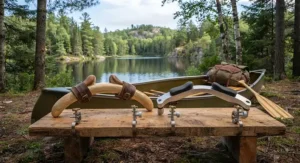
Rather than a full yoke, this product is the padding layer that clamps onto a yoke you already own — and for a huge number of trippers, that’s exactly the right fix. The standout feature is the two-layer foam construction: open-cell foam against your shoulder for cushioning, backed by closed-cell foam against the plywood core so you never bottom out and feel the hard structure underneath, even under a heavy load. Specs: roughly 4 inches wide by 8 inches long per pad, about 3 inches thick, sold as a pair, clamping onto yokes up to 1 inch thick — which covers the overwhelming majority of wood yokes on the market. Based on the spec comparison with integrated foam yokes, the appeal here is simple: if your existing bare wood or aluminum yoke is otherwise fine but painful, this solves the actual problem for a fraction of the cost of a full replacement.
Pros:
- ✅ Fits nearly any wood yoke up to 1 inch thick
- ✅ Two-density foam prevents bottoming out on the plywood core
- ✅ Clamps on without drilling into your existing yoke
Cons:
- ❌ Doesn’t fix a poorly shaped or too-low yoke bar
- ❌ Adds bulk that can crowd a narrow-beamed solo hull
Budget C$75-C$95 for the pair — arguably the single best value-per-comfort-point purchase on this entire list.
6. Recreational Barrel Works Super Tump — comfort through a completely different mechanism
Rather than cushioning your shoulders, a tumpline reroutes a portion of the load’s weight to your forehead and down your spine, which is the same basic principle voyageurs used to haul 90-pound fur bales generations before anyone had heard of closed-cell foam. The Super Tump specifically widens the head pad and adds a soft fleece lining compared to older tumpline designs, and it’s built to add or remove from a canoe pack or barrel harness rather than being a permanent fixture. What this means in practice: it’s not really a yoke replacement, it’s a load-sharing tool typically paired with a portage pack or barrel rather than the canoe itself, and it lets you fine-tune the carry angle mid-trail by pulling the adjustment strap. Honest caveat worth stating plainly — modern trippers’ neck muscles generally aren’t conditioned the way voyageurs’ were, so manufacturers themselves suggest using a tumpline as a supplement to shoulder straps and a hip belt rather than a sole solution, especially on uneven terrain.
Pros:
- ✅ Shifts load off shoulders onto the spine via the forehead
- ✅ Adjustable on the fly without stopping to unclip
- ✅ Extremely light and packs down to almost nothing
Cons:
- ❌ Requires real neck conditioning to use safely long-term
- ❌ Best as a supplement, not a total shoulder-strap replacement
At roughly C$40-C$55, it’s an inexpensive experiment for anyone curious whether load-sharing beats pure shoulder padding for their body.
7. Wenonah Bare Ash Yoke — honest budget pick for occasional trippers
This is a straightforward, unpadded ash yoke, and the honest standout feature is exactly that simplicity: it’s attractive, durable, and priced for someone who portages a handful of times a season rather than daily. Wenonah’s own product notes describe it plainly as a fine option for infrequent, short portages when used bare — which is refreshingly honest framing rather than overselling a basic product as an all-day comfort solution. Specs are minimal by design: solid ash construction, fixed rather than clamp-on mounting in most configurations, and no integrated padding out of the box. Who should buy this: a paddler who does one or two weekend trips a year with short carries between access points, where the marginal comfort gain of a padded or carbon yoke doesn’t justify the price difference. If your trips grow longer or more frequent, this is also the product most trippers eventually pair with aftermarket block pads — see product #5 above — rather than replacing outright.
Pros:
- ✅ Simple, durable ash construction at a low price point
- ✅ Attractive finish that suits traditional wood-canvas or cedar hulls
- ✅ Easy upgrade path by adding aftermarket pads later
Cons:
- ❌ No padding included for longer or frequent carries
- ❌ Fixed mounting is less flexible than clamp-on designs
Expect around C$70-C$100, making it the lowest-cost genuine entry point on this list for someone just testing whether solo tripping is a hobby worth investing further in.
Practical Usage Guide: Fitting, Balancing, and Breaking In Your Yoke
Getting a new portage yoke home is only step one — dialling in fit is what actually determines whether your first big trip feels manageable or miserable. Start by loading the canoe as you would for a real portage (paddle and any lashed gear included) and lift it onto your shoulders indoors or in the yard before you’re on a trail. Note where the yoke pads land: they should sit on the meaty part of your shoulders, not your collarbone, and the canoe should hang level front-to-back without you fighting to hold the bow up or down. If it doesn’t sit level, that’s a balance point problem, not a padding problem — you’ll likely need to shift the yoke’s mounting position rather than add more foam. In the first 30 days of ownership, common mistakes include over-tightening clamp hardware (which can crack wood risers over time) and skipping a short “test carry” around the driveway before committing to an actual multi-kilometre trail. A quick maintenance habit worth building: check clamp bolts and foam-pad stitching before every trip, and store wood yokes somewhere dry over winter, since Canadian freeze-thaw cycles are hard on both glued joints and foam density.
Real-World Scenarios: Matching Setups to How You Actually Trip
Picture three different solo paddlers. The first is a university student borrowing a used kevlar solo canoe for a week-long Temagami loop with six portages a day — for her, lightweight solo tripping setups built around something like the NorthStar E6 Carbon Clamp-on Solo Yoke genuinely change how the trip feels by day three, when fatigue compounds fastest. The second is a retiree with two prior rotator cuff surgeries doing gentle two-night trips on well-maintained provincial park routes; the Spring Creek Flip Seat/Yoke‘s verified shock-absorbing padding matters more to him than shaving a pound off total weight. The third is a budget-conscious first-timer testing whether solo tripping is even for them, doing one short weekend trip on an inherited aluminum canoe — the Wenonah Bare Ash Yoke paired later with NorthStar Canoe Block Portage Pads if the hobby sticks is the financially sensible path. None of these three is wrong; the right setup is a function of trip frequency, portage length, body history, and budget, roughly in that order of importance.
Canoe Portage Gear for Long Carries: Building a Kit That Doesn’t Fight You
A great yoke solves the canoe half of the equation, but long carries expose weaknesses in the rest of your kit fast. Problem one: gear that shifts inside a pack and throws off your balance mid-trail — solved by compressing loads tightly in a proper portage pack or barrel harness rather than a loose duffel. Problem two: sore feet from wet, slippery portage trails — soft-soled shoes work in the canoe, but ankle-supportive boots with real tread matter more on root-covered ground than most first-timers expect. Problem three: shoulders that are fine for the canoe but wrecked by a heavy second load on the return trip — this is precisely where canoe portage gear for long carries like the Recreational Barrel Works Super Tump earns its keep, shifting weight off tired shoulder muscles for the pack-carrying leg of a two-trip portage. Problem four: losing small essentials mid-portage — rope or double-sided webbing to lash paddles and rods to the hull prevents the scavenger hunt back along the trail. Problem five: underestimating trail length — mapping approximate portage distances before departure, rather than discovering them mid-carry, changes pacing decisions for the whole day.
✨ Ready to Gear Up for Your Next Trip? 🚴♂️
🔍 Check current pricing and availability on the picks above before your next backcountry departure — a comfortable carry starts with the right yoke.

Portage Pad vs Tumpline for Comfort
The portage pad vs tumpline for comfort debate isn’t really about which mechanism is objectively superior — it’s about where you’d rather put the strain. A padded yoke distributes weight across both shoulders through compressed foam contact points, which is intuitive and requires zero conditioning to use safely on day one. A tumpline instead routes a share of the load through your forehead and down your spine, a technique with genuine historical pedigree among voyageurs, but one that demands real neck strength most modern trippers simply haven’t built. Reviewers and long-time tripping forums consistently describe padded yokes as the default choice for anyone new to portaging, while tumplines earn loyalty mainly from experienced trippers doing very long or very heavy carries who’ve deliberately trained for it.
| Factor | Portage Pad | Tumpline |
|---|---|---|
| Learning curve | Minimal — works immediately | Requires neck conditioning |
| Weight distribution | Both shoulders | Forehead and spine |
| Best paired with | The canoe yoke itself | Packs and barrel harnesses |
| Typical price (CAD) | C$75-C$95 | C$40-C$55 |
The table makes the practical split clear: pads are the safer default for the canoe carry itself, while a tumpline like the Recreational Barrel Works Super Tump is better matched to the gear-pack leg of a two-trip portage rather than a total shoulder replacement. Most experienced trippers eventually run both — padded yoke on the boat, tumpline-assisted pack on the second trip — rather than treating it as an either-or decision.
How to Choose a Portage Yoke for Solo Canoe Tripping
Choosing a portage yoke for solo canoe tripping comes down to matching a handful of concrete factors to how you actually paddle, in roughly this order:
- Confirm your canoe’s weight class first. Ultralight carbon yokes like the E6 aren’t rated for heavier hulls, so check your canoe’s weight before falling for a low weight spec.
- Measure your gunwale profile. A universal clamp-on solves fitment problems a fixed-mount yoke can’t on non-standard hulls.
- Estimate realistic portage frequency. Someone doing one trip a year has a very different cost-benefit case than someone doing weekly summer loops.
- Factor in any shoulder or neck history. Verified reviewer feedback around shock-absorbing padding matters more here than raw weight specs.
- Decide clamp-on versus fixed mounting. Clamp-on protects resale value and swaps between boats; fixed mounting is simpler and usually cheaper.
- Budget for padding separately if needed. A cheap bare yoke plus aftermarket block pads often beats a mid-range integrated yoke on comfort-per-dollar.
- Test-carry before committing to a long trip. A short driveway or backyard test carry reveals balance issues no spec sheet will show you.
Solo Canoe Design and Balance Points for One-Person Carries
Solo canoe design directly shapes where your yoke needs to sit, and this is one of the most commonly overlooked variables in the whole buying decision. Tandem canoes are built around two paddling stations with a centre thwart that roughly splits the hull’s length, but solo hulls are asymmetric — the single paddling station typically sits closer to centre-to-stern, which shifts the canoe’s actual balance point forward of where a repurposed tandem yoke would naturally land. What most buyers overlook about this is that bolting a tandem-style yoke onto a solo hull without checking the true balance point often results in a canoe that nose-dives or tail-drags during the carry, no matter how good the padding is. Balance points for one-person carries are found empirically, not by formula: load the canoe as you would on trail, lift it, and walk in a straight line for twenty or thirty steps. If the bow consistently wants to drop, the yoke sits too far forward relative to the balance point; if the stern drags, shift it backward. Universal clamp-on designs like the Hidden River Universal Solo Yoke exist specifically because solo hull balance points vary enough between manufacturers that a one-size mounting position doesn’t reliably work across brands.
Lightweight Solo Tripping Setups: Shaving Grams Without Losing Comfort
Lightweight solo tripping setups live at the intersection of two competing pressures — weight and comfort — and the spec sheet won’t tell you this, but user reports suggest the two don’t have to trade off as harshly as beginners assume. The NorthStar E6 Carbon Clamp-on Solo Yoke is the clearest example: carbon fibre construction saves roughly two-thirds the weight of a comparable wood yoke without meaningfully sacrificing structural rigidity for hulls within its rated weight class. Where lightweight setups genuinely do compromise is stock padding thickness, since ultralight yokes typically ship with thinner foam than dedicated comfort-focused block pads. The practical fix experienced trippers use is mixing categories: a carbon yoke for the structural weight savings, paired with a slightly thicker aftermarket pad if shoulder comfort on long days matters more than shaving the last few ounces. Total system weight — yoke plus pads plus any tumpline — is the number that actually matters on trail, not any single component viewed in isolation.
What to Expect: Real-World Performance on Long Portages
Specs on a page translate into trail experience in ways that are easy to underestimate before your first real multi-portage day. A yoke rated at 17 ounces feels genuinely different from one at 3 pounds by roughly the third or fourth crossing of the day, once cumulative fatigue starts compounding rather than resetting between carries. Padding quality shows up less on a single short portage and more on carries pushing past 400-500 metres, where inadequate foam starts translating pressure points into real soreness rather than mild discomfort. Balance quality, meanwhile, matters from step one — a poorly balanced yoke turns even a short 100-metre carry into an arm-wrestling match with the canoe, regardless of how nice the padding feels. The honest takeaway from aggregated tripper experience is that balance and fit issues surface immediately, while weight and padding differences mostly show up over distance and repetition.

Common Mistakes When Buying a Portage Yoke
The single most common mistake is buying based on weight spec alone without checking whether the yoke is rated for your canoe’s actual weight class — an ultralight carbon yoke mounted on a heavier poly hull is a durability problem waiting to happen. A close second is skipping the balance-point test carry before a real trip, only to discover on day one of a wilderness route that the canoe nose-dives with every step. Buyers also frequently underestimate how much aftermarket padding can fix an otherwise fine bare yoke, spending on a full replacement when a C$75-C$95 pad upgrade would have solved the actual comfort problem. Another recurring pattern in aggregated review sentiment is buyers assuming a tandem yoke will work fine on a solo hull; because solo canoe design shifts the true balance point, this substitution frequently fails without custom repositioning. Finally, several trippers report a mismatch between clamp-on hardware and unusually shaped gunwales, which the universal designs specifically address but standard fixed-mount yokes don’t.
Long-Term Cost & Maintenance
Total cost of ownership on a portage yoke extends well past the sticker price. Wood yokes need occasional hardware checks and dry winter storage to avoid glue-joint failure after repeated Canadian freeze-thaw cycles, while clamp-on hardware on any material benefits from a yearly re-tightening check before the season’s first trip. Foam pads, whether integrated or aftermarket, compress and lose cushioning density over years of use — expect to consider replacement pads roughly every several seasons of regular tripping, a cost worth factoring into the initial budget comparison. Carbon yokes carry a higher upfront price but effectively zero routine maintenance beyond periodic clamp checks, since there’s no wood to seal or protect. Viewed over a five-year ownership window, a premium carbon yoke and a budget wood yoke plus periodic pad replacements often land closer in total cost than the sticker prices alone suggest — the real differentiator ends up being cumulative shoulder comfort rather than dollars saved.
| Ownership factor | Budget wood + pads | Premium carbon |
|---|---|---|
| Upfront cost (CAD) | C$145-C$195 combined | C$420-C$480 |
| Ongoing maintenance | Pad replacement, hardware checks | Minimal, occasional clamp check |
| Weight over trip lifetime | Adds up on frequent trippers | Consistently lighter every carry |
| Best for | Occasional to moderate trippers | Frequent, multi-portage trippers |
The takeaway from this comparison is straightforward: frequency of use, not raw budget, should drive which side of this table you land on — occasional trippers rarely recoup a carbon yoke’s premium in comfort gained, while frequent trippers often feel the weight savings pay for itself in reduced fatigue within a season or two.
Safety, Regulations, and Portage Trail Etiquette in Canada
Portaging itself isn’t directly regulated the way on-water equipment is, but every solo canoe trip in Canada still falls under Transport Canada’s Safe Boating Guide, which sets out mandatory equipment for human-powered craft — a properly fitted PFD, a sound-signalling device, and a bailer among them — that you’ll be carrying across every portage regardless of yoke choice. On the trail itself, informal etiquette matters more than any formal rule: keep gear and boats clear of the path so other trippers can pass, especially at busy access points during peak summer weekends. Provincial park systems generally categorize routes by difficulty based partly on portage length and frequency, so checking a route’s rated difficulty before departure helps you gauge whether your chosen yoke and pack setup is actually matched to the trip ahead, rather than discovering the mismatch mid-trail. Weather and trail condition awareness matters too — wet, root-covered portages after rain change footing enough that even a well-balanced yoke carry demands slower, more deliberate steps.

FAQ
❓ What is the best portage yoke for solo canoe tripping?
❓ How much does a solo canoe yoke cost in Canada?
❓ Is a tumpline better than a portage pad for comfort?
❓ Can I put a tandem yoke on a solo canoe?
❓ How do I know if my portage yoke is properly balanced?
Conclusion
The right portage yoke for solo canoe tripping isn’t the lightest one on the shelf or the cheapest one in the store — it’s the one matched honestly to how often you trip, how your canoe is built, and what your shoulders and neck can realistically handle over a full season. Whether that lands you on the featherweight NorthStar E6 Carbon Clamp-on Solo Yoke for a summer of back-to-back Temagami loops, or a simple Wenonah Bare Ash Yoke for a couple of gentle weekend trips, the underlying logic stays the same: check the balance point, match the weight rating to your hull, and don’t underestimate what a C$75-C$95 pad upgrade can do for an otherwise decent bare yoke. Portaging has been the connective tissue of Canadian canoe travel since long before anyone had heard of closed-cell foam — as the CBC’s retrospective on the canoe’s place in Canadian culture notes, it remains one of the most enduring ways to move through this country’s wilderness. Get the yoke right, and the trail between lakes stops being an obstacle and starts feeling like part of the trip itself.
Recommended for You
- Portage Yoke for Canoe: 7 Best Picks Compared (2026)
- Bailing Pump for Canoe: 7 Top Picks for 2026
- Waterproof Whistle for Kayaking: 7 Top Picks for Canada (2026)
Disclaimer: This article contains affiliate links. As an Amazon Associate, I earn from qualifying purchases. If you purchase products through these links, we may earn a small commission at no additional cost to you.
✨ Found this helpful? Share it with your friends! 💬🤗
