In This Article
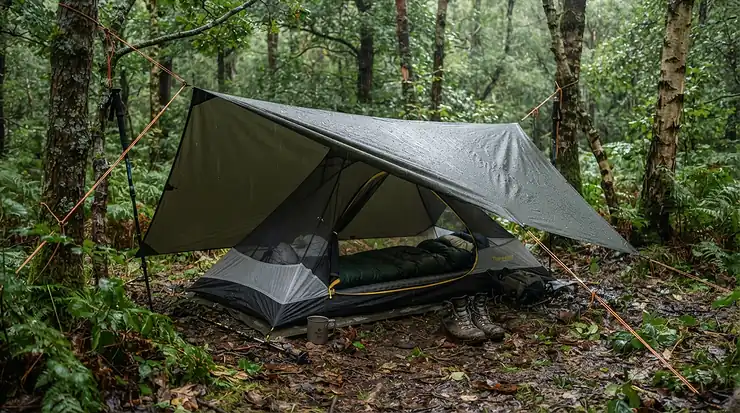
A lightweight mosquito shelter for backpacking is a mesh-based, bug-proof sleeping enclosure, usually a bug bivy, a net tent, or an integrated trekking-pole shelter. It weighs roughly 150 to 500 grams (5 to 18 oz) and packs down smaller than a water bottle. It keeps mosquitoes, black flies, and no-see-ums off your skin while letting air move through.
Now the part the glossy catalogues skip: bugs don’t read spec sheets. You can shave your base weight down to a smug, respectable number and still lie awake at 2 a.m., listening to a whine you can’t locate. A bug-proof sleeping space is one of the rare ultralight items that improves your sleep, not just your pack scale.
Ultralight backpacking has always been a philosophy more than a rulebook. As Wikipedia’s overview of ultralight backpacking points out, there is no technical standard for the term. Ray Jardine’s 1992 PCT Hiker’s Handbook, later retitled Beyond Backpacking, is widely credited with popularizing the approach. Within that spirit, a lightweight mosquito shelter for backpacking is the sweet-spot compromise: a few hundred grams of mesh instead of a full tent.
This guide covers seven real options, from budget nets to premium gram-counters. It explains what each spec means on the trail, and it digs into ultralight mosquito shelter for hiking performance, trekking-pole pitching, and Canadian repellent and tick guidance. It also covers the honest cost of going light.
One transparency note: I haven’t slept in these shelters. Everything below comes from manufacturer specs and published tester coverage, filtered through honest analysis. No invented anecdotes, no made-up quotes.
Quick Comparison: 7 Lightweight Mosquito Shelters at a Glance
Before the deep dives, here’s the cheat sheet. Weights come from manufacturer or published tester listings. Prices are my rough CAD conversions of U.S. list prices seen during research, so treat them as ranges and check current price. Shipping, duties, and tax can nudge the real number, and several of these come from small cottage makers, so availability on amazon.ca varies.
| Product | Type | Weight | Approx. price (CAD) | Best For |
|---|---|---|---|---|
| Onewind Solitary Inner Tent | Net tent | ~500 g (1.1 lb) | Under C$100 | Budget first-timers |
| Yama Mountain Gear 1P Bug Shelter | Net tent, bathtub floor | ~278 g (9.8 oz) | C$160–C$200 | Tarp users who cook under cover |
| Mountain Laurel Designs Bug Bivy | Bug bivy | ~184 g (6.5 oz) | C$180–C$220 | Sleep-only tarp campers |
| Six Moon Designs Serenity Net Tent | Net tent | ~312 g (11 oz) | C$195–C$235 | Mixed-pitch flexibility |
| SlingFin SplitWing Mesh Body | Net tent | ~318 g (11.2 oz) | C$215–C$260 | Modular, seasonal systems |
| Hyperlite Mountain Gear Bug Bivy | Bug bivy | ~162 g (5.7 oz) | C$300–C$370 | Gram-counting purists |
| Zpacks Hexamid Solo | Integrated shelter | ~275 g (9.7 oz) | Premium tier, check current price | Solo hikers with no tarp |
Look at the weight column first and a pattern jumps out. The two bug bivies, the Hyperlite Mountain Gear Bug Bivy and the Mountain Laurel Designs Bug Bivy, sit under 200 g. The net tents cluster near 280 to 320 g, and that extra 100 to 150 g buys sitting-up room and pitch flexibility. The Onewind Solitary Inner Tent trades roughly 200 g of weight for a big price cut. The Zpacks Hexamid Solo stands alone as the only all-in-one shelter, which is why it costs like one.
A quick word on the “type” column, because it decides everything. A bug bivy is a snug net you sleep in under a tarp, and a net tent is a roomier mesh room you can sit up in. An integrated shelter brings its own roof. Pick the type first and the brand second.
💬 Just one click — help others make better buying decisions too!😊
Top 7 Lightweight Mosquito Shelters for Backpacking: Expert Analysis
I built this list across budget, mid-range, and premium tiers, and across three shelter types, so you can see the real trade-offs rather than seven clones. Review sentiment below comes from published editorial coverage. Where I couldn’t verify a deep customer-review pool, I say so rather than inventing one.
1. Onewind Solitary Inner Tent — budget-friendly full-mesh enclosure
Full 360° bug protection for roughly the price of a restaurant dinner is a rare thing, and that is exactly this tent’s pitch.
Onewind lists the mesh as no-see-um grade at 1,600 holes per square inch. That’s a manufacturer claim, but a meaningful one, because coarse netting is how the tiniest biters sneak in. The listed weight is about 500 g (1.1 lb), and it packs to roughly 30 × 11 cm (11.8 × 4.3 in). That’s chunkier than a bug bivy and still far lighter than any freestanding tent. It pitches from branches, trekking poles, or the ridgeline of a compatible shelter, so it works solo or as an inner for a tarp.
My read: those extra 200 to 300 g over the featherweights buy you headroom and a gentle entry price. That makes the Onewind Solitary Inner Tent a smart first purchase for weekend hikers who want to test the bug-shelter idea before spending more. I couldn’t verify a deep pool of customer reviews for this specific model, so inspect the seams and zippers on arrival rather than assuming bomber durability.
Pros:
- ✅ Full 360° mesh enclosure with no floor
- ✅ Pitches from trekking poles, branches, or a ridgeline
- ✅ Lowest price of the seven
Cons:
- ❌ Noticeably heavier than the bug bivies
- ❌ Limited long-term durability evidence
Price check: under C$100 at the time of research (check current price), making this the value pick of the seven.
2. Yama Mountain Gear 1P Bug Shelter — bathtub floor with real sitting room
Most bug nets are glorified curtains. This one is a proper little room.
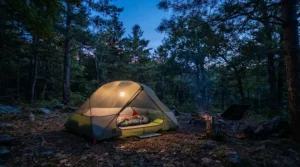
The Yama 1P Bug Shelter weighs about 278 g (9.8 oz) and uses a mesh canopy with a bathtub floor whose sides rise roughly 25 cm (10 in). That raised floor is the quiet hero, because it blocks splashback and ground-crawlers from sneaking in over the edge. Yama designed it around its own tarps, but published coverage notes it can be pitched alone from trekking poles or under almost any tarp. A Dyneema (DCF) version exists for the weight-obsessed.
Analytically, this is the shelter for people who want more than a bivy offers. One tester pairing it with Yama’s Cirriform tarp argued that a taller bug shelter beats a bivy because bivies are mostly built for sleeping, not sitting up, eating, or waiting out a downpour. If you cook under your tarp and want to stay bite-free doing it, headroom matters more than 90 grams.
Sentiment comes mainly from editorial roundups (SectionHiker and Field Mag), which are positive on its versatility. I couldn’t verify a large customer-review volume.
Pros:
- ✅ Deep bathtub sides block splash and crawlers
- ✅ Pitches alone or under another tarp
- ✅ Real sitting-up room compared with bivies
Cons:
- ❌ Adds roughly 100 g over the bug bivies
- ❌ Best performance needs a tarp overhead
Price check: roughly C$160–C$200 for the base version, with DCF options climbing higher. Check current price. Good value for anyone who lives under a tarp.
3. Mountain Laurel Designs Bug Bivy — featherweight net under any tarp
At 184 g (6.5 oz), the MLD Bug Bivy weighs about as much as a medium apple, and it does a far more useful job at 10 p.m.
SectionHiker files it in the bug bivy class: a low-profile mesh sleeve meant for cowboy camping, lean-tos, and sleeping under a tarp. For a hiker who sleeps flat and cooks outside, it covers the single job that matters at night, which is mosquito-proof sleep. On paper the weight-per-bite-prevented ratio is superb.
The real-world cost is space. You can’t sit upright, change layers in comfort, or wait out a thunderstorm without feeling like a burrito. I’d point the MLD Bug Bivy at hikers who already run a tarp and are happy to treat bug time as strictly sleep time. I couldn’t verify details like fabric denier or floor material from the sources I reviewed, so confirm those on the manufacturer’s listing. Cottage-brand stock on amazon.ca can also be spotty.
Reviewer coverage is positive but editorial; I couldn’t confirm a large customer-review volume.
Pros:
- ✅ Light at about 184 g
- ✅ Works under tarps, in lean-tos, or cowboy camping
- ✅ Tiny packed volume for its coverage
Cons:
- ❌ Cramped, with no room to sit up
- ❌ Needs a tarp for rain protection
Price check: roughly C$180–C$220. Strong value for a sleep-only setup.
4. Six Moon Designs Serenity Net Tent — pitch it three different ways
Flexibility is this shelter’s party trick.
The Serenity Net Tent weighs about 312 g (11 oz). SectionHiker notes it can be set up by itself with trekking poles, hung from a rafter in a lean-to, or placed under a wide variety of tarps. That’s three kinds of trip in one package: a pole-pitched solo camp, a shelter-hosted night, and a tarp-covered ridge.
What that means on the trail is that you aren’t betting on one tarp or one campsite. Poles, rafters, and tree cord all become valid anchor points, which is why I’d steer hikers with changing routes toward the Serenity Net Tent. It also sits comfortably in the middle of the weight range, so you aren’t paying a premium for the last few grams.
It appears in SectionHiker’s 2026 roundup of top bug shelters. Six Moon Designs is a well-known ultralight brand, but I couldn’t verify a large pool of customer reviews specific to this model.
Pros:
- ✅ Three distinct pitching options
- ✅ Works with trekking poles you already carry
- ✅ Fits under a wide range of tarps
Cons:
- ❌ About 130 g heavier than the lightest bivies
- ❌ Pole-pitched mode needs staking practice
Price check: roughly C$195–C$235. A fair price for the flexibility.
5. SlingFin SplitWing Mesh Body — modular mesh for tarp-and-net systems
Modular gear is the grown-up version of Lego: carry only the pieces the trip needs.
The SplitWing Mesh Body weighs about 318 g (11.2 oz). The name signals a mesh body built to work within SlingFin’s SplitWing system, though SectionHiker files it under net tents. Confirm exact pitch requirements before buying, because I couldn’t verify every pairing detail from the sources I reviewed.
The appeal is seasonal logic. In bug season you carry the mesh, and when nights turn cold and wet you swap in solid layers. Modular systems reward hikers who camp across several seasons, and they punish impulse buyers who skip the compatibility check.
Coverage is editorial, from SectionHiker’s 2026 roundup. I couldn’t confirm a broad customer-review volume, so check recent buyer feedback on whichever retailer listing you use.
Pros:
- ✅ Full mesh body at about 318 g
- ✅ Modular approach suits changing seasons
- ✅ Established ultralight brand
Cons:
- ❌ Priciest of the mid-weight net tents
- ❌ Pitching tied to compatible pieces, so check first
Price check: roughly C$215–C$260. Good value only if you’ll use the modular system.
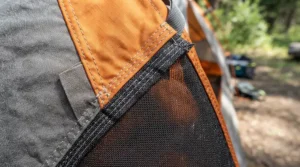
6. Hyperlite Mountain Gear Bug Bivy — the lightest of the seven
At 162 g (5.7 oz), this is roughly the mass of a bruised banana.
The HMG Bug Bivy is the featherweight champion of this list, and published coverage lists it around US$235. Do the maths against the MLD Bug Bivy: you pay roughly C$130 more to save about 22 g, which works out to something like C$5 to C$6 per gram. That’s the price of the last mile of ultralight.
My analytical take is that the HMG Bug Bivy only makes sense if you’re already counting grams religiously, you already own a tarp, and you sleep flat. For everyone else, the money buys more comfort elsewhere, like a better quilt or a roomier net.
It appears in SectionHiker’s 2026 roundup. I couldn’t verify a broad pool of customer reviews, so treat durability as something to handle gently rather than assume.
Pros:
- ✅ Lightest here at about 162 g
- ✅ Ultra-small packed size
- ✅ Works under tarps or for cowboy camping
Cons:
- ❌ Premium price per gram saved
- ❌ No sitting room
Price check: roughly C$300–C$370. Worth it only for dedicated gram-counters.
7. Zpacks Hexamid Solo — all-in-one shelter, one pole
This is the only shelter on the list that brings its own roof.
The Hexamid Solo weighs about 275 g (9.7 oz) with integrated bug netting and pitches from a single angled trekking pole. Its asymmetric hexagonal shape maximizes interior volume, and the integrated mesh door and lower sidewalls use ultra-fine bug netting. Field Mag’s 2026 testing calls it a classic among the lightest hikers’ shelters, and the reviewer notes the single-pole pitch suits people who only carry one pole.
The math that matters is that the Hexamid Solo replaces the tarp-plus-net combination with one shelter at a weight similar to a net tent alone. The honest caveat is that single-wall shelters need careful pitching and ventilation to manage condensation, and a taut pitch takes practice.
I couldn’t verify a broad customer-review pool, so I’m leaning on that editorial testing rather than invented buyer quotes.
Pros:
- ✅ Complete shelter with bug netting at about 275 g
- ✅ Pitches with a single trekking pole
- ✅ Asymmetric shape adds interior volume
Cons:
- ❌ Premium price
- ❌ Single-wall design demands careful pitching and ventilation
Price check: premium tier, so check current price. Strong value only if you’d otherwise buy a tarp and a net.
How to Choose a Lightweight Mosquito Shelter for Backpacking
To choose a lightweight mosquito shelter for backpacking, match the shelter type to how you sleep and cook. Then set a weight ceiling, confirm the mesh is fine enough for no-see-ums, and make sure it pitches with gear you already carry. Here’s the order I’d work in:
- Pick the type by how you live in it. Sleep-only? A bug bivy wins on grams. Want to sit up and cook? Choose a net tent or integrated shelter.
- Set your weight ceiling. Decide whether you’re shopping at 160 g or 500 g before you read brand copy. It stops you from drifting upmarket.
- Check mesh fineness. No-see-um grade matters in Canadian boreal country, and some cheap head nets use coarse mesh that lets the smallest flies through.
- Match the pitch to your poles. Trekking-pole compatibility saves you from buying extra poles, which is the opposite of the point.
- Decide on a floor. A bathtub floor stops crawlers and splash, while a floorless net saves grams and demands a groundsheet.
- Budget the whole system. Shelter, tarp, groundsheet, and stakes together are the real cost.
- Check availability and returns. Cottage brands can be out of stock on amazon.ca, so confirm before you plan your trip around one.
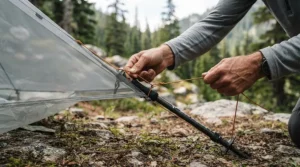
Ultralight Mosquito Shelter for Hiking: What to Expect in Real-World Performance
Specs describe a shelter on a table. Here’s how an ultralight mosquito shelter for hiking tends to behave once it’s pitched on an actual slope beside an actual lake.
Airflow versus warmth. Mesh breathes, which is glorious on a humid July night and chilly in early September. Pair a net with a quilt rated for shoulder season, because mesh holds no heat. The upside is less internal condensation than a sealed single-wall shelter produces.
Bugs don’t all behave alike. Mosquitoes hunt at dusk and dawn, black flies punish daytime camp chores, and no-see-ums squeeze through anything coarse. A fine-mesh shelter handles all three while you’re inside it, but it can’t help while you cook. That’s why a shelter plan always needs a repellent plan beside it.
Ground-level reality. Ticks hide where trail meets forest. A Canada Communicable Disease Report review of methods to prevent Lyme disease notes that ticks are often found in leaf litter at the edges of forested habitats, including hiking trails. It names dressing appropriately and removing attached ticks as practical defences. A mesh shelter won’t screen a tick you carried in on your socks, so do a body check before you zip in.
Packable Screen Shelter for Backcountry Trips vs Traditional Alternatives
A packable screen shelter for backcountry trips replaces a tent’s heaviest components, waterproof fabric and poles, with mesh and gear you already own. The question is what you give up. Here’s how the main alternatives compare.
| Option | Typical weight | Bug protection | Weather protection | Best For |
|---|---|---|---|---|
| Bug bivy | ~160–185 g | Full mesh while lying down | None; pair with a tarp | Gram-counters, e.g. Hyperlite Mountain Gear Bug Bivy |
| Net tent | ~280–320 g | Full enclosure with sit-up room | Minimal; pair with a tarp | Cooks and readers, e.g. Six Moon Designs Serenity Net Tent |
| Integrated trekking-pole shelter | ~275 g | Full enclosure | Built-in roof | Tarp-free solo hikers, e.g. Zpacks Hexamid Solo |
| Pop-up mesh tent | ~890 g (listing claim) | Full enclosure | Minimal | Car-camp crossover, e.g. TOLVPWR Ultralight Mosquito Net Tent |
| Conventional trekking-pole tent | ~800 g | Full enclosure | Full storm protection | Wet, windy routes, e.g. Durston X-Mid 1 |
The weight gap tells the story. The mesh options save roughly 500 to 650 g over a conventional trekking-pole tent like the Durston X-Mid 1 (listed at 28.5 oz with fly, inner, stakes, and stuff sacks). The price you pay is weather protection, which a net shelter leaves entirely to your tarp. Pop-ups like the TOLVPWR Ultralight Mosquito Net Tent are the odd ones out: the listing claims about 890 g, which is heavy for the backcountry, though it does offer extra room.
If your route sees mostly dry summer nights, the lighter mesh options make clear sense. If you expect a week of cold rain, the tent’s extra weight is insurance rather than excess.
Minimalist Mosquito Protection for Trekking: Safety, Repellents and Ticks in Canada
Minimalist mosquito protection for trekking is a system, not a single item: a shelter for sleeping, repellent for moving, and clothing for the gaps. In Canada, the repellent part has real rules.
Health Canada’s insect repellent guidance explains that repellents sold here must be registered, with a registration number on the label. Canadian health summaries of that guidance put the ceiling at 30% for DEET and 20% for icaridin (picaridin). Keep DEET off your shelter and gear, because it can damage some synthetic fabrics. Health Canada also says wristbands and ultrasonic gadgets aren’t suitable replacements for a registered repellent, so don’t spend grams or dollars on them. Permethrin isn’t sold as a skin repellent in Canada, though treated clothing exists, and a travel health clinic can advise.
A sensible minimalist kit looks like this:
- 🦟 A fine-mesh shelter for sleeping
- 🧴 A registered DEET or icaridin repellent for hiking and camp chores
- 👕 Light-coloured long sleeves and pants, tucked into socks, which makes ticks easier to spot
- 🔍 A nightly tick check
Lyme disease is the Canadian reason to take that last step seriously. Government data cited in Canadian media showed confirmed cases rising from 144 in 2009 to 992 in 2016, and blacklegged tick ranges keep expanding. Your shelter keeps mosquitoes out, and your habits keep ticks off.
Ultralight Gear Philosophy: Features That Actually Matter (And Those That Don’t)
The ultralight gear philosophy isn’t “own less because less is cool.” It’s “carry only what earns its place, then make each item multitask.” Wikipedia’s overview names shelter, sleep system, and pack as the major targets for weight reduction, and a mosquito shelter slots neatly into that first category.
Features that earn their grams:
- ✅ Fine mesh. No-see-um grade, because the smallest biters are the ones coarse netting lets through.
- ✅ Reliable zippers and door design. A snagging zipper at 3 a.m. is a bigger failure than an extra 15 g.
- ✅ Bathtub height. Splash and crawlers are the quiet enemy.
- ✅ Pitch flexibility. Poles, branches, tarps, and rafters mean fewer dead-end campsites.
Features that usually don’t:
- ❌ Extra pockets. Each costs grams and cash, and a pocket won’t stop a mosquito.
- ❌ Exotic fabrics on short trips. A weekend hiker rarely recovers the premium.
- ❌ Lowest-possible weight claims. They often exclude stakes, cord, and stuff sacks.
Compare packed weights, not marketing weights, and the ultralight gear philosophy stays honest.
Weight-vs-Durability Trade-Offs: Long-Term Cost and Maintenance
Every gram removed is paid for somewhere: in price, in puncture resistance, or in comfort. The weight-vs-durability trade-offs for mesh shelters are real but manageable. Lighter builds generally leave less margin for snagging on zippers, thorns, and rough ground, so lighter shelters ask for gentler handling.
| Choice | Weight | What you’re trading | Best For |
|---|---|---|---|
| Hyperlite Mountain Gear Bug Bivy | ~162 g | Least margin; premium cost | Careful gram-counters |
| Yama Mountain Gear 1P Bug Shelter | ~278 g | Extra mesh and bathtub sides | Tarp users cooking under cover |
| Six Moon Designs Serenity Net Tent | ~312 g | Middle ground on weight and price | Mixed trips |
| Onewind Solitary Inner Tent | ~500 g | More mass, lowest price | New users testing the idea |
Notice that the cheapest option is also the heaviest, while the lightest is the priciest. That pattern is the whole weight-vs-durability story in one table. Cost-per-night makes the maths clearer: a C$200 shelter used 25 nights a year for four years works out to about C$2 a night, and a C$335 premium bivy used 100 nights lands near C$3.35. Add a repair kit (mesh tape, needle, and thread weigh next to nothing) and a casual wipe-down after each trip, and any of these should last.
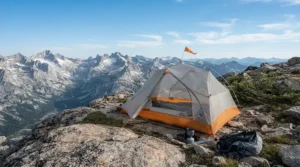
Compatible Trekking-Pole Setups: A Practical Pitching Guide
Compatible trekking-pole setups are the reason a net tent can replace a tent without adding a single pole to your pack. Here’s how the main styles work.
One-pole pitches
The Zpacks Hexamid Solo uses a single angled pole, which suits hikers who carry only one. The Onewind Solitary Inner Tent can also hang from a single pole or branch as a ridgeline anchor.
Two-pole and tarp-hosted pitches
The Six Moon Designs Serenity Net Tent and Yama 1P Bug Shelter can be pitched from trekking poles. The bug bivies usually sit under a tarp that is itself pitched from poles, so the poles do double duty.
No-pole pitches
Trees, branches, and rafters work for the Serenity Net Tent and Solitary Inner Tent. This is handy for treed Canadian Shield routes.
A few practical tips. Set the pole to the manufacturer’s pitch height, and practise in the backyard before you need it at dusk. Add a small cord loop at stress points instead of pulling hard on bare mesh. If you carry ski poles or fixed-length poles, check the minimum pole length first, because a pole that’s too short is a sagging shelter.
Your First 30 Days: Setup, Maintenance and Mistakes to Avoid
A net shelter looks idiot-proof until you meet it in rain at dusk. Treat the first month as a training period.
Day one. Pitch it at home, check seams and zippers, and note which stake angles give a taut mesh. Repack it the way you’ll pack it on the trail.
First trips. Choose bug-free campsites when you can: breezy knolls beat still lakeshores. Stake the floor edges flat so crawlers can’t slip under the mesh.
Maintenance schedule. After each trip, shake out debris and air-dry before packing. Monthly, inspect mesh and zippers for pinholes and stress points. Wash by hand in lukewarm water with mild soap when it needs it, never in a machine.
Common first-month mistakes:
- ❌ Packing the shelter damp
- ❌ Skipping the practice pitch
- ❌ Leaving mesh in strong sun for days
- ❌ Forgetting the tick check
For that last one, the Government of Canada’s Lyme disease prevention video is a good refresher. Its guidance includes wearing closed-toe shoes, light-coloured long sleeves and pants, tucking your shirt in, pulling socks over your pant legs, and using a bug spray with DEET.
Real-World Scenarios: Matching a Shelter to Your Trip
Three profiles show how the reasoning plays out.
The Canadian Shield weekend paddler-hiker. Budget around C$100, black-fly lake country, six to eight nights a year. The Onewind Solitary Inner Tent fits: full mesh, tree or pole pitching, and a price that doesn’t hurt if you decide bug shelters aren’t for you.
The Bruce Trail section hiker. Budget C$200 to C$250, humid shoulder-season nights, 20-plus nights a year, and already owns a tarp. Either the Yama 1P Bug Shelter (for cooking under cover and bathtub sides) or the Serenity Net Tent (for pitch flexibility) fits. I’d pick based on whether you value sitting room or flexibility more.
The Rockies gram-counter. Budget C$350-plus, solo, 40-plus nights a year, tarp already in the pack. The Hyperlite Mountain Gear Bug Bivy wins on grams. If there’s no tarp, the Zpacks Hexamid Solo replaces both.
✨ Don’t Miss These Exclusive Deals!
🔍 Take your backcountry bug-proofing to the next level with these carefully selected shelters. Click on any highlighted item to check current pricing and availability. These picks will help you create bite-free nights your whole crew will love!
Common Mistakes When Buying a Lightweight Mosquito Shelter for Backpacking
Most regrets come from five avoidable errors.
- ❌ Buying the lightest option without a tarp. A bivy alone is a net, not a shelter. Budget for the whole system.
- ❌ Ignoring sitting room. If you cook or read in camp, a bivy will feel like a sleeve within a week.
- ❌ Trusting claimed weights. Check packed weight with stakes, cord, and stuff sack.
- ❌ Skipping the practice pitch. Learn the setup before you’re tired and bitten.
- ❌ Assuming a shelter replaces repellent. It protects you while you sleep, and Canadian health guidance still points to registered repellents and tick checks for everything else.
A sixth mistake is more subtle: chasing a gram count that doesn’t match your actual trips. A sleep-only bivy is a brilliant tool for dry, tarp-camping weekends and a miserable one for a rainy week in the bush. Buy for your trips, not for a spec sheet.
FAQ
❓ How much does a good lightweight mosquito shelter for backpacking cost in Canada?
❓ Is a bug bivy or a net tent better for solo trekking?
❓ Will a mosquito shelter keep black flies and no-see-ums out?
❓ Can I pair a net shelter with a tarp I already own?
❓ Does a mosquito shelter protect me from ticks?
Conclusion
A lightweight mosquito shelter for backpacking is the rare piece of gear that makes you lighter and more rested at the same time. The honest picture from this research: the Onewind Solitary Inner Tent is the budget entry point, the Yama 1P Bug Shelter and Six Moon Designs Serenity Net Tent cover most hikers, and the bug bivies chase grams for sleep-only setups. The SlingFin SplitWing Mesh Body suits modular thinkers, and the Zpacks Hexamid Solo replaces the tarp-and-net combo for solo hikers.
Pick by type first, weight second, and brand last. Buy for the trips you actually take, practise your pitch before you need it, and treat the shelter as one layer in a system that includes a Health Canada-registered repellent and a nightly tick check. Do that and the ultralight gear philosophy pays off the way it’s meant to: fewer grams, better nights, and a trip you remember for the views instead of the bites.
Recommended for You
- Pop-Up Mosquito Shelter For Backyard: 7 Proven Picks (2026)
- Bug Shelter For Family Camping: 7 Best Picks Ranked (2026)
- Mosquito Bivy Vs Bug Tent For Backpacking: 7 Proven Picks 2026
Disclaimer: This article contains affiliate links. As an Amazon Associate, I earn from qualifying purchases. If you purchase products through these links, we may earn a small commission at no additional cost to you.
✨ Found this helpful? Share it with your friends! 💬🤗
