

In This Article
A screened shelter for mosquitoes is a freestanding or pop-up canopy with fine mesh walls that lets air through while keeping biting insects out. It gives you roughly 9 m² (100 sq ft) of shaded, bug-free living space over a picnic table or a few camp chairs, without the stuffiness of a sealed tent.
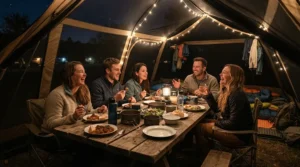
Here’s the dirty secret of a Canadian summer evening. The weather turns perfect at the exact hour the mosquitoes clock in. Dusk. Lake. Dinner on the table. Then comes the slap-dance, the frantic swirl of repellent, and the quiet retreat into the tent at 7:30 p.m. with a half-eaten burger.
It isn’t only about comfort. West Nile virus is the leading domestically acquired mosquito-borne disease in Canada, and Health Canada’s surveillance infographic lists covering skin, using DEET or icaridin repellent and keeping screening intact among the core protections. A mesh-walled shelter is the physical-barrier layer of that plan. It works while you eat, play cards or let the kids be kids.
This guide is built around seven real products and the questions shoppers actually ask. We cover top screened mosquito shelters, a proper mosquito shelter comparison, the best rated bug screen shelters, durability of mesh screening, ease of cleaning and storage, and warranty and return policies.
One honest note up front. I haven’t personally pitched these shelters in a bog. Everything below is built from manufacturer specs, retailer listings, Canadian retailer reviews and editorial roundups, and I label each source type as I go. Check current price and availability on amazon.ca before you buy, because stock and pricing shift all the time.
Quick Comparison: Top Screened Mosquito Shelters at a Glance
| Product | Size | Setup / Frame | Standout | Best For |
|---|---|---|---|---|
| Alvantor Pop Up Screen House | 3 × 3 m (10 × 10 ft) | Pop-up, fiberglass frame | UPF 50+ roof, light carry | Weekend campers |
| WildFinder 10×10 Pop Up Screen House | 3 × 3 m (10 × 10 ft) | Pop-up | PU1500-rated waterproof roof | Backyards with drizzle |
| East Oak Pop Up Screen Tent | 3 × 3 m (10 × 10 ft) | Pop-up, steel frame | Fine mesh, ~1-minute setup claim | Patios and decks |
| Coleman Skylodge Screenhouse | 3 × 3 m (10 × 10 ft) | Instant, 6.8 kg (14.9 lb) | 2.1 m centre height, 1-year warranty | Families |
| Coleman Instant Screen House 11 x 11 | 3.4 × 3.4 m (11 × 11 ft) | Pre-attached poles | No-see-um mesh | Black fly and midge country |
| Clam Escape Screen Tent | 3.5 m (11.5 ft) | Quick-set hub | No-see-um mesh, ~60-second setup | Lakeside camping |
| Eureka Northern Breeze 10 | ~3 × 3 m (10 × 10 ft) | Aluminum frame, ~12.5 kg (27.6 lb) | Waterproof roof and awning | Rainy, longer stays |
Read that table as a trade-off map, not a leaderboard. The Alvantor Pop Up Screen House and the East Oak Pop Up Screen Tent win on convenience, while the Eureka Northern Breeze 10 wins on weather. The two Coleman models and the Clam Escape Screen Tent sit in the middle with finer mesh, which matters a great deal if tiny biters are your real enemy.
💬 Just one click — help others make better buying decisions too!😊
Top 7 Screened Shelter for Mosquitoes Picks: Expert Analysis
Every pick below follows the same logic. First what the spec means in practice, then who it suits, then what reviewers consistently say. Prices appear as ranges only and are estimates at the time of research.
1. Alvantor Pop Up Screen House — lightest all-round pop-up
The headline here is portability. Listings and roundups put the weight somewhere between 4 and 7 kg (roughly 9 to 15 lb), depending on the version, which makes it easy to carry from the car to a tent pad.
The frame is fiberglass, the footprint is 3 × 3 m (10 × 10 ft), and the interior stands about 2.1 m (7 ft) tall. The roof carries a UPF 50+ rating, so it also works as a sun shade at midday. On paper this means the pop-up design collapses fast, but fiberglass flexes more than metal in a gusty campsite.
My read, based on the spec comparison: this suits fair-weather weekenders and backyard users who value speed over storm-proofing. Editorial reviewers consistently rate it near the top of lightweight pop-ups, with ratings around 4.5 out of 5 on affiliate review sites. Treat that as secondhand and check the live amazon.ca rating and review count yourself. Two themes recur. One is that the roof isn’t waterproof. The other is that refolding takes a tutorial video the first time.
Pros:
- ✅ Very light for a 3 × 3 m shelter
- ✅ UPF 50+ roof for midday shade
- ✅ Mesh on all sides for airflow
Cons:
- ❌ Roof is not waterproof
- ❌ Refolding has a learning curve
Expect budget-tier pricing, often somewhere in the C$150-C$250 range (check current price). Value verdict: excellent if your weather is mild.
2. WildFinder 10×10 Pop Up Screen House — waterproof-rated roof for backyard drizzle
The twist is the roof. Where many budget pop-ups skip rain protection entirely, this one advertises a PU1500 waterproof coating. That figure is a hydrostatic-head style rating, and in plain terms it handles light showers but isn’t a substitute for a storm-grade tarp.
The listing describes it as sized for four to six people and set up by one person, which is a practical detail if you’re alone at the campsite. A 3 × 3 m space comfortably holds a standard picnic table plus a couple of chairs. It won’t host a family reunion.
Who is it for? Backyard hosts and campers who’ve been caught out by a surprise sprinkle. Roundups position it as a value pick, and that fits the spec sheet. I couldn’t verify a large pool of individual amazon.ca reviews, so I won’t quote any. Check the live page and look for comments about zipper durability and seam leaks, the two weak points on any budget screen house.
Pros:
- ✅ Waterproof-rated roof coating
- ✅ One-person setup claim
- ✅ Fits a table and chairs comfortably
Cons:
- ❌ PU1500 won’t handle heavy downpours
- ❌ Limited published long-term durability data
Pricing typically falls in the budget-to-mid range, roughly C$150-C$250 (verify). Value verdict: the best “just in case it rains” budget option.
3. East Oak Pop Up Screen Tent — steel frame and fine mesh on a patio budget
Steel beats fiberglass when wind and repeated folding enter the picture. Metal frames resist snapping and bend less under sideways load, so this model suits deck and patio use where gusts funnel between buildings.
The listing advertises a D33 mesh, UPF 50+ roof protection and a roughly one-minute setup, across 100 sq ft (about 9.3 m²) of floor area. “Fine mesh” is a marketing phrase, so ask what it means for you. For common mosquitoes it’s plenty, but for biting midges you’ll want something labelled no-see-um.
My take: an excellent patio shelter that doubles as a car-camping option when weight isn’t a concern. Steel adds heft, so expect a heavier carry than the Alvantor Pop Up Screen House. Reviewers on roundups praise the quick setup, and the most common caution on steel-frame pop-ups generally is rust if you store them damp. Dry the frame fully before packing it away.
Pros:
- ✅ Sturdier steel frame
- ✅ Quick pop-up setup
- ✅ UPF 50+ roof protection
Cons:
- ❌ Heavier to carry than fiberglass rivals
- ❌ Frame needs drying to prevent rust
Think budget-to-mid pricing, roughly C$150-C$300 (check current price). Value verdict: strong for permanent-ish backyard use.
4. Coleman Skylodge Screenhouse — instant setup from a trusted outdoor name
Familiarity is the draw. Coleman offers a 3 × 3 m (10 × 10 ft) Skylodge with a 2.1 m (7 ft) centre height, a 1.8 m (6 ft) entry height and a listed weight of 6.8 kg (14.9 lb), plus a 1-year limited warranty.
Here’s what the weights and heights mean on a campsite. The entry height lets most adults walk in without ducking, and 6.8 kg is carryable but not backpack-light. The one-minute-setup positioning is aimed at picnickers and sports parents rather than backcountry campers.
Based on the spec comparison, it suits families who want predictable, brand-backed gear and a documented warranty, something many marketplace-only brands can’t match as clearly. Roundups name it a top pick for picnic tables. Look for review comments about roof wear after prolonged sun exposure, which is a pattern with many Coleman canopies (more in the durability section below).
Pros:
- ✅ Documented 1-year limited warranty
- ✅ Comfortable standing height
- ✅ Fast instant-style setup
Cons:
- ❌ Heavier than the lightest pop-ups
- ❌ Roof can wear under months of sun
Expect mid-range pricing, roughly C$200-C$350 (verify). Value verdict: a safe, sensible all-rounder.
5. Coleman Instant Screen House 11 x 11 — no-see-um mesh in a roomier footprint
The reason to pick this one is the mesh. It’s specified with no-see-um mesh, a 150D polyester oxford canopy with UVGuard, pre-attached poles and a Comfort Grip lock for pinch-free adjustment. The centre height is 2.3 m (7 ft 6 in).
Why does 11 × 11 ft (3.4 × 3.4 m) matter? It’s the difference between a table plus chairs and a table plus chairs plus room to walk around them. That’s the point at which a shelter stops feeling like a phone booth for bugs and starts feeling like an outdoor room.
If you camp near wetlands, boreal forest or any spot with biting midges, finer mesh earns its keep. The trade-off is that tighter weave cuts airflow slightly on still, humid evenings, so pick a shaded site with a breeze. Third-party price trackers show this model has ranged widely on amazon.ca (roughly C$157 to C$359 over several months), which tells you timing matters when you buy. I couldn’t verify review counts, so I’m skipping star claims.
Pros:
- ✅ No-see-um mesh stops tiny biters
- ✅ Taller 2.3 m centre height
- ✅ Pre-attached poles speed setup
Cons:
- ❌ Tight mesh reduces airflow slightly
- ❌ Price swings make timing important
Typical range: roughly C$200-C$350 (check current price). Value verdict: the best mesh for the money.
6. Clam Escape Screen Tent — no-see-um mesh and fast quick-set hub design
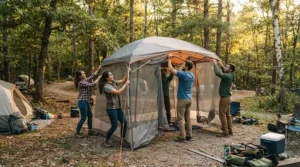
Set-up speed is the hook. The Escape is listed at 11.5 ft (about 3.5 m) with a roughly 60-second setup and no-see-um mesh, and several editorial roundups name it best overall for lakeside camping.
Hub-style frames deploy by pulling the poles outward in one motion, so the frame does the work rather than you wrestling corner poles. Lakeside sites are exactly where wind and midges show up together, which explains the roundup praise. One roundup does note the trade-off: if you want true no-see-um mesh and don’t mind the weight, this is the one.
It’s a heavier carry than the Alvantor Pop Up Screen House, so it’s a car-camper’s shelter rather than a canoe-trip one. Affiliate roundups list it around 4.6 out of 5, a secondhand figure worth cross-checking on amazon.ca. Look closely at comments about hub durability in wind.
Pros:
- ✅ Genuine no-see-um mesh
- ✅ Quick 60-second setup claim
- ✅ Roomy 3.5 m span
Cons:
- ❌ Heavier than pop-up rivals
- ❌ Premium pricing
Premium-tier pricing, roughly C$350-C$500 (estimate; check current price). Value verdict: worth it if midges are your nemesis.
7. Eureka Northern Breeze 10 — the weather-ready, long-stay shelter
Storm tolerance defines this model. It uses an aluminum frame, a roof that covers the whole body with an awning, built-in rain curtains and no-see-um mesh with peak venting. Roundups put the weight around 12.5 kg (27.6 lb) and the height at about 2.3 m (7 ft 8 in).
That weight is the price of stability. Aluminum poles and a full roof mean it can sit through a wet week without turning into a trampoline in a gust. Eureka also sells an accessory floor that lets you convert it into a tent, which stretches its usefulness.
Who is it for? Campers staying several nights in unpredictable weather, such as the Maritimes, the BC coast or the Rockies’ shoulder season. It’s overkill for a backyard barbecue. It ships with a duffel-style storage sack, which is fine, but a 12 kg bag isn’t a casual haul.
Pros:
- ✅ Waterproof roof with awning
- ✅ Aluminum frame handles wind better
- ✅ Built-in rain curtains add flexibility
Cons:
- ❌ Heavy to carry and pack
- ❌ Highest price tier
Expect roughly C$500-C$700 (estimate; verify). Value verdict: pays off for frequent, long-stay campers only.
Mosquito Shelter Comparison: How the Seven Stack Up
| Product | Mesh Type | Roof Protection | Weather Verdict | Warranty Info | Best For |
|---|---|---|---|---|---|
| Alvantor Pop Up Screen House | Standard fine mesh | UPF 50+, not waterproof | Fair weather | 1-year listed | Light weekend trips |
| WildFinder 10×10 Pop Up Screen House | Standard mesh | PU1500 waterproof rating | Light showers | Check listing | Backyard use |
| East Oak Pop Up Screen Tent | D33 fine mesh | UPF 50+ | Breezy decks | Check listing | Patios |
| Coleman Skylodge Screenhouse | Standard mesh | UV-rated | Fair weather | 1-year limited | Families |
| Coleman Instant Screen House 11 x 11 | No-see-um | UVGuard polyester | Fair weather | Check listing | Midge country |
| Clam Escape Screen Tent | No-see-um | Roof cover | Windy lakeshores | Check listing | Lakeside camps |
| Eureka Northern Breeze 10 | No-see-um | Waterproof roof with awning | Rain and wind | Check listing | Long, wet trips |
Notice that mesh and roof are the two columns that separate these tents. The Eureka Northern Breeze 10 and Clam Escape Screen Tent pair fine mesh with stronger weather answers, while the two Coleman options and the Alvantor Pop Up Screen House keep weight and cost down. If you only remember one rule from this mosquito shelter comparison, make it this: match the mesh to your bug, and the roof to your sky.
How to Choose a Screened Shelter for Mosquitoes
Picking well takes six decisions, in this order.
- Identify your bug first. Mosquitoes are stopped by standard fine mesh. Biting midges and black flies often need no-see-um mesh. If you camp near wetlands in June, upgrade.
- Match the footprint to your furniture. A 3 × 3 m (10 × 10 ft) shelter holds a picnic table and a few chairs. Add 0.5 m (about 11 ft total) if you want to walk around them.
- Check the roof, not just the walls. Mesh keeps bugs out, but the roof keeps rain and UV out. UPF 50+ coatings help with sun. Waterproof ratings help with showers.
- Weigh the frame. Fiberglass is light, steel is sturdier, aluminum is lightest per strength but costs more.
- Plan for your season. Public health reporting notes that West Nile virus risk is generally highest later in the summer, as CTV News explains, so a shelter that survives August heat and UV matters.
- Read the warranty before the glossy photos. A 1-year limited warranty is common. Know what it excludes.
Think of it as a funnel: bug, space, weather, weight, season, paper trail. Skip step one and you’ll be swatting midges inside a very expensive net.
Best Rated Bug Screen Shelters: How to Read Reviews Honestly
Everyone searches for the best rated bug screen shelters, and it’s tempting to grab the highest star number. Resist it for a moment.
Star ratings quoted on affiliate roundups are secondhand, they’re often snapshots from months ago, and several of them recycle each other’s text. The Alvantor Pop Up Screen House and the Clam Escape Screen Tent keep topping those lists, which tells you they’re popular, not that they’ll suit your campsite.
A better method is to open the live amazon.ca listing and read the one- and two-star reviews first. Look for repeated themes, not single rants. Does the same zipper fail in multiple reviews? Do several people mention sun-rotted roofs after a summer? Then check the three-star reviews, which tend to be the most balanced.
One concrete example from a Canadian retailer page: a reviewer of the Coleman Back Home screen canopy reported leaving it up for about four months and finding the sun had thinned the roof badly. It’s a single review, not a verdict. Still, it points to the real pattern that UV punishes any screen house left standing all season.
Durability of Mesh Screening: What Actually Fails
Mesh rarely fails first. That surprises people.
What tends to break:
- Zippers, especially cheap ones on door panels
- Seams where mesh meets roof fabric
- Frame joints under wind load
- Roof fabric under months of direct sun
Mesh itself is usually polyester or nylon netting, and it resists tearing better than you’d expect until something snags it. Fine no-see-um weave looks delicate but behaves well if you avoid dragging it across rough ground or branches.
Wind is the real stress test. One editorial reviewer cautioned against relying on the Alvantor Pop Up Screen House in steady wind above about 40 km/h (25 mph). That’s sensible for any pop-up. Stake every corner, use the guy lines, and take the shelter down before a storm rather than hoping.
For durability of mesh screening, treat UV as the quiet killer. UPF 50+ coatings and UVGuard treatments help, but none are forever. If you plan to leave a shelter up for weeks, favour the heavier-built Eureka Northern Breeze 10 or take any pop-up down between uses.
Ease of Cleaning and Storage
Nobody buys a shelter for its cleaning routine, yet this is where good gear earns loyalty.
Cleaning. Wipe the mesh and roof with lukewarm water and mild soap using a soft cloth. Skip harsh detergents and bleach, which can degrade coatings. Rinse, then let everything dry completely.
Drying. This is the step that decides whether your shelter smells like a gym bag next June. Fold a damp fabric roof into a bag and mildew moves in. If you must pack up wet, unpack it as soon as you’re home and drape it over a railing or clothesline.
Storage. Pop-ups like the Alvantor Pop Up Screen House and East Oak Pop Up Screen Tent fold into flat discs or compact bundles, but refolding takes practice. The Eureka Northern Breeze 10 ships with a duffel-style sack that’s easy to stuff but bulky. Coleman’s wheeled carry bag, listed on its larger Back Home models, is a gift for sore backs.
For ease of cleaning and storage, my practical ranking is simple. Instant-style frames with pre-attached poles are the easiest, pop-ups sit in the middle once you learn the fold, and detachable-pole shelters take the longest.
Warranty and Return Policies: Read This Before You Click Buy
Let’s talk about the boring paperwork that saves money.
Manufacturer warranty. The Coleman Skylodge Screenhouse lists a 1-year limited warranty, and the Alvantor Pop Up Screen House is listed with a 1-year warranty on a roundup. “Limited” normally means defects in materials and workmanship, not sun wear, wind damage or normal use. Read the exclusions.
Retailer returns. Returns on amazon.ca depend on the seller and product type. Many eligible items have a return window of about 30 days, but check the listing and the “Sold by / Shipped by” line.
Practical strategy for warranty and return policies:
- Set the shelter up in your yard within the first week.
- Test every zipper, seam and pole joint.
- Leave it up through one windy afternoon.
- Keep the receipt and order number.
- Photograph any defect immediately.
That backyard test costs an hour and protects hundreds of dollars. I can’t verify specific warranty terms for every product on this list, so confirm directly on each listing and with the manufacturer.
Screened Shelter for Mosquitoes vs Bug Tent vs Pop-Up Canopy
| Option | Bug Protection | Airflow | Privacy / Floor | Best For |
|---|---|---|---|---|
| Screened shelter for mosquitoes | Excellent (mesh walls) | Excellent | Open floor, low privacy | Dining, lounging |
| Standard camping tent | Excellent | Fair | Floor and privacy | Sleeping |
| Open pop-up canopy | None | Excellent | None | Shade only |
| Mosquito net or hanging bug net | Good for small areas | Good | Minimal | Hammocks, beds |
A tent keeps bugs out but traps heat. An open canopy gives shade yet leaves you in the mosquito buffet line. A screened shelter sits between them, giving you air and bug-free sightlines in one structure.
My honest analysis: if you only camp to sleep, skip the shelter. If you eat, play and linger outdoors from dusk until dark, it’s the single most useful piece of non-sleeping gear you can add. Models like the Coleman Instant Screen House 11 x 11 and Clam Escape Screen Tent make that evening hour dramatically more pleasant, especially in midge-heavy regions.

Practical Usage Guide: Setup, First Use and the First 30 Days
Most shelter regrets happen in the first month. Avoid them.
Pick the site. Choose a flat, slightly elevated spot away from standing water. Mosquitoes breed there. Avoid sites directly under dead branches.
Set up properly.
- Lay out the frame fully before extending any legs.
- Pop up or extend one corner at a time, not all at once.
- Stake all four corners before you zip the doors.
- Run guy lines even in calm weather.
- Weigh down the base if the ground is soft.
Optimize it. Zip doors closed before the evening rush, not during it. Enter and exit quickly to avoid letting insects in with you. Keep a small fan or a battery lantern inside to move air and reduce warm, still pockets.
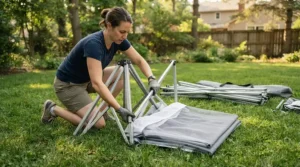
Common first-month mistakes. Leaving it up during storms, folding it damp, skipping stakes, and dragging furniture across the mesh. The Alvantor Pop Up Screen House refold, in particular, rewards a practice run in your driveway. Do it once at home so you aren’t fighting it in the dark.
Real-World Scenarios: Which Shelter Fits Which Camper?
Scenario 1: The weekend lake family. A family of four with a picnic table, a cooler and two kids who run in and out constantly. Space and fast setup matter most, so the Coleman Skylodge Screenhouse or the larger Coleman Instant Screen House 11 x 11 fit well. The extra width keeps traffic from brushing the mesh, and the no-see-um option on the 11 × 11 helps at the water’s edge.
Scenario 2: The backyard host. Someone hosting weekend dinners on a deck, wanting bug control without hauling anything far. The East Oak Pop Up Screen Tent or WildFinder 10×10 Pop Up Screen House work. The steel frame suits breezy decks, while the waterproof-rated roof suits a late-summer drizzle.
Scenario 3: The wet-coast long-stayer. A couple camping on Vancouver Island for ten days, with rain on and off. The Eureka Northern Breeze 10 earns its weight here. Its waterproof roof, awning and rain curtains make it a legitimate outdoor living room.
Scenario 4: The light traveller. Someone paddling or driving a compact car who counts every kilo. The Alvantor Pop Up Screen House gives the lightest carry in this group.
Match the person to the product, and the price starts to feel fair.
Problem to Solution Guide: Fixing the Common Complaints
Problem 1: Mosquitoes still get in.
Check the zipper tracks and the seams where the mesh meets the floor line. Gaps near stakes are common entry points. Peg the skirt down and tuck loose fabric under chairs.
Problem 2: Still, stagnant air inside.
Open the upper vents, rotate the shelter so a door faces the breeze, and add a small battery fan.
Problem 3: Midges slip through.
If your mesh isn’t labelled no-see-um, they’ll often pass. Upgrade to the Coleman Instant Screen House 11 x 11, Clam Escape Screen Tent or Eureka Northern Breeze 10.
Problem 4: Wind keeps lifting the frame.
Add guy lines, weigh the legs down with sandbags, or take the shelter down. Don’t fight gusts above about 40 km/h with a light pop-up.
Problem 5: Mosquitoes keep breeding near camp.
Reduce standing water around your site by emptying buckets, upturned wheelbarrows and old pots. Public health units, including one profiled by CBC News, list tires, flower pots and wheelbarrows as typical breeding spots.
✨ Don’t Miss These Exclusive Deals!
🔍 Take your outdoor evenings to the next level with these carefully selected shelters. Click on any highlighted item to check current pricing and availability. These picks will help you create bug-free, relaxed evenings your family will love!
Canadian Mosquito Season and Safety Guide
Canada’s mosquito season starts earlier and ends later than most people assume. Public Health Agency of Canada guidance has historically noted infection risk can begin in mid-April and last until the first hard frost.
A screened shelter is one layer, not the whole plan. Public health guidance generally stacks protections:
- Cover exposed skin with light-coloured long sleeves and pants
- Use Health Canada-approved repellents containing DEET or icaridin
- Remove standing water near your site
- Keep window and door screens in good repair at home
The Public Health Agency of Canada public health reminder notes that there is no specific treatment or vaccine for West Nile virus, which is why prevention matters. For babies under six months, repellents aren’t recommended, and Health Canada suggests mosquito netting over cribs or strollers instead.
Note that while public health officials stress that severe illness remains uncommon, the practical takeaway holds. A mesh barrier reduces bites, and fewer bites mean less risk and fewer itchy evenings.
Long-Term Cost and Value: What You Really Pay Per Night
| Tier | Typical Examples | Likely Lifespan Pattern | Cost Logic |
|---|---|---|---|
| Budget | Alvantor Pop Up Screen House, WildFinder 10×10 Pop Up Screen House, East Oak Pop Up Screen Tent | Several seasons with care, fewer if left up | Lowest entry cost, more replacement risk |
| Mid-range | Coleman Skylodge Screenhouse, Coleman Instant Screen House 11 x 11 | Multiple seasons | Balanced cost, documented warranty |
| Premium | Clam Escape Screen Tent, Eureka Northern Breeze 10 | Longest, if maintained | Higher up-front cost, lower per-use cost |
Run the maths with a hypothetical. A C$300 shelter used 25 nights a year for four years comes to roughly C$3 per night of bug-free dining, before you count the dinners saved from mosquito misery. A C$180 shelter that fails after two seasons can cost more per night.
The analysis: buy to your usage. Occasional campers and backyard users get excellent value from budget and mid-range models. Frequent, long-stay campers usually save money with the Eureka Northern Breeze 10 or Clam Escape Screen Tent, because durability and warranty support spread the cost across more nights. Just remember that prices are ranges and change, so check current price before deciding.
FAQ
❓ Do screened shelters keep out no-see-ums and biting midges?
❓ Can I use a screened shelter in the rain?
❓ What size screened shelter do I need for a picnic table?
❓ How long does setup take?
❓ Is it safe to leave a screened shelter up all summer?
Conclusion
Choosing a screened shelter for mosquitoes comes down to matching three things: your bug, your weather and your carrying capacity. Light-travelling weekenders should look at the Alvantor Pop Up Screen House. Backyard hosts will like the East Oak Pop Up Screen Tent or WildFinder 10×10 Pop Up Screen House. Families who want a name and a documented warranty can start with the Coleman Skylodge Screenhouse. Midge-heavy sites call for the Coleman Instant Screen House 11 x 11 or the Clam Escape Screen Tent, and wet, long-stay trips justify the Eureka Northern Breeze 10.
If you’re reading this in November, you’re ahead of the crowd. Off-season is the best time to compare, read reviews carefully, and check warranty and return policies before everyone else starts searching in May. Whichever you choose, set it up in your yard first, stake it down, and treat the mesh with respect.
Do that, and next summer’s dusk becomes the best part of the day instead of the worst.
Recommended for You
- Lightweight Mosquito Shelter For Backpacking: 7 Best Picks (2026)
- Pop-Up Mosquito Shelter For Backyard: 7 Proven Picks (2026)
- Bug Shelter For Family Camping: 7 Best Picks Ranked (2026)
Disclaimer: This article contains affiliate links. As an Amazon Associate, I earn from qualifying purchases. If you purchase products through these links, we may earn a small commission at no additional cost to you.
✨ Found this helpful? Share it with your friends! 💬🤗
