

In This Article
A mosquito shelter for patio is a screened, roofed or open-topped enclosure that wraps fine insect mesh around your outdoor sitting area, creating a bite-free zone without sealing you indoors. Options range from pop-up screen houses to permanent hardtop gazebos with zippered netting panels, and each trades off cost, weather resilience and setup effort.

Canadian patio season is gloriously short, and mosquitoes never got the memo. You finally drag the chairs outside, pour something cold, and by dusk you’re slapping your own ankles like you’re auditioning for a tap-dance number. Repellent helps. Coils and lanterns help a little. But a proper mosquito shelter for patio changes the equation, because it puts a physical barrier between you and the bugs instead of asking you to out-chemistry them.
It’s early November 2026 as I write this, which is a strange moment to talk about bugs. It is also exactly the right one. Off-season is when you can measure the deck, compare hardtops against pop-ups, and plan seasonal installation and teardown without a cloud of mosquitoes judging your timing. Keep one spec in your back pocket: mesh size matters enormously. Openings of about 1.2 mm stop mosquitoes, while roughly 0.6 mm is needed to stop biting midges and no-see-ums.
Below you’ll find seven real products, from a screened gazebo for mosquitoes in full hardtop armour to a patio mosquito screen enclosure you build by adding netting to a gazebo you already own. You’ll also get a buyer’s framework, an install-and-storage guide, and Canadian snow-load and permit context. Everything here is spec analysis and aggregated review sentiment, not hands-on testing, and I’ll say plainly where a data point couldn’t be verified.
Quick Comparison: Mosquito Shelter for Patio Picks at a Glance
| Pick | Type | Footprint | Price Range (CAD) | Best For |
|---|---|---|---|---|
| Kozyard Alexander 10′ x 12′ Hardtop Gazebo | Aluminum hardtop | 10′ x 12′ (about 3 x 3.7 m) | C$1,500-C$2,200 | Snowy regions, long-term setups |
| Kozyard Rosana 10′ x 10′ Hardtop Gazebo | Aluminum hardtop | 10′ x 10′ (about 3 x 3 m) | C$1,300-C$1,800 | Compact decks and patios |
| Sunjoy Kingston 12′ x 12′ Steel Hardtop Gazebo | Steel hardtop | 12′ x 12′ roof | C$1,500-C$2,100 | Style-first, light-hanging setups |
| NETAJE 10′ x 12′ Hardtop Gazebo | Hardtop | 10′ x 12′ | C$650-C$1,100 | Hardtop look on a mid-range budget |
| MASTERCANOPY 10′ x 12′ Bermuda Soft-Top Gazebo | Soft top | 10′ x 12′ | C$500-C$900 | Seasonal canopy removal |
| HOTEEL 10′ x 10′ Pop-Up Gazebo Screen House | Pop-up | 10′ x 10′ | C$150-C$300 | Renters and first-timers |
| Outsunny Replacement Mosquito Netting for Gazebo | Retrofit netting | Sized to your gazebo | C$70-C$160 | Upgrading a gazebo you already own |
Looking at the table above, the two Kozyard hardtops anchor the premium end, and the NETAJE is the one that tries to deliver a hardtop’s architecture for far less money. If you already own a gazebo frame, the Outsunny netting is the cheapest route to a working patio mosquito screen enclosure. Price ranges are approximate for the Canadian market at the time of research, so check current pricing before you commit.
💬 Just one click — help others make better buying decisions too!😊
Top 7 Mosquito Shelter for Patio Picks: Expert Analysis
One honest note first. I haven’t handled any of these products, and availability on Amazon.ca shifts, so confirm stock before you plan around any of them. What follows is spec interpretation, editorial reviews and the aggregated sentiment visible on retail listings at the time of research.
1. Kozyard Alexander 10′ x 12′ Hardtop Gazebo — the heavyweight for snowy climates
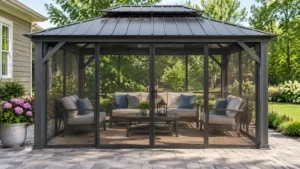
The Alexander is built to stay up, which is the whole point when you want a semi-permanent bug shelter for outdoor living instead of a tent you babysit. It pairs a rustproof aluminum frame with reinforced beams and a galvanized steel double roof. The netting is PBV-coated polyester that slides on a double-track system, so you can layer a privacy curtain over the mesh.
Footprint is roughly 3 m x 3.7 m (about 120 sq ft) with a peak near 2.9 m. The manufacturer cites support for up to 2,500 lb (about 1,130 kg) of snow and 60 mph (about 97 km/h) winds. Treat those as manufacturer claims, not permission to ignore your roof in January. In practice, aluminum means no rust streaks on your deck, and the double track means one gazebo can handle bug season and late-evening privacy.
This is the pick for anyone who wants a screened gazebo for mosquitoes that doubles as an outdoor room. Reviewers on the listing, which sits around 4.5 out of 5 across roughly 1,500 ratings, describe assembly as a real project but call the finished structure sturdy and solid.
Pros:
- ✅ Rustproof aluminum frame with reinforced beams
- ✅ Netting and privacy curtains on a double track
- ✅ Double roof designed for heavy snow and wind
Cons:
- ❌ Assembly demands helpers, a tall ladder and patience
- ❌ Highest price tier of the seven picks
Expect roughly C$1,500-C$2,200. Spread over ten seasons that works out to a modest cost per summer, which is the honest case for paying up.
2. Kozyard Rosana 10′ x 10′ Hardtop Gazebo — the compact editorial favourite
The Rosana packs the Alexander’s core idea into a smaller square. One editorial roundup, MosquitoReviews, named it best overall among gazebos with mosquito netting. It praised the rust-free aluminum frame and its heft, and noted that the netting is included and sized to the structure.
At 3 m x 3 m (about 9 m²) it suits a townhouse deck or a modest backyard pad. That is room for a four-seat bistro set or a small loveseat plus side table, but not a full sectional. The weight is a feature here: a heavy frame resists wind lift far better than a light pop-up, which matters on open lots.
A caution on evidence. That roundup was written some years ago, so I’d verify the current Canadian listing, specs and warranty before ordering. The 9/10 score is one site’s editorial rating, not customer-review data, and I couldn’t verify a large Canadian review pool.
Pros:
- ✅ Rust-free aluminum framing built to last
- ✅ Netting included and sized to the frame
- ✅ Compact footprint fits smaller decks
Cons:
- ❌ Premium price for a 10′ x 10′ footprint
- ❌ Older editorial praise, so verify current specs
Budget around C$1,300-C$1,800. It’s good value only if you’ll actually use it every season.
3. Sunjoy Kingston 12′ x 12′ Steel Hardtop Gazebo with Curtain and Netting — modern lines with ceiling hooks for lights
The Kingston leans into design. It has a steel hardtop roof, powder-coated aluminum posts in grey, brown or woodgrain-look finishes, ceiling hooks, and pre-drilled anchor plates. Coverage is listed around 142 sq ft (about 13 m²).
Here is what those details mean. The ceiling hooks give you a place for string lights, a hanging planter or a fan without improvising. The anchor plates let you bolt the frame to a deck or pad, which is the right move on windy lots. It also helps with matching patio decor, since the finishes can echo your railings and furniture frames.
Measure carefully. Sunjoy has told a buyer of a different 12 x 12 model that the label refers to the roof, with posts closer to 10 x 10 apart. Plan furniture around post-to-post space, not the headline number.
Retail listings show high ratings on small review counts, around 4.8 on a few dozen reviews. Recurring comments say the structure is good but parts fit loosely and instructions need work. One Canadian reviewer noted hardware coating rubbed off during assembly yet still called it a great product.
Pros:
- ✅ Ceiling hooks for lights and fans
- ✅ Pre-drilled anchor plates for secure mounting
- ✅ Several finishes for matching patio decor
Cons:
- ❌ Reviewers report imprecise parts and thin instructions
- ❌ Roof size overstates usable post-to-post space
Plan on roughly C$1,500-C$2,100. It’s a strong pick for style-focused buyers who don’t mind a patient build.
4. NETAJE 10′ x 12′ Hardtop Gazebo — hardtop architecture at a mid-range price
The NETAJE tries to give you the hardtop experience without the Kozyard price tag. It uses an aluminum frame with a double roof, in galvanized steel or polycarbonate panel versions, plus curtains and mosquito netting. Check which roof version you’re ordering. Steel is generally sturdier and darker, while polycarbonate lets daylight through but can feel warmer under summer sun.
The practical reading: you’re paying for structure and screens, and saving by skipping a premium brand’s track record. That’s a fair trade for a buyer who is comfortable reading the manual twice and contacting support if a bracket is off.
On review sentiment, one major retail listing showed ratings in the high-3s out of 5 across roughly 300 reviews. That is mixed-to-positive, not glowing. Treat it as a reminder to inspect parts on arrival and keep your packaging until you’ve confirmed everything is there.
Pros:
- ✅ Hardtop double roof at a lower price
- ✅ Curtains and mosquito netting included
- ✅ Multiple roof versions to choose from
Cons:
- ❌ Review scores are mixed rather than strong
- ❌ Less brand track record and support clarity
Expect about C$650-C$1,100. Good value if you inspect carefully on delivery.
5. MASTERCANOPY 10′ x 12′ Bermuda Soft-Top Gazebo (GH13N01) — soft top built for seasonal setups
The Bermuda uses a powder-coated steel and iron frame, a soft-top canopy and mosquito netting. A soft top is lighter and cheaper than a hardtop, and it can come off for winter. That makes it a natural fit for homeowners who prefer seasonal installation and teardown over a year-round structure.
The tradeoff is fabric longevity. Canopies fade and eventually wear, so think of the top as a replaceable consumable. The steel frame also deserves a quick check each spring for chips where rust could start.
The same brand has a hardtop polycarbonate sibling with an aluminum frame, four mosquito nets and four privacy curtains. MosquitoReviews gave that one 7/10. If you like the brand but dread canopy replacement, it’s worth a look.
On customer reviews, I could only verify this model as an editorial mention, not a robust review pool. Verify current feedback on the listing before buying.
Pros:
- ✅ Removable soft top suits seasonal storage
- ✅ Lighter and easier to assemble than hardtops
- ✅ Lower price than hardtop competitors
Cons:
- ❌ Fabric top wears faster than hard roofs
- ❌ Steel frame needs a rust check each spring
Plan for roughly C$500-C$900 and confirm current pricing. It’s a smart middle path if you won’t leave a roof up all winter.
6. HOTEEL 10′ x 10′ Pop-Up Gazebo Screen House Tent — up in minutes, down in an evening
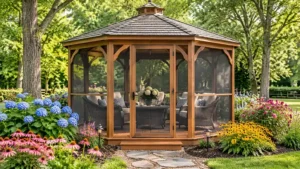
The HOTEEL is the lowest-commitment path to a bug-free patio. The listing describes a pop-up hub frame, mosquito-netting sidewalls, a waterproof and UV-resistant roof, a carry bag and stakes. Up to five to eight people and patio furniture fit in the 10′ x 10′ footprint, according to the listing.
Think of it as a trial run. If you aren’t sure you want a permanent screened gazebo for mosquitoes, a pop-up lets you learn how your family actually uses the space before spending four figures. It also suits rental homes, since there’s nothing to bolt down. Pop-ups are light, so stake them or weigh them down properly, and take them down before heavy snow or serious wind.
Sentiment is mixed in a normal way for this category. One listing showed about 3.7 out of 5 across 38 ratings, while another listing of the brand, with 266 reviews, carried glowing notes about setting one up in minutes. Light frames mean you should expect to babysit it in gusty weather.
Pros:
- ✅ Pops up in minutes without tools
- ✅ Netted sidewalls and carry bag included
- ✅ Low price makes it a good trial run
Cons:
- ❌ Lightweight frame needs staking in wind
- ❌ Not suited to snow or winter storage outdoors
Budget around C$150-C$300. Excellent value for a short season, less so if you want ten years from it.
7. Outsunny Replacement Mosquito Netting for Gazebo (10′ x 12′) — turns your existing gazebo into a patio mosquito screen enclosure
If you already own a gazebo, this is the cheapest upgrade here. The Best Buy Canada listings describe four zippered panels in nylon mesh, with plastic clip rings and hooks, sold in sizes like 10′ x 10′, 10′ x 12′, 12′ x 12′ and 13′ x 13′. Colours include cream, white, beige and black.
The key is fit. Netting only works if your gazebo has a way to hang it, whether tracks, hooks or rails, and if the panel dimensions match your posts. Measure each side, not just the footprint. A recurring complaint in this product category, seen on a comparable universal netting listing with roughly 4.3 out of 5 across 400-plus ratings, is that the tie straps are too short for the job.
Colour choice doubles as matching patio decor: black mesh tends to disappear visually, while cream and beige can look softer against light frames. I couldn’t verify a large review pool for this specific Outsunny listing, so lean on the measurement advice rather than star ratings.
Pros:
- ✅ Cheapest route to a mosquito-proof enclosure
- ✅ Zippered panels allow easy entry and exit
- ✅ Colour options help blend with your gazebo
Cons:
- ❌ Works only if your frame can hold the panels
- ❌ Sizing and short ties are common headaches
Expect about C$70-C$160. It’s tremendous value if your frame is already solid.
Specs and Value Comparison: Top 7 Picks
| Product | Roof Type | Screens / Walls | Review Sentiment Found | Price Range (CAD) |
|---|---|---|---|---|
| Kozyard Alexander | Galvanized steel double roof | PBV-coated netting and curtains | About 4.5/5, roughly 1,500 ratings | C$1,500-C$2,200 |
| Kozyard Rosana | Hardtop | Netting included | Editorial 9/10 (older review) | C$1,300-C$1,800 |
| Sunjoy Kingston | Steel hardtop | Curtain and netting | High ratings, small review counts | C$1,500-C$2,100 |
| NETAJE Hardtop | Steel or PC double roof | Curtains and netting | High-3s/5, roughly 300 reviews | C$650-C$1,100 |
| MASTERCANOPY Bermuda | Soft top | Mosquito netting | Not verified (editorial mention) | C$500-C$900 |
| HOTEEL Pop-Up | Waterproof fabric | Netted sidewalls | Mixed, roughly 3.7/5 on one listing | C$150-C$300 |
| Outsunny Netting | None (retrofit) | 4 zippered panels | Limited data; category about 4.3/5 | C$70-C$160 |
Read this table by commitment level, not by star rating alone. The Kozyard Alexander has the deepest verified review pool, which supports its premium, while the HOTEEL and Outsunny picks make sense as low-regret entries. Where sentiment is thin, as with MASTERCANOPY Bermuda, the right move is to verify current listing feedback instead of trusting a number from this table.
✨ Don’t Miss These Exclusive Deals!
🔍 Take your patio evenings to the next level with these carefully selected products. Click on any highlighted item to check current pricing and availability. These shelters will help you create bite-free evenings your family will love!
How to Choose a Mosquito Shelter for Patio: 7 Steps
- Measure post-to-post space, not roof size. The usable floor area is what your furniture needs, and roof overhang can flatter the headline number by a wide margin.
- Decide how permanent it should be. If it stays up all winter, you need a hardtop with a real snow rating. If it comes down in autumn, a soft top or pop-up saves money.
- Check the mesh. Aim for openings near 1.2 mm for mosquitoes, and finer if you battle midges or no-see-ums. Finer mesh cuts airflow, so don’t overdo it.
- Confirm the entry system. Zippered panels, double zippers and overlapping doors matter more than the roof, because gaps are where mosquitoes get in.
- Match your climate. Windy prairies need anchor plates or ground stakes and heavier frames. Snowy regions need a verified snow rating plus a plan for clearing the roof.
- Plan for furniture and electricity. Ceiling hooks, cord routing and clearance for a ceiling fan are easy to ignore until the shelter is built.
- Budget for the whole season. Add anchors, lighting, replacement netting and storage bags to your tally. A cheaper shelter that needs replacing sooner isn’t always cheaper.

Features That Actually Matter (And Those That Don’t)
Marketing copy loves big adjectives, so here’s the filter. Features that matter: a rustproof frame, a zipper system that closes without gaps, anchor points, mesh fine enough for your local biters, and a roof that suits your weather. Everything else is garnish.
Features that look better on paper than on a patio? “Heavy-duty” claims with no rating attached, extra-large dimensions that only describe the roof, and bundled accessories you’ll never use. Ventilated double roofs are different, because they genuinely help heat escape in July, so those earn their keep.
A smart rule is to ask what each feature does for you at 8 p.m. on a muggy July evening. Airflow, easy zippers and a place to hang a light pass the test. A fancy finish that scratches on day one doesn’t.
And a quick reality check on mesh numbers: some sellers brag about extreme hole counts, but finer mesh also blocks breeze. Wikipedia’s mosquito net overview cites about 285 holes per square inch as a balance of breathability and bug-stopping, while other outdoor sources suggest 150-400 for mosquitoes and far higher counts for midges. Pick the mesh for your bug, not for the biggest number.
Seasonal Installation and Teardown: Your Practical Guide
A good seasonal installation and teardown routine extends the life of any shelter, and it’s easiest when you treat it like a ritual instead of a chore.
Spring setup
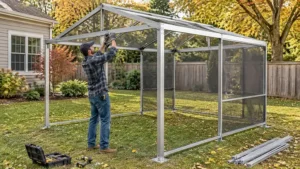
Start after the last hard frost, with a clean, level pad. Lay out every part and count hardware before you touch a tool. Hardtops need two to three adults and a stable ladder. Pop-ups need stakes or weights, and anything you can bolt down should be bolted down.
Hang netting last. Clip rings and hooks tighten evenly when the frame is already square, and it prevents wrinkled panels that let gaps open at the corners.
Summer maintenance
Once a month, check zippers, wipe mesh with mild soap, and inspect for tiny holes. A pinhole is a mosquito highway. Patch it with repair tape or replace the panel.
Fall teardown (right about now in most of Canada)
Take netting down before the first heavy snow, shake it dry, then let it air out fully before folding. Storing damp mesh invites mildew. Soft tops should come off and go into a labelled bag. Pop-ups collapse and store indoors.
Common mistakes in the first 30 days
- Skipping anchors on a windy lot
- Forgetting to tension the roof fabric
- Leaving zippers dirty so they bind next spring
Real-World Scenarios: Which Shelter Fits Which Patio?
These are illustrative buyer profiles, not case studies of real customers, so you can map your own situation to a pick.
Scenario one: the townhouse deck. Imagine a 3 m x 3 m deck, a young family, and a budget under C$2,000. A Kozyard Rosana gives you a permanent, compact screened space, while a HOTEEL pop-up makes sense if you want to test the habit first. Frequency matters: used four nights a week, the Rosana’s cost per use drops fast.
Scenario two: the acreage with wind. Picture an open lot on the prairies with gusts and heavy mosquito pressure. Light pop-ups are a gamble here. A Kozyard Alexander with a bolted base, or a Sunjoy Kingston using its anchor plates, matches the environment better, and you’d want to confirm the foundation before you build.
Scenario three: the existing gazebo. You already own a gazebo with a tired canopy and bugs flying through the gaps. The Outsunny netting is the efficient fix. If the canopy itself is shot, a MASTERCANOPY Bermuda soft top is a sensible reset that stays seasonal.
The thread running through all three: the best mosquito shelter for patio isn’t the most expensive one. It’s the one matched to your frequency of use, your weather and your tolerance for assembly.
Problems and Fixes: Troubleshooting Your Patio Mosquito Screen Enclosure
Problem: a few mosquitoes are still inside. Usually they hitched in through the door. Check for corner gaps, close zippers fully, and treat the entry like an airlock. For stragglers, personal repellent still works, and Health Canada’s repellent guidance notes that DEET products are sold up to 30% and that area products like lanterns and coils repel only within a limited area and protect less reliably than personal repellents.
Problem: it’s stuffy. Open one or two panels at dusk’s start, add a small fan on a hook, and favour double-roof designs for heat release.
Problem: wind flaps the netting. Add weighted corners or extra ties, and make sure panels are tensioned evenly.
Problem: no-see-ums are getting through. Standard mosquito mesh isn’t fine enough. You’d need a finer mesh near 0.6 mm openings, which reduces airflow, so consider adding a fan.
Problem: fabric is fading. UV is the culprit. Rotate panels where possible, and store everything indoors in winter.
Screened Gazebo for Mosquitoes vs Patio Mosquito Screen Enclosure vs Traditional Alternatives
A screened gazebo for mosquitoes is a structure with a roof and netted walls. A patio mosquito screen enclosure is the broader idea: netting around any patio frame, including a gazebo you retrofit. The distinction matters, because you can have one without buying the other.
| Option | Bite Protection | Weather Handling | Setup Effort | Best For |
|---|---|---|---|---|
| Hardtop gazebo with netting (Kozyard Alexander) | Excellent when zipped | Strong, year-round | High | Permanent outdoor rooms |
| Pop-up screen house (HOTEEL) | Very good | Light, seasonal | Low | Renters, trial runs |
| Retrofit netting (Outsunny) | Very good if the fit is tight | Depends on your frame | Low to medium | Gazebo owners |
| Repellent only | Variable | None | Minimal | Short evenings |
| Coils, lanterns, fans | Limited area | None | Minimal | Supplements, not solutions |
Notice that none of these replaces common sense about breeding sites. The Public Health Agency of Canada notes there is no specific treatment or vaccine for West Nile virus, which is why avoiding bites matters even though the risk for most people is low. Empty standing water from planters and buckets regularly, then use the shelter as your second line of defence.
For most households, a physical enclosure plus a bit of repellent beats any single tactic. Repellent alone depends on reapplication, and fans only reduce bites where airflow is strong enough to disrupt flight.
Outdoor Furniture Protection: What Your Shelter Can (and Can’t) Do
Outdoor furniture protection is a bonus benefit, not the headline. A roof shades cushions from UV, shields wood from rain and keeps bird droppings off upholstery. In a hardtop like the Kozyard Alexander or Sunjoy Kingston, that can meaningfully slow fading and mildew.
What a shelter can’t do is turn furniture into winter-proof gear. Soft tops and pop-ups don’t survive snow loads, so cushions and fabric furniture still belong indoors from late fall. Even under a hardtop, wind-driven snow finds a way inside, particularly through netting. Treat the shelter as shade and rain insurance, not hibernation.
A few small habits go a long way. Lift furniture off wet decks with feet pads, wipe down surfaces before putting covers on, and store cushions in a dry, ventilated spot. If you use the shelter for outdoor furniture protection, leave a small gap for air movement so trapped moisture doesn’t cultivate mould.
One more thing: heavy furniture shouldn’t hang from frames. Ceiling hooks are for lights and planters, not swings or hammocks, unless the manufacturer explicitly says so.
Matching Patio Decor Without Inviting Mosquitoes In
Matching patio decor sounds like an indulgence, but it’s often what separates a shelter you love from one you tolerate. Start with frame colour: grey and charcoal frames blend with modern railings, brown and woodgrain finishes warm up cedar decks, and beige or cream netting softens harsh lines.
Black mesh tends to visually recede, which is why it’s popular for views. White and cream mesh reflect light, which can brighten an evening but shows dirt faster. Curtains add colour, but heavy fabric near open flames or candles is a hazard, so use battery-operated lanterns instead.
Keep decor off the mesh. Hanging items from netting stretches it and invites tears. Use ceiling hooks, posts or freestanding shelves, and group lighting near the roof to leave the sides clean.
A practical tip: match your cushions’ tones to the roof colour, not the netting. Roofs dominate the overhead view, and mismatched netting is far less noticeable than a roof that clashes with everything below. If you’re comparing the Sunjoy Kingston to the NETAJE, check finish options early, because colour availability can change from one order to the next.
Long-Term Cost and Maintenance of a Semi-Permanent Bug Shelter for Outdoor Living
A semi-permanent bug shelter for outdoor living should be judged by cost per season, not sticker price. Here’s an illustrative comparison using assumed lifespans, so adjust for your own situation.
| Option | Typical Price Range (CAD) | Assumed Lifespan | Rough Cost Per Season |
|---|---|---|---|
| Kozyard Alexander | C$1,500-C$2,200 | 10 seasons | About C$150-C$220 |
| NETAJE Hardtop | C$650-C$1,100 | 6 seasons | About C$110-C$180 |
| MASTERCANOPY Bermuda | C$500-C$900 | 5 seasons | About C$100-C$180 |
| HOTEEL Pop-Up | C$150-C$300 | 3 seasons | About C$50-C$100 |
| Outsunny Netting | C$70-C$160 | 3 seasons | About C$25-C$55 |
The takeaway: a hardtop isn’t dramatically costlier per summer than a mid-range soft top if it truly lasts a decade. The risk is paying hardtop money for a structure with weak support or loose parts, which erodes the lifespan assumption. The cheap options win on flexibility, not durability.
Maintenance costs are modest. Budget for replacement netting every few seasons, lubricant for zippers, a UV protectant for fabric, and an occasional hardware check. Do an annual tightening of bolts on any hardtop, because thermal expansion loosens them over time.
Safety, Snow Loads and Regulations in Canada
Regulations vary by municipality, so treat this as orientation, not legal advice. One Ontario township’s accessory building guide explains that prefabricated gazebo-type structures may need to be designed for local snow and rain loads and wind loads under the Ontario Building Code, and it cautions against buying a product whose minimum snow load is below local requirements unless you’ll clear snow consistently. Your township may differ, so call your building department before you buy.
Check three things. First, whether your structure needs a permit based on its size and whether it’s attached to your house. Second, setbacks from property lines and fences. Third, the snow load for your area and how the manufacturer’s rating compares.
Safety habits matter too. Never run a fuel-burning heater, barbecue or fire pit inside a fully netted shelter, because carbon monoxide and fire risk go up quickly in enclosed spaces. If you add string lights, heaters or fans, look for CSA or cUL certification marks on electrical gear, and keep cords off walkways.
Finally, clear heavy snow from roofs promptly and take soft tops and pop-ups down well before winter storms arrive.
FAQ: Mosquito Shelter for Patio Questions
❓ Do I need a building permit for a screened gazebo in Canada?
❓ How much does a mosquito shelter for patio cost in Canada?
❓ Can I leave a patio mosquito screen enclosure up all winter?
❓ Is a screened gazebo for mosquitoes safe for babies?
❓ How do I keep no-see-ums out of my mosquito shelter for patio?
Conclusion: Choosing Your Mosquito Shelter for Patio
If you take one idea from this guide, make it this: buy for your climate and your habits, not for the biggest number on the listing. A Kozyard Alexander earns its price if you’ll live in it for a decade, and the Kozyard Rosana does the same job in a smaller footprint. The Sunjoy Kingston wins on style, the NETAJE on hardtop value, and the MASTERCANOPY Bermuda on seasonal flexibility.
For low-risk starting points, the HOTEEL pop-up lets you test the lifestyle cheaply, and the Outsunny netting upgrades a gazebo you already own into a proper patio mosquito screen enclosure. Whichever you choose, plan your seasonal installation and teardown, think about outdoor furniture protection and matching patio decor, and verify local permit and snow-load rules before you build.
It’s early November, which means you have a whole winter to research, measure and compare. Do the homework now and next summer’s evenings will feel like a small upgrade to your life, minus the ankle-slapping.
✨ Ready for bite-free evenings? 🦟
🚫 Compare the picks above, check current pricing on Amazon.ca, and pick the shelter that fits your patio, your weather and your budget. Your future self, relaxing in the dusk, will thank you!
Recommended for You
- Screened Shelter For Mosquitoes: 7 Best Picks For Canada In 2026
- Lightweight Mosquito Shelter For Backpacking: 7 Best Picks (2026)
- Pop-Up Mosquito Shelter For Backyard: 7 Proven Picks (2026)
Disclaimer: This article contains affiliate links. As an Amazon Associate, I earn from qualifying purchases. If you purchase products through these links, we may earn a small commission at no additional cost to you.
✨ Found this helpful? Share it with your friends! 💬🤗
