In This Article
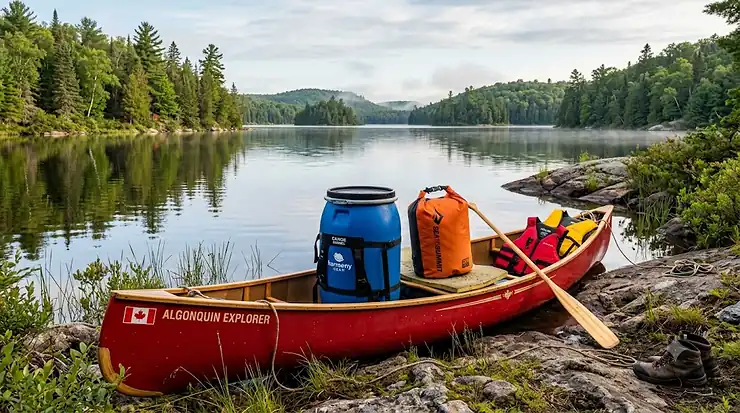
You’re standing at the put-in on a grey Ontario morning, rain threatening from the northwest, three portages between you and your campsite, and a pile of gear at your feet. In that moment, the canoe barrel vs dry bag debate stops being theoretical and becomes very, very real.
I’ve had this exact moment — pack soaked, sleeping bag damp, freeze-dried dinner soggy — because I trusted the wrong storage system for the wrong trip. And I’ve talked to enough Canadian paddlers from Algonquin to Quetico, from the Nahanni to the Bloodvein, to know I’m not alone.
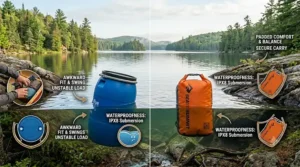
Here’s the honest answer most gear guides won’t give you: neither a canoe barrel nor a dry bag is universally better. The right choice depends on your trip type, your portage load, your group size, and yes — whether you’re paddling in bear country where food storage rules can override your packing preferences. A canoe barrel vs dry bag decision involves real trade-offs in weight, rigidity, organization, and waterproofing performance, and smart Canadian paddlers use both strategically rather than picking one and sticking to it.
In this guide, I’ll walk you through seven of the best waterproof storage options available on Amazon.ca right now, give you honest analysis on when each system truly shines (and when it fails), and help you build a portage storage system you’ll actually trust on Canada’s unpredictable backcountry lakes. Whether you’re weekend-tripping in Killarney, running remote routes in northern Manitoba, or doing your first family paddle in Kejimkujik — this is the breakdown you need.
All prices mentioned are in CAD. Products are verified available on Amazon.ca. Free shipping for Amazon Prime members; non-Prime orders generally require a $35 CAD threshold for free shipping.
Quick Comparison: Canoe Barrel vs Dry Bag at a Glance
| Feature | Canoe Barrel | Dry Bag |
|---|---|---|
| Waterproofing | ✅ Excellent (submersion-rated) | ✅ Good (splash/rain; roll-top varies) |
| Organisation | ✅ Rigid structure, stacks neatly | ❌ Single cavity, collapses |
| Portage comfort | ⚠️ Requires harness (sold separately) | ✅ Built-in straps on many models |
| Weight (empty) | ❌ Heavier (2–4+ kg) | ✅ Lighter (100–900g) |
| Bear country food storage | ⚠️ NOT bear-proof (must still hang) | ❌ Not bear-proof |
| Durability | ✅ Very high (HDPE plastic) | ⚠️ Varies by material/price |
| Best for | Multi-day trips, food, group gear | Day trips, clothes, layering system |
| Price range (CAD) | $70–$150+ | $30–$200+ |
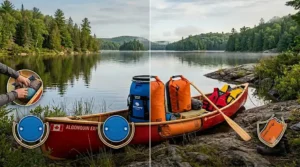
The table above tells part of the story, but here’s what it can’t: barrels win on durability and organisation for extended wilderness treks in Ontario and Quebec where you’re packing 7–10 days of food for two people. Dry bags win on versatility and weight savings for shorter routes or as a secondary system tucked inside a canoe pack. Many seasoned Canadian trippers use both simultaneously — a barrel for food and a dry bag for clothing. That combination, not the either/or mindset, is usually the smartest portage storage comparison approach.
💬 Just one click — help others make better buying decisions too! 😊
✨ Don’t Miss These Exclusive Deals!
🔍 Take your canoe trip gear to the next level with these carefully selected waterproof storage options. Click on any highlighted item to check current pricing and availability on Amazon.ca. These products will help you keep your gear bone-dry, trip after trip!
Top 7 Canoe Barrels and Dry Bags: Expert Analysis for Canadian Paddlers
1. Recreational Barrel Works 60L Canoe Barrel
If there’s one piece of gear synonymous with Canadian canoe tripping, it’s the RBW 60L barrel — the blue workhorse found in canoes from Algonquin to the Yukon. Made by a family-owned business in Peterborough, Ontario since 2001, this is as Canadian as your gear gets.
The 60L barrel measures 62 cm tall × 39 cm wide (24⅜ in × 15.5 in) and weighs approximately 4.175 kg (9.2 lbs) empty. The air-tight lid with lever-lock metal closure and two heavy-duty folding handles aren’t just specs — they mean your food stays dry even if the canoe goes over in a Class II rapid, because properly sealed RBW barrels float. That floating feature has saved more than a few Canadians from a very hungry night in the bush.
This is the standard issue for paddlers doing multi-day trips in the Canadian Shield. The 60L capacity holds roughly 7–10 days of food for one person, comfortably, which makes route planning on remote Ontario or Manitoba routes dramatically simpler. What most buyers overlook is the lid’s versatility as a camp table and cutting board — on a log-crowded campsite, that rigid flat surface is genuinely useful.
Canadian reviewers consistently praise the durability and the availability of replacement parts (gaskets, lids, rings) — a key advantage over cheaper alternatives when you’re planning a trip you’ll repeat for 30 years.
✅ Floats when properly sealed
✅ BPA-free, food-grade HDPE — safe for direct food storage
✅ Made/supported by a Canadian company (Peterborough, ON)
❌ Heavy empty — adds weight before you pack a single gram of food
❌ Harness sold separately (budget an extra $80–$150 CAD for a quality harness)
Price range: Around $100–$130 CAD for the barrel alone. Check current pricing on Amazon.ca.
2. Recreational Barrel Works 30L Canoe Barrel
The 30L is the unsung workhorse of weekend canoe trips and solo paddlers. At 52 cm tall × 31 cm wide (20.5 in × 12 in) and weighing roughly 2.8 kg (6.2 lbs) empty, it’s significantly lighter and more manoeuvrable than its bigger sibling — and it fits inside most large canoe packs, so you can avoid buying a harness separately if you already own a pack.
The lever-lock lid and gasket seal provide the same submersion-resistant protection as the 60L, and the virgin BPA-free HDPE construction means you can store food directly inside without liners. The inner diameter opening is 24.5 cm (9⅝ in) — wide enough to fit a typical one-litre Nalgene bottle, which matters when you’re organizing camp kitchen supplies.
For a two-person weekend trip in Killarney or the Kawarthas, the 30L comfortably holds three to four days of food for one, or two days for two people. It’s also ideal as a medical kit or electronics barrel — a dedicated “dry box” that rides separately from your food supply. Paddlers from Algonquin who’ve done the canoe barrel vs dry bag debate on shorter routes almost universally land on the 30L as the smarter compromise: lighter than the 60L but with the same structural confidence.
✅ Nestles inside large canoe packs (no harness needed on some trips)
✅ Available in multiple colours (blue, orange, red) for colour-coded packing
✅ Floats when sealed — peace of mind on rocky put-ins
❌ Limited to 3–4 days of food for one person on solo trips
❌ Not ideal for groups; you’ll need multiple barrels
Price range: Around $80–$100 CAD. Available on Amazon.ca — Prime shipping eligible.
3. SealLine Baja Dry Bag (20L / 30L)
The SealLine Baja is the dry bag that serious river paddlers keep coming back to — some reviewers report using the same bags for over 20 years, which is about as strong an endorsement as gear gets. Available on Amazon.ca in sizes from 5L to 55L, the Baja’s scrim-reinforced vinyl construction and DrySeal roll-down closure make it genuinely waterproof (not merely splash-resistant), which is a meaningful distinction on a Canadian Shield route with unpredictable rapids.
What stands out for Canadian use is the reinforced bottom — significantly thicker than the body of the bag — which handles the rough granite landings you’ll find on portage trails across Ontario and Québec. The attached D-ring on the buckle lets you lash the bag to a thwart or rigging point, which prevents it from becoming a projectile in a capsize. The 20L version weighs around 450g (1 lb) — essentially nothing compared to a canoe barrel — which matters when you’re already hauling 25 kg of trip gear over a 1.5 km portage.
The Baja shines as a clothing dry bag, the secondary system in any smart portage storage comparison. Pack your sleeping clothes, down jacket, and extra socks in here, lash it behind the bow seat, and sleep dry regardless of what happens on the water. That said, the Baja does not have padded backpack straps, so for portaging it either rides inside a pack or needs to be hand-carried.
✅ Legendary durability — 20+ year lifespan reported by long-term users
✅ Available in multiple sizes and colours for colour-coded packing systems
✅ Genuinely waterproof (not just water-resistant) in submersion scenarios
❌ No backpack straps — needs to ride inside a pack or canoe pack on portages
❌ Larger sizes can be pricey compared to budget alternatives
Price range: $40–$100+ CAD depending on size. Available on Amazon.ca.
4. Sea to Summit Big River Dry Bag (20L / 35L)
The Sea to Summit Big River is what I’d call the “thinking paddler’s dry bag” — it offers a more refined feature set than basic roll-tops at a mid-range price that makes sense for serious Canadian paddlers who want reliability without paying premium prices.
The 420D nylon TPU laminate construction is notably tougher than the PVC used on budget bags, and crucially, it’s UV-resistant — a real consideration for paddlers doing multi-week routes in the Canadian north where you can accumulate serious sun exposure. The hypalon roll-top closure resists wicking more reliably than basic nylon closures, and the triple-coated base handles abrasion from rocky portage landings. The white interior is a genuinely useful detail: you can find your headlamp at 5:30 AM without unpacking half the bag.
Multiple lash points (four welded TPU patches and two D-rings) make it easy to rig the Big River as a canoe trip gear choice for clothing or bulky camp items that don’t need rigid protection. The 35L version is the sweet spot for a two-person trip’s shared clothing supply. For Canadians doing route planning, Sea to Summit’s Canadian website (seatosummit.com/en-ca) confirms shipping availability and offers warranty support domestically.
✅ 420D nylon TPU — tougher and more UV-resistant than basic PVC bags
✅ White interior makes finding gear fast at any hour
✅ Multiple lash points for secure attachment inside the canoe
❌ No backpack straps in the standard model (Dry Bag Sling sold separately)
❌ More expensive than entry-level dry bags for similar capacity
Price range: $60–$120 CAD depending on size. Available on Amazon.ca.
5. HEETA Waterproof Dry Bag (20L / 30L)
The HEETA Waterproof Dry Bag is the honest budget option for new Canadian paddlers or those wanting a secondary layer to their storage system without a significant investment. Available on Amazon.ca in 5L through 40L sizes, it’s transparent PVC construction that solves a real canoe camping problem: finding your gear without emptying the whole bag.
The semi-clear material means you can see your cook kit, first-aid supplies, or camera gear at a glance — genuinely useful on a busy portage day when time and energy are at a premium. The 20L version weighs under 500g and comes with a basic waterproof phone pouch included. PVC is not the most environmentally progressive material choice, but it does offer reliable waterproofing in the rain and splash conditions Canadian paddlers deal with most often.
What most buyers overlook with the HEETA is its appropriate use case: this is a day-trip bag or a “clothing liner inside your canoe pack” system, not a standalone portage pack for multi-day routes. The unpadded shoulder straps get uncomfortable quickly under load, and the hardware is unbranded — fine for short carries, not ideal for aggressive portaging. For a budget-conscious family doing weekend paddles on Ontario’s Trent-Severn Waterway or beginner routes in BC’s Interior, the HEETA represents solid value in the $30–$50 CAD range.
✅ Transparent PVC — see contents at a glance without unpacking
✅ Excellent budget value; includes phone pouch
✅ Available in multiple sizes and colours on Amazon.ca
❌ Unpadded straps — uncomfortable under significant load on long portages
❌ Not appropriate as a standalone portage system for multi-day wilderness trips
Price range: $30–$60 CAD depending on size. Available on Amazon.ca with Prime shipping.
6. Level Six Algonquin 55 Waterproof Canoe Pack
Level Six is an Ottawa-based Canadian paddling brand, and the Algonquin 55 is their flagship canoe pack — a hybrid solution that integrates a 50L dry bag inside a structured canoe pack frame. It’s a smart answer to the portage storage comparison question because it delivers barrel-style waterproofing with dry-bag-style portage comfort.
The 420D nylon exterior is tough enough for the granite-edged portage trails of Algonquin Provincial Park (where this bag was, presumably, extensively tested), and the internal 50L dry bag liner provides reliable waterproofing for your full gear load. The structured back panel and padded hip belt make it significantly more comfortable on long portages than lashing a dry bag to your back with improvised straps. At 55L total capacity, it handles a full multi-day trip’s gear load for a single paddler.
What makes the Algonquin 55 particularly smart for Canadian buyers is the dual-purpose design: it’s equally at home as a canoe pack and a hiking pack, which improves cost-per-use significantly for paddlers who also do backcountry hiking in the off-season. The Level Six Canadian brand presence also means easier warranty and parts support domestically — no cross-border headaches. Available through Level Six’s Canadian website and select Amazon.ca listings; pricing is in the premium tier but reflects genuine Canadian-made quality.
✅ Canadian brand (Ottawa-based) — domestic warranty and support
✅ Padded hip belt and structured back panel for genuine portage comfort
✅ Integrated dry bag liner — no need for a separate liner system
❌ Premium pricing — significantly more expensive than a basic barrel + harness combo
❌ Less organization than a rigid barrel for managing food supplies
Price range: In the $180–$220 CAD range. Check Amazon.ca availability and current pricing.
7. Recreational Barrel Works Canoe Pack Liner (XL)
The RBW Canoe Pack Liner is the most underrated piece of waterproof storage options on this list — not because it’s the most impressive gear item, but because it solves a specific Canadian problem brilliantly: your favourite canoe pack is almost certainly not waterproof enough on its own.
Made from 30-denier waterproof coated honeycomb ripstop nylon, this liner fits packs from 65L to 140L and creates a massive roll-top dry bag inside your existing pack. The closing system is elegantly simple: roll the top, tie a half-knot, clip the buckle. The taped seams and reinforced stress points handle day-long rain and wet landings without the stiffness or weight of traditional PVC liners. At roughly 150g, it adds almost nothing to your pack weight.
For Canadian canoe trippers who already own a quality canoe pack but are tired of arriving at camp with damp sleeping bags, the pack liner is a $40–$60 CAD solution that transforms your existing system. It’s particularly valuable on multi-day Ontario or Québec routes where you might face sustained rainfall across several portage days — conditions where a basic garbage bag liner simply isn’t reliable enough. Pair this liner with a 30L RBW barrel for food and you have an extremely effective, affordable, thoroughly Canadian waterproof storage system.
✅ Converts any 65–140L pack into a waterproof system at minimal cost
✅ Extremely lightweight (30D ripstop nylon) — adds almost nothing to pack weight
✅ Available directly on Amazon.ca from a Canadian brand
❌ Requires an existing canoe pack to use
❌ Not rigid — offers no organization structure or floating capability
Price range: $40–$65 CAD. Available on Amazon.ca with Prime shipping.
How to Use a Canoe Barrel Properly: A Practical Usage Guide for Canadian Conditions
Owning a canoe barrel and using one effectively are two different things. Here’s what the product listing won’t tell you.
Sealing it correctly matters more than you think. The lever-lock closure on RBW barrels requires a firm, deliberate motion — especially when the barrel is new and the gasket hasn’t yet formed to the lid. If you’re not hearing a solid click and feeling the metal ring seat fully, it’s not sealed. On a Killarney trip in 2023, a fellow paddler lost two days of food when a barrel went into a rapid with an improperly seated lid. Test your seal at home before the trip by pressurizing the barrel slightly and listening for air escape.
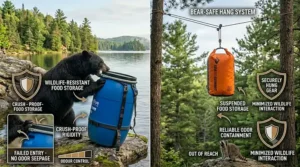
In bear country, your barrel still needs to be hung. This is the single most important thing Canadian paddlers misunderstand about canoe barrels. As noted by Bending Branches and confirmed through Parks Canada guidelines for areas like Algonquin, RBW-style “blue barrels” are not certified bear-resistant containers. A determined black bear can and will destroy one — there’s a barrel at Killarney’s front gatehouse that proves it. When paddling in bear country, hang your food barrel from a tree at least 4 metres above the ground and 1.3 metres horizontally from the trunk, or use a certified bear-resistant container as required under Parks Canada regulations. The barrel keeps your food dry; the hang keeps you safe.
Packing your barrel for portage balance: Fill the barrel from the bottom with the heaviest items (canned goods, hard-sided containers) and lighter items on top. This keeps the centre of gravity low when you’re wearing a harness, reducing the forward tilt that causes shoulder fatigue. On trips with multiple portages, spending 10 minutes on barrel packing order at the start of each day is genuinely worth it.
Cold-weather sealing tip: In early Canadian spring or late fall, the rubber gasket on barrel lids can stiffen slightly in temperatures below 5°C (41°F). If your lid is harder than usual to seat on a cold morning, warm the gasket briefly in your hands before closing. This simple trick prevents the micro-gaps that cold-stiffened gaskets can create.
Dry bag maintenance for longevity: After each trip, rinse roll-top dry bags with fresh water (especially after saltwater coastal paddling in BC or Nova Scotia), wipe dry, and store loosely rolled rather than tightly compressed. The seam tape on quality bags like the SealLine Baja can delaminate prematurely if stored folded along the same crease repeatedly. Hanging dry bags loose in a gear room extends their life significantly.
Real-World Scenarios: Which Storage System Fits Which Canadian Paddler?
The canoe barrel vs dry bag debate resolves differently depending on who you are and where you paddle. Here are three profiles I see constantly.
Profile 1: The Algonquin Weekend Warrior (Ontario) Sarah, 34, paddles two or three routes in Algonquin every summer with her partner. They do 5–7 night trips with 3–5 portages per day. Their system: one RBW 60L barrel (food) with a Level Six Bad Hass harness, one RBW pack liner inside a 90L canvas canoe pack (clothing and camp gear), and two SealLine Baja 10L dry bags for electronics and first aid. Total: four pieces of storage, everything stays dry, portages are manageable. The barrel for food is non-negotiable — Algonquin has active black bears and having rigid, organized food storage simplifies camp routine dramatically.
Profile 2: The BC Coastal Day Tripper (British Columbia) Marcus, 27, paddles the Gulf Islands and Johnstone Strait on day trips and occasional overnighters. His needs are fundamentally different: he doesn’t portage, food storage is minimal (day snacks), and he primarily needs to protect electronics and dry clothes from ocean spray and Pacific Northwest rain. For Marcus, two SealLine Baja bags (20L and 10L) or a Sea to Summit Big River 35L cover everything. No barrel needed. The dry bag or barrel question here doesn’t really arise — dry bags win by a significant margin for coastal flatwater paddling.
Profile 3: The Northern Wilderness Tripper (Manitoba/Ontario remote routes) Diane, 52, does one remote northern route every two years — Bloodvein, Kopka, or Wabakimi. These are 12–18 day routes, 6 portages per day on some sections, and genuine bear country. Diane’s system: two RBW 60L barrels (one food, one gear) with two Level Six Bad Hass harnesses, one HEETA transparent 20L dry bag for the day kit (snacks, sunscreen, camera, rain jacket) kept accessible in the canoe. The HEETA lives under the bow seat within reach; the barrels go in the hull between trips and on her back over portages. The transparency of the HEETA means she can find her rain jacket in 10 seconds when clouds build suddenly — which they do, constantly, on northern Canadian lakes.
Dry Bag or Barrel in Bear Country: What Canadian Paddlers Need to Know
This question comes up constantly in Canadian paddling circles, and the answer is more nuanced than most gear guides acknowledge. Let’s break it down.
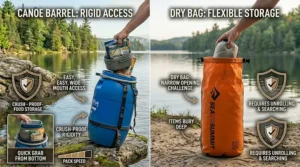
The core truth first: neither standard canoe barrels nor roll-top dry bags are certified bear-resistant containers. A blue HDPE canoe barrel looks sturdy, and it is — against water, impacts, and general abuse. But a motivated black bear can destroy one, as documented at Killarney Provincial Park and discussed in Explore Magazine’s candid comparison of bear canisters vs canoe barrels. Dry bags offer essentially zero resistance to a bear.
What Canadian regulations actually require: Parks Canada requirements vary by park and zone. In some areas (including certain zones of Banff, Jasper, and Kluane National Parks), certified bear-resistant containers are mandatory. In others, proper food hanging is the accepted practice. Parks Canada’s official guidance is the authoritative source — always check the specific regulations for your planned route before departure, as rules can change and vary by zone within the same park.
The practical system for Canadian bear country canoe trips:
In areas without tree cover (the boreal north, above treeline, rocky Shield terrain with sparse canopy), your only compliant option in regulated zones is a certified bear-resistant container like the BearVault BV475 or Counter Assault Bear Keg. These can be stored inside or alongside your canoe barrel system. In areas where hanging is permitted, store your food barrel — including the dry bag inside it if you’re using a liner system — at least 4 metres above the ground, 1.3 metres from the trunk.
The canoe barrel does have one genuine bear-country advantage: it’s rigid enough that you can slot a BearVault canister inside it for the food items bears most want (high-calorie, strong-smelling foods), and use the remaining barrel space for less attractive items like stove fuel, cooking equipment, and dry staples. This nested system keeps everything organized and gives you maximum bear security with minimum additional bulk.
A dry bag alone in bear country is simply not adequate for food storage on a canoe trip — don’t rely on it as your primary food container anywhere bears are active.
How to Choose Waterproof Storage for Your Canoe Trip in Canada
Making the right waterproof storage choice is about matching the system to the trip, not finding a universal winner. Here’s a clear framework.
1. Assess your portage load first. If your route has more than 5 portages per day, weight and portage comfort dominate every other consideration. A 60L barrel + quality harness adds about 5 kg (11 lbs) empty; a 35L dry bag with backpack straps adds under 1 kg. On a 25-portage route in Quetico, that difference accumulates significantly.
2. Consider trip length and food volume. Under 4 days for two people: a 30L barrel (or two large dry bags with careful packing) is usually sufficient. 5–10 days for two people: you need at least one 60L barrel for food, ideally two. Beyond 10 days or for groups: multiple 60L barrels become the only practical food management system.
3. Know your water conditions. Flatwater paddling in the Rideau system? A quality dry bag is perfectly adequate. Technical whitewater on Quebec rivers or remote Shield routes with frequent rapids and carries? Barrels offer superior protection because they don’t rely on a correctly rolled closure — they’re mechanically sealed. In Canadian spring conditions when cold, fast water and tired paddlers are a dangerous combination, the barrel’s passive waterproofing is safer.
4. Budget realistically in CAD. A complete barrel system (barrel + harness) runs $180–$280 CAD depending on brand. A quality dry bag system runs $60–$150 CAD for comparable capacity. The barrel system costs more upfront but lasts 20+ years with basic maintenance — that’s a lower cost-per-trip than replacing budget dry bags every few seasons.
5. Check provincial/park regulations before you go. Bear country rules, fire permits, and campsite regulations vary significantly between Algonquin, Bowron Lake, and Wabakimi. Parks Canada and provincial parks websites are your authoritative source.
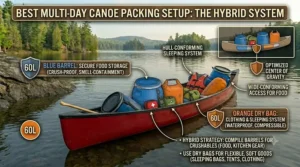
6. Think about your secondary system. The most effective approach isn’t barrel OR dry bag — it’s barrel FOR FOOD + dry bags FOR CLOTHING. This separation simplifies camp organization, reduces the time you spend with your barrel open (limiting odour dispersal in bear country), and keeps clothing dry even if your food barrel takes a hard knock.
7. Consider where you’ll be buying replacement parts. For gear used across decades of Canadian tripping, domestic parts availability matters. RBW’s Peterborough operation stocks replacement lids, gaskets, and rings that ship across Canada. For imported dry bag brands, check warranty terms and whether Canadian customers need to return items cross-border.
Common Mistakes When Choosing Portage Storage in Canada
Mistake 1: Buying a barrel without budgeting for a harness. The barrel is useless on a portage without a proper harness. The barrel itself is $80–$130 CAD; a quality harness from Level Six Bad Hass or the RBW Expedition Harness adds another $120–$180 CAD. Budget for the complete system, not just the container.
Mistake 2: Trusting a cheap dry bag for a multi-day route. Budget roll-top bags rated “waterproof” on Amazon can fail unexpectedly under sustained rain or submersion. On a 10-day remote route in northern Ontario, wet gear is a safety issue, not just an inconvenience. Spend appropriately for the stakes involved — SealLine Baja or Sea to Summit Big River for anything beyond day trips.
Mistake 3: Assuming your barrel is bear-proof. Covered above, but worth repeating: blue canoe barrels are not certified bear-resistant. This misunderstanding causes real problems in Killarney, Algonquin, and coastal BC parks where habituated bears are active. Always hang your food or use a certified canister in bear country — check specific park regulations at parks.canada.ca.
Mistake 4: Ignoring Canadian-specific sizing issues. American gear review sites often reference US gallon barrel sizes. Canadian barrels are sized in litres (RBW’s 60L = 15.9 US gallons). When comparing specifications across American and Canadian retailers, always convert to metric to avoid buying the wrong capacity.
Mistake 5: Over-relying on one large bag instead of a layered system. One 90L dry bag that holds everything sounds simpler, but in practice it means you’re unpacking 90L of gear every time you need your rain jacket or snack supply. Use a layered system — barrel for food, mid-size dry bag for camp clothes, small dry bag for daily access items — and label each container with coloured tape. Your portage days will be dramatically more efficient.
FAQ: Canoe Barrel vs Dry Bag for Canadian Paddlers
❓ What is the difference between a canoe barrel and a dry bag for portage storage?
❓ When should I use a canoe barrel vs dry bag on a Canadian canoe trip?
❓ Are canoe barrels bear-proof for food storage in bear country Canada?
❓ What size canoe barrel do I need for a week-long trip in Canada?
❓ Do dry bags float if a canoe capsizes on a Canadian river?
Conclusion: Building the Right Waterproof Storage System for Canadian Waters
The canoe barrel vs dry bag debate is really a false dichotomy — the best Canadian paddlers don’t choose between them, they use them together strategically. Your barrels carry the food and heavy group gear; your dry bags handle the clothing, sleeping kit, and day-access items that need flexibility. That combination, tuned to your specific route, group size, and bear country context, is what actually works on Canadian lakes and rivers.
For most paddlers doing Ontario or Québec routes: start with a Recreational Barrel Works 60L barrel and a quality harness for food, add a canoe pack liner for your clothing pack, and keep a SealLine Baja or Sea to Summit Big River as your day-kit bag. For budget-conscious new paddlers or day-trippers: a HEETA 20–30L transparent bag gives you solid splash protection at a price that doesn’t sting. For serious remote trippers heading into genuine Canadian wilderness: invest in the complete Level Six or RBW system, and research your bear country food storage obligations through Parks Canada before you load the canoe.
The waterproof storage options on this list are all genuinely available on Amazon.ca (with the caveat that some Level Six products may ship directly through levelsix.ca for the most current Canadian inventory). None of them will disappoint if matched correctly to their appropriate use case. The paddle-ready combination of a good barrel, a quality dry bag, and solid bear safety knowledge is what lets you focus on what actually matters: the route ahead and the water around you.
✨ Don’t Miss These Exclusive Deals!
🔍 Ready to gear up for your next canoe trip? Click any highlighted product above to check current pricing and availability on Amazon.ca. Canadian Prime members enjoy free shipping — non-Prime orders over $35 CAD qualify for free standard delivery to most provinces. 🇨🇦
Recommended for You
- Compression Dry Bag vs Regular Dry Bag: 7 Best for Canoe Camping in Canada 2026
- Best Compression Dry Bag for Sleeping Bag: 7 Top Picks for Canada 2026
- 7 Best 60L Dry Bags for Canoe Camping in Canada (2026)
Disclaimer: This article contains affiliate links. As an Amazon Associate, I earn from qualifying purchases. If you purchase products through these links, we may earn a small commission at no additional cost to you.
✨ Found this helpful? Share it with your friends! 💬🤗
