
In This Article
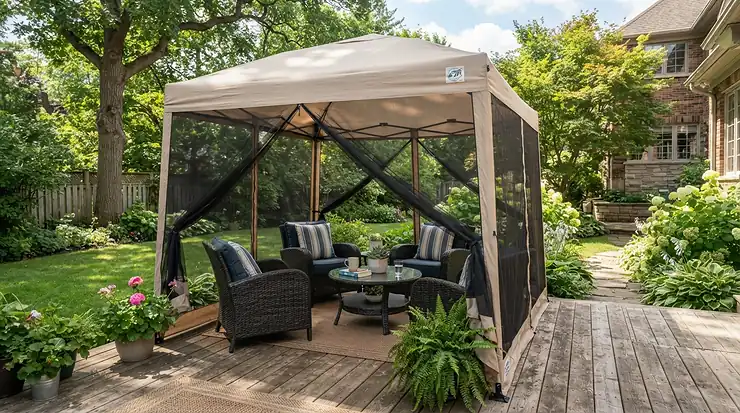
A pop-up mosquito shelter for backyard use is a freestanding, mesh-walled canopy with a collapsible frame that opens in about a minute or two. It gives you a shaded, bug-free sitting area on grass, deck or patio without tools, permits or a contractor, and it folds away when the season ends.

Canadian summers are short, gorgeous and aggressively buzzy. West Nile season here generally runs from mid-April to October, and the mosquitoes involved tend to bite around dusk, right when you’ve finally sat down with a cold drink. The Public Health Agency of Canada says the best way to avoid infection is to prevent mosquito bites in the first place. A mesh shelter protects everyone under it at once, with no sprays and no slapping.
It’s late October as I write this, which is a smart time to shop. You can compare models calmly instead of panic-buying during a June swarm. Prices change constantly, so every figure below is a CAD range, and you should check current prices before you buy.
Here’s my promise. This guide covers seven real models and what their specs mean for an actual Canadian yard. It also digs into wind stability of pop-up shelters, storage and portability at home, and outdoor entertaining setups. I haven’t personally tested these products. Everything here comes from published specs, spec-to-spec reasoning and aggregated review themes, and I’ll say plainly where something couldn’t be verified.
Quick Comparison of 7 Pop-Up Mosquito Shelter for Backyard Picks
| Product | Footprint | Standout Trait | Price Range (CAD) | Best For |
|---|---|---|---|---|
| Coleman Skylodge | 11 × 11 ft (3.4 m) | Brand-name instant setup | C$200–C$300 | Coleman Skylodge: families wanting a known brand |
| Alvantor | 10 × 10 ft (3 m) | Pop-up frame plus wind kit | C$150–C$250 | Alvantor: first-time buyers |
| East Oak | 6, 10 or 12 ft | Size choices, long warranty | C$150–C$300 | East Oak: choosing by yard size |
| VEVOR | 10 × 10 ft (3 m) | Six-sided gazebo shape | C$130–C$230 | VEVOR: budget gazebo look |
| Lenotos | 10 × 10 ft (3 m) | Lowest entry price | C$100–C$170 | Lenotos: occasional use |
| CORE | 120 sq ft (11 m²) | Built-in lighting | C$280–C$400 | CORE: picnic-table dining |
| IDEALHOUSE | 13 × 13 ft (4 m) | 2-in-1 removable sidewalls | C$250–C$400 | IDEALHOUSE: bigger gatherings |
Looking at the table, Lenotos and VEVOR make the cheapest way in, while CORE and IDEALHOUSE cost more for features (lighting, extra footprint) that matter only if you’ll use them. For most single-family yards, a 10 × 10 ft footprint like Alvantor or East Oak is the sweet spot between coverage and storage hassle. Think of price as buying either convenience or space, and decide which one you’re short on.
💬 Just one click — help others make better buying decisions too!😊
Top 7 Pop-Up Mosquito Shelter for Backyard Models: Expert Analysis
1. Coleman Skylodge — brand-name instant setup with a tall centre peak
Coleman Skylodge is built around speed. Roundups describe a one-minute instant setup, UPF 50+ roof fabric and a lightweight aluminum frame. The larger 15 × 13 ft (4.6 × 4 m) version lists a 2.5 m (8.1 ft) centre height and two zipper doors. The 11 × 11 ft (3.4 m) version sold on Amazon.ca covers a six-seat patio table with room to walk around it.
A tall peak matters more than it sounds. It lets adults stand and move without ducking, and it keeps heat from pooling at head height on humid July evenings. Based on the spec sheet, this is the pick for families who want a familiar brand and a straightforward instant setup. Weight varies by size, though one review site lists a related Coleman Skylodge-family instant screened canopy near 45 lb (20 kg), so check your version.
Reviewers consistently praise the speed and the generous covered area. A recurring complaint across independent reviews is fragile zippers and pole joints that can loosen, and a few resale-listing reviewers report leaks. Treat it as a bug-and-shade shelter, not a rain shelter.
Pros:
- ✅ One-minute instant setup per listings
- ✅ Tall centre height for standing comfortably
- ✅ Familiar brand, widely stocked in Canada
Cons:
- ❌ Zippers and pole joints draw durability complaints
- ❌ Can be heavy to carry in larger sizes
Expect around C$200–C$300 depending on size; check current price. Good value if you prize brand support and headroom.
2. Alvantor — the pop-up with a real wind-hardware kit
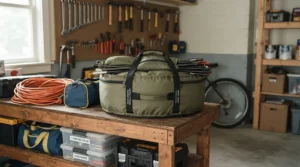
Alvantor earns its spot by shipping a complete tie-down package. Independent roundups list a 10 × 10 ft (3 × 3 m) footprint, 7 ft (2.1 m) peak, a fibreglass pop-up frame and UPF 50+ roof. They also list 12 guylines, with sandbags and ground nails reported in the kit. Reported weights run from about 9 to 15 lb (4–7 kg) depending on version.
That last number is the quiet hero. A shelter you can carry from garage to lawn in one trip gets used on a Tuesday, not just on holiday weekends. Fibreglass poles also flex under gusts instead of kinking, which is helpful when a prairie breeze rolls through.
Review sentiment is the story here: roundups note an unusually large review base, which makes long-term patterns easier to spot. The common complaints are that the roof isn’t waterproof and that folding it down takes a tutorial video the first time. Both are fair trade-offs for the price.
Pros:
- ✅ True automatic pop-up deployment
- ✅ Sandbags, ground nails and guylines included
- ✅ Light enough for one person to carry
Cons:
- ❌ Roof is not waterproof
- ❌ Folding down has a learning curve
Plan on around C$150–C$250; check current price. Excellent value for first-time buyers.
3. East Oak — the size-flexible pick with a long warranty
East Oak is easiest to understand as a family: 6 × 6, 10 × 10 and 12 × 12 ft versions of the same idea. Listings cite D33 mesh, UPF 50+ protection and roughly 100 sq ft (9.3 m²) in the 10 × 10 model. One roundup lists the 12 × 12 at 144 sq ft (13.4 m²) with a steel-and-fibreglass hybrid frame and a three-year warranty.
Offering sizes is more useful than it looks. A 6 × 6 ft model suits a small balcony or a two-chair reading corner, while the 12 × 12 swallows a full dining set. The warranty also tells you something, because manufacturers rarely promise three years on frames they expect to fold in half.
On review sentiment, the best-seller badge in Amazon’s screen-house category is a real signal of volume. However, the reviews I could verify were mostly on US listings, so check the Amazon.ca page for Canadian-buyer feedback before ordering.
Pros:
- ✅ Three footprints to match your yard
- ✅ Warranty reported on the larger model
- ✅ UPF 50+ roof for sun protection
Cons:
- ❌ Verified reviews skew toward US listings
- ❌ Rain protection isn’t its headline feature
Expect roughly C$150–C$300 depending on size; check current price. A smart “right-size it” choice.
4. VEVOR — six-sided gazebo styling on a budget
VEVOR takes the six-sided gazebo route: mesh windows, a carry bag and ground stakes in the 10 × 10 ft (3 m) model. Larger 12 × 12 ft versions add removable privacy wind cloths and a water-resistant rating on the listing. Its 6 × 6 ft version carries a category best-seller tag in the US.
A six-sided canopy tends to present less flat surface to a gust than a plain box, and it looks more like permanent garden furniture. The removable cloths, available on bigger models, also let you convert a bug shelter into a sun-and-breeze gazebo on days the mosquitoes behave.
I could not verify detailed buyer sentiment for this specific listing, so treat any claim about long-term durability as unproven. Budget gazebos at this price point often include thin stakes, so budget an extra few dollars for proper ones.
Pros:
- ✅ Gazebo styling suits garden settings
- ✅ Carry bag and ground stakes included
- ✅ Larger sizes add removable wind cloths
Cons:
- ❌ Detailed owner feedback is thin
- ❌ Stock stakes likely need upgrading
Plan on around C$130–C$230; check current price. A good-looking value pick if you’re willing to reinforce it.
5. Lenotos — the cheapest way into mosquito-free evenings
Lenotos is the pick for someone who wants to try the idea without a big commitment. The 10 × 10 ft (3 m) pop-up includes mosquito netting and a carry bag, and a 6 × 6 ft option exists for small spaces. At research time, the Amazon.ca listing showed roughly 4.5 stars across a small pool of 54 ratings.
That small pool deserves a sceptical eyebrow. A high average from few reviews is encouraging but not conclusive. Budget frames typically trade away guyline and stake quality first, so the realistic approach is to buy it, then spend a few dollars on better stakes and sandbags.
It suits weekend barbecues, kids’ sleepovers and the “does my family actually use this?” experiment. If the answer is yes, you’ll know what upgrade you want.
Pros:
- ✅ Lowest entry cost of the group
- ✅ 6 × 6 and 10 × 10 ft options
- ✅ Carry bag included
Cons:
- ❌ Small review pool limits confidence
- ❌ Expect to upgrade stakes and anchoring
Expect around C$100–C$170; check current price. Fair value for occasional use, not for daily abuse.
6. CORE — built-in lighting that fits over your picnic table
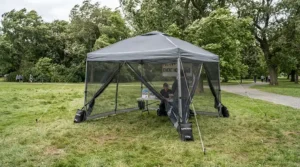
CORE thinks about the evening. The Medium Instant Screen House lists 120 sq ft (11 m²), a roughly 60-second setup, three-mode integrated lighting and a floorless design that fits over a standard picnic table. It weighs about 27 lb (12 kg).
Integrated lights sound gimmicky until you realise that mosquito hours are also dim hours. Without them you’re juggling lanterns, which also attract bugs to the mesh edges. The floorless layout means you can set it right over your existing patio table instead of dragging furniture inside.
One review site scored it 7.8 out of 10, praising setup speed and lighting, while flagging weak stakes as the recurring complaint. At 27 lb it’s also the heaviest pop-up here, so storage and portability at home deserve a thought.
Pros:
- ✅ Built-in three-mode lighting
- ✅ Fits over a standard picnic table
- ✅ Roomy 120 sq ft footprint
Cons:
- ❌ Stock stakes draw complaints
- ❌ Heavier at about 27 lb
Plan on roughly C$280–C$400; check current price. Worth it if evening dining is your main use.
7. IDEALHOUSE — a 13 × 13 ft 2-in-1 for bigger crowds
IDEALHOUSE is the large-format option: a 13 × 13 ft (4 × 4 m) pop-up gazebo with removable sidewalls and mosquito netting. The “2-in-1” idea is that you zip in the netting at dusk and swap in solid walls or take everything off for open shade by day.
At roughly 169 sq ft (15.7 m²), it comfortably holds a long dining table plus a few extra chairs. Larger canopies, though, catch more wind and take up more space in storage, so anchoring matters even more here. This is the model to consider for graduation parties and Canada Day gatherings.
I couldn’t verify in-depth buyer feedback for this listing, so check recent Canadian reviews before buying. Treat the sidewalls and netting as separate stakeholders in your wind plan.
Pros:
- ✅ Largest footprint of the seven
- ✅ Removable sidewalls double as shade gazebo
- ✅ Suits larger gatherings
Cons:
- ❌ Bigger frame is harder to store
- ❌ Large canopy demands careful anchoring
Expect around C$250–C$400; check current price. A strong choice if guest count is the priority.
Side-by-side specs at a glance
| Product | Peak / Footprint | Weight Note | Review Basis |
|---|---|---|---|
| Coleman Skylodge | ~2.5 m (15 × 13 ft model) | Heavy in larger sizes | Mixed: speed praised, zippers criticised |
| Alvantor | 2.1 m, 3 × 3 m | ~4–7 kg reported | Large review base |
| East Oak | 100–144 sq ft options | Not verified | Best-seller badge (US) |
| VEVOR | 3 × 3 m, six-sided | Not verified | Limited verification |
| Lenotos | 3 × 3 m | Not verified | ~4.5 stars, 54 ratings |
| CORE | 11 m² | ~12 kg | 7.8/10 editorial score |
| IDEALHOUSE | 4 × 4 m | Not verified | Limited verification |
The pattern is clear: the lightest, best-documented options (Alvantor, CORE) are the ones with verifiable numbers, while the cheaper models leave more homework for you. If you can’t confirm a weight or a stake quality, assume you’ll upgrade the anchoring. That extra homework is the real price difference.
How to Choose a Pop-Up Mosquito Shelter for Backyard Use
Start with how you’ll actually use it, then work down this list.
- Measure your space first. Mark a 3 × 3 m (10 × 10 ft) square with tape. Add 60 cm (2 ft) on every side for guylines, because the canopy is bigger than the floor area suggests.
- Pick mesh with the right hole size. According to Wikipedia’s overview of mosquito nets, a 1.2 mm mesh stops mosquitoes while about 0.6 mm also stops biting midges. Many listings don’t state mesh size, so ask the seller if black flies and no-see-ums are your local problem.
- Judge the frame material. Fibreglass flexes in gusts, while steel is sturdier but heavier. Hybrids split the difference.
- Check the setup claim honestly. A genuine instant pop-up for a patio opens in a minute or two. A true “pop-up” that needs two adults and a YouTube video is a marketing stretch.
- Weigh the carry. If you can’t lift it comfortably, you’ll leave it up all season and shorten its life. Anything near 12 kg (27 lb) deserves a wheeled bag or a second person.
- Inspect the anchoring kit. Stakes, sandbags and guylines matter more than the headline features.
- Think about the roof. Most are UPF-rated shade, not waterproof canopies. If rain is common, buy a model that says water-resistant explicitly.
If a feature doesn’t affect one of those seven points, it’s probably decoration.
Wind Stability of Pop-Up Shelters: What Actually Keeps Them Grounded
Wind is the one thing that turns a lovely shelter into a kite with a handle. The good news is that wind stability of pop-up shelters comes down to a few things you control.
Environment Canada’s wind warning criteria give you a useful ceiling. As Global News explained, the national threshold is sustained winds of 70 km/h or gusts above 90 km/h. No pop-up shelter, however many guylines it ships with, should be standing in a gust like that. Take it down.
Below that line, here’s what matters:
- Anchor at the legs and the guylines. Stakes in soil, sandbags on pavers or decks. Roundups note that kits with 12 guylines and sandbags, like the one reported for Alvantor, handle gusts better than bare-bones sets.
- Aim the door edge at the wind. One reviewer’s tip I like: angle the shelter so wind meets a door edge rather than a broadside panel.
- Prefer shapes that spill wind. Six-sided designs like VEVOR tend to spill gusts better than flat-sided boxes.
- Don’t trust stock stakes. CORE and many budget models draw complaints here, and replacement stakes cost little.
- Take the walls off when it blows. Mesh lets wind through, but solid sidewalls on IDEALHOUSE act as sails.
One last reality check: most listings carry no certified wind rating. Treat any number as marketing, and treat your own forecast as the real spec.
Storage and Portability at Home: Where Does This Thing Live?
Nobody warns you that the hardest part of owning a shelter is the other nine months. Storage and portability at home decide whether it becomes a joy or a garage hazard.
Start with the packed size. Pop-up frames fold into a flat, wide disc, which looks compact but is awkward to carry. A wheeled bag (listed on some Coleman Skylodge-class models) is a real convenience, particularly for lighter frames.
Next, weight. Anything under about 7 kg (15 lb), like Alvantor, can be carried one-handed. At around 12 kg (27 lb), CORE wants a firm grip or a second person. Large IDEALHOUSE frames are best stored upright in a corner or hung from garage hooks.
Then the season. Canadian winters are brutal on stored fabric, so dry it fully before packing, because damp polyester grows mildew in a cold garage. A basement closet or a high shelf beats a shed where mice and condensation roam. Shake out grass and debris first, since sharp bits wear mesh from the inside.
Finally, consider apartments and condos. A 6 × 6 ft East Oak or Lenotos can live under a bed or in a locker, while a full 13 ft frame effectively cannot. Match your storage reality to your shelter before you fall for the biggest one.
Outdoor Entertaining Setups: Turning One Shelter Into a Party Zone
A mosquito shelter isn’t just defence. It’s the room your gathering happens in. These outdoor entertaining setups use the same shelter in different ways.
The dinner party. Centre a 10 × 10 ft (3 m) shelter over a table seating six. CORE fits over standard picnic tables and has lighting built in, which solves the “where do I put the lantern?” problem. Keep food prep outside and bring dishes in, because open food invites guests in through the door gap.
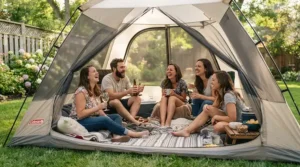
The kids’ campout. Put sleeping mats inside a 10 × 10 ft shelter like Alvantor and let the kids “camp” without leaving the yard. It’s floorless, so lay a tarp or foam mats down. Kids over two can use repellent according to Health Canada guidance, though a mesh space reduces how much you need.
The big birthday. A 13 × 13 ft IDEALHOUSE handles a long table plus a drinks station. Pair it with a second small shelter such as a 6 × 6 ft East Oak as a “quiet corner” for grandparents.
Fire and flame. Keep grills, fire pits and citronella candles well away from fabric. Polyester and mesh are not fireproof, so give open flames generous clearance and check your municipal bylaws.
Think of it as a stage set. Furniture and lighting do more for the evening than the shelter itself.
✨ Don’t Miss These Exclusive Deals!
🔍 Take your backyard evenings to the next level with these carefully selected shelters. Click on any highlighted item to check current pricing and availability. These picks will help you create bite-free memories your family will love!
Backyard Mosquito Enclosure vs Repellent, Coils and Permanent Screen Rooms
A backyard mosquito enclosure is only one way to fight bugs. Here’s how it stacks up.
| Option | Upfront Cost | Protection Type | Best For |
|---|---|---|---|
| Pop-up shelter (e.g. Alvantor) | C$150–C$250 | Physical barrier, whole group | Flexible yards, renters |
| Personal repellent (DEET/icaridin) | Low, recurring | Individual, on-skin | Walks, travel |
| Coils, lanterns, area repellents | Low | Limited local zone | Supplementing a barrier |
| Permanent screened porch | Thousands | Full barrier | Homeowners with budget |
Health Canada’s personal insect repellents page notes that area repellents like lanterns and coils don’t protect against bites as well as personal repellents. A mesh barrier sidesteps the question entirely. It needs no reapplication, doesn’t smell and works for toddlers and anyone avoiding chemicals.
The trade-off is portability versus permanence. A permanent room will outlast any pop-up and add property value, but it costs many times more and takes planning. For renters, first-time experimenters or anyone whose yard layout may change, a pop-up shelter gives most of the benefit at a fraction of the price.
Quick-Setup Screen Shelter for Yards: A First-Day Setup Guide
A quick-setup screen shelter for yards should open in minutes. Make your first setup smooth with this routine.
- Choose level ground. Slopes tilt frames and strain joints. Clear sticks and sharp stones.
- Unpack and inspect. Count stakes, check zippers and make sure poles are intact before you leave the garage.
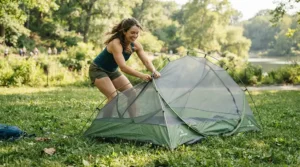
- Open the frame. For an instant pop-up bug screen for patio use, stand in the centre, lift evenly and let the frame extend. If it fights you, stop and check the hinges instead of forcing it.
- Anchor immediately. Stakes or sandbags first, guylines second, even if the sky looks calm.
- Test the doors. Zip them fully, because a half-zipped door gives mosquitoes a front entrance.
- Take a first-thirty-days walkthrough. Check stakes after the first rain, look for loosening joints, and brush off any debris from the roof.
Maintenance schedule: wipe mesh with a damp cloth monthly, rinse the roof at season’s end, dry everything completely before storage, and lubricate stiff zippers with a bar of soap or a zipper lubricant. Common first-month mistakes include skipping anchors, folding while damp and overloading the frame with hanging lights.
Do this once carefully and the second setup becomes a three-minute habit.
Real-World Scenarios: Which Shelter Fits Which Yard
These are hypothetical profiles, not real customers, built to show how the reasoning works.
The Ottawa townhouse family. Four people, a 3 × 4 m (10 × 13 ft) deck and weekend barbecues. A 10 × 10 ft Alvantor fits with room to spare, packs light for the shed, and the included anchoring kit suits deck use with sandbags. Budget: around C$150–C$250.
The Calgary acreage with serious wind. Open lots invite gusts. A sturdier frame like the steel-hybrid East Oak 12 × 12 ft paired with upgraded stakes makes sense, plus a firm rule: take it down when forecasts approach Environment Canada wind-warning levels. Budget: C$200–C$300.
The Halifax first-time renter. Small yard, tight storage, cautious budget. A 6 × 6 ft Lenotos or East Oak fits under a bed in winter and tests the concept cheaply. Budget: about C$100–C$170.
The Vancouver Island entertainer. Frequent dinners, long evenings, damp climate. CORE with built-in lighting over the existing table, plus a tarp for the damp ground. Budget: around C$280–C$400.
The lesson is that yard size, wind exposure and storage decide the winner, not the headline spec.
Problem → Solution Guide: Fixing the Most Common Annoyances
Problem 1: Mosquitoes still get in. Check door zippers first, then the gap along the floorless edges. Weigh the edges with sandbags or pegs, and zip doors fully. If midges are the issue, look for finer mesh as noted earlier.
Problem 2: The shelter shifts in wind. Add sandbags and extra stakes, orient a door edge into the wind, and take it down if gusts build. Budget stakes are often the weak link on models like CORE and VEVOR.
Problem 3: It’s too hot inside. Mesh walls on a screen house help, but still-air days feel stuffy. Add a battery fan, place the shelter in partial shade and use light-coloured furniture.
Problem 4: Rain leaks through. Most roofs are UV-rated shade rather than waterproof. Some reviewers of the Coleman Skylodge family report leaks, and Alvantor‘s roof isn’t waterproof. Treat any shelter as a rain-delay device unless it states a waterproof rating.
Problem 5: It’s hard to fold. Folding is the learning curve noted for Alvantor. Watch the manufacturer’s video once, practise indoors and avoid forcing joints.
Problem 6: Grass and debris stick. Shake the shelter out, let it dry fully and store it in the supplied bag. A little weekly care beats a seasonal rescue.
Long-Term Cost & Maintenance
The sticker price is only the first chapter. Total cost of ownership depends on how many seasons the shelter survives, what you replace and what you store it in.
| Cost Item | Typical Range (CAD) | Notes |
|---|---|---|
| Shelter (budget) | C$100–C$230 | Lenotos, VEVOR |
| Shelter (mid) | C$150–C$300 | Alvantor, East Oak |
| Shelter (premium) | C$250–C$400 | CORE, IDEALHOUSE |
| Upgraded stakes and sandbags | C$20–C$50 | Often worthwhile |
| Replacement mesh or zipper repair | Variable | Depends on model |
Spread over four or five summers, even a mid-range pop-up costs less per evening than a couple of restaurant patio dinners. A C$200 shelter used 30 evenings a year over four years works out to under C$2 per evening, and that’s before you count the bug-spray you didn’t buy.
Longevity depends on three habits: anchoring properly, drying fully before storage and replacing weak stakes immediately. Warranties help too. A reported three-year warranty on the larger East Oak is a meaningful sign. Value, in this category, means a shelter that survives your habits.
Safety, Health Canada and Practical Rules for Backyard Shelters
Mesh keeps bugs out, but a few safety rules keep everything else in order.
Repellent still has a role. Health Canada says personal repellents with DEET are safe when used as directed, up to 30% for adults and children older than 12. Icaridin is another licensed option. For infants under six months, the guidance is to skip DEET and use a mosquito net over a crib or stroller instead. A shelter gives parents a second line of defence without extra chemicals.
Know the symptoms. West Nile symptoms typically appear within a couple of weeks of a bite and can include fever, headache and body aches. Most people infected show no symptoms, but if you feel unwell, speak with a health professional.
Respect the weather. Never shelter in a thunderstorm, and take the structure down when forecasts approach wind-warning levels.
Keep flame at a distance. Grills, fire pits and candles don’t belong near fabric. Check the manufacturer’s guidance and your municipal fire bylaws.
Check local rules. Temporary pop-up shelters are typically not permanent structures, but condo and municipal bylaws vary, so confirm if you’re unsure.
Safety here isn’t dramatic. It’s habits.
FAQ
❓ Can I leave a pop-up mosquito shelter for backyard use up all summer?
❓ Do pop-up screen shelters keep out black flies and no-see-ums?
❓ Do I need a permit for a pop-up screen shelter in my yard?
❓ Is a pop-up mosquito shelter safe near a BBQ or fire pit?
❓ What size pop-up screen shelter fits a patio table for six?
Conclusion
Let’s land the plane. A good pop-up mosquito shelter for backyard use turns the worst hour of a Canadian summer evening into the best one. The real work is matching the shelter to your yard.
If you want the easiest, best-documented first purchase, Alvantor is hard to argue with: light, well reviewed and shipped with a proper anchoring kit. If you value a recognizable brand and a tall peak, Coleman Skylodge earns a look. Choose East Oak to fit your yard size, CORE for lit dinners over the picnic table and IDEALHOUSE when guest lists are long. Lenotos and VEVOR are the thrifty options, as long as you reinforce the anchoring.
Whatever you pick, remember the three unglamorous rules: anchor it well, take it down in strong wind and dry it before storage. Do that, and a C$150–C$300 shelter pays you back in evenings, not just in dollars. Check current prices and Canadian reviews before you buy, because both change.
✨ Ready for bite-free evenings?
Compare your favourites, check current pricing and pick the shelter that fits your yard. Your next summer dinner deserves to be buzz-free! 🦟
Recommended for You
- Bug Shelter For Family Camping: 7 Best Picks Ranked (2026)
- Mosquito Bivy Vs Bug Tent For Backpacking: 7 Proven Picks 2026
- Bug Tent For Camping: 7 Best Bite-Free Picks In 2026
Disclaimer: This article contains affiliate links. As an Amazon Associate, I earn from qualifying purchases. If you purchase products through these links, we may earn a small commission at no additional cost to you.
✨ Found this helpful? Share it with your friends! 💬🤗
